
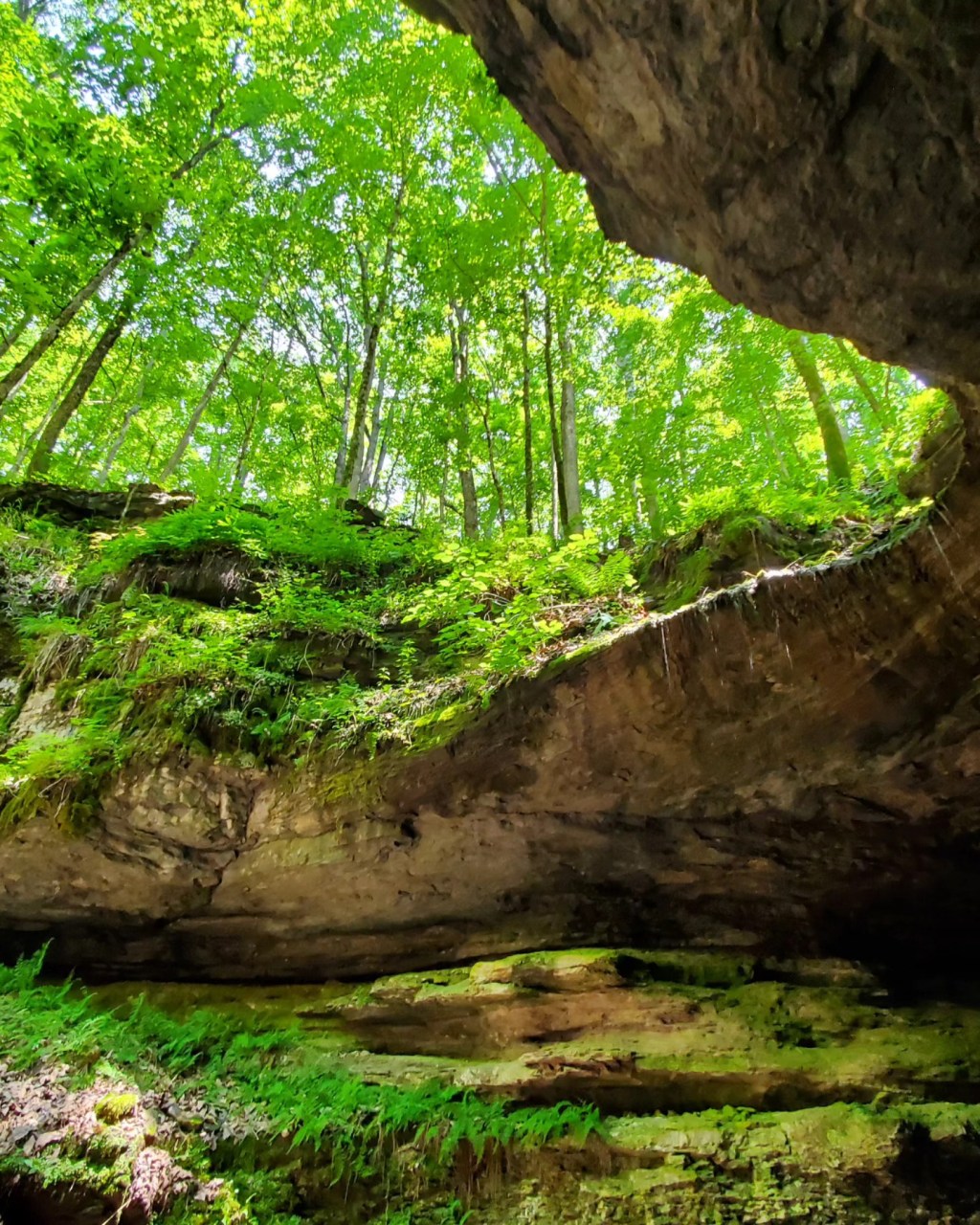

Mammoth Cave National Park was Kentucky’s first tourist attraction, and is the second oldest tourist attraction in the United States.

Mammoth Cave is the longest/largest cave system in the world with over 4000 mile of passages, 400 miles of mapped passageways, and 10 miles of passages that are open for public tours.
Mammoth Cave is a UNESCO World Heritage Site and International Biosphere Reserve with over 50,000 acres of natural preserve.

Bear hunters once discovered the cave after tracking a wounded target through its entrance. Explorers later found evidence that it had been inhabited by early humans, but not for many centuries.
The property was purchased in 1812 to mine calcium nitrate, which is used to make saltpeter.

A man named Franklin Gorin purchased the land in 1816 to use it as a tourist attraction.
He was an enslaver, and one of the men he enslaved was immediately set to task on exploring the cave system.
Stephen Bishop, a young African-American man in his 30s, spent the next several years of his life discovering new passages, naming the geographic features, drawing maps, and sailing the underground rivers.
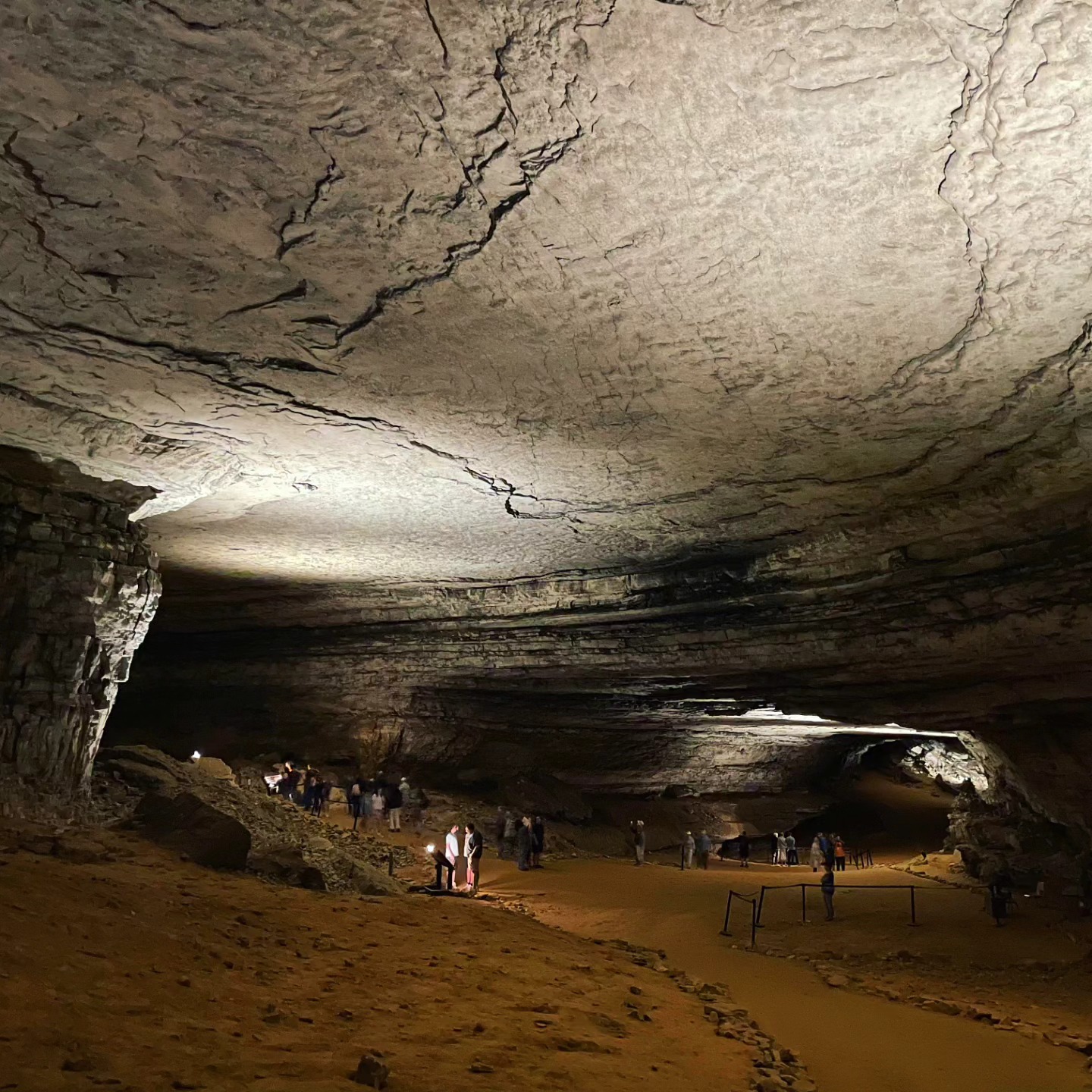
Ownership of the cave passed through various hands during the years to come, including a doctor with high hopes of using the cave’s dry and mineral-rich environment as a tuberculosis cure.
He based these hopes on the discovery that several bodies previously found in the cave were nearly perfectly preserved due to the environmental conditions.
Sadly, his patients were not cured, so the testing was called off.
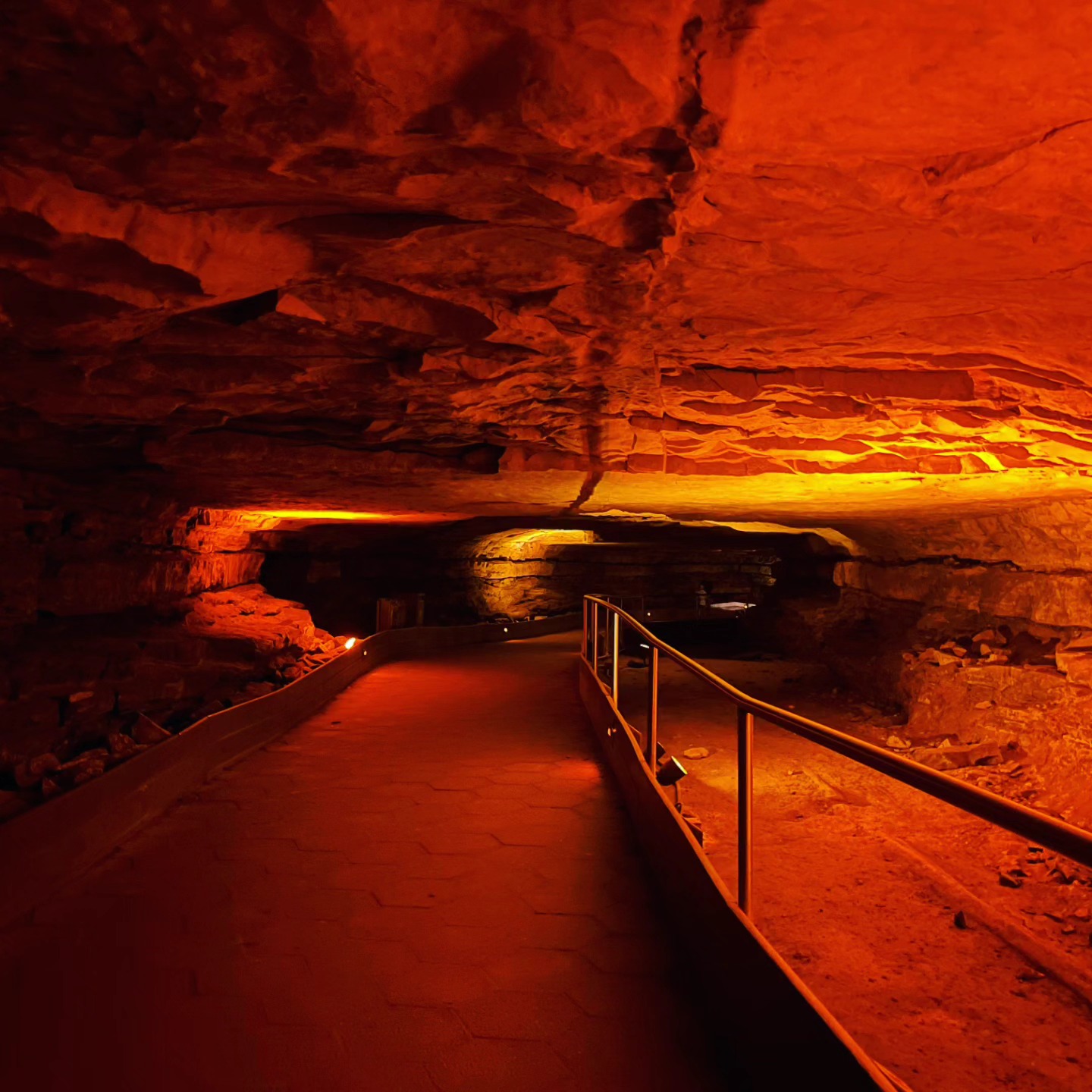
Several people are buried in Mammoth Cave, most notably Lost John, a gypsum miner that was crushed to death in 1925 by a five-tonne boulder.

There are more than 150 recorded paranormal events taken in the cave, earning it the title of most haunted cave system.

We chose to take a self-guided tour of Mammoth Cave, but also took the ranger-led Wondering Woods tour.

Our ranger guides took us on a bus tour through the historic Tranquil Valley and then on a super short hike to the Old Original Cave.

Our ranger guide told us about Floyd Collins, an explorer who tragically died in 1925 after a boulder trapped him inside the Sand Cave, a new cave he was developing for tourism to follow up on his famous Crystal Cave.
He did not die right away, however, rescuers spent 14 days attempting to reach him.

The entire nation tuned in, white knuckled, as news reports relayed step by step updates on the rescue mission.
Floyd’s entrapment nearly 60 feet underground had become one of the first national stories to be shared on broadcast radio.
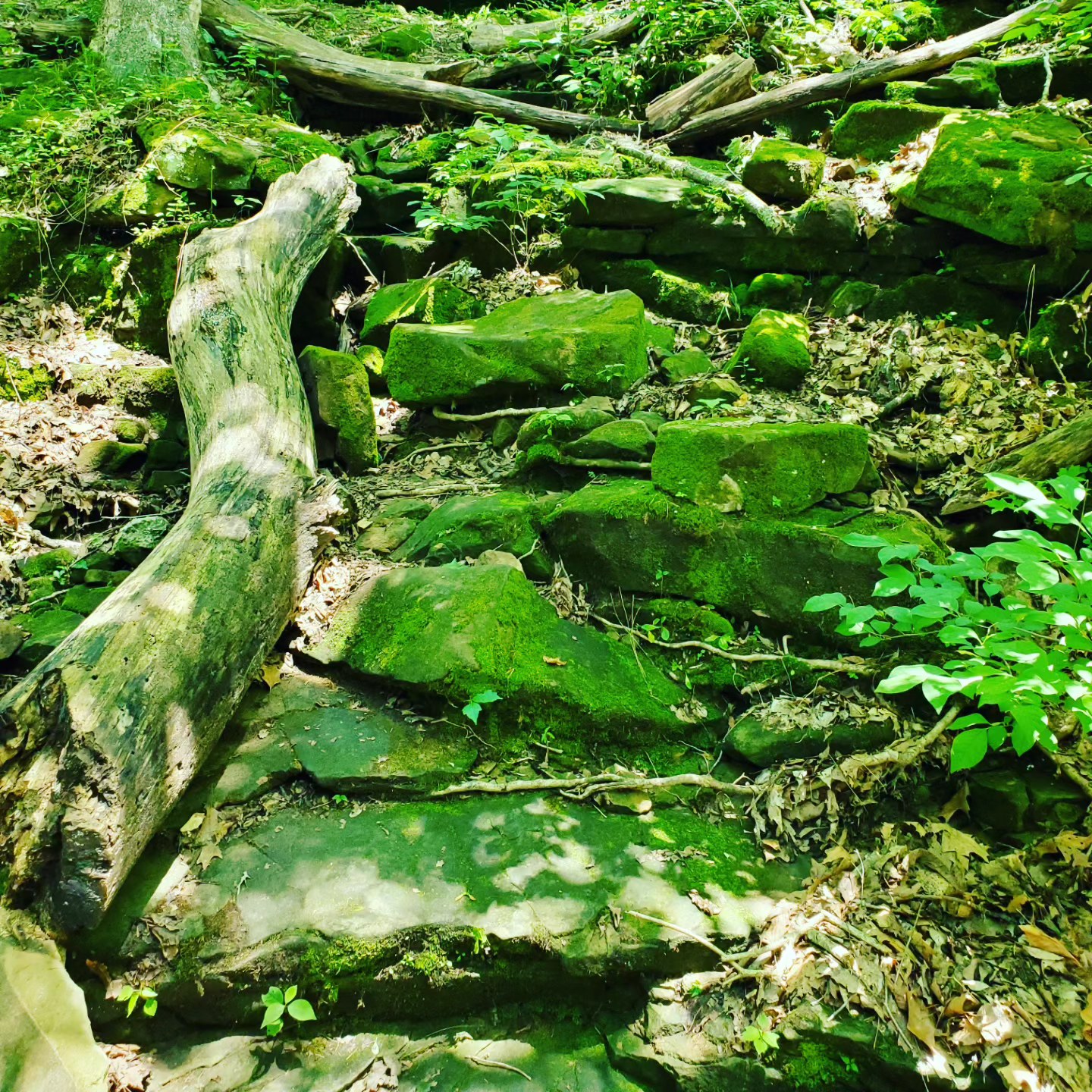
A sickening group of entrepreneurs began setting up food carts and hosting crowd games to draw tourists and make money off the disaster as it was unfolding.
Floyd slowly succumbed to starvation, dehydration, hypothermia, and exposure while in horrific pain, as crowds above him socialized, ate hot dogs, and posed for photos.

Old Original Cave is part of the Mammoth Cave National Park, but it is not directly connected to Mammoth Cave, and is only accessible by a ranger-guided tour.


The only entrance is low and narrow. At six feet tall, I basically had to squat and hop a little, doing my best not to crack my skull.
It only takes a few seconds to get in though, then the cave opens way up high.


The interior of the cave is full of gorgeous formations, but beware of the cave crickets.
Even with electric lighting, drainage, metal stairs, and regular maintenance, the walls are lined with cricket colonies and oozing with a sticky, shimmering substance I will let you take a wild guess about.


We enjoyed taking a few different approaches to the National Park; self-guided versus ranger led, timed versus at leisure, hiking on foot versus a bus tour, a schedule route versus wandering at will.
I highly encourage all visitors to take more than one of the dozen or so options that are available.

The park has a fantastic museum of cave history and exhibitions.

There are a couple different gifts and souvenirs shops on site as well. We both love bats, and even went as far as wearing bat capes, bat ears, and bat-patterned leggings to show our love for the critters.
Rangers have stations set up at each cave exit for guests to stomp on or scrub their shoes on to soapy mats, to remove any possible traces of Pseudogymnoascus destructans .
This fungus causes white-nose syndrome (WNS) and has tragically been wiping out bat colonies.

Diamond Caverns is another cave open to tours, just down the highway.

They also have a large facility with public wi-fi and restrooms, lots of gifts, souvenirs, cave and bat-related items, books, crystals, exhibits, historic memorabilia, and some hands-on activities.


In the area for a while? Follow me to Cave City, Horse Cave, Munfordville, and Glasgow! (in progress)
********************
© Copyright Fernwehtun, 2015- Current. Unauthorized use and/or duplication of this material without express and written permission from this site’s author and/or owner is strictly prohibited. Excerpts and links may be used, provided that full and clear credit is given to Fernwehtun and Fernwehtun.com with appropriate and specific direction to the original content.

 Fernweh, An Ache for Distant Places
Leave a comment