

COUNTY KERRY
County Kerry is known as “The Kingdom” in Ireland and includes the towns of Killarney, Kenmare, Sneem, Waterville, Cahersiveen, Caherdaniel, Dingle, Blennerville, and others.
The name Kerry comes from the word “Ciarrai” which is pronounced more like “Keer-ree” and means “the people of Ciar.”
“Ciar” itself is used to describe someone with a dark complexion or dark hair, and the suffix “rai” added on refers to a tribe.

KERRY CONNECTION
Recently I learned that my own family may have originated from Kerry in part, as we still “carry” (pun intended) the well-known Mullins surname and a heap of “Mc”- surnames.
Ironically, the origin of Mullins with varied spellings is used to describe fair-haired people.
That line of my family is a blend of people with both dark hair and dark eyes, or a particular shade of light red hair with green eyes and pale skin. Time to try one of those ancestry tests!

KERRY CULTURE
County Kerry is known for its conservation of traditional Irish language, music, song, dance, and more cultural aspects that have become more internationalized or phased out in other parts of Ireland.
There are two official Gaeltacht regions in Kerry, the Gaeltacht Uíbh Ráthaigh and the Gaeltacht Corca Dhuibhne, where the people primarily speak Irish.
The dialect in Kerry is Munster Irish, and about 40% of the people in Kerry claim to speak it.

Hollywood actors Liam Neeson, Gabriel Byrne, and Timothy V. Murphy, plus film producers Neil Jordan and Fiodhla Cronin O’Reilly are all from Kerry.
Writers Peig Sayers, Muiris O’Sullivan (anglicised), and Tomas O’Criomhthain are from the Blasket Islands and/or have based their work on time spent there.
Actor-director Michael Fassbender was born in Germany but moved to Killarney with his family at age two. They owned the West End House Restaurant where he worked as a teenager, and now it is Fassbender’s West End House School of Art.
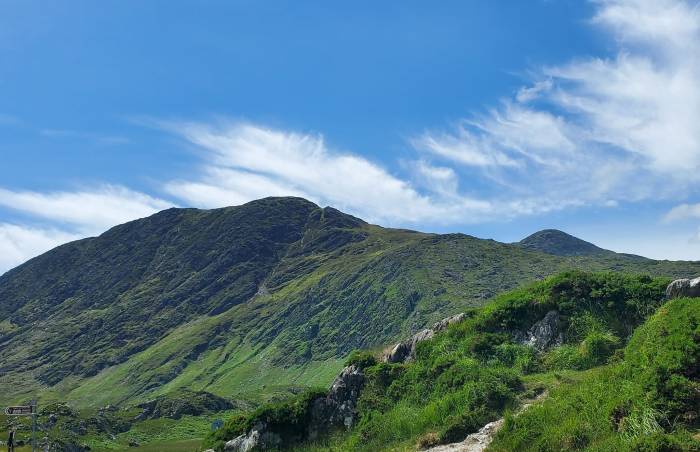
Far and Away, Harry Potter & the Half Blood Prince, Ryan’s Daughter, and Star Wars VII – The Force Awakens were all filmed in County Kerry, so if you have seen those films, you have already caught a glimpse of Kerry’s unique landscape.
Kerry sphagnum moss grows abundantly in this region and played a crucial role in military first aid during World War I, the Easter Rising of 1916, and in wars as far back as the Battle of Clontarf in the year 1014.
This sphagnum moss is an excellent substitute for cotton and wool, and so known for its medicinal properties that the Royal College in Dublin backed its research, harvesting, and commercial packaging to be distributed around the world.
Dried sphagnum moss packets were commonly sent as far as Egypt, France, India, Italy, and Palestine. I just randomly checked Amazon and found that the moss packets are still a hot commodity worldwide.

Kerry has its own special breeds of animals like the Kerry slug, Kerry cow, the Kerry Bog Pony, and its own Kerry Lily (Simethis mattiazzii).
I was not able to capture a good photo of a Kerry lily because in the few times I spotted a cluster, it was out in the bog or on the side of the road as we whirred past, so I am sharing this photo below from WildflowersofIreland.com:

Speaking of Kerry-specific critters, historical hero and activist Michael Collins’ had a pure-bred “Kerry Blue” Terrier named Convict 224, a throwback to his inmate number while imprisoned in Wales in 1916. He specifically loved Kerry Blue Terriers so much that he was known to give them as gifts to his friends and family.
Collins risked his life and freedom on a regular basis, but famously did so in the midst of the War of Independence to show Convict 224 in a dog show where “enemy” British officers were presiding.
Convict 224 won first prize and the Irish Kennel Club issued a trophy with Collins’ real name on it, but the British officers never caught on. The trophy is currently on display at their club location.
Sadly, the “Kerry Hill” species of sheep does not originate from County Kerry, but you can find plenty of good old black sheep and all other sorts roaming Ireland.

RING OF KERRY
The Ring of Kerry is a world-renowned scenic driving route that follows N70 around a loop, or ring, to the best of County Kerry. N70 also connects to N71, N72, and other roads to complete the full ring.
You can stay on the N70 road for about 111 miles and drive the entire ring in a matter of hours, but you would be missing the entire point. There are so many spots to overlook natural wonders, to eat in charming villages, or to chill on lively beaches.
The image below does not belong to me. It is shared from TheIrishRoadTrip.com and is only included for illustrative purposes.

WHICH WAY, NOW?
The Ring of Kerry partially overlaps a segment of the Wild Atlantic Way, another famous scenic driving route that follows the western coast of Ireland. There is a lot of debate about where you should start the Ring of Kerry, and if you should go clockwise or counter-clockwise for the best experience.
Killarney is the largest and most commercialized tourist town in County Kerry and on the Ring of Kerry route, so many people suggest starting there. We have driven the ring a few times now, starting and ending in Killarney, but that is because we stayed at a place we love in the Killarney National Park.
We also drove clockwise and arrived in Kenmare first, as opposed to driving counter-clockwise to Killorglin first. There is really no specific reason for that one, and honestly I would not change a thing.

To make your own decision, know that most commercial bus tours are required to drive clockwise which could mean slower speeds, constantly arriving at the same destination as a bus full of tourists, and worst of all, not being able to see a damn thing except the bus in front of you the entire time.
On the other hand, a major benefit to driving clockwise is that you are already driving on the LEFT side of the road, looking left at all the sights to behold, and it makes it a little easier to pull off into a safe spot when you need to stop instead of crossing the lane.
If you are willing to start your route super early or mid-morning after most bus tours have started their daily route, you should be able to bypass all that. I suggest driving it both directions, but you do you.
For those looking to walk, hike, or bike through Kerry instead of driving, the Kerry Way, Dingle Way, and Beara Way routes are there for it.

County Kerry is the westernmost county of Ireland, with more than 550 miles of Atlantic Ocean coastline as its western border.
The landscape is known for its beaches, cliffs, rock formations, and dreamy islands. The most famous are the Skelligs, Valentia Island, and the Blasket Islands. MacGillycuddy’s Reeks is the highest mountain peak in Ireland, and the only mountain in the country that reaches over 3,200 feet.
The more you get out of the car and walk or bike, the more you will really be able to take in.

KILLARNEY NATIONAL PARK
In 1932, Ireland officially established its first national park in County Kerry. This 25,000 acre park gave new definition to some of Ireland’s most beautiful landscapes, historic sites, and ancient relics.

Killarney National Park was kicked off when the Muckross Estate was donated to the State, and the parameters of the park expanded to include many nearby landmarks.
Plans for environmental conservation were set into motion, and it eventually became a designated UNESCO Biosphere Reserve in 1981.

Sheep are the most commonly seen animals, just like in the rest of Ireland, but in Killarney National Park you have a better chance to observe herds of Red Deer, Sika, Pine martins, foxes, rabbits, badgers, and other animals that roam the protected lands.

Route N71 cuts through the park with Torc Mountain on one side with the Purple, Shehy, and Tomies ranges on the other.

LADIES VIEW
One of the most popular Killarney National Park destinations, and rightfully so, is an overlook called Ladies View. It received this name in 1861 after Queen Victoria and her courtly ladies visited County Kerry and were rather fond of this spot.
From here you can see the Lakes of Killarney flowing endlessly into the distance.
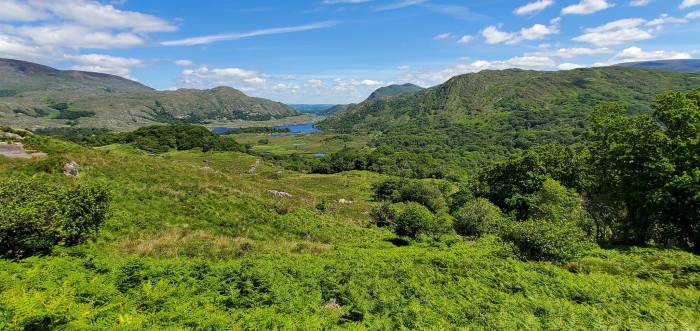
Visiting the overlook is easy. If you are coming from Killarney, follow the N70 Ring of Kerry Road for about twelve miles. There is a parking lot, gift shop, and cafe with signs clearly marking the stop.
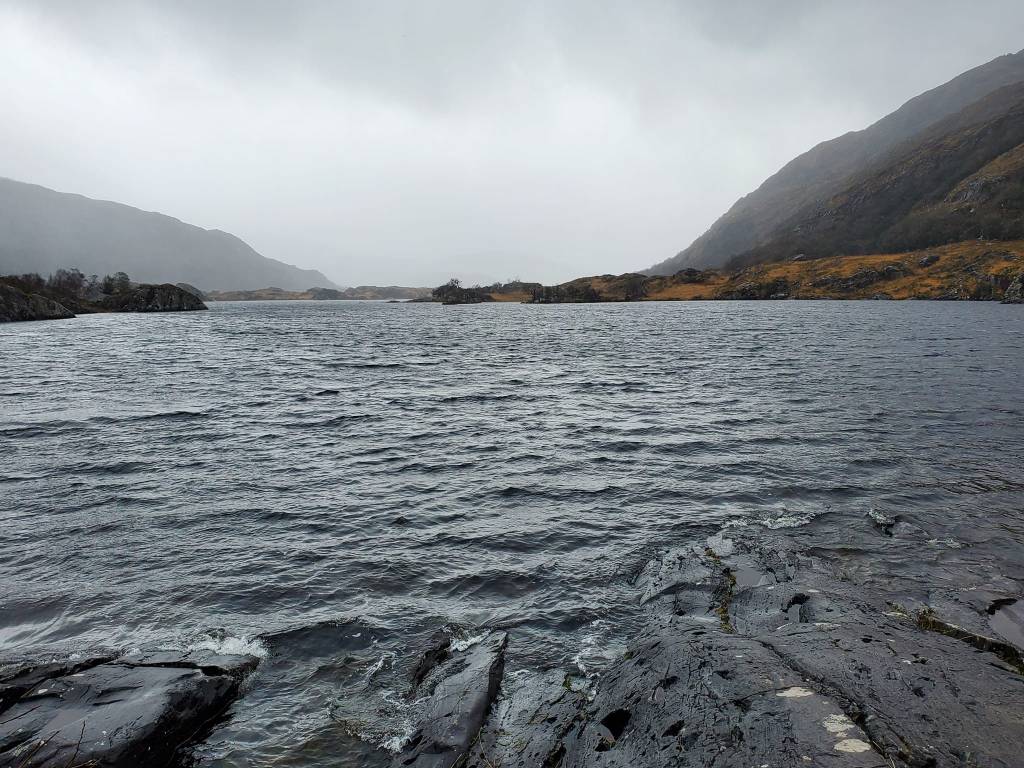
Warm weather in late Spring or summer is the best time to visit for visibility. Notice the difference in the photo below when we went in March, compared to the one above when we visited in June.

A second overlook, just a few minutes further down N70, is criminally underrated.

Even I did not want to get out of the car after climbing back in from seeing Ladies View and blasting the AC.
It is just a few dozen steps from the pull off though, so don’t be lazy. Go look!

This spot has a plaque about the Killarney National Park and offers a different perspective looking out across the lakes than from the more popular Ladies View.
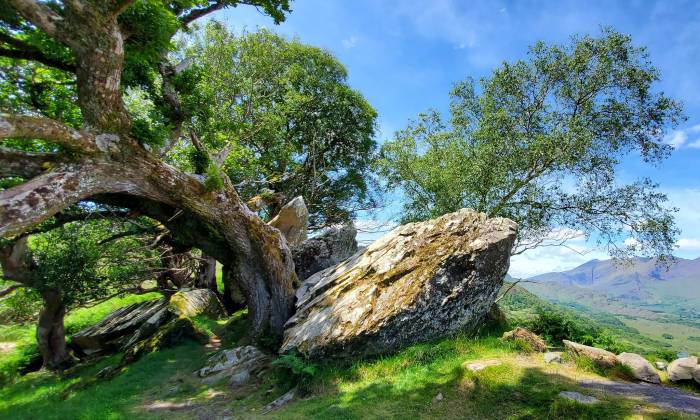
MOLL’S GAP, BLACK VALLEY, & THE GAP OF DUNLOE
If you ever want to drive the Ring of Kerry and take a shortcut to omit the Killarney National Park, my suggestion to you is DON’T.
However, in the event you have driven the full Ring of Kerry before and are looking for some less touristy sights, take the Moll’s Gap mountain pass through Black Valley and the Gap of Dunloe.
We took N71 (Ring of Kerry Road) and made a right onto R568 to take the pass heading north. Others may drive it from Killorglin toward Kenmare instead, taking N72 to Gap Road and then down to Moll’s Gap.
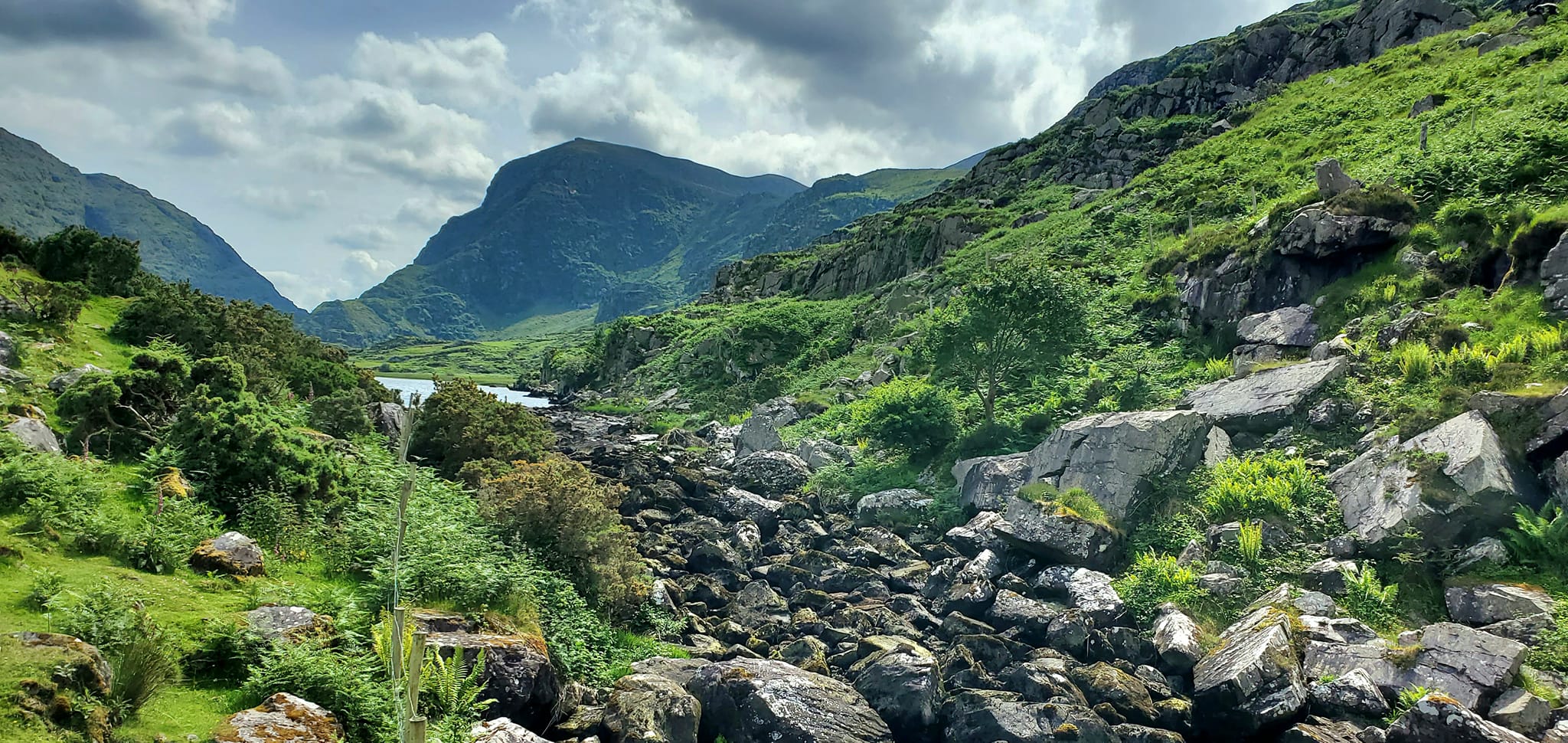
Black Valley is a rather remote valley at the bottoms of MacGillycuddy’s Reeks, so remote that it was actually one of the last places in Ireland to get electricity as recently as 1976.
This part of the Ring of Kerry is thought to belong more to the walkers and cyclists on the route than the motorists.

There are a whole lot of bogs in Black Valley, and with bogs come bog cotton. I learned that bog cotton is often used to make candle wicks, certain types of paper, and as pillow or mattress stuffing.
Bogs are very enticing to me and the smell of burning peat is one of my most cherished. If you also enjoy bogs, or at least the very thought of them, check out A Bog’s Life.
I would be remiss to not also share this song “The Bog” by BiGod20, for all the real ones. It is an oldie but a goodie, and you can trust that I was cackling and singing it to myself the whole time out in Black Valley.

Upon encountering a bog in person, remember that they can be extremely dangerous.
My big ass started sinking while trying to take photos and I had to heave my body up with a quickness to get back onto less squishy ground.
Thankfully the bog only got me up to my ankles, but people die in those things.
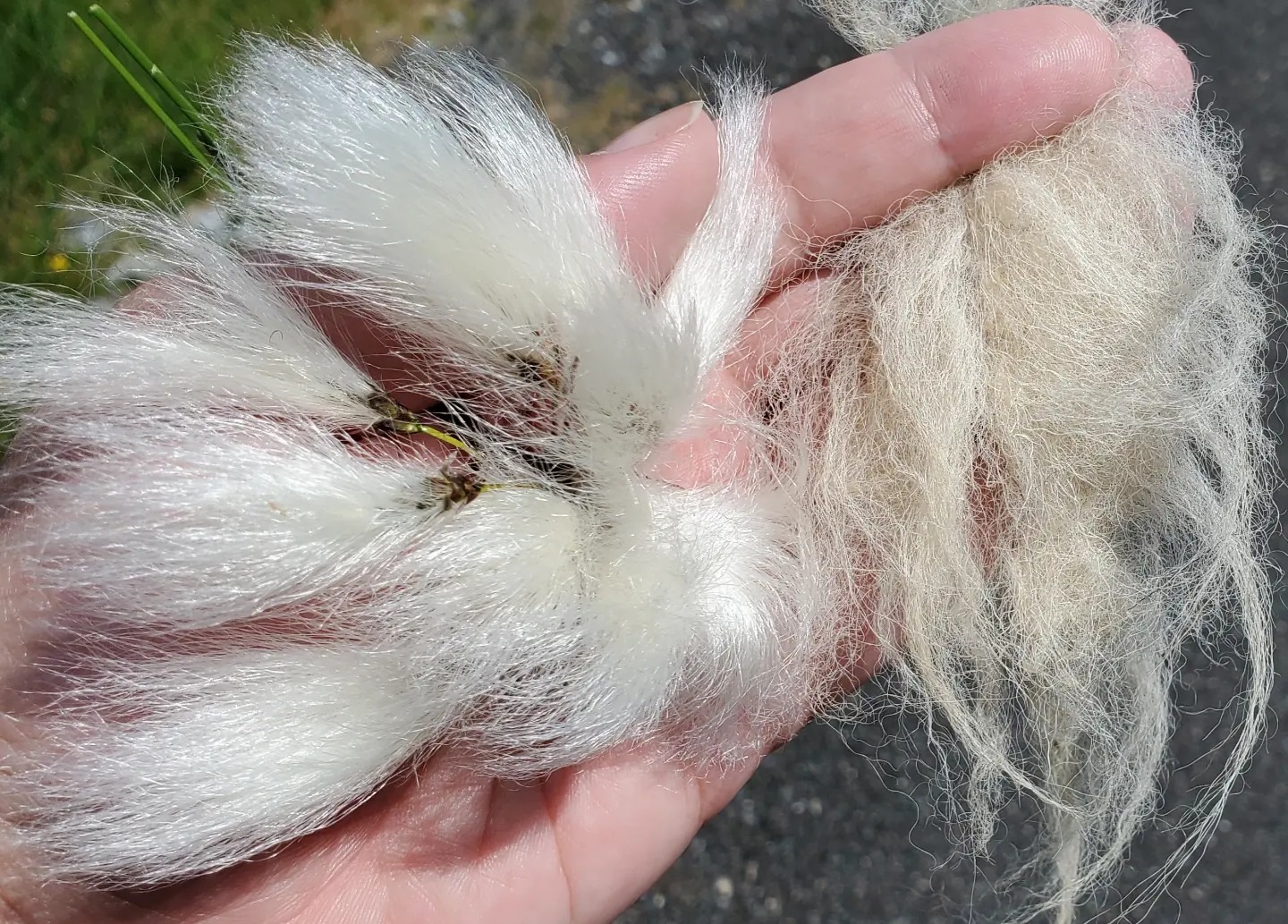
To make matters confusing, you can often find large tufts of wool that has been pulled off sheep as they grazed past some sharp edge or branch.
On more than one occasion I excitedly crept toward what I thought was a giant blossom, only to find it was wool instead.

Finally, we reached the Gap of Dunloe. This was one of the most breath-taking views, if one can even begin to rank all the beautiful scenes of Ireland.

This area gets kind of congested between personal vehicles, tour buses, jaunting cars, carriages, bicycles, hikers, and hill walkers, so take your time.

Augher Lake and Cushvalley Lake are both right along the lane.

The Wishing Bridge is a very popular spot for photos, maybe even moreso than the lakes.

KILLARNEY TOWN
I didn’t want to leave the Gap of Dunloe, but we had so much more to see.
Killarney, as I mentioned earlier, is the most commercialized tourist town on the Ring of Kerry. Do not write that off as a bad thing though, because Killarney is awesome.

Killarney is so vibrant and clean with historical markers, murals, and gardens everywhere you go.

The town is full of old-world hotels, upscale restaurants, and casual taverns offering any kind of cuisine you may crave.

We are especially fond of The Laurels Pub & Restaurant, and have been a couple times now.

Their traditional potato cakes with smoked bacon and chicken, topped with a creamy mushroom sauce is my second favourite thing on the menu, but the baked goat cheese with beets and pickled veggies is making my mouth water as I type.

During our first visit to The Laurels, I resumed this little game that started with my first trip to Ireland in 2017.

I was on a mission to try as many different seafood chowders as possible, and to find the best one. I may have gained a few pounds as a result but The Laurels chowder wins, hands down.

We have also had the Monkfish curry, Chicken Supreme, and the Banoffee pie, and everything was perfect.
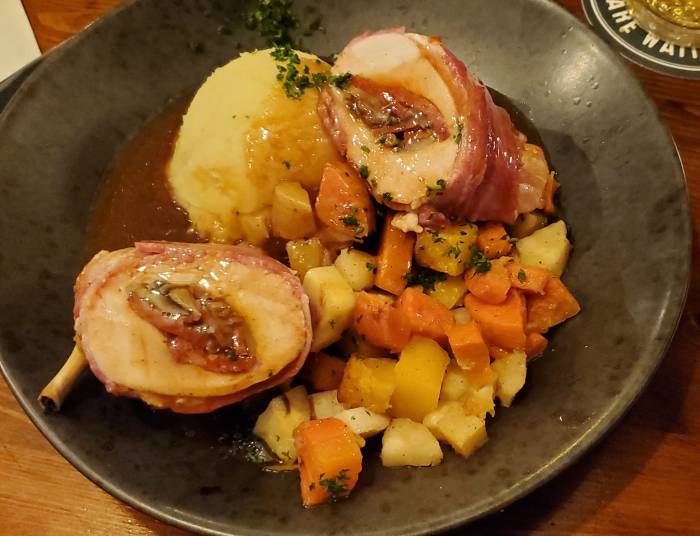
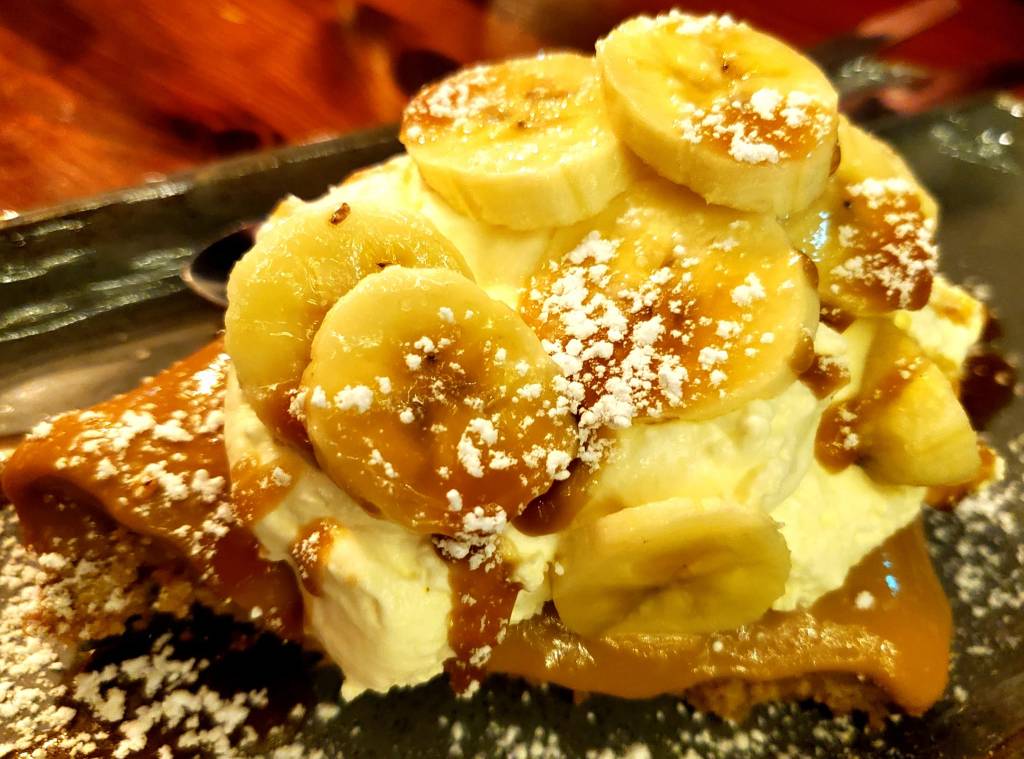
Hannigan’s Bar & Restaurant was also perfection. It is located inside the International Hotel and has a streetside entrance for the general public.

They have a super thick and creamy seafood chowder that is a tie with what we had at The Laurels.
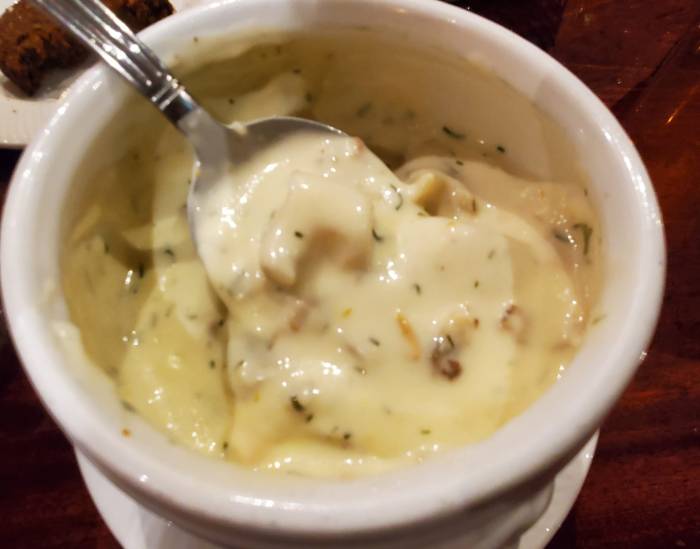
Hannigan’s has a house special called Arthur’s Pride that is like a Guinness stew with beef and mushrooms, but there is nothing basic about that dish. I am still dreaming about it, weeks later.

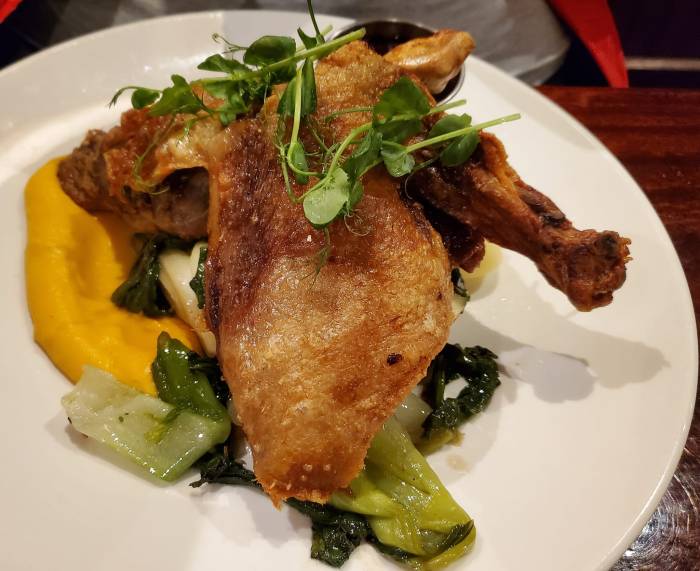
My friend ordered the roasted duck. I have not yet had a good experience eating duck but this looked different than any other duck dishes I have seen.
The portion was huge and appeared to be fried properly without all the grease known to come with duck. He raved about it so much that I almost considered taking a bite.
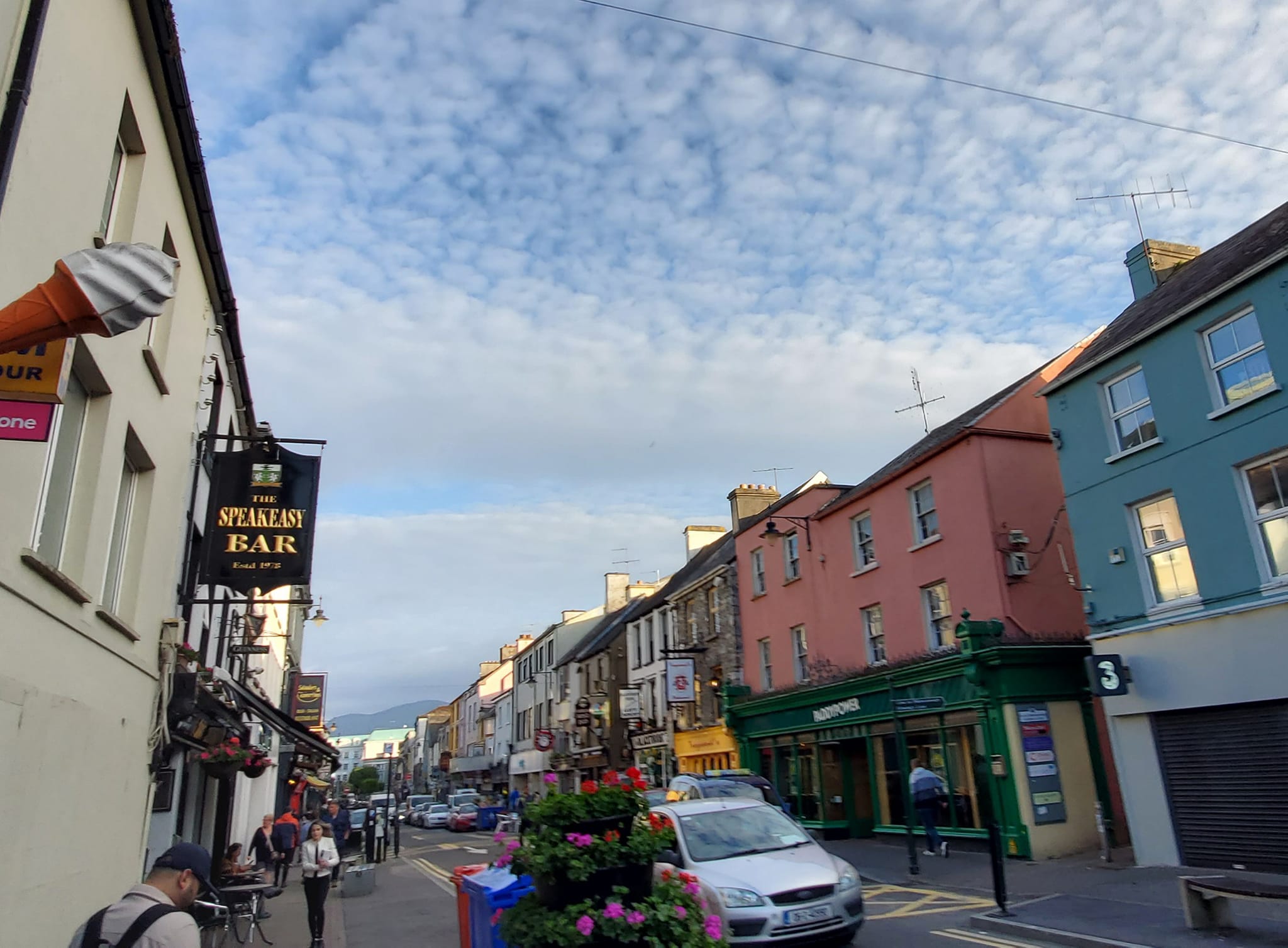
In between meals, be sure to walk around Killarney to check out the cool street art and bronze statues of historical figures.
The first sculpture I noticed was of Hugh O’Flaherty, a priest who worked in the Vatican and became a celebrated figure of Catholic resistance to Nazism during World War II.
He worked tirelessly to help Jewish people and Allied soldiers escape Nazi Germany, partly by changing his name and identity to constantly escaping the Gestapo in their hot pursuit to assassinate him.
This earned O’Flaherty the clever nickname “The Scarlet Pimpernel of the Vatican” which refers to the plant’s ability to brazenly cover lots of ground.
O’Flaherty was born in Cahersiveen about 35 miles away, but his monument (below) is in the center of Killarney. Note to self: watch the 1983 film The Scarlet and the Black that was inspired by O’Flaherty’s life, and stars Gregory Peck.

Speaking of Gregory Peck, his cousin Thomas Ashe was an Irish patriot and beloved hero of the 1916 Easter Rising and is buried in Dublin’s Glasnevin Cemetery.
Peck traveled to County Kerry and spent time there researching his role as O’Flaherty and connecting with his Irish roots. Both Peck and O’Flaherty have also been featured on postage stamps.
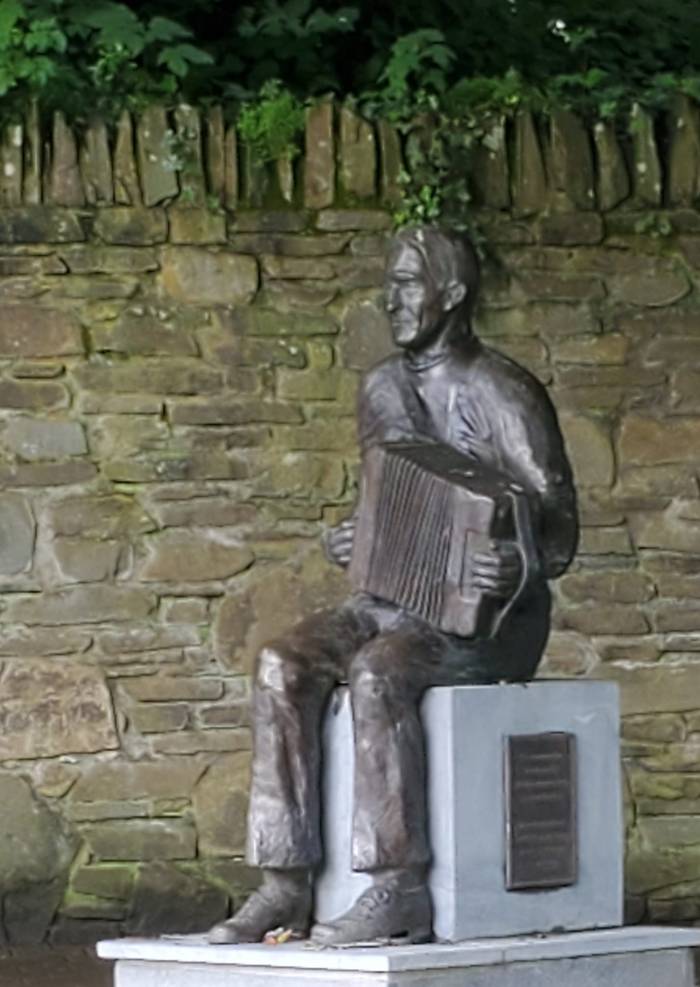
I could not find any information on site or online about this guy below. Sweet cane, though.

Johnny O’Leary was a famous musician that specialised in the “Sliabh Luacra” style of music, and is celebrated as one of Ireland’s best accordionists.
My photo turned out blurry but I am a sucker for an accordion, and had to include it in the list.
I didn’t think this monument about ploughing would be so interesting, but then I learned that the very first World Ploughing Competition in Europe had happened in Killarney, and at the time it was the only the second actual formal ploughing competition ever.
A new monument is created after each competition to commemorate the town it took place in, and they are revered as “Cairns of Peace” among its creators and recipients.

MUCKROSS HOUSE & ABBEY
Since the Killarney National Park was created with the Muckross House being donated to the State, many visitors like to start their tour of the park at Muckross House and Muckross Abbey, with its treasured yew tree.

This lovely Victorian mansion was built in the 1800s along one of Killarney’s famous lakes, Lake Muckross, and is the most idyllic setting for an Irish estate.

The most influential owner of the estate, Henry Arthur Herbert, is credited for designing and commissioning the these gardens as a welcoming gesture to Queen Victoria when she visited County Kerry in 1861.

ROSS CASTLE
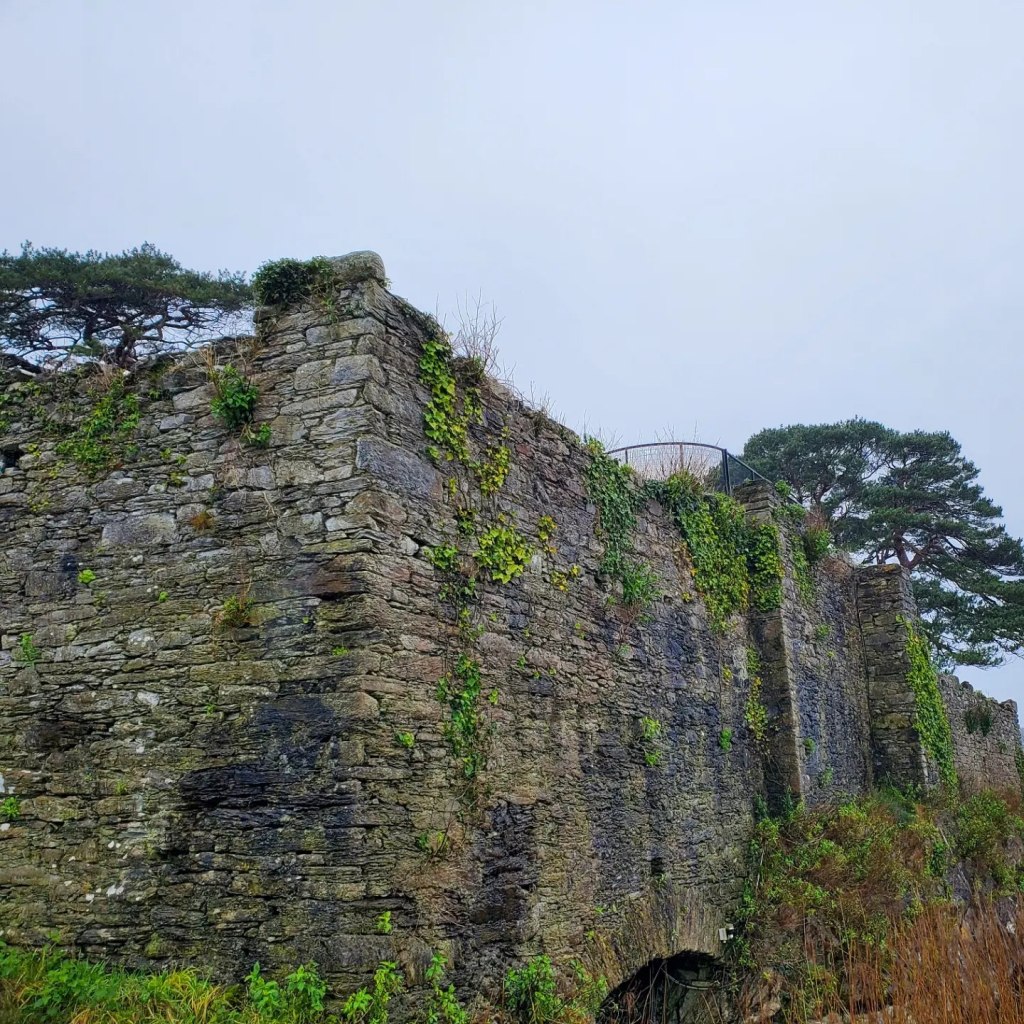
Known as the last significant fortified site to fall to [Oliver] Cromwell’s tomfoolery, the Ross Castle was the home of the Clan O’Donoghue until it was later taken over by the Brownes of Killarney.

Ross Castle is everything you need in a castle. Not too big, not too small, unbelievably solid for a 15th-century tower and keep.
It is surrounded by water but only a few minutes from the town center. Not much for neighbours; serene yet moody AF.

Prince O’Donoghue was known to have a library of books on Black Magic and a collection of youth-restoring potions.

Forgive me for presenting such nonsense, but legend has it that while the Prince was rifling through one of his ol’ Devil books, he had a vision that scared him so badly that he jumped out the window of the castle, taking his horse, table, and books with him.

The entourage quickly sunk below the lake’s surface, never to be seen again, except on one night every seven years when he and his ghost horse are seen galloping across the castle grounds.
I would personally like some clarity on what the horse was doing in the library with him to begin with, but it looks like I will never find out.


LAKE HOTEL
We have stayed at the historic 1820s Lake Hotel many nights now, on two separate occasions.
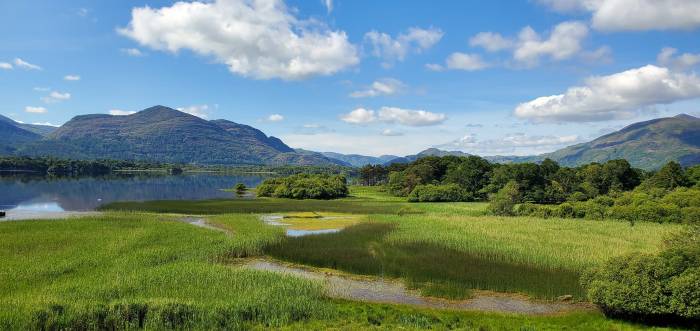
This is the place of our dreams, perfect for waking up and making our way down for a decadent breakfast each morning before setting out for adventures.
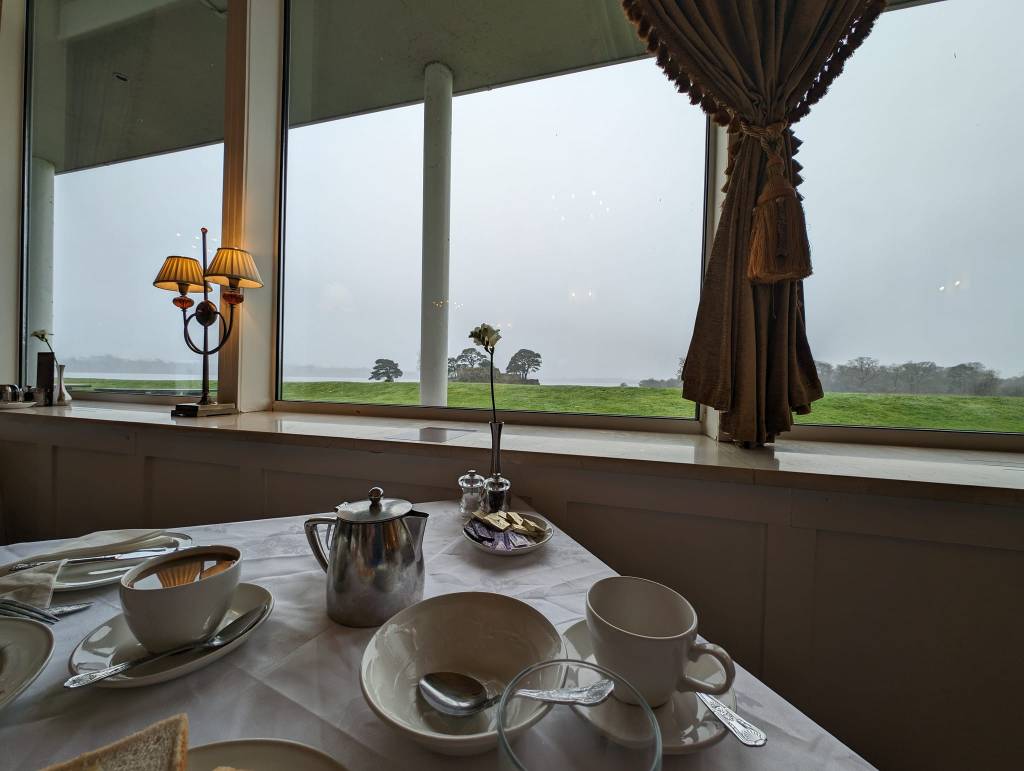

It is a fairytale setting where we can look out the window of our balcony and see the gorgeous Lough Leane and Castlelough ruins, undisturbed by the rest of existence.


It is the most serene setting for an evening walk around the lake, admiring the deer and birds that grace its waters.


It is the most luxurious place to come “home” to each night after exploring the Ring of Kerry and nearby attractions, and to have a night cap in the Devil’s Punchbowl Bar before tucking in.
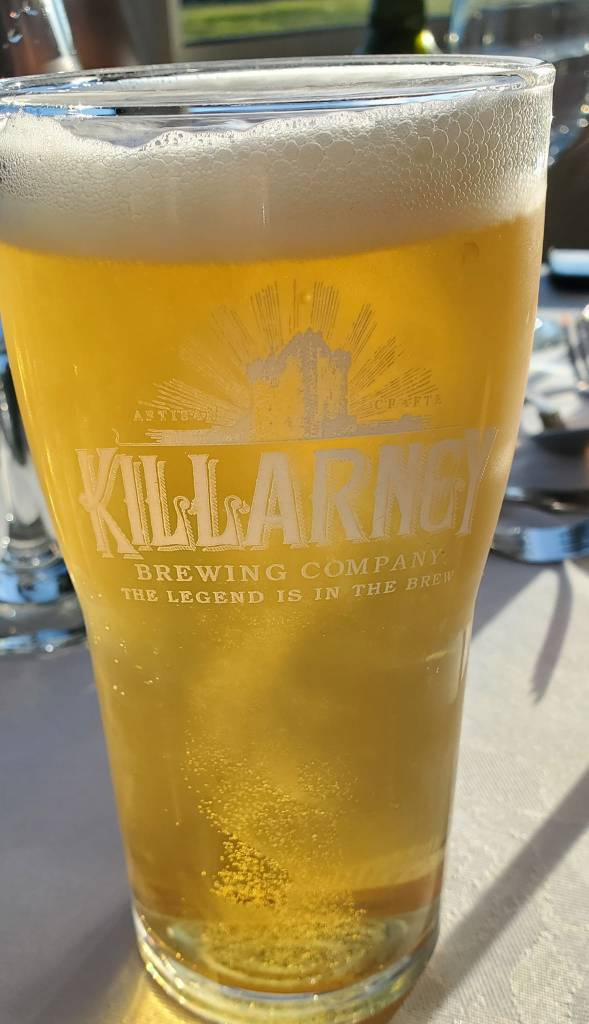
There is so much more to say about the magic of the Lake Hotel. The lobby and hallways are like a history museum, as the walls are lined with framed family history and a timeline of events for Lake Hotel, and the County Kerry region.

Guests can sit and read or have quiet conversation while taking tea or coffee in one of the few library rooms.


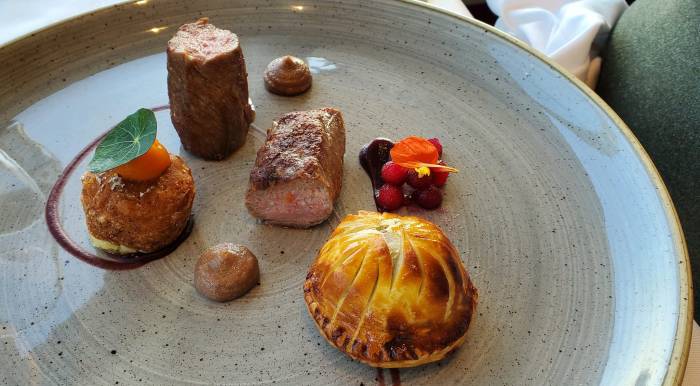
Dinner service at the Castlelough Restaurant is by reservation only. We decided to really splurge one evening to get the full experience.

We were presented with the “bon bon” of the day that was filled with whipped black pudding, then breaded and fried. My friend also ordered the stuffed rabbit appetiser.

Neither of those dishes suited me but I admired the presentation and creativity.

For entrees, we had an interesting mix of pistachio-stuffed chicken Wellington and roasted lamb with tiny pastries.
The general public is welcome to dine in with reservations, to visit the Castlelough ruins, and walk the trails along Lough Leane.
In the area for a while? Follow me through the next segment of the Ring of Kerry through Kenmare, Sneem, Caherdaniel, and Derrynane.
*************
© Fernwehtun, 2015- Current. Unauthorized use and/or duplication of this material without express and written permission from this site’s author and/or owner is strictly prohibited. Excerpts and links may be used, provided that full and clear credit is given to Fernwehtun and Fernwehtun.com with appropriate and specific direction to the original content.

 Fernweh, An Ache for Distant Places
Leave a comment