Huntsville, Alabama is known around the globe as Rocket City. It was originally named Twickenham after Alexander Pope’s home in England but later renamed in 1811 after its first settler, John Hunt.
In the early days of Huntsville, it was a mill and factory town. Some of the old mills are still standing and have been repurposed into art studios and the like.

There is a lot of ugly Civil War and anti-Civil Rights history behind Huntsville, just like any other town in the Southern region of the US, but there are some particularly cool victories here.
Students at Alabama A & M University staged the first lunch counter sit-in in 1962 which led others to form peace protests and to organize aid to bail out protestors who were arrested.
That same year, Huntsville became the first city to become racially desegregated in Alabama, a fact its people are rightfully quite proud of.
Oddly enough, a main road to the US Space & Rocket Center is still named after Governor George Wallace who was known as the “embodiment of resistance to the Civil Rights Movement.” Wallace really did his best to block every bit of progress made during those days, and who fought to keep segregation in place until he was literally served with a restraining order to leave people tf alone.
If y’all Huntsvillians get a chance, maybe you could rename that memorial highway something good.

Today, Huntsville is the largest city in the state of Alabama and the county seat of Madison County, with an estimated population of nearly 216,000 and of 1.2 million in the greater metro area, according to the 2020 census.
US News & World Report have voted Huntsville the #1 Best Place to Live for Families and the Best Place to Retire Based on Affordability.
Huntsville is most famously known for being the home of the NASA Marshall Space Flight Center, Space Camp, the US Space & Rocket Center, the Redstone Arsenal and United States Army Aviation & Missile Command Center, Cummings Research Park (the second largest in the world), and one of Meta‘s several multi-billion dollar data centers.
Famous actress Tallulah Bankhead was born in Huntsville, Little Richard was laid to rest there in Oakwood Memorial Gardens, and internet celebrity Antoine “Hide Yo Kids” Dodson lives in Huntsville, where the unfortunate incident he spoke of took place.
US SPACE & ROCKET CENTER
Speaking of Space, our first objective in Huntsville was a visit to the US Space & Rocket Center, the largest of its kind in the world.

I learned that the backstory began when former Nazi regime officer, Dr. Wernher von Braun, was brought over to the US in 1945 to utilize his undeniable skills in the field and to create ballistic rockets.
(below is astronaut John D. Hair, by the way)

His team is credited for creating the Saturn V rocket that dispatched Apollo astronauts to the moon and placed Americans at the forefront of space exploration and technology.

Researchers quickly moved on to more inventions like International Space Station modules, rockets, space shuttle propulsion systems, and the upcoming Space Launch System.
Huntsville was transformed from simply the “Watercress Capital of the World” into ROCKET. MF. CITY.
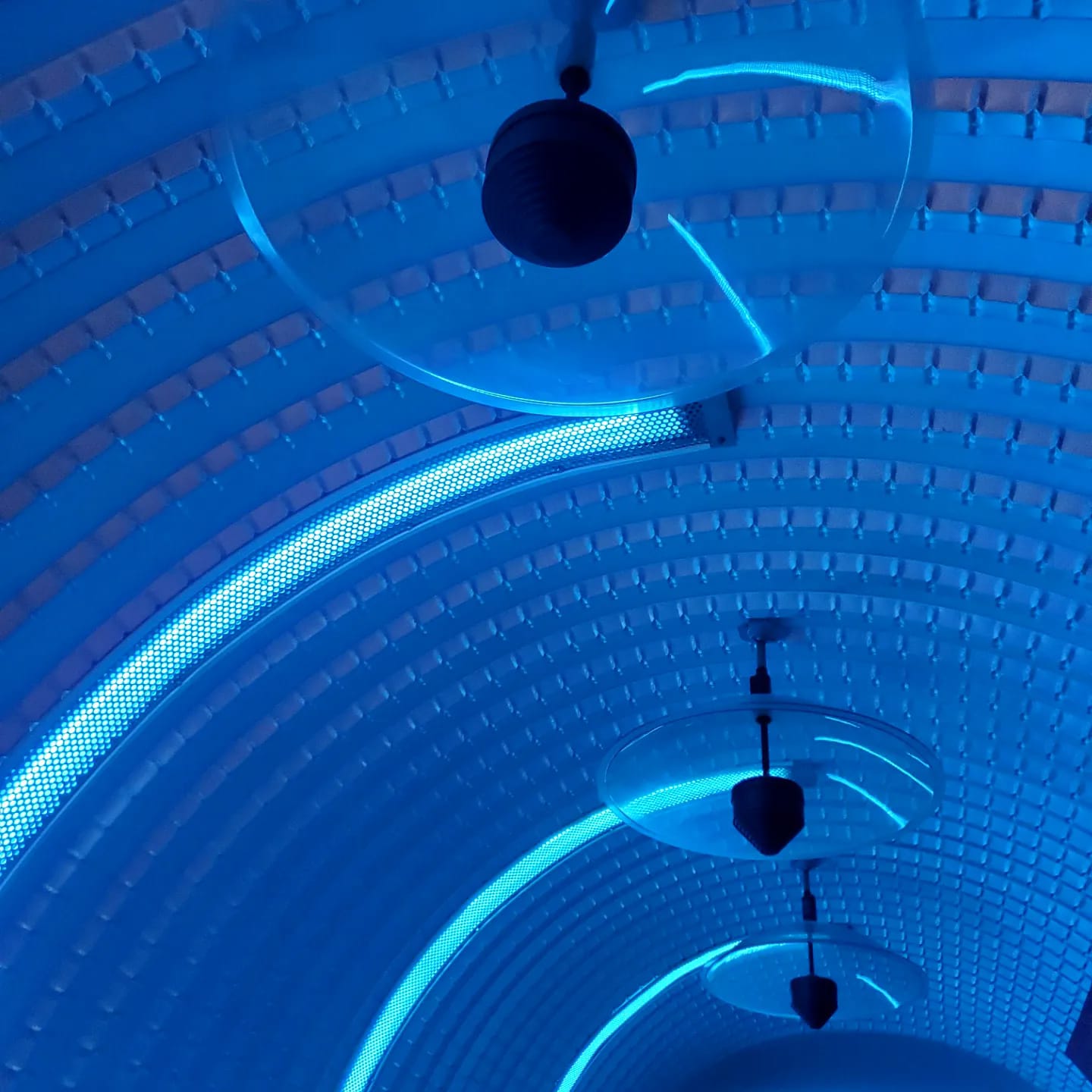
In 1970, the US Army donated land to Von Braun’s team to create a permanent exhibit of their work, and the U.S. Space & Rocket Center opened.
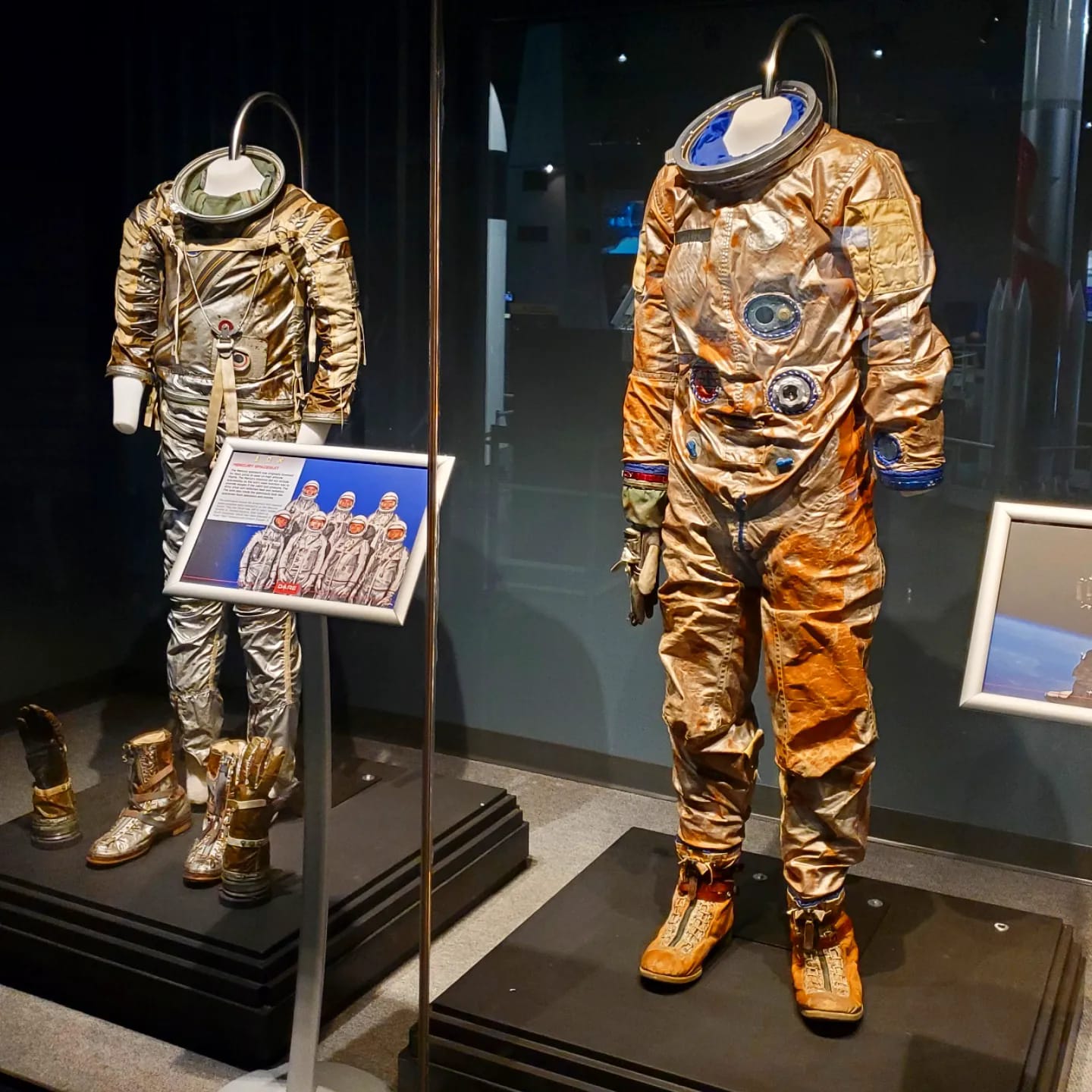
There are more than 1,500 items on display including the Explorer 1 satellite, Dream Chaser next generation space vehicle, Skylab Orbital Workshop, Apollo 12 Moon Rock, Apollo 16 Command Module, Pathfinder which is the only full-stack space shuttle display in the world, and National Historic Landmark, the Saturn V Moon Rocket.

The US Space & Rocket Center has some interesting displays but we were disappointed with the lack of authentic artifacts that have actually been used in relevant research, used during missions, or that came from space.

The featured exhibit was a wall of cubes below a projection on the wall of a compilation of old TV shows and other pop culture references to outer space. In the main hall, you can view several replicas of space craft, but hardly anything is genuine.

Thirty bucks get you in the door, but most of the exhibits are electric simulation rides that you must pay an extra $10-20 each for, and the footage shown is animated.
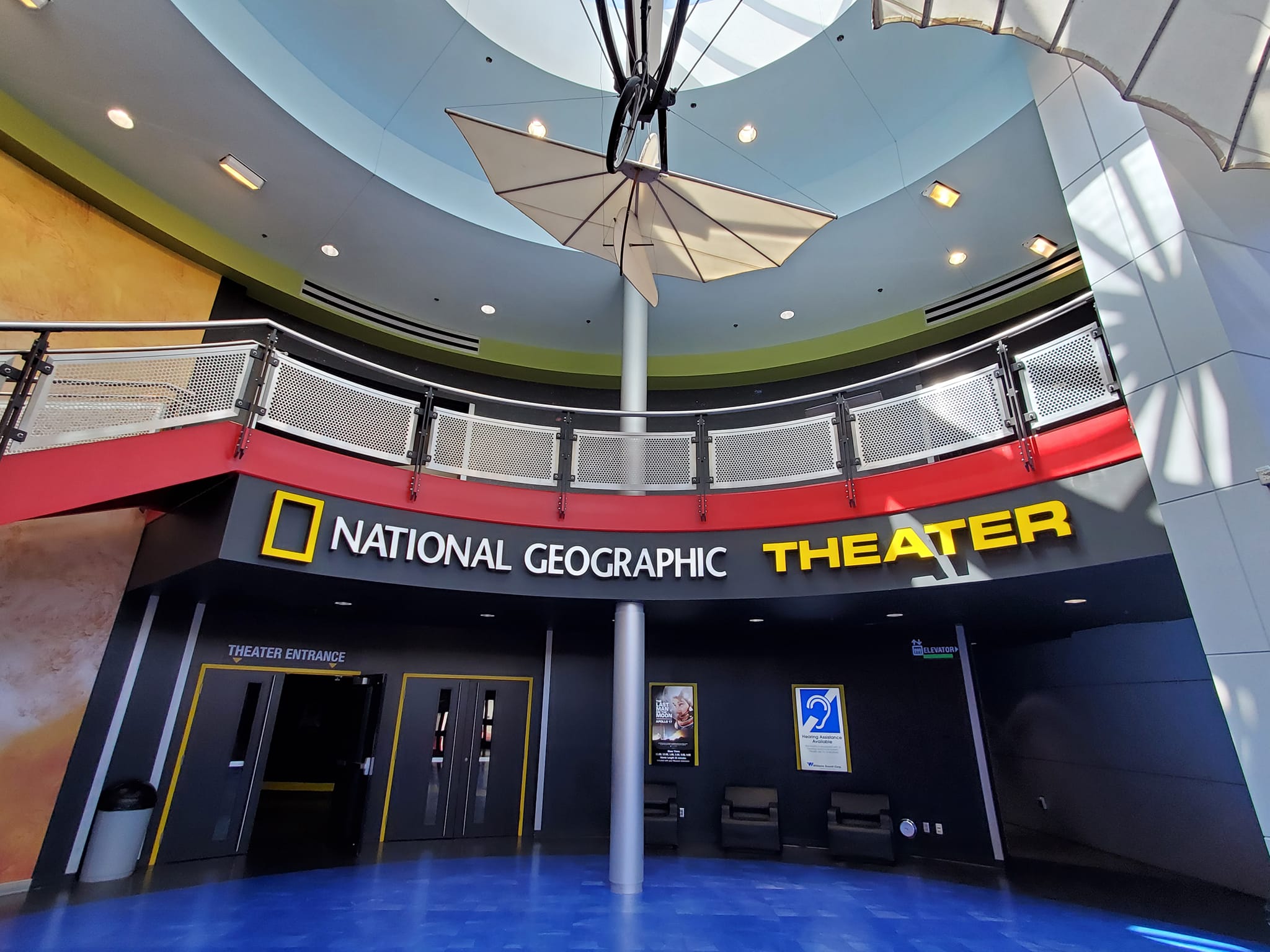
In my opinion, the most genuine experience is the decades-old documentary shown in the NatGeo theatre that includes interviews with actual astronauts.
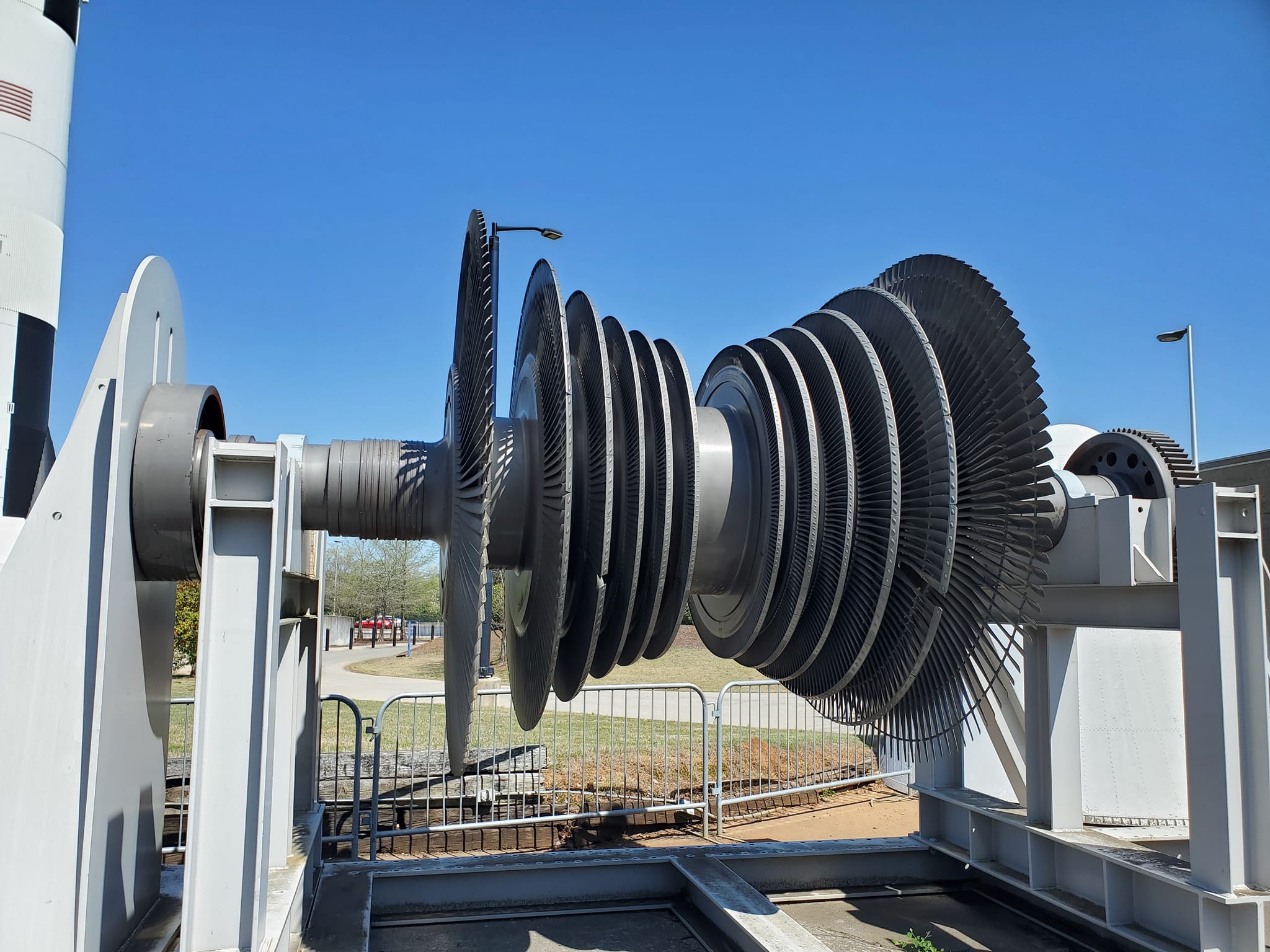
From the outside, the US Space & Rocket Center looks impressive, but the lawns between them look like a construction wasteland.
Officials have set up a few old military planes and helicopters that have nothing to do with NASA as filler to distract from the debris and lack of authentic spacecraft. The rockets and displays you can see below are replicas.

We did find a few cool items though.
The Center is well-known for its Space Camp program that has been in operation since 1982. More than 700,000 students between the ages of 9-18 have enrolled in this program to study actual NASA astronaut training.
NASA’s largest field center, the Marshall Space Flight Center, is also part of the complex.

I DETECT A THEME
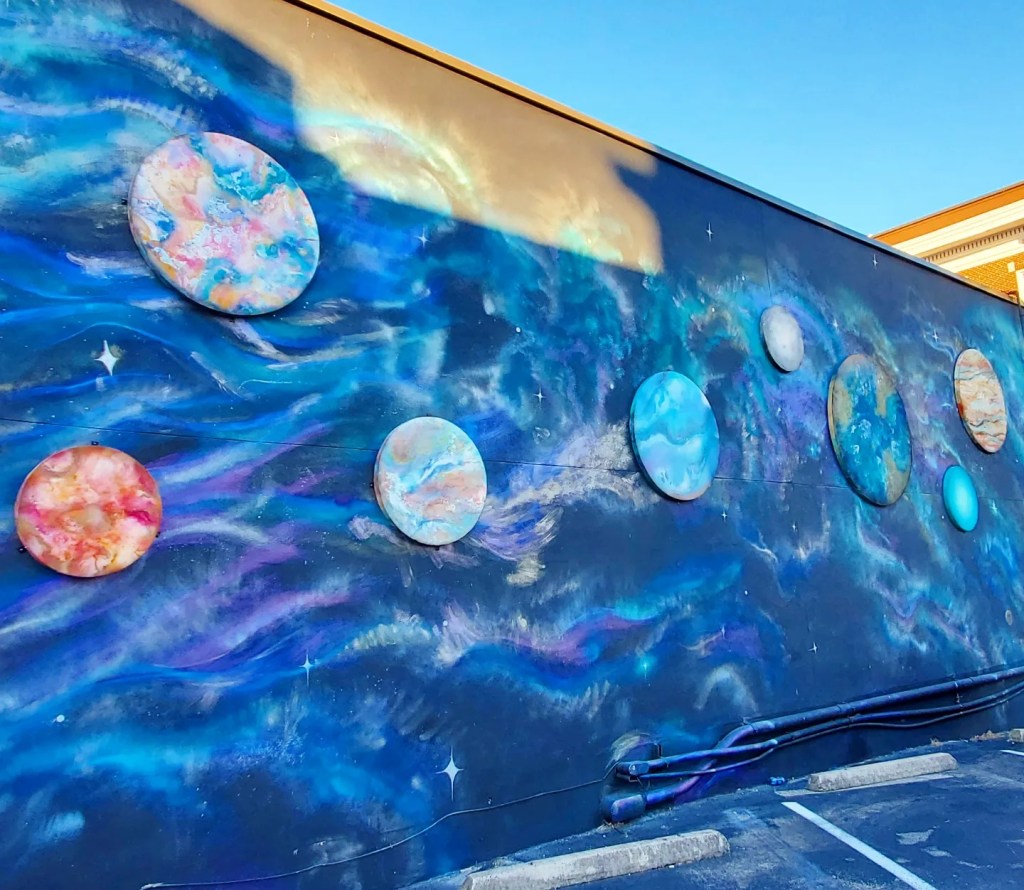
Making your way around Huntsville, you will notice a theme going on. Everything is space related.

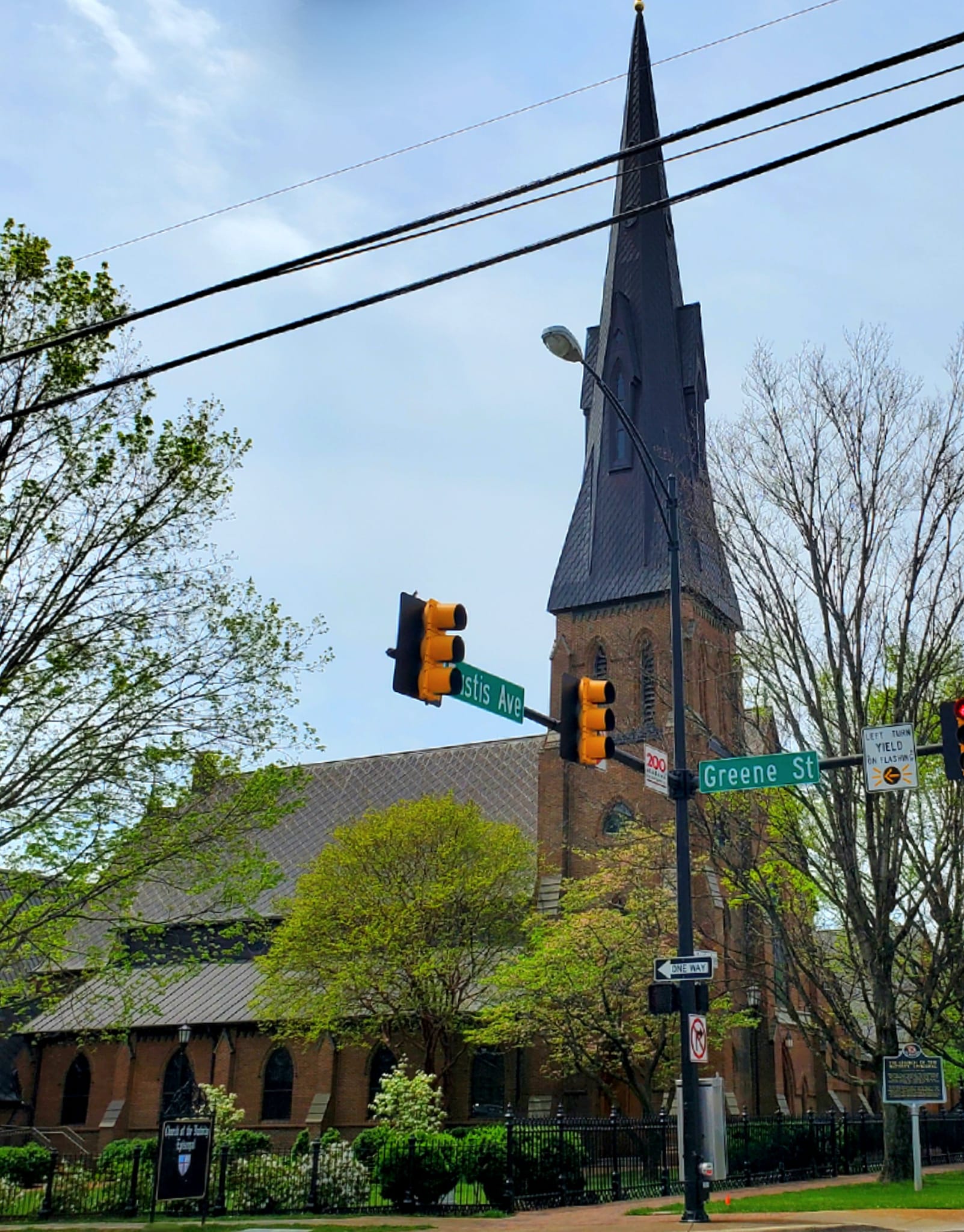
We found several awesome space murals, especially this strange Space Jesus mural that locals call “Eggbeater Jesus” and “Cosmic Christ” interchangeably. Stranger yet, it is painted on a Baptist church.

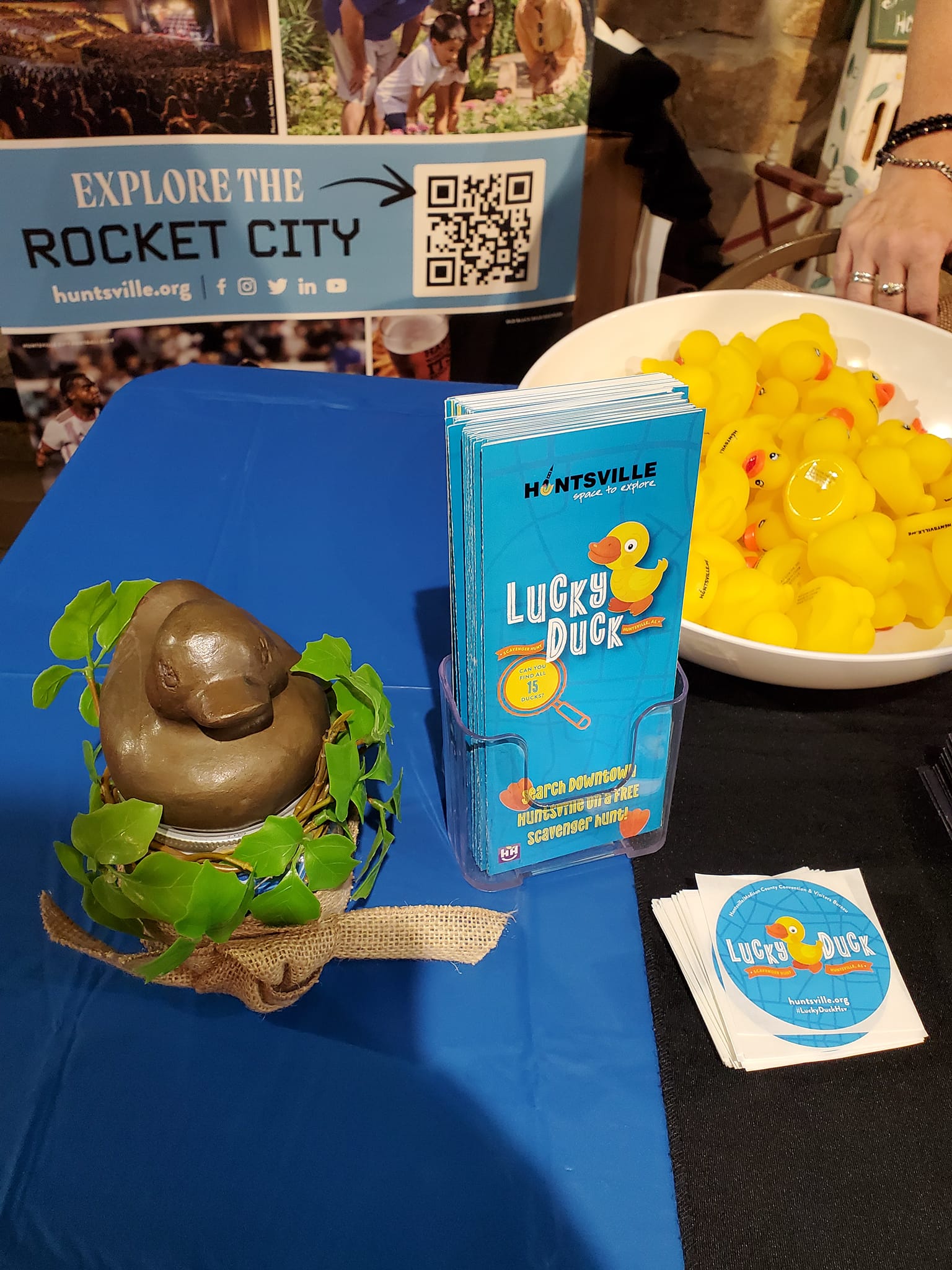
Consider following local tours like the Downtown Huntsville Secret Art Walk or the Lucky Duck Scavenger Hunt to find 15 hidden ducks around town, the latter which awards a prize upon completion when redeemed at the Visitors Center.
CAVES, PARKS, & OUTDOOR MEMORIALS
Caves are also a big deal in Huntsville. In fact, downtown is built directly on top of one. Huntsville is also part of the Tennessee-Alabama-Georgia Caving Region.
Long before Huntsville was called Rocket City, it was known as Cave City. It is even the headquarters of the National Speleological (Caving) Society, the largest in the world, that has its own publications and week-long convention each year. Check out this link to learn more about the various initiatives NSS has to manage its 19 caves and 4 reserves.

Cathedral Caverns State Park is less than 30 miles from downtown Huntsville, and absolutely worth the short trip. This cavern was originally called Bat Cave and it has the largest natural cave opening in the world; 25 feet high and nearly 130 feet wide.

In the 1950s, owner Jacob Gurley opened his cave to the public, renamed Cathedral Caverns, for its interior appearance.
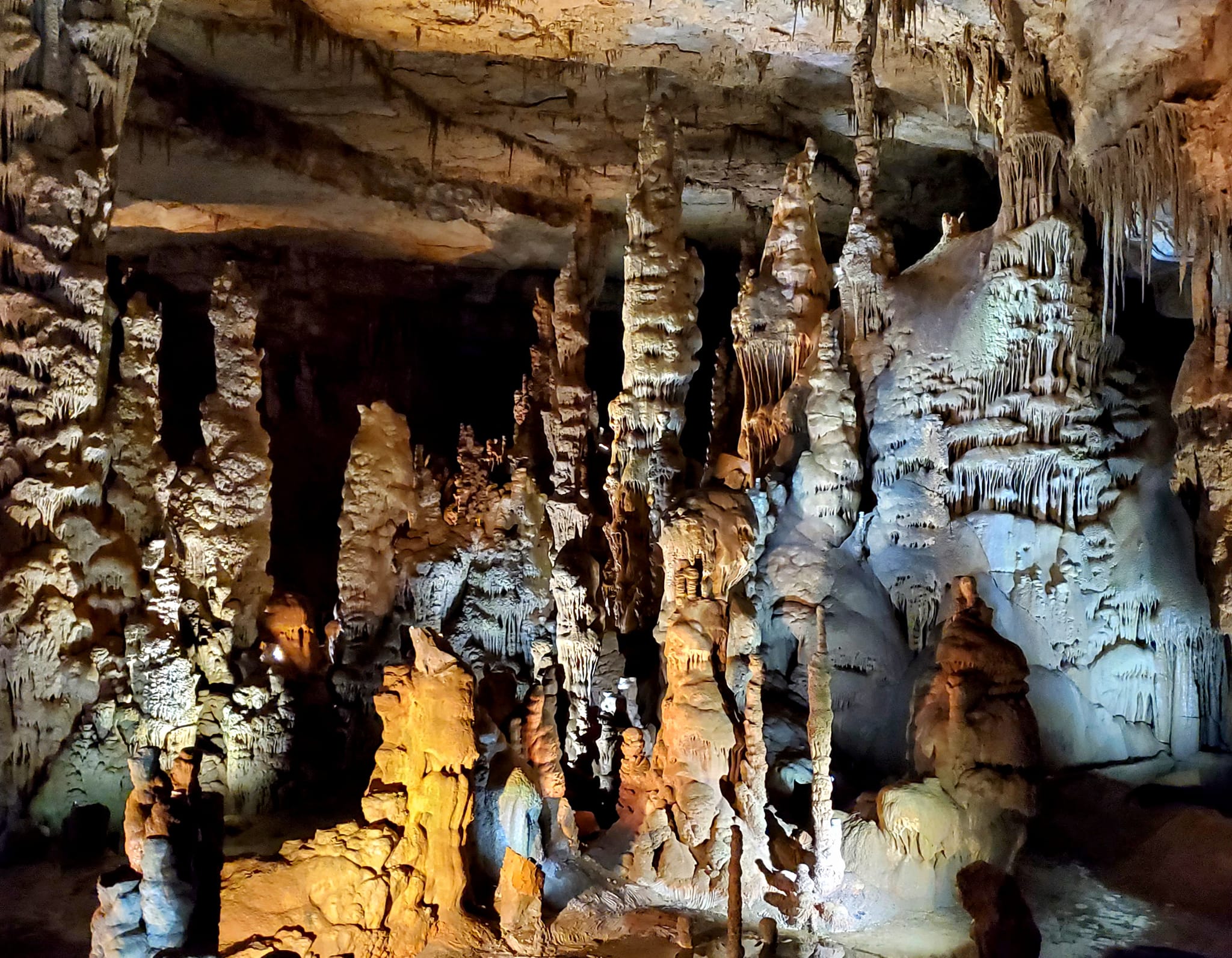
One of the most unbelievable formations inside the cave is a 27 feet tall stalagmite that measures more than three inches across.
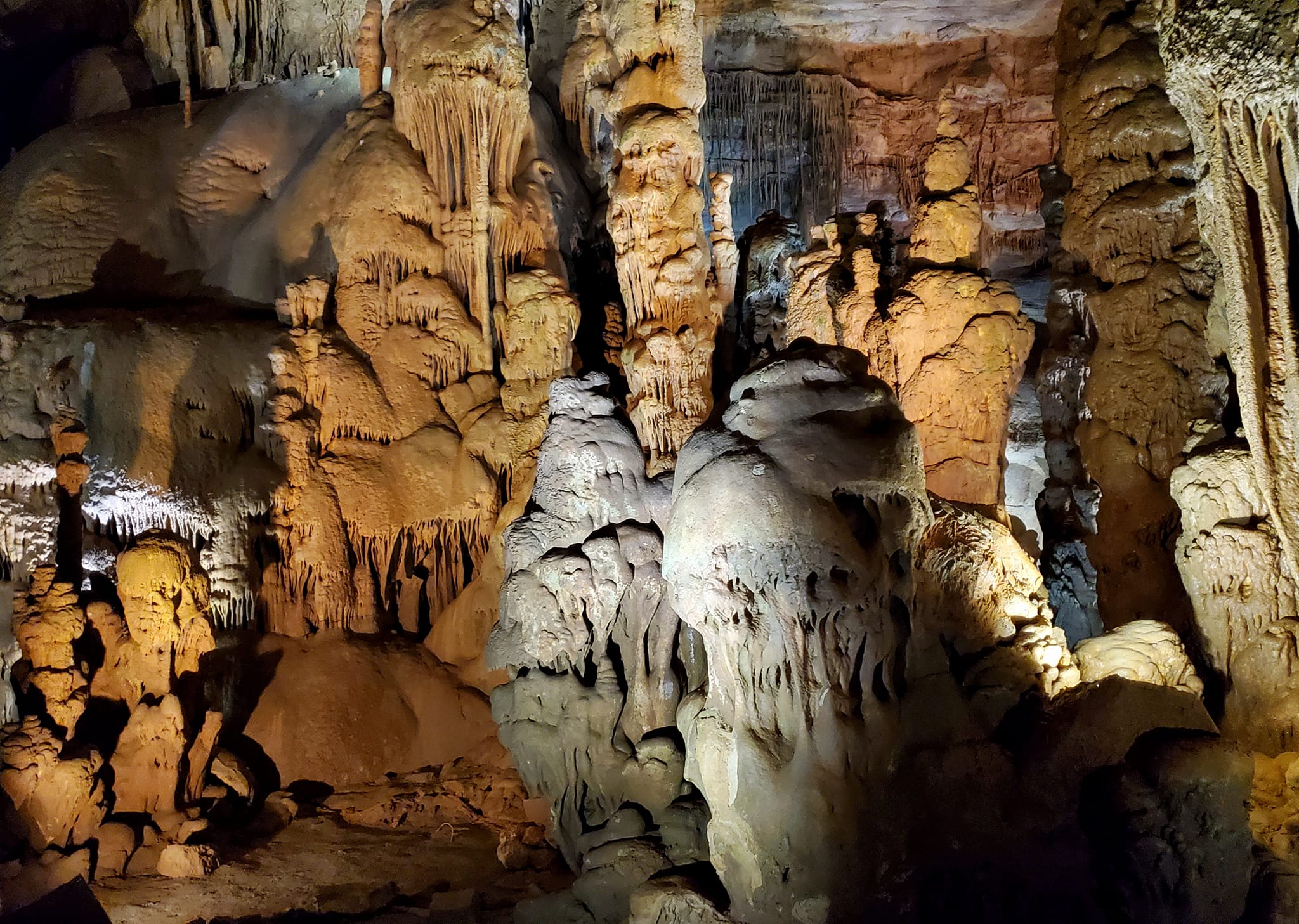
The land was purchased by the State of Alabama in 1987 and reopened in 2000 as a state park with almost 500 acres surrounding the cave.

Gem mining, hiking the trails, camping, hosting marathons, and other special events are frequent activities in the park. It stays around 60F degrees year round inside the cave and paid tours are available for individual, group, and field trip tours.

Huntsville has more than 60 parks within its city limits, more than we could have possibly visited all in one weekend. Here are a few that we loved.

Monte Sano State Park sits on over 2100 acres near the Land Trust of North Alabama and has loads of gorgeous mountain views over Roundtop Mountain. Monte Sano is Spanish for “mountain of health” and it is easy to see why.
Tourists have been going there since the 1800s to take in the sights and fresh air, soak in the mineral springs, hike, camp, and enjoy the groups. There are over a dozen rustic cabins that were mostly built by the Civilian Conservation Corp, and 89 updated camp sites.
Take a scenic drive and stop for a picnic, visit the CCC Museum & Memorial, the North Alabama Japanese Garden, and the Wernher von Braun Planetarium while you are there.

Burritt on the Mountain was previously the home of a homeopathic doctor, Dr. William Henry Burritt, and it is now a museum in the southwestern part of Monte Sano State Park. The eccentric doctor was known for his love of goat milk and the unique X-Shaped home he built on top of Roundtop Mountain in 1938. His home is surrounded by 167 acres and looks out across the whole of Huntsville and beyond.
Today, visitors can hike the trails, tour the open air living history museum with pioneer cabins, watch demonstrations of blacksmithing and other daily operations in the 1800s, meet a variety of farm animals, attend Roundtop Folk Festival, folk art classes, and live music events. There is also a wedding and event venue in the park called The View that has beautiful views.
We missed the museum’s opening hours but had a nice stroll around the lawns.

I learned on the Lily Flagg’s Signal Podcast that Dr. Burritt requested his ashes be buried in the archway of the entrance, and that may or may not have been true for a while, however they are currently in his family’s mausoleum at Maple Hill Cemetery. You can find that episode transcript here.
The lovely individual who creates this podcast about all things Huntsville is a local historian and walking tour guide as well. You can view the audio-guided walking tour itinerary here.

Huntsville Botanical Garden, Purdy Butterfly House, Bethel Spring/Land Trust of North Alabama, Bethel Springs Nature Center & Preserve are on top of our list for next time. We also enjoyed checking out the urban Big Spring International Park.
Historic Maple Hill Cemetery is the oldest municipally-owned, and one of only four cemeteries maintained by the city, that still offers burial plots to the newly deceased.
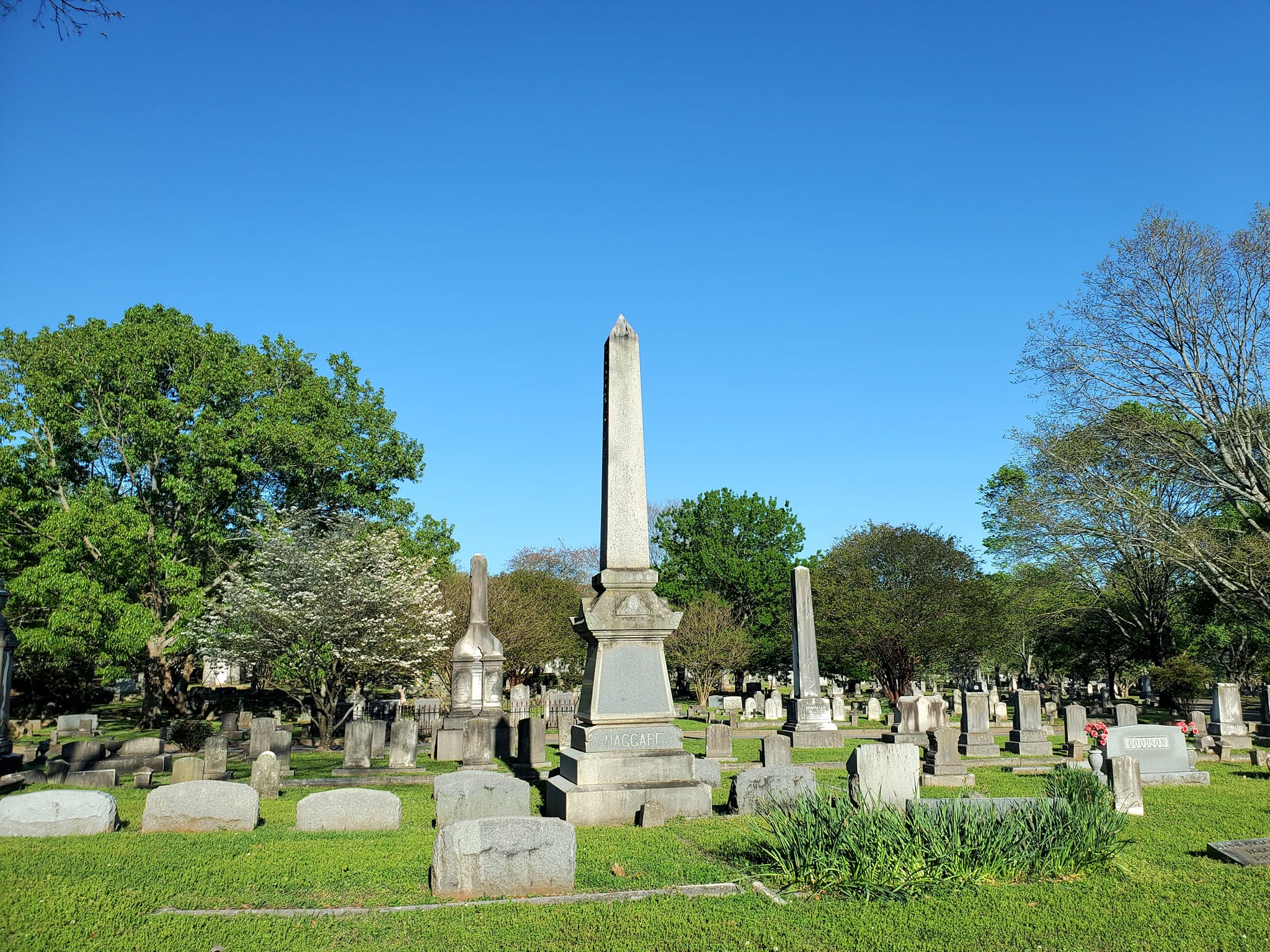
Ten former governors, senators, and congressman have made this cemetery their final resting place, alongside Studebaker Motors magnate Albert Erskine, founder and “Father of Hunstville” LeRoy Pope, well-known suffragist Priscilla Holmes Drake, and a few dozen German scientists who moved here to work with Wernher von Braun’s team.
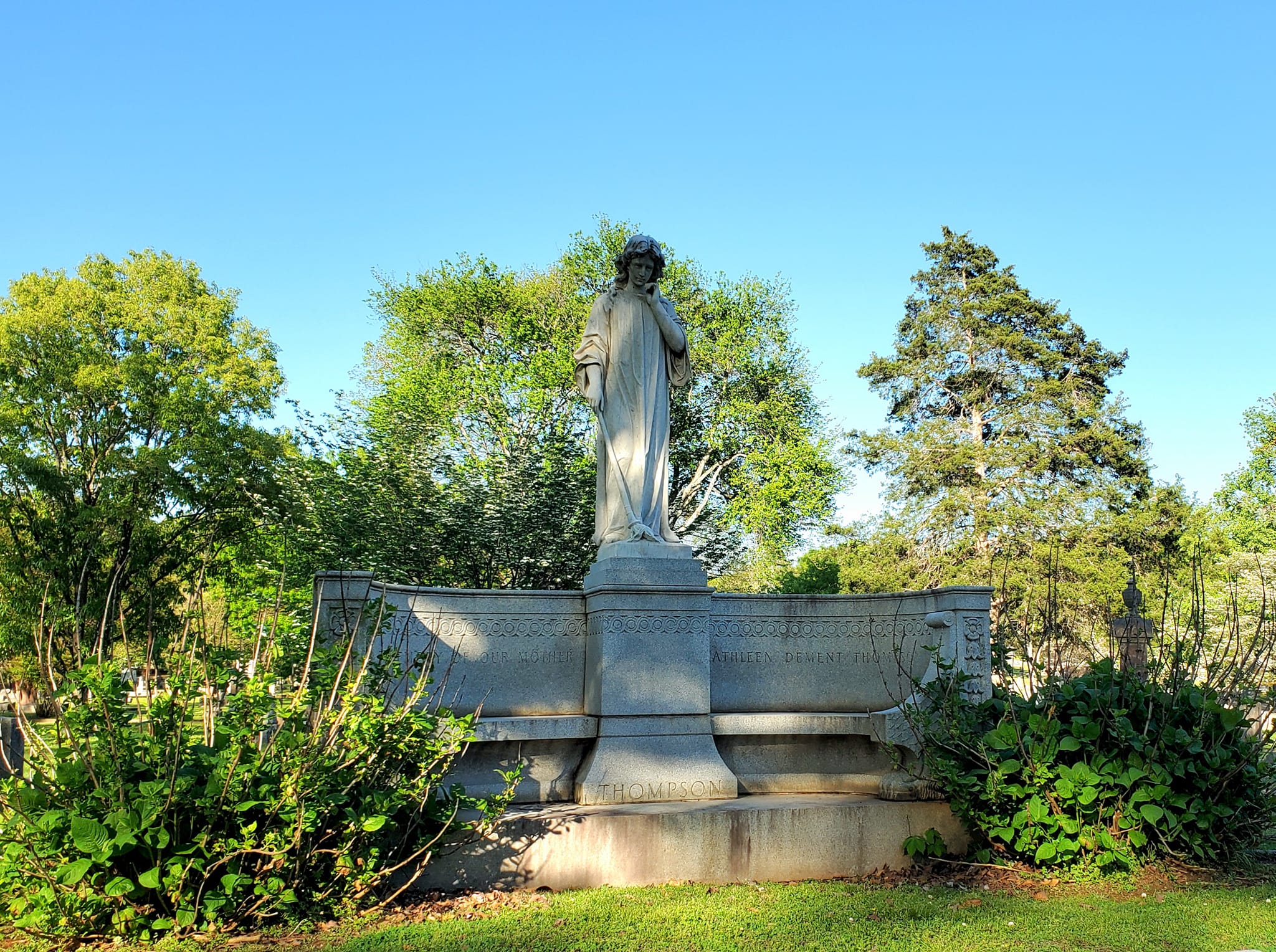
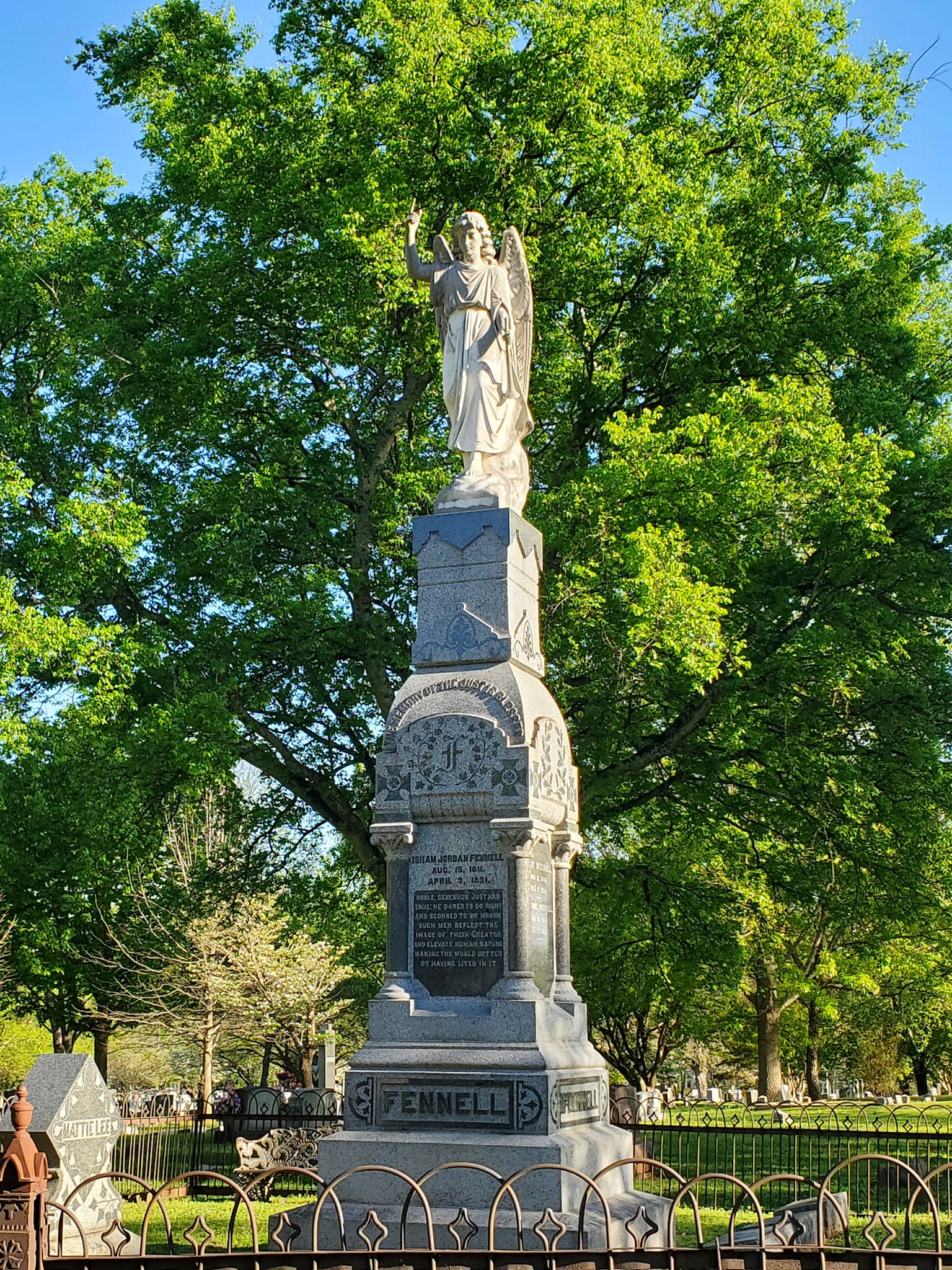
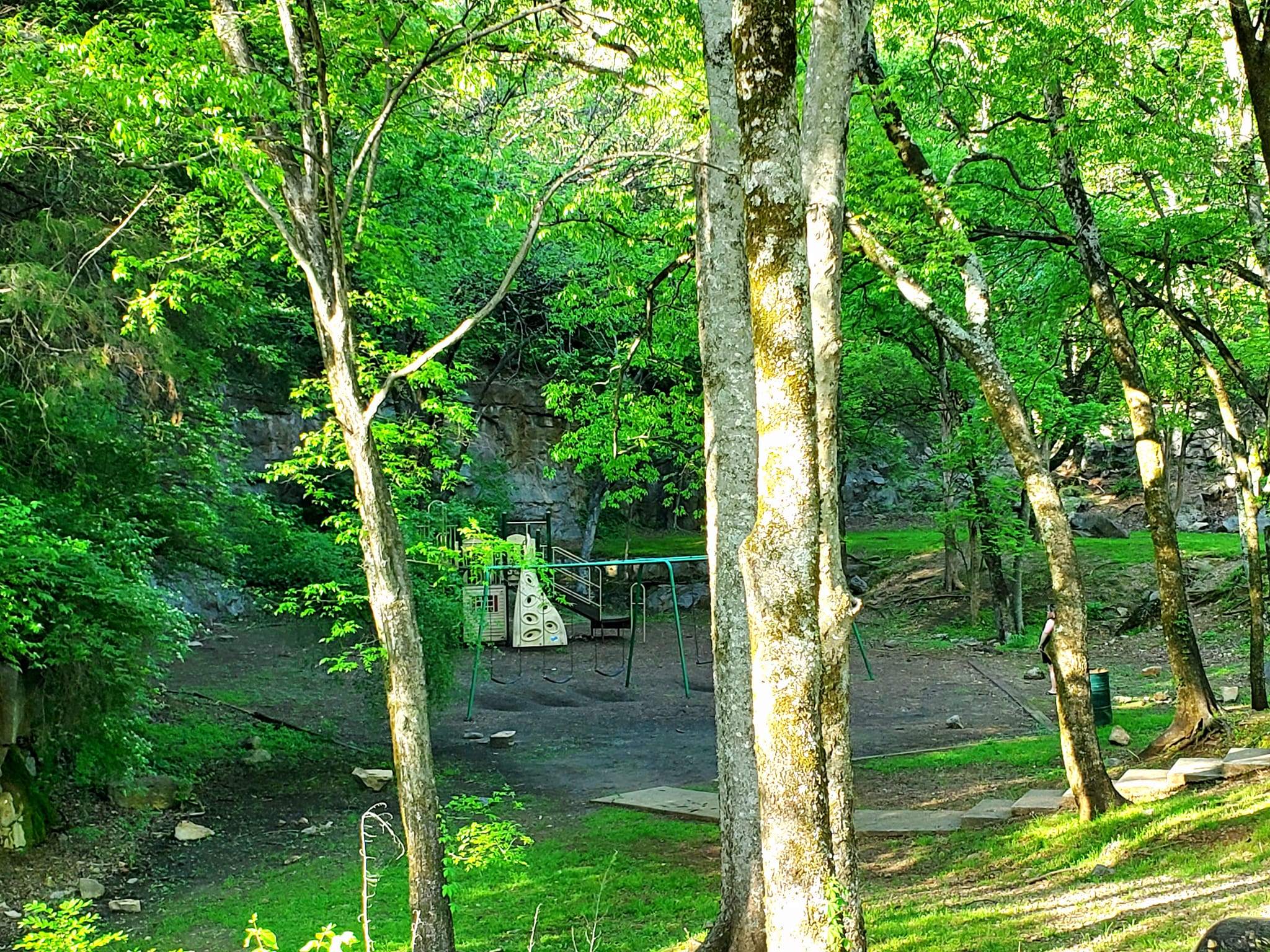
Maple Hill Cemetery has gained a wider reputation for its alleged hauntings, though. In the far corner, tucked into the tress, is a small playground know as the “Dead Children’s Playground” and is one of Alabama’s Top 10 Haunted sites based on reports.
People often report seeing tiny ghosts running amok, seeing swings move by themselves, and other eerie events. I have to be honest, as skeptical as I am, the place really did have a creepy vibe.
The Huntsville Madison County Veterans Memorial Park has some really cool fountains and monuments around the park.
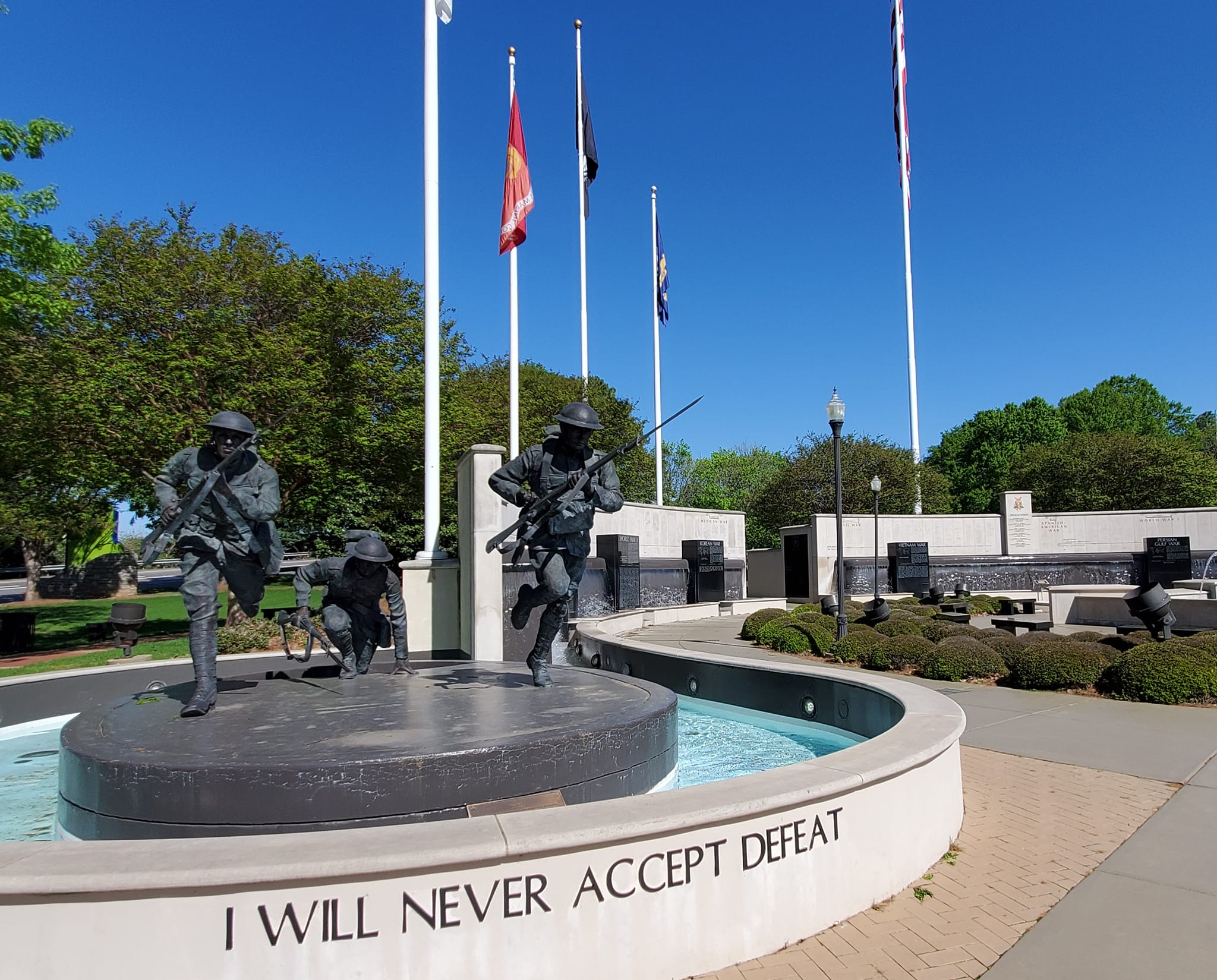

We happened by it unintentionally, but enjoyed our walk along the trail.

HISTORIC BUILDINGS
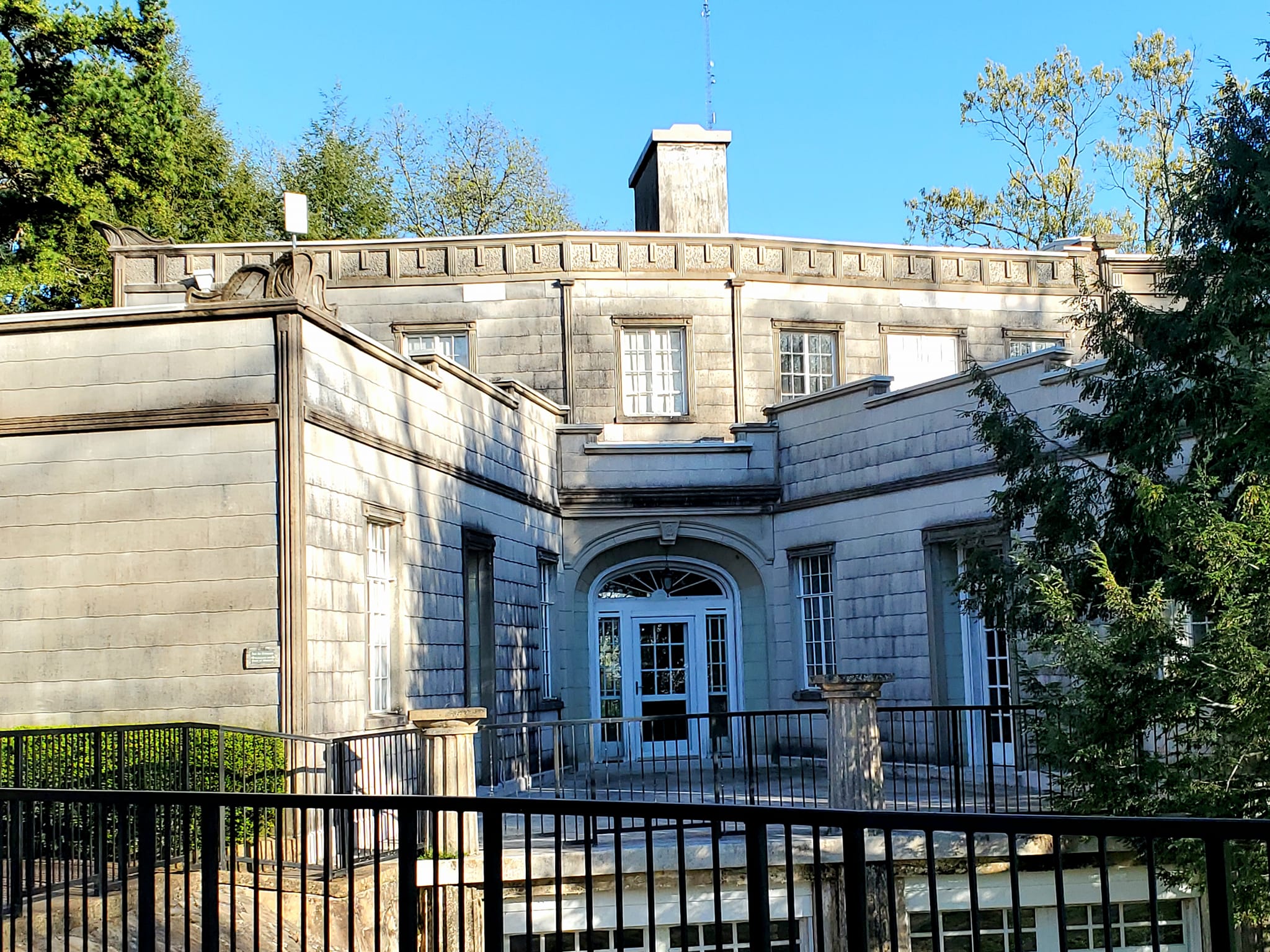
The Weeden House Museum, Garden, & Event Venue is an attractive building we had to pass by a few times to admire. It was built in 1819 and housed some of Hutnsville’s early governing members and bankers.
Dr. William Weeden and his family owned and lived in the home between 1845-1956, save for a few years when the home was taken over by Federal officers as living quarters during the Civil War. I am not sure where the Weedens lived in the meantime.
Dr. Weeden’s daughter, Howard Weeden, was a successful painter, poet, and author who was born in this house in 1846 and lived there until her death in 1905.

Huntsville Museum of Art has been voted as one of Alabama’s Top 10 Destinations by the Alabama Bureau of Tourism and Travel and has been showcasing art to the public on this site since 1998.
The non-profit was first established in 1970, and has been accredited repeatedly by the The American Alliance of Museums since then.

Alabama Constitution Hall Park is open seasonally and offers guided tours about Alabama’s creation as a state in 1819 and what daily life was like back then.

The Historic Huntsville Depot Museum is home to one of the oldest standing railroad depots in the US. It opened in 1860 to service the Memphis & Charleston Railroad offices but, in my understanding, only carried passengers for a few years in the late 1960s. In 1971, after closing, it was added to the National Register of Historic Places.

FOOD HALLS
Remodeling old warehouses and turning them into vibrant multi-use facilities for independent shops, boutiques, galleries, educational resources, and food vendors is no new thing, but in Huntsville, it is a BIG thing.

We encountered more of these in Huntsville than I saw in Charlotte or even Denver.

Lowe Mill, in particular, is the largest privately-owned “arts facility” in the US and hosts more than 200 small businesses and creators.

I literally felt like a rat running around in a maze, following all the kooky signs and arrows and clues along the scavenger that is the Lowe Mill.
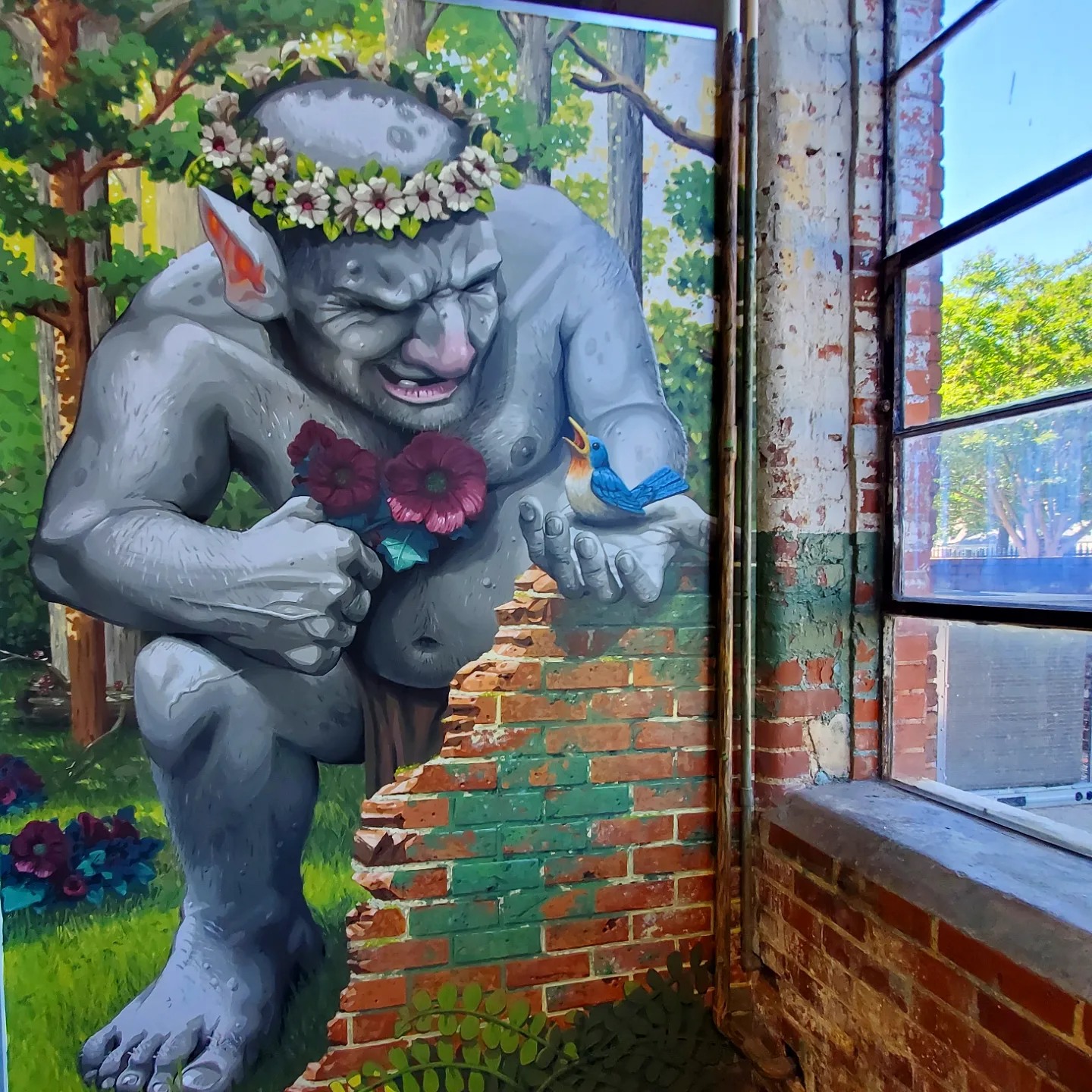

Lincoln Mill is a much smaller but equally cool complex.

I enjoyed my stop at Turbo Coffee and all the natural lighting inside.


Stovehouse was another one we visited, and I think it has more outdoor development than any of the others.
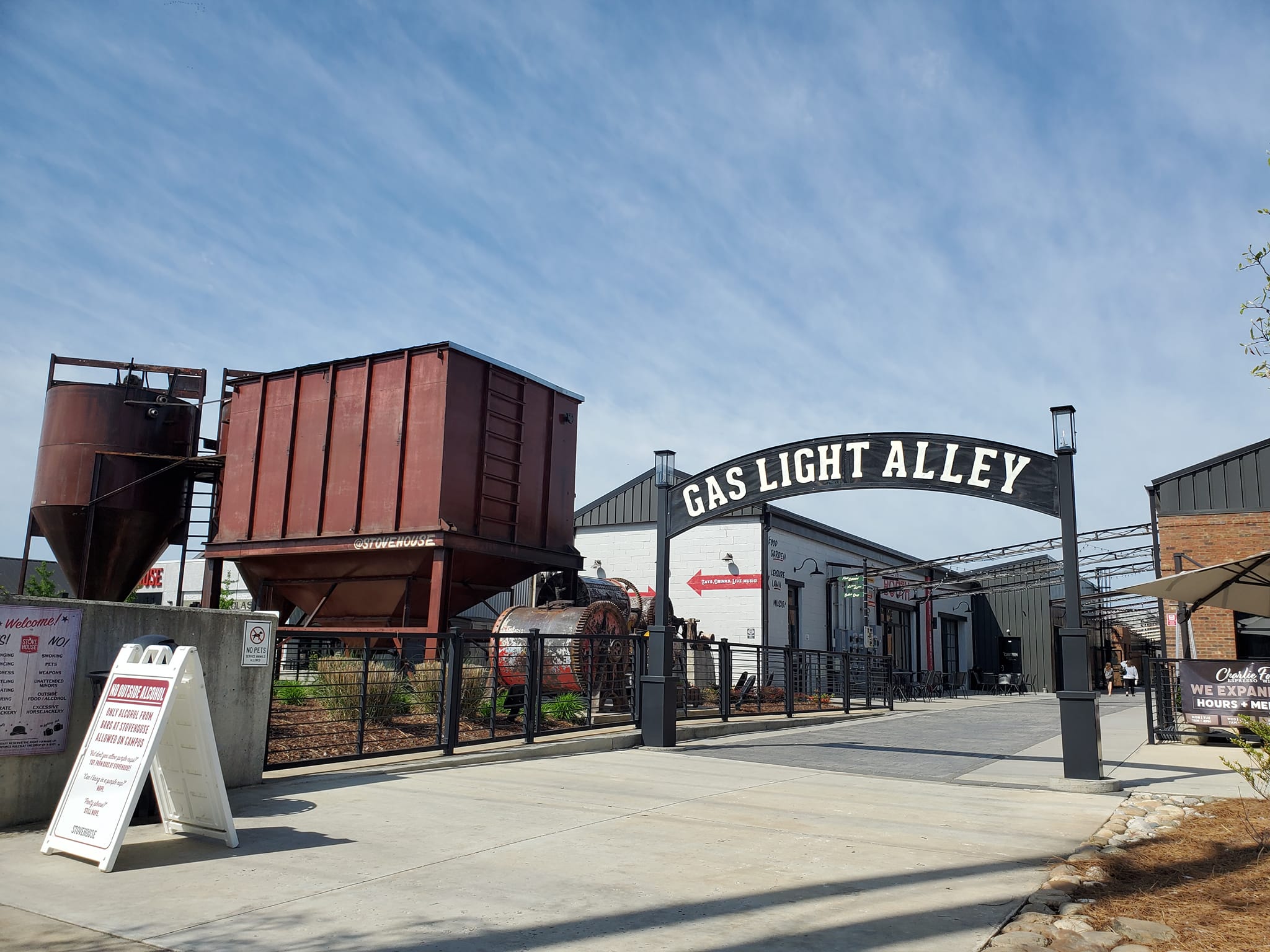
I was particularly amused by the name Gaslight Alley, the outdoor courtyards and lawns surrounding the main shops.


Stovehouse also has a bit more immediate parking, easier walk-up access, and separate-entry storefronts, for those deciding which option might be best for mobility issues.

FOOD & DRINKS
We were really impressed by the variety and quality of dining options in Huntsville.
Gold Sprint Coffee has my vote for quirky coffeeshop, with an obvious penchant for combining “boho” décor with vintage gym gear.

It was comfy inside, the staff all have enviably cool mullets, and the food was banging.

Moon Bake Shop is another rad option, but they sometimes have a life all the way down the block and around the corner.

Cajun Steamer is a limited, area chain with select locations around Alabama and Tennessee. I am still including it in the blog since you have to come to this specific area where TN meets AL to eat their food.
And by god, we did. Twice!

I am not into alligator meat but the fried gator bites appetizer is one of their most popular dishes.
My concerns were directed toward the Bayou Chicken stuffed with shrimp and crab and covered in their Crawfish Louie sauce, and toward the blackened Melvin Chicken with regional specialty Conecuh smoked sausage, carmelized onions, bacon, a balsamic glaze and Cajun mashed potatoes.
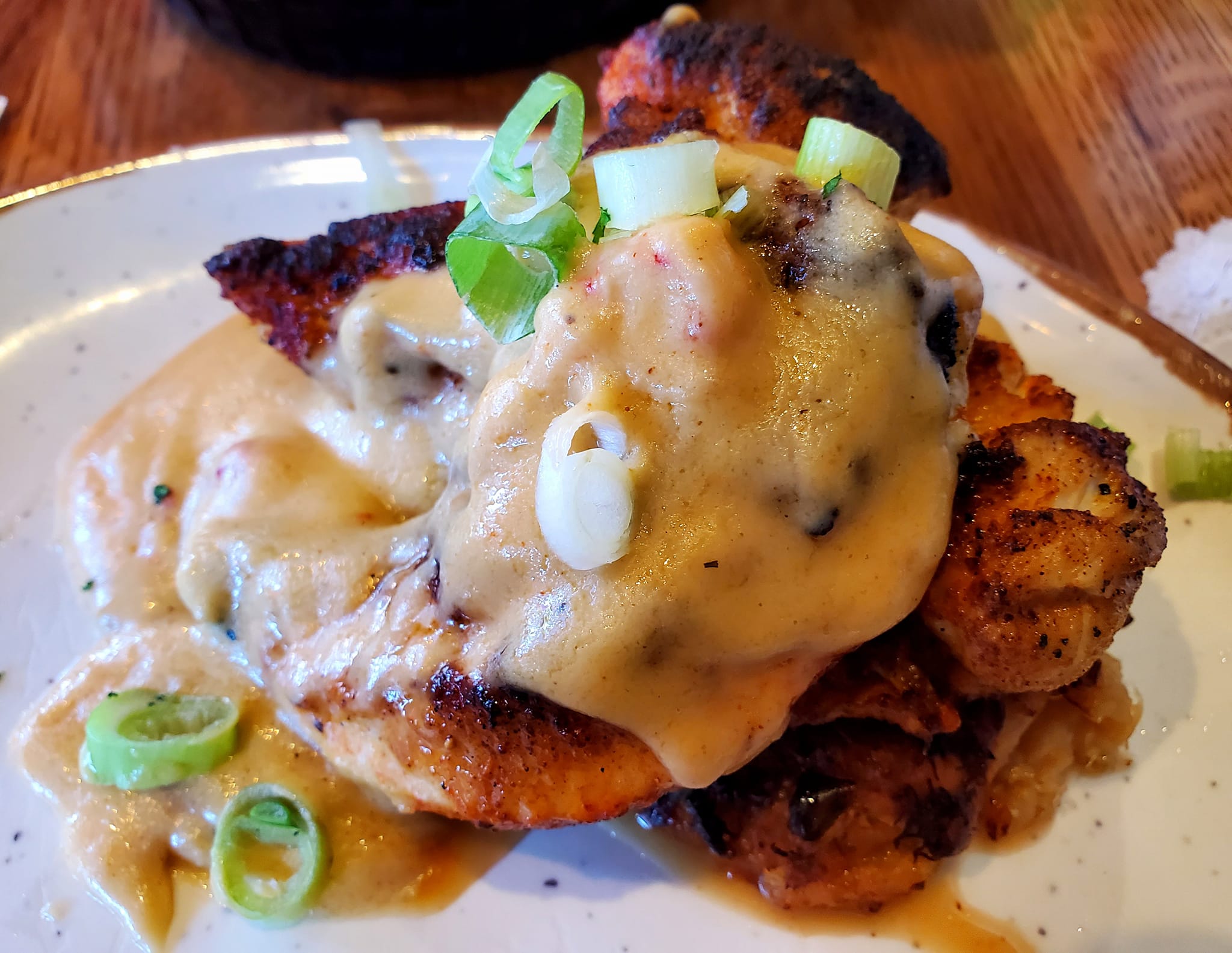
If I were not a (mostly) responsible adult, I would drive back down there this very minute for more.

My friend had some of the more traditional dishes in their Cajun Trio which comes with gumbo, red beans and rice, and crawfish etouffee. Naturally I pilfered a few bites, and it was delish.
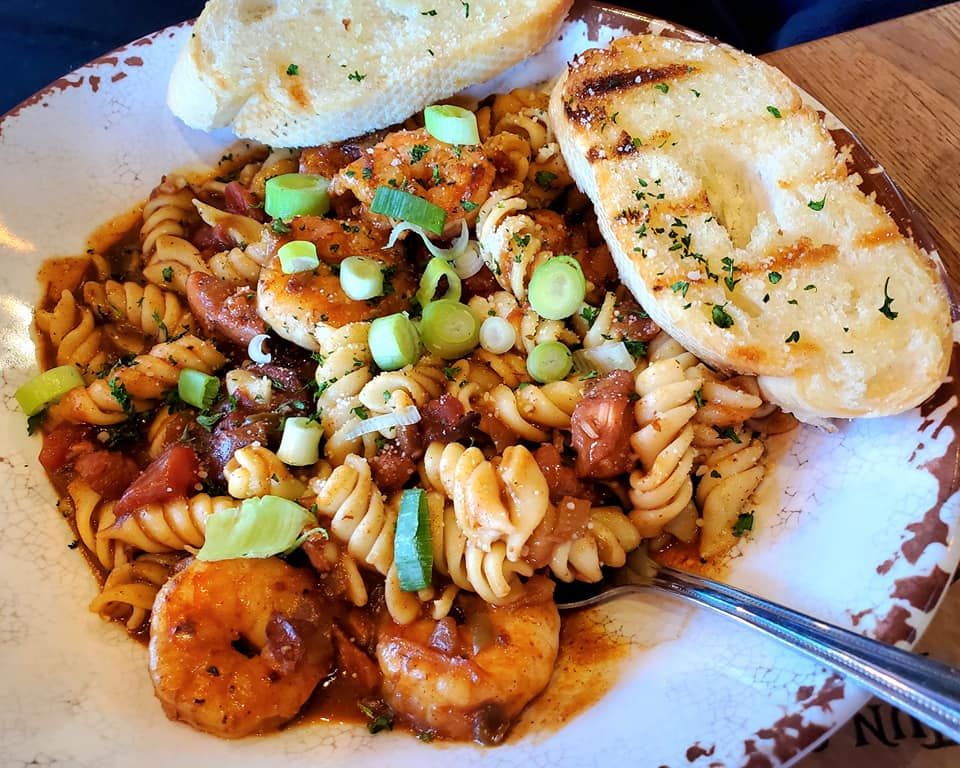

Purveyor is far, far on the other end of the price point spectrum but it was a worthy and rewarding splurge for us.

We started with their version of ceviche and a decadent pork belly dish.
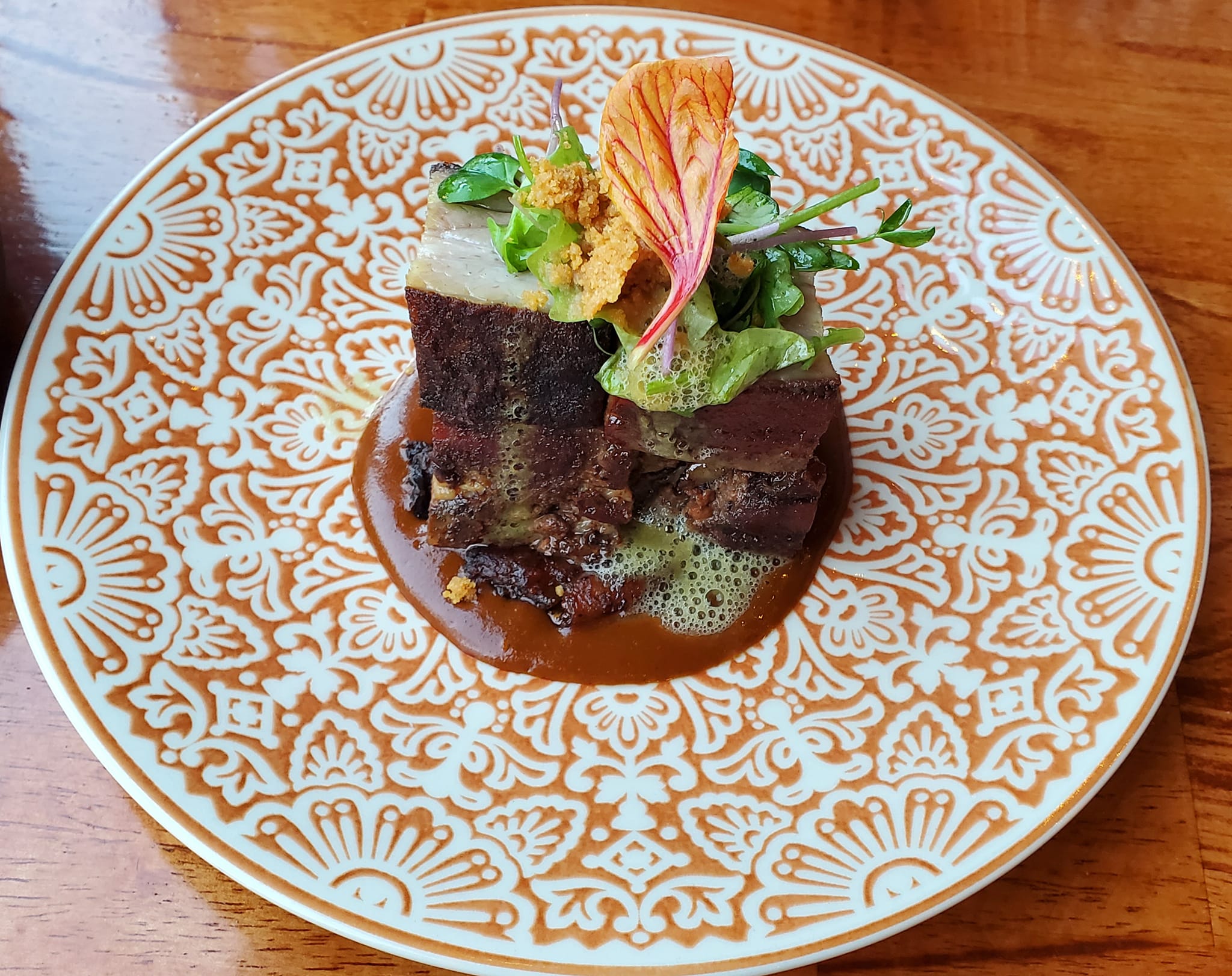
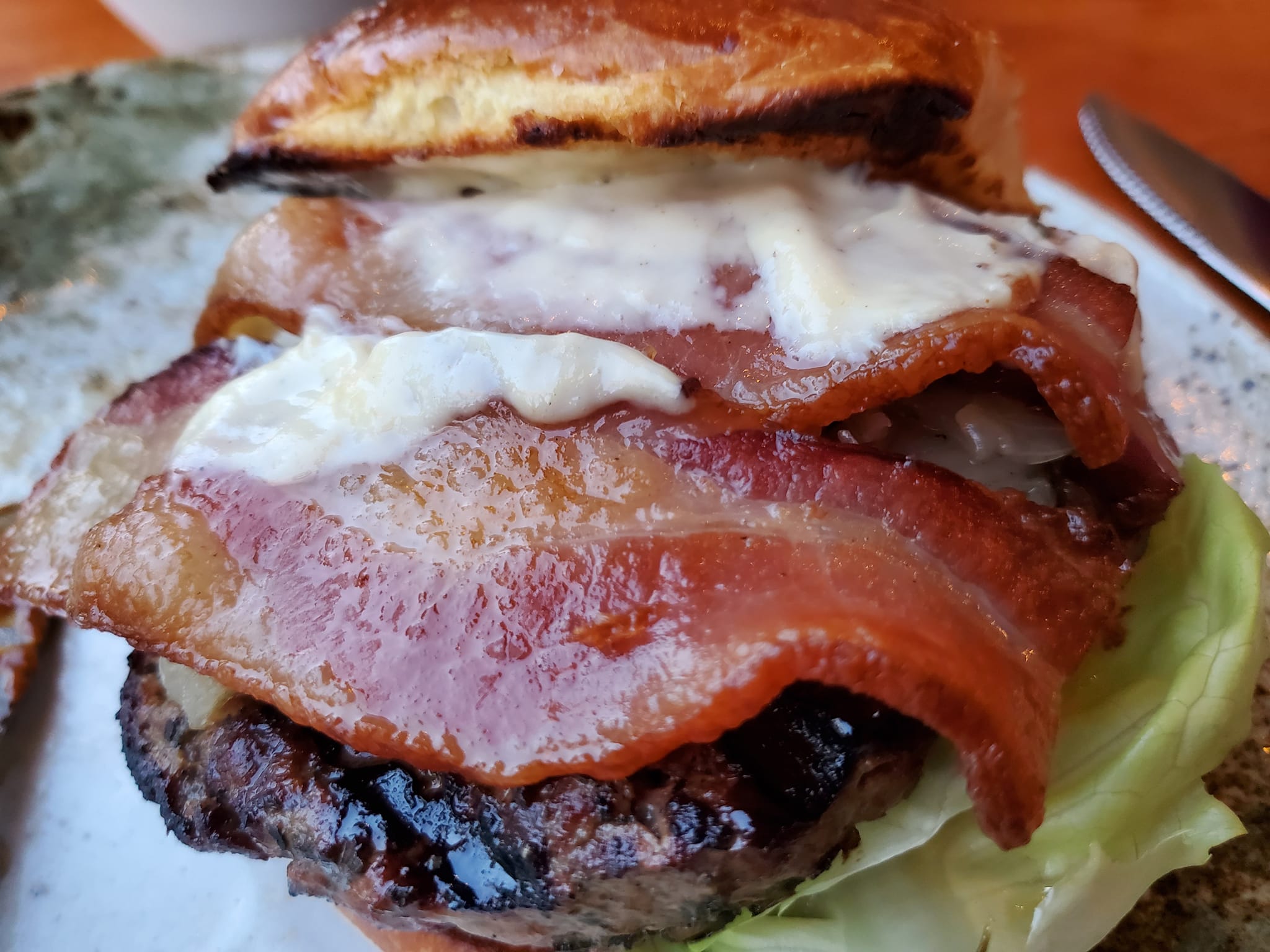
We tried a few other amazing dishes like seared fish and a burger, then had an after-dinner cocktail.

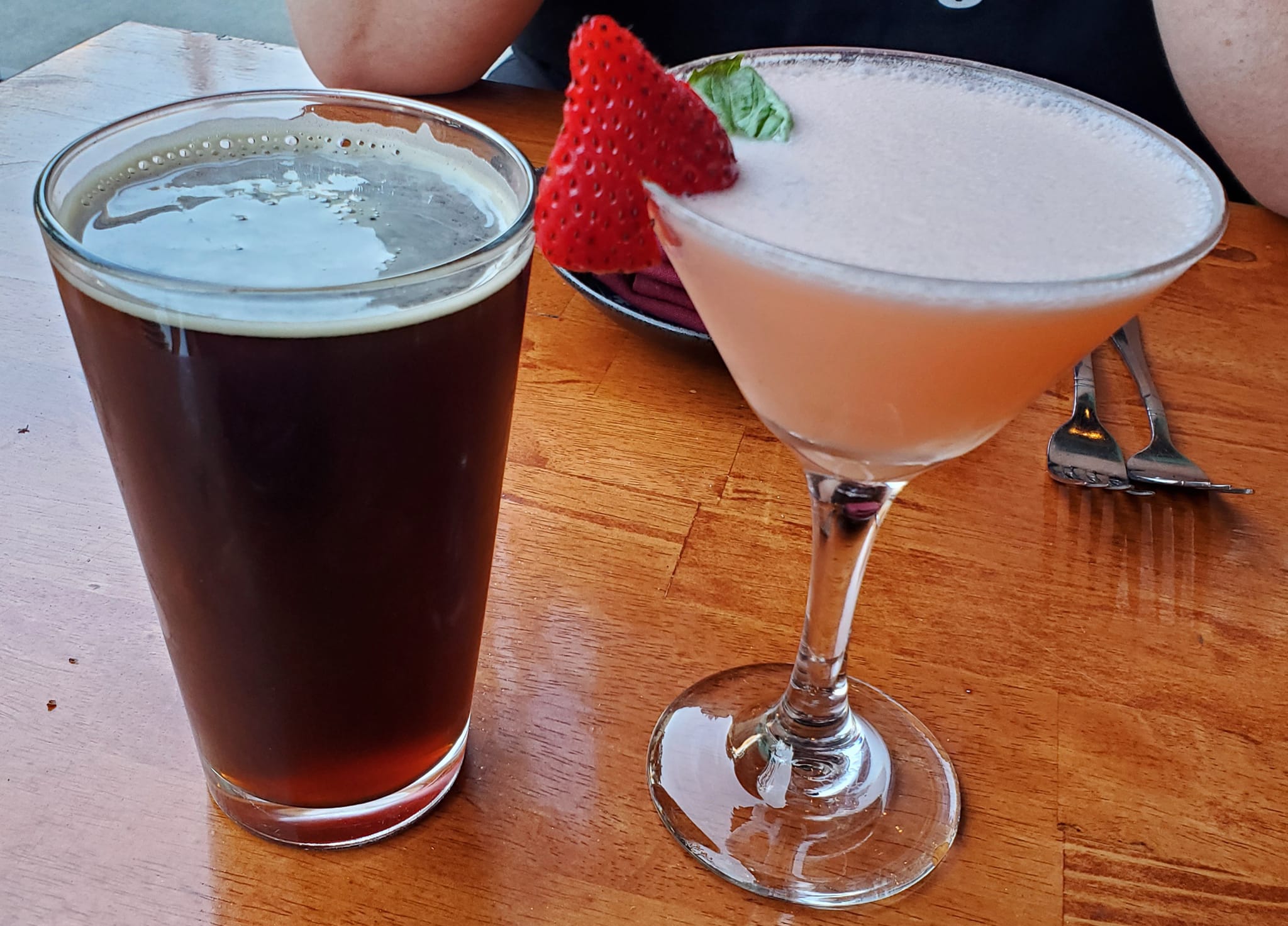
I really loved the Velvet Old Ale by Straight to Ale Brewing just a mile or so down the road.
We popped by Stella’s Elixir Lounge for more cocktails and a pretty view of the night sky on their second floor balcony patio.
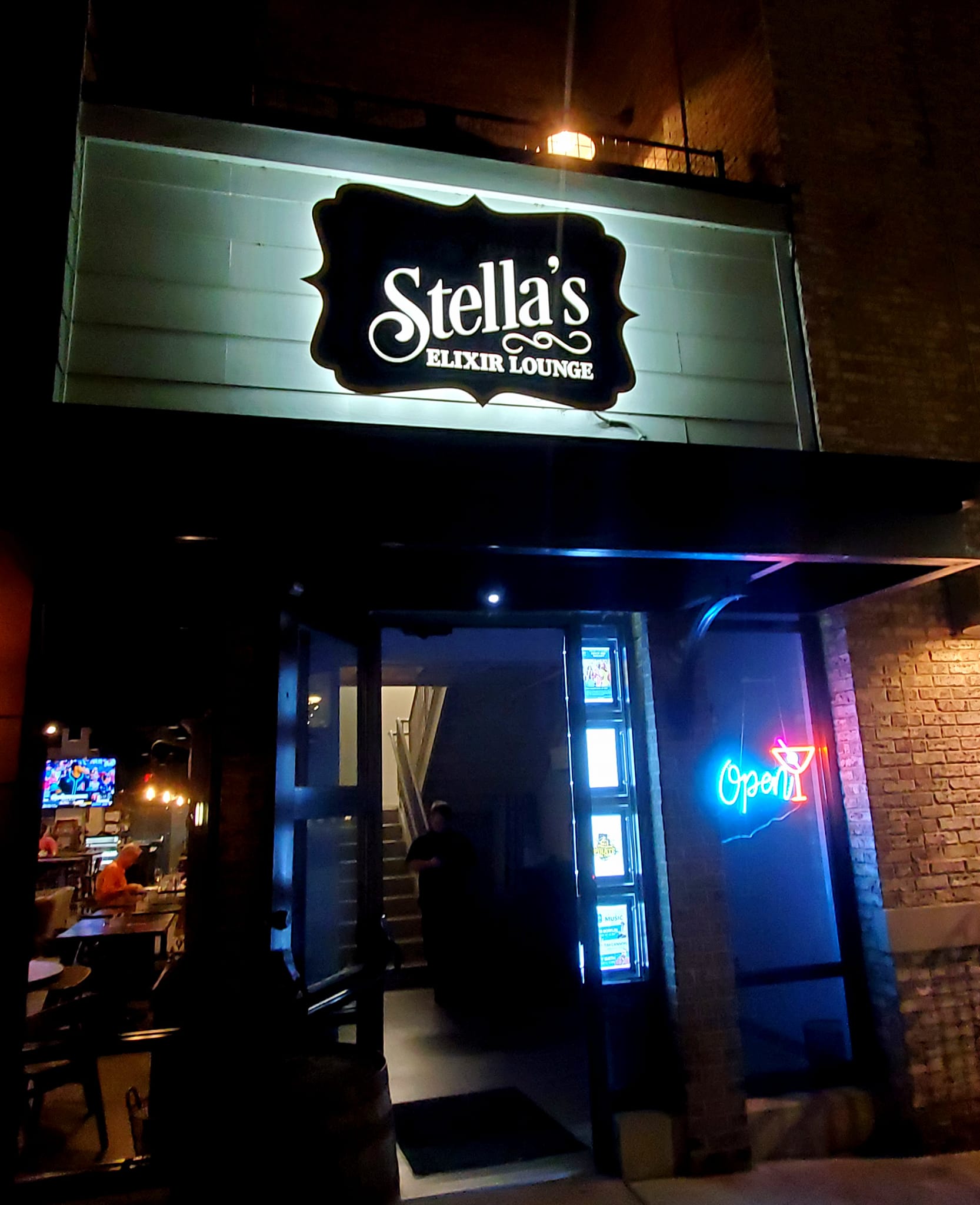
A few other places I would love to check out next time are Honest Coffee Roasters, Greenroom, Hildegard’s German Rest, Ol’ Heidelberg Café, Yellowhammer Brewing, and Old Black Bear Brewing.
Check out the Downtown Huntsville Craft Coffee Trail, Craft Beer Trail, and Craft Cocktail Trail to see more awesome places. Each trail comes with a special gift upon completion.

TWICKENHAM
Huntsville has some really fantastic historic homes and districts that we were happy to explore. The Twickenham Historic District, also known as the Old Town Historic District, is the most popular and defined one, and it is full of Victorian architecture and gardens. Here are a few that we found interesting.
501 Franklin Street, The Van Valkenburg House, 1902

517 Franklin Street, Thomas Fearn House, 1820

527 Franklin Street, Albert Eskine House, 1818

558 Franklin Street: I have no idea where the photo I took of this house went, but this is the birthplace of General Moragn, aka the Rebel Raider. He was a leader of the Confederacy which I do not really care to write about but it is there if you are into that sort of thing.
416 McClung Avenue, McClung House, 1838
Special note about this one is that is was commissioned by James McClung, a lawyer and legislator who family played a big role in developing Knoxville, TN, where I currently live. My favourite Knoxville museum and a few other landmarks in town are named after the McClungs, but I did not realise until this trip that their reach extended so far beyond Knoxville.
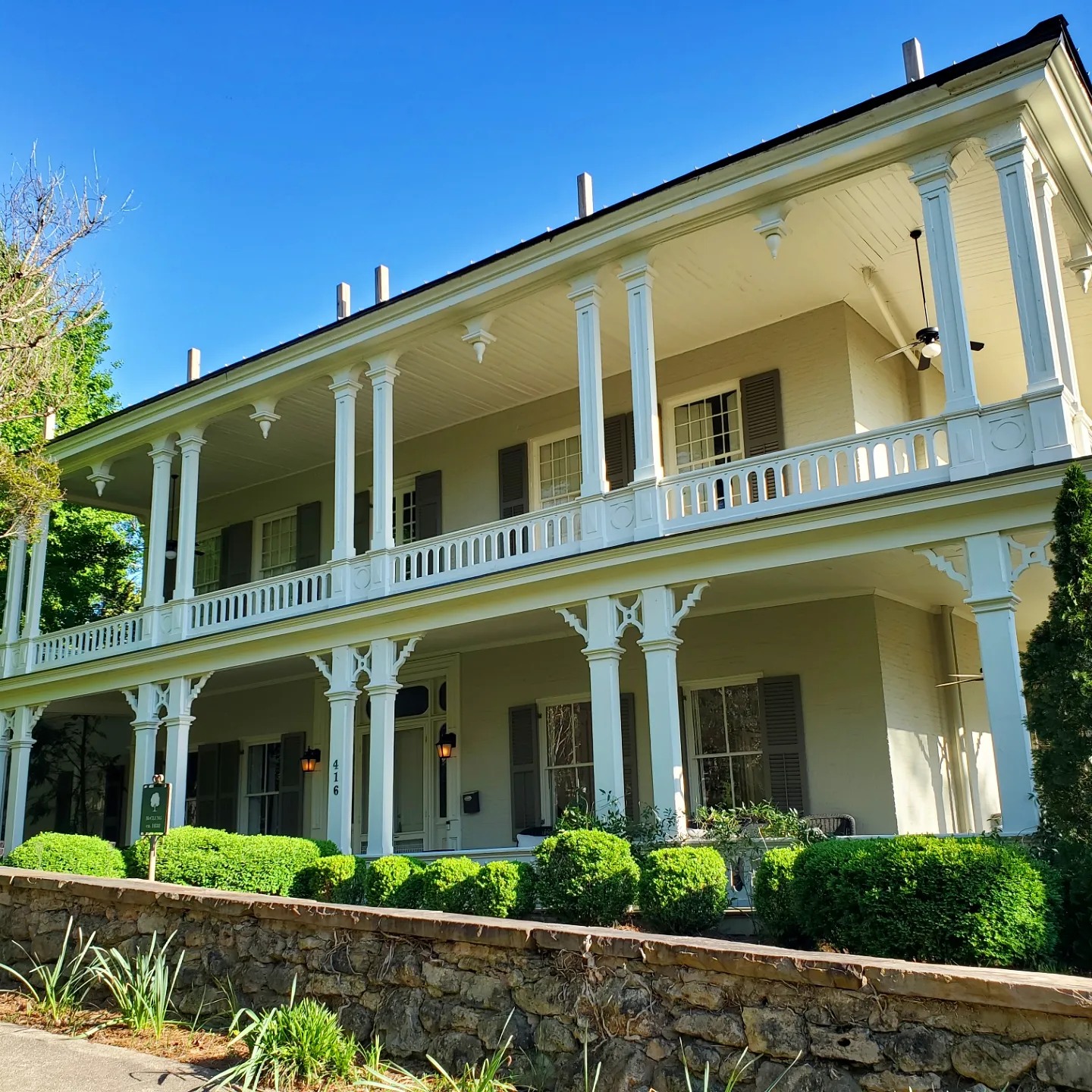
421 McClung Avenue, Ingleside, 1888

517 Adams Street, McDowell House, 1848, aka The Backwards House, another photo that somehow disappeared.

526 Adams Street, George Harris House, 1888

528 Adams Street, Yeatman House, 1825
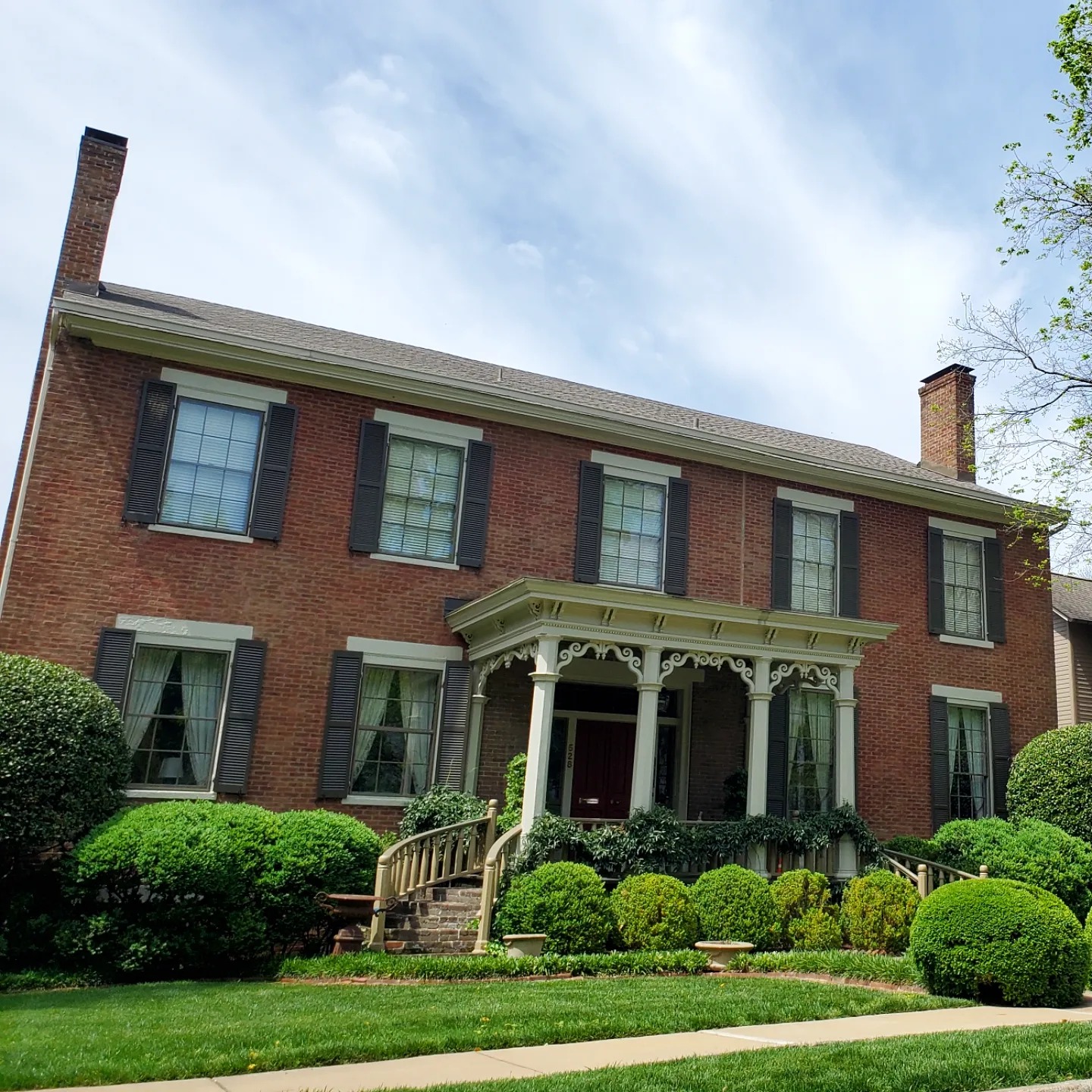
612 Adams Street, Dunn-Terry House, 1888
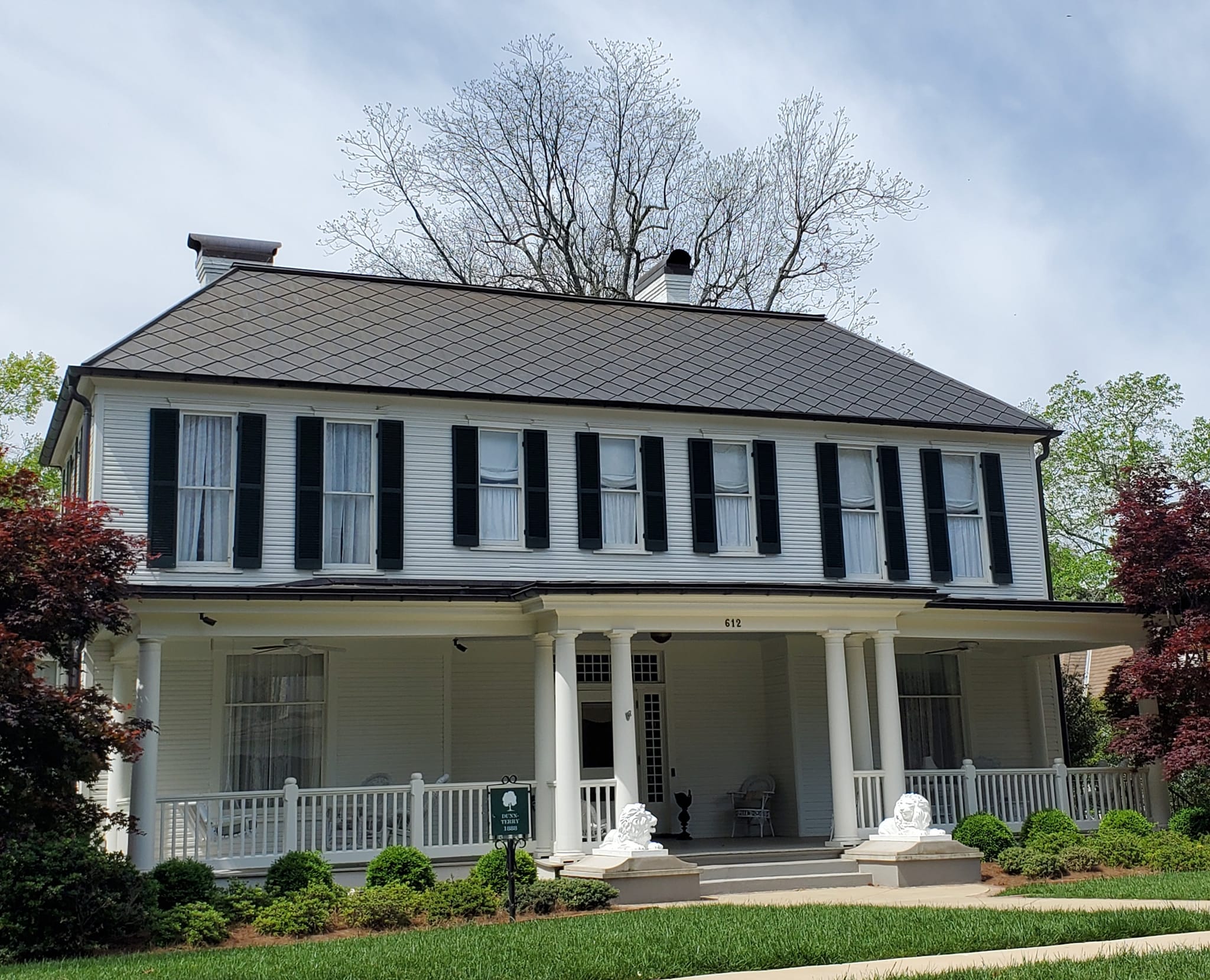
This one is not part of the historic homes guide but the John B. Weeden House was built in 1871 and is historically significant, as he is related to the Weeden family of Huntsville.

I do not know the scoop on this one, but it looks very cool.

I could not resist including this photo of an adorable pup relaxing on his porch. He definitely embodies the neighbourhood vibe here.

There are so many more places we did not have time to visit but that I still want to mention including the US Veterans Memorial Museum, North Alabama Railroad Museum, HC Blake Art & History Center, Carnegie Visual Art Center, Goldsmith Schiffman Wildlife Sanctuary, Blackwell Swamp, Rainbow Mountain Trail, Indian Creek Canal Park/Greenway, Lost Sink Falls, Keel Mountain Preserve, and Alum Hollow. What did we miss?
In the area for a while? Follow me to the Old South Pittsburg Cornbread Festival or to Birmingham (in progress).
*************
© Fernwehtun, 2015- Current. Unauthorized use and/or duplication of this material without express and written permission from this site’s author and/or owner is strictly prohibited. Excerpts and links may be used, provided that full and clear credit is given to Fernwehtun and Fernwehtun.com with appropriate and specific direction to the original content.

 Fernweh, An Ache for Distant Places
Leave a comment