
COUNTY TIPPERARY
County Tipperary is the largest land-locked county in the Republic of Ireland and is known as “The Premier County” in reference to a news article in The Nation in the 1840s by editor Thomas Davis where he stated that “where Tipperary leads, Ireland follows.”
This also has a great deal to do with Tipperary’s Golden Vale, an abundant stretch of rolling pasture land known for being the best place for dairy farming.
The Golden Vale extends into the nearby counties of Limerick and Cork, but Tipperary is considered the heart of the Munster Province dairy country.
This region is also called “Ireland’s Ancient East and Hidden Heartlands.”
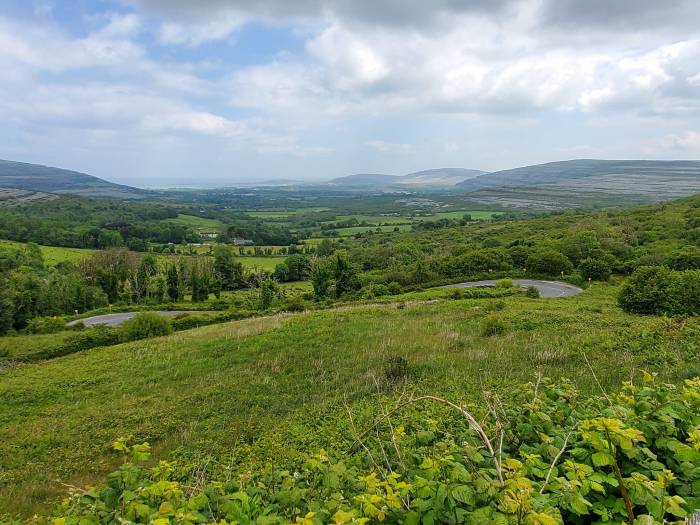
Settlements of this land date back to the 1200s, but County Tipperary as we know it was founded as part of the Munster Province in 1838, which makes it one of the longest standing counties in Ireland.
From the start, it was divided into North Tipperary and South Tipperary to make its large population and resources more manageable.
That has changed over the years, but the two divisions of Tipperary are now merged and managed by the Tipperary County Council since 2014.
Despite this, you can still see the letters “N” or “S” indicated on the license plates of many Tipperary locals.
County Tipperary was ruled by the O’Brien and McCarthy families from early on, and both surnames are still very popular and widespread in Ireland, the UK, the USA, and beyond.
The O’Kennedy’s also ruled over the area before the Norman invasion, so it is not uncommon to see also the name Kennedy on local businesses or on signs.
The name Tipperary means “the Well of Ara” and is often shortened to its nickname, Tipp.
I especially appreciate this as my original hometown overseas, Tippecanoe, is also called Tipp. Tipp City, to be factual, and it is part of Dayton, Ohio in the USA.
Fun facts: actor Martin Sheen is from Dayton/Tipp City but he has family ties to County Tipperary in Ireland. The parents of beloved pop singer, Boy George, are also from Tipperary.
Tipperary has been honoured by Jack Judge’s “It’s a Long Way to Tipperary” which was popular among soldiers during the early 1900s, and by Charles Kickham’s “Slievenamon” which is still often played at Irish sport events.
NOT SO TINY TOWNS
Ireland is known for its charming tiny towns and villages, but some of them are quite large.
Clonmel, Nenagh, and Thurles are the three largest towns in County Tipperary. I have spent significant time in Nenagh but only passed through the others.
I do not know much at all about Thurles, but Clonmel is the home of Bulmers, a brewing company that makes a cider we jokingly call “Boring Bulmers” even though I love it. When we are in Tipp, nearly everyone is drinking Bulmers.
Merck & Co Pharmaceuticals also has a HQ the Clonmel area, helping make Clonmel the global economic hub of Tipperary County.
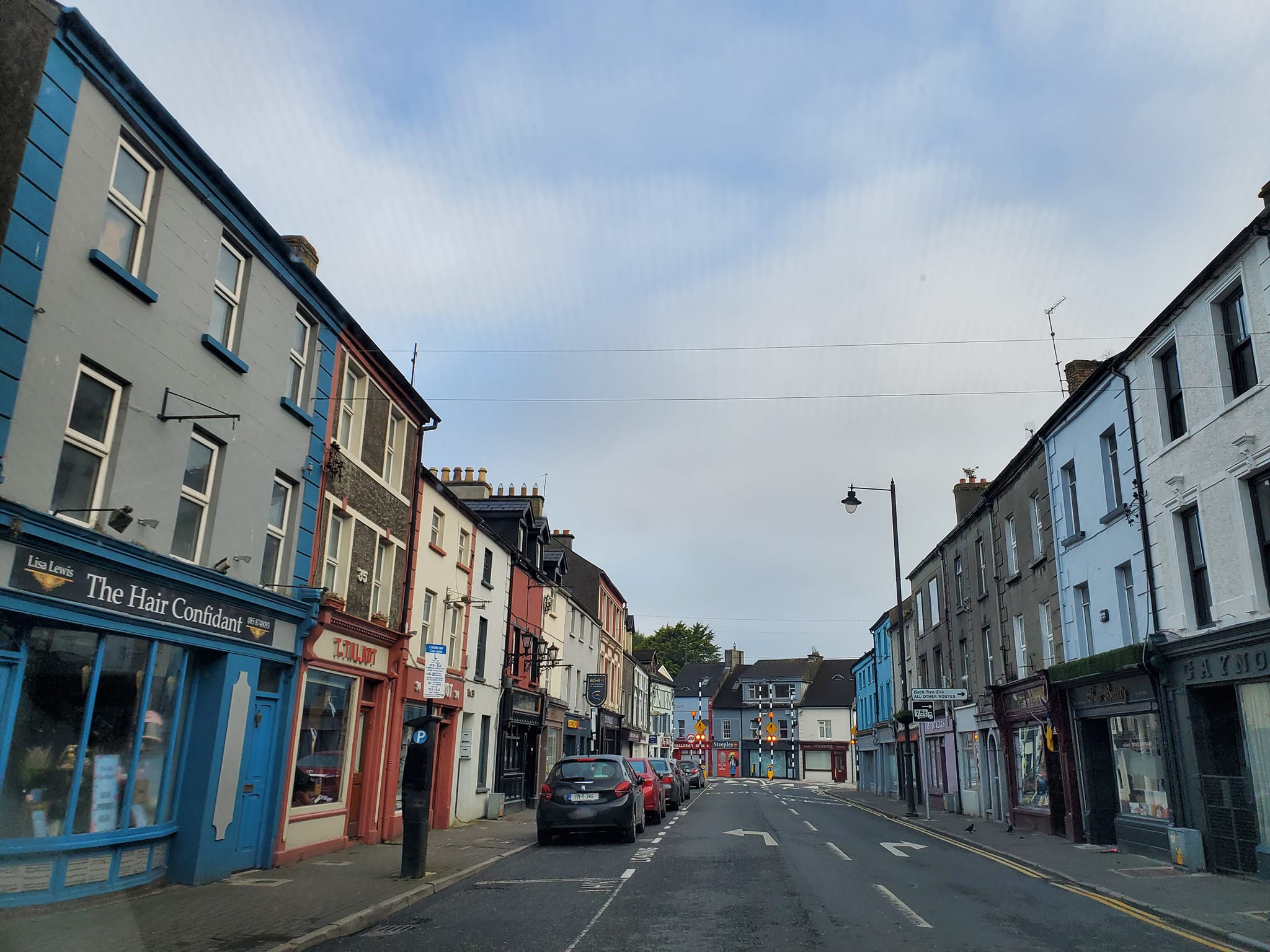
NENAGH
The name Nenagh is from the Irish term for “The Fair” which makes sense because Nenagh was a former market town and homesite of the East Munster Ormond Fair.
Nenagh is the second largest of the three most populated towns of County Tipperary, but the largest town in the northern half.
Nenagh spans along the Nenagh River, just north of the the Silvermine Mountains that have been mined on and off for centuries and still contain some old mining sites and relic from the 1800s.
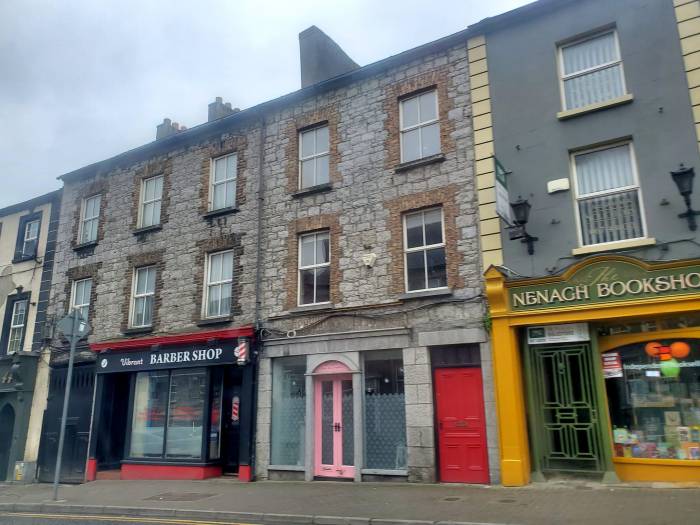
We have spent most time our time in County Tipperary with our lovely friends in Nenagh, then visiting Cashel and Cahir, but we made a few stops in connecting towns along the way.
This blog is written from the perspective of starting north in Nenagh and then traveling south.
Nenagh is most famous for its Nenagh Castle and St. Mary of the Rosary Church.
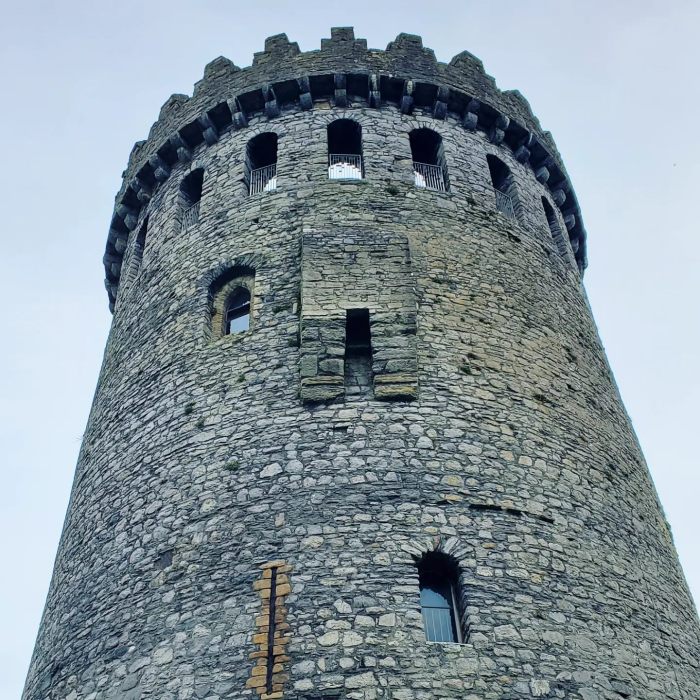
NENAGH CASTLE
The Nenagh Castle is mostly in ruins, with its most prominent structure being a limestone tower, known as a keep.
Construction began around the year 1200 by a guy named Theobald Walter, the first Baron Butler. His son finished the job nearly 20 years later.
It is more than 98 feet tall and the base is about 52 feet across. During open hours, visitors can take the 101 steps to the top of its four stories and look out across the town.
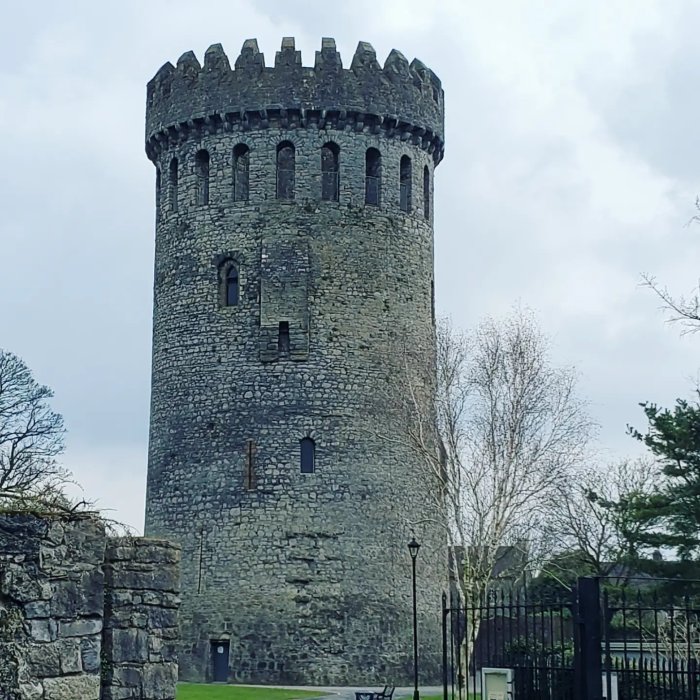
Nenagh Castle’s keep was intended to be the bell tower of a cathedral that was sadly never actually built and, even sadder, it is primarily used for local businesses to paste up advertisements now.
There have been a few renovations and restorations, including the addition of pretty landscaping around the keep tower that connects it to the neighbouring St. Mary of the Rosary Church.

St. Mary of the Rosary was constructed between 1892 and 1896 by notable architect, Walter Doolin.
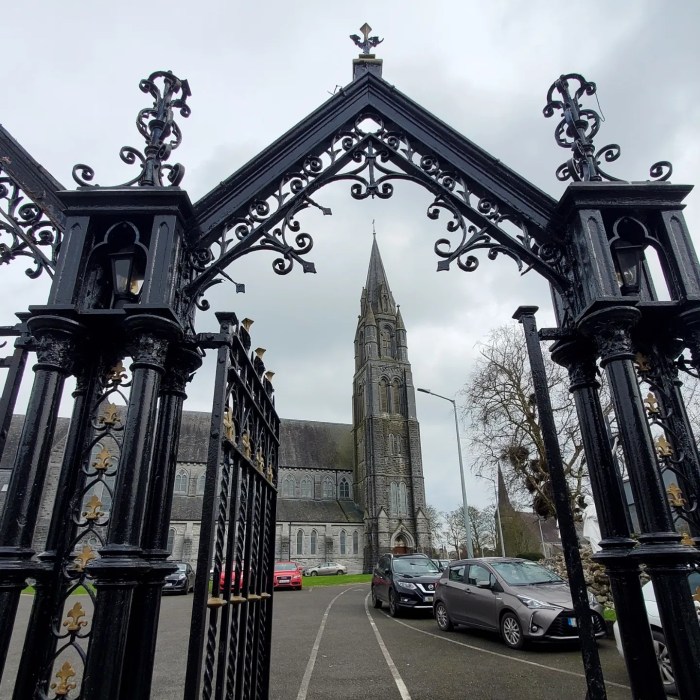
Doolin’s magnificent new 13th-century Gothic cathedral gave the Nenagh skyline a facelift that I still can not get over. This church is amazing!
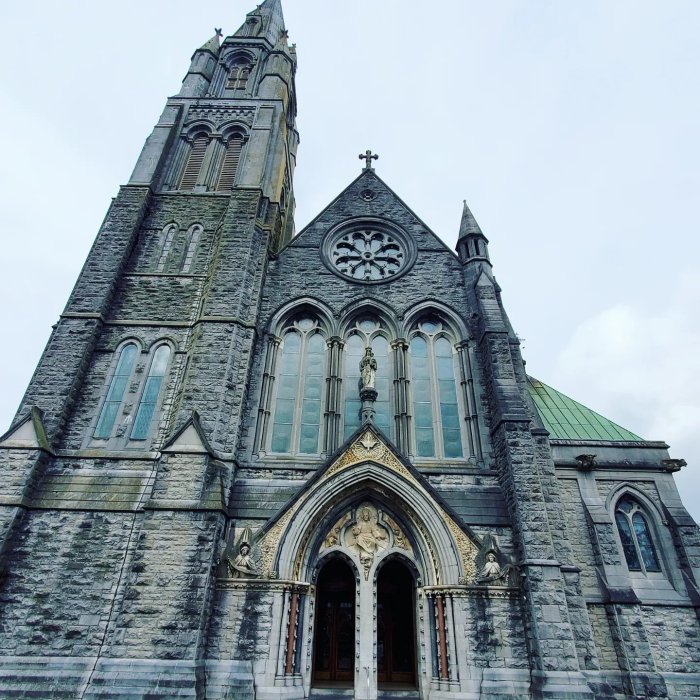
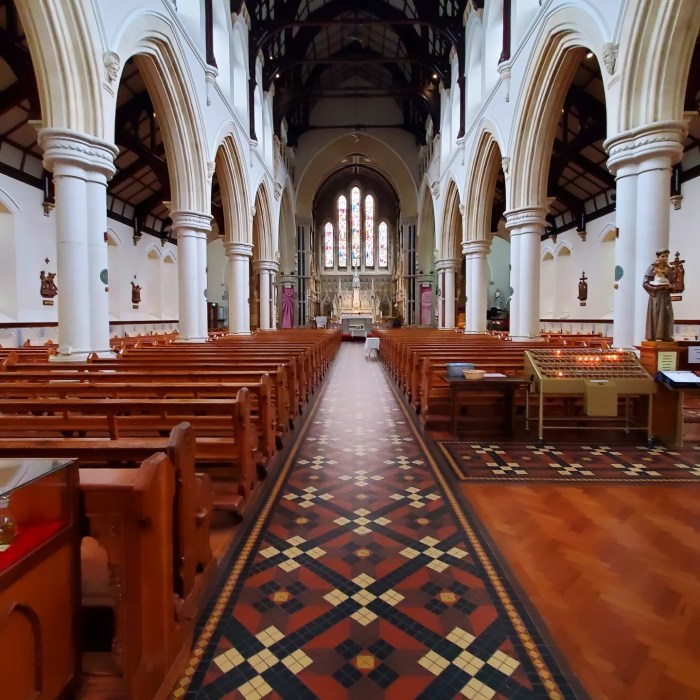
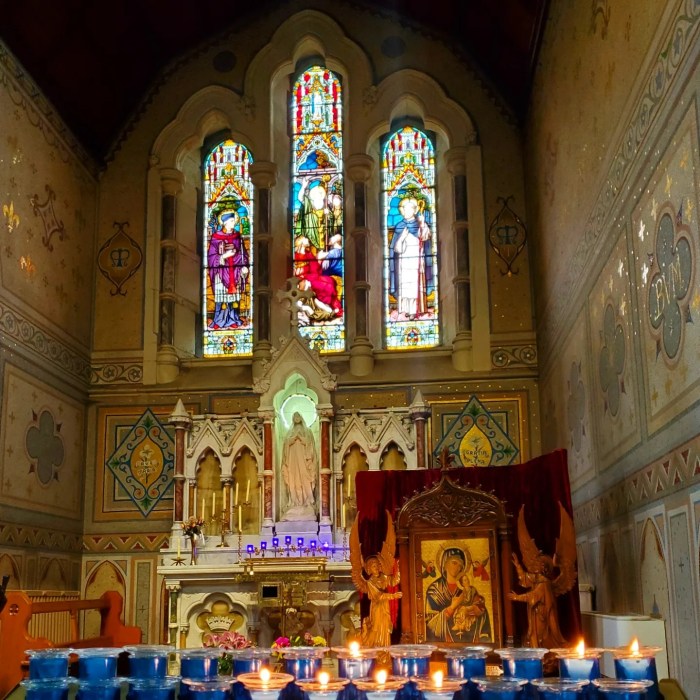
Its interior is much like many other cathedrals, but still unique in its own ways.
I am not religious, but I can never get my fill of old cathedrals and gothic architecture, so this place was a dream to visit.
OTHER ITEMS OF INTEREST
The Nenagh Heritage Center and Nenagh Gaol (Jail) is a historical complex that includes the North Tipperary Genealogy archive and two schools.
The Gaol’s old Governror’s House is now a museum for local and area history, and the Gaol Gatehouse tells the story of thousands of criminals who were imprisoned in the jail, and the dozen or so who were executed there.
When the Gaol closed in 1887, the Sisters of Mercy (hey now, hey now, now) took it over and created the schools.
Many visitors also attend Nenagh for its Nenagh Silent Film Festival each February, the Visit Nenagh Classic Festival each April, the Aonach ar Siúl Walking Festival each May, the Dromineer Literary Festival and Spleodar Community Arts Festival each October, and so many other celebrations.
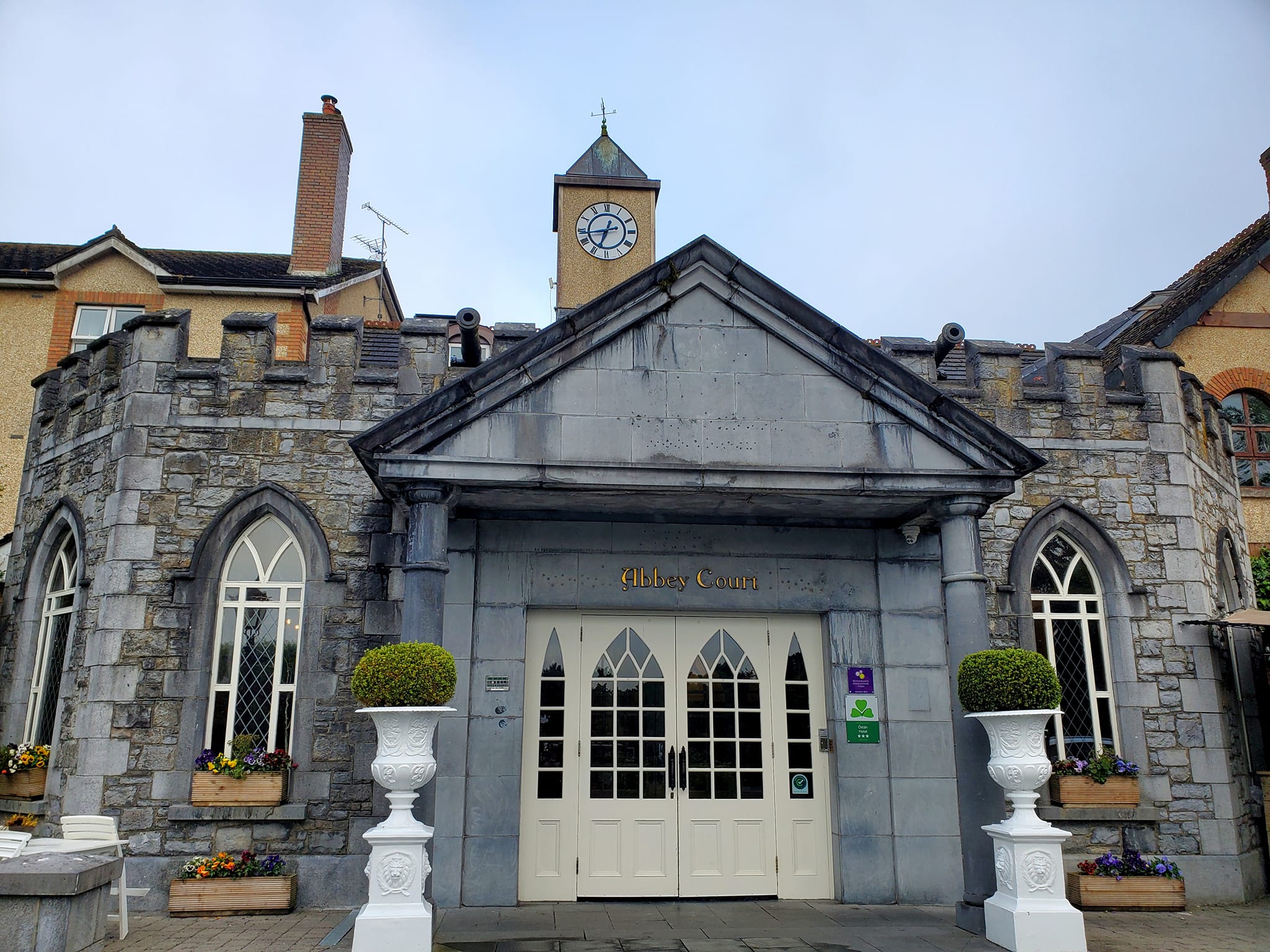
ABBEY COURT HOTEL
We have stayed at the Abbey Court Hotel twice now and both times were a charm.
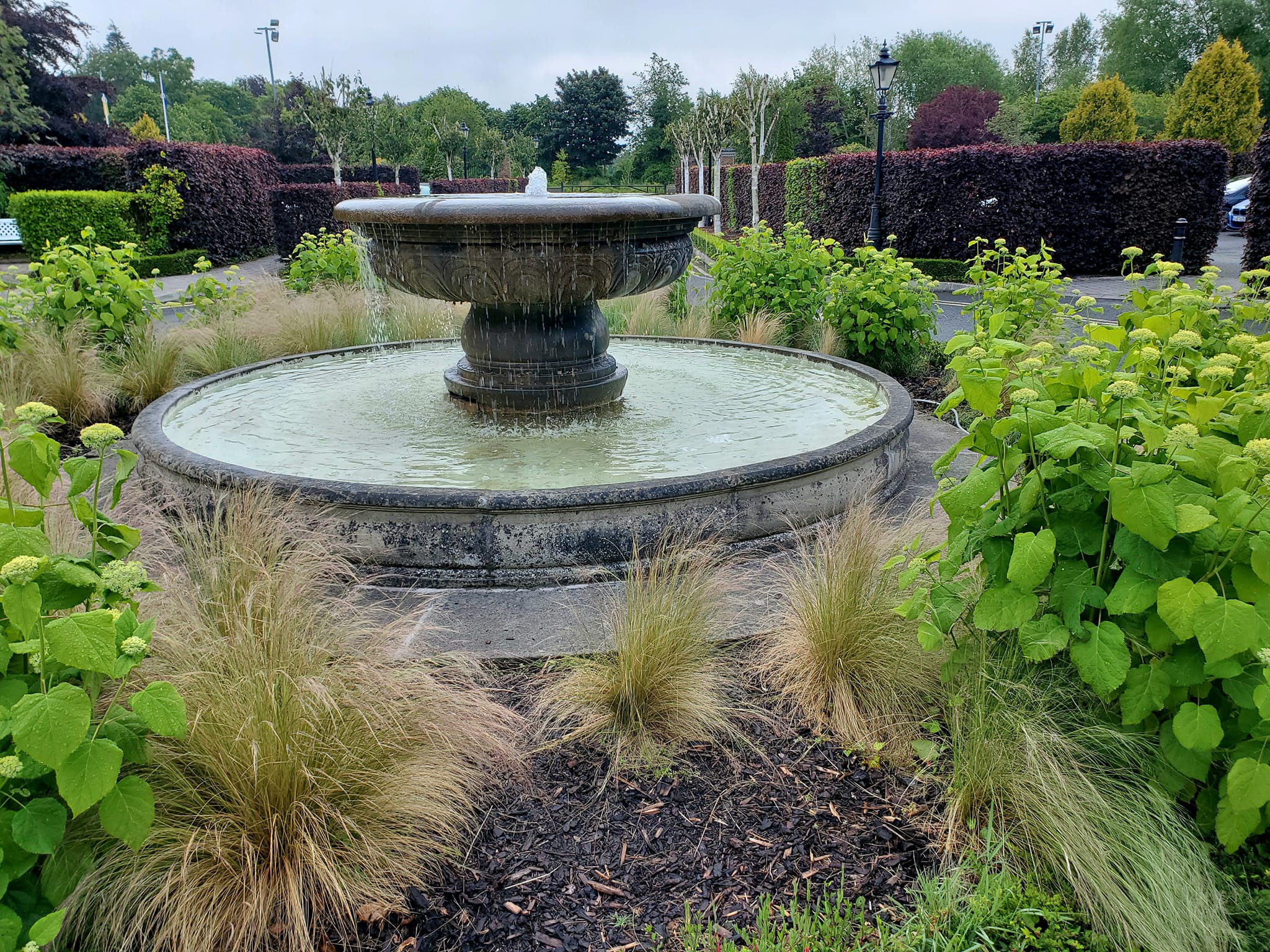
This is the most luxurious and beautiful place to stay in or near Nenagh, and it has the best reputation and ratings.
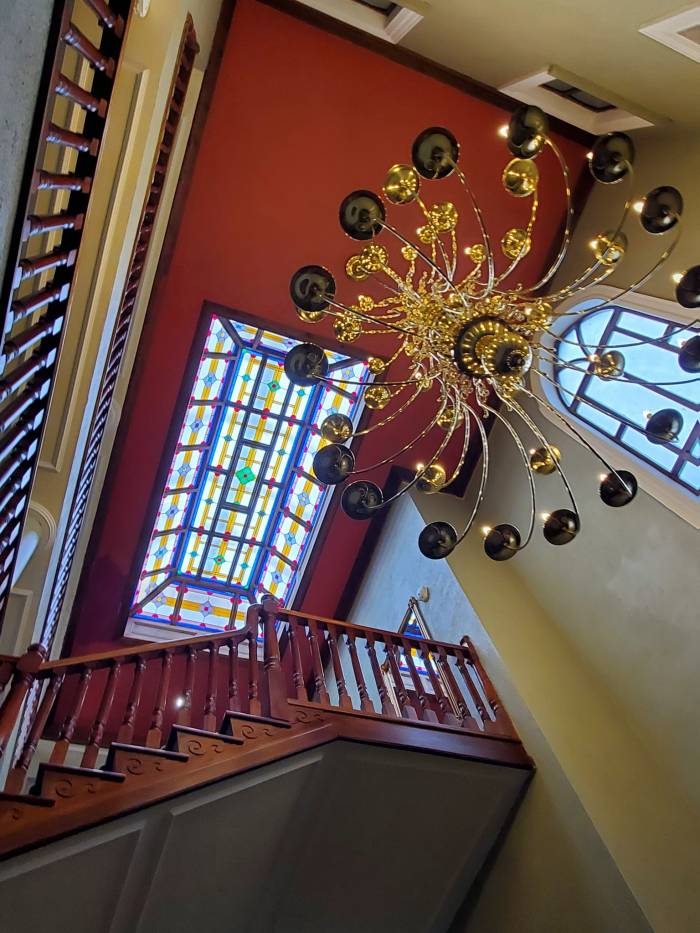
I really love the elegant, cozy, and somewhat eccentric decor.

The staff is efficient, competent, and friendly.
Reservations are easy, check-in is super easy, and they have a great little coffee shop and snack bar in the lobby.
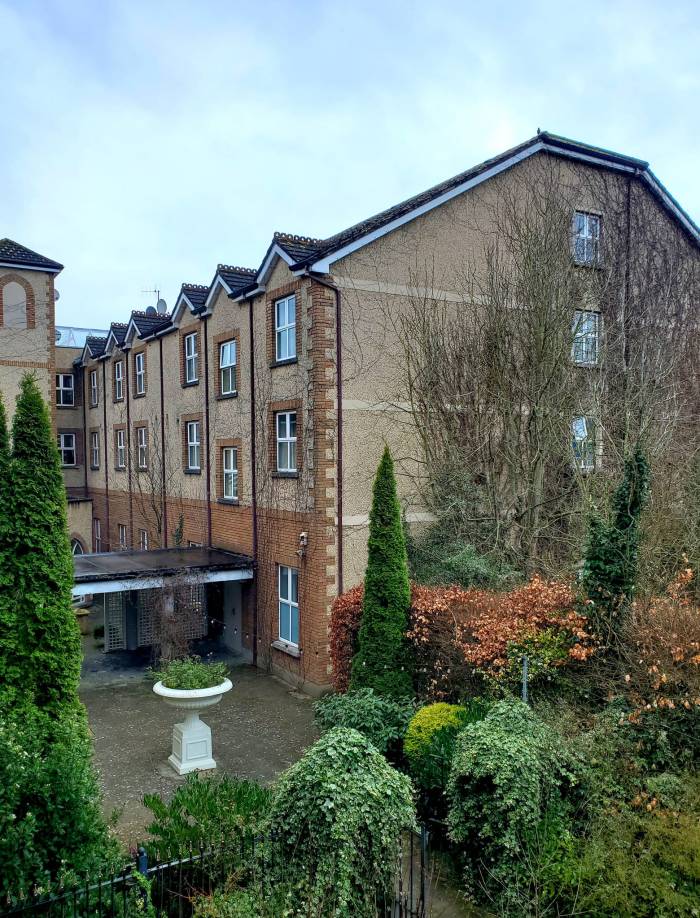
Our rooms were beautiful, the food was great, and we loved spending time in the library-themed Butler’s Bar for drinks.
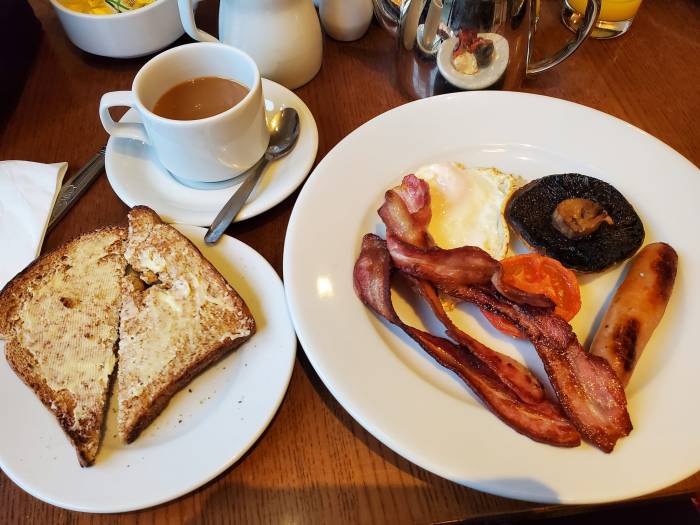
Visitors from all around the globe land at Abbey Court Hotel.
One night, I was invited to sing on stage at a party for a band that was visiting family in Nenagh before taking off on another tour.
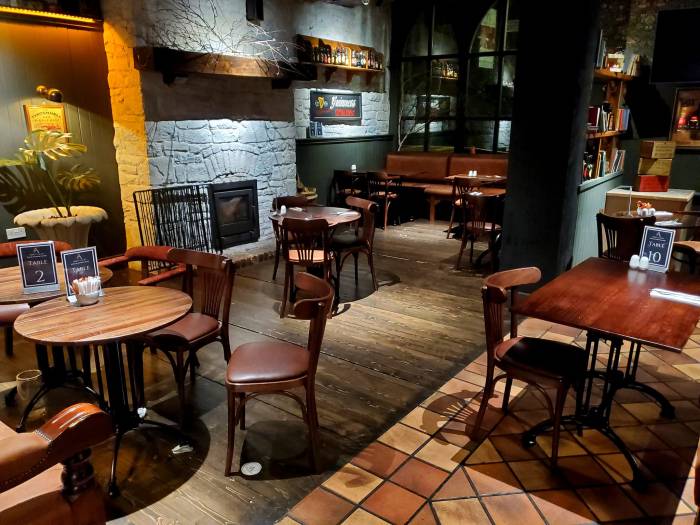
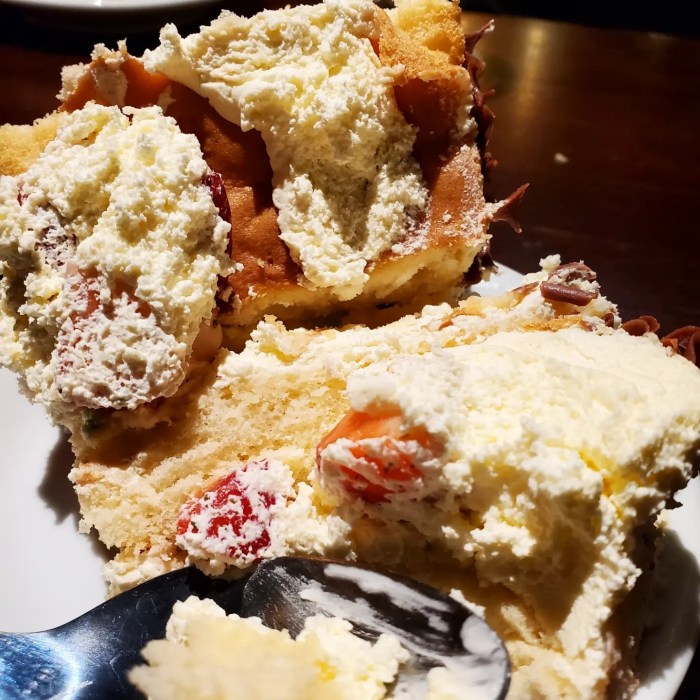
Another night, we found ourselves gifted with huge piles of cake at the birthday party for a pair of 80-year old twins.
On that note, a jolly old man politely informed me that “piles” has a different meaning there in Ireland, one that I have only heard the old Appalachian folk back at home say, but he had a real groaner of a joke to go along with that.
NENAGH CULTURE
Unlike many counties in Ireland, there was never an official Gaeltacht in County Tipperary, so there are very few fluent Irish speakers.
Like anywhere else though, people come and go, each bringing their own language, culture, and perspectives, so you never know what you will run into.
I had read this somewhat grim article about how Nenagh was, just a few generations back.
The author describes a rough and tumble upbringing where “culture” was frowned upon, but has recently come around to appreciate Nenagh after returning to his childhood home and seeing how it had grown and improved.
I think most of us can relate.
I asked my Irish friend, who is not originally from Nenagh but has lived there for many years, what she thinks of its people and culture. She laughed and said they are all “hurling mad” but there is a wonderful sense of community, and she felt accepted right away because the people look out for each other.
She appreciates that the locals regularly organize outings and events, especially for women and the elderly, to stay active and social and share the good craic.
Additionally, she loves Nenagh and its accessibility to the rest of Ireland. My own experiences in Nenagh lead me to agree with her.
We have met some genuine and lovely people there, and the town itself is adorable.
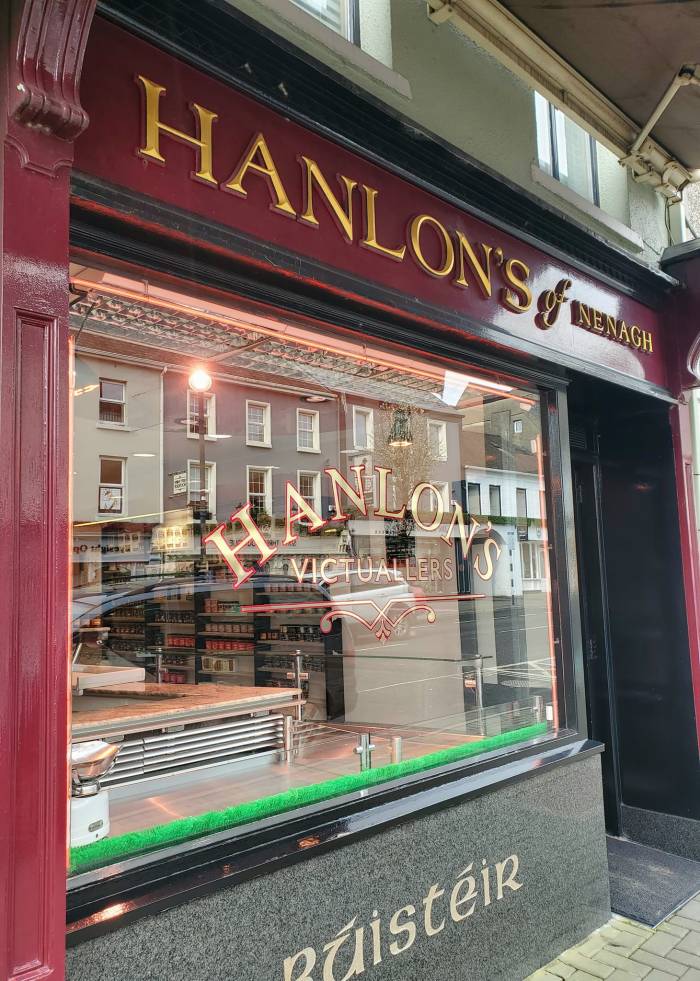
I love that most of the businesses in town are owned by locals, some of them for many generations now, and there is a great sense of pride in bearing the torch of each family’s respective skills and offerings in the community.
WHERE TO EAT & DRINK
Bistro 41 was the first meal we had in Nenagh, and we love this place.

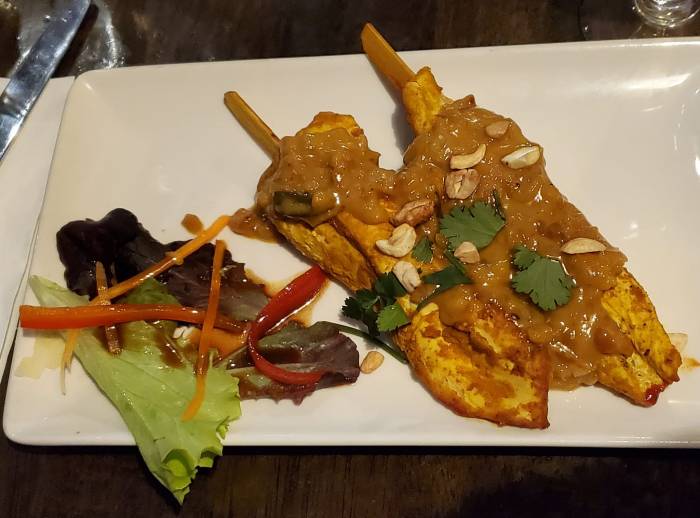
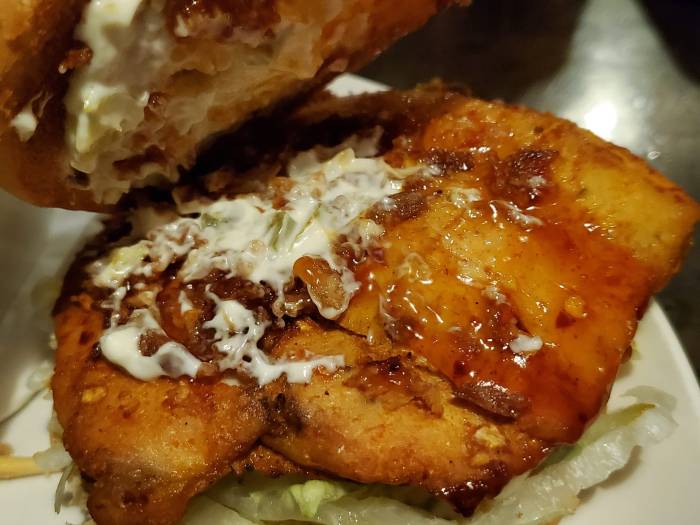
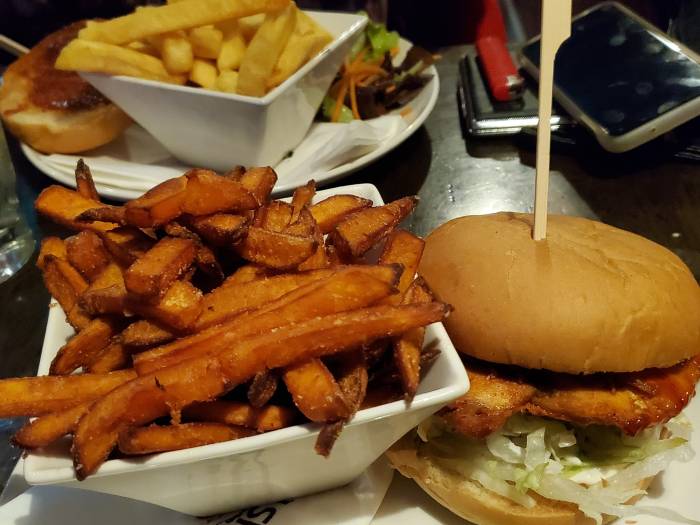
The menu is eclectic and has something for everyone whether you prefer steak and veggies, Thai chicken skewers, spicy chicken sandwiches, or more traditional Irish dishes.
The Thatched Cottage aka “The Thatch” is a restaurant and event venue situated in a restored early 1800s thatched roof cottage.
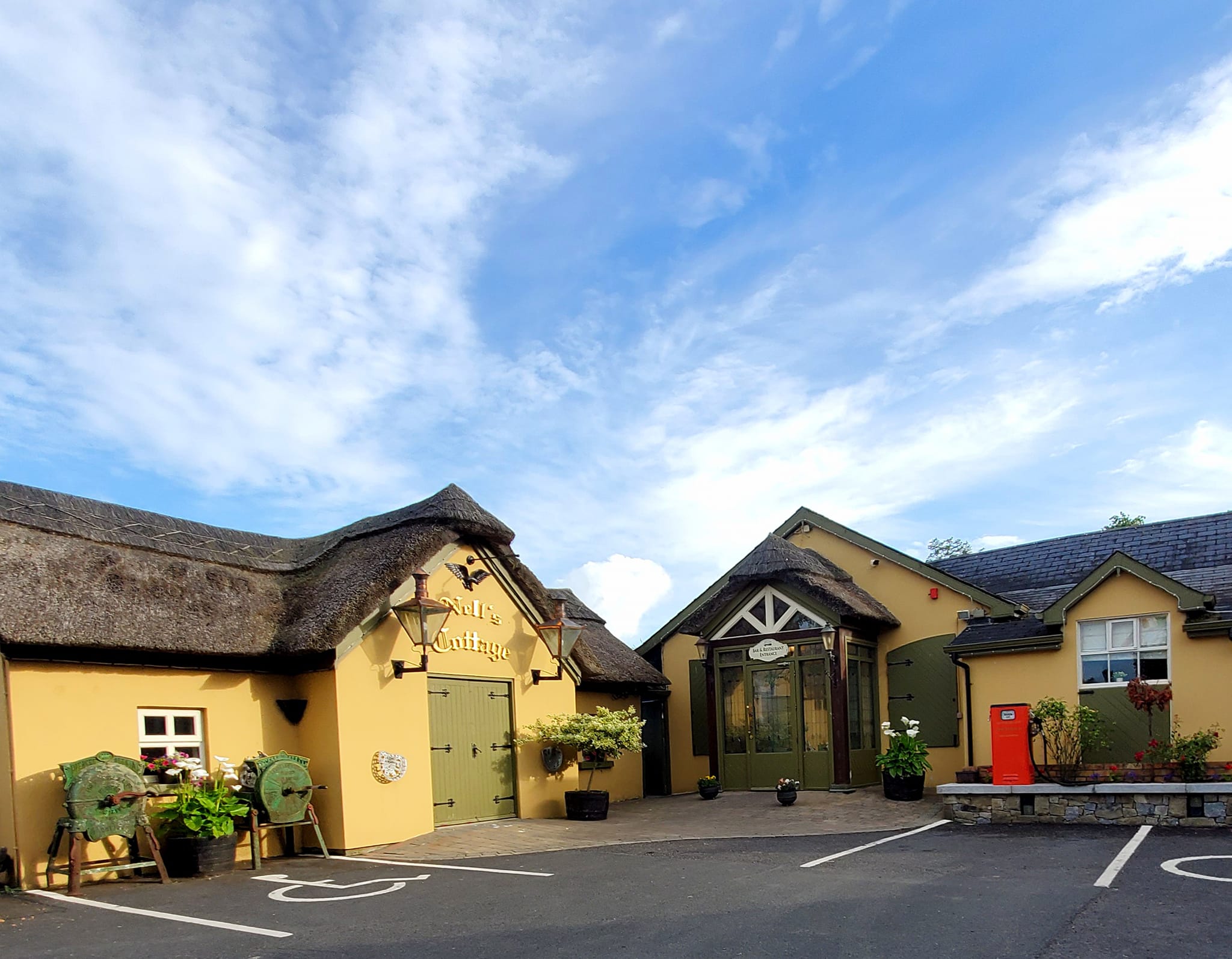
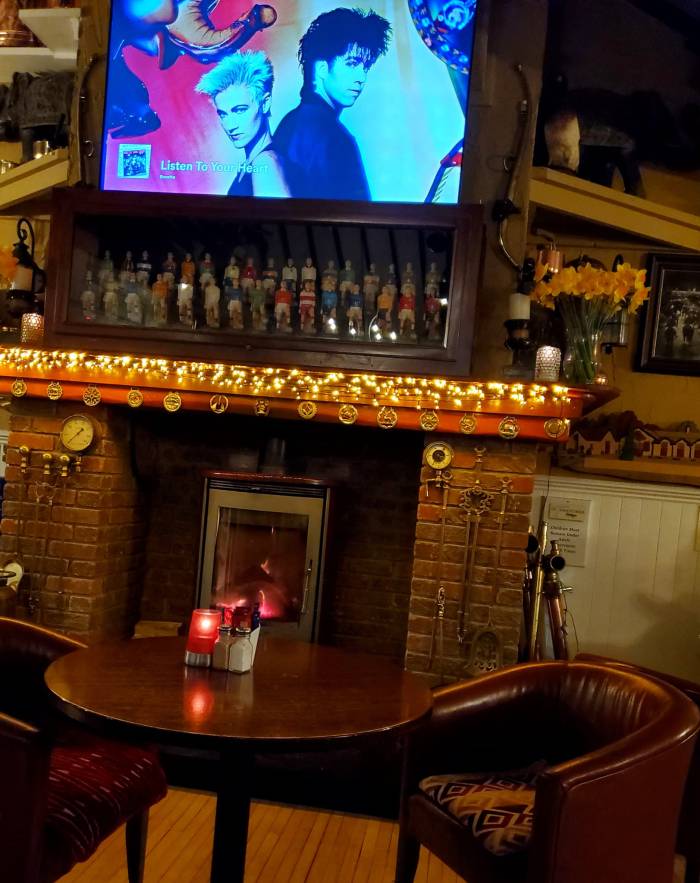
It is SO cozy and the people we have met who work there are wonderful.
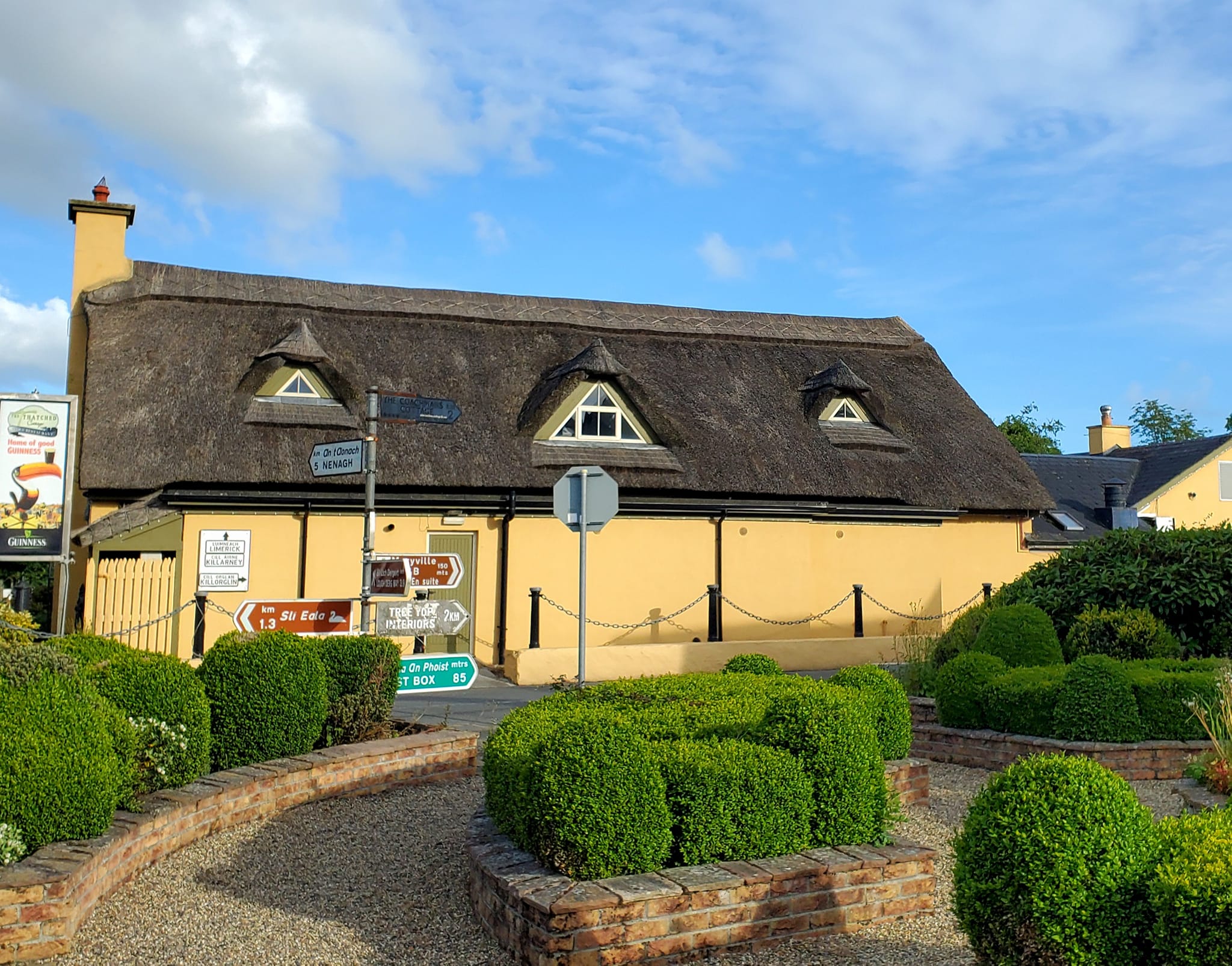
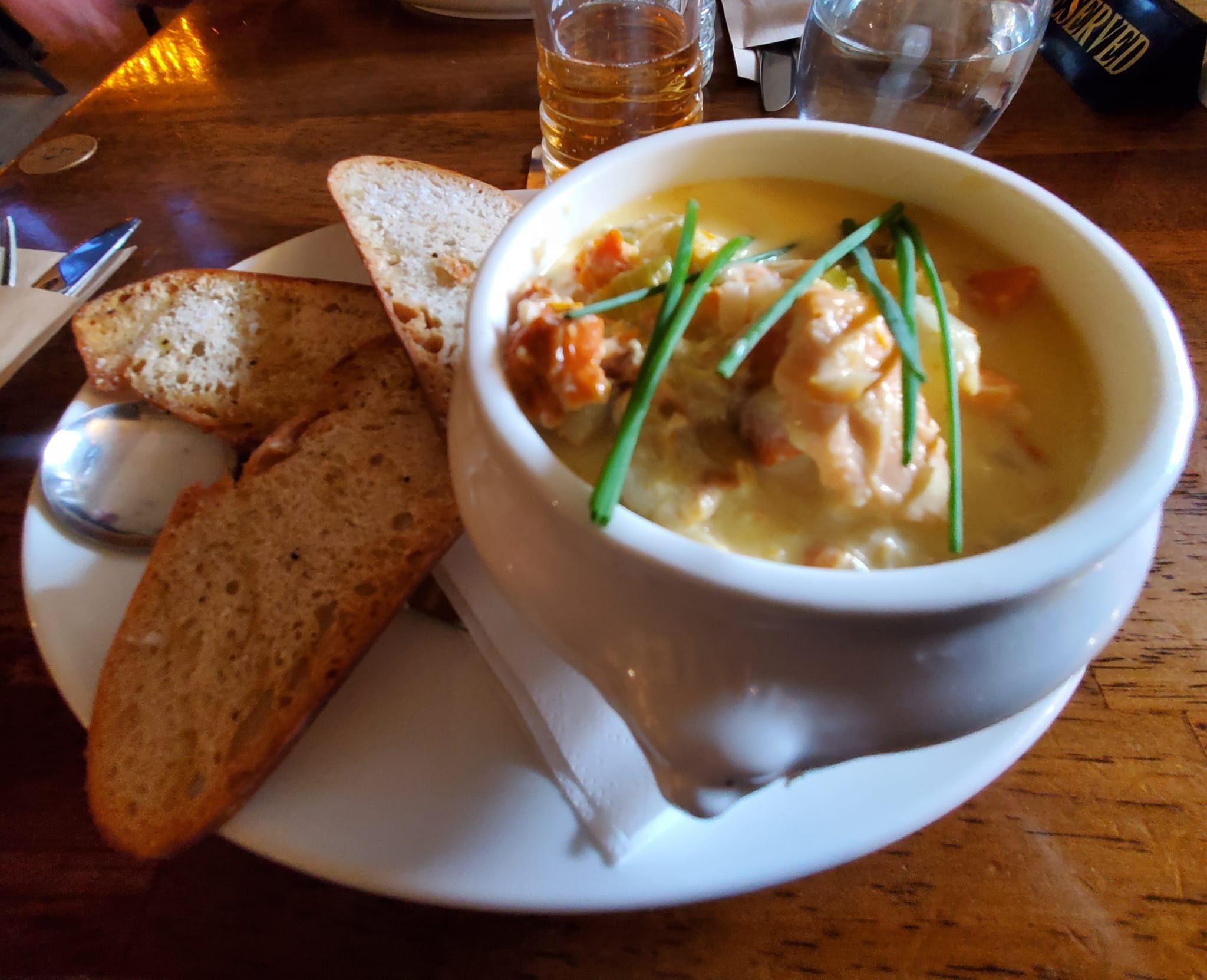
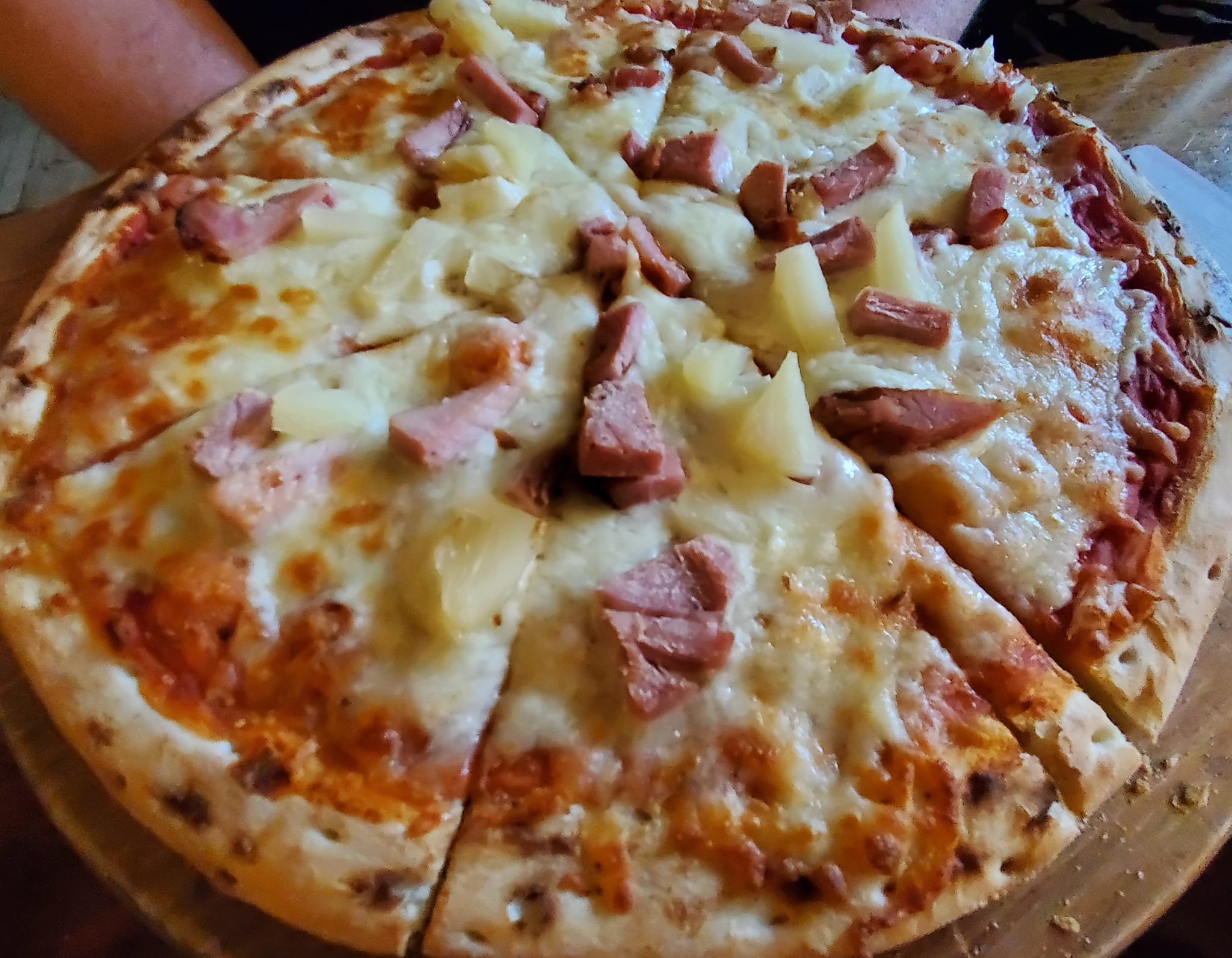
We have been a few times now, and each time was great. I have enjoyed the seafood chowder and flatbread pizzas, not to mention a beer… or four.
Oh, and those tequila shots.

They usually have a soft 80s playlist going in between live bands and other events going on since they host an event venue as well.
I hope to go back next time for their Carvery Lunch that another friend told me about.
SHANE MACGOWAN
After Shane MacGowan of The Pogues died in November of 2023, his infamous wake was held in the Thatch.
Several hundred guests and celebrities like Johnny Depp, Imelda May, Glen Hansard, and Aidan Gillen attended, and the event really left its mark on the locals.
They showed up to deliver world-class service and have loads of stories to share about the wake and meeting various people.
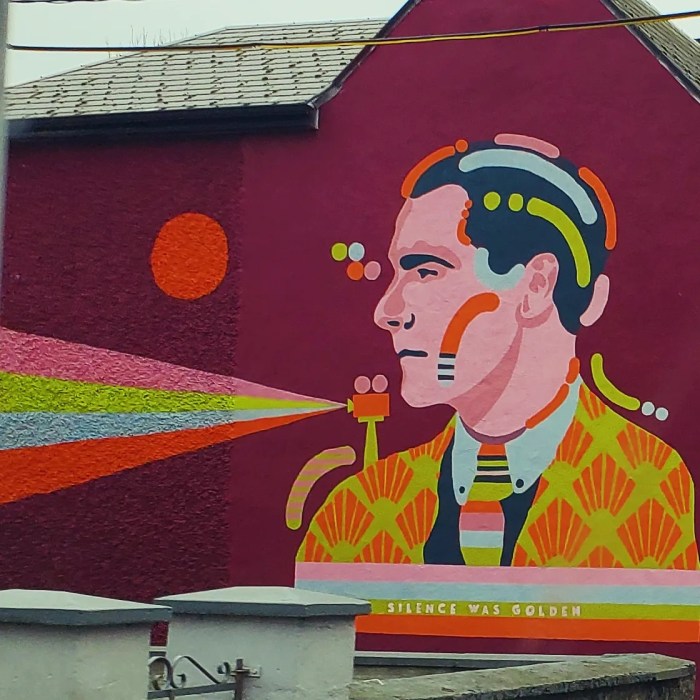
There is a memorial dedicated to MacGowan in the town center, seen below.
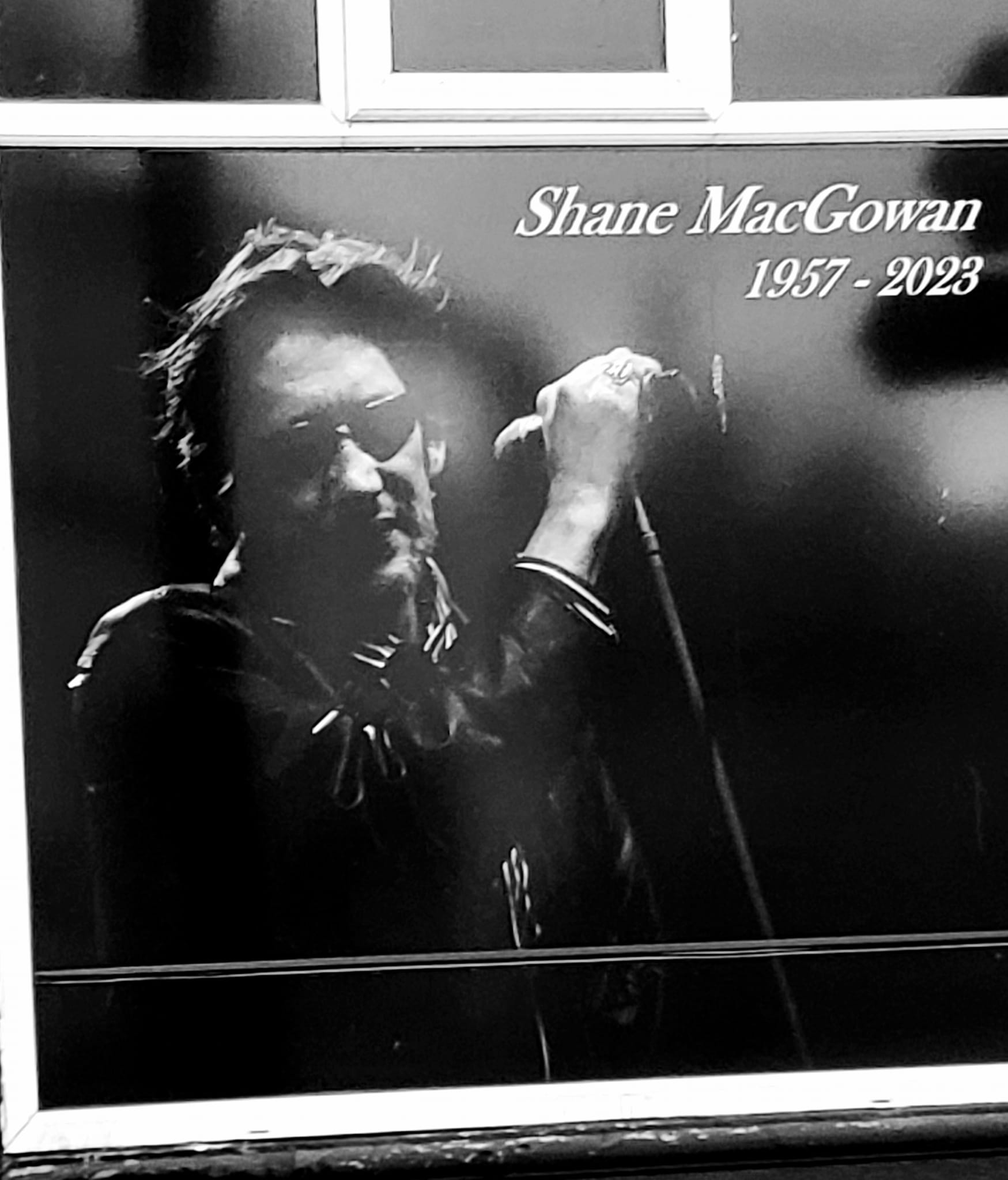
Update 8/29/24: Okay I am seriously pumped right now because the day after I published this, I learned that there is a new mural of Shane MacGowan being painted in Nenagh. Here is a screenshot I took of my Facebook feed:

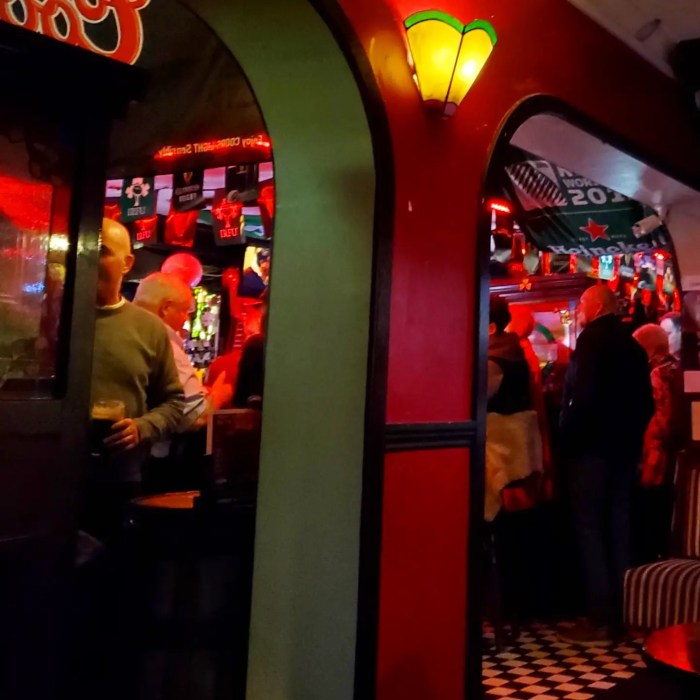
Figgerty’s Pub is a vibrant but comfortable bar, packed to the gills with chill people just having a few “scoops” and listening to live music.
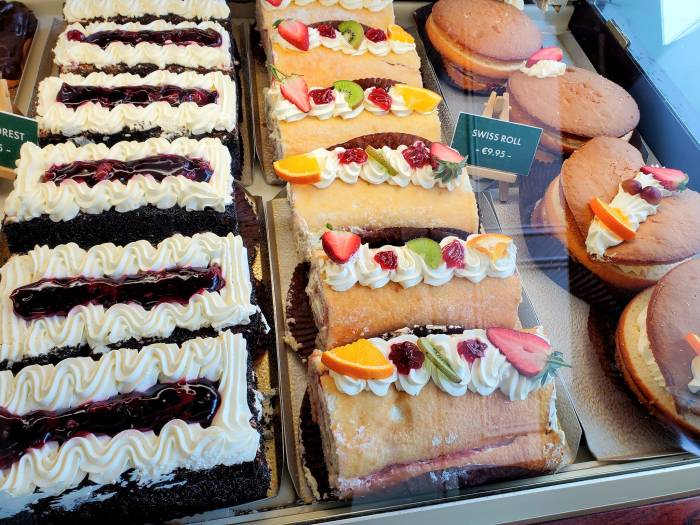
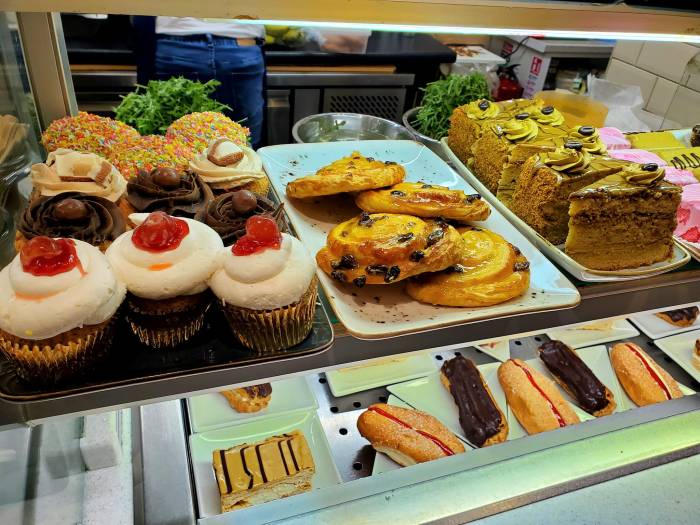
Quigley’s Bakery & Cafe blew me away with how many gorgeous cakes, pastries, and sandwiches they have to offer.
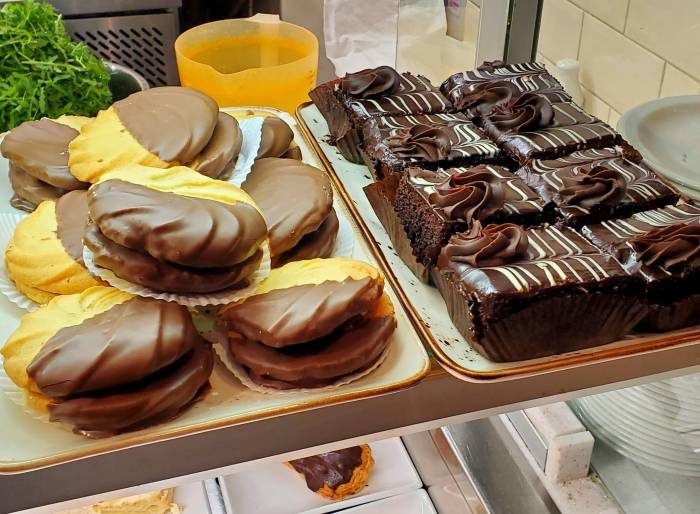
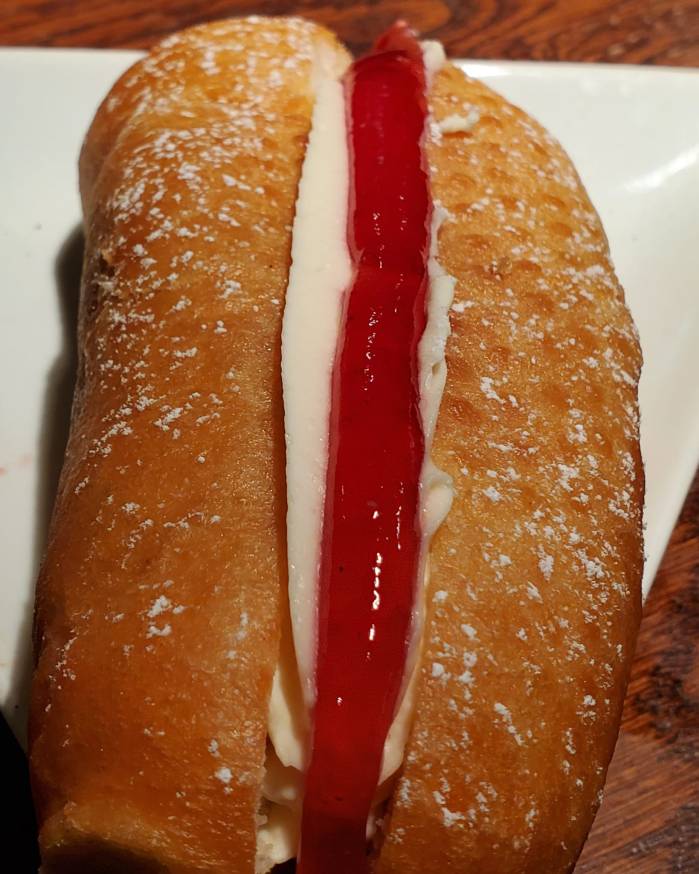
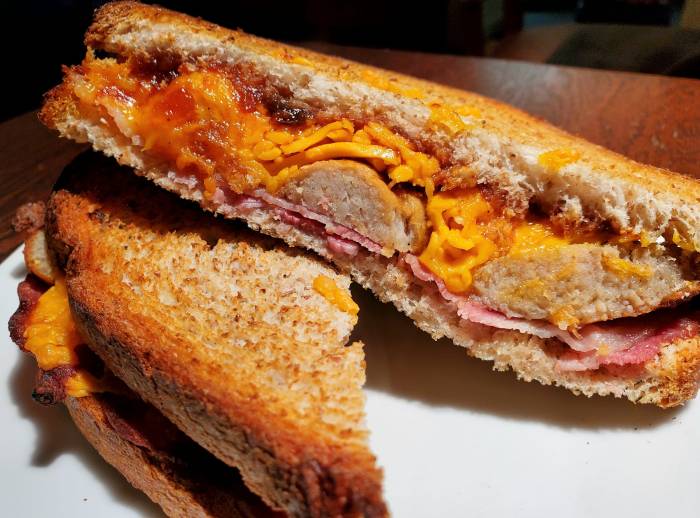
Below is the Irish jelly donut and the breakfast sammie our friend had. Everything was so delicious.
FARNEY CASTLE
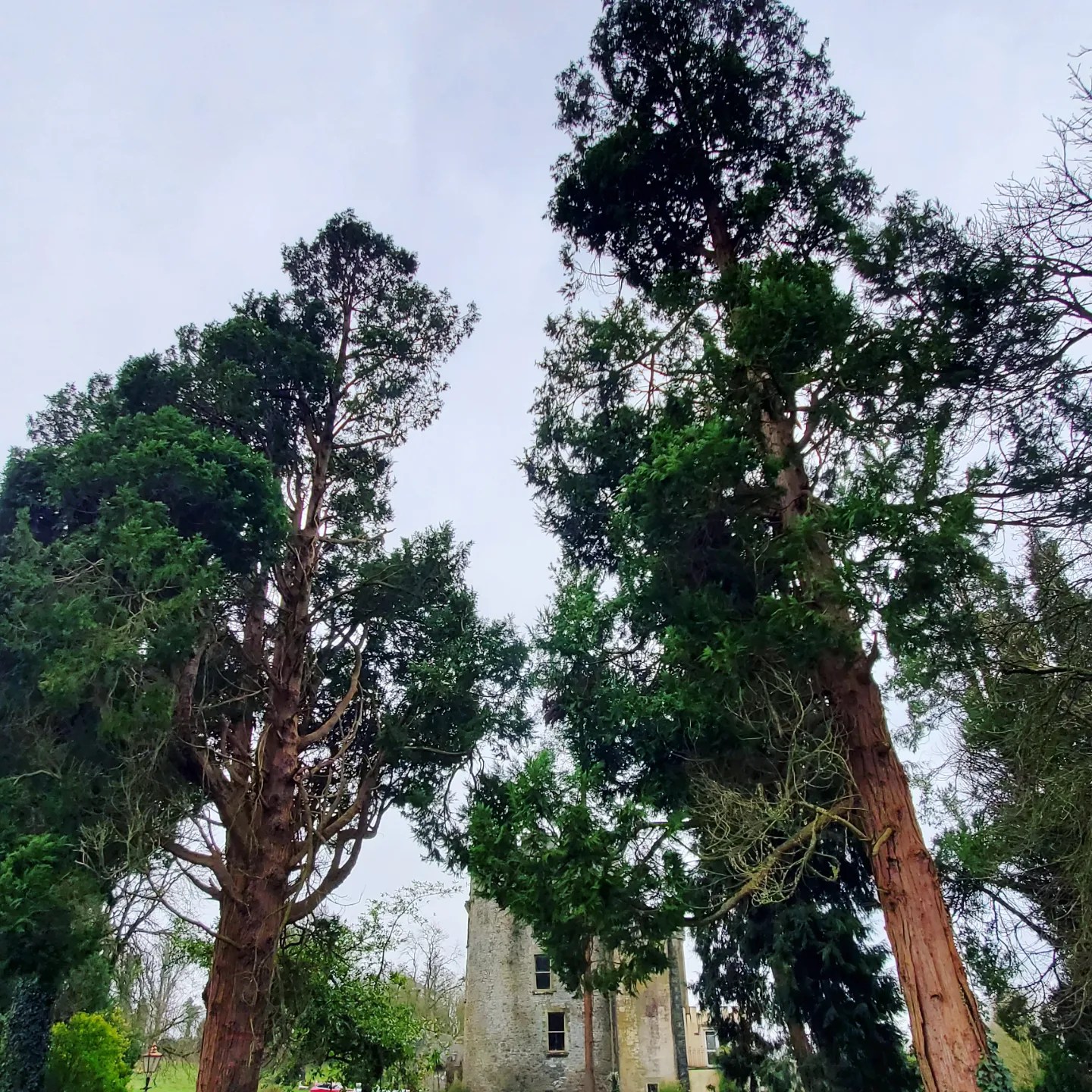
Leaving Nenagh (sad face), we drove south a bit and our first stop was at Farney Castle in the Holycross community of County Tipperary.
It was built in 1185 from timber, later rebuilt in 1495 by the 7th Earl of Ormond, Thomas Butler. I am not sure if the original fell to ruins or was burned or what, but Butler’s rebuild was intentionally for defense.
Butler’s family lived there for 500 years but was temporarily confiscated in the 1530s by King Henry VII, to be used as a residence for King James I from 1617-1625 and by King George I from 1716-1721. Rude.
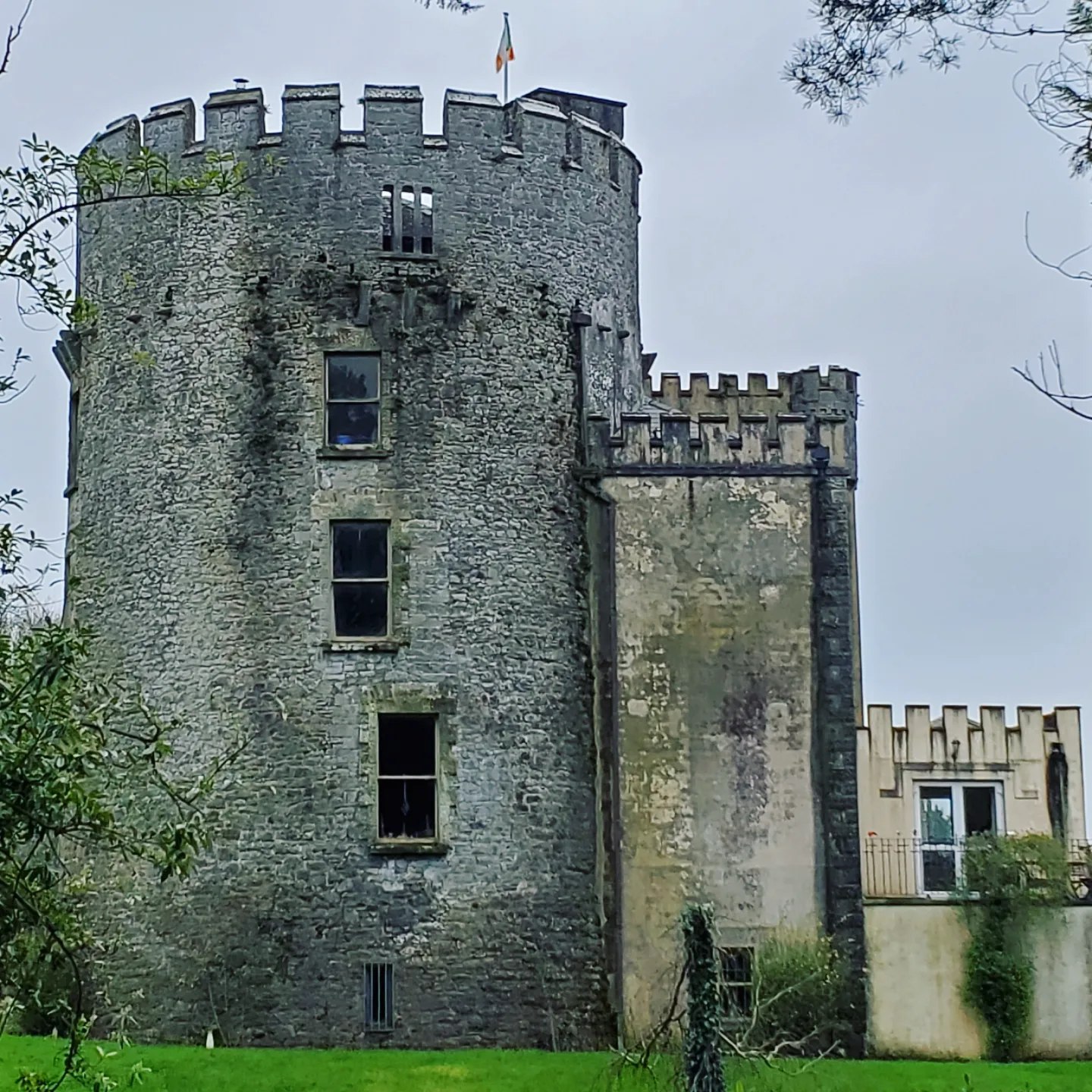
Farney Castle is the only round tower in Ireland that is currently used as a family residence.
An Irish knitwear designer and porcelain sculptor named Cyril Cullen lives there now, so I am guessing he has been doing well for himself.
You can tour the castle and visit his art gallery/studio by making reservations in advance, but the option to do so seems to have been removed from the website for the time being.
HOLYCROSS ABBEY
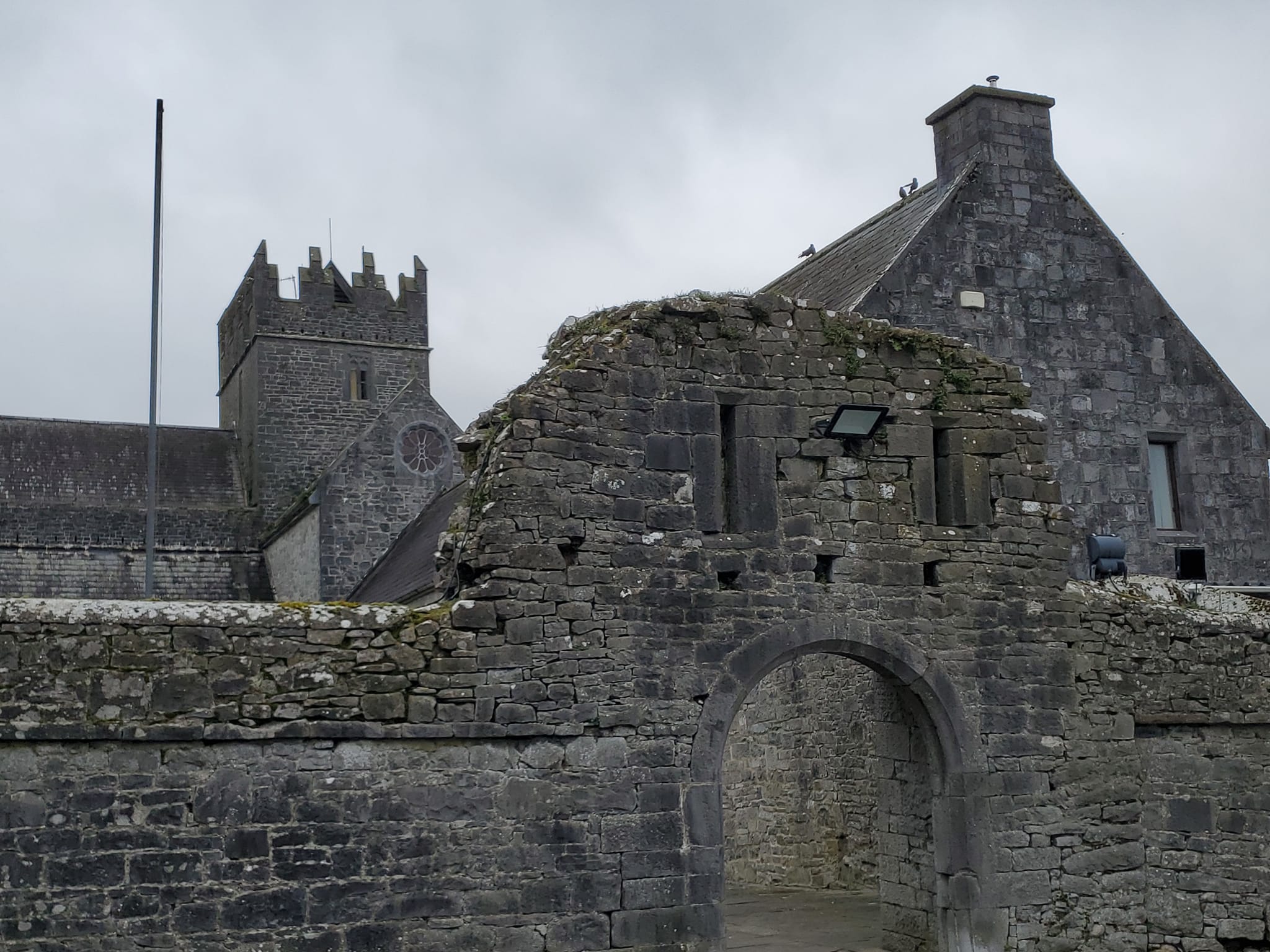
Our next stop was at the Holycross Abbey near Thurles. The original Cisterian monastery was built on this site in 1169 but was later rebuilt for King John’s widow, Queen Isabella, after she brought a sacred relic of the “True Cross” over in 1233.
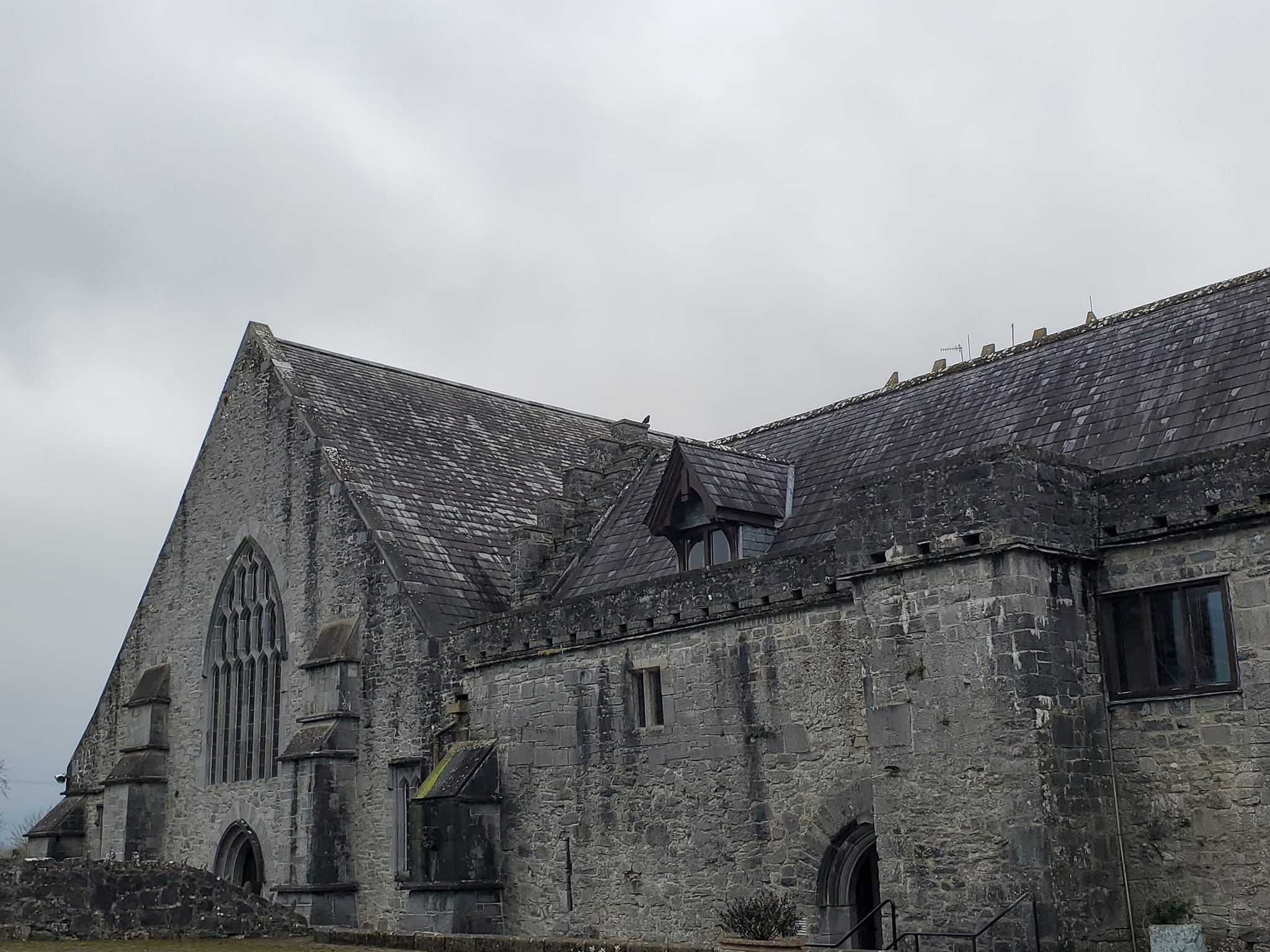
The Holycross Abbey quickly became a pilgrimage site for those wanting to venerate the relic or who were seeking spiritual refuge and peace, as much as it served as a rallying site for those protesting against religious persecution and struggles for independence.
The abbey also stands as, and contains, a collection of fine architecture and art.
ROCK OF CASHEL
One of County Tipperary’s most popular tourist attractions is the Rock of Cashel, also known as Cashel of the Kings or St. Patrick’s Rock.
The rock refers to the limestone castle, which sits on top of a seriously dramatic hill overlooking the Golden Vale pastures below.
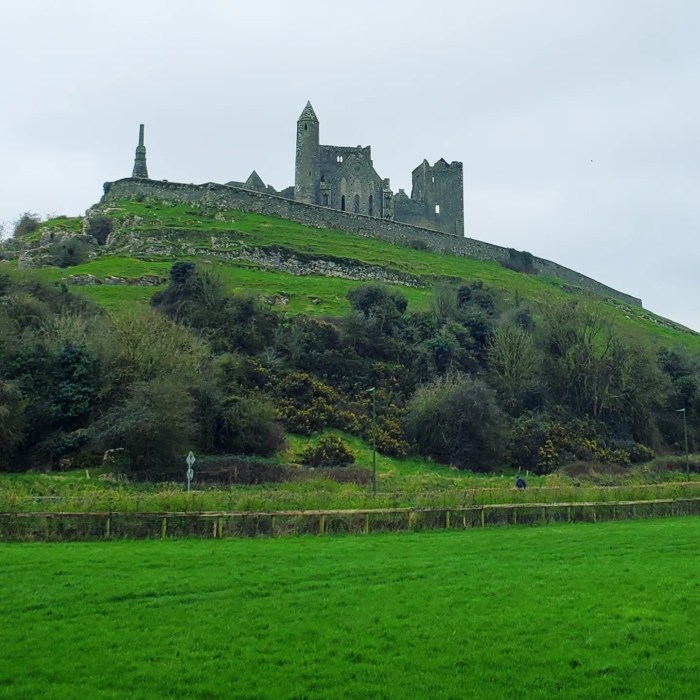
Within its walls there is a gothic cathedral, an abbey, a round tower and tower house, a high cross, the Roman-style Cormac’s chapel, and the Hall of the Vicars Choral.
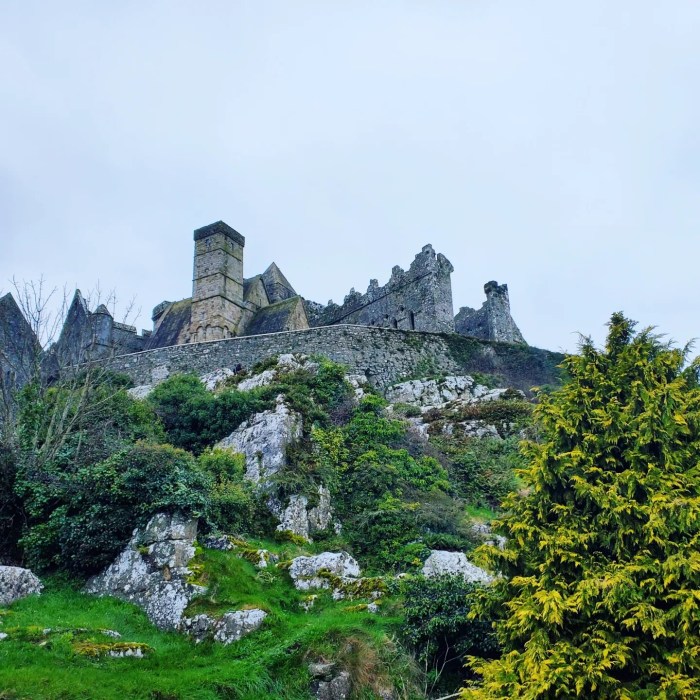
Legend says that St. Patrick visited the site in the early 5th century to convert the former King Aenghus over to Christianity, and that the castle was blasted from its original site on the nearby Devil’s Bit mountain over to Cashel when St. Patrick banished Satan from its cave.
St. Patrick seemed awfully busy, between that and all the snakes.
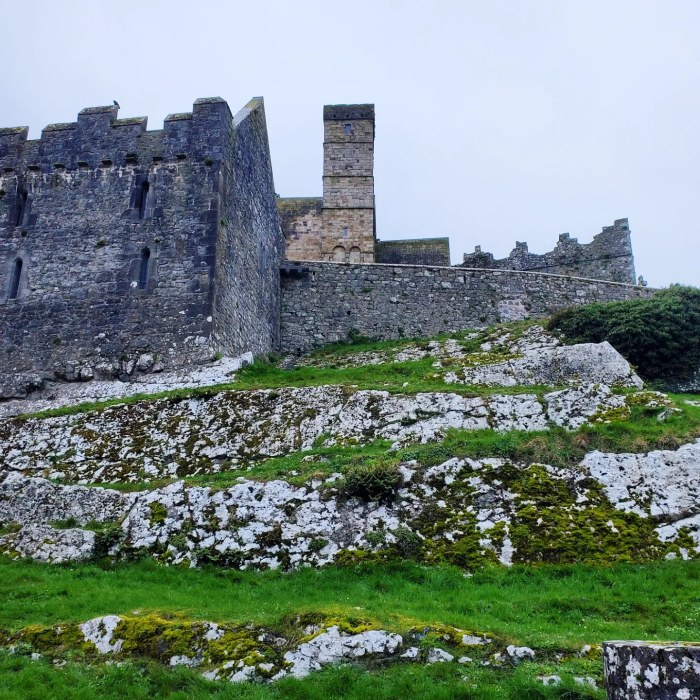
We have been to the Rock of Cashel twice now, and also enjoyed checking out the village of Cashel below.
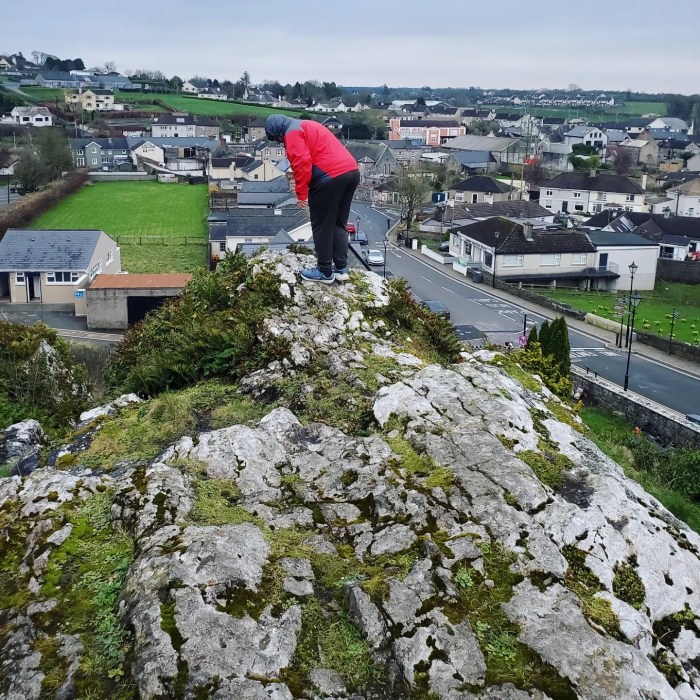
Cashel is full of cute stores, gift shops, and cafes.

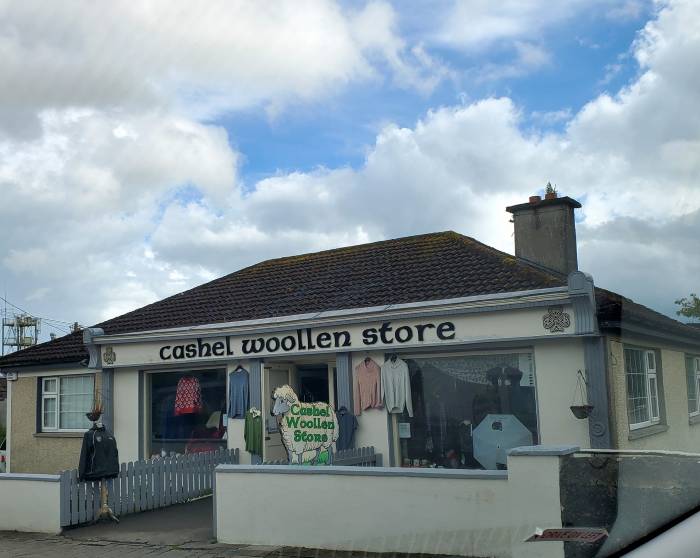
Aside from the Rock of Cashel, Cashel’s main attraction is the Cashel Folk Village Museum complex that includes the Easter Rising & War of Independence Museum, and the Great Irish Famine Museum.
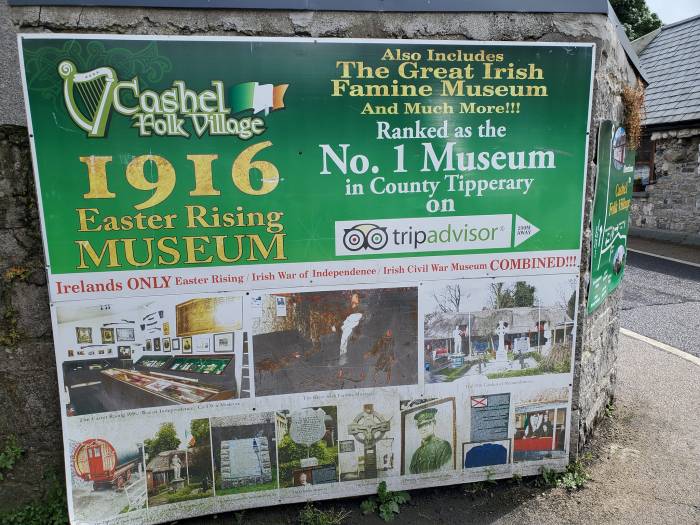
The Cashel Folk Village’s founder Martin O’Dwyer Bob is an impressive character, known as one of Tipperary’s most prominent historians, author of eight books on Tipperary history, chairman and cofounder of the Cashel Historical Society, and the man who spearheaded the founding of St. Marks Famine Graveyard that is dedicated to those who died during the Irish Famine in Cashel.
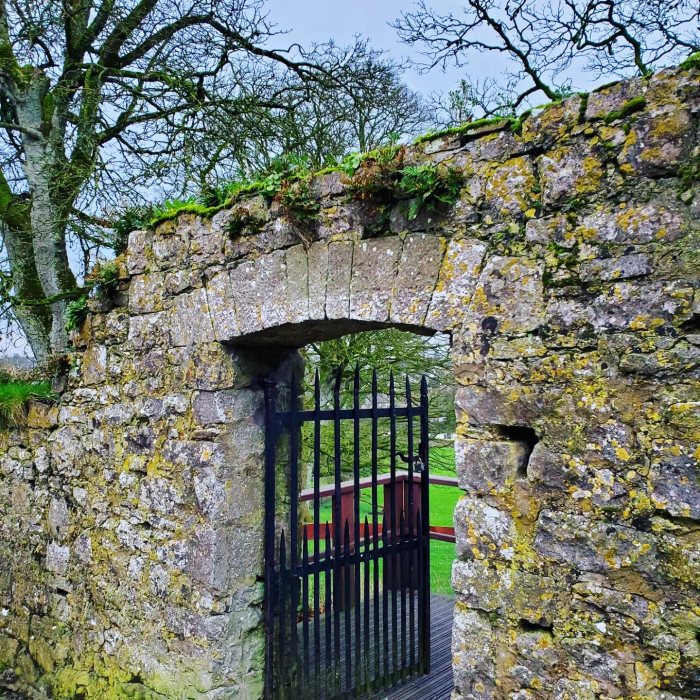
St. Declan’s Way is a 1,500 year old sacred pilgrimage walking path that stretches more than 70 miles between the towns of Ardmore and Cashel.
The path follows the journey that St. Declan of Ardmore made when he traveled north to pay homage to St. Patrick in Cashel.
This gate marks the start of the path, and pilgrims can follow blue waymarkers and keep current with path updates here to help stay on track down to Ardmore.
HORE ABBEY
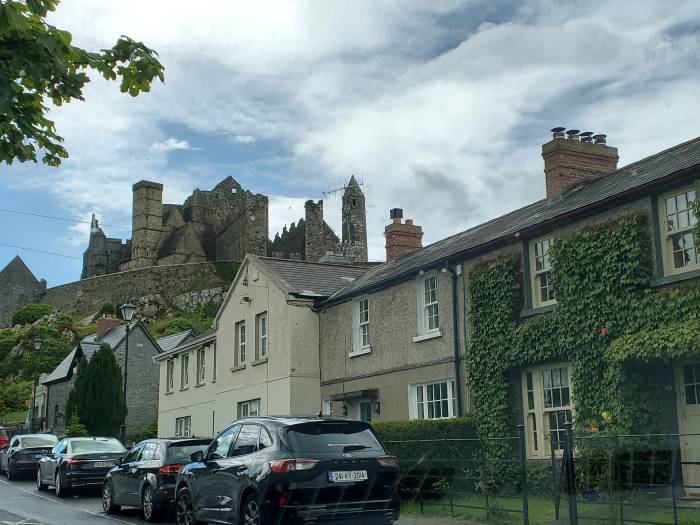
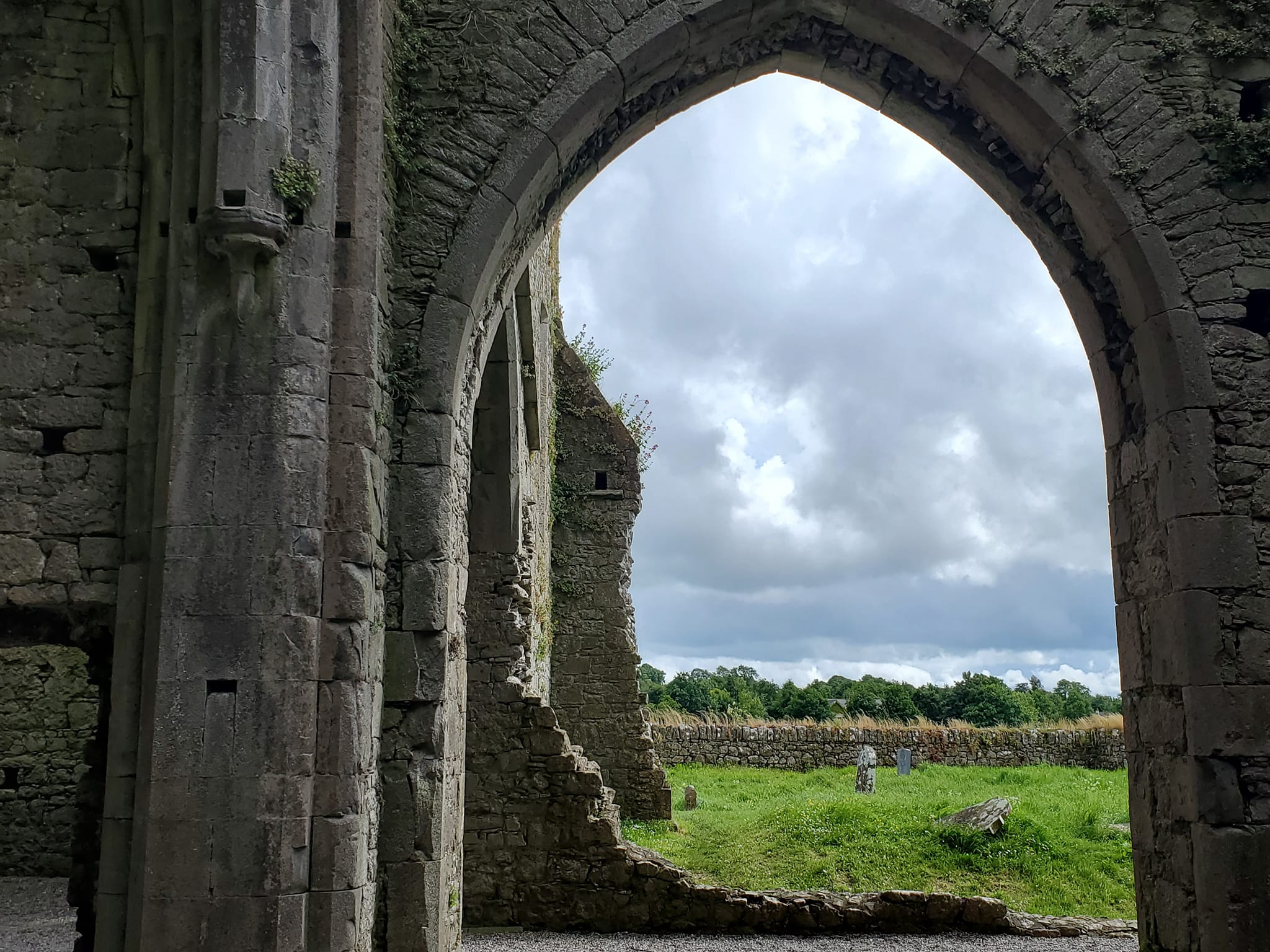
At the base of Rock of Cashel, just across the field, is the Hore Abbey.
You can see how close they are in the photo below, with Rock of Cashel in the background, to the left.
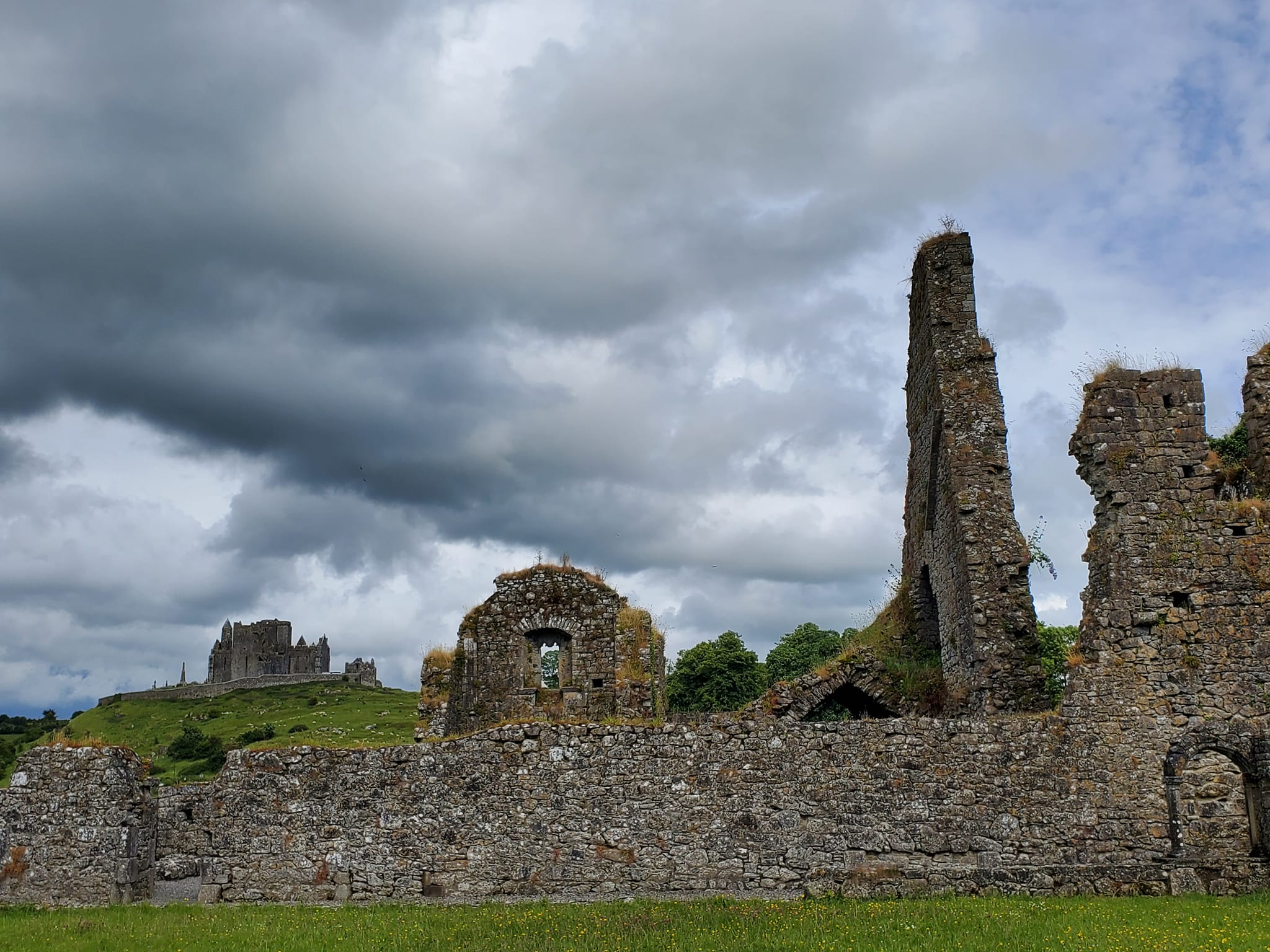
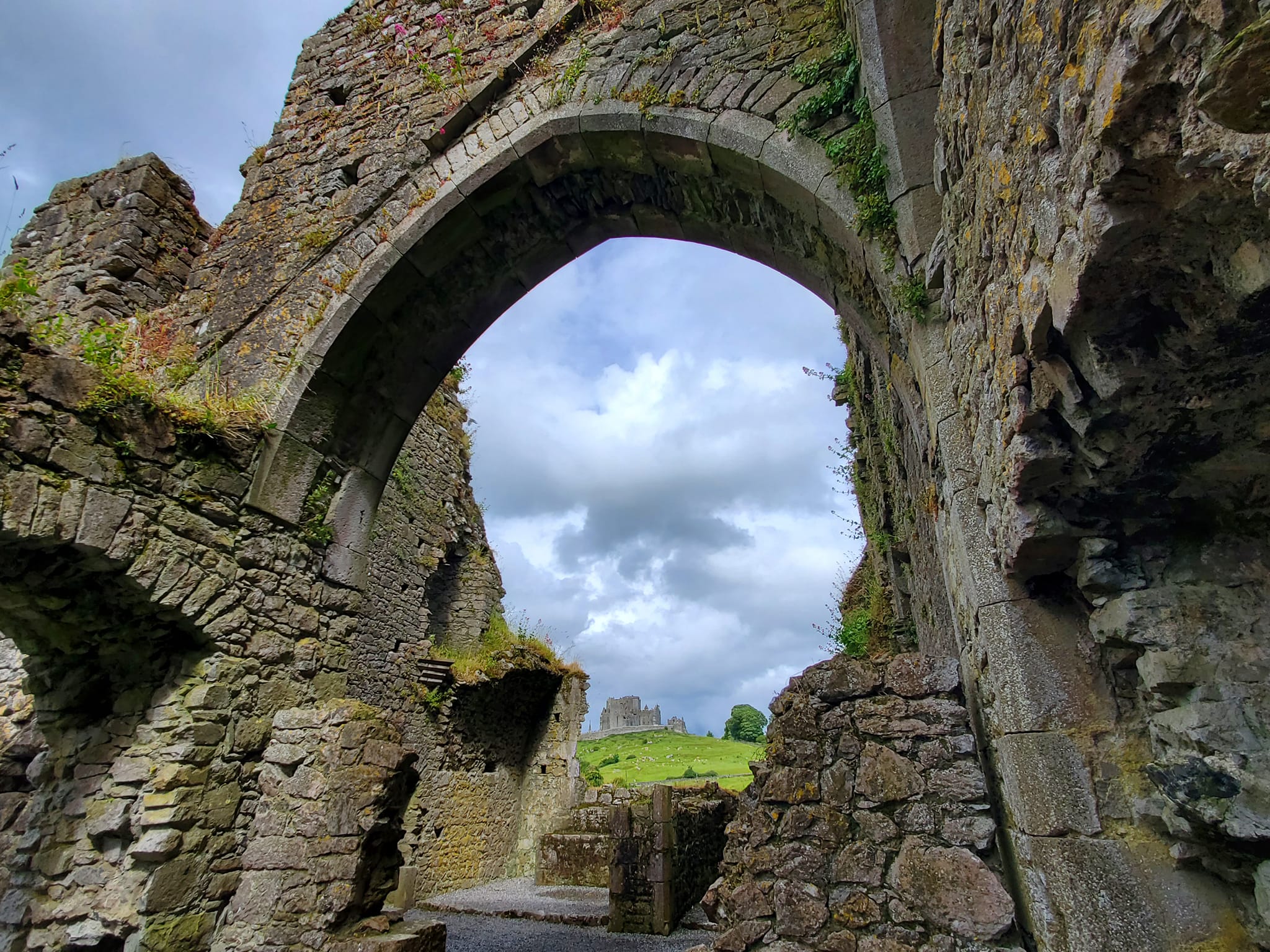
I find it unfathomable that Hore Abbey is hardly mentioned in any of the Rock of Cashel features on various travel websites.
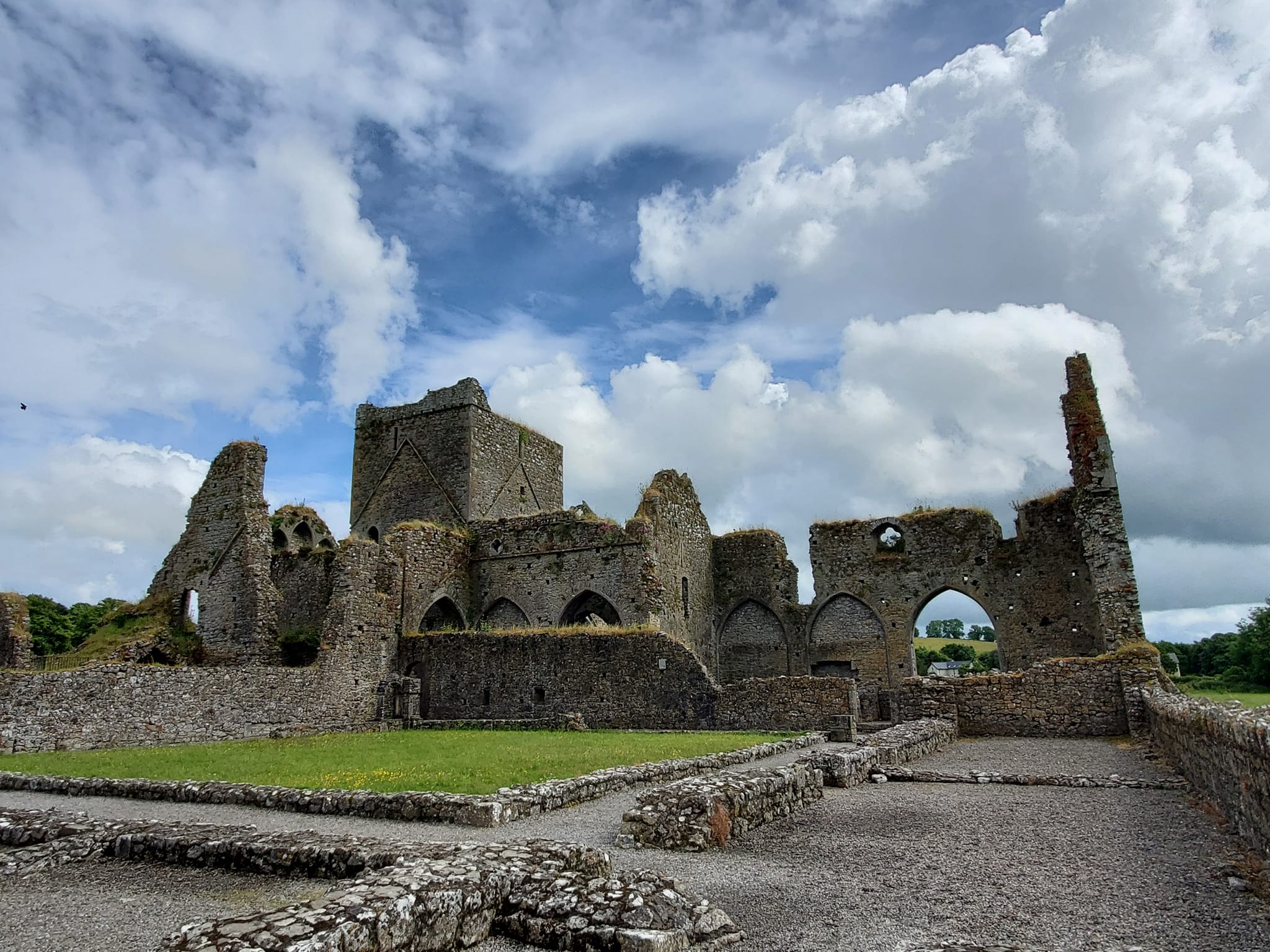
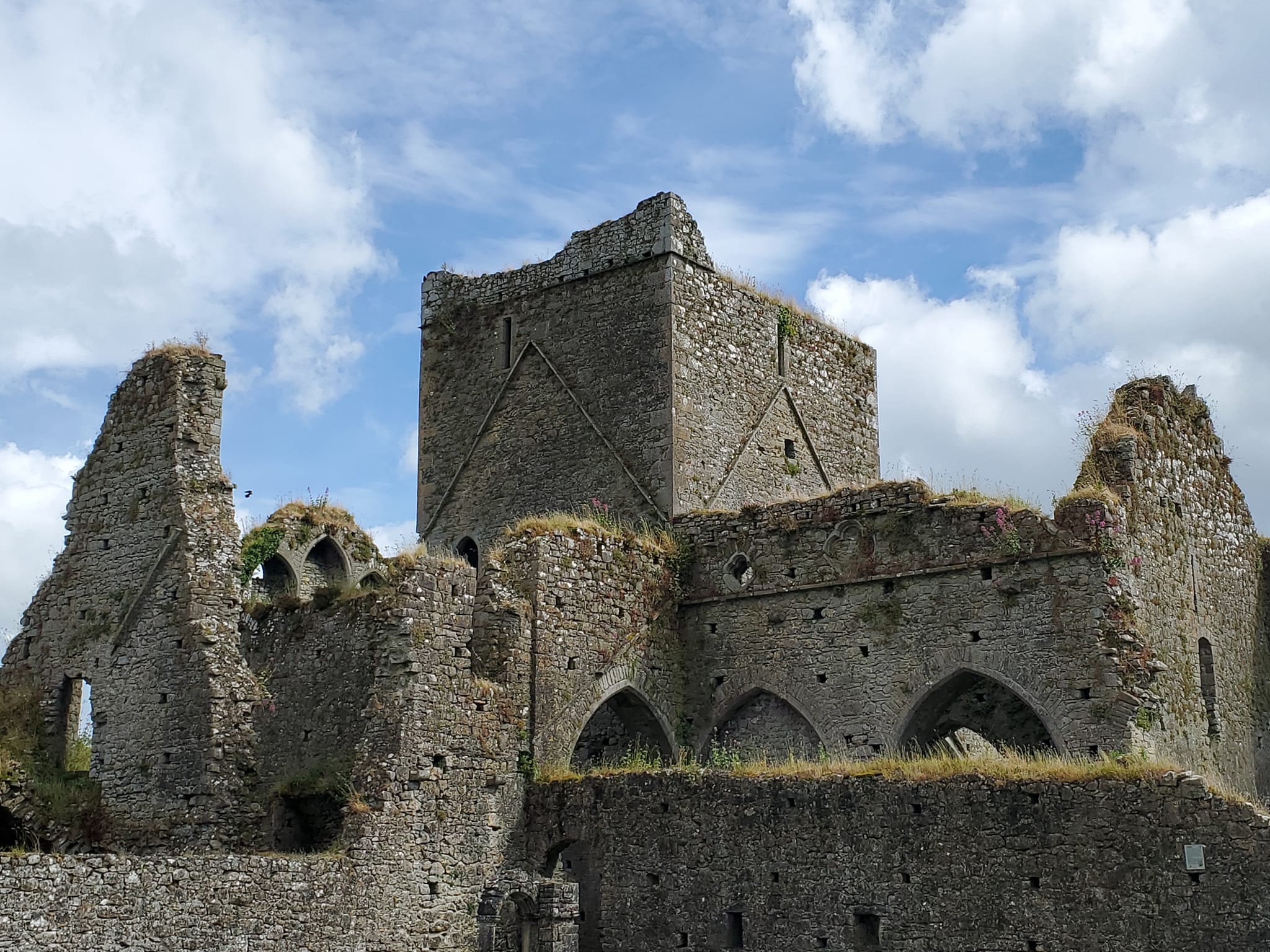
Hore Abbey was founded in 1270 as the last Cistercian foundation in Ireland and is also known as St. Mary’s Abbey of the Rock.
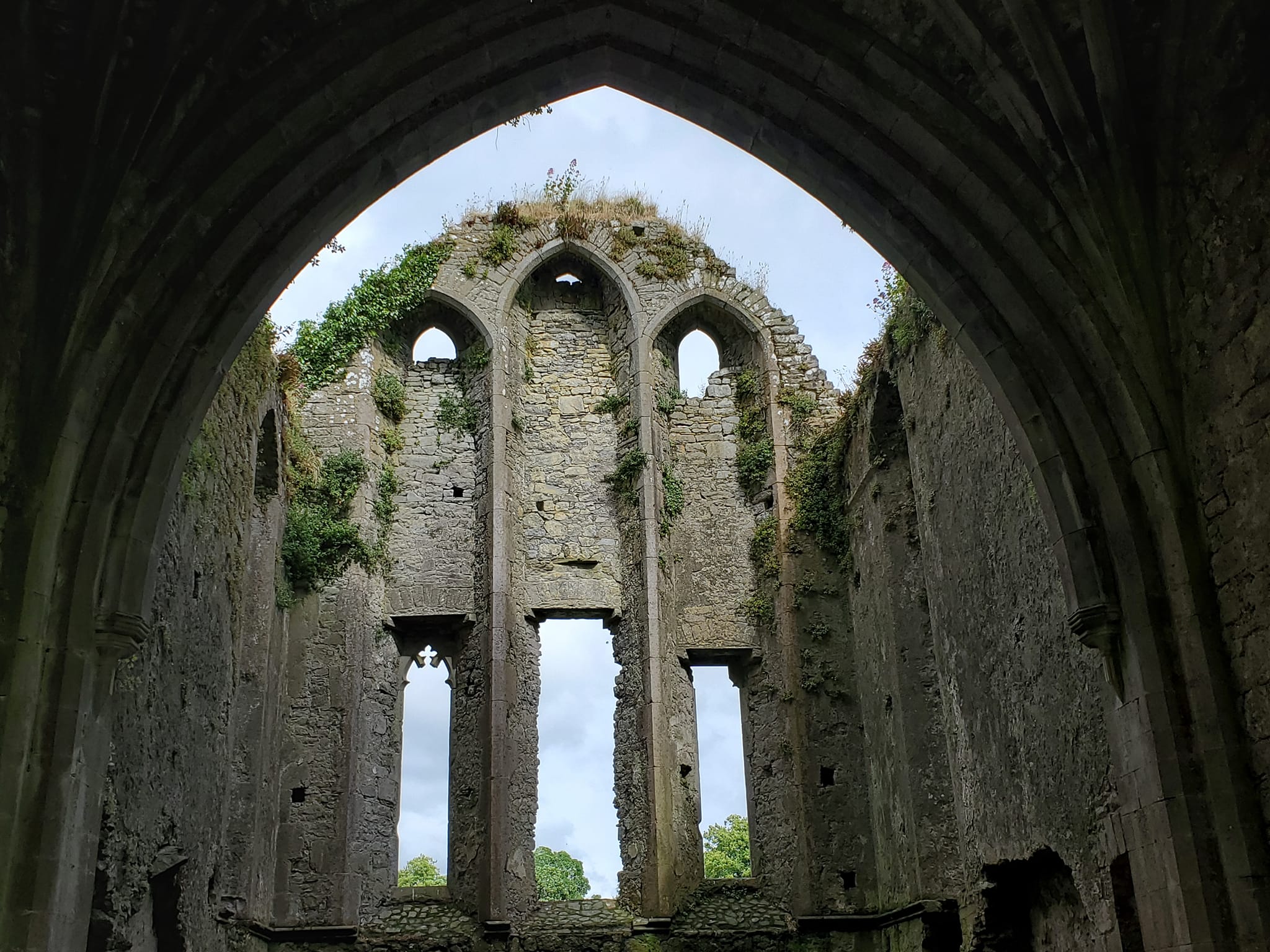
The name of the abbey is from the Irish word for yew tree, iubhair, and one of many distinctions it has is that it faces north unlike other cloisters.
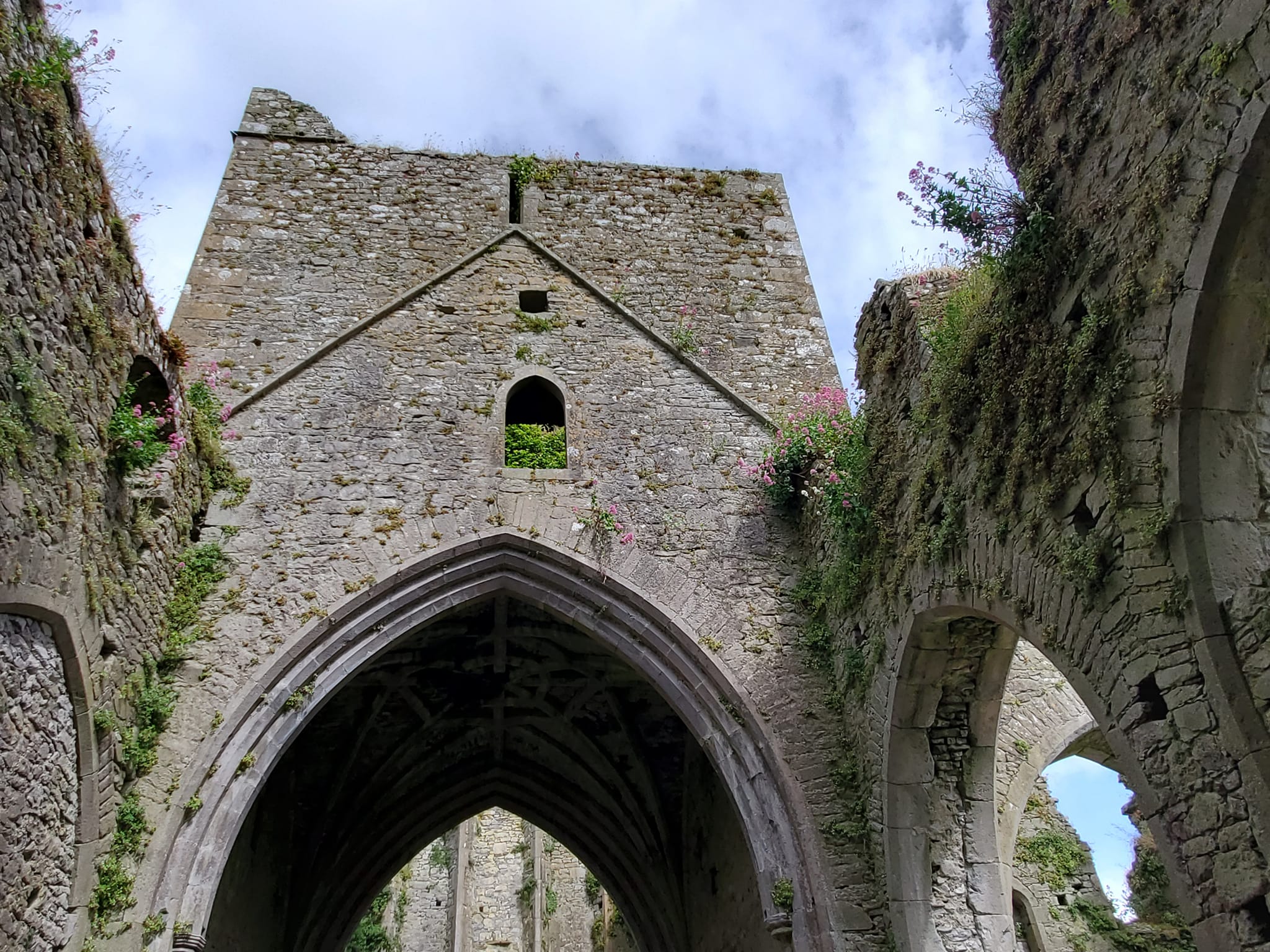
The legend of Hore Abbey is that it was home to Benedictine monks until 1272 when the archbishop expelled them and gave the abbey over to a group of Cisterian monks from the Melliford Abbey instead.
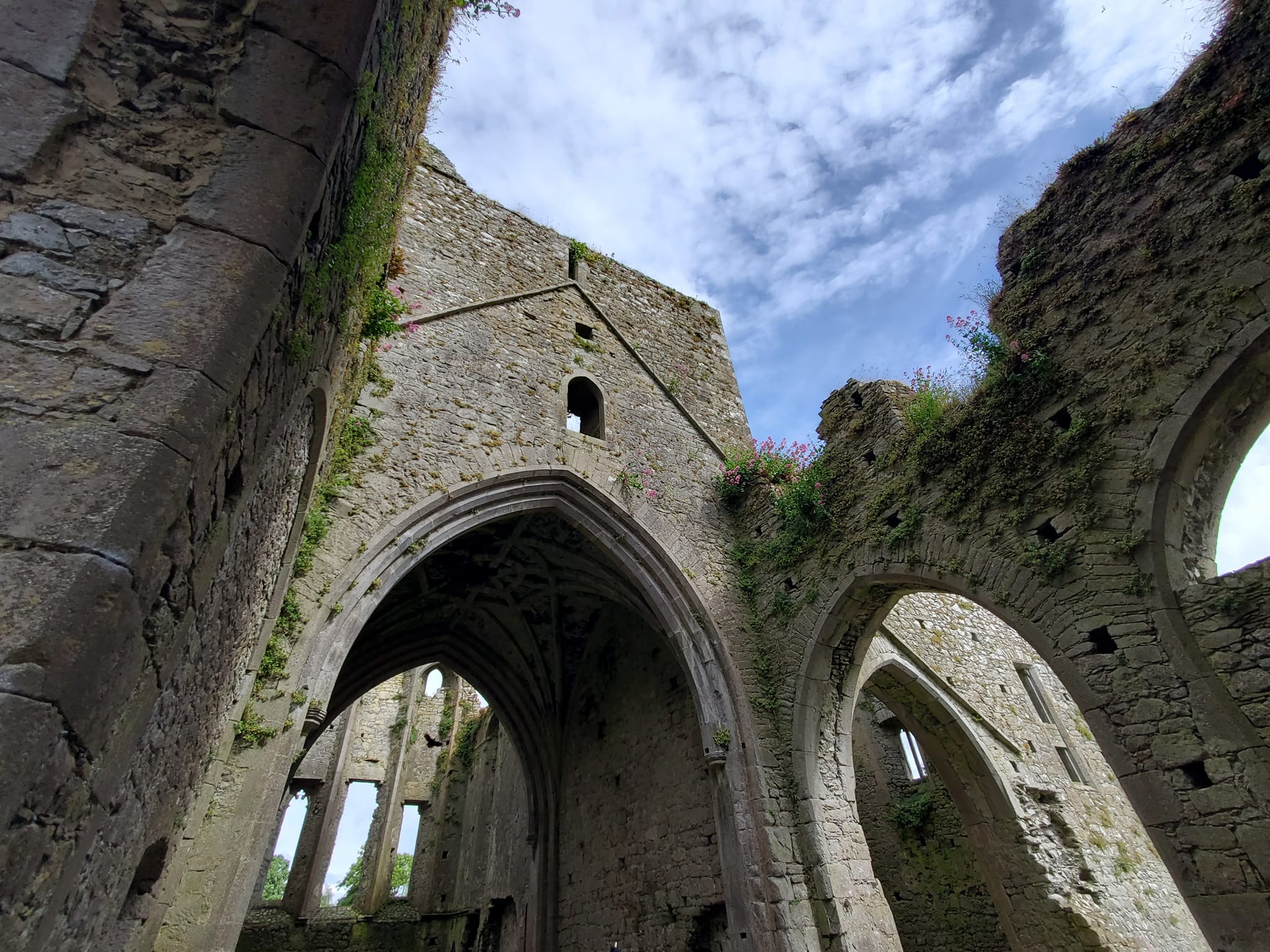
This took place after the archbishop dreamed that the Benedictines were plotting his murder.
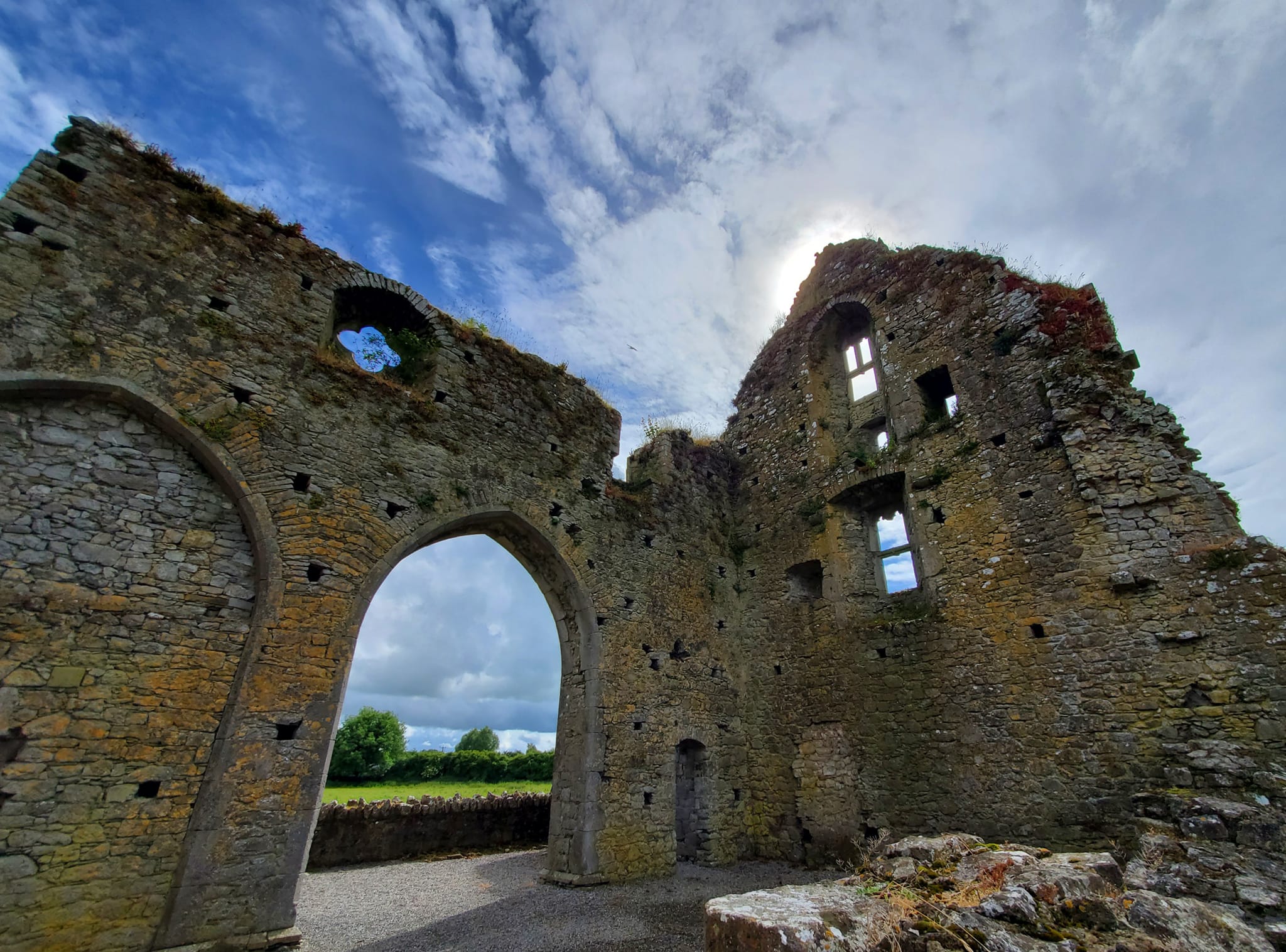
In reality, the notoriously argumentative archbishop had garnered the scorn of the Anglo-Norman members of Cashel by favouring Irish people and lavishing them with land, resources, and gifts.
If anyone wanted to kill him, it was the Anglo-Normans.
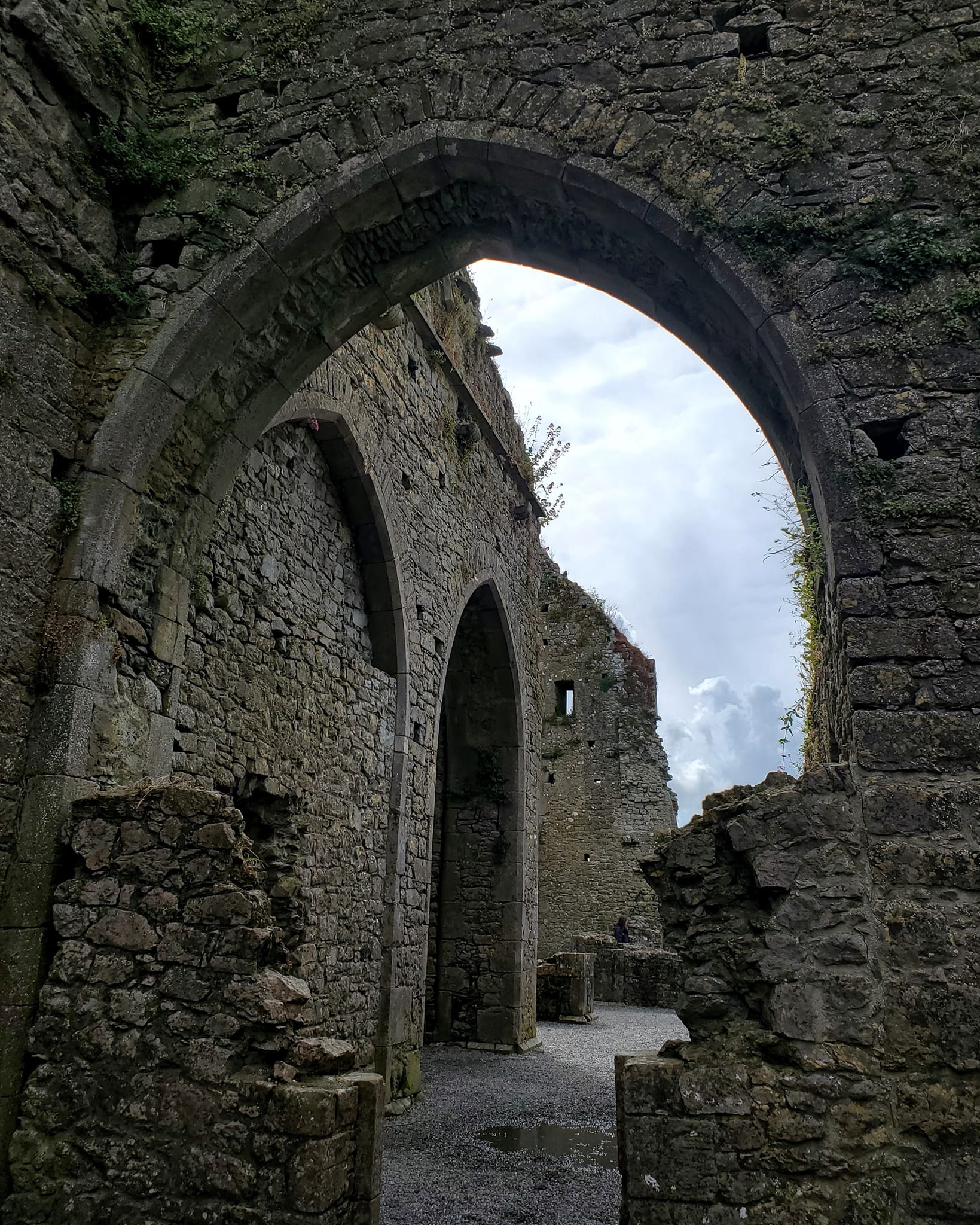
Hore Abbey was essentially abandoned around 1540 except for one small part kept as a parish, but usage dwindled over time and the ruins now sit solemnly.
CAHIR CASTLE
We left Cashel and headed straight to Cahir Castle.
For those of you following St. Declan’s Way, the route between Cashel and Cashir is Segment 1 on the pilgrimage path.
There is also the Butler Trail that connects the Ormonde Castle to Cahir Castle and other Butler Dynasty landmarks.
We chose to just drive about 11 miles down the M8.
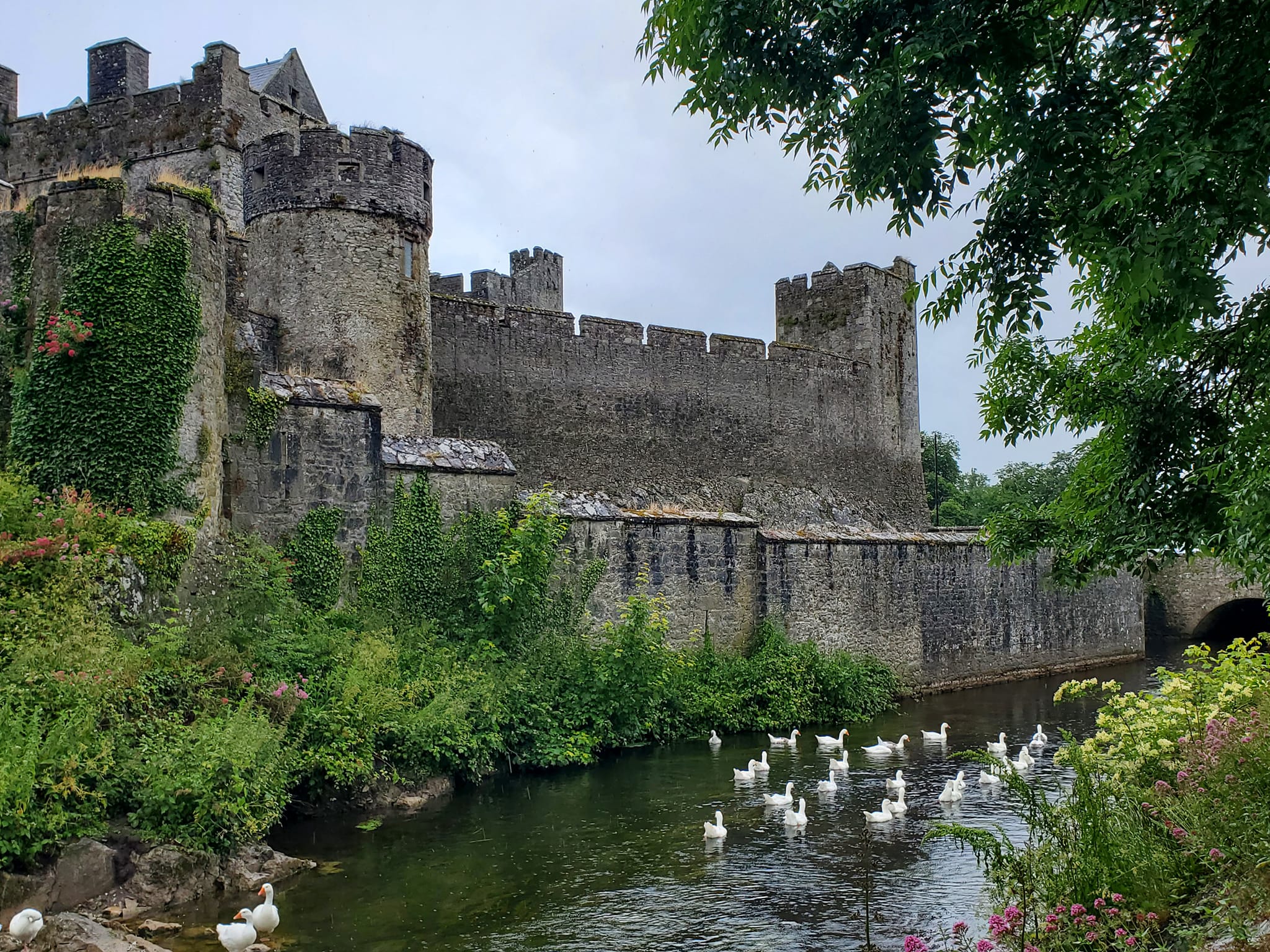
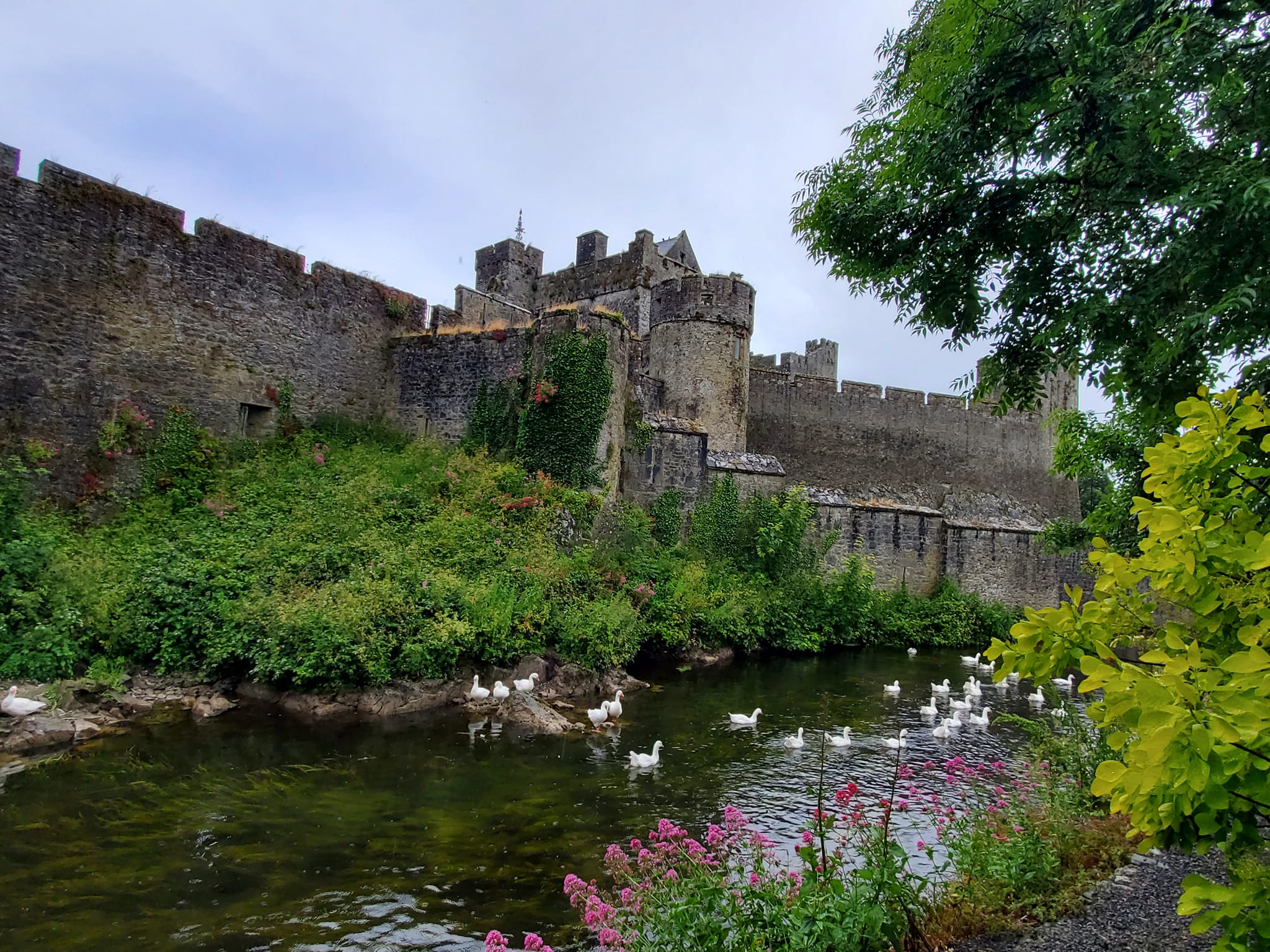
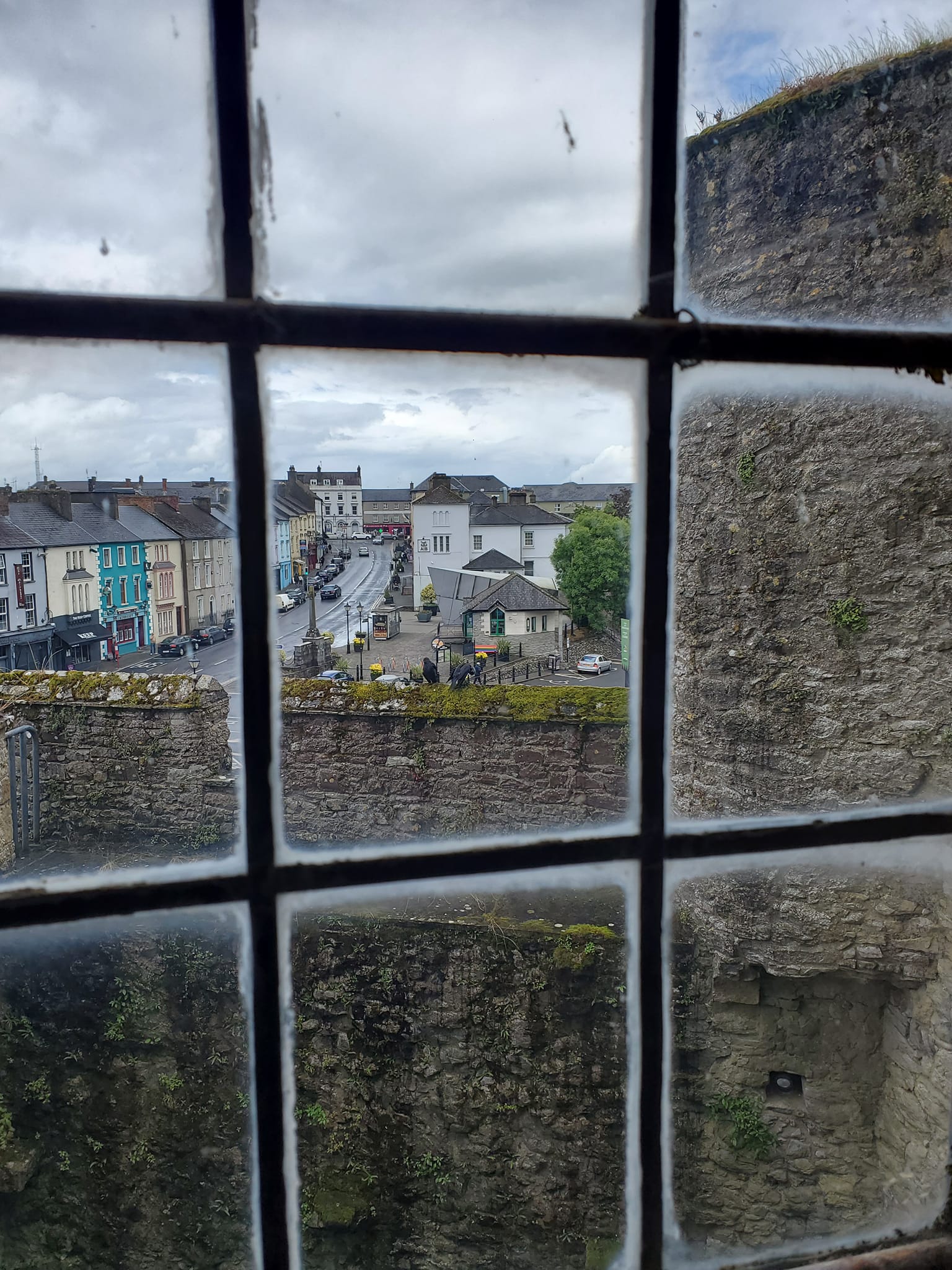
Cahir Castle is one of the largest and best preserved castles in Ireland, situated along the River Suir.
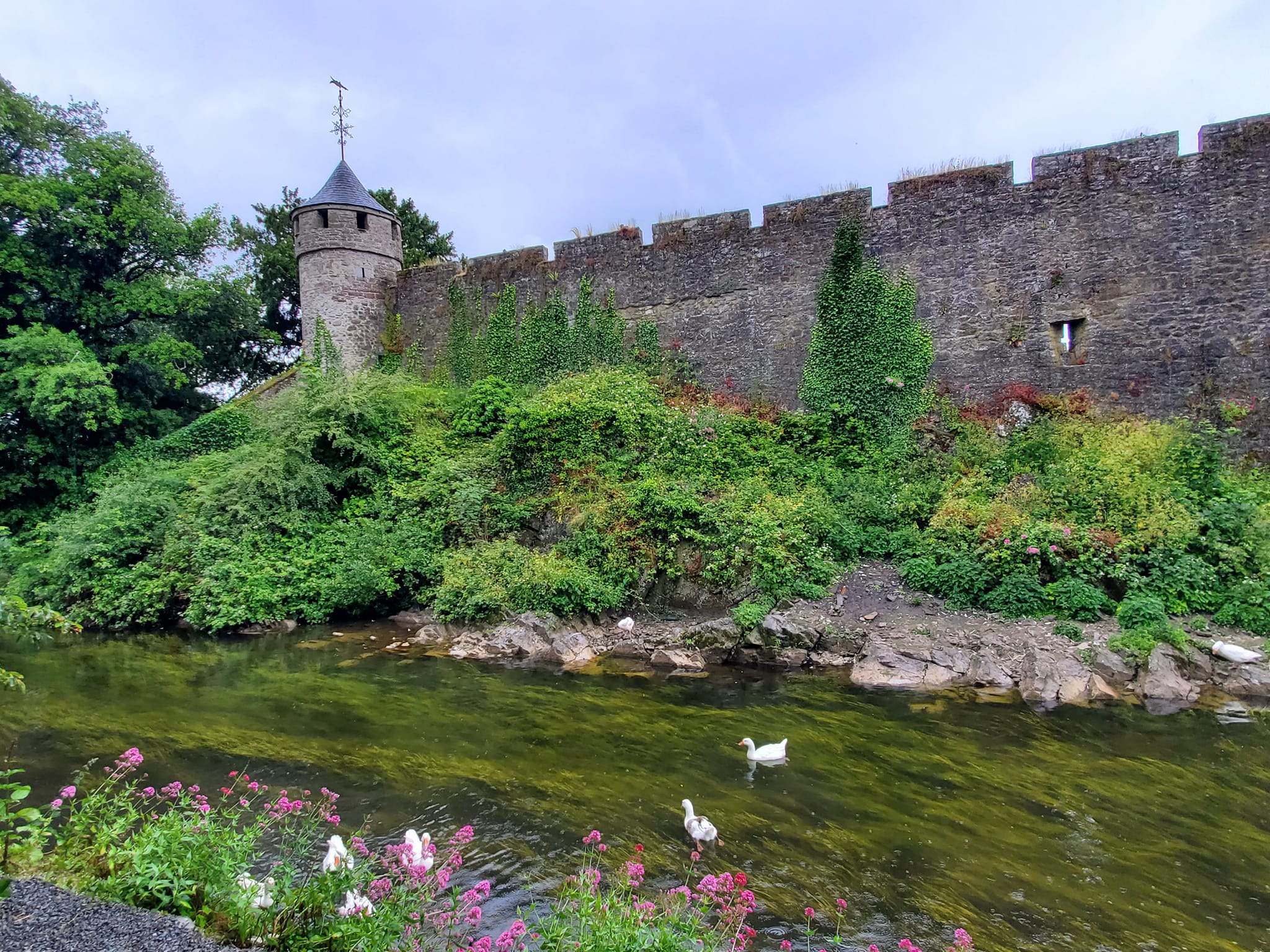
It was built in 1142 by the King of Thomond on island, which has since become the town center of Cahir.
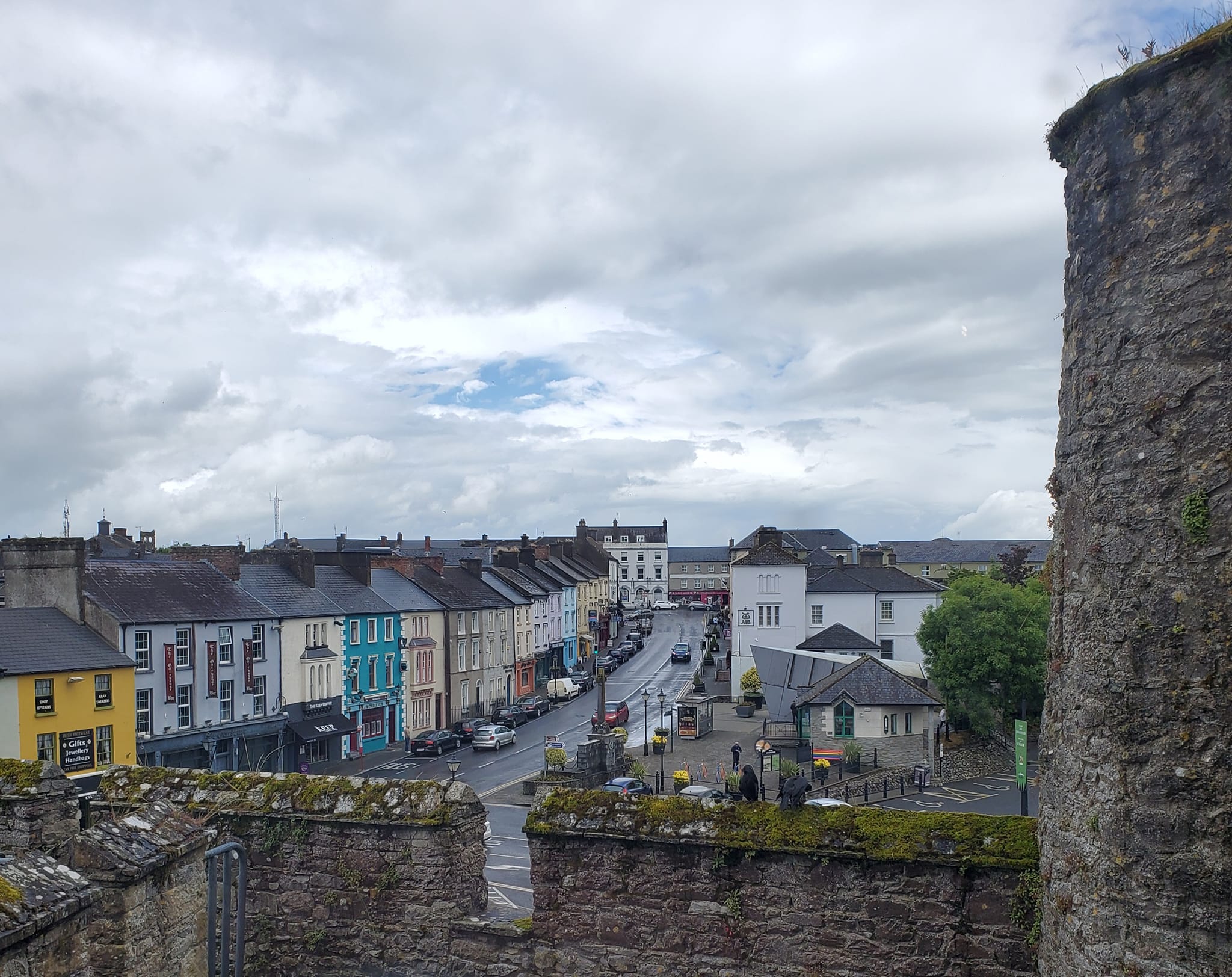
In 1375 the Earl of Ormond took possession of the castle as a gift, until it was captured in 1599 by the Earl of Essex’s army.
There is an interactive exhibit inside the castle that demonstrates each step of the battle through a series of informative plaques and a giant model in the center of the room with buttons that light up various parts of the battle scene.
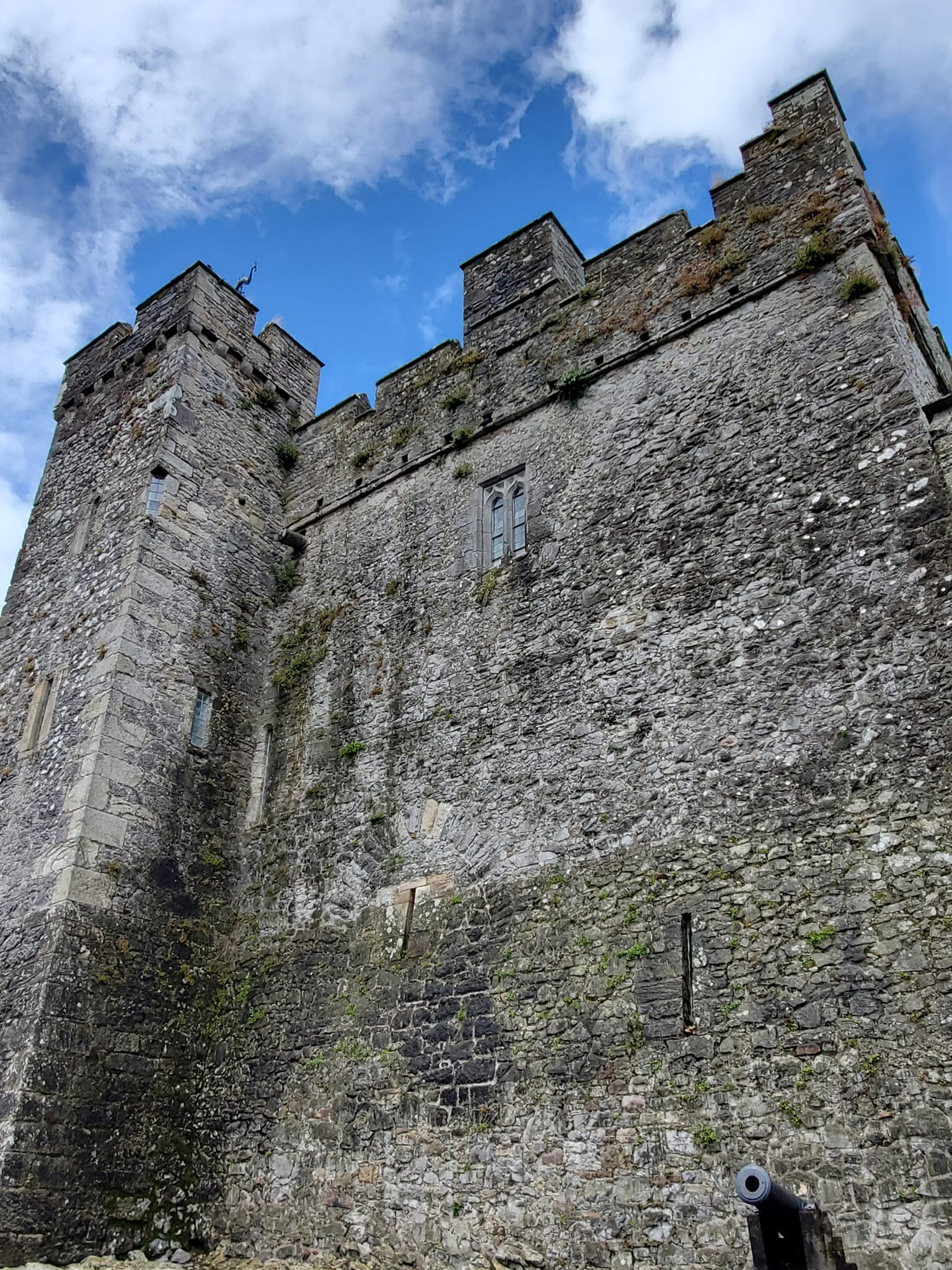
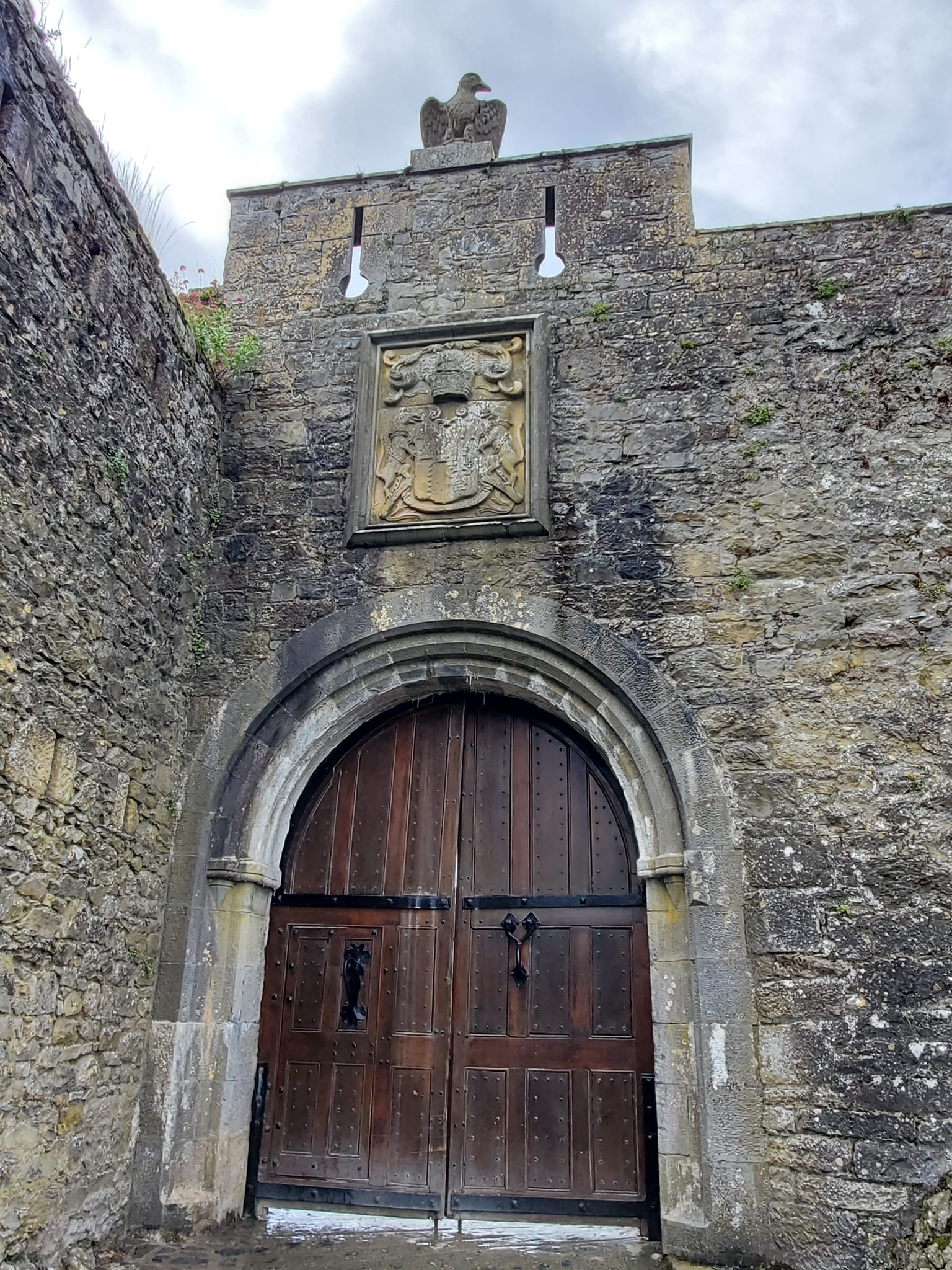
The last Lord Cahir died in 1961 and the Irish state took over the castle. It was later declared a National Monument.
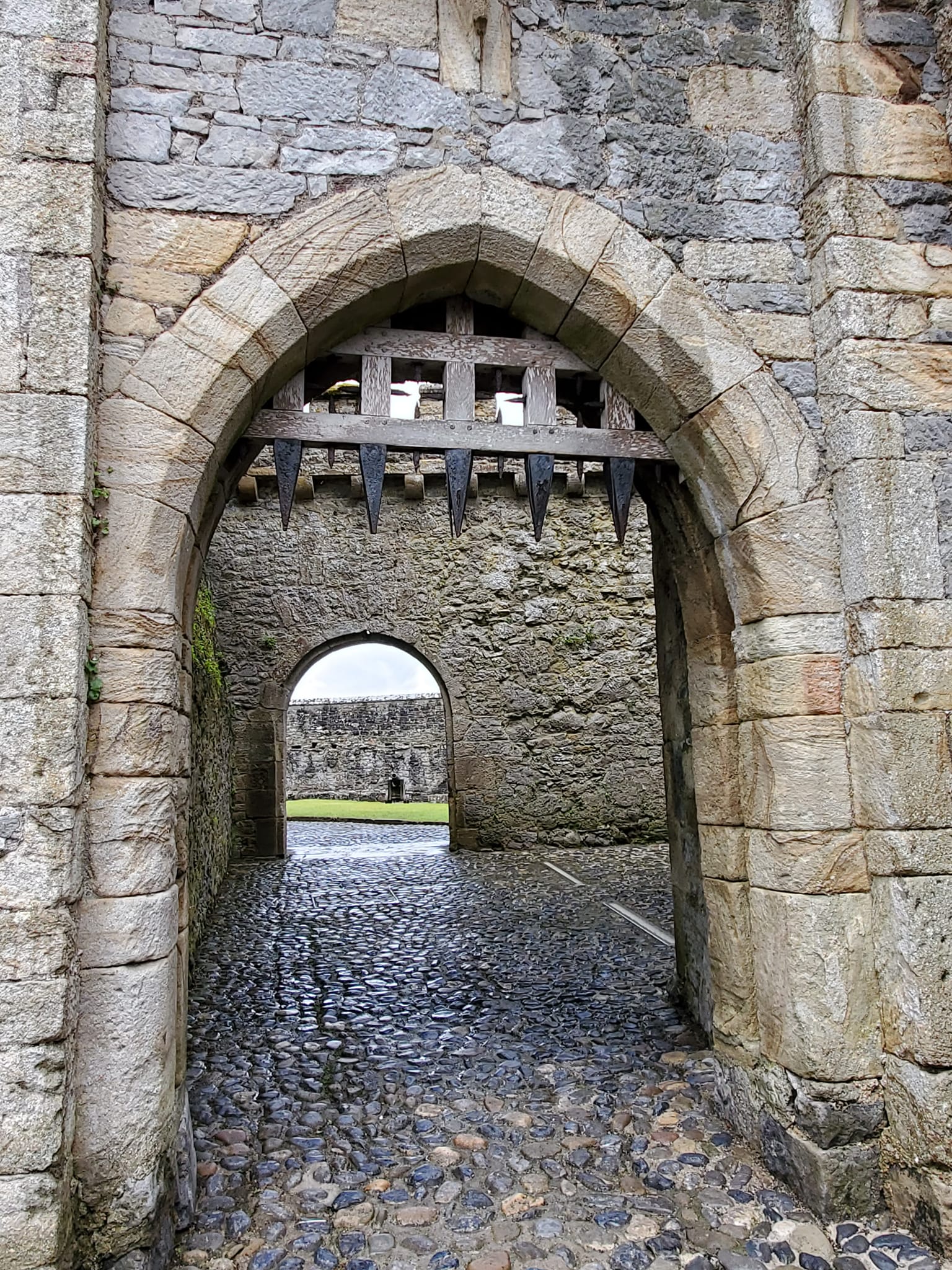
Since then, Cahir Castle has served as the filming location for several iconic films such as Stanley Kubrick’s essential Irish film, Barry Lyndon, the 1981 film Excalibur, the 1998 film Saban’s Mystic Knights of Tir Na Nog, the 2019 film The Green Knight, the 2021 film The Last Duel, a 1973 television film called The Conflict, and the popular tv serial The Tudors.
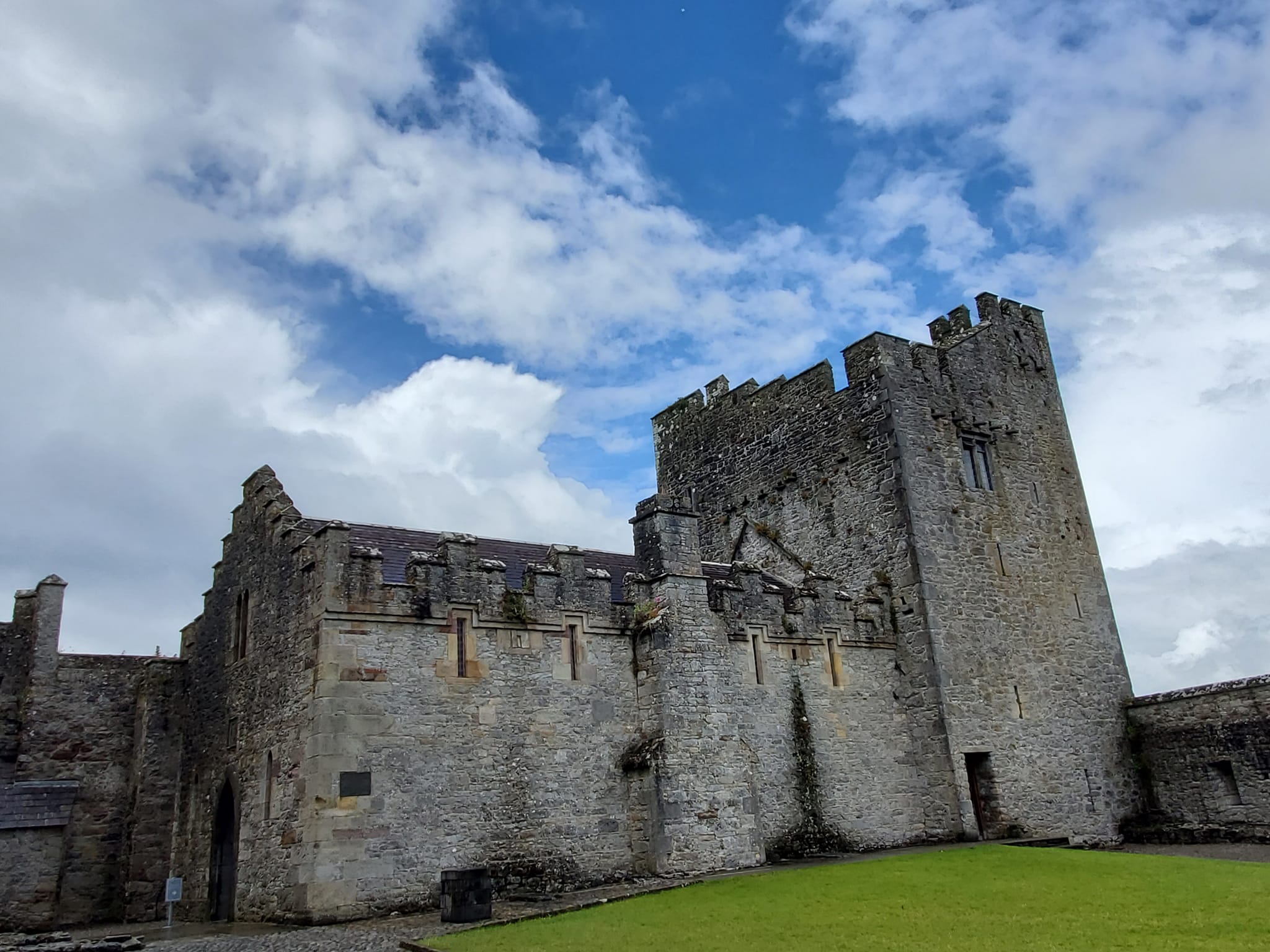
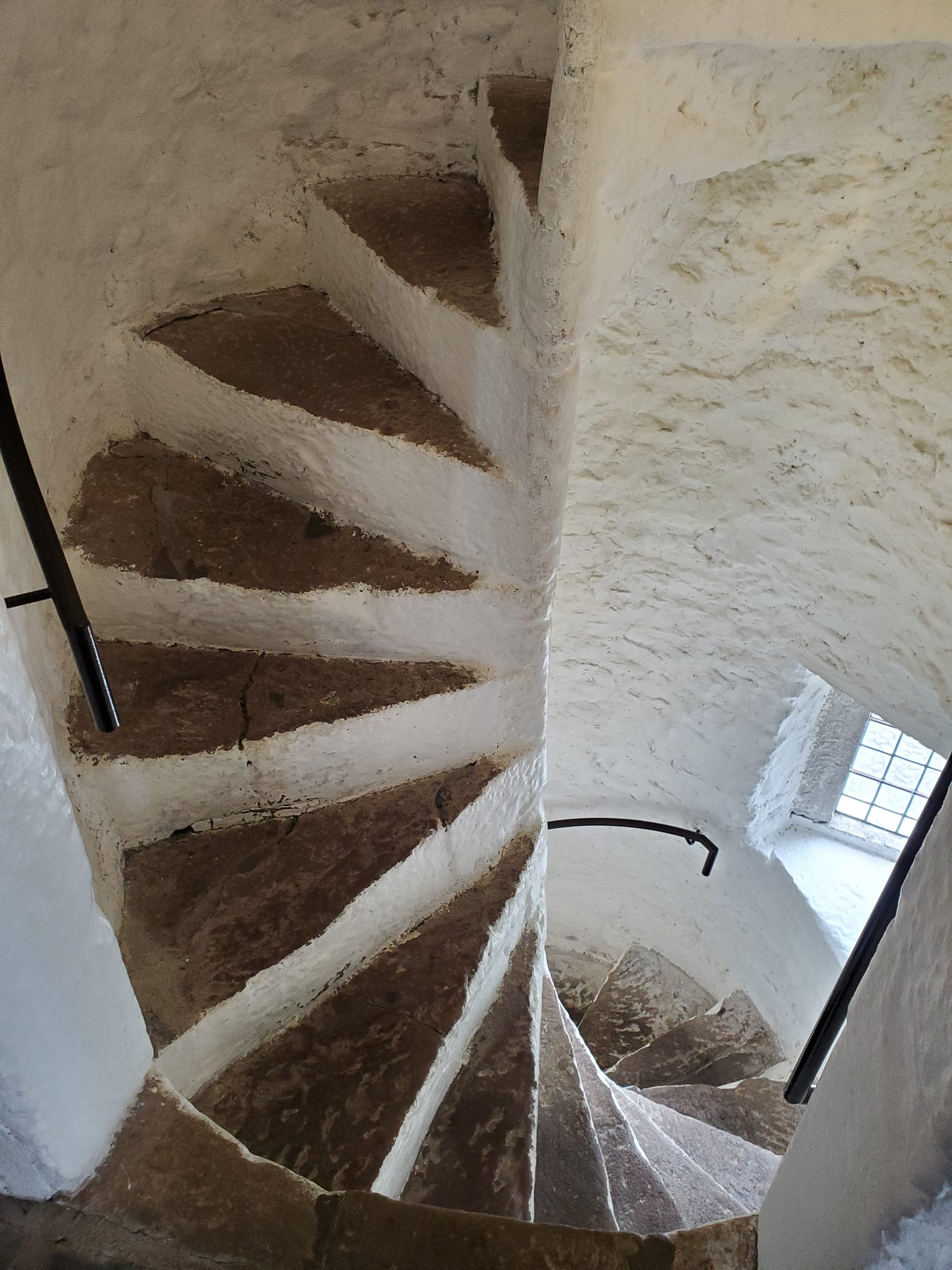
Plan to wear secure shoes for your visit, because the stairs inside are narrow AF.
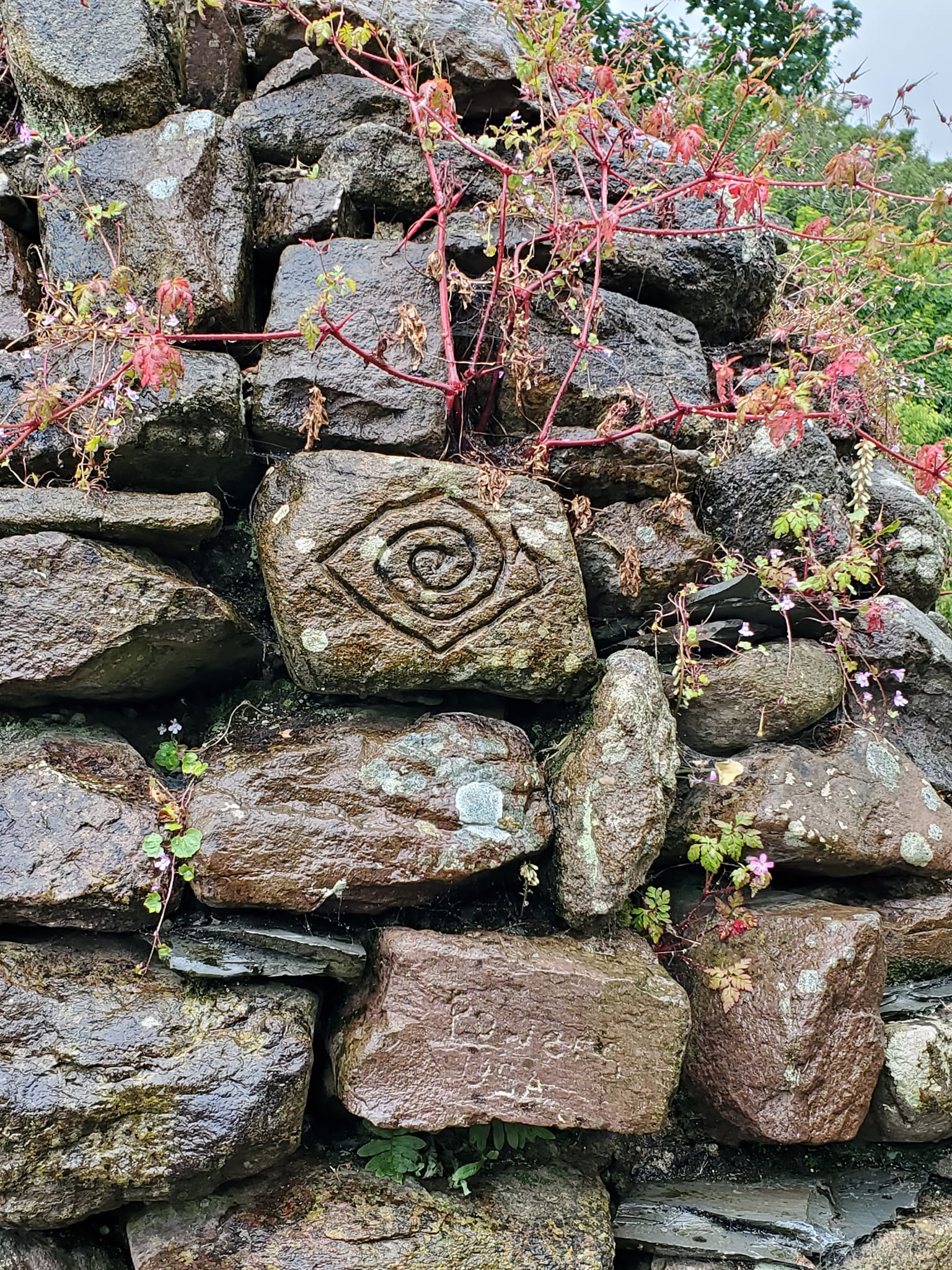
I noticed a trail out in the parking lot and decided to follow it.
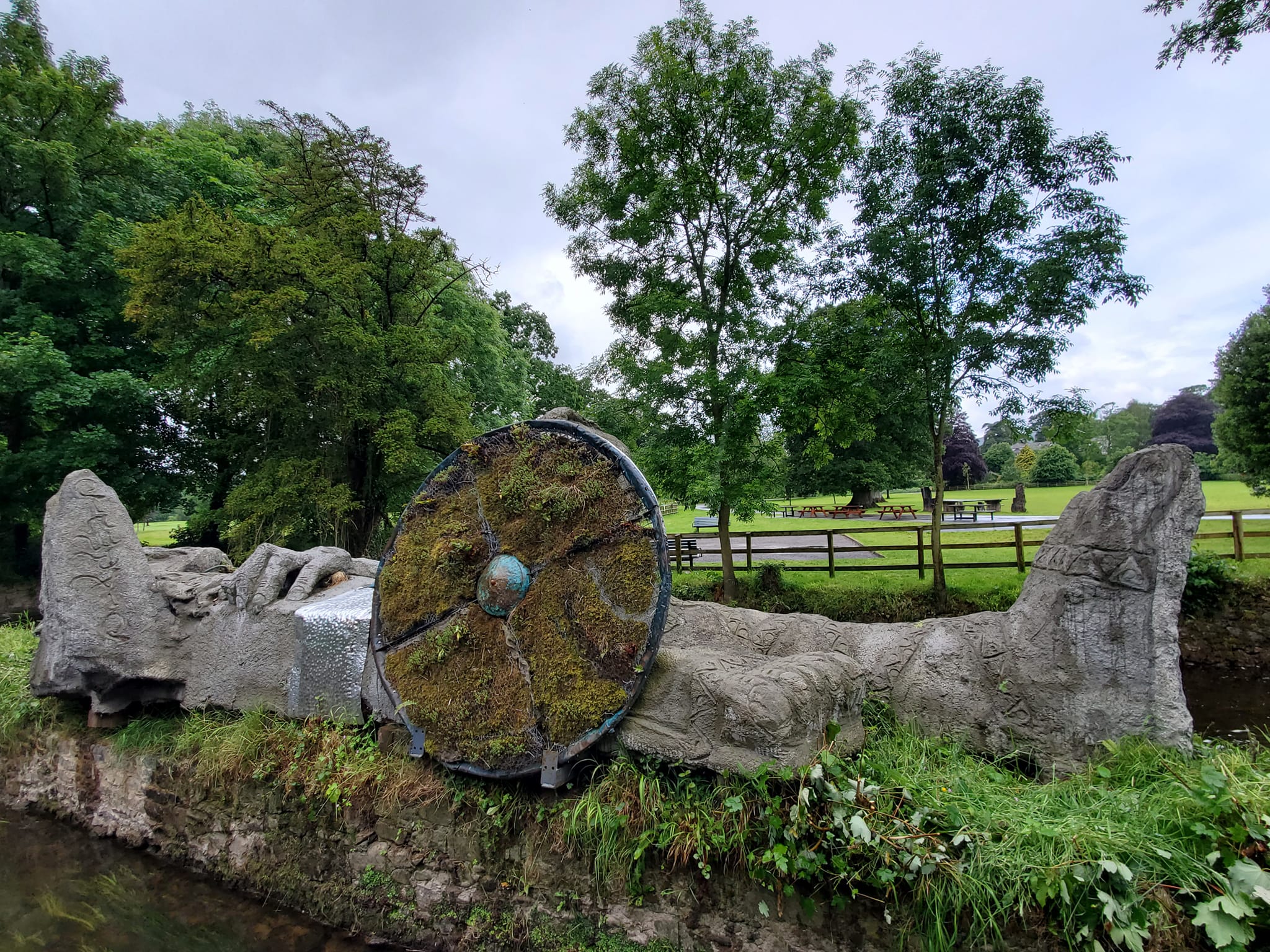
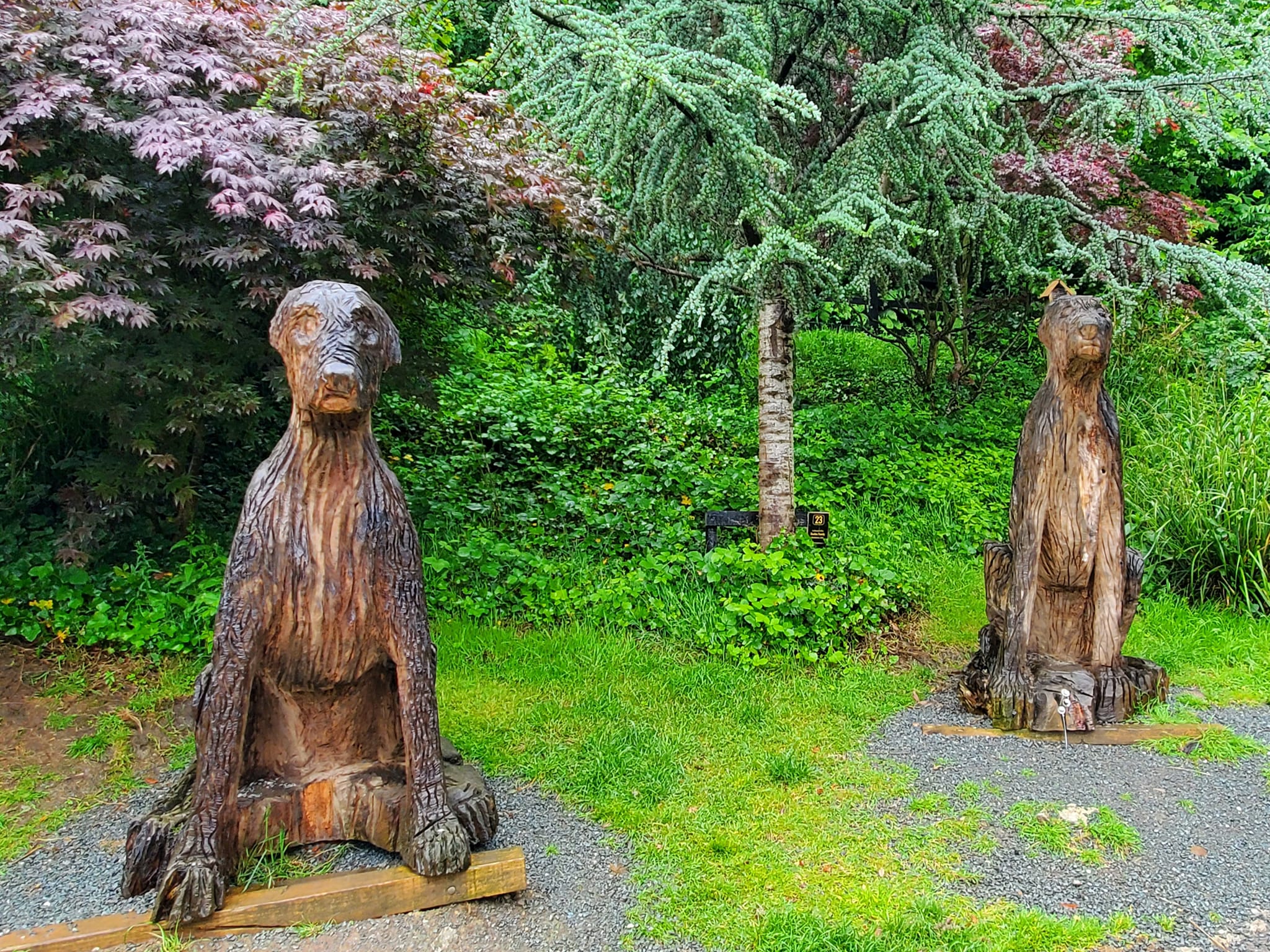
Turns out it is Cahir’s Memorial Garden (no website), filled with interesting statues, beautiful plants, and lots of little surprises.

FETHARD
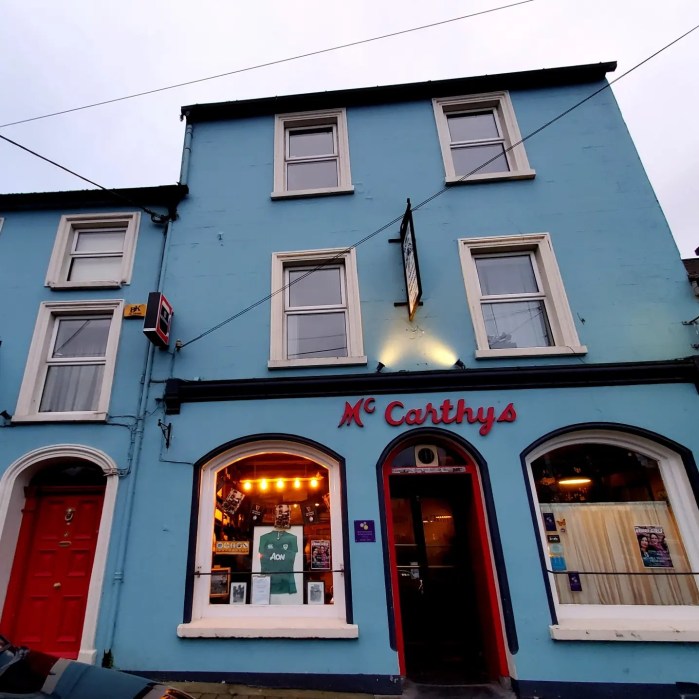
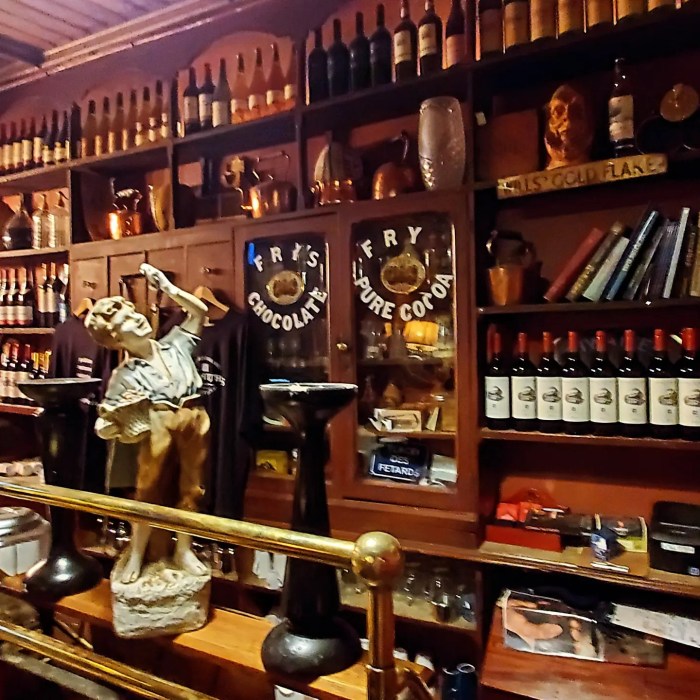
After nearly losing my MIND with excitement, my friend took me to McCarthy’s Pub & Undertakers so I could walk in and have a beer.
Many traditional undertaker businesses in Ireland double as pubs, because what else helps more when you have a lost a loved one than hugs and a few pints with friends and family? Classic combo.
McCarthy’s has been open since the 1840s and is currently operated by the family’s fifth generation descendent.
They have a legit restaurant menu that goes above and beyond the fried bar food genre, and they have a Hall of Fame with photos of celebrities and notable guests over the years including Michael Collins and Eamon De Valera.
Wrapped up in aforementioned excitement, I completely forgot that Fethard has a medieval castle. I knew it ahead of time, and then I forgot.
Fethard’s most popular attraction, and not a single photo.
Fethard comes from the Irish term Fiodh Ard which means “high wood” and has inspired legends about a bit of lawlessness taking place out in the woods where traveling merchants were robbed and killed.
Its remaining fortified walls, often up to 26 feet tall, are considered one of the best examples of a medieval walled town in all of Ireland. They were first set out in the 1200s to defend the village from invaders.
Michael Doorley’s book Stella Days: The Life and Times of a Rural Irish Cinema was adapted into film called Stella Days that was filmed on set in Fethard.
It stars MARTIN SHEEN (I am not even kidding) as an Irish priest living in rural Ireland in the 1950s.
Oh, if you could only feel the sense of satisfaction I have, now that everything has come full circle.
BITS & PIECES
South of McCarthy’s is the Tipperary Museum of Hidden History, but we missed its open hours. Instead, we traveled west of Fethard and Cahir toward Limerick, through two neighbouring communites called Murgasty and Carrownreddy.
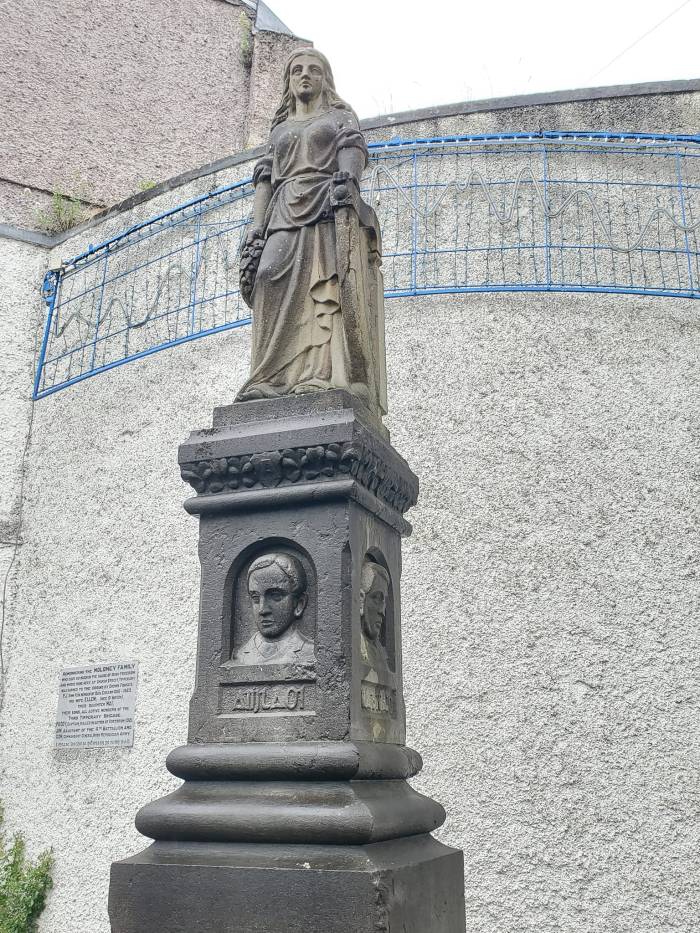
In Murgasty, we stopped to admire the Maid of Eirann, a limestone statue created in 1907 as a memorial to three political activists that were executed in 1867.
The statue has been sat on this corner behind a gate since 2003, but the town has recently announced plans to renovate the site and make it more accessible to visitors, with the additions of more plaques and memorials.
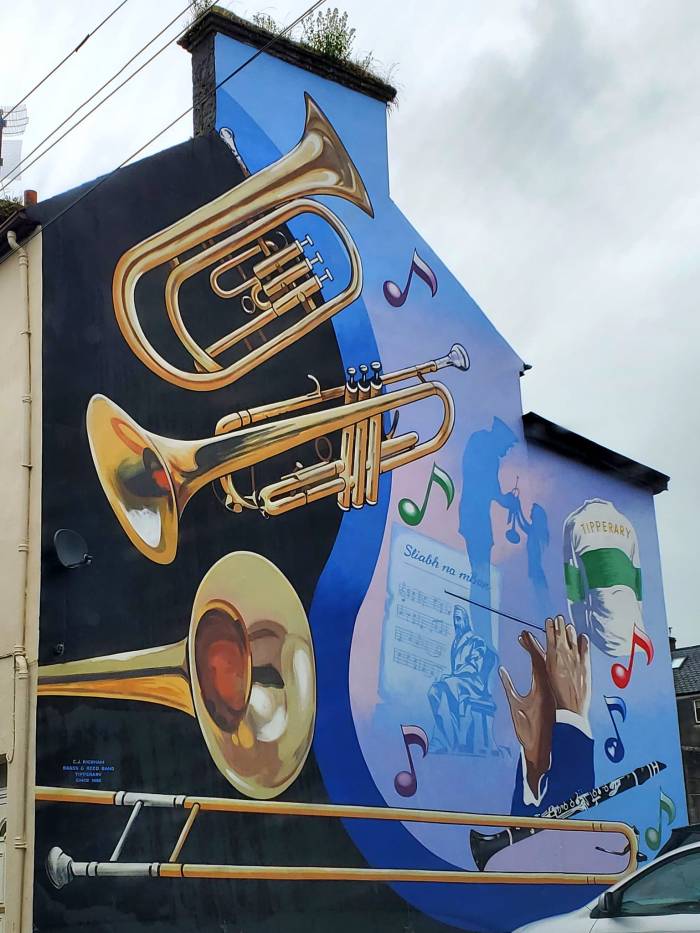
In Carrownreddy, I just loved the mural panels of musical instruments on the exterior of the Danny Ryan Music Shop.
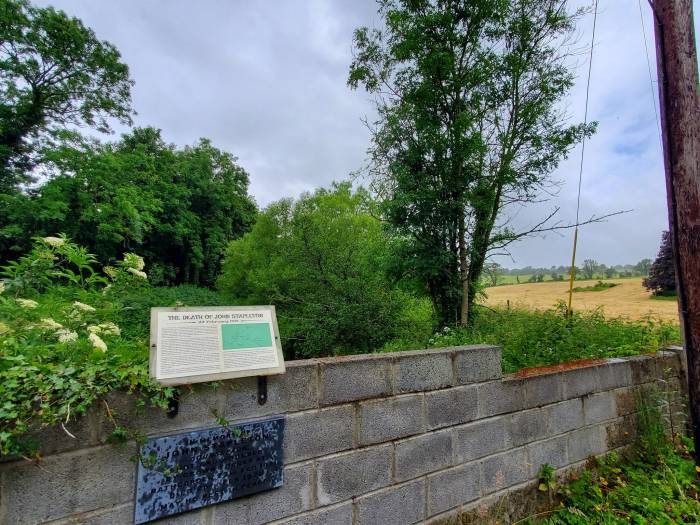
We spotted an unassuming memorial titled “The Death of John Stapleton” that tells the account of a man named John Stapleton who was investigated for being in the IRA and shooting at an RIC patrolman.
When Stapleton was captured, he quickly escaped, so the RIC agents shot him.
He died of his wounds and no one seems to really know the full story, but from my understanding this is a stop on the War of Independence tour.
There is so much to see in County Tipperary, and I already have the Ahenny High Crosses, the Ormonde Castle, Lough Derg, Athassel Priory, Kilcooley Abbey, Roscrea Castle, Carrick-on-Suir, a return to see Fethard Castle on my list for next time.
In the area for a while? Follow me to Dublin, the Wicklow Mountains, County Clare, or the Ring of Kerry!
*************
© Fernwehtun, 2015- Current. Unauthorized use and/or duplication of this material without express and written permission from this site’s author and/or owner is strictly prohibited. Excerpts and links may be used, provided that full and clear credit is given to Fernwehtun and Fernwehtun.com with appropriate and specific direction to the original content.

 Fernweh, An Ache for Distant Places
Leave a comment