Birmingham is known as the Dinner Table of the South, depending on who you ask.
My friend and I recently attended an Herbalist weekend conference in Nauvoo, Alabama and made it a point to plan time for a day in Birmingham beforehand. This north-central Alabama city is a gem in the Valley-and-Ridge Appalachian region, in an area called Jones Valley.

Birmingham is the county seat of Alabama’s most populous county, Jefferson County, and is the state’s second-most populous city after Huntsville, with nearly 200,000. The broader Birmingham population exceeds 1.1 million, making it the fourth most populous metro in the United States.

The city was founded in 1871 as part of Civil War Reconstruction efforts and it grew prosperous in the iron, steel, railroad, and mining industries.
In fact, Birmingham is considered to be the only location in the world with large deposits of all three materials; limestone, iron ore, and coal, the very three used to make steel. This phenomenon is credited to hematite, Alabama’s official State Mineral.
INDUSTRIAL POWER
Birmingham has continued to be a prominent industrial center in the Southern region of the US, earning nicknames like Iron City, Pittsburgh of the South (even though we have one of those in Tennessee), and Magic City, in part due to its speedy upward transition from dumpy farmland to a grid-designed city center full of nice homes and successful businesses.
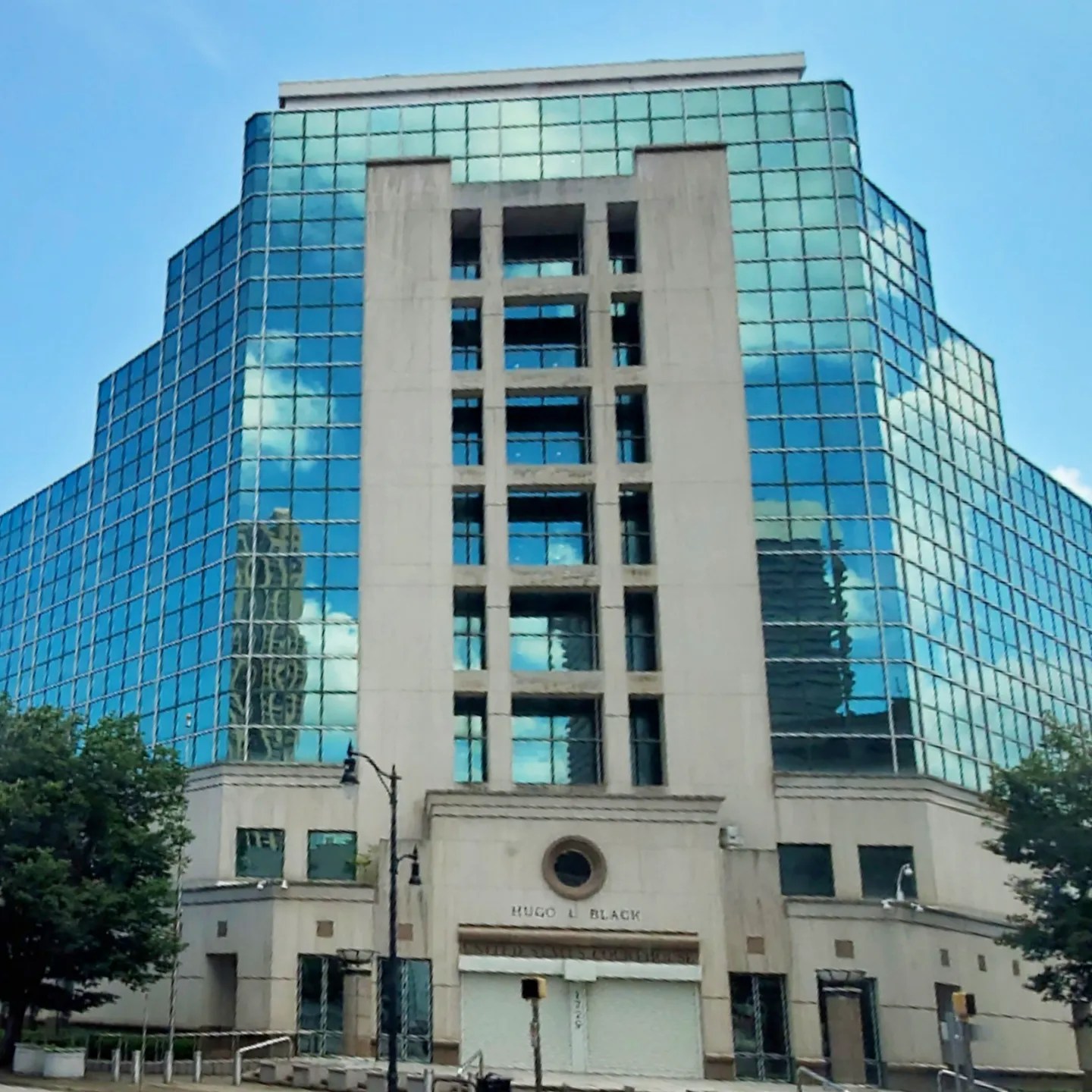
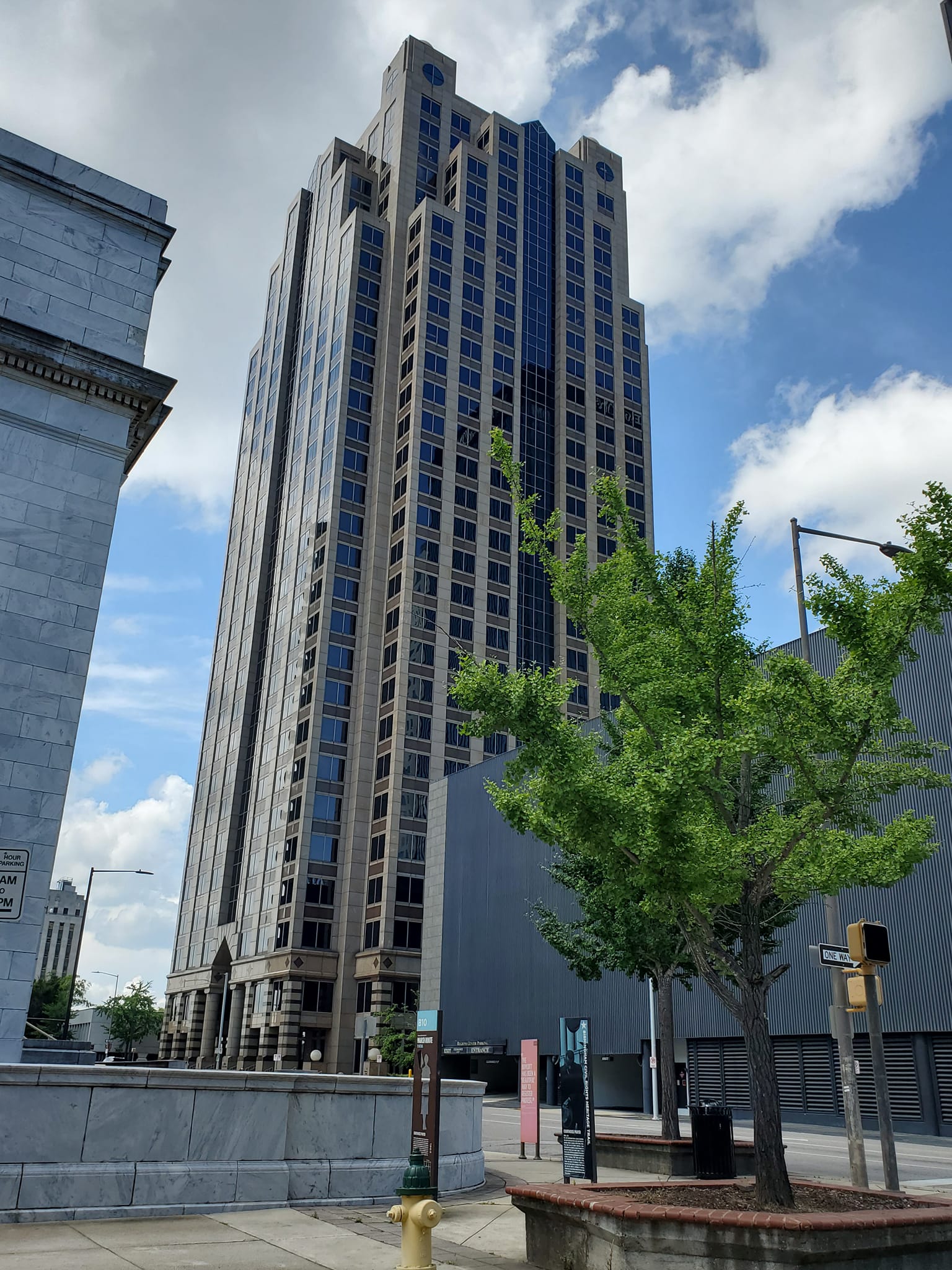
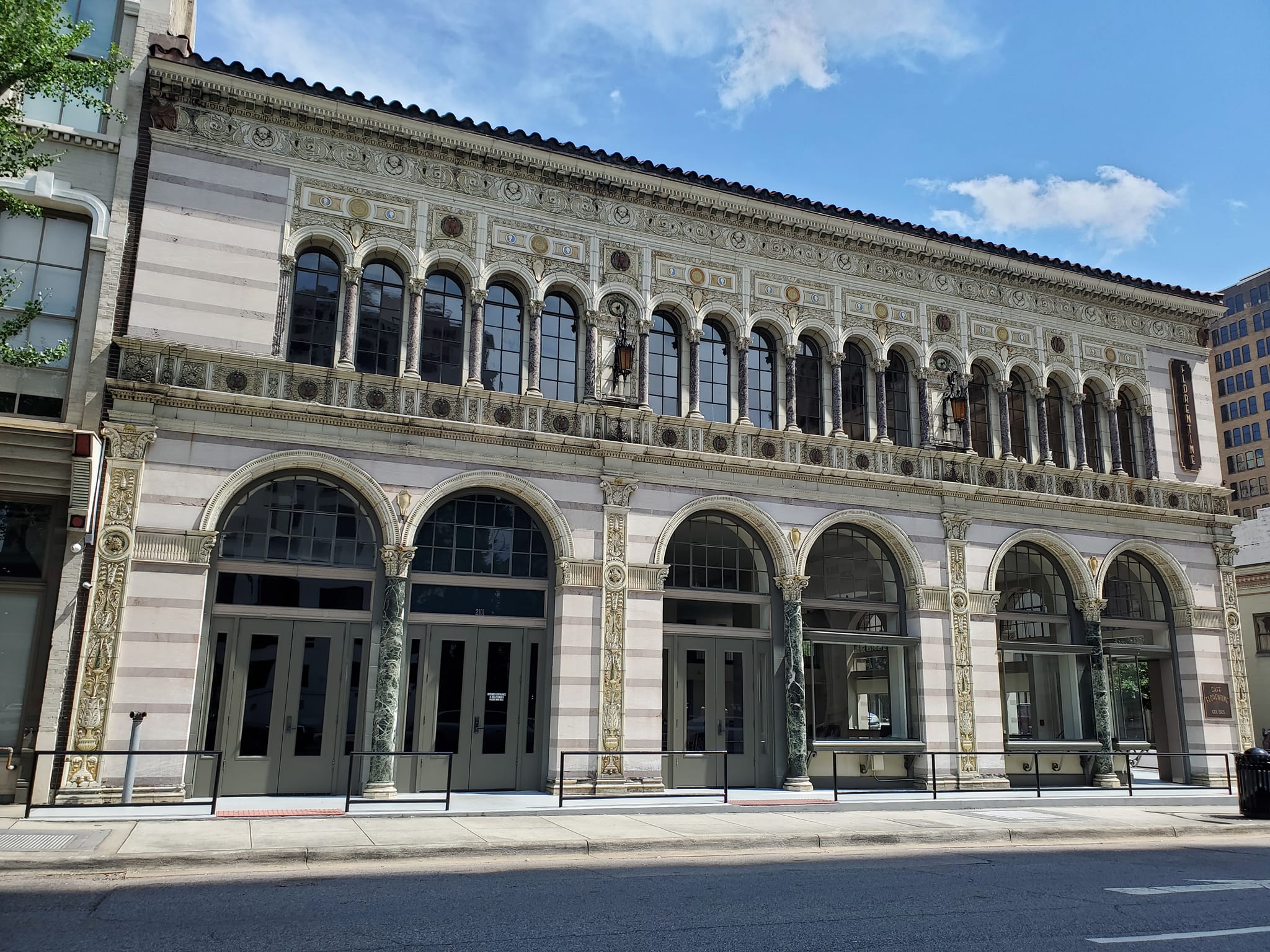
You can view some of the first major office buildings ever built in the city at the crossing of 1st Avenue North and 20th Street, which all point to their respective directions north, south, east, and west.
This cluster of skyscrapers created in the early 1900s is known locally as the “Heaviest Corner on Earth.”
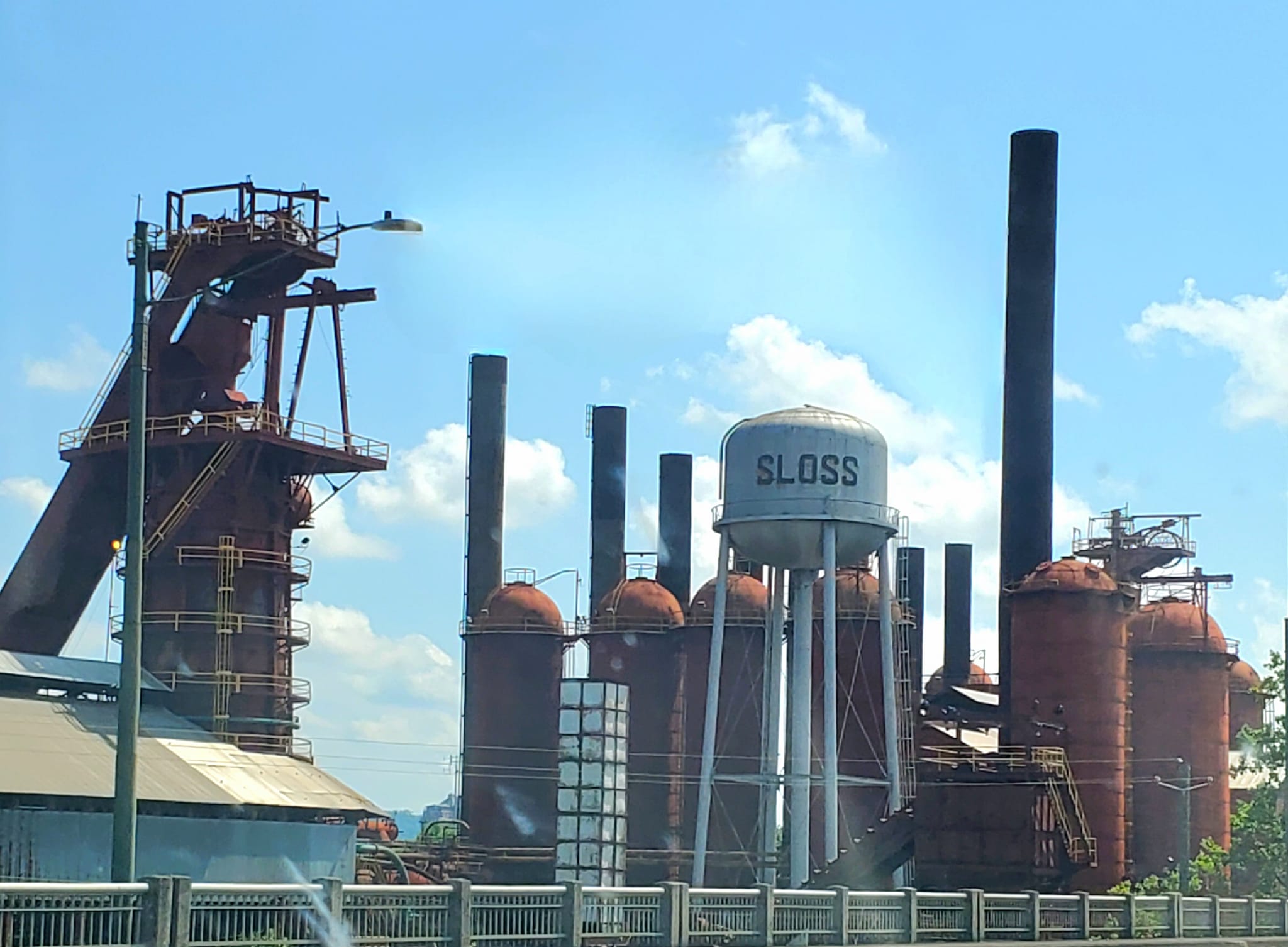
Sloss Furnaces National Historic Landmark was a formidable steel factory in the 20th century, operating on such an extensive scale that it took an estimated 5 million gallons of water, 3.5 million pounds of iron ore, and 2.3 million pounds of coal coke to keep it running properly, and to produce 900 tons of iron EACH DAY.
The furnaces were in full swing until 1971, and the site was added to the National Register of Historic Places one decade later.
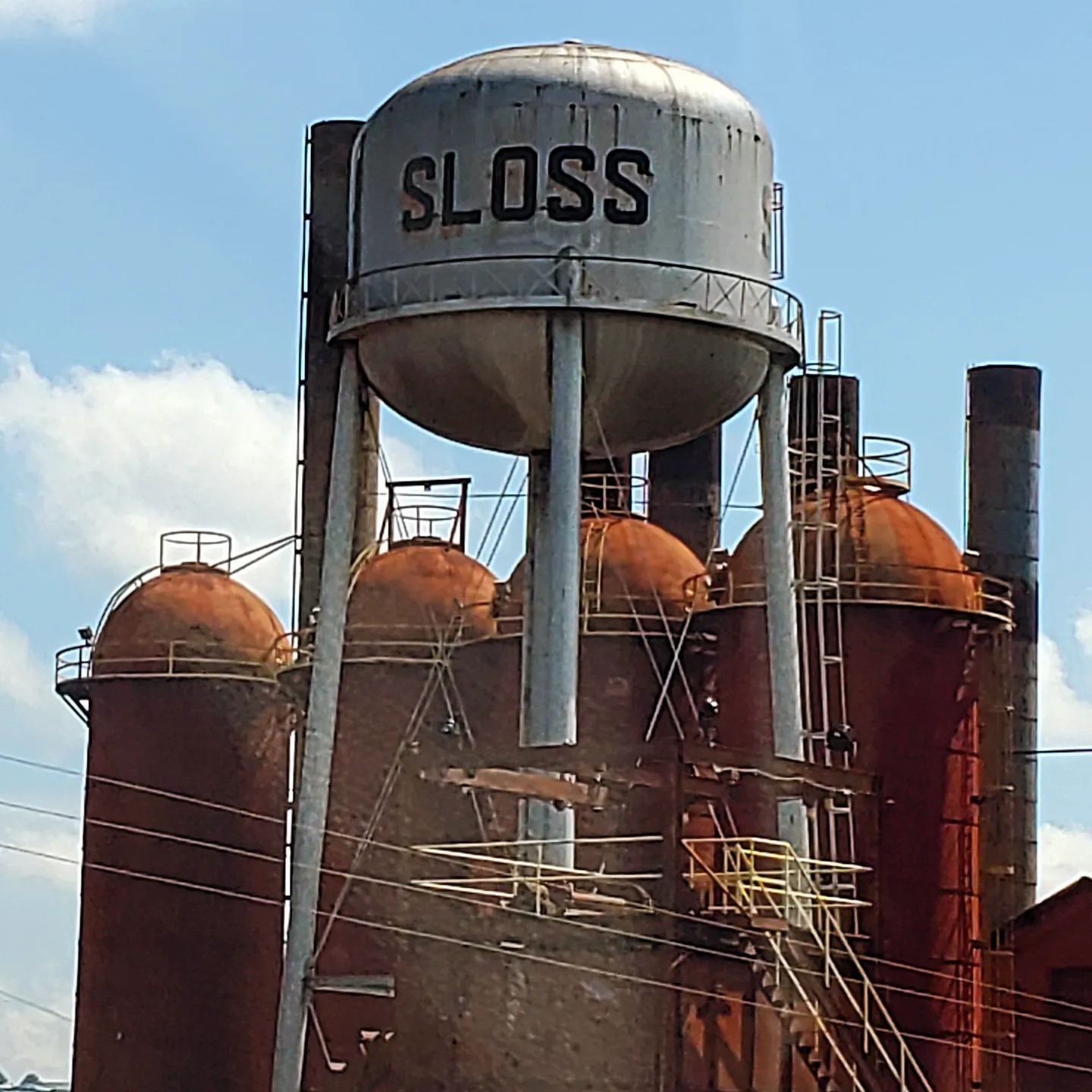
Today you can visit for free and follow a self-guided tour or pay for a guided tour through its 15 acres.
Sloss Furnaces hosts all types of festivals and live shows during the year like Furnace Fest, Magic City Art Connections, Taco Fest, Dia de los Muertos, Festa Italiana, Food+, private weddings, and other events.
Another local landmark is found slightly south of downtown in Vulcan Park & Museum. The Vulcan statue is the world’s largest cast iron statue, and it was cast for the 1904 St. Louis Exposition.

The Vulcan statue was created in 1938 and stands high above the entire city from Red Mountain. It was kind of intimidating until we saw the back of it and had a giggle.
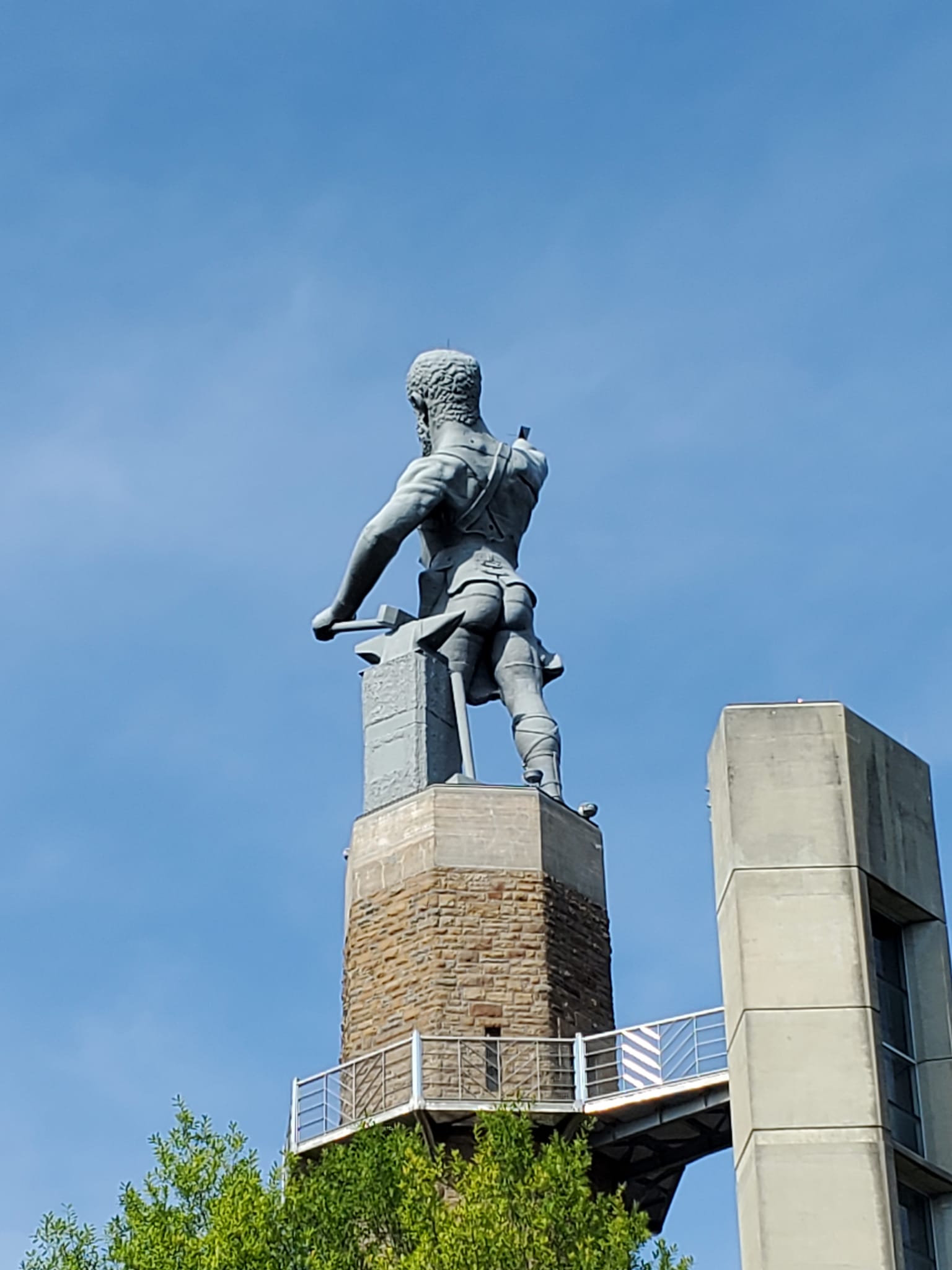
Vulcan, the Roman God of fire, iron, and blacksmiths, has become the symbol and mascot of Birmingham. You can see references to Vulcan, as the God and to the statue itself, all over town.

A PATTERN OF RESILIENCE
As demonstrated in the slogan above, Birmingham has a real CAN DO attitude.
The city has seen its share of disaster and turmoil, suffered a massive earthquake in 1916 that destroyed much of its infrastructure, fell particularly vulnerable during the Great Depression in the 1930s, and it was the site of some major events during the Civil Rights Movement.
Despite all of this, the people keep moving forward.

Thankfully the people of Birmingham had direct access to abundant steel and building materials to rebuild with, which attracted the attention and funding of the New Deal, WPA, and CCC programs, which helped it survive during the Great Depression of the 1930s, and was further supported by the demand for steel that brought job security during war time in the 1940s and beyond.
The resilience of its people also kept it strong during all of the political and social hits it has taken over the years.
ART, CULTURE, & EDUCATION
Birmingham is not all business and industry though, it has been a cradle for the arts and entertainment. St. Paul & the Broken Bones, Helen Keller, Ruben Studdard, Sun Ra, Erskine Hawkins, Emmylou Harris, Gucci Mane, Courteney Cox, Condoleezza Rice, and other well-known figures are all from Birmingham.
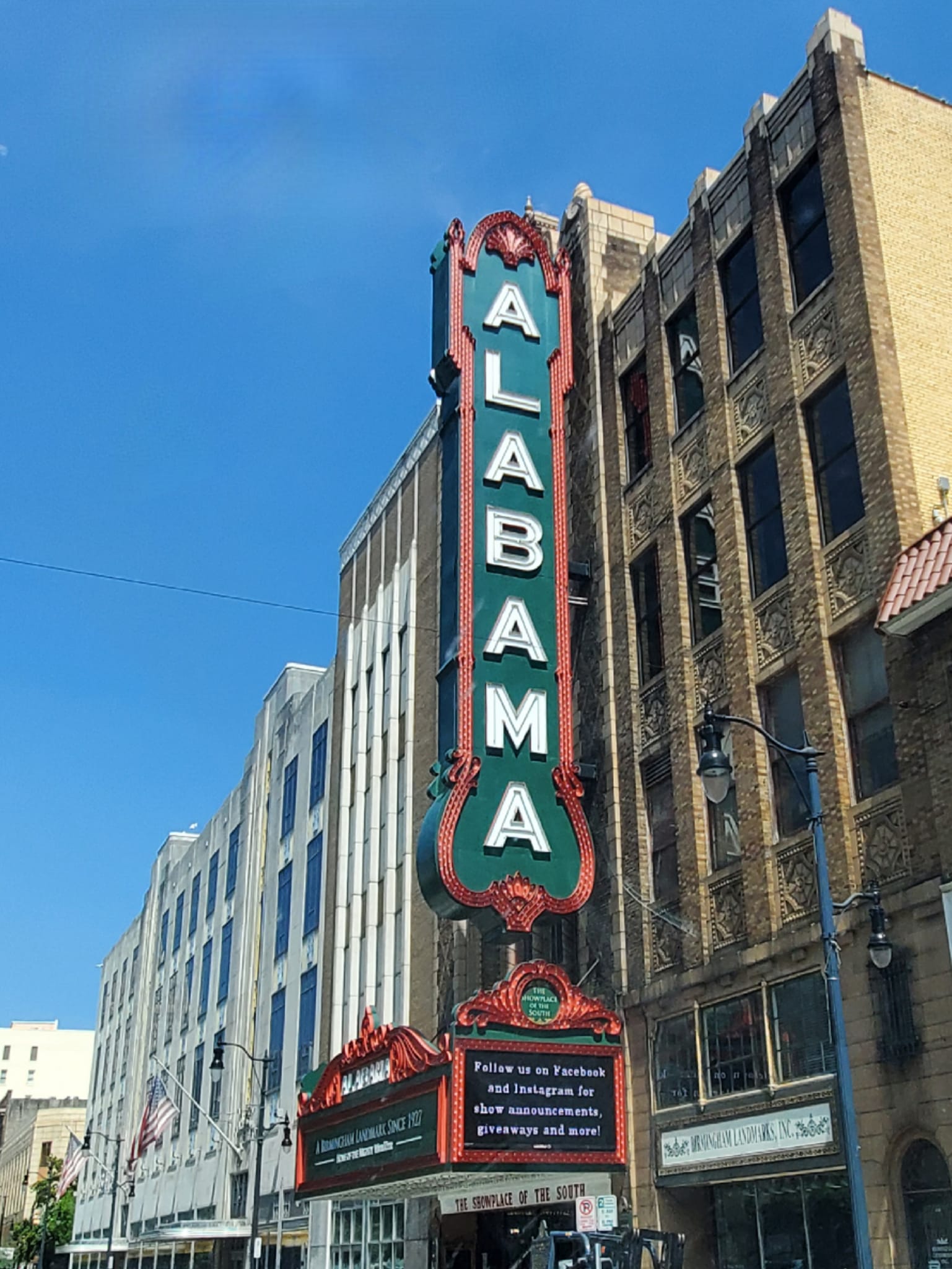
The Birmingham Museum of Art is the largest art museum in the Southeast, and you can find it, the Alabama Ballet, Alabama Symphony Orchestra, Opera Birmingham, Birmingham Concert Chorale, Birmingham Civil Rights Institute, Southern Museum of Flight, Arlington Home, Alabama Museum of Health Sciences…
*deep inhale*
… the Barber Vintage Motorsports Museum, Alabama Sports Hall of Fame, Talladega Superspeedway International Motorsports Hall of Fame Museum, the Iron & Steel Museum of Alabama at Tannehill Ironworks Historical State Park, and the McWane Science Center, all in this one city.

Birmingham festivals like the Sidewalk Film Festival, Birmingham Folk Festival, Taste of 4th Avenue Jazz Festival, and Do Dah Day never cease to flood the city with new and recurring visitors each year.
The Birmingham Zoo, Birmingham Botanical Gardens, and Aldridge Botanical Gardens should be at the top of any nature lover’s list.
The University of Alabama at Birmingham, Sanford University, and Miles College are all notable institutions and, the Birmingham-Southern College operated there until it closed this year (2024).
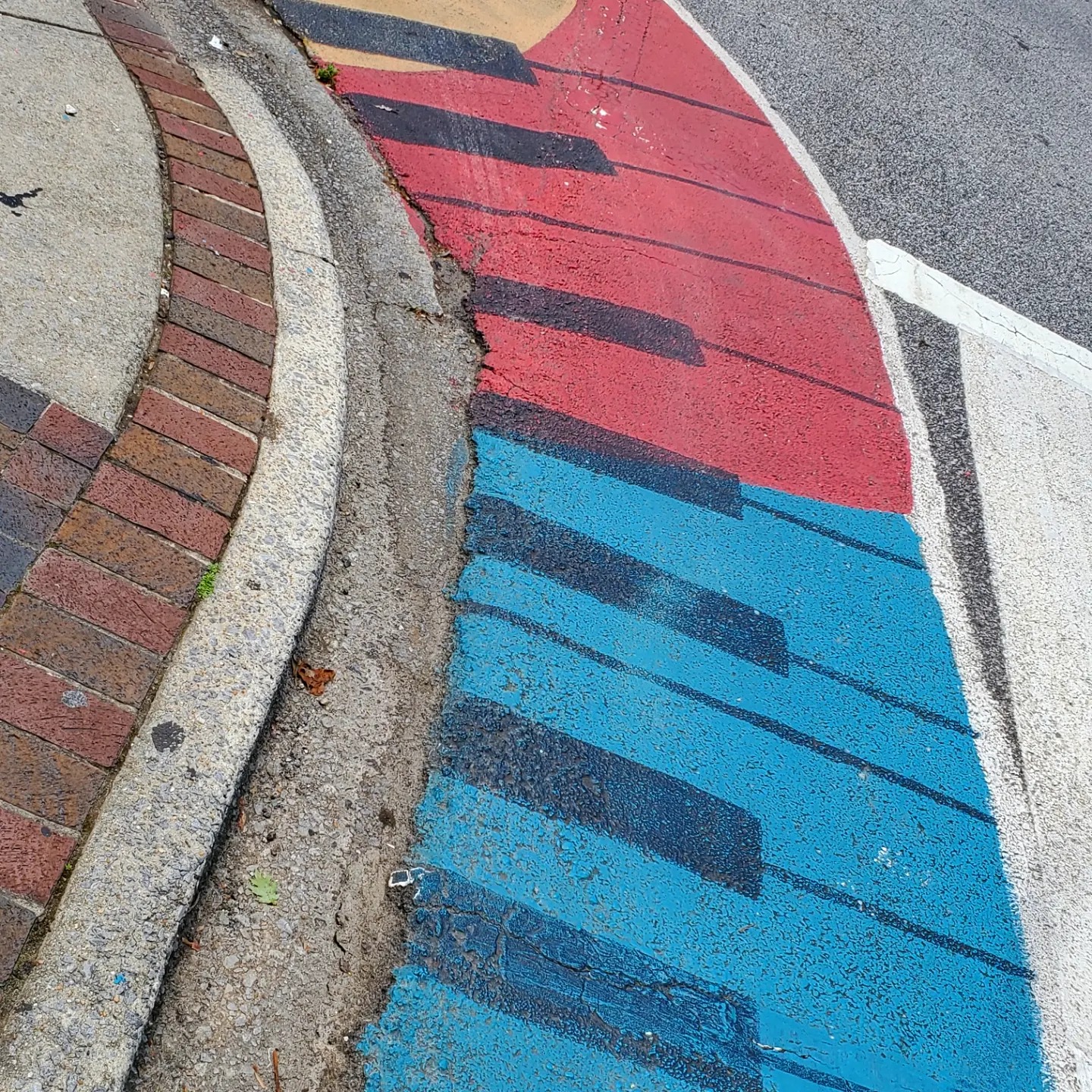
ALABAMA JAZZ HALL OF FAME
The Historic Carver Theatre is now proudly home to the new Alabama Jazz Hall of Fame.
The Carver Theatre first opened in 1935 as a movie house in Birmingham’s segregated “Black Business District” along Fourth Avenue. It was known for being one of the very few theatres for African-Americans that showed first-run films during the time of Jim Crow, and was a major entertainment hub in the district until the 1980s.
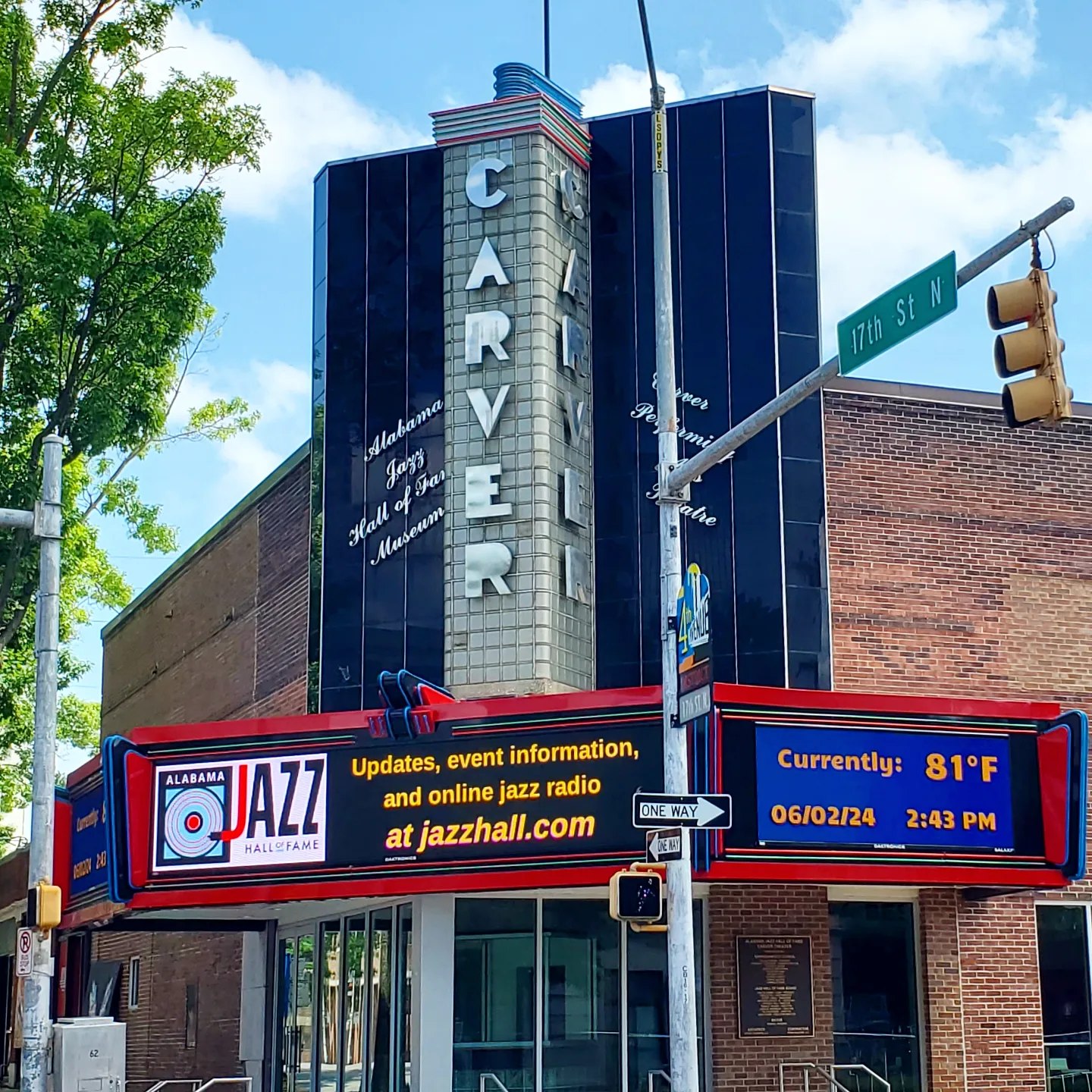
In the 1990s, the City set out to revive the Fourth Avenue District and part of that plan was to purchase the Carver Theatre and make it the new home of the Alabama Jazz Hall of Fame. The AJHF was created first in 1978 and had previously been located at 161 Street North until it moved into the Carter Theatre.
The first big bash there was the induction ceremony in 1978 where Birmingham’s jazz greats were honoured, including Erskine Hawkins, Sammy Lowe, Haywood Hawkins, John T. “Fess” Whatley, Frank Adams, and Amos Gordon.
Hawkins was and still is Alabama’s most famous bandleader and is commonly credited as the man behind Birmingham’s Tuxedo Junction district as well as the hit song of the same name.
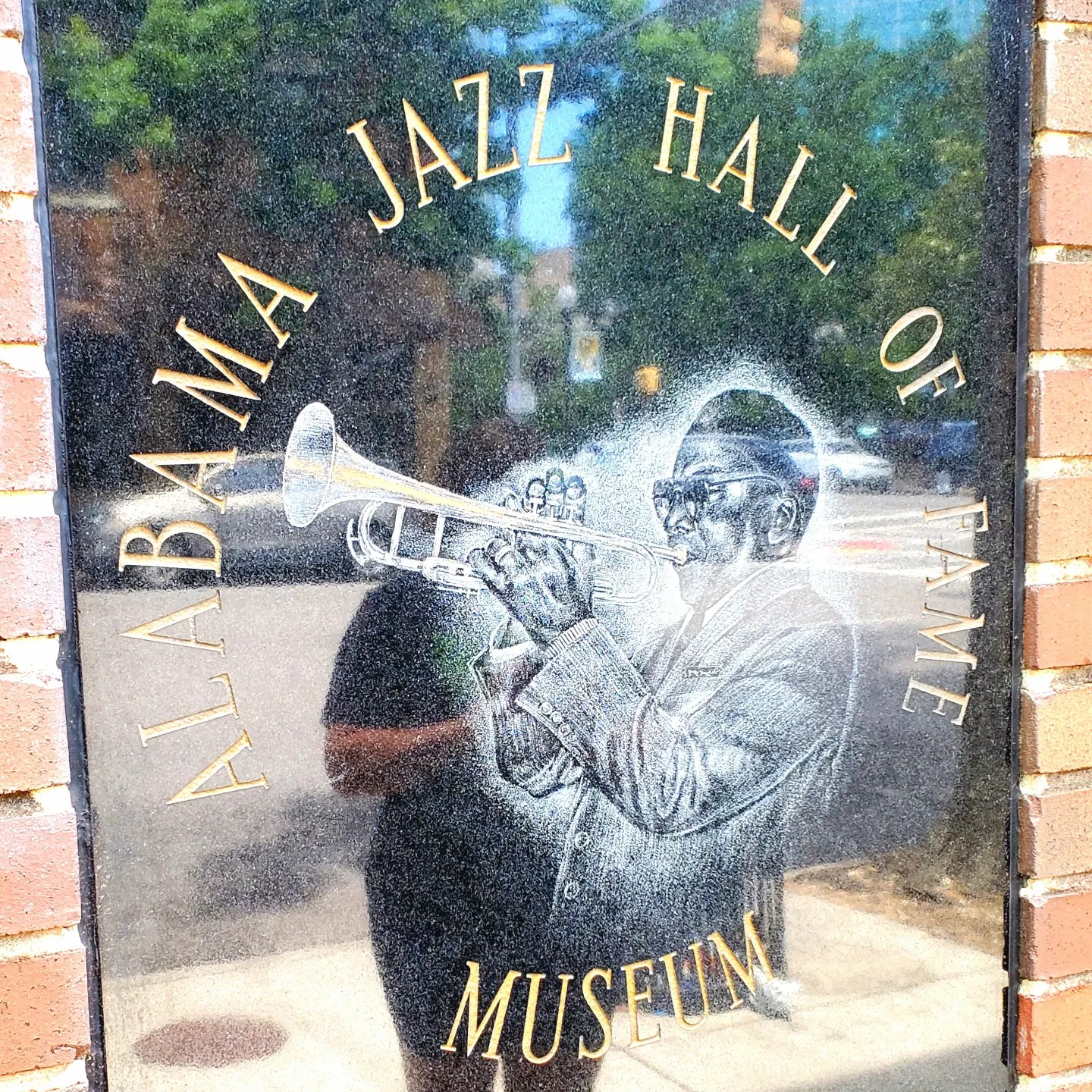
By early 1993, the museum opened its doors to the public.
The newly renovated performance hall attracted jazz, blues, and soul artists from all around and became an integral part of local music and film festivals, The Alabama Jazz Hall of Fame now has nearly 250 inductees from all over Alabama instead of strictly Birmingham.
AJHF has also become a highly revered landmark of Birmingham’s Civil Rights District that I will talk more about later.

In 2019, the AJHF Board of Directors were faced with the need for modernizing the building, and set to obtaining grants and investments of over four million dollars for redesign and expansion.
Demolition began that year and rebuilding began the year after. It took about four years to get everything completely finished.
We actually visited in early summer of 2024 before the Board was ready to reintroduce the AJHF to the public. The website said they were open, so we knocked on the glass and waited around for a bit until someone poked their head out and said they would not be ready until the following month.
As usual, my face betrayed me. I must have shown my feelings of despair and sadness, because the kind gentleman opened the door again and said “You know what, come on in. I’ll show you around.”

That was when we met Mr. Orville Ifill. He was the President of AJHF for many, many years, but had just recently stepped back to become Vice President since he has his hands on so many other projects.
He is still a huge part of the AJHF operations and can be found there more often than any other soul in the building.
Today he just happened to be there doing some paperwork, or we would have been outta luck after our 3.5-hour drive.

Orville spent about an hour taking us through the museum, discussing each exhibit, touring the theatre and new stage, the radio station, and all the behind-the-scenes places we could dream of. We appreciated him and his knowledge so much, and this was one of the most memorable experiences of our trip.
He told us about the jazz hall being renamed the Carver Performing Arts Center and all of the exciting plans they have, especially now that they have the city’s jazz and blues radio station on site, are offering music classes, are partnered with many community outreaches, and are on the list of landmarks for so many festivals and historical tours.
You can stream the radio station online by visiting this link and clicking Listen Live!

4TH AVENUE BUSINESS DISTRICT
The historic Fourth Avenue Business District is described as “one of the only surviving Black Business Districts in the Southeast still operating with a majority Black owned business ecosystem and property ownership!” A tour of locations in this district provide a backdrop to the time of Jim Crow in Birmingham, mainly 1908-1941. when the city was still segregated.
It has been on the National Register of Historic Places since 1982 and includes 17 historic buildings found on the 1600-1800 blocks of 4th Avenue North as well as the 300 blocks of both 17th and 18th Streets.
Some of its most prominent buildings are the Pythian Temple (Alabama Penny Savings Bank), the 1922 “Colored” Masonic Temple, and a showcase of other fine Art Deco architecture.
The heart of this district just so happens to be the Alabama Jazz Hall of Fame, and the Taste of 4th Avenue Jazz Festival is its main event.
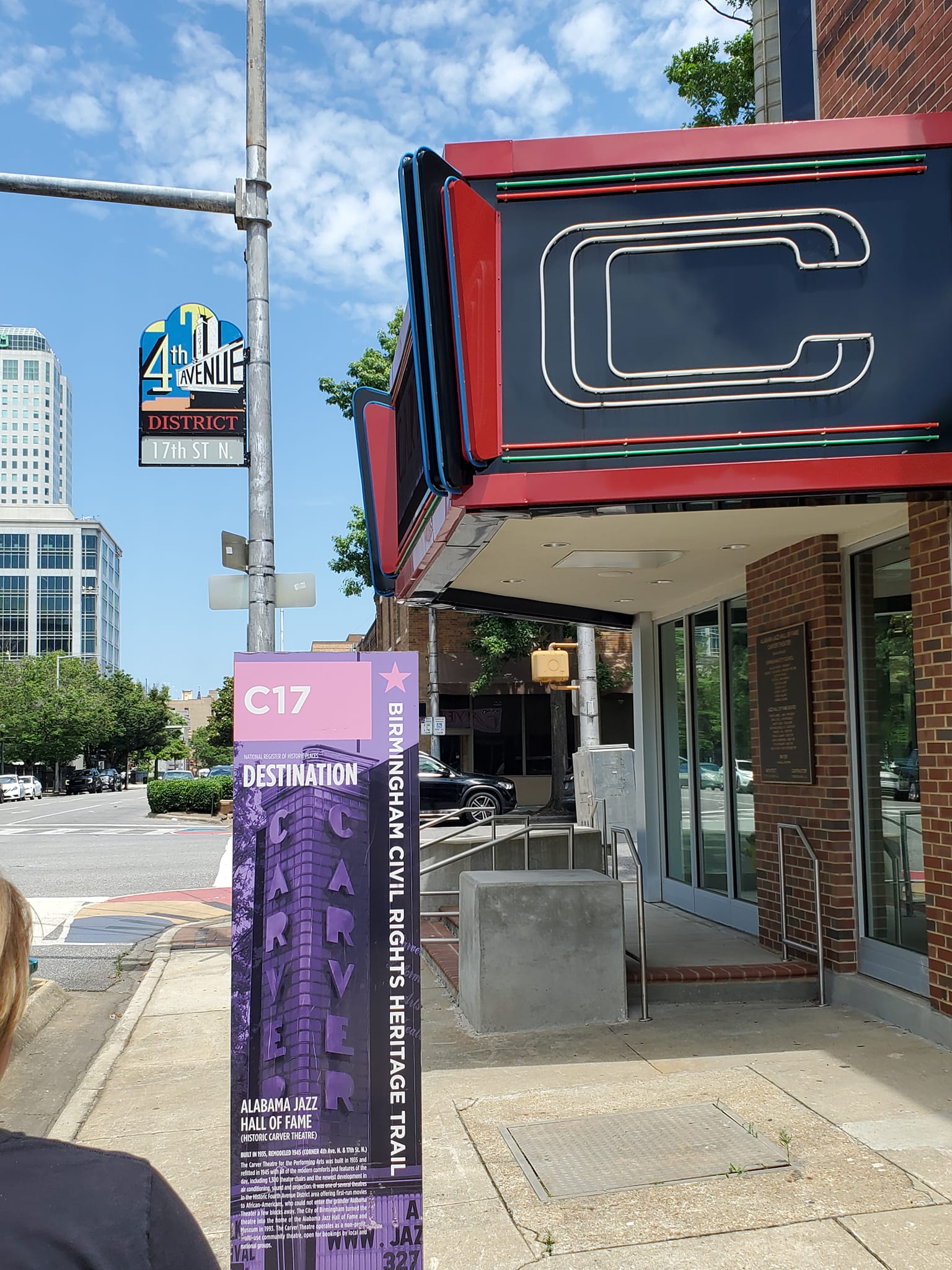
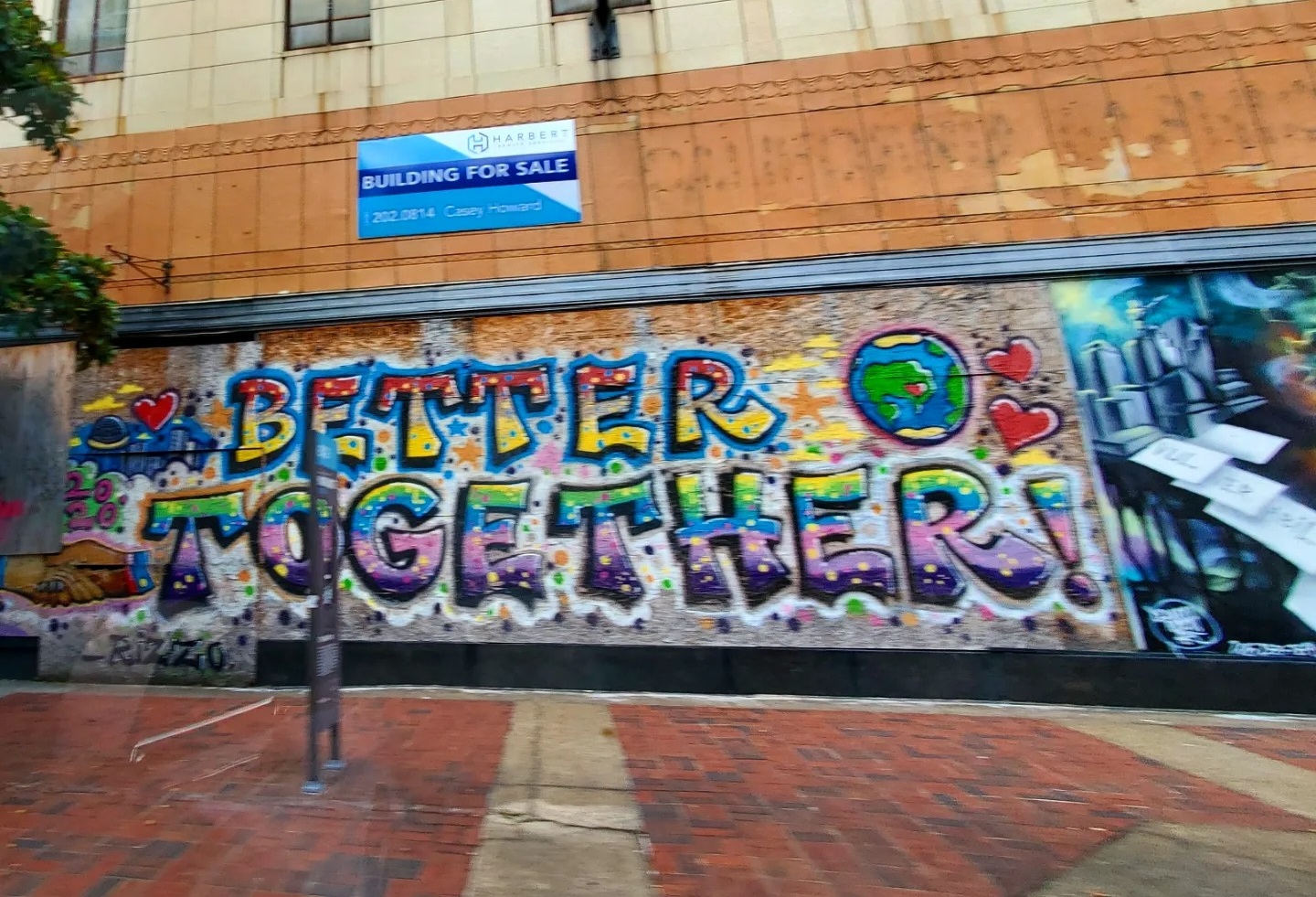
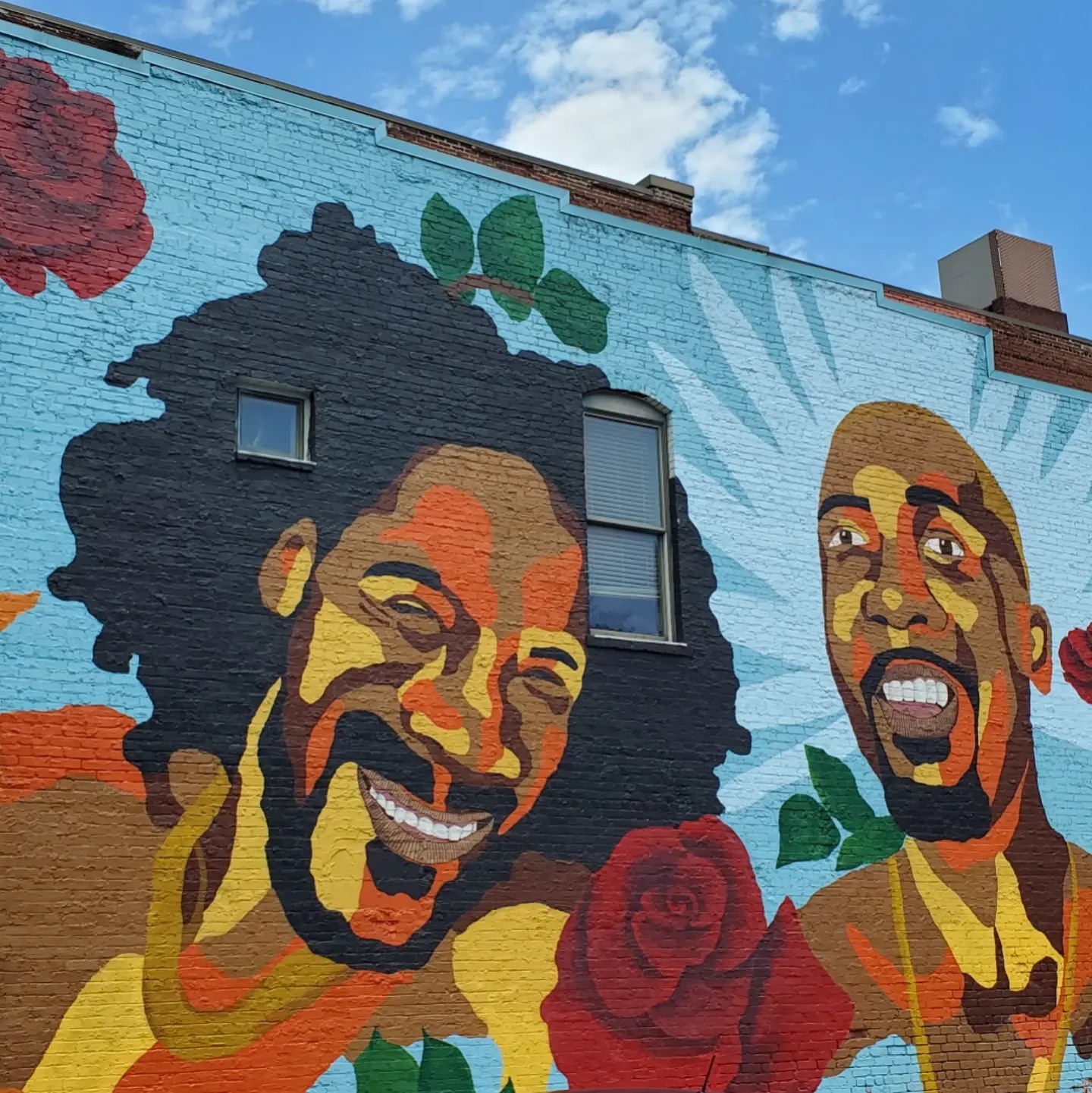
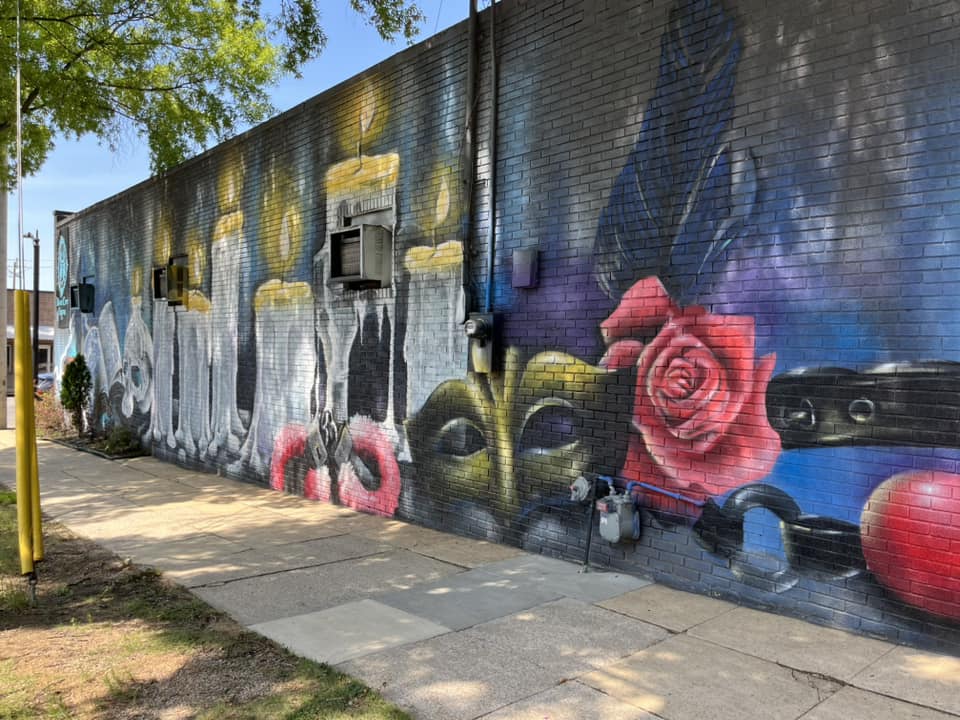
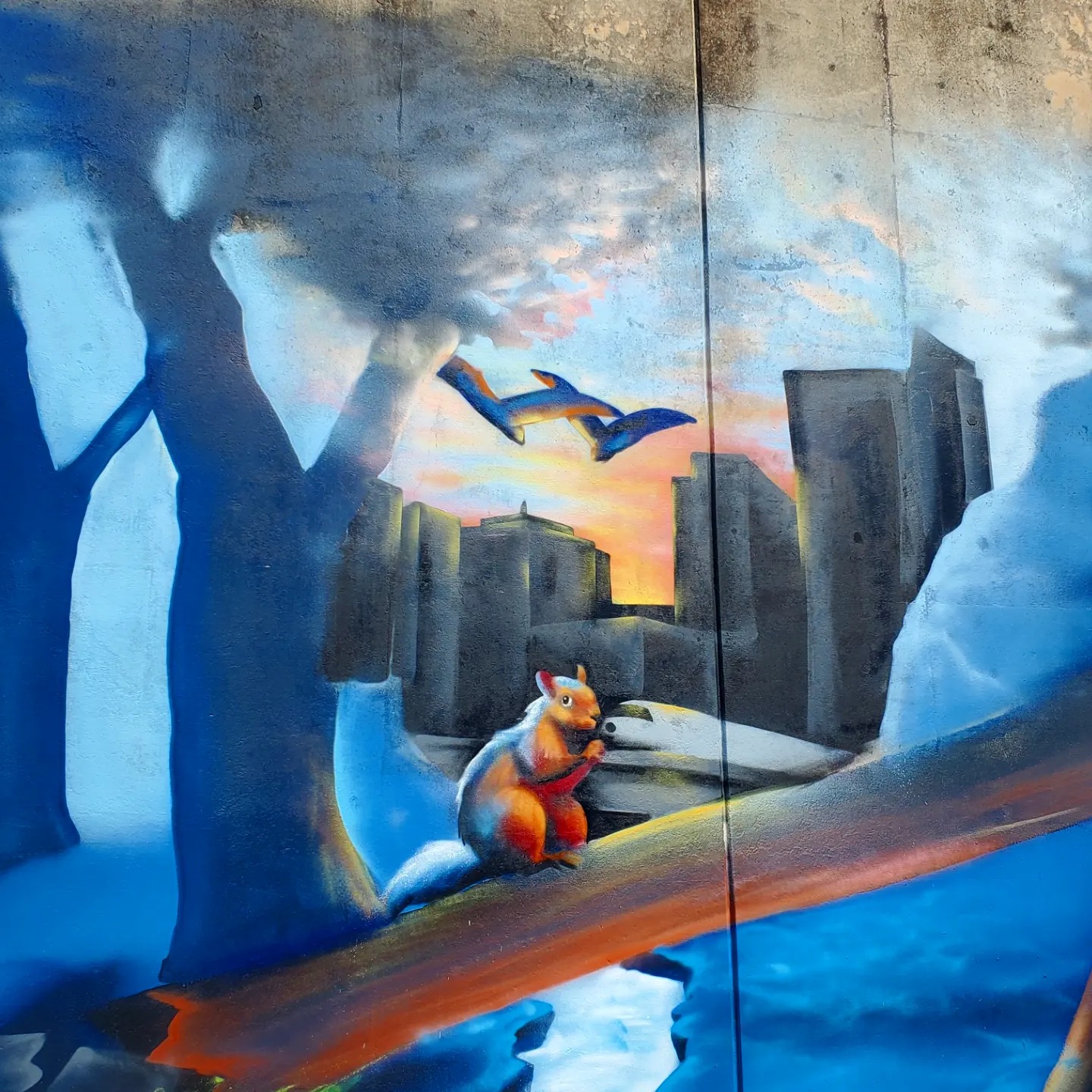
We found loads of brilliant murals while walking around the district and other parts of downtown, by dozens of different artists.
My personal favourites are work by Erica Chisolm, including the Fourth Avenue Moving Forward one above, and the mural in the image below, found on Nelson Brothers Café at 314 17th Street.
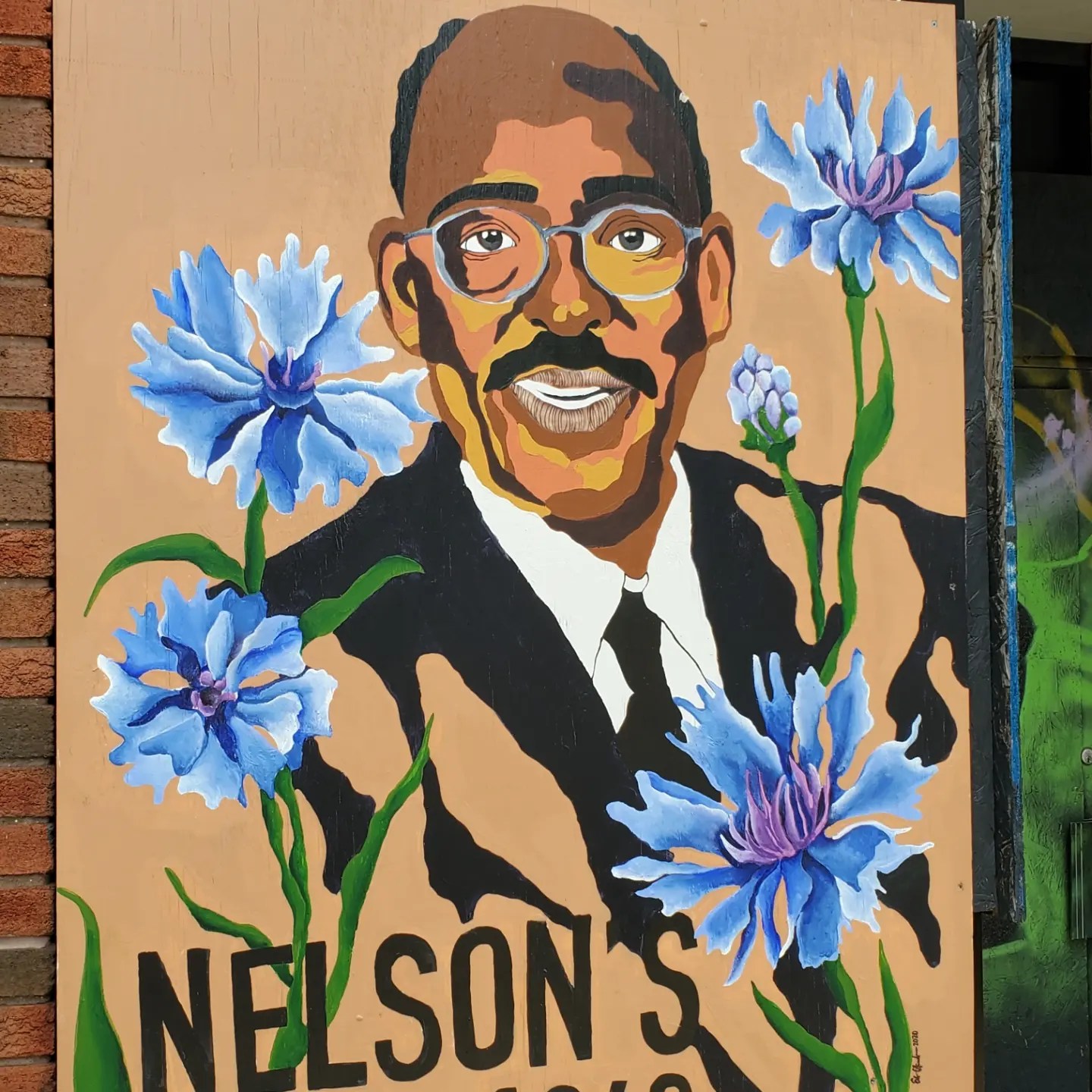
This photo below is of Chisolm’s mural on the outside of Sonya Faye’s Tailor & Clothier shop.
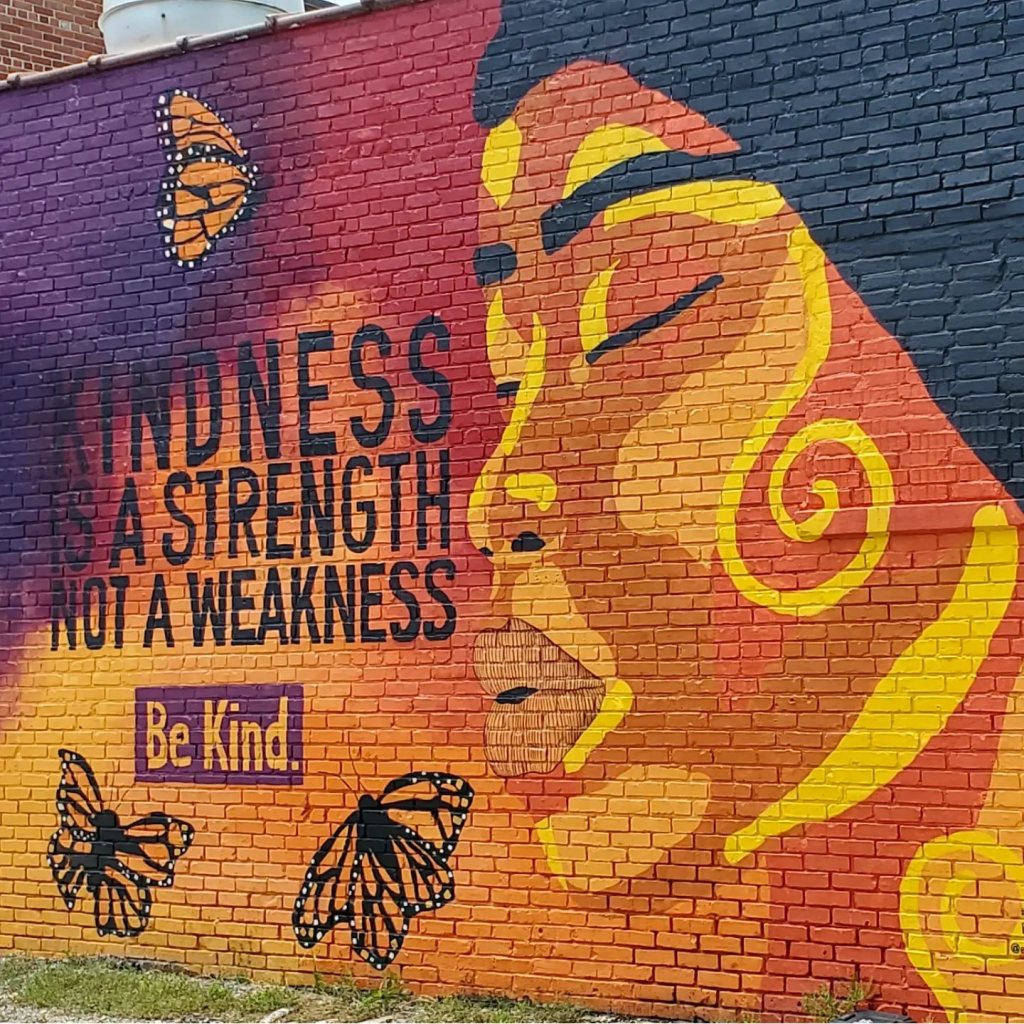
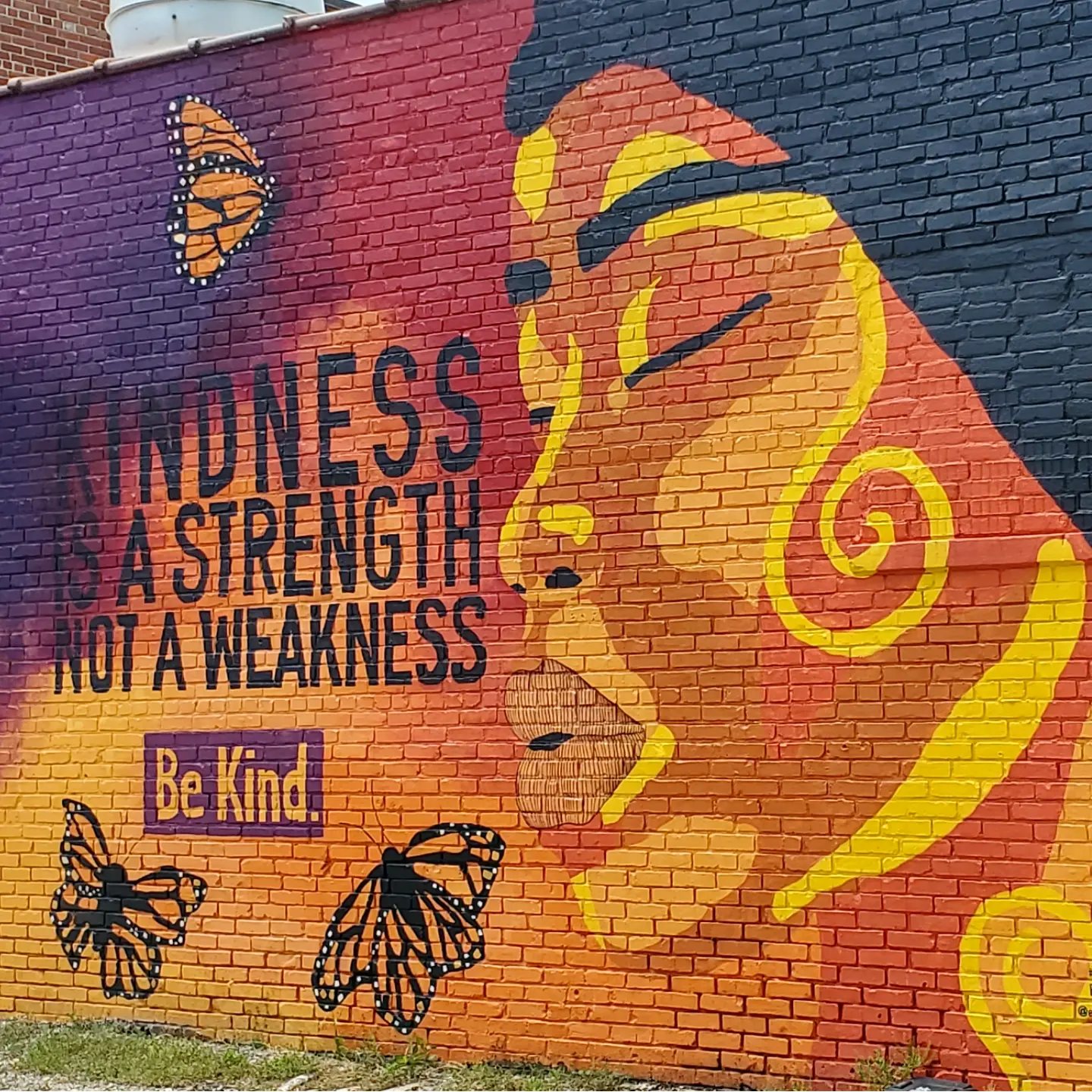
Her Be Kind mural can be found at 312 17th Street.
The photo below is of a collaboration between Chisolm and Jamie Bonfiglio, and can be found at 1617 4th Avenue North.

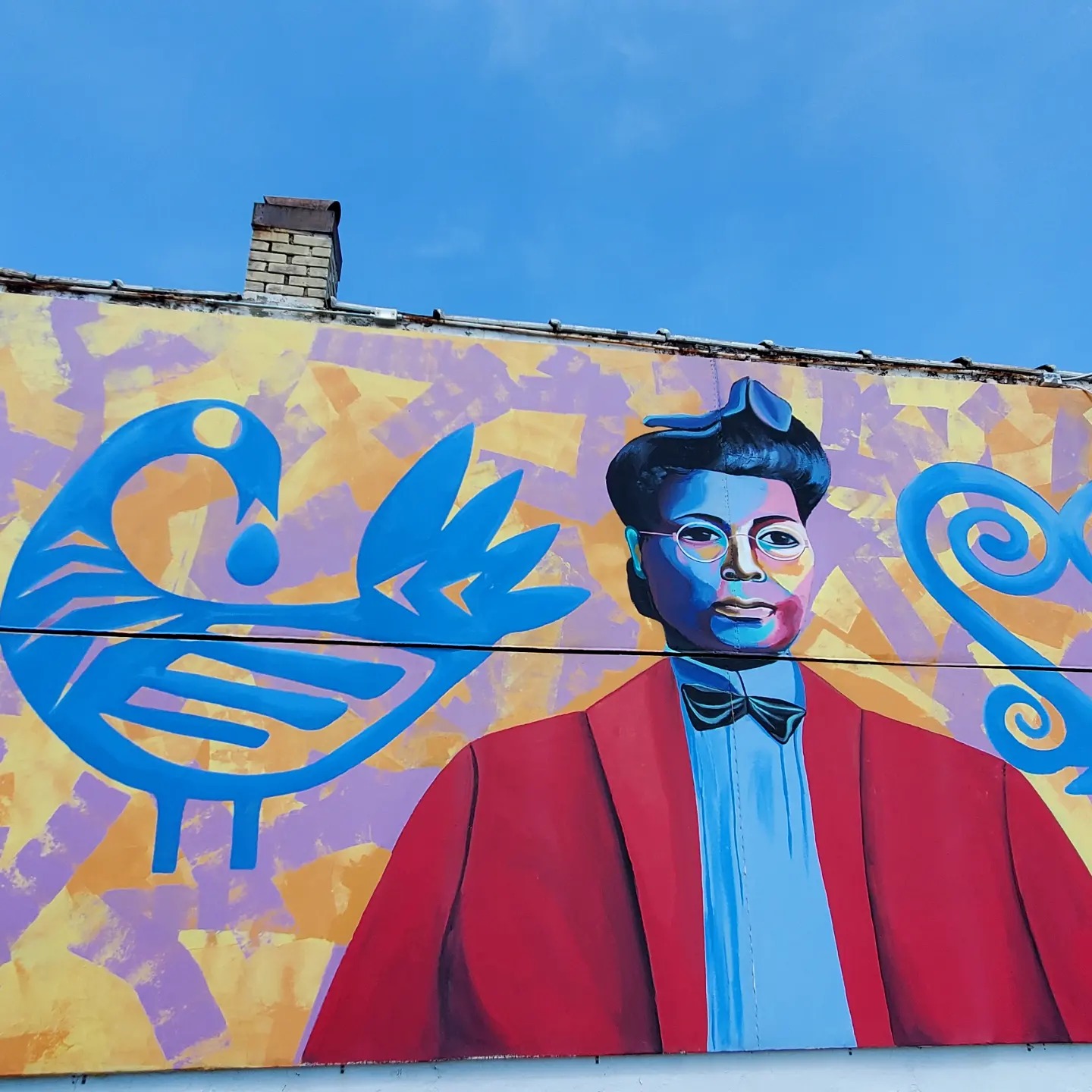
CIVIL RIGHTS MOVEMENT
Birmingham was a major site of the Civil Rights Movement in the 1950s and ’60s, and is still a hub for Civil Rights history.
Local movements were led by a local preacher and activist named Fred Shuttlesworth, and came to a head in 1963 when he asked Dr. Martin Luther King, Jr. and the Southern Christian Leadership Conference to come to Birmingham to assist with segregation and racial tensions.
This resulted in the launching of Project C (for Confrontation), sit-ins and marches led by James Bevel, and ultimately the creation of the Civil Rights Act of 1964.
Dr. King was arrested and imprisoned for his participation in the nonviolent protests, and wrote his famous Letter from Birmingham Jail during incarceration.
Another event during this time was the bombing of 16th Street Baptist Church, part of why the city took on the scary nickname of “Bombingham.” Such events provoked John Coltrane’s song “Alabama” and the poem “The Ballad of Birmingham” by Dudley Randall.

The Birmingham Civil Rights Institute is your primary resource for learning more about each event and story from the Civil Rights Movement that unfolded in Birmingham.
Consider taking the Birmingham Civil Rights District tour also. If you are unable to visit in person, you can scour the BCRI online archive here.

Kelly Ingram Park was an extremely significant site during the protests and riots of the Civil Rights Movement. It looks like a peaceful, serene park full of sculpture today, but was considered an epicenter of the Movement in and after 1963.
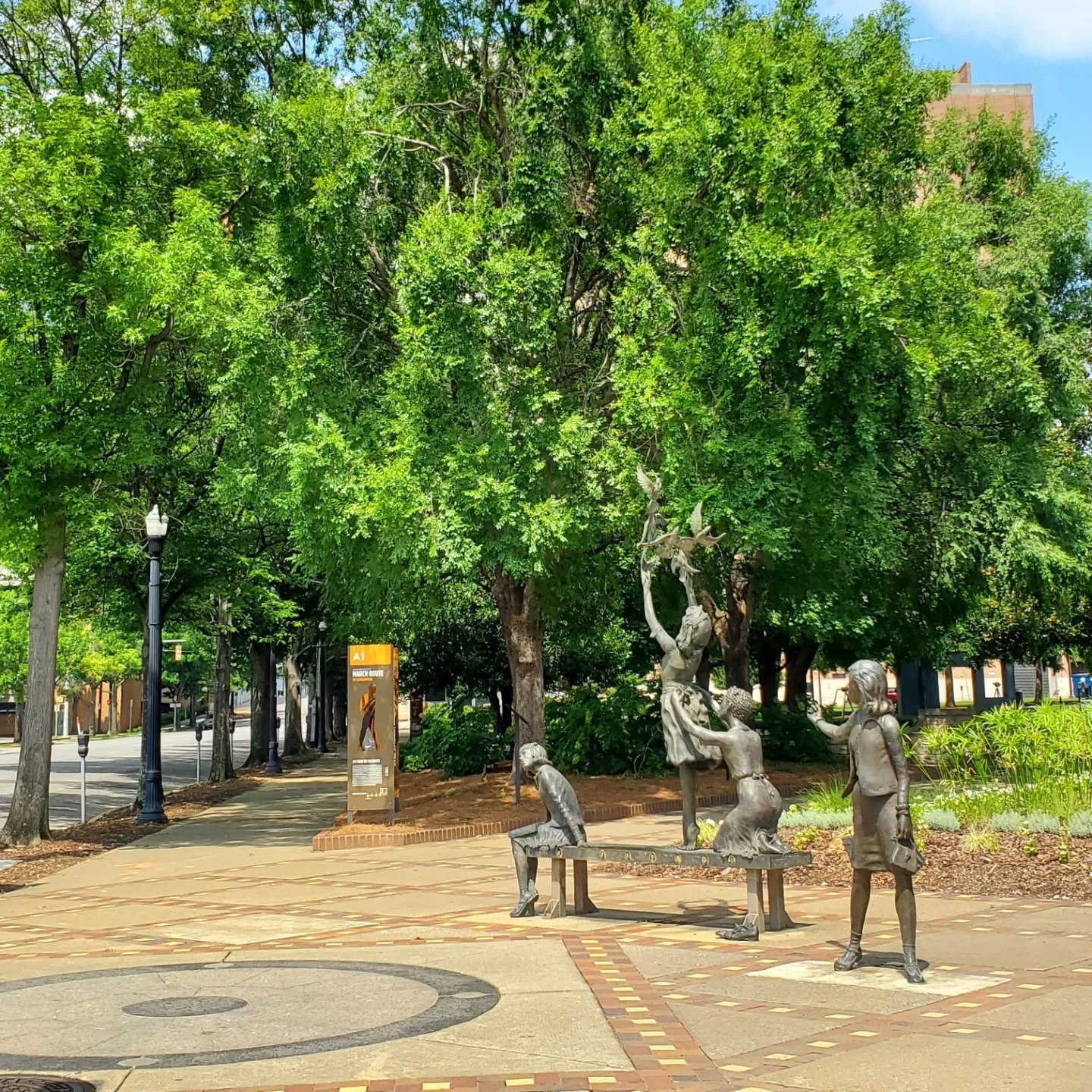
The park is directly across the street from the Birmingham Civil Rights Institute, just around the corner from the Alabama Jazz Hall of Fame, and is a major stop on most walking tours of Birmingham and Civil Rights Movement trails.
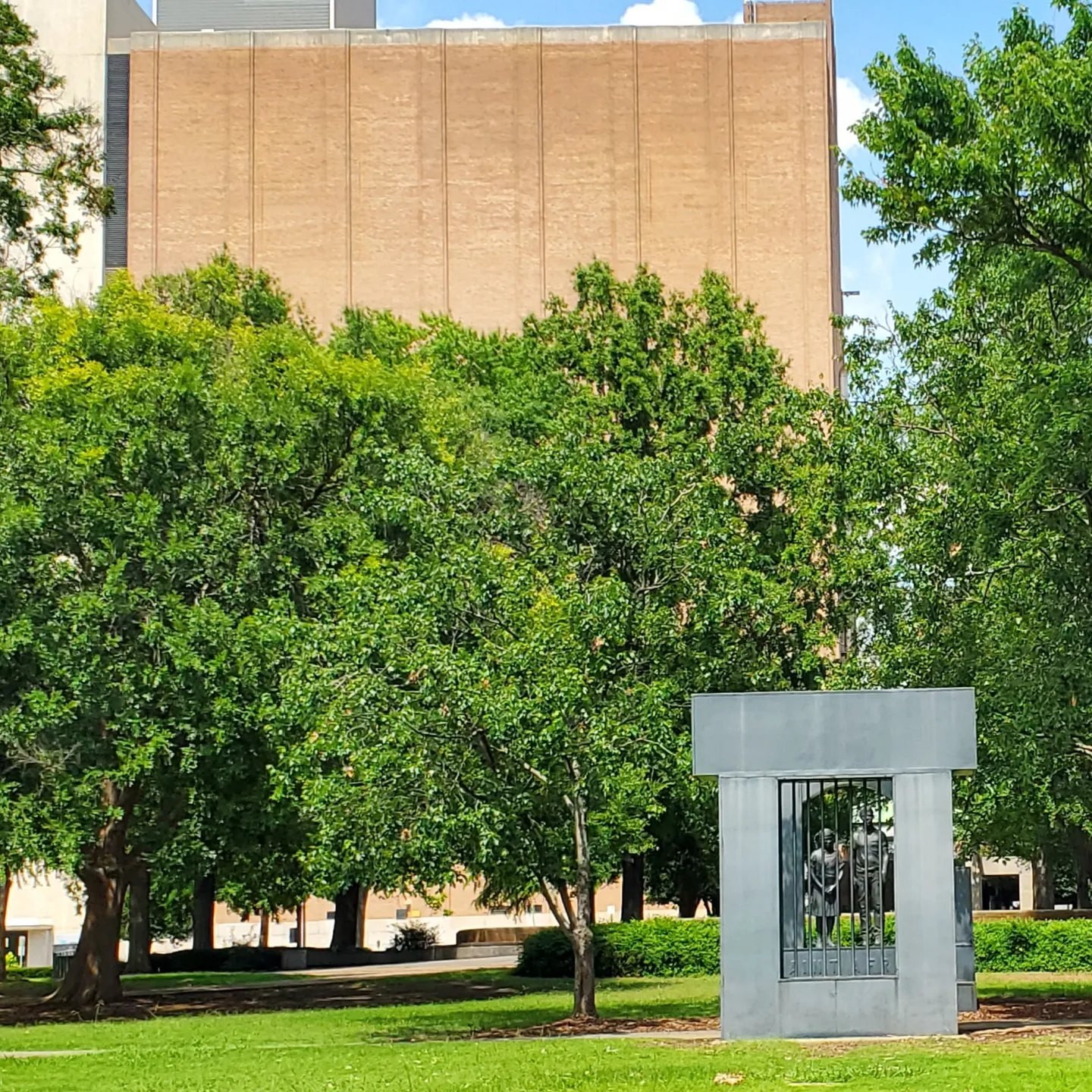
FIVE POINTS SOUTH
The main entertainment and nightlife district is Birmingham is its Five Points neighbourhood, also called Five Points South.
It was founded and plotted out in 1893 and is packed with historic architecture, unique shops, clubs, cafes, and a few James Beard Award-wining restaurants that help Birmingham hold its title as “Dinner Table of the South.”
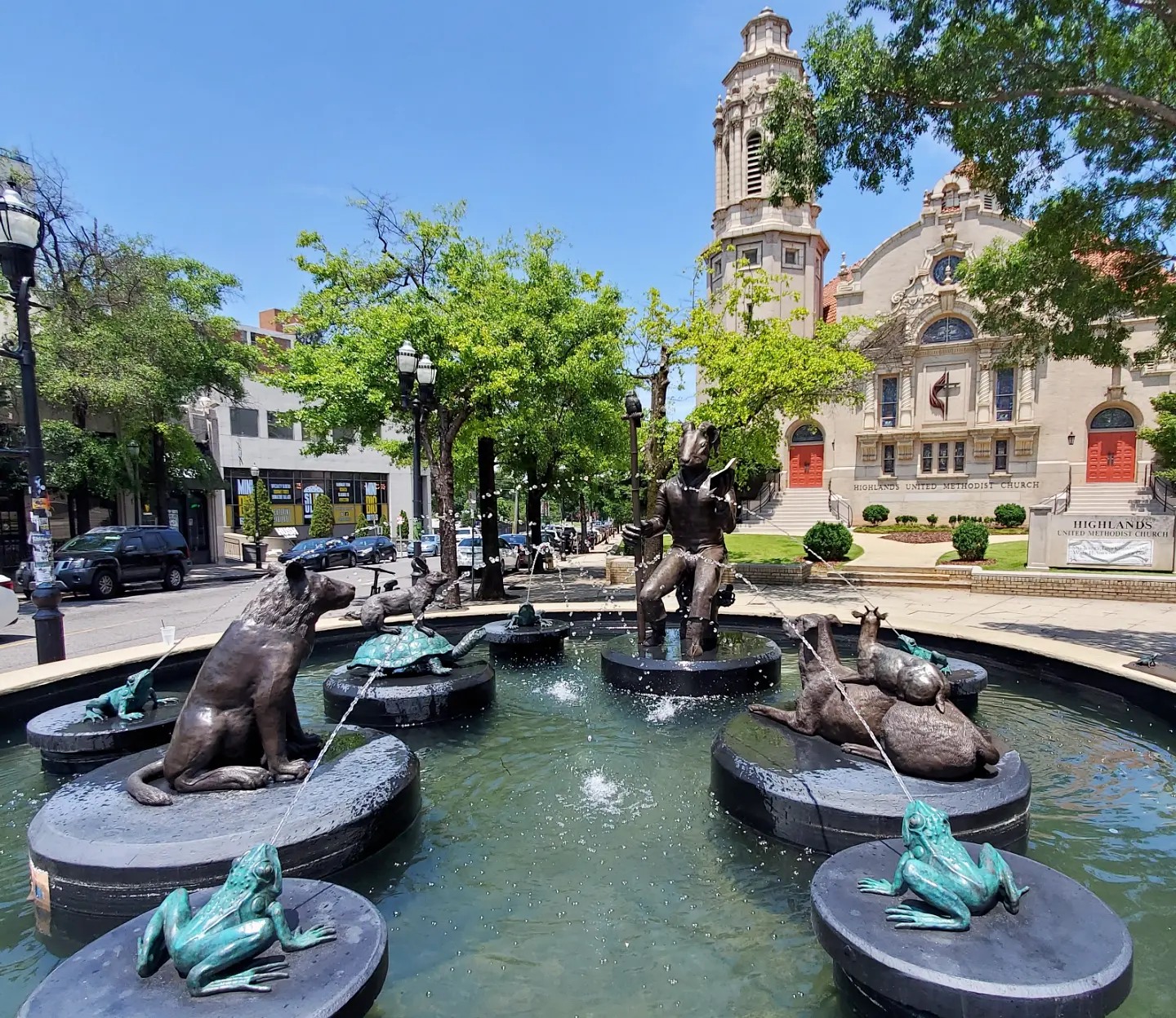
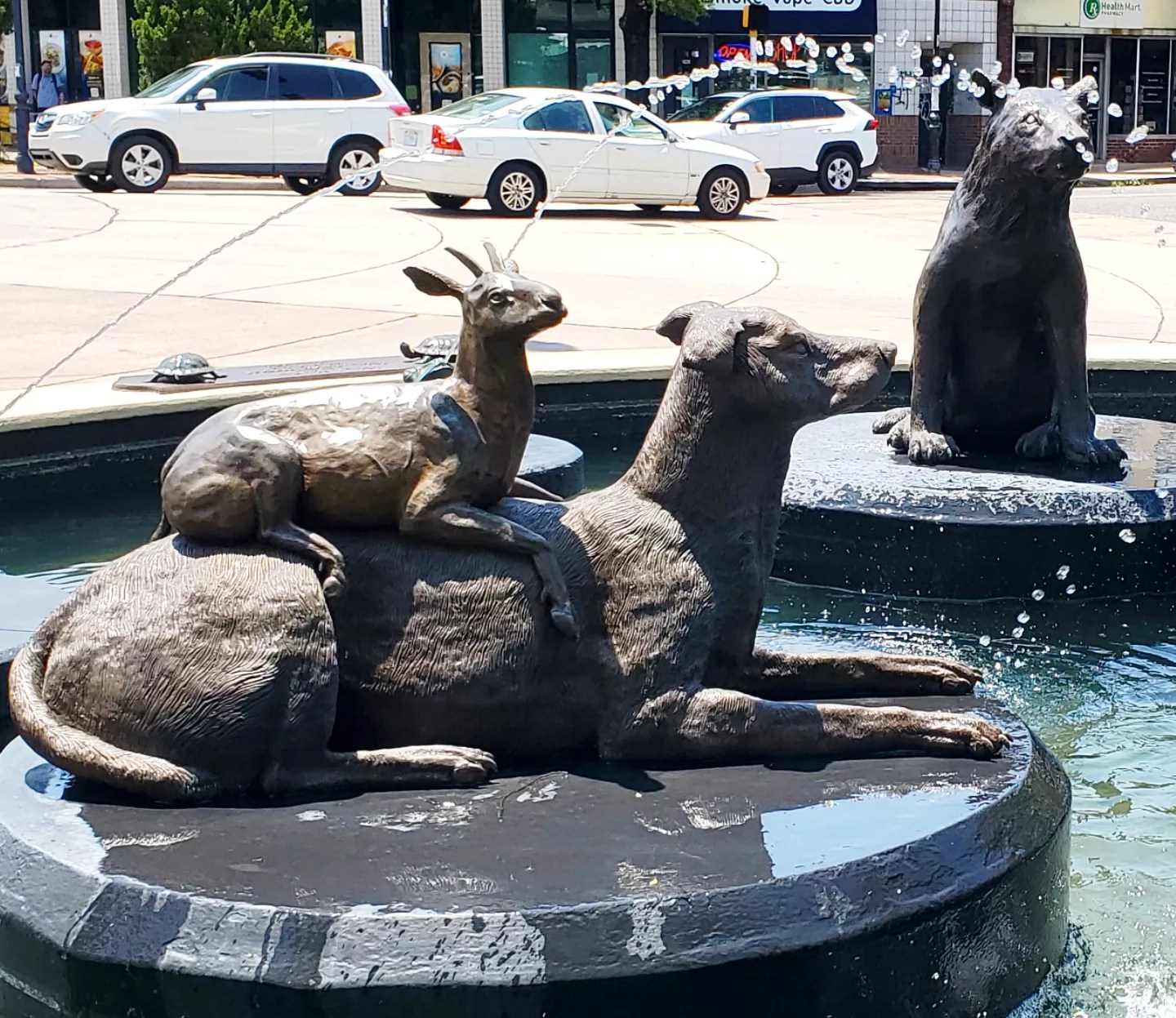
The first thing we noticed when we arrived in Five Points was this STUNNING fountain in the center of the district.

The Storyteller is a sculpture and water fountain piece by local artist Frank Fleming.
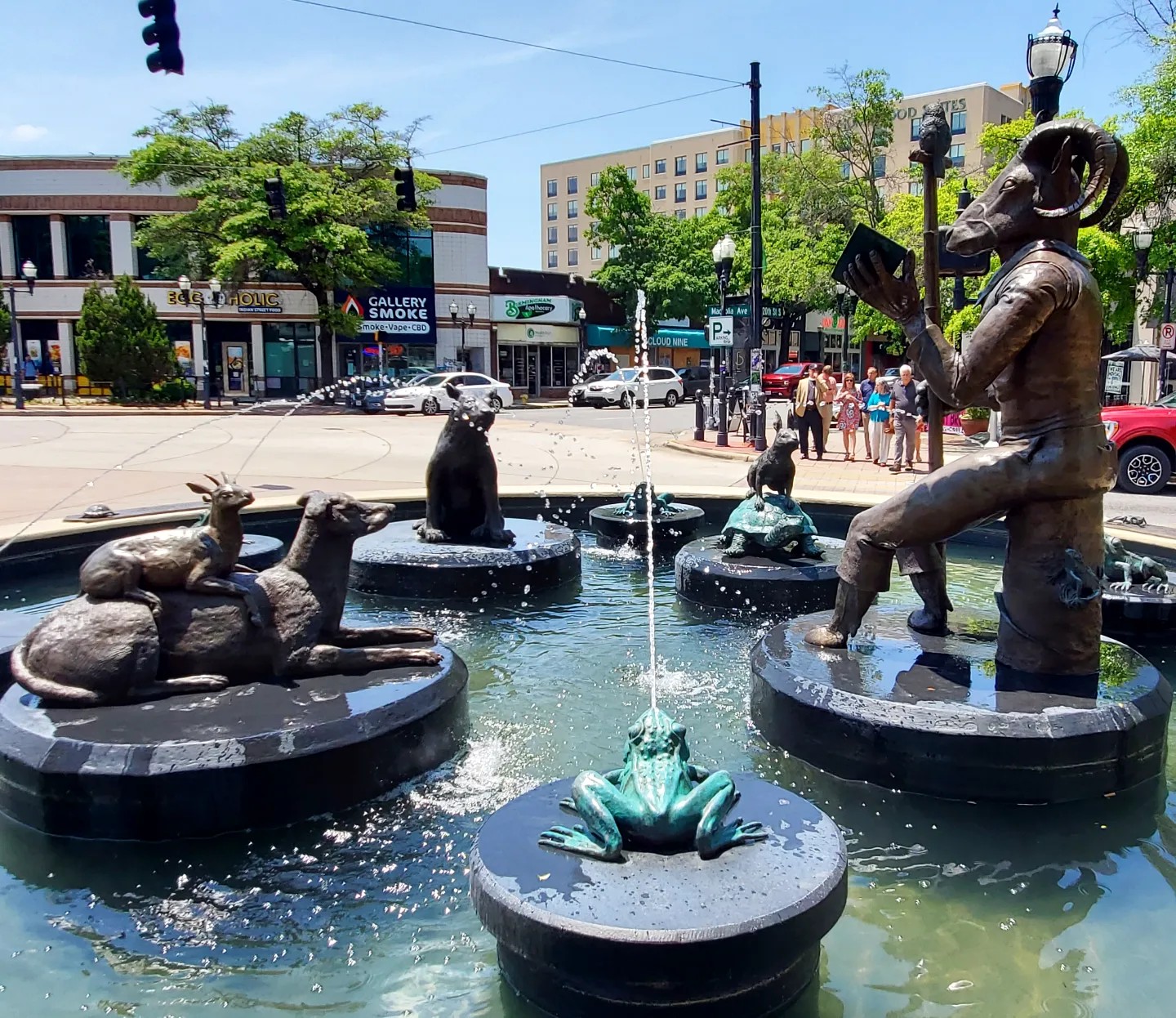
What is obviously a magickal occult opus here is described as conveying a “peaceful kingdom” of a ram reading to various woodland and other critters. The animals are arranged in a pentagram pattern, but Fleming claims he intended no symbolism of Satanism, the Occult, Paganism, or the like.
Be a lot cooler if you did…
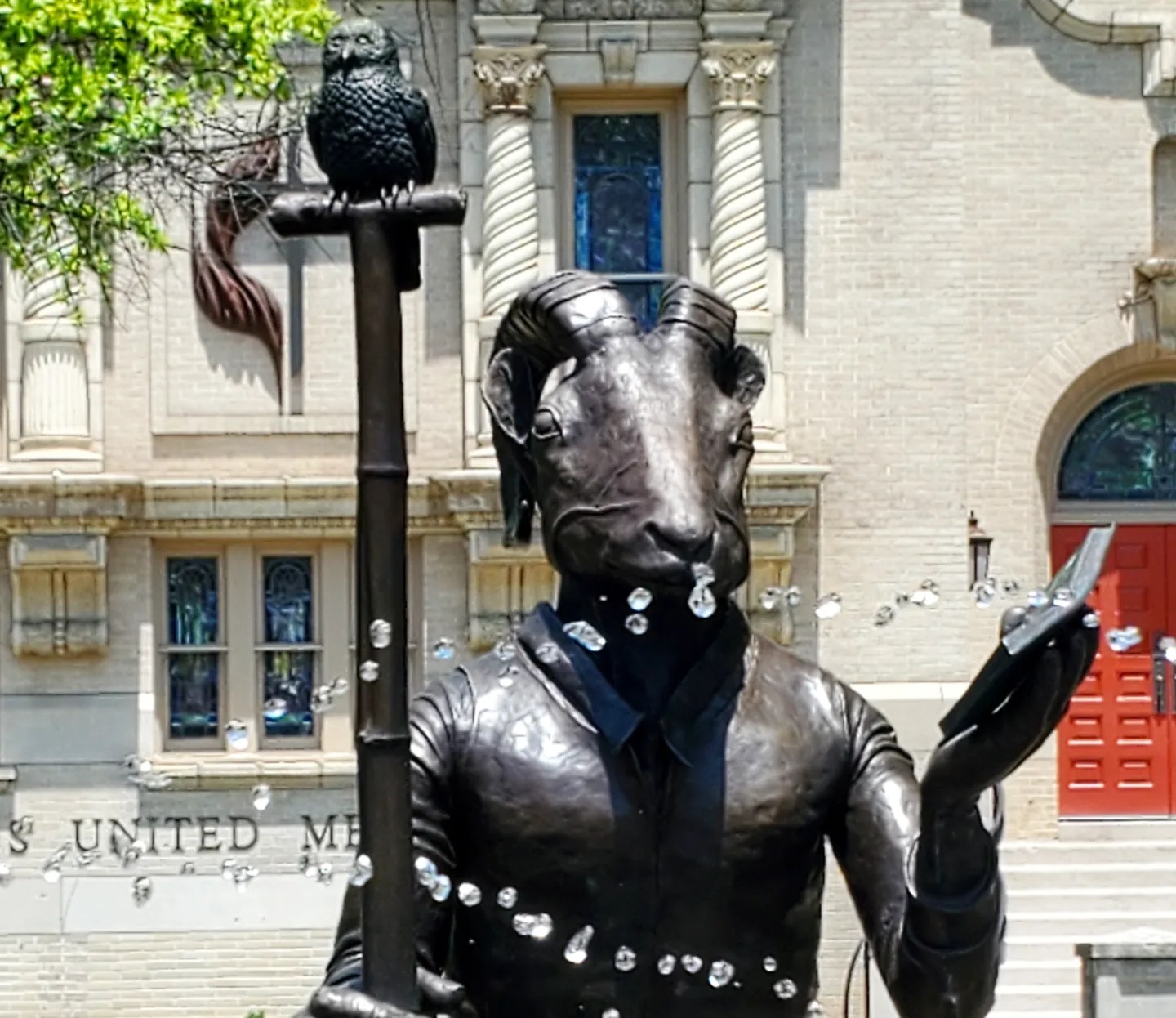
Construction of the fountain began in 1983 after a local art dealer named Malcomb McRae was murdered and his mother commissioned a work of art to honour his memory.
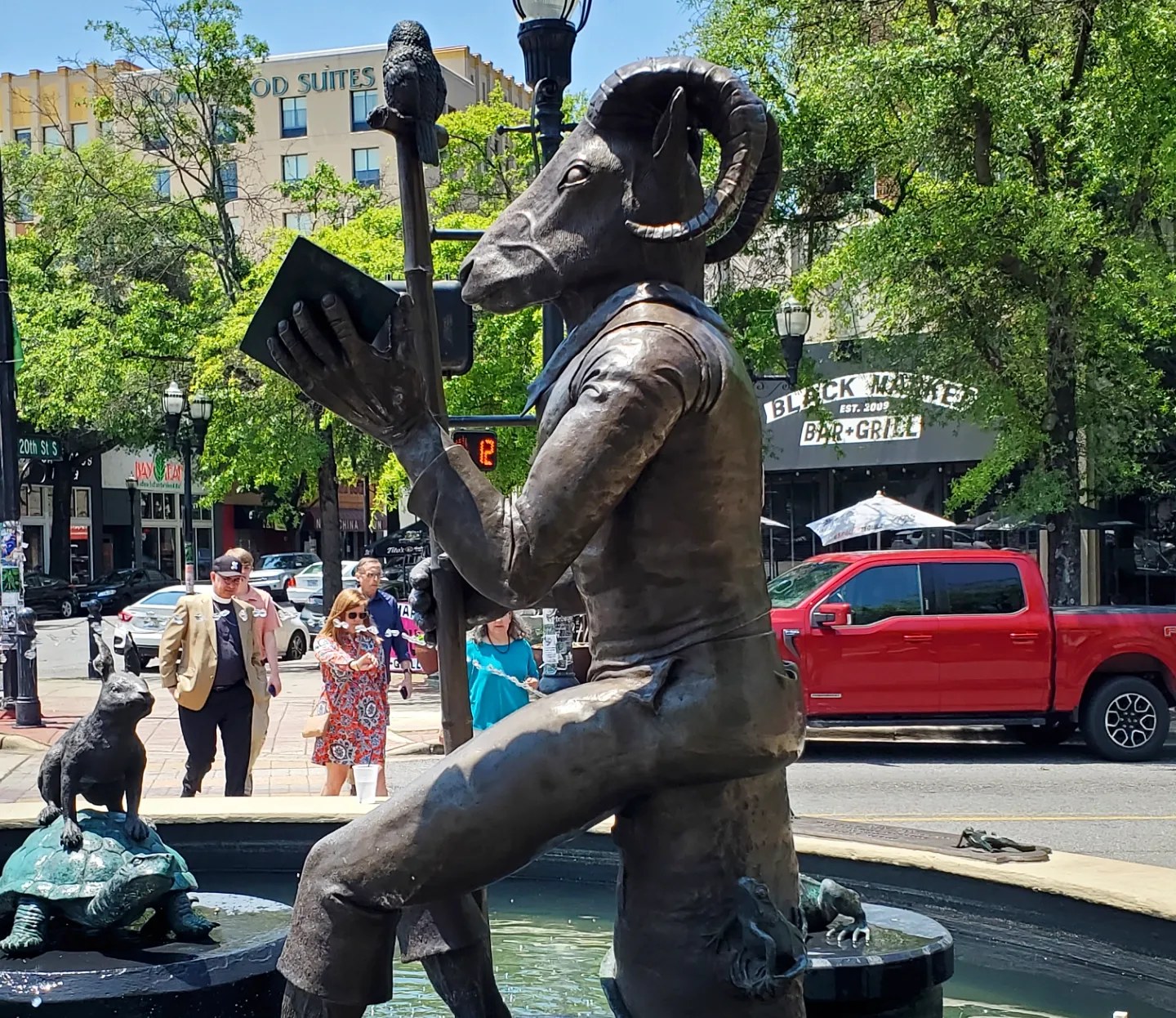
It took nearly nine years to finish the installation, but DAMN what a memorial.
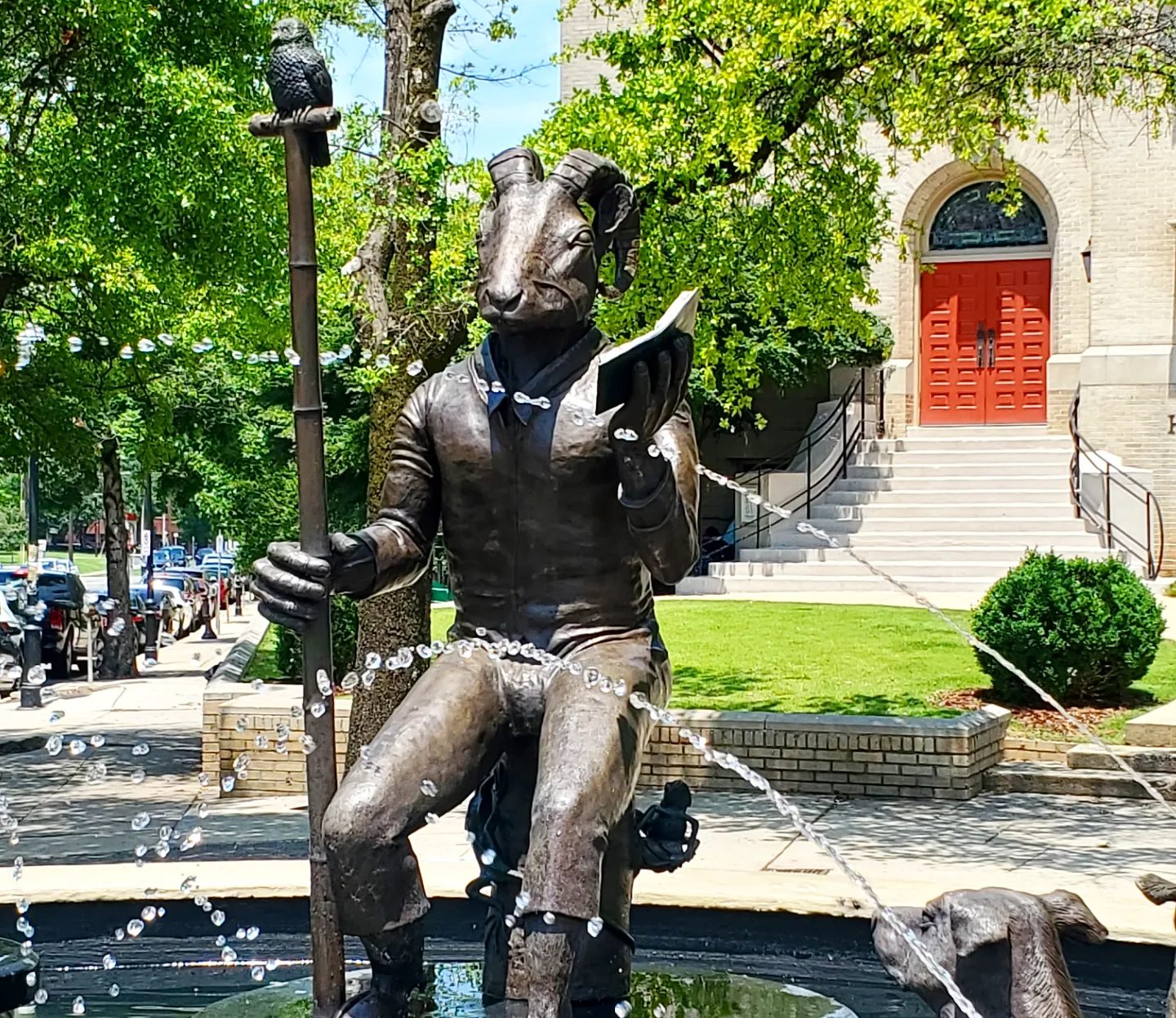
More of the late Fleming’s work can be found at the Birmingham airport, Birmingham Botanical Gardens, Aldridge Gardens, and the Alys Stephens Center.
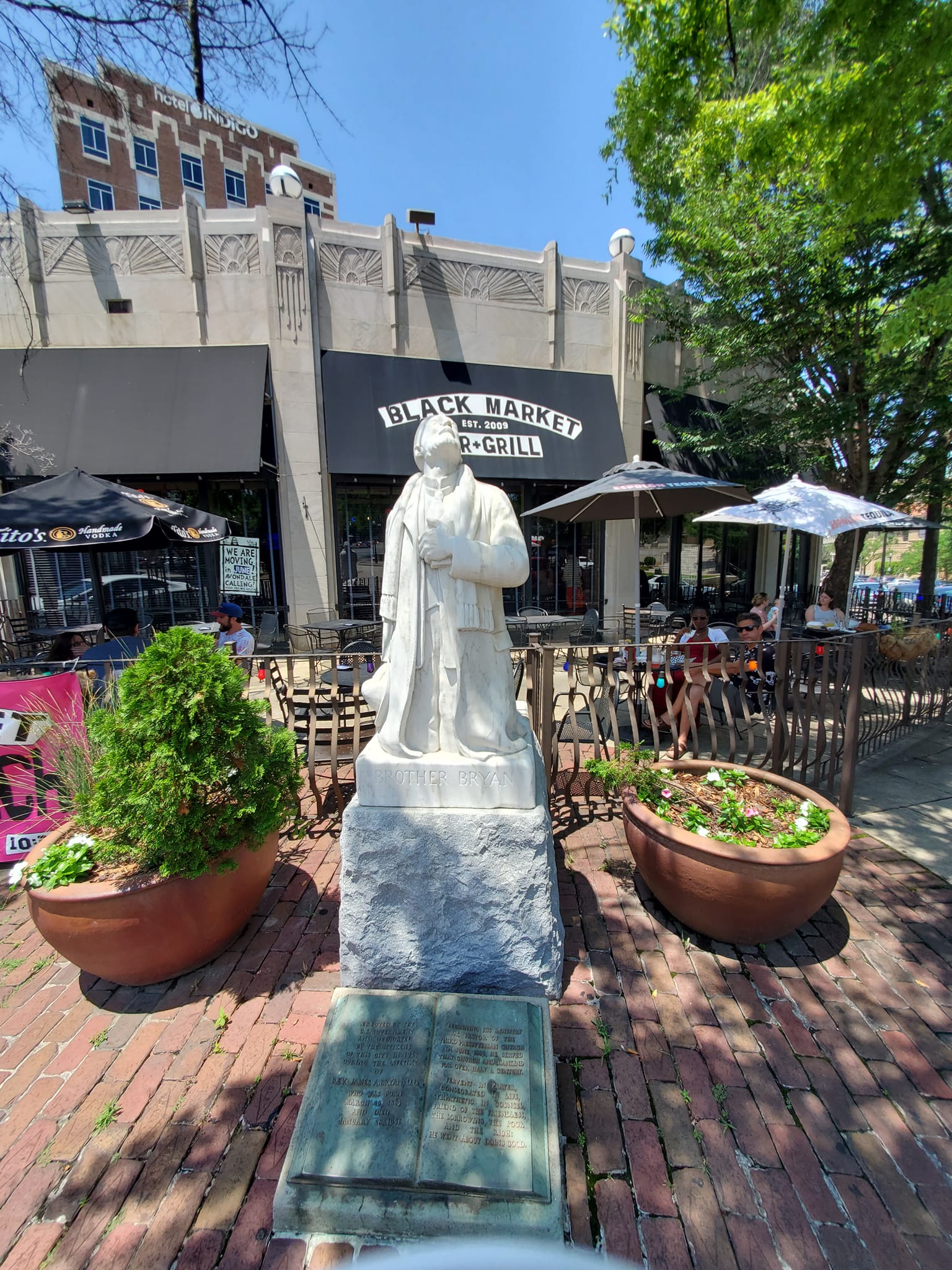
After gawking at The Storyteller, we had a delicious brunch at Black Market Bar & Grill across the street. This was kind of so we could keep gawking at it, but we were starving, and their vibe checked out.
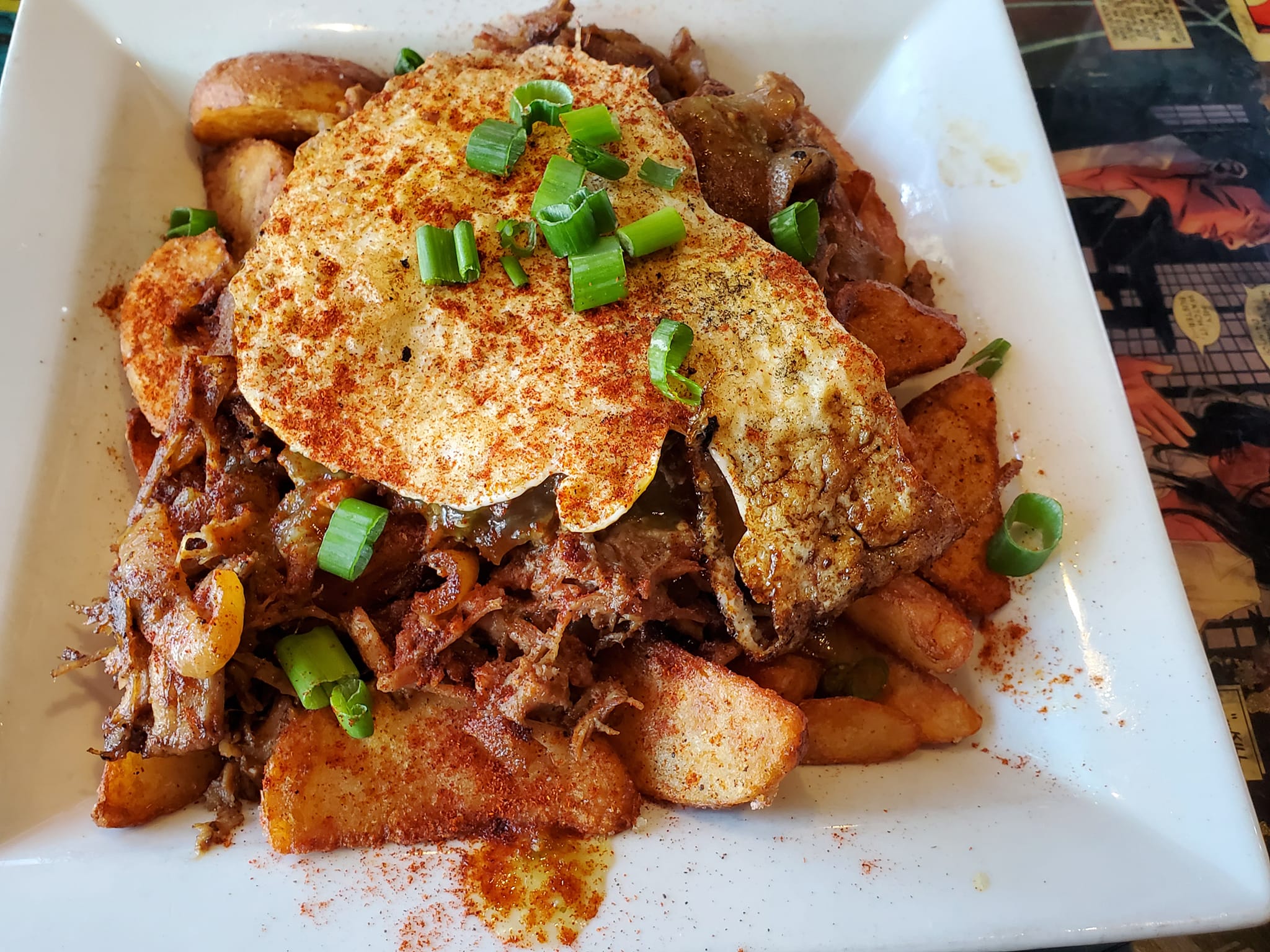
I had the Pork Verde dish with pulled pork and onions, a fried egg, and their Boss Sauce over crispy, spicy baked potatoes,
My friend braved their Baby Mama Breakfast Bowl which means the kitchen staff decides what goes on your plate and then presents you with a surprise. You can choose ONE food ingredient to exclude but after that, it is up to them.
She lucked out with crispy potatoes topped with creamy grits, bacon, cheese, and a few other mixins.

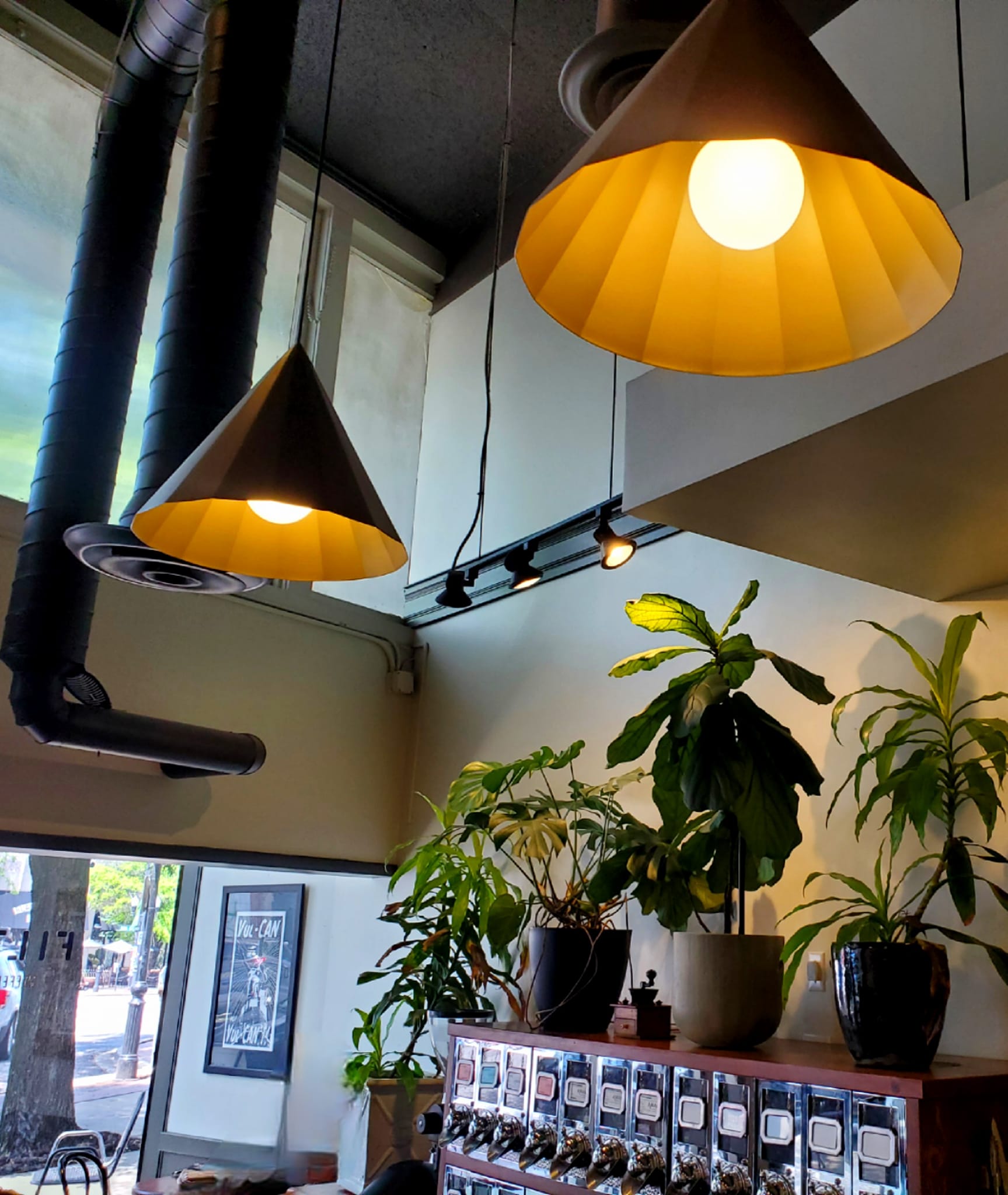
We stopped by Filter Coffee for some to-go some lattes afterward, despite it being about 90 degrees outside. Call it habit.
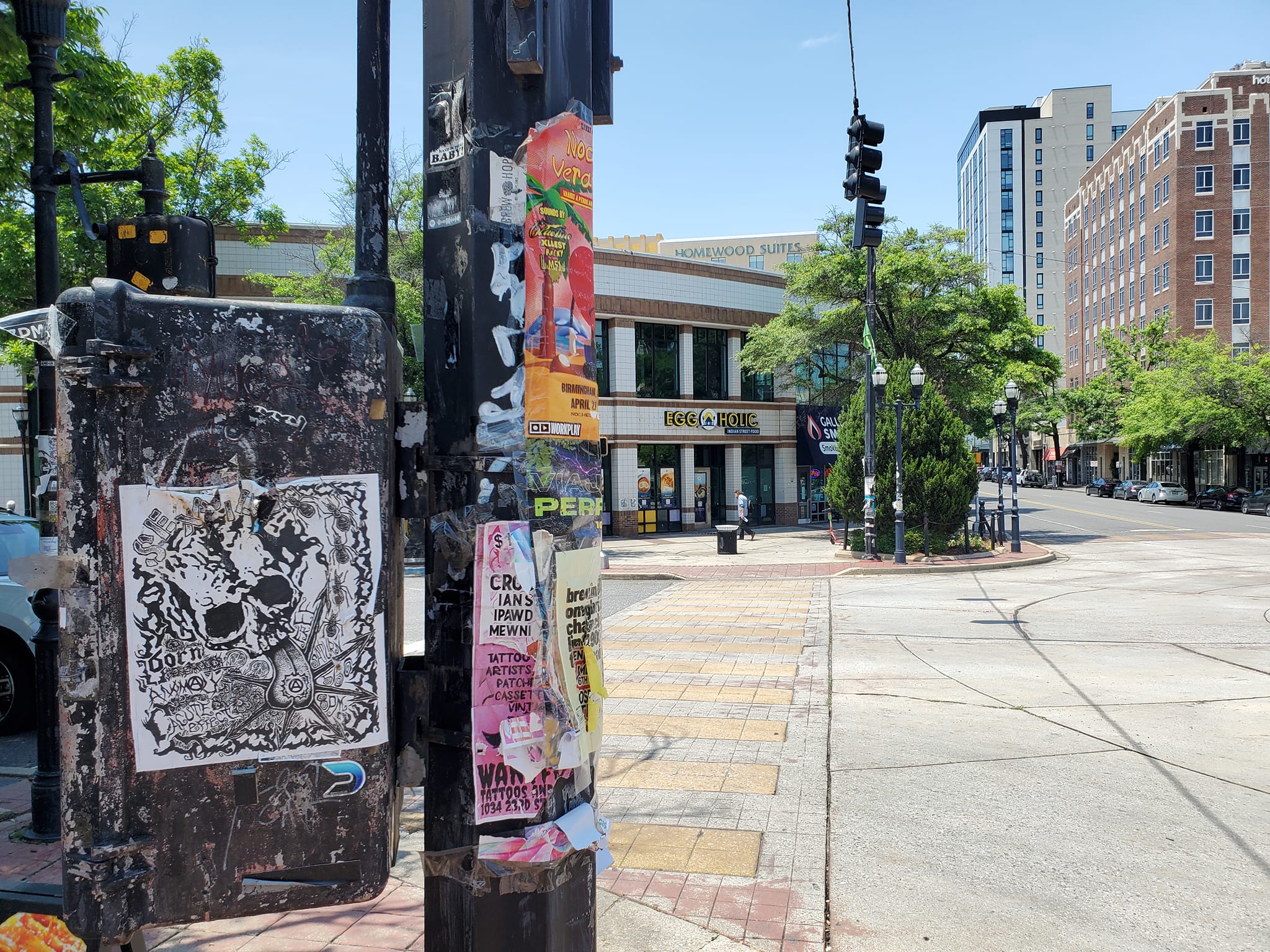
We perused shop after shop, with a favourite being Golden Temple, and checked out the posters for upcoming metal shows. Too bad we had to leave so soon.
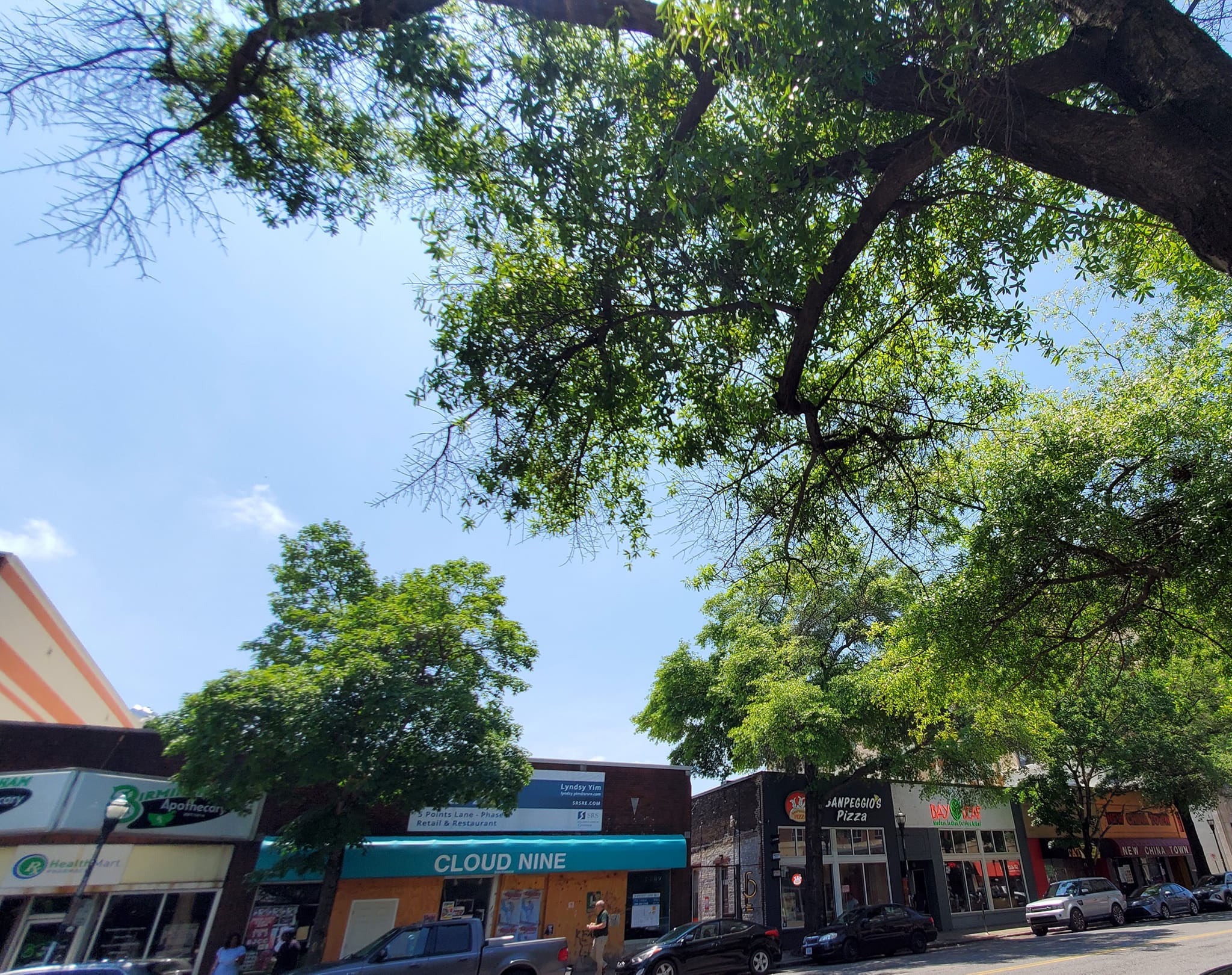
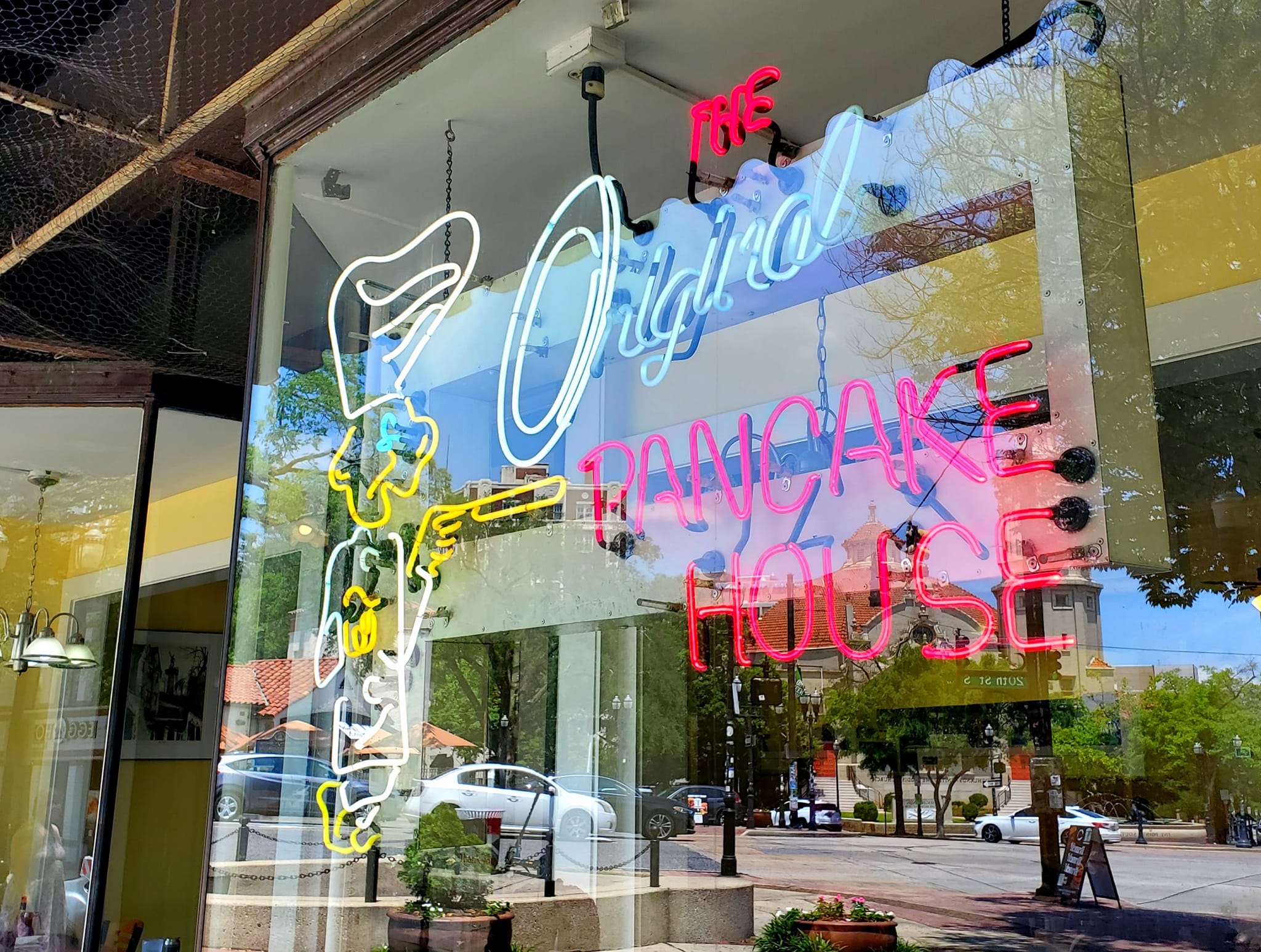
My next visit is going to have to include a stop at the Original Pancake House, as well.
UPTOWN
Uptown is a newer entertainment district in Birmingham, about 2.5 miles from Five Points. We enjoyed our visit, but I want to note that this is an intentionally designed area geared toward tourists and guests of the luxury hotels within its parameters, versus an organically grown commercial square that caters to locals like Five Points.
It is built-in around the Birmingham-Jefferson Convention Complex, TopGolf, Alabama Sports Hall of Fame, Legacy Arena, Protective Stadium, and some other business centers, and Uptown’s website is even part of the Birmingham-Jefferson Convention Complex website that refers to Uptown as a campus.
Forbes published this article about watching out for the upcoming Uptown, so do not write it off just yet.
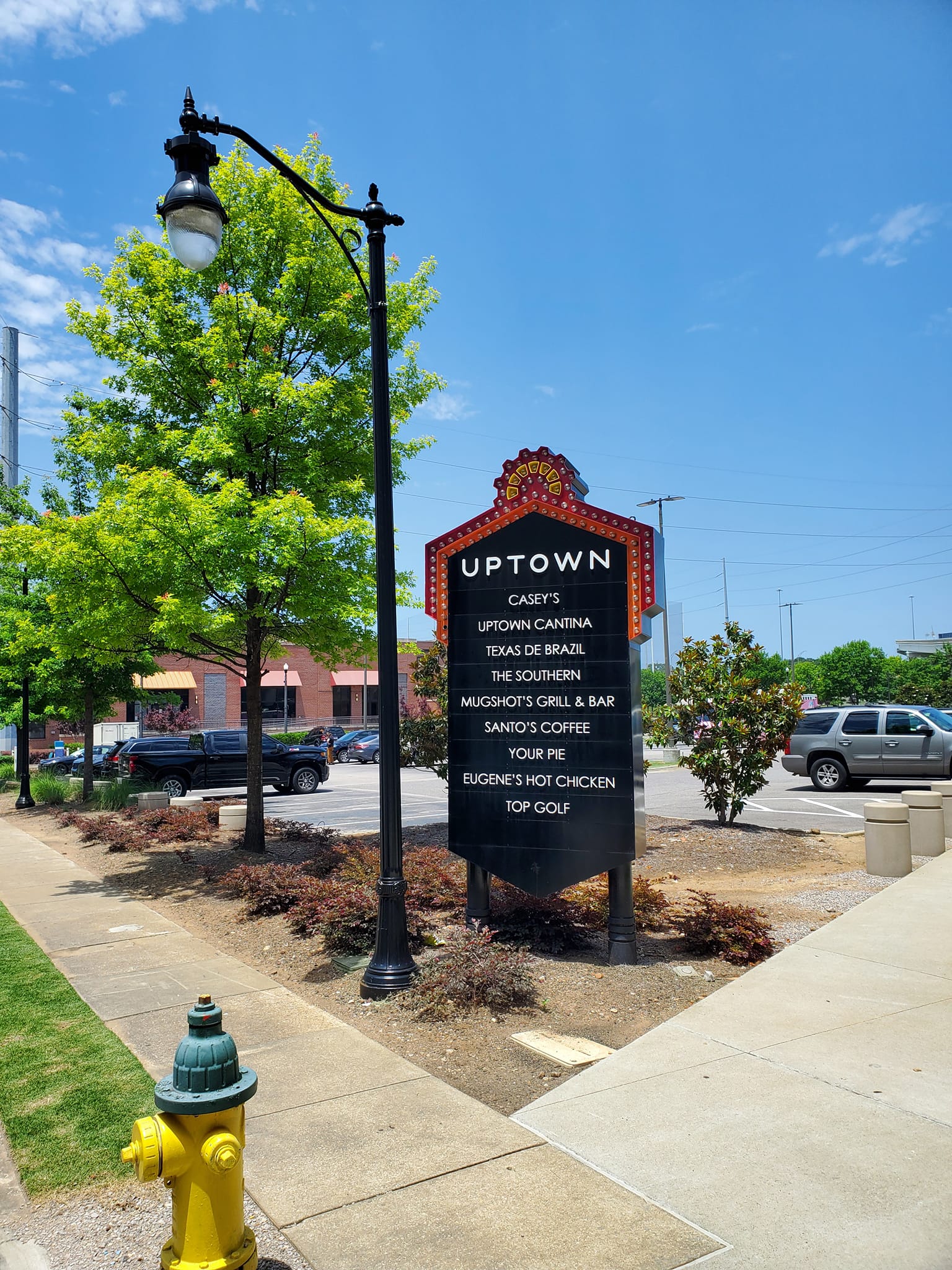
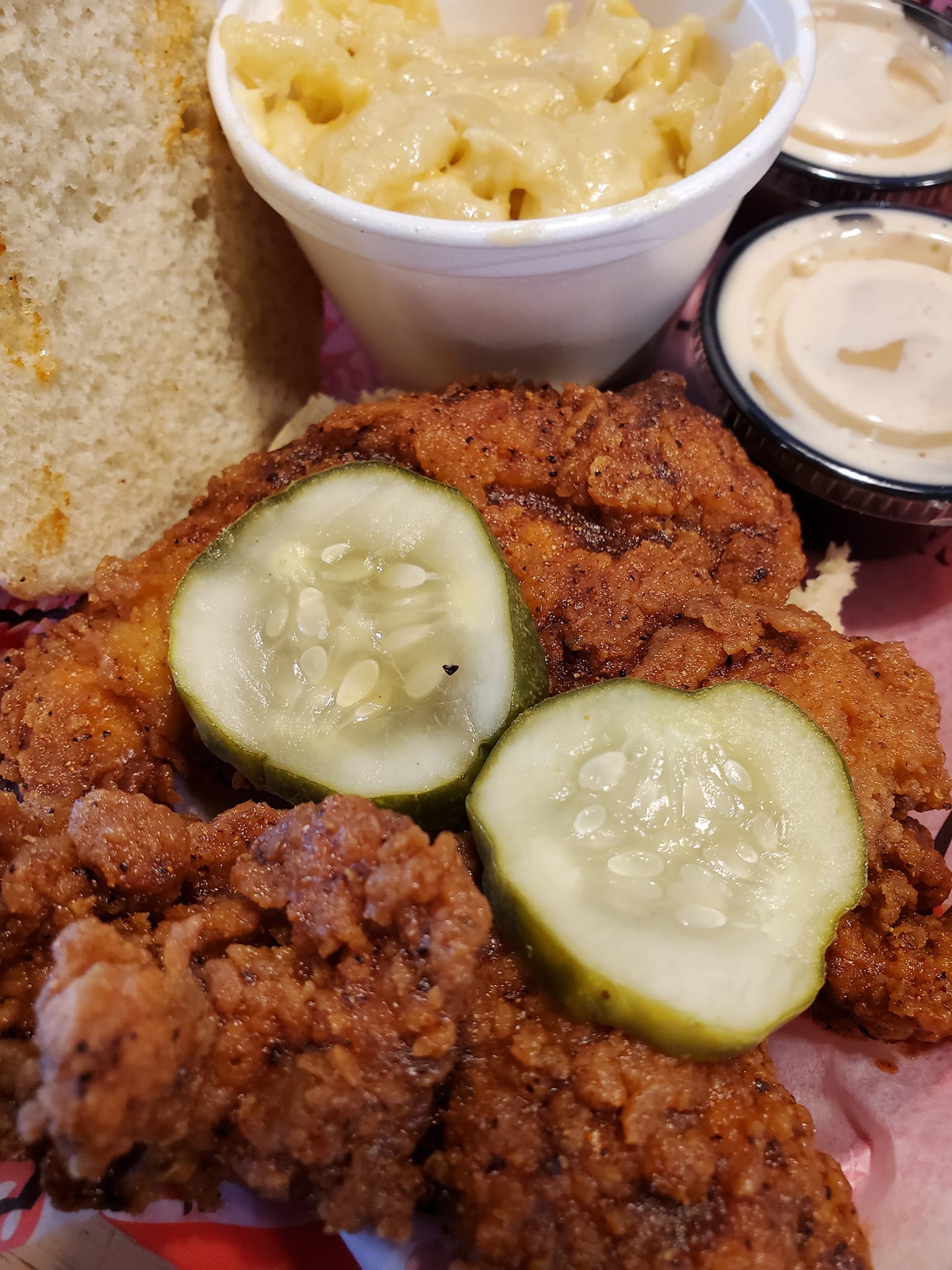
We visited Uptown to eat dinner at Eugene’s Hot Chicken and good grief, this was delicious.
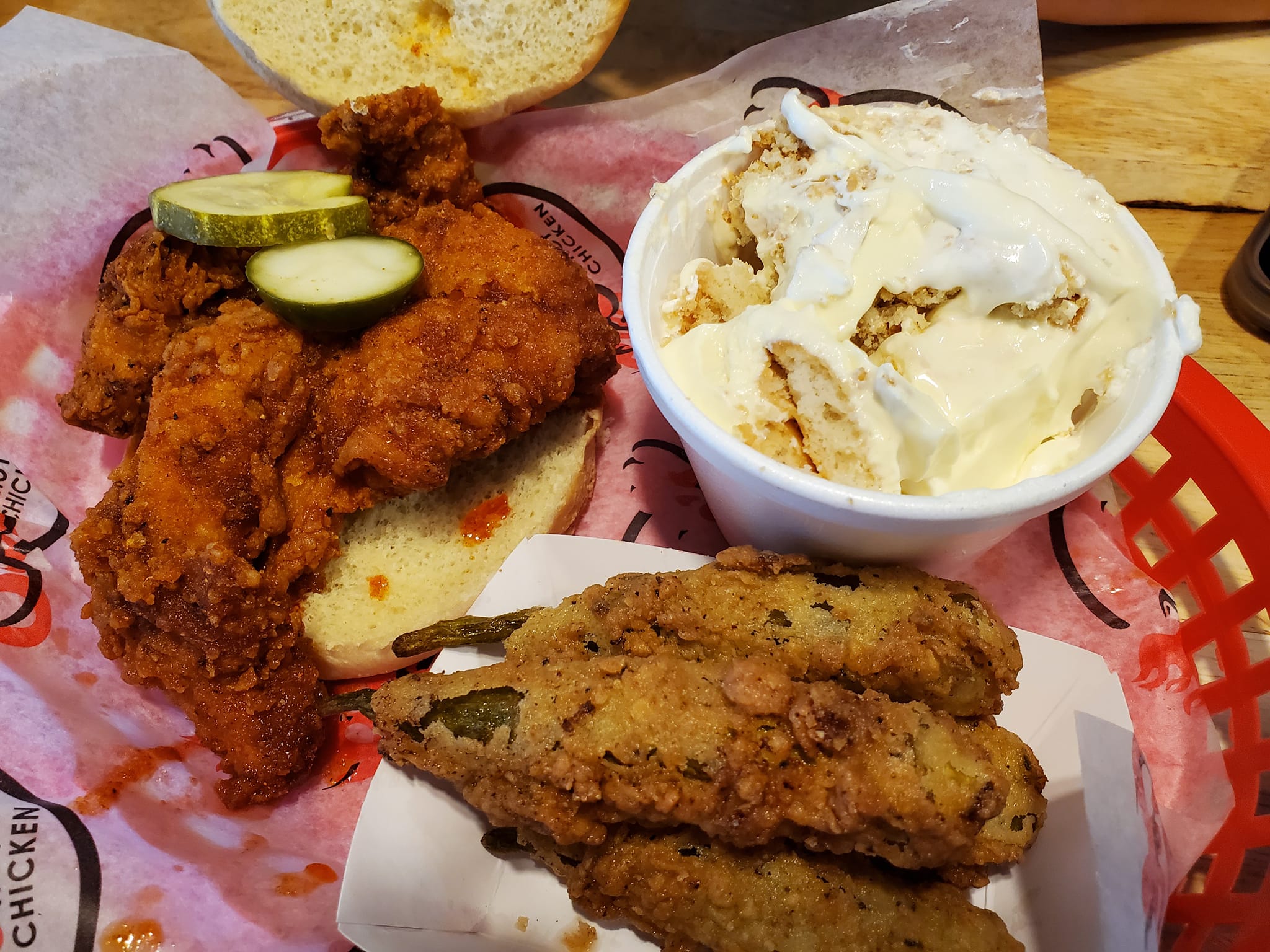
We each had their signature sandwiches, mine came with macaroni and cheese, and my friend had fried okra and banana pudding with hers.
MAGIC CITY
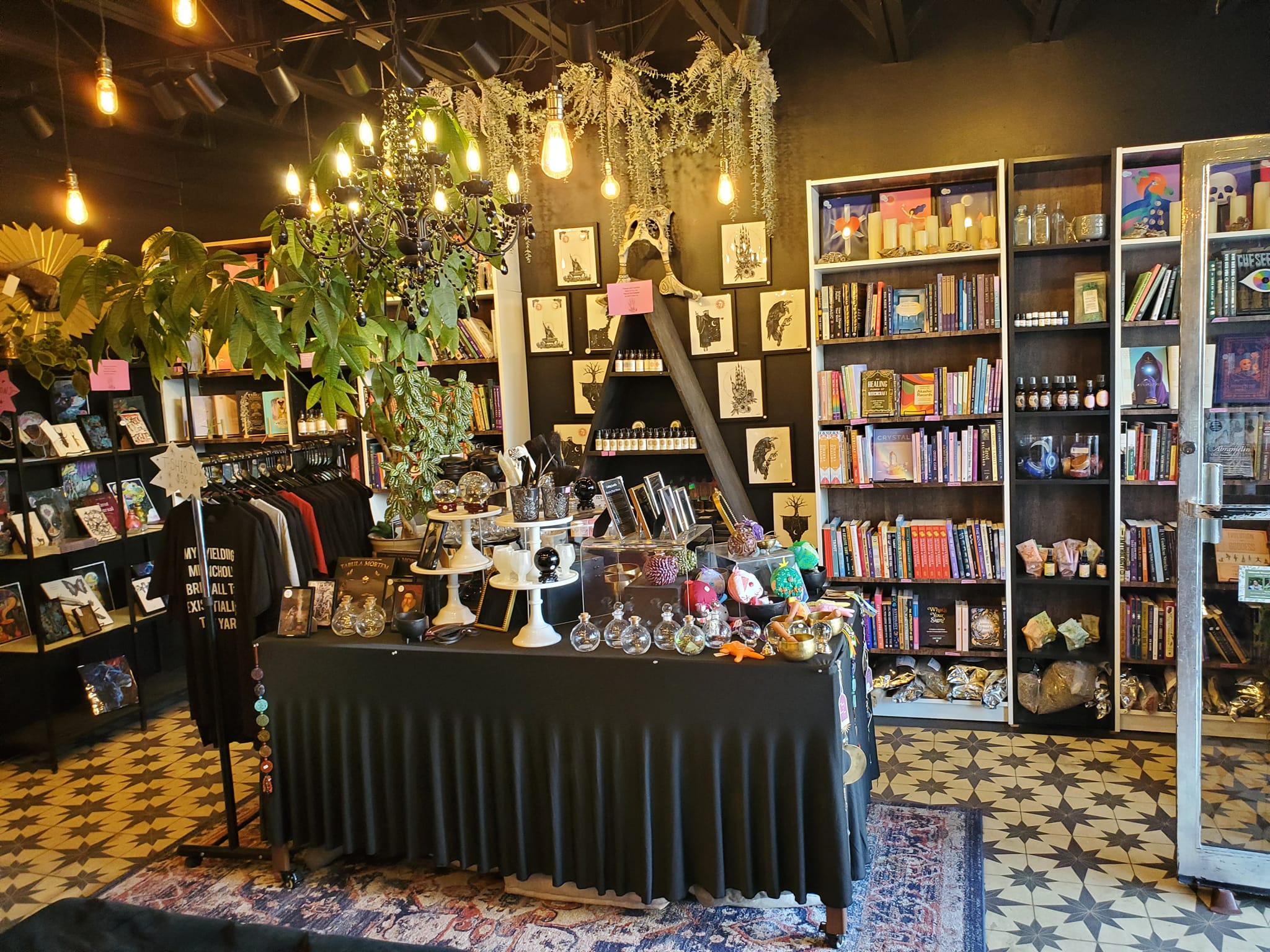
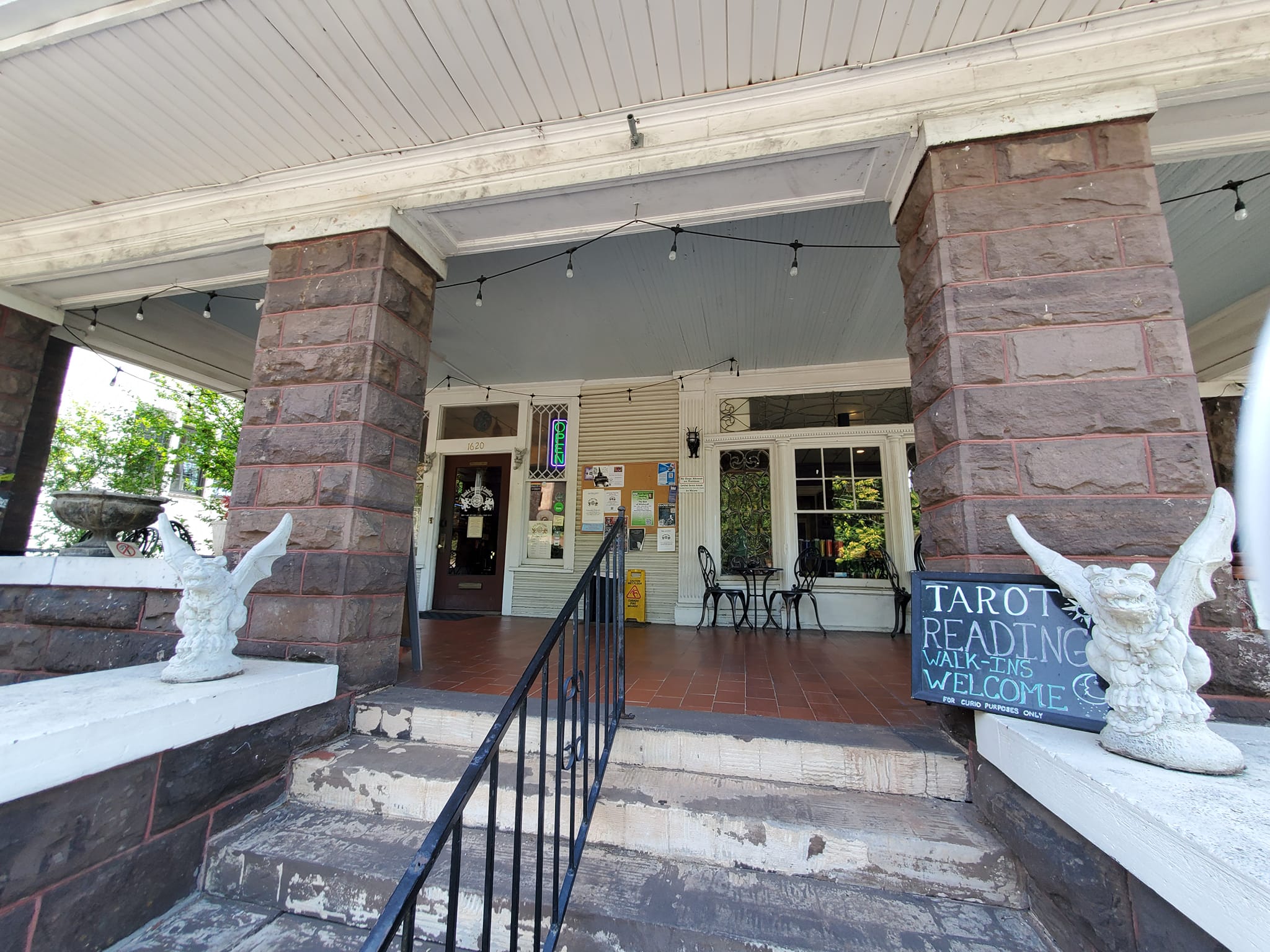
Another reason Birmingham is called Magic City could very well be the number of metaphysical cafes and bookshops.
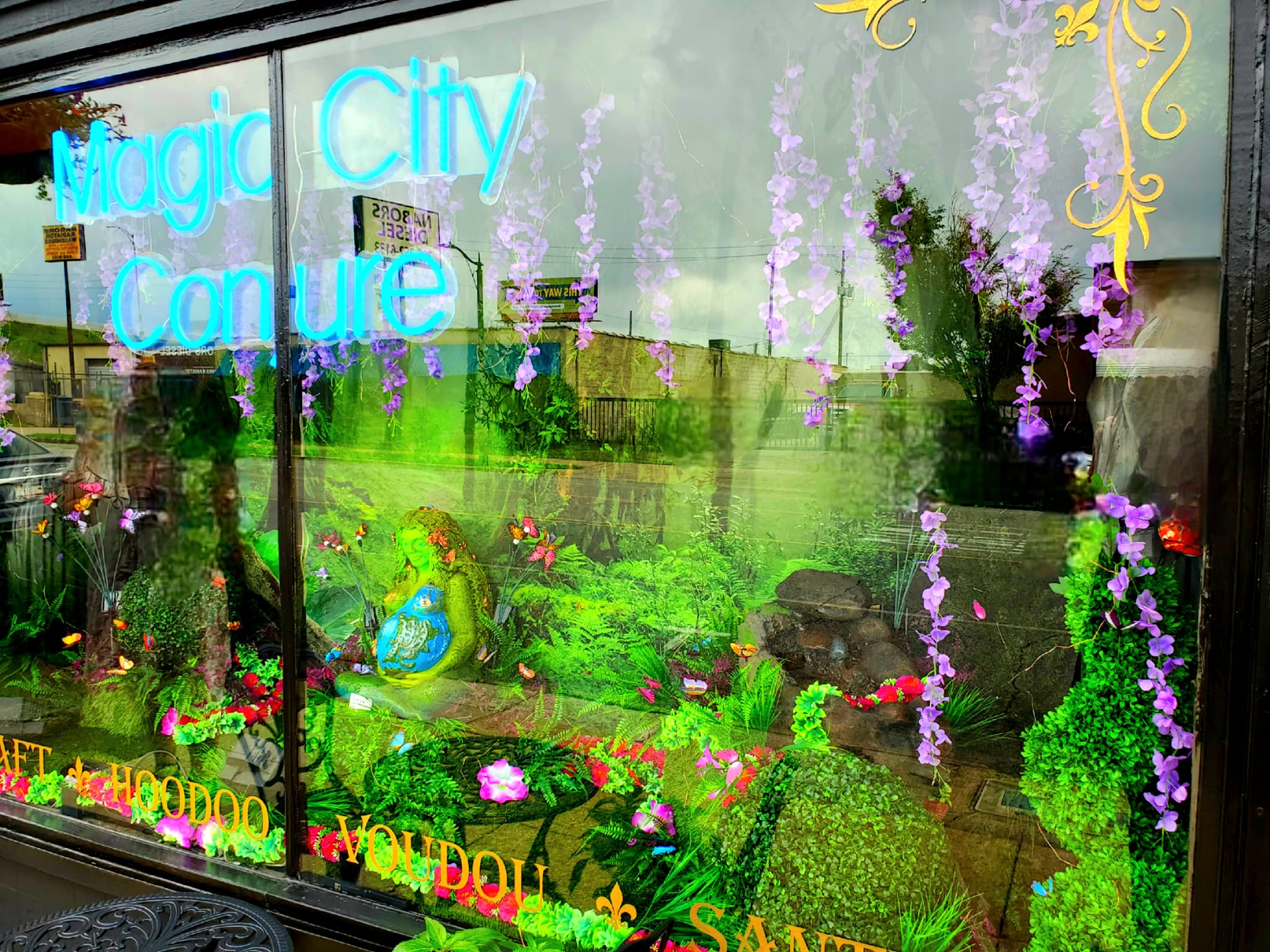
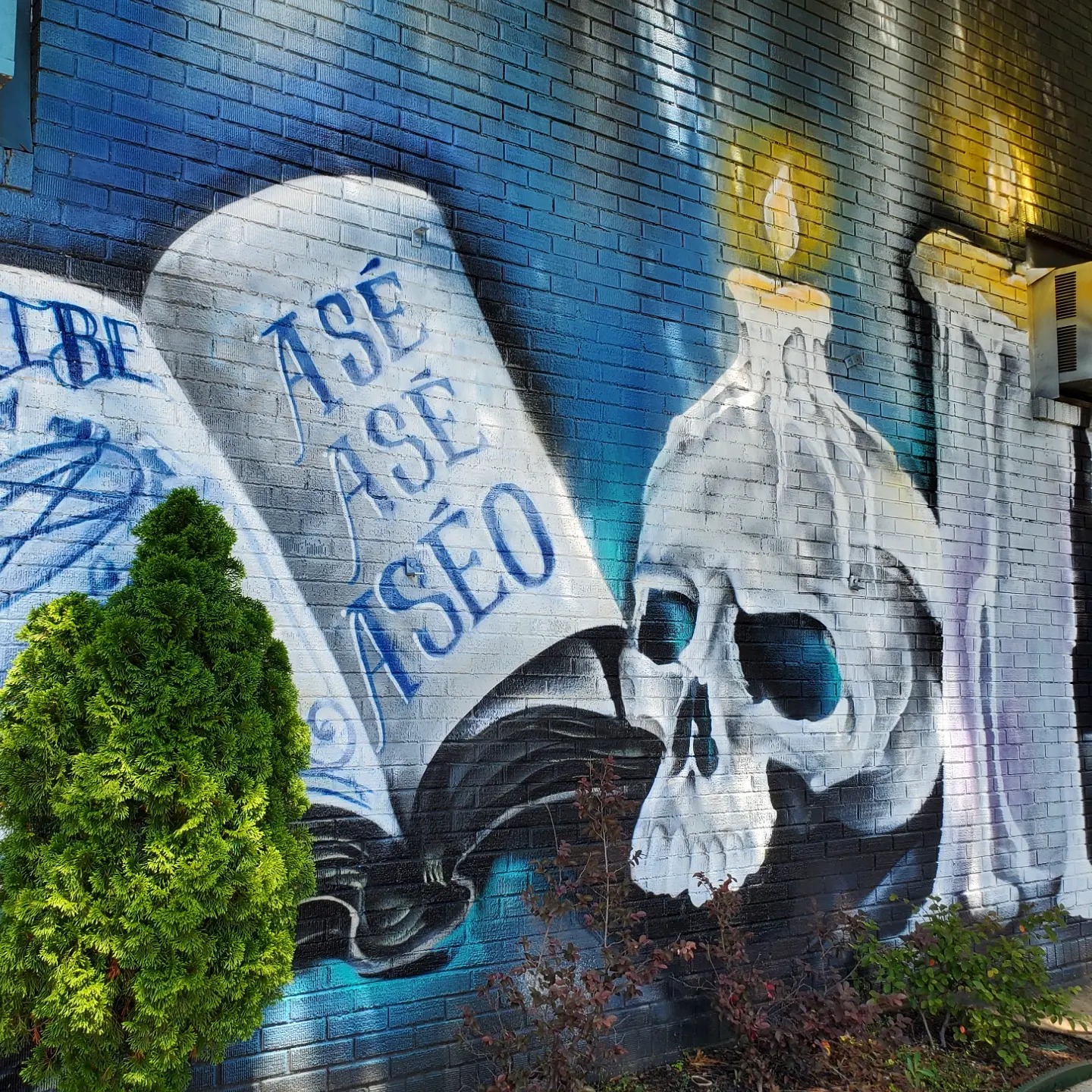
Magic City Conjure, Ritual + Shelter, and Books, Beans, & Candles were just three that we visited in one afternoon.
Each one had a different energetic feel, and slightly varying merchandise than the other. If you are into “witch” shops, you will dig Birmingham.
IN THE NEWS
I feel like I must mention the recent (September 2024) mass shooting in Birmingham where four victims lost their lives and more than a dozen additional people were seriously injured. Police believe that this was a targeted “hit” on an individual that unfortunately affected bystanders. According to various news sources, this is the third mass shooting in 2024 and speaks on the city’s growing violent crime rate.
City officials are working to combat this, but major news outlets continue to report that Birmingham has one of the highest total crime rates in the USA. Many of these reports, like this one, clarify that this is not mean Birmingham has the highest number of violent crimes. Memphis, Detroit, and Little Rock are just a few examples of the most dangerous cities in the US based off violent crime.
Despite this, we felt safe visiting Birmingham in the day time. We had to move on to Nauvoo before dark, but I would happily return to Birmingham one day. Just as with any place I write about or that you read about elsewhere, be cautious and aware when visiting. Watch your back in your own neighbourhood.
In the area for a while? Follow me to Huntsville!
*************
© Fernwehtun, 2015- Current. Unauthorized use and/or duplication of this material without express and written permission from this site’s author and/or owner is strictly prohibited. Excerpts and links may be used, provided that full and clear credit is given to Fernwehtun and Fernwehtun.com with appropriate and specific direction to the original content.

 Fernweh, An Ache for Distant Places
Leave a comment