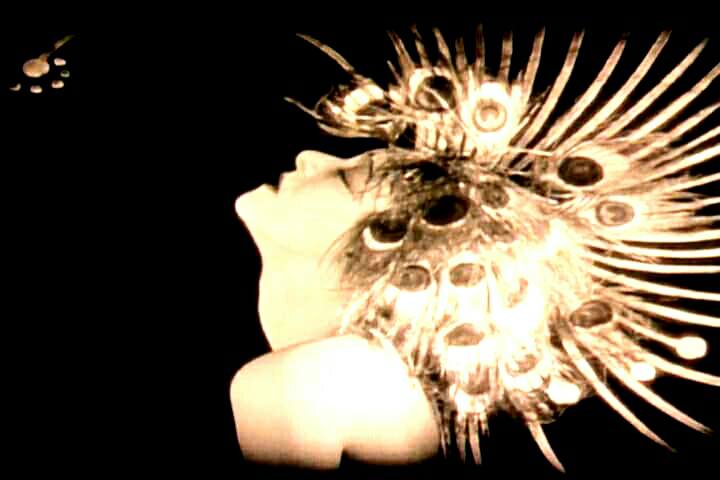
HOT SPRINGS
Hot Springs is in the southernmost region of the South Dakota Black Hills. It sits about halfway between Custer State Park and the South Dakota-Nebraska state line, and slightly east of the Wyoming-South Dakota state line.
Hot Springs is also in Fall River County, the neighbouring county to Oglala Lakota County and the Pine Ridge Reservation. There are around 3,500 people living in 3.5 square miles.
This land originally belonged, and still legally belongs, to the (Sioux) Lakota people.
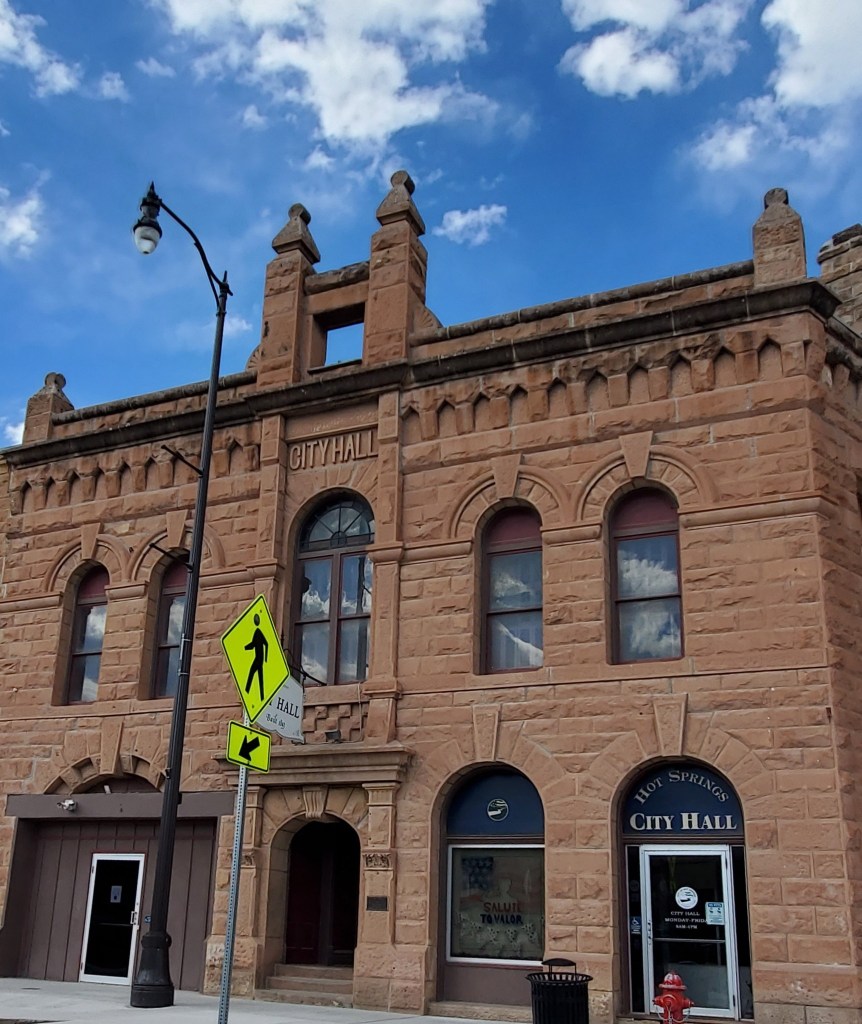
One of my favourite things about Hot Springs is the abundance of sandstone buildings, many of which were built between the 1880s and 1930s.
At one point, there were nearly 30 separate sandstone quarries near Hot Springs that shipped this gorgeous stone out all over the country.
The Franklin Hotel in Deadwood is just example of its quality and endurance over time.

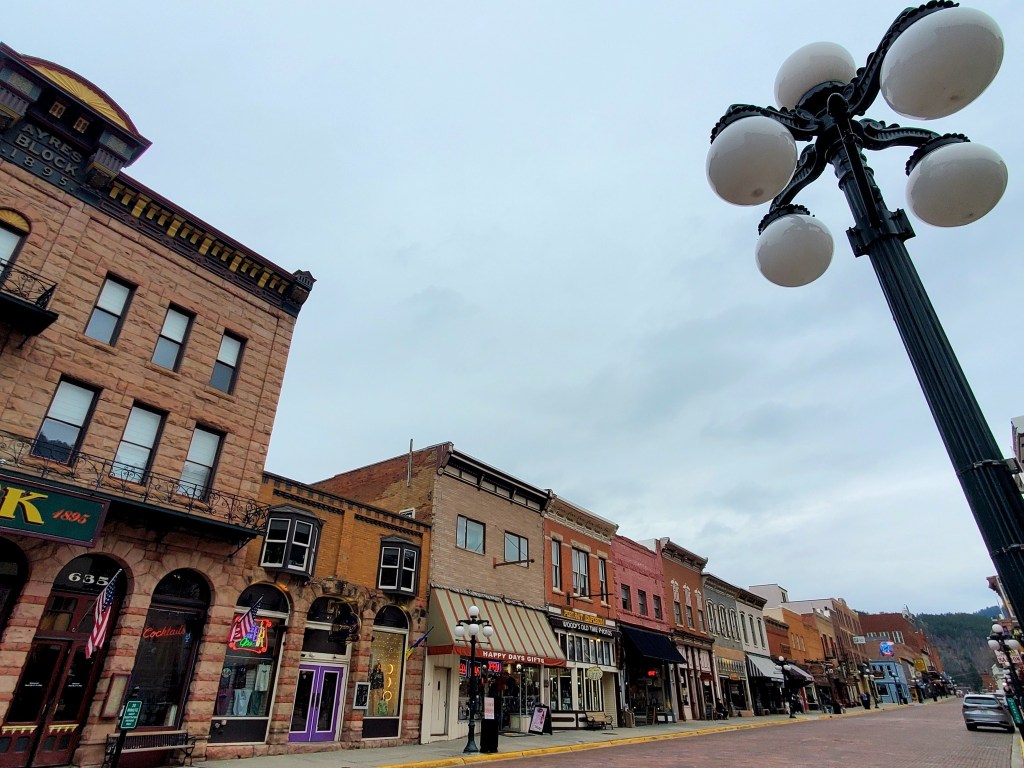
Downtown, the 1.5 mile manicured Fall River & Freedom Trail connects to the River Walk waterfall in the center, just below street level.
Browse around and find the historic City Hall, Jail, and other historic architecture.

Hot Springs is also the home of South Dakota’s first Poet Laureate, Charles Badger Clark, Jr. who was famous for his work “A Cowboy’s Prayer.” You can view another site in his honour over at Custer State Park.
Popular sites in Hot Springs include Evans Mineral Plunge, Moccasin Springs Natural Mineral Falls, Upper Chautauqua Park, Mammoth Fossil Site, and also the World Fossil Finder Museum, and Fall River Pioneer Museum.

NATURAL MINERAL SPRINGS
The first tourist vacation destination in the Black Hills was Hot Springs, a town founded in 1890. It began when the natural mineral springs were used to treat physical injuries and mental strain in veterans who had come home from war.
As you might guess, someone found a way to capitalize and commercialize it.
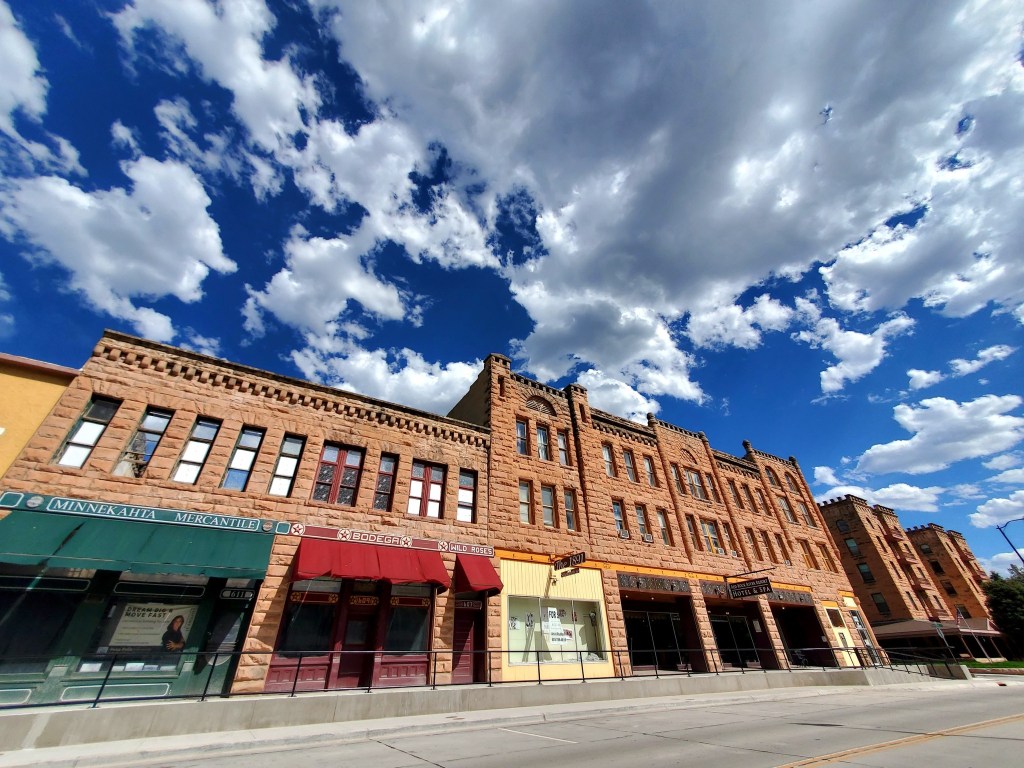
Dr. R. D. Jennings opened the town’s first commercial bath house in 1881 on the site where Moccasin Springs Natural Mineral Spa is now.
Fred Evans opened Evans Plunge in 1891 but it is owned by the city of Hot Springs today. It was first called Plunge Bath and, back then, was the largest known enclosed, natural, warm water pool.
We were not able to get an appointment at Moccasin Springs because their website was down and they did not answer their phone or email after multiple attempts over the course of three business days, until the very last moment we were in town and they said they had no openings. If this is important to you, I would suggest contacting them a few weeks before you go to get an answer and guarantee a spot.
We considered going to Evans Plunge but a few people told us that families often bring large groups of rowdy kids and even dogs to the facility, so we followed their advice to a third option: Upper Chautauqua Park.
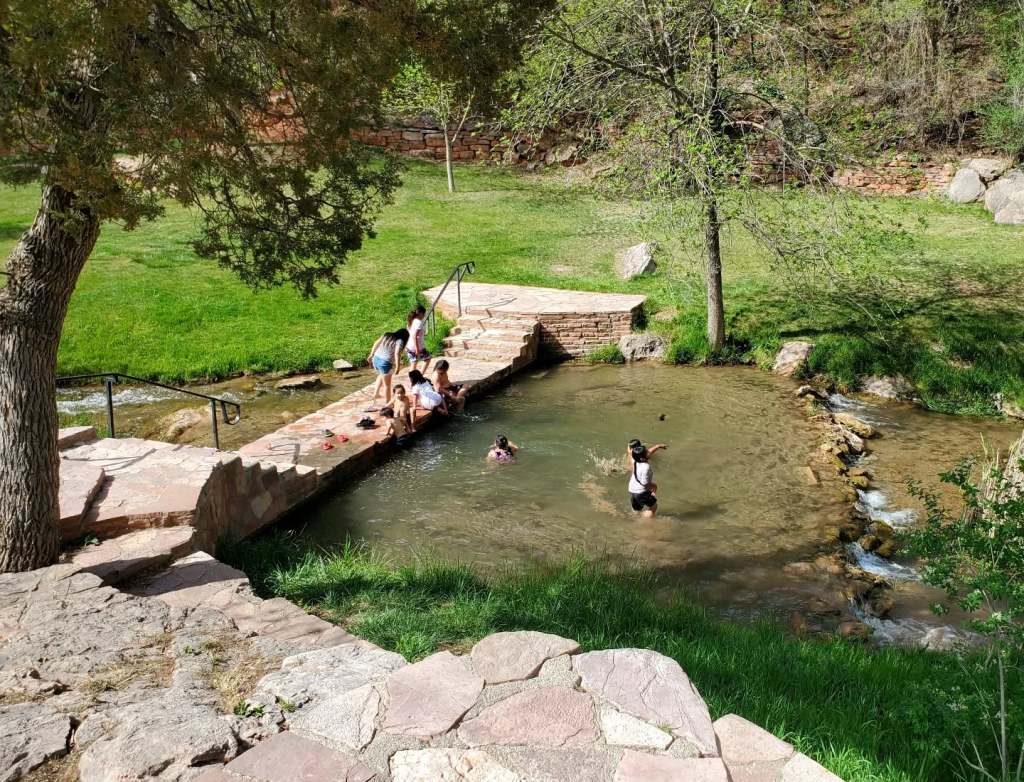
Upper Chautauqua Park was definitely the right move.
Chautauqua Park is divided into Upper and Lower sections but if you want to visit the natural mineral springs as seen below, be sure to follow the signs for Upper. We parked on a narrow gravel driveway by a picnic shelter by the water, not knowing a better option.

The lush, green, natural lawn surrounding the springs was so inviting, we kicked off our shoes and wandered around a bit.

I saw some poison hemlock growing out in the wild, which was a first.

I hiked up my leggings and waded around a bit, eventually settling on a spot where I could sink my feet in and watch the springs rush around them.

I was joined by some really funny Lakota kids who had clearly just learned a few new curse words and were practicing with each other while I was fighting for my life not to burst into laughter.
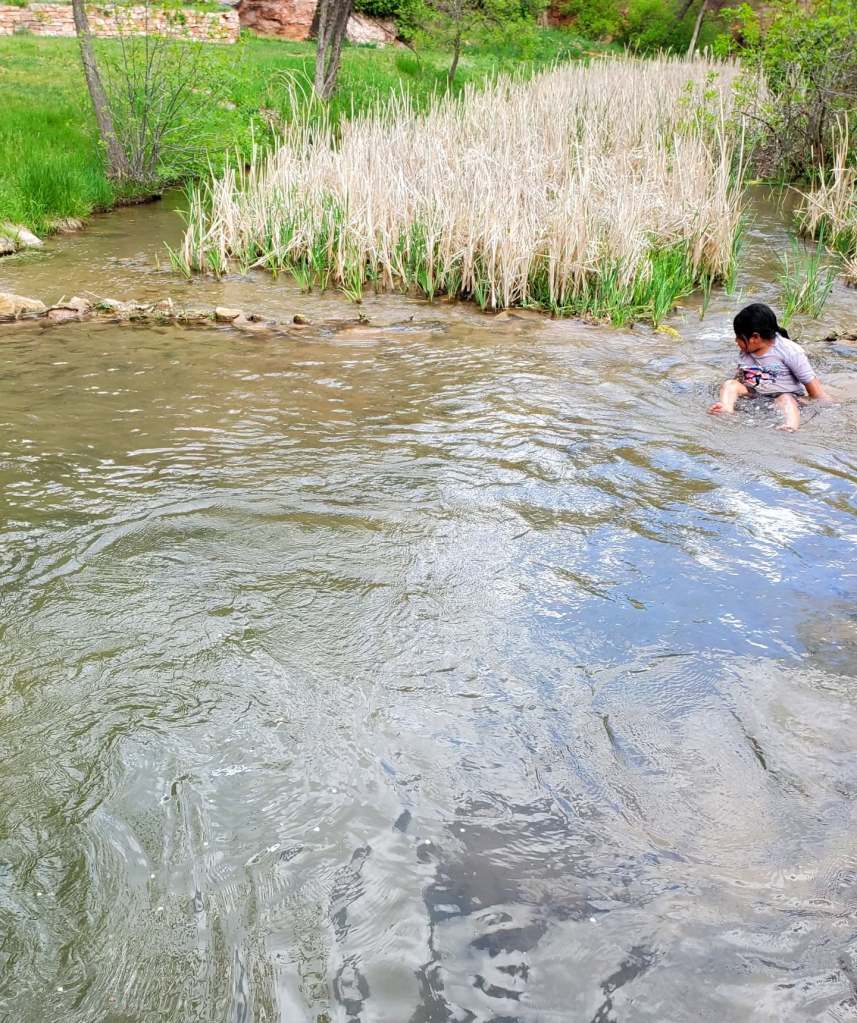
They were very eager to have me watch them do various belly rolls and swimming stunts. I am not one you would describe as a kid person, but they always beeline right to me.
I really enjoyed their silly little group.
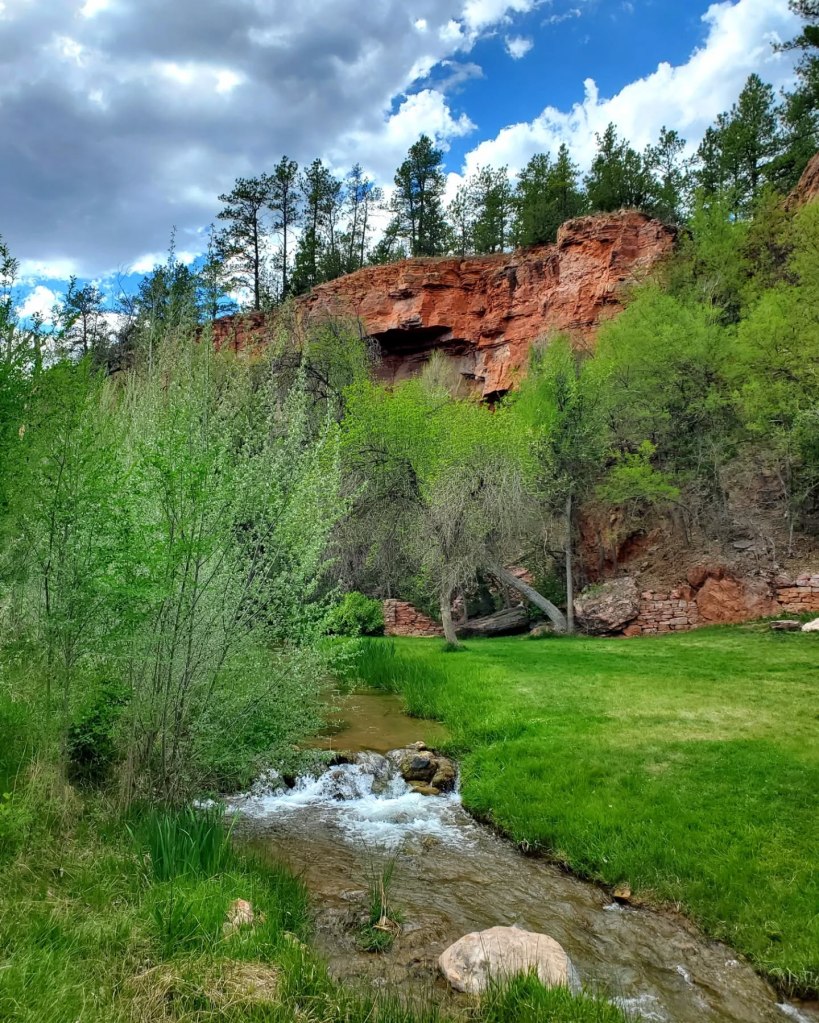
Soaking in the warmth, the breeze, and the coolness of the water, I was in disbelief that access to this place was free.

Eventually the sun came on a little too strong so we packed up and headed for our next destination.

MAMMOTH FOSSIL SITE
With slightly wet bottoms and feet, we made our way to the Mammoth Fossil Site, the largest mammoth research facility in the world.

It is also one of the most prominent fossil interpretive sites in the US.
Over 60 mammoths and nearly 90 other Ice Age mammals have been unearthed right on the site below your feet.

The Mammoth Fossil Site got its start back in 1974 when an excavator hit on something that caught the driver’s eye. Upon closer evaluation, he realized it was a massive skeleton.

Now, the Mammoth Fossil Site is a non-profit organization.

All of its research and projects are independently funded without receiving any government grants, so the price of admission ensures that it will keep going.

It is an active dig site, which means more will inevitably continue to be found.
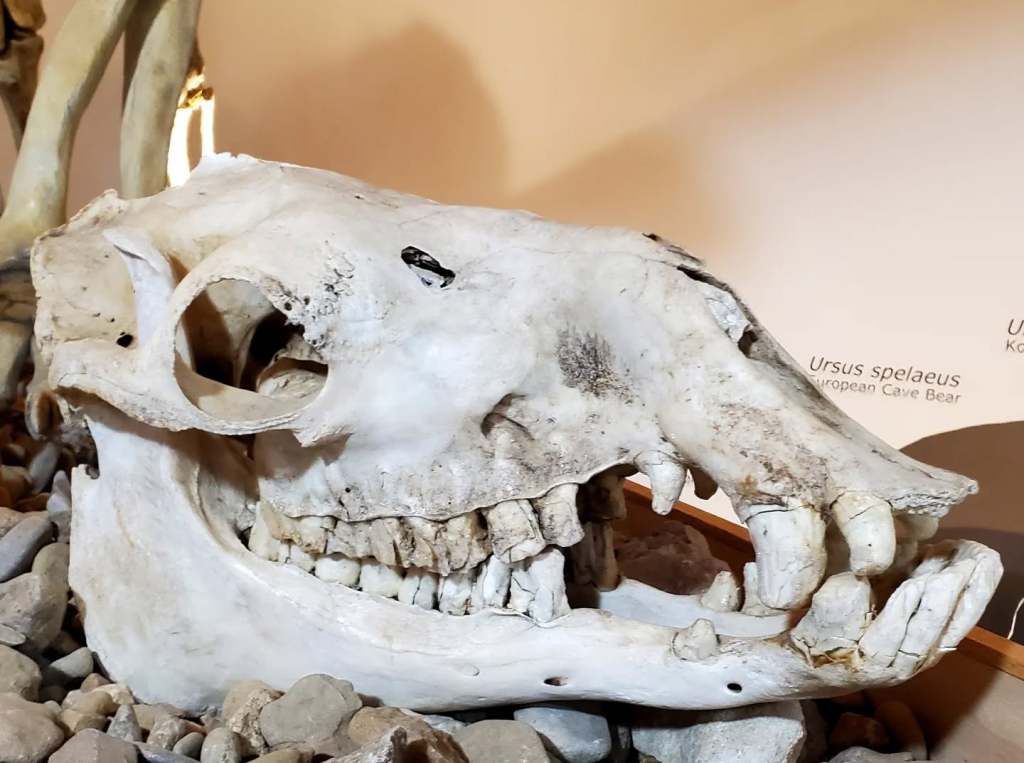
Napoleon Bone-a-Part, picture below, is the oldest and most articulated Columbian mammoth fossil known.

Mammoth Fossil Site has a large exhibit hall with various collections of skulls, skeletons, fossils, and mummified specimens found onsite or nearby, and a few that are borrowed from related projects.


GEOLOGY DRIVING TOUR
Hot Springs and the Black Hills region as a whole are a massive hub for paleontology, geology, and archaeology.
We found a brochure somewhere in South Dakota called the “Bones & Stones” tour, but after scanning it and realizing that I had been or was already planning to go to most places on the list, I threw it away. Now, I can not find any information about it online.
I recall that each stop is located in the Black Hills area and among them are the Mammoth Site and Evans Plunge in Hot Springs, Custer State Park, the Black Hills Mining Museum in Lead, and then the Adams Museum, Black Hills Caverns, and Reptile Gardens in Deadwood. Stay tuned for future blogs about those.
In Rapid City, the SDSM&T Museum of Geology and Dinosaur Park are on the list. In Keystone, we visited the Rock Shed then drove by both Rushmore Cave and the Big Thunder Gold Mine & Museum. We drove around the edges of Bear Butte State Park, and saw both the Dakota’s Stone Rock Shop and the Museum at Black Hills Institute in Hill City. I will have a Rapid City blog coming out soon, also.
Unfortunately we were not able to visit the Petrified Forest of the Black Hills in Piedmont, the Devils Tower National Monument in Black Hills of Wyoming, or the Petrified Wood Park & Museum in Lemmon, SD due to distance and running out of time for this trip.
It’s not like Pokemon though, you can’t catch them all. Not in one trip, anyways.
Dr. John Paul Gries of the South Dakota School of Mines and Technology has a book called Roadside Geology of South Dakota if you are interested in learning about any more significant sites I may have missed.

In the area for a while? Follow me to other rad places in the Black Hills like Wind Cave National Park, Badlands National Park, Custer State Park, Wall Drug, and Spearfish Canyon, or to Rapid City, Deadwood, and Lead.
*************
© Fernwehtun, 2015- Current. Unauthorized use and/or duplication of this material without express and written permission from this site’s author and/or owner is strictly prohibited. Excerpts and links may be used, provided that full and clear credit is given to Fernwehtun and Fernwehtun.com with appropriate and specific direction to the original content.

 Fernweh, An Ache for Distant Places
Leave a comment