LEAD, pronounced like “Leed,” is a little old town situated in the heart of South Dakota’s Black Hills region. It is famous for being the site of the historic Homestake Mine and the Sanford Underground Research Facility where scientists study Dark Matter and Neutrinos, better known as Ghost Particles.
Less than 3,000 people live in Lead and, if I had not learned otherwise, I might have just thought it was cute but underwhelming.

Lead was founded in 1876, known as the “Great Gold Discovery year,” and it was named after a ledge of ore deposits called a lead.

The Homestake Mine opened that same year and it was the largest, deepest, most productive gold mine in the western hemisphere. It held the record for longest continually-operated mine until it closed in 2002. During that time, miners produced over 40 million ounces of gold!
Check out this video on Youtube:
By 1889 Lead had become South Dakota’s largest city, with around three times its current population living there and working the mines.
In the 1930s, the entire town packed up and moved uphill due to instability of the ground from miles of underground tunnels leading into the mine that was more than 8,200 feet below the surface.

SANFORD LAB HOMESTAKE
Lead is famous around the world for another reason now; the former Homestake Mine is now home to the Sanford Underground Research Facility.
Also known as both SURF or the Sanford Lab, this National Science Foundation facility is used for low-background experiments on neutrinos and dark matter, nuclear physics topics, biology, and mine engineering.

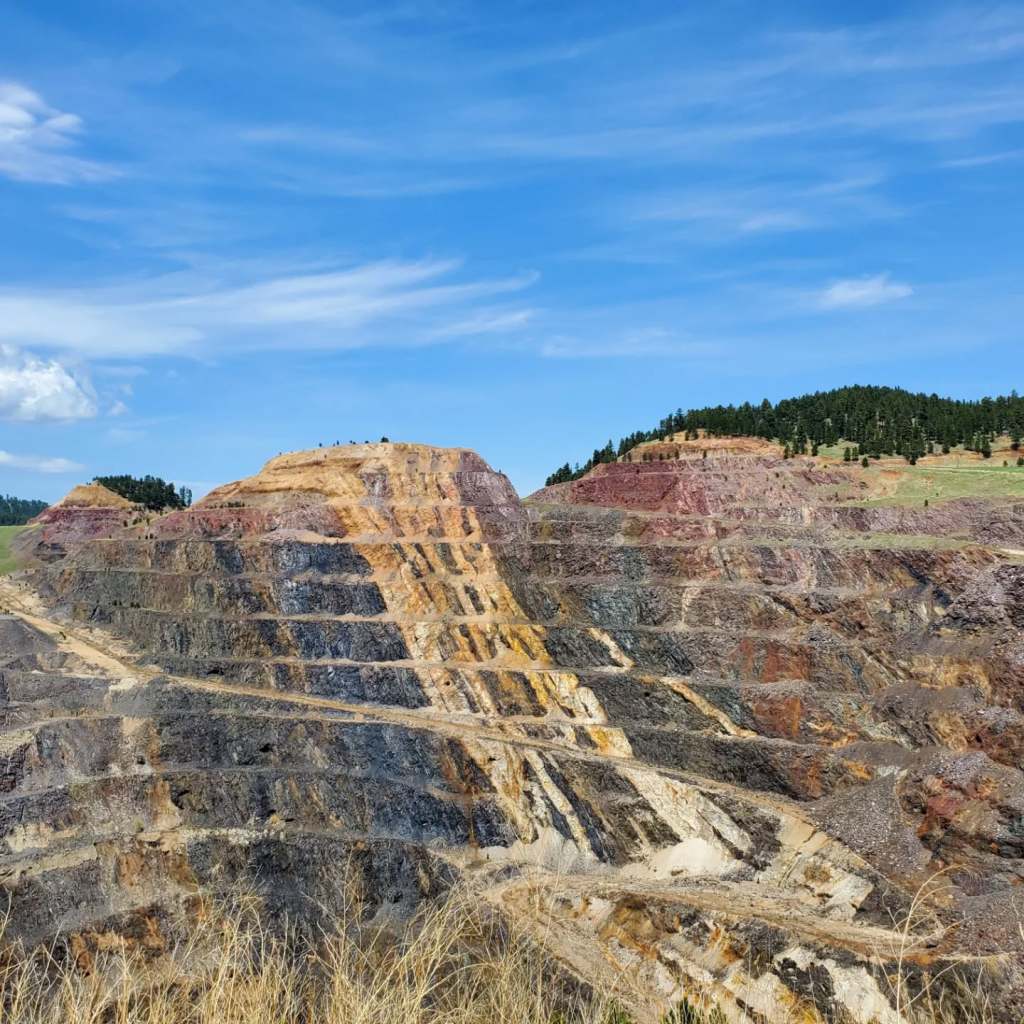
Below, you can se the excavation site known as the Open Cut, the most prominent remnant of the Homestake Mine.
This opening is half a mile wide and more than 1,200 feet deep.
Inside the visitors center, there is a 3D model of it if you care to learn more about its shape below the surface.

You can view other exhibits about Lead’s history, development of Homestake Mine, and everything that led to the opening of the Lab and welcoming visitors.

Sanford Lab has a Youtube channel with several fascinating videos you can view here, including this one:
Check out these two videos from other educators to learn more about Neutrinos:
BLACK HILLS MINING MUSEUM
In a town that began and thrived as mining hub for over a century, it will come as no surprise that one of its main attractions is a mining history museum.

The Black Hills Mining Museum is loaded with artifacts, tools, newspaper articles, and fun exhibits about Lead-specific mining and mining history in general.

The museum also offers a recreated Underground Tour, a gold panning experience, and assistance with research. You can also check out their online archives for free.

HISTORICAL SITES
Homestake Opera House is Lead’s most notorious historical building, which says a lot in a town that takes great pride in its historic renovations. The Opera House was built in 1914 and served as the center of community, music, art, and social life until it was damaged by a major fire in 1984.
Of course it was eventually restored, but it was a devastating hit to the small town. Not only was it a theatre, it was home to the town library, event rooms, and housed a pool, bowling alley, and billiards.

Hearst Free Public Library was commissioned by Phoebe Hearst, wife of Homestake mogul George Hearst, as a gift to the people of Lead. She also established the Hearst Free Kindergarten in 1900 that provided free childcare for working people of the town.
Her additional donations and scholarships are credited for making Lead livable and enjoyable despite harsh working conditions.

Shot in the Dark Saloon is part of the historic Stamphill Restaurant & Inn which was established in 1897. It started as a boarding house for Homestake Mine workers, survived the tragic fire of 1904 that took out many of its neighbours, and eventually began hosting tourists instead of the local labour force.

The bartender told us that Shot in the Dark was named to memorialize officer Milan Miller who was murdered in retaliation by a man he facilitated the conviction of in 1938. The saloon has a story wall with various news clippings and photos of all parties involved.

Lead is very proud of its two-story Coca-Cola mural outside Shot in the Dark. It was painted in 1897 just as soon as the Stamphill building was completed, and is credited for being the second mural of only a few its kind to be painted. The only other known one is located in Georgia.

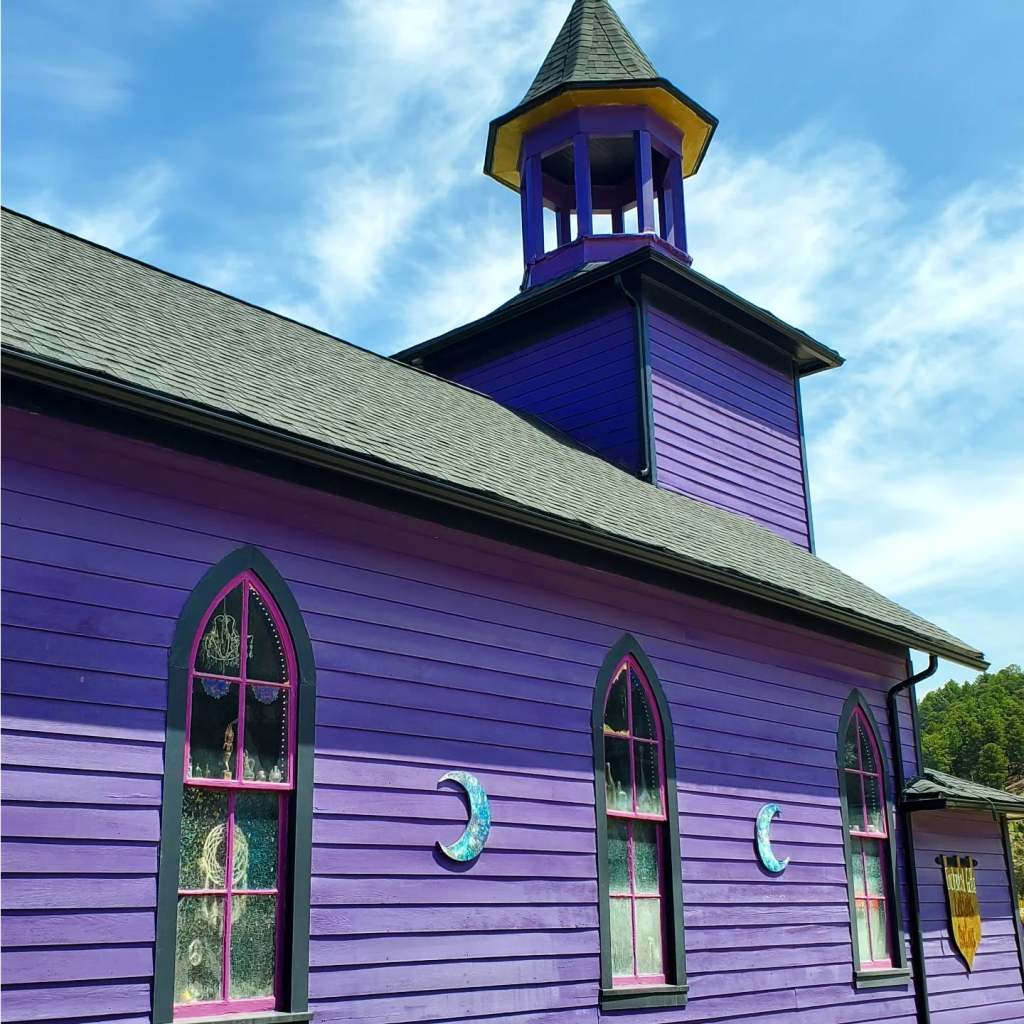
The country’s first Finnish Evangelical Lutheran Church was built in Lead in 1891. It stood on this site until a new church was dedicated elsewhere in 1962, when it was repurposed as a meeting hall and art memorial.
Now, the buildings hosts Aspyre boutique and art gallery.
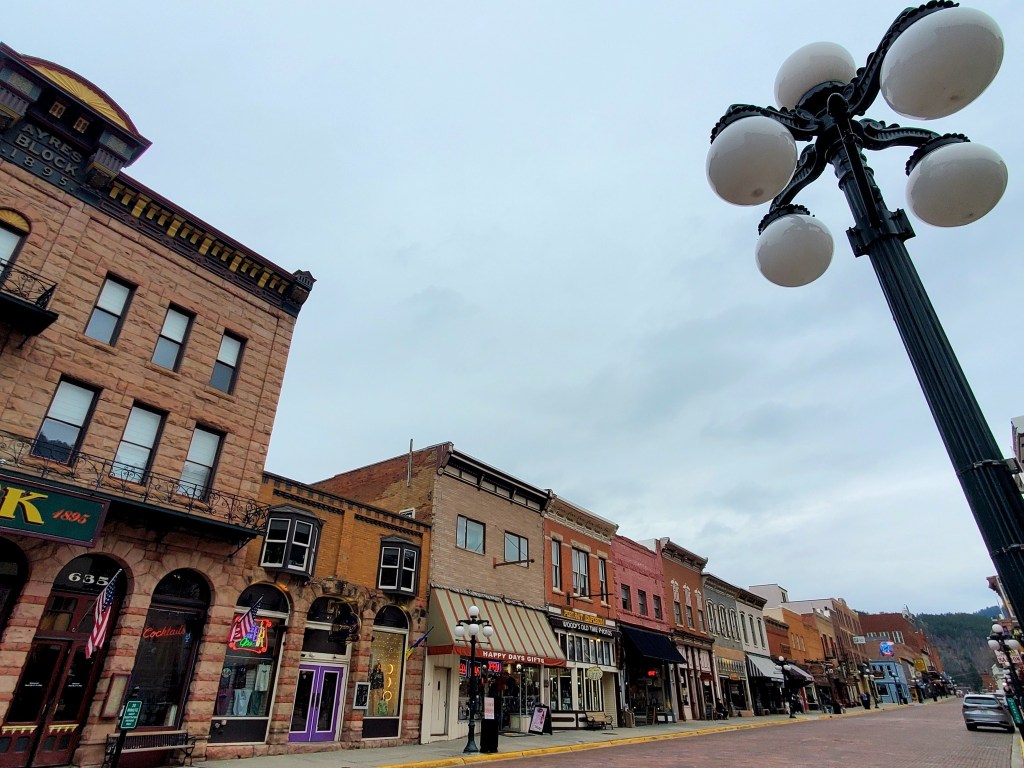
Most of Lead was added to the National Register of Historic Places in 1974 as the “Lead Historic District” that includes more than 400 buildings.
We really enjoyed browsing the eclectic shops and local art.

One last interesting thing I will share about Lead is that its super high elevation makes it one of the wettest and snowiest places in the United States, with an average of 184 inches of snow per year. I live in a place where the average annual snowfall is 4.6 inches per year and am from originally from place with an average 25 inches per year, so I can only imagine.
In the area for a while? Lead makes a great home base for visiting all the other attractions of the Black Hills. Follow me to Keystone, Mount Rushmore, Crazy Horse Memorial, Wind Cave National Park, Badlands National Park, Hot Springs, Deadwood, Spearfish Canyon, Wall Drug, Custer State Park, and Rapid City.
*************
© Fernwehtun, 2015- Current. Unauthorized use and/or duplication of this material without express and written permission from this site’s author and/or owner is strictly prohibited. Excerpts and links may be used, provided that full and clear credit is given to Fernwehtun and Fernwehtun.com with appropriate and specific direction to the original content.

 Fernweh, An Ache for Distant Places
Leave a comment