DEADWOOD, SOUTH DAKOTA
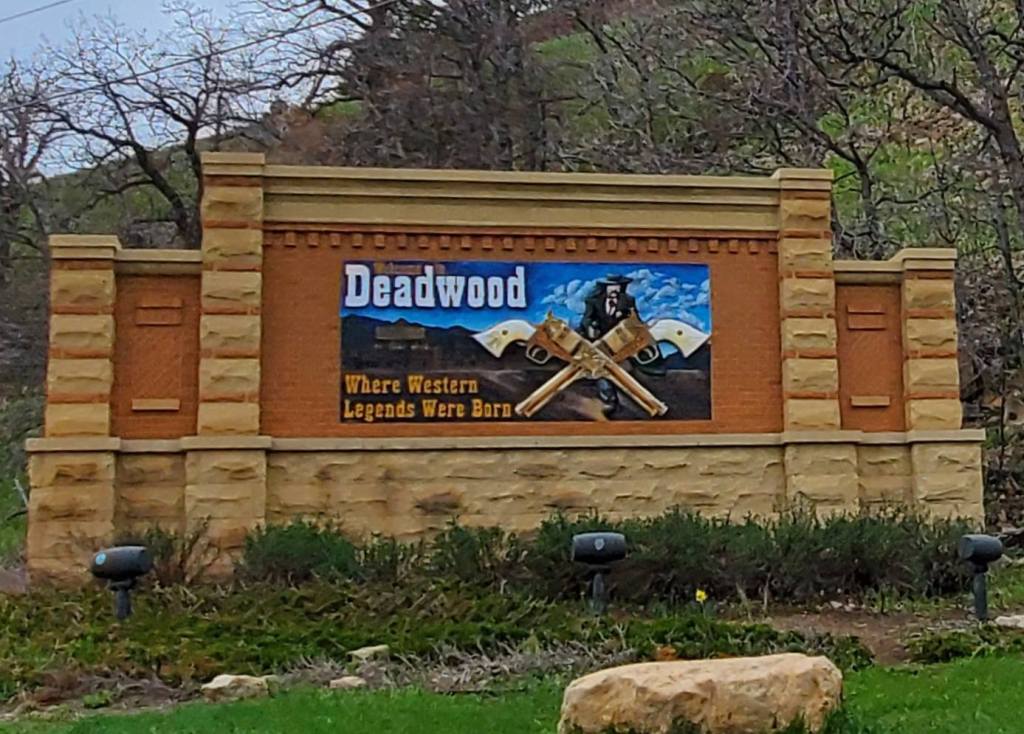
When you hear about lawless, depraved, violent, and wicked places, Deadwood, South Dakota should be on the tip of your tongue.
Deadwood is the Epitome of the Wild West; a shotgun town built in 1876 when miners hustled in for the gold rush and anything else they could get their hands on. They were just as hopeful as they were desperate.
Among many other mass caravans, brothers “Colorado” Charlie & Steve Utter drove a wagon train to Deadwood from George, Colorado, picking up over 100 miners, sex workers, and others who wanted to ride along to their new home.
Like everything else in Deadwood’s early days, the original base camp was crude and filthy, clinging to a gulch of dead trees along both sides of Whitewood Creek.
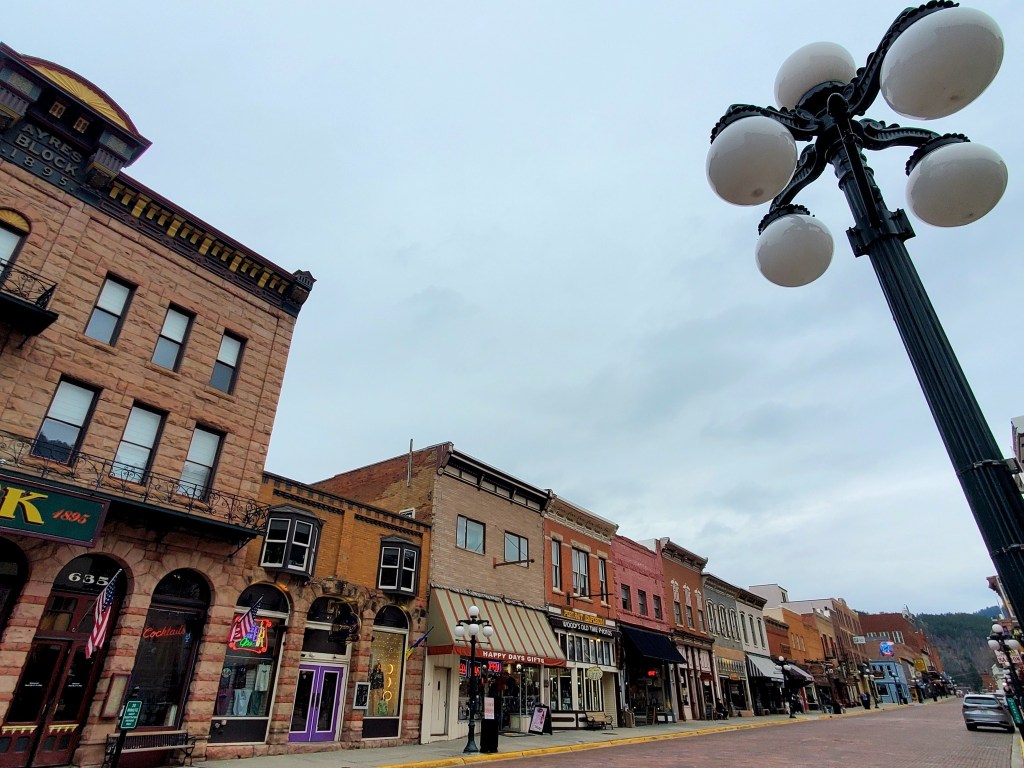
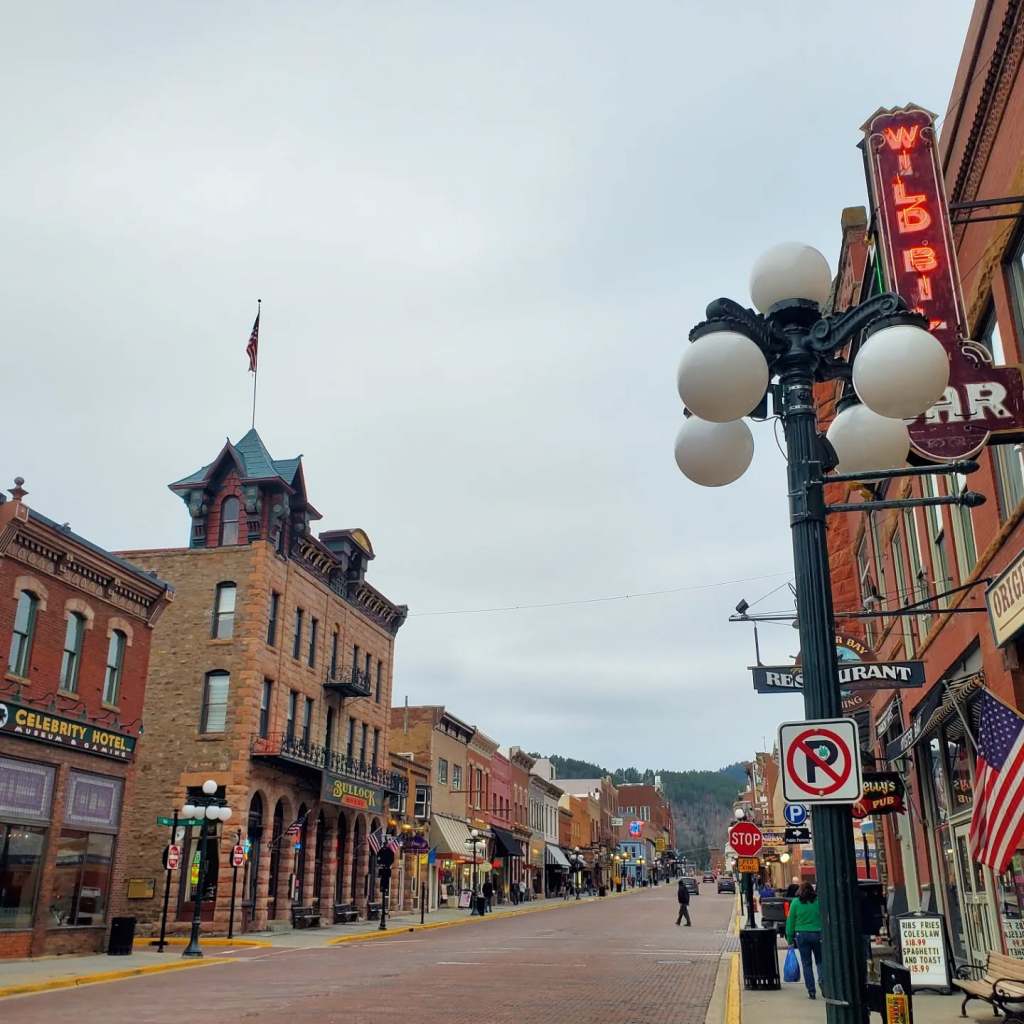
Right away, the main drag through town was filled with saloons, brothels, and gambling halls.
This part of town was named the Bad Lands District and ran along what we now know as Main Street.
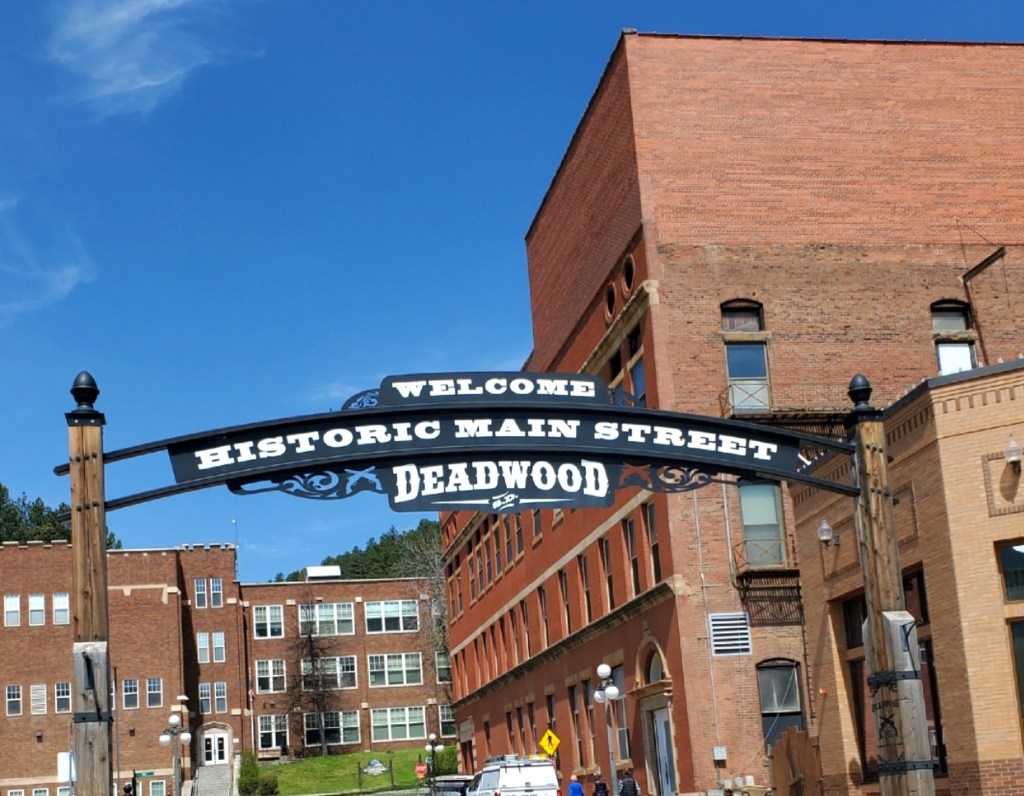
Some of the most prominent places were the Gem Variety Theater and the Bella Union, both known for its illegal and unsettling activities.
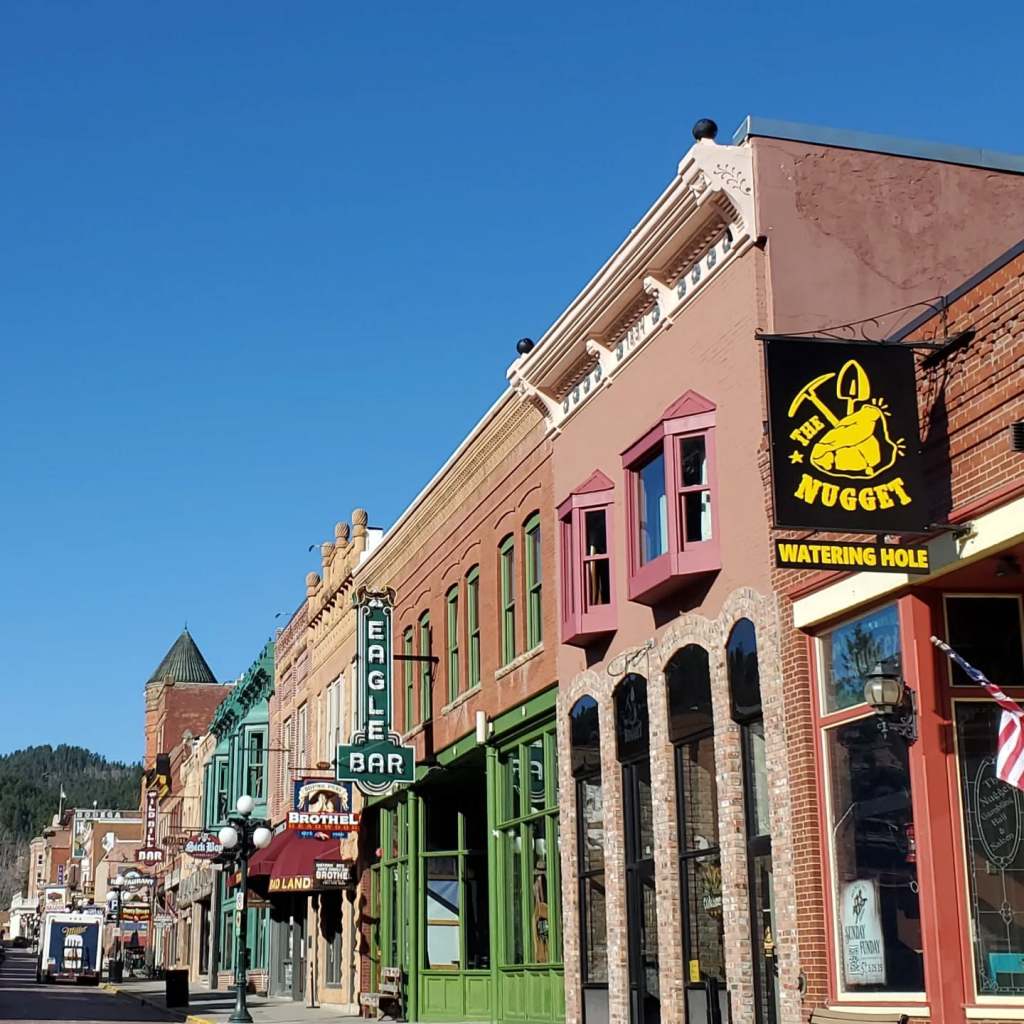
Gold was not newly discovered in the Black Hills during the Gold Rush. Indigenous People of the Black Hills knew about it long before then, they just did not greedily claw the Earth apart to dig it out and sell.
Within a year of Deadwood starting up camp, George Hearst founded the Homestake Mining Company, the largest, deepest, most productive gold mine in the western hemisphere. It held the record for longest continually-operated mine until it closed in 2002.
During that time, miners produced over 40 million ounces of gold! Read more about Homestake Mine and the nearby town of Lead here.
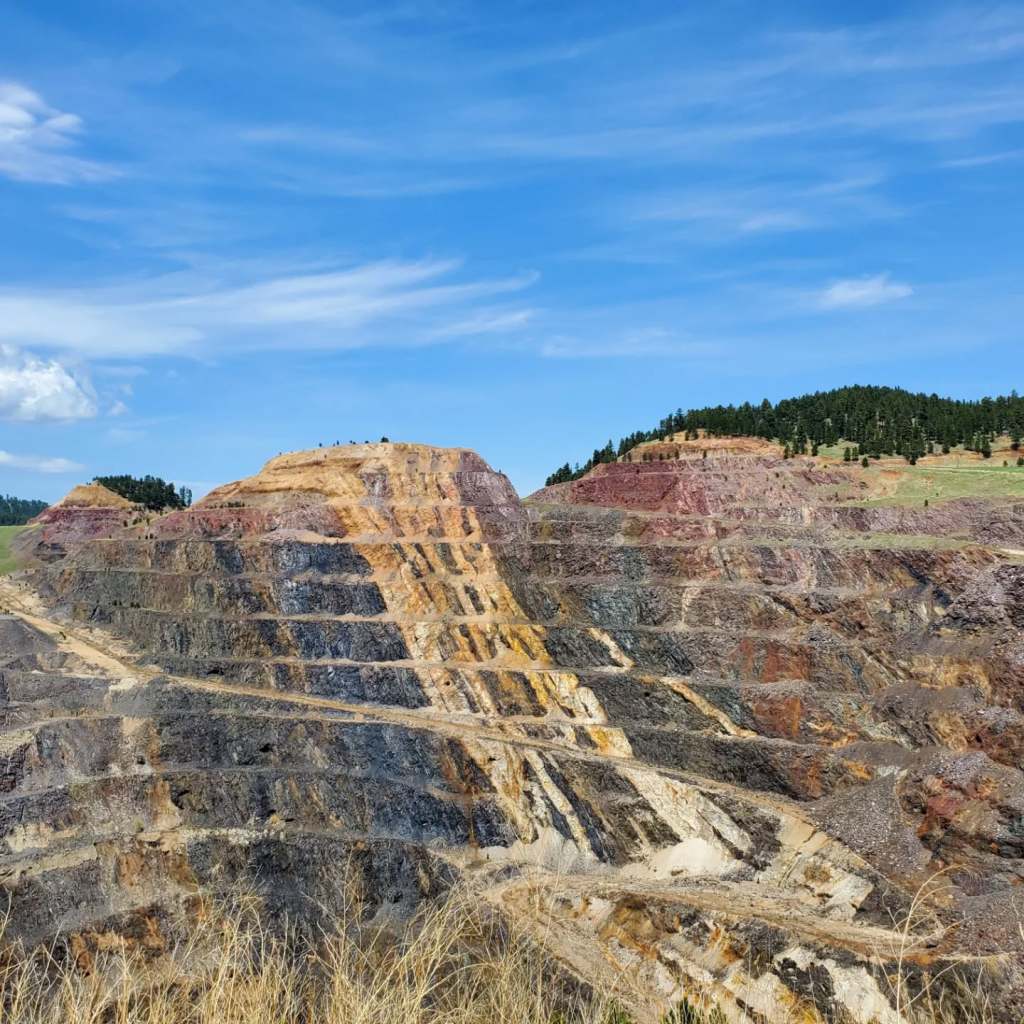
Most mining towns burned out as quickly as they started booming and were forgotten by history, but Deadwood is thriving today.
Here is an interactive timeline about Deadwood’s unique and extensive mining history.
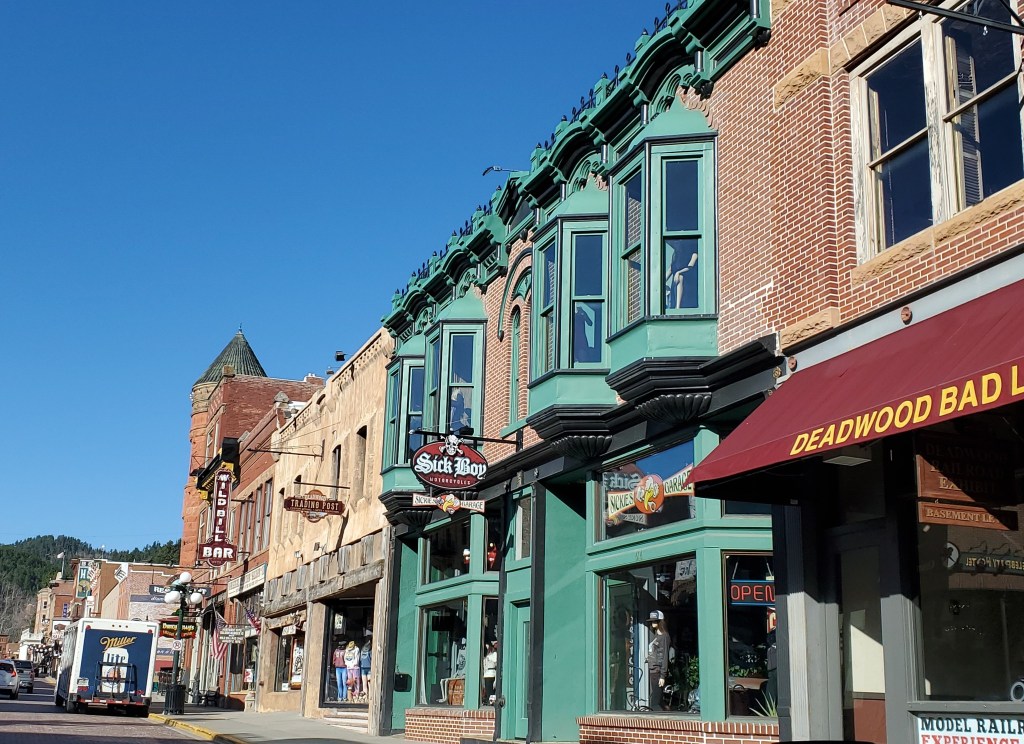
Because Deadwood was (and still is!) on Native land, it was always allowed to function outside of US Law. For many years, there was no successful way of mitigating the fights, murders, extortion, forced prostitution and trafficking, deadly alcohol production, and other criminal activity that took place by miners in the camps.
Sadly, devastating fires and then people fleeing for more newer cities eventually led to economic decline.
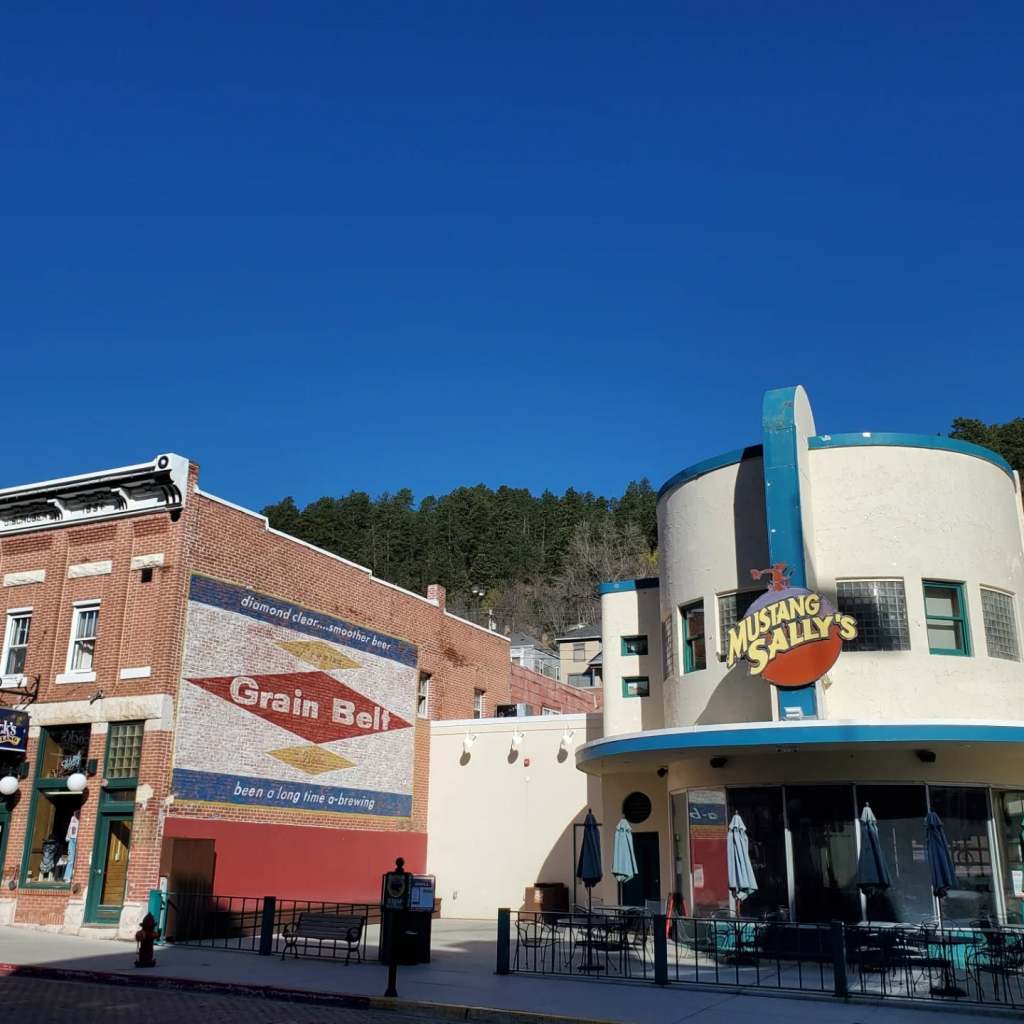
Brothels were still in operation as late as the 1980s, when city officials decided to use Deadwood’s shady past as a means to bring it back to life and created The Brothel Tour.
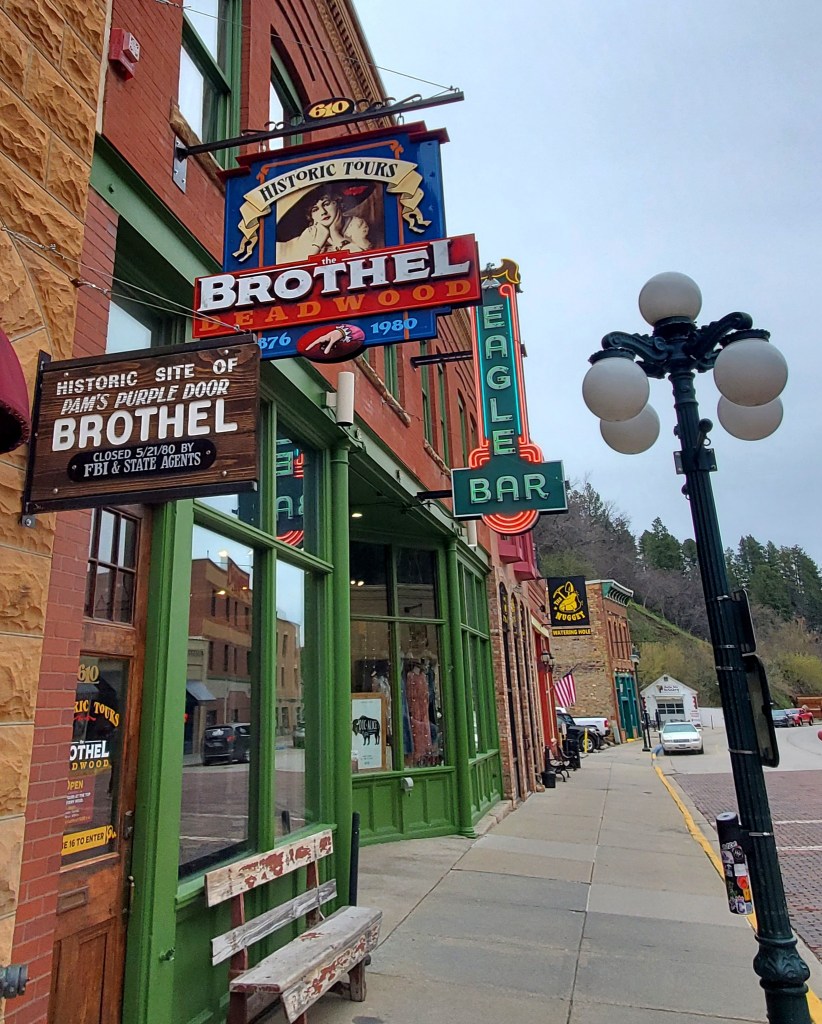
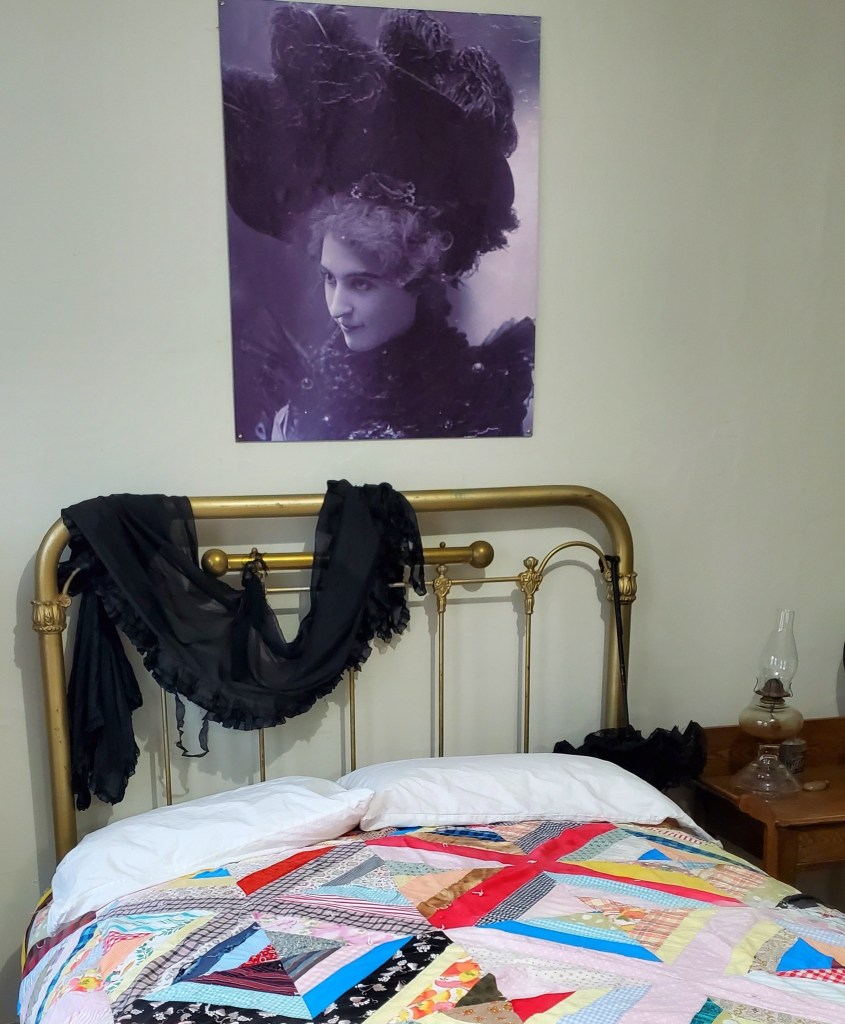
Learning about how so many women were trafficked and brutally abused there was horrific, and this tour told of how scary life was for women in camps. Our guide also highlighted the quick wit and cleverness of many of the women who were able to rise above it.
I was really dreading the experience of being in a group of mostly men who laughed and elbowed each other and made gross jokes the entire time, as I have heard before, but staff was on point and professional.
They facilitated a factual and educational experience, but still called on their sense of humour when relaying some of the harmless pranks and hijinks that went on around Deadwood.
In 1989, after more than a century of gambling on the down-low, Deadwood became the third place in the US to allow legal gaming.
Preservation efforts were spearheaded by various organizations, culminating in Deadwood becoming a National Historic Landmark in 1961.
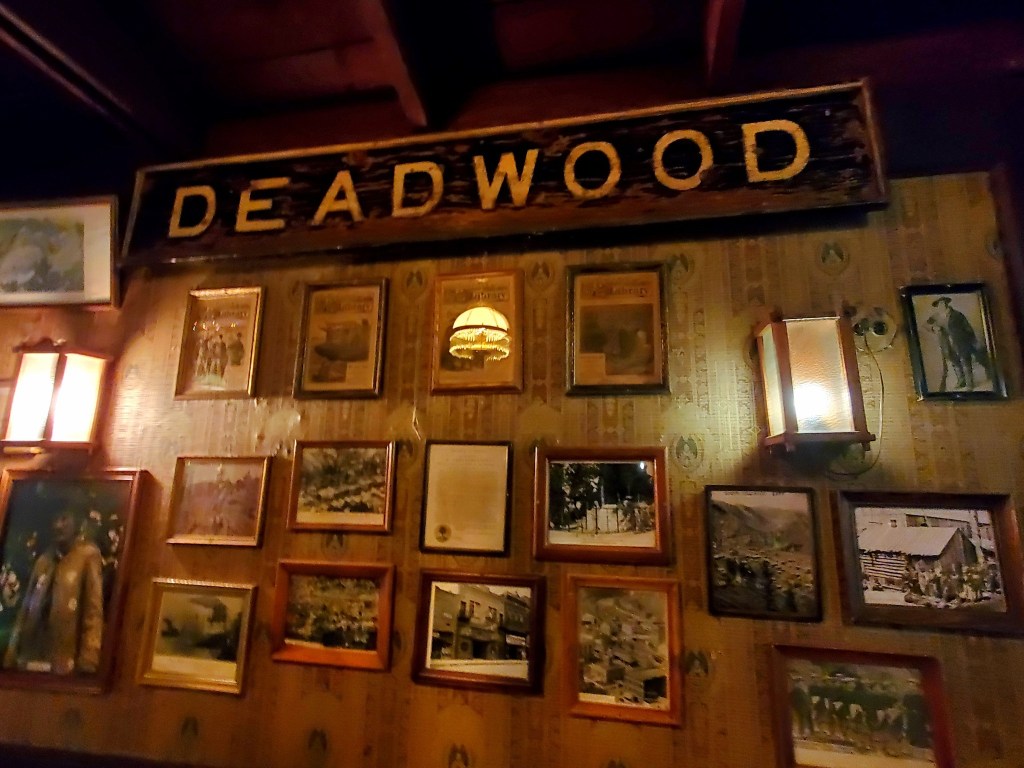
Outside of its scandalous history, Deadwood is a fascinating town on its own.
It is located in the magnetic Black Hills region of western South Dakota, just under five square miles and an estimated 1,300 permanent residents.
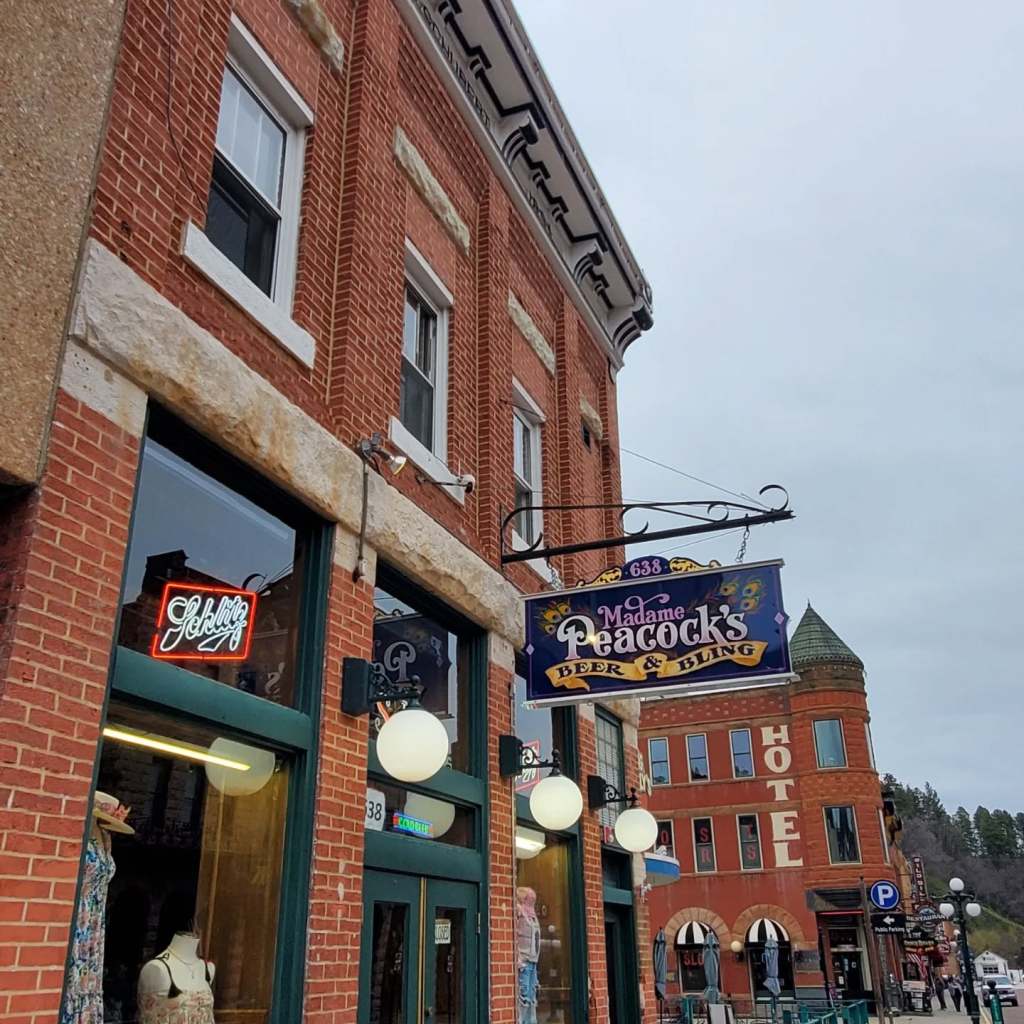
KEY PEOPLE
Deadwood is what it is because of thousands and thousands of different people, some who did wonderful things and some who were notoriously awful.
Undeniably, its most legendary players were and continue to be Wild Bill, Calamity Jane, Sherriff Bullock, and Poker Alice.
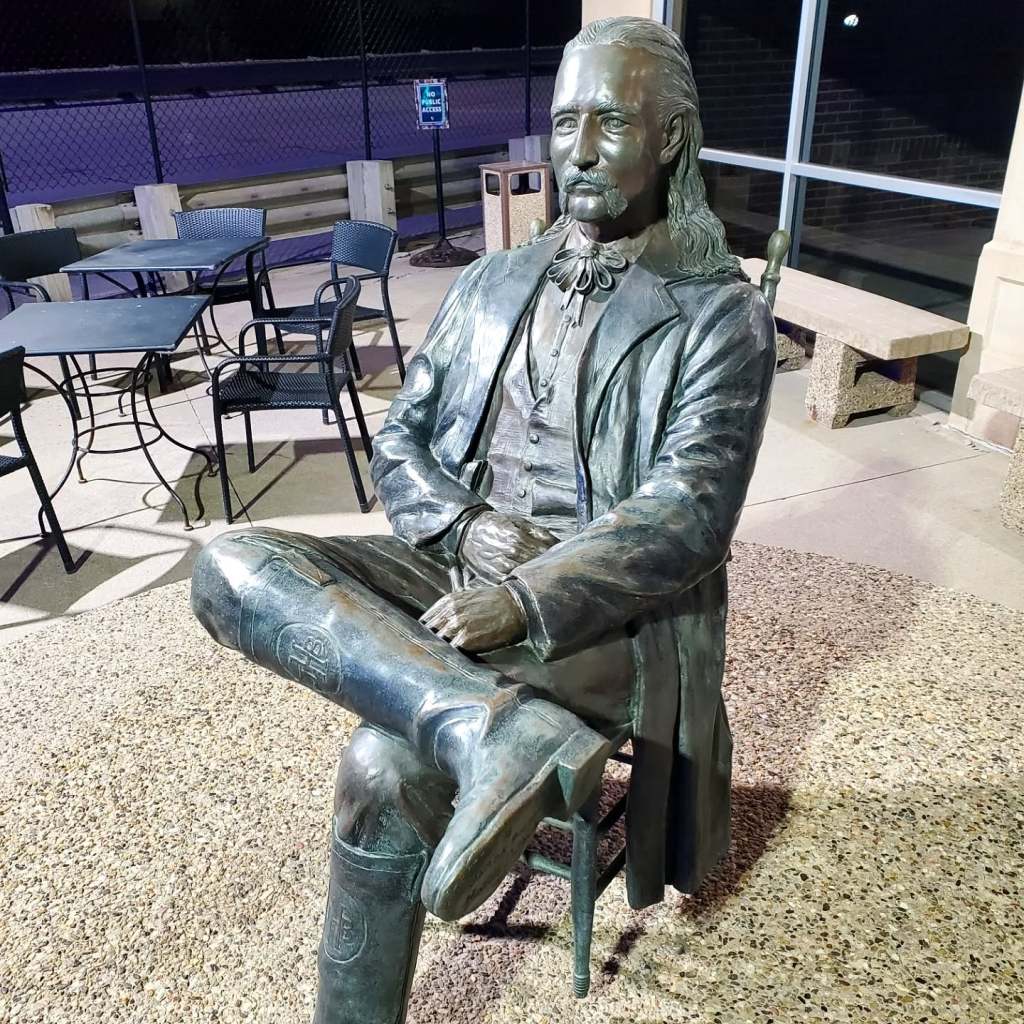
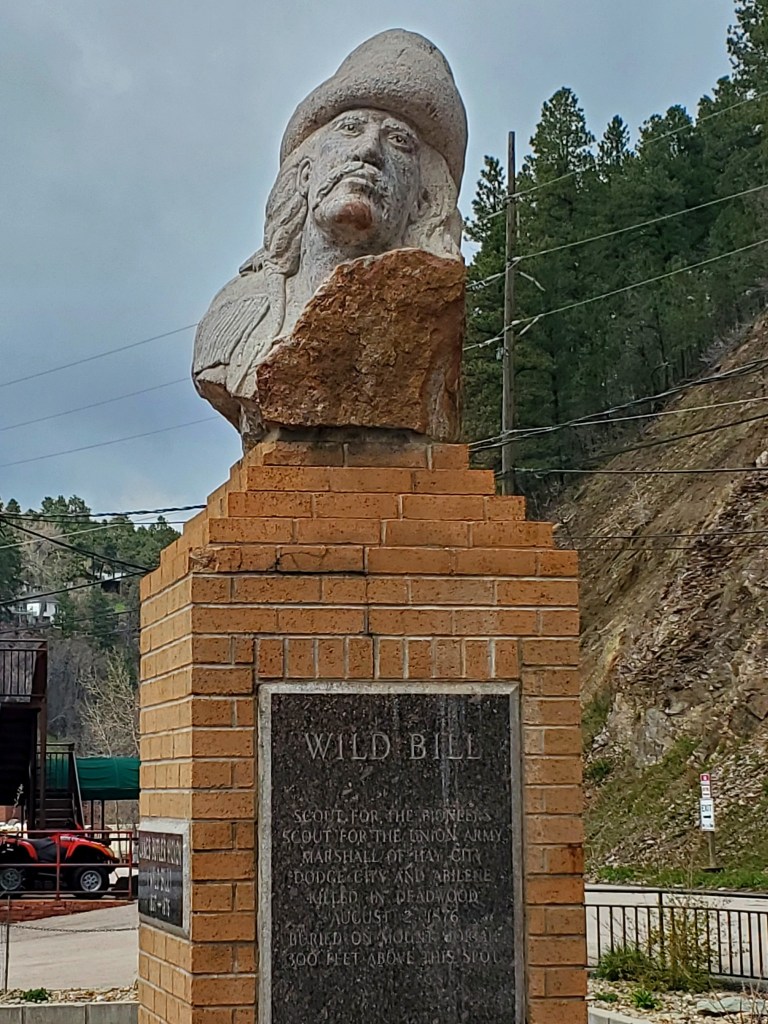
“WILD BILL” aka James Butler Hickock is the face of Deadwood. He was born in 1837 in Illinois, grew up on family farm, then spent many of his adult years out West working as a detective, scout, and town Marshall in various places.
Wild Bill was known for his quick draw and crack shot, with a penchant for carrying his pistols on his belt with the butts of the guns facing forward.
He is described as being over six feet tall with long wavy hair and grey eyes; a real dreamboat by every account. Take a look at this video and you will see what I mean.
His consistently calm and sharp demeanor gave him a commanding presence.
Wild Bill’s reputation as a lawful killer and expert gambler had preceded him and when he showed up in Deadwood, a certain type of folk were waiting on him.
He was only in Deadwood for a few weeks before he was murdered at the original No. 10 Saloon.
A man named Jack McCall shot Wild Bill in the back of the head while he was playing a card game. The Legend of the Dead Man’s Hand, black aces and eights with a nine of diamonds, came from the murder.
McCall was originally let off the hook by a “miner’s court” who had no real authority. It gave McCall enough time to flee Deadwood, but he was later captured and hanged for the crime by Dakota Territory officials.
At first, Wild Bill was buried in Deadwoods first town cemetery but relocated to Mt. Moriah Cemetery three years later. Over time, his life and death were sensationalized in film, books, comics, shows, and reenactments.
You can find all sorts of monuments and historical markers about him and his cohorts while walking around Deadwood.
CALAMITY JANE aka Martha Canary was born in 1856 in Missouri but her family moved to Montana when she was ten. She was the eldest of six kids, and all of my fellow first-born daughters out there know exactly what that means.
To make it worse, both of her parents died within the first two years in Montana, leaving 12-year old Martha completely on her own to care for five children. With little choice, she moved to Wyoming and earned money through sex work and as a waitress and dance hall girl in various camps.
“Jane” is often depicted as foul-mouthed, vulgar, and uncouth; drinking too much, dressing in men’s clothing, and carrying a spittoon. Her unfathomable sacrifices for her family, life-long humanitarianism and care for others is sadly left out. She wore men’s clothing to hide her gender and enable her hold jobs that kept her out of sex work. She cared for others in the camps who were suffering small pox and dysentery and other diseases when everyone else left them to die.
She was a rowdy western heroine, known for her crack shot just like Wild Bill. There are stories about her alleged affair with Wild Bill that vary from them showing up in Deadwood together and having a fiery romance, to them not knowing each other at all, and it is still under dispute.
Calamity Jane struggled with alcoholism throughout her life, which may have been her only method of coping in such a terrifying and violent life, and she died in 1903 at age 47 from pneumonia and inflamed bowels.
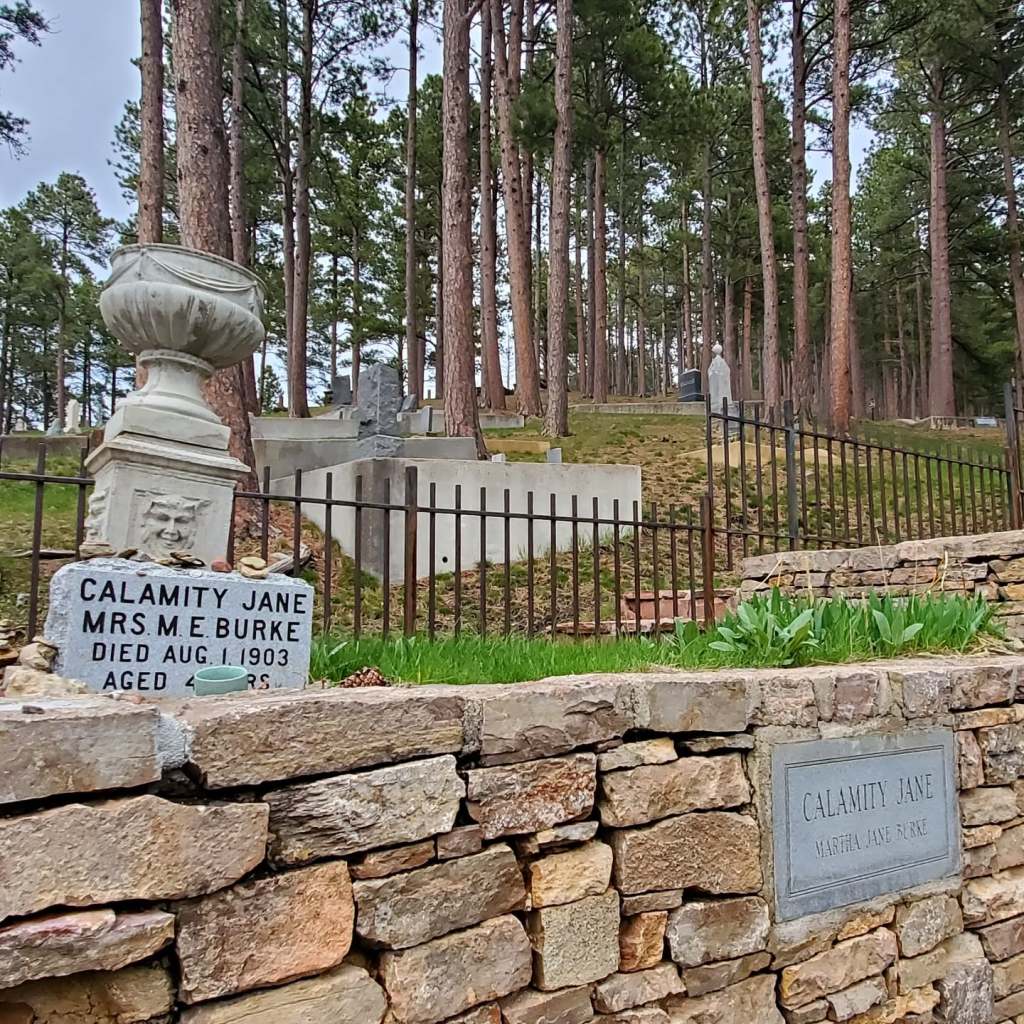
You can find her buried in Mt. Moriah Cemetery near Wild Bill.
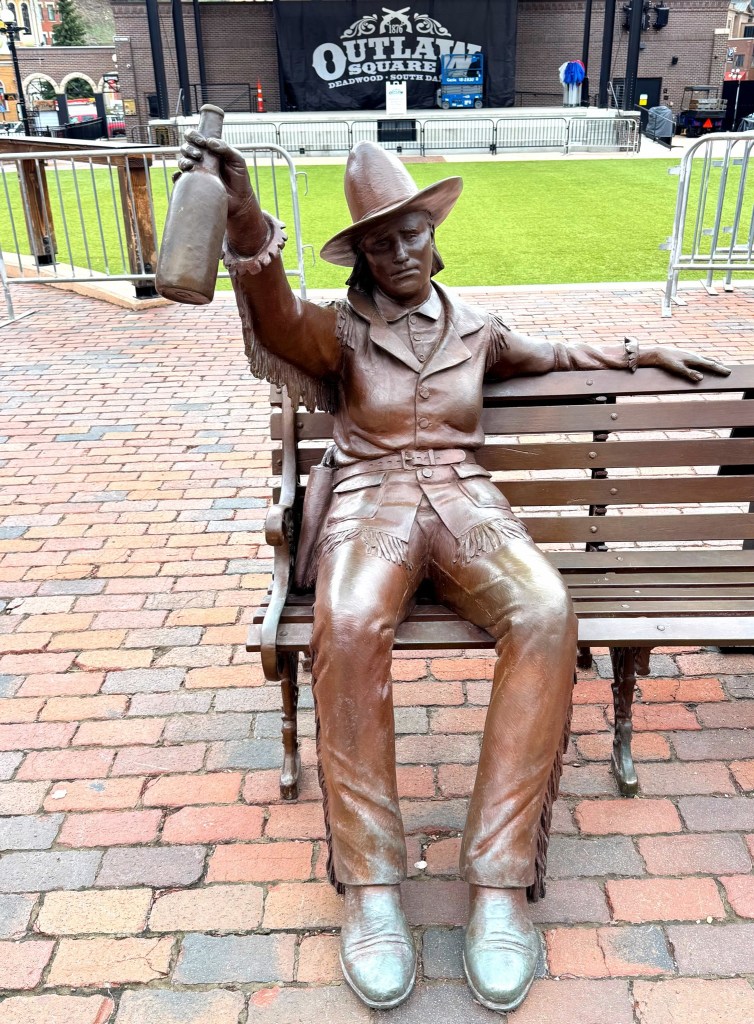
SETH BULLOCK, namesake of the famous Bullock Hotel, was said to be the “quintessential pioneer and settler of the American frontier” and he was known as a steady force that brought order to the most lawless places.
He was a strong player in Montana for many years and had a major role in getting Congress to establish Yellowstone within the state.
Bullock served in the Spanish War with President Teddy Roosevelt who later appointed Bullock as US Marshall for the state of South Dakota.
Bullock and his business partner, Sol Star, purchased a corner lot on Main and Wall Streets when the Deadwood camp was first coming together. The two sold hardware and necessities to the miners who flooded in.
After he became wealthy, he had the Bullock Hotel built in that same spot.
He created the Round Table Club, the oldest cultural association that still exists in the Black Hills Region, and after Wild Bill was murdered, Bullock was appointed Sherriff of Deadwood.
You can also visit his grave in Mt. Moriah Cemetery.
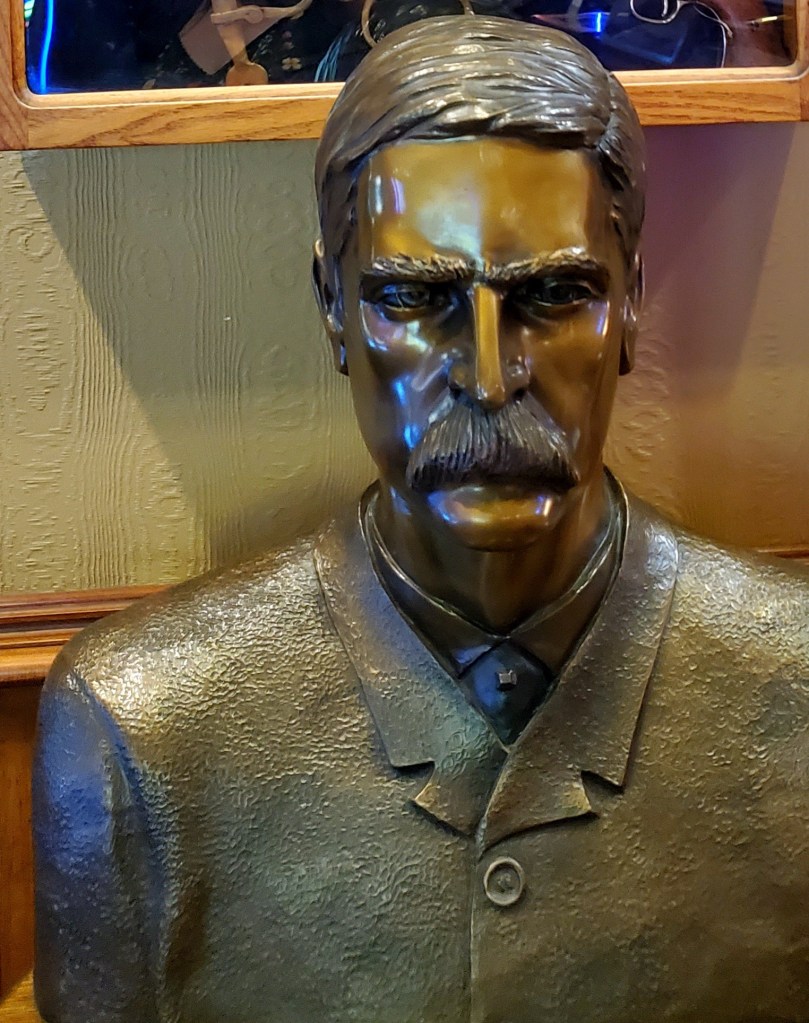
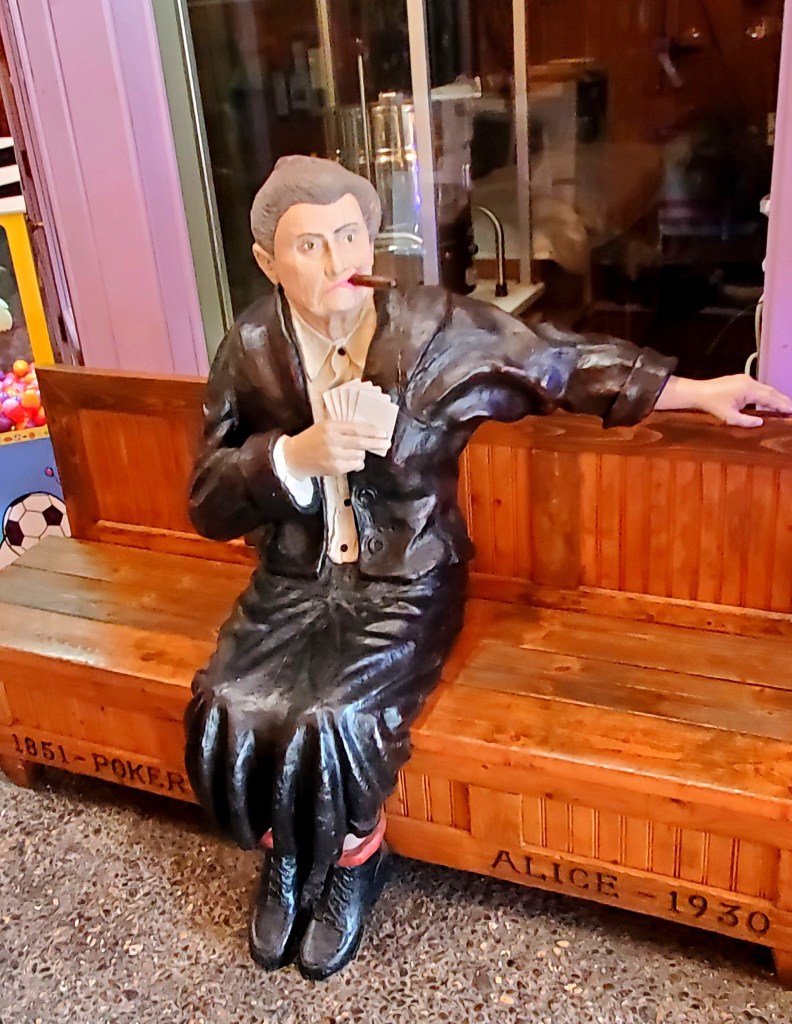
POKER ALICE aka Alice Ivers Tubbs was likely born in 1853 in Devonshire, England but some say she was born in Virginia to Irish immigrants.
Her family moved to Colorado when she was young and she later married a man who loved poker as much as she did, but she was better at it.
Alice traveled a lot and gambled excessively after his death, before she ended up in Deadwood’s Bandlands district. She married her second husband, Warren G. Tubbs, an avid gambler and career painter, and the two of them bought a chicken farm and raised a family.
After Warren died in 1910, Alice opened gambling house and brothel between Sturgis and Fort Meade.
She became a bootlegger during Prohibition but soon died in 1930, and she is buried in Sturgis’ Aloysius Cemetery.
Her name is echoed all around Deadwood in relation to its gambling, brothels, bootlegging, and saloon history.
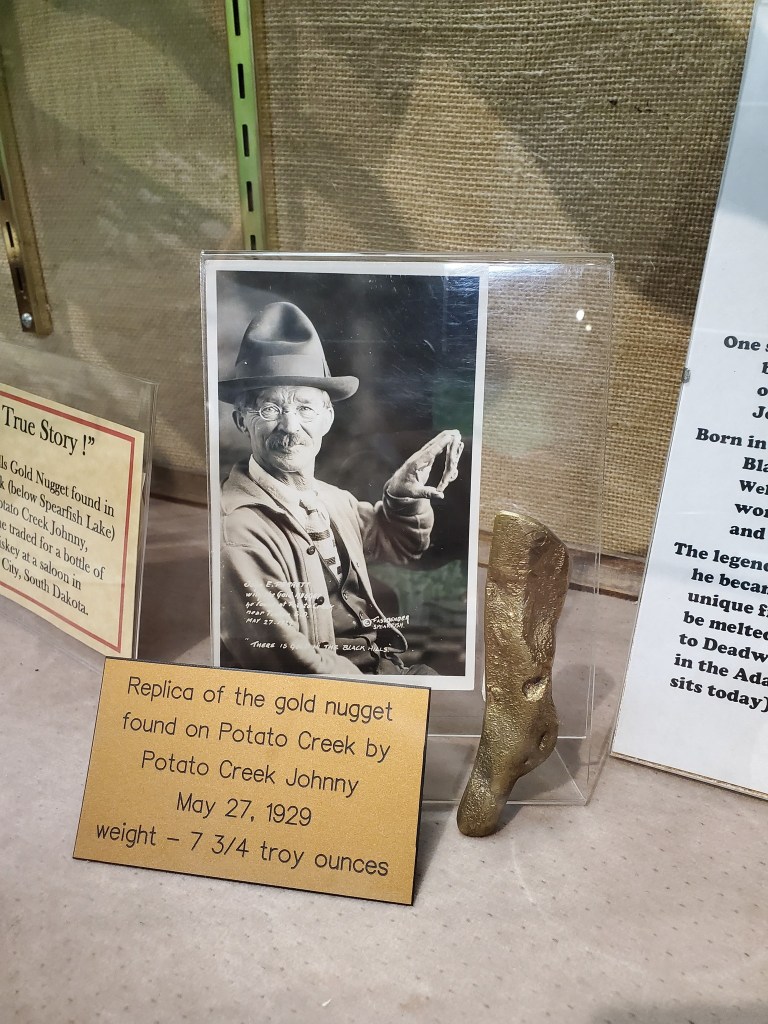
POTATO CREEK JOHNNY aka John Perrett was born in Wales in 1866 and immigrated to the US in 1883. He worked near Potato Creek as a prospector for decades before finding one of the largest gold nuggets in the Black Hills in 1929.
The nugget was described as being 5 inches long and weighing 7.75 Troy ounces, which equates to about 0.54 pounds.
At 66, Johnny became a local celebrity. He worked at the Deadwood Chamber of Commerce and enjoyed dressing up as an 1880s era gold prospector in the 1930s. He was a permanent fixture of Deadwood’s Days of ’76 Celebration and as an actor in the Trial of Jack McCall street dramas.
When he died in 1943, he was buried in Mt. Moriah Cemetery next to Wild Bill Hickock and Calamity Jane.
MT. MORIAH CEMETERY
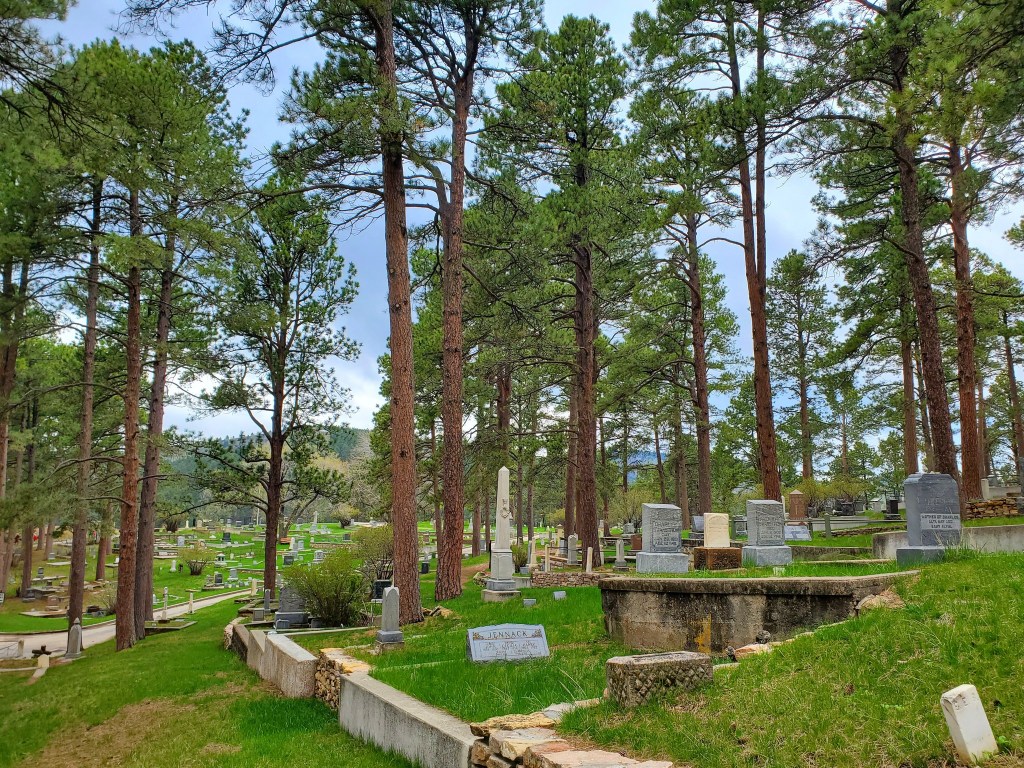
Just as I had mentioned, Mt. Moriah Cemetery is the final resting place for Wild Bill, Calamity Jane, Seth Bullock, Potato Creek Johnny, and many of Deadwood’s other notable and founding figures.
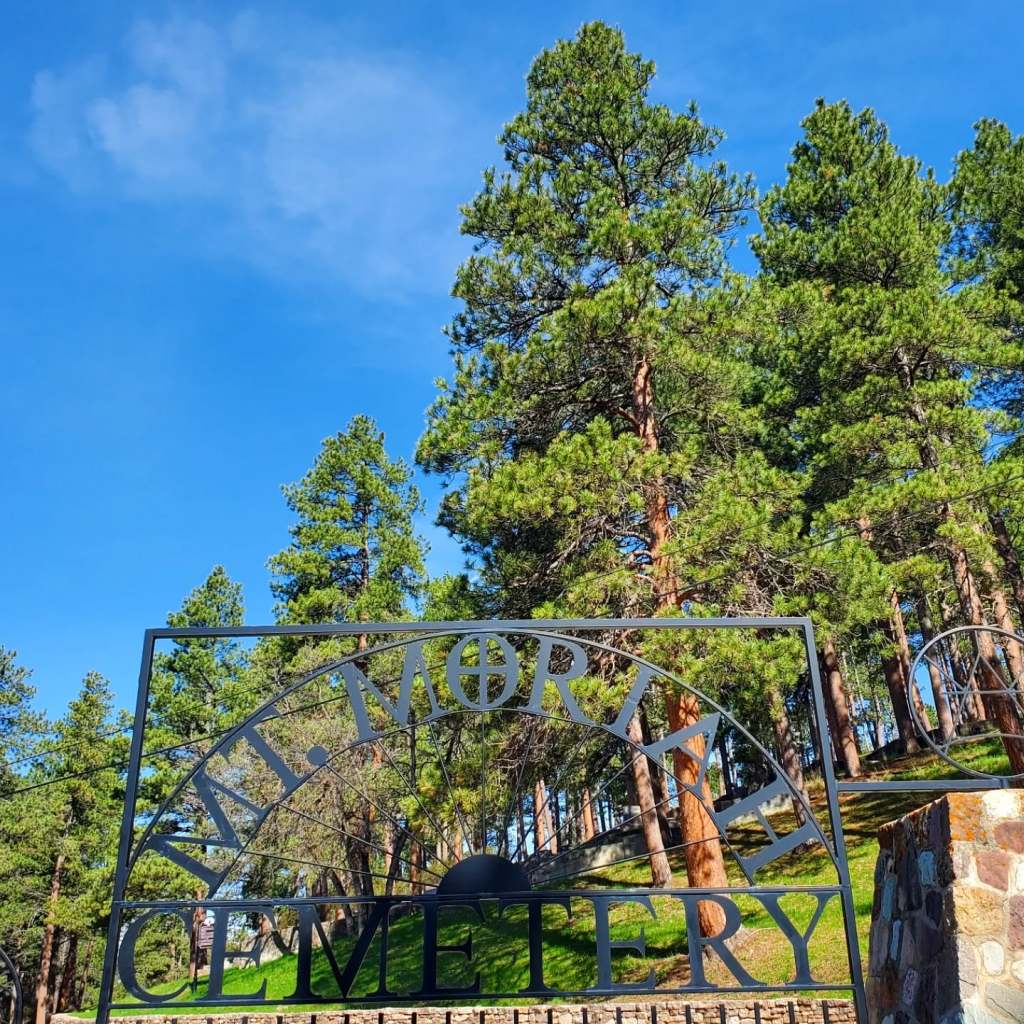
Mt. Moriah was established in 1878 and looks out over the Deadwood Gulch from way up high.
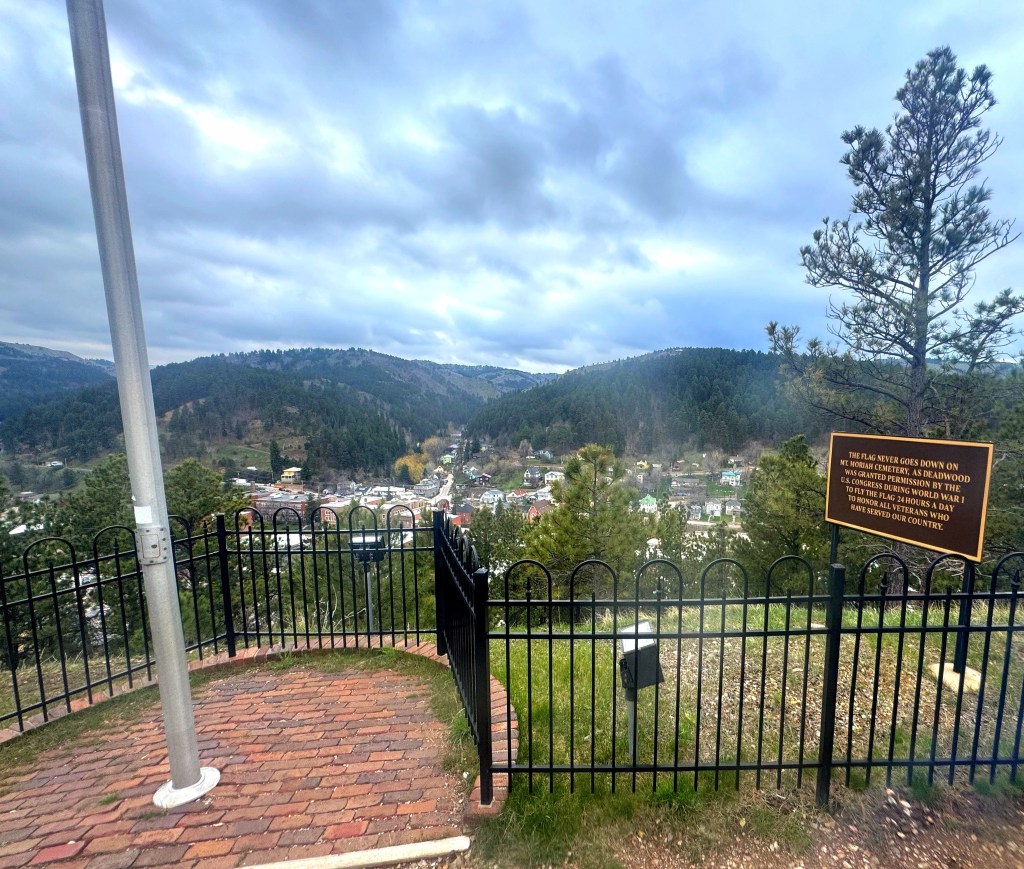
This Victorian cemetery was designed in an oval shape with four sections, and has additional “potter’s fields” on the north and south ends.
There are dedicated sections for Deadwood’s Jewish and Chinese populations, and the cemetery has historically worked with families of the interred to honour religious practices and even assist with relocating bodies back to their birthplaces.
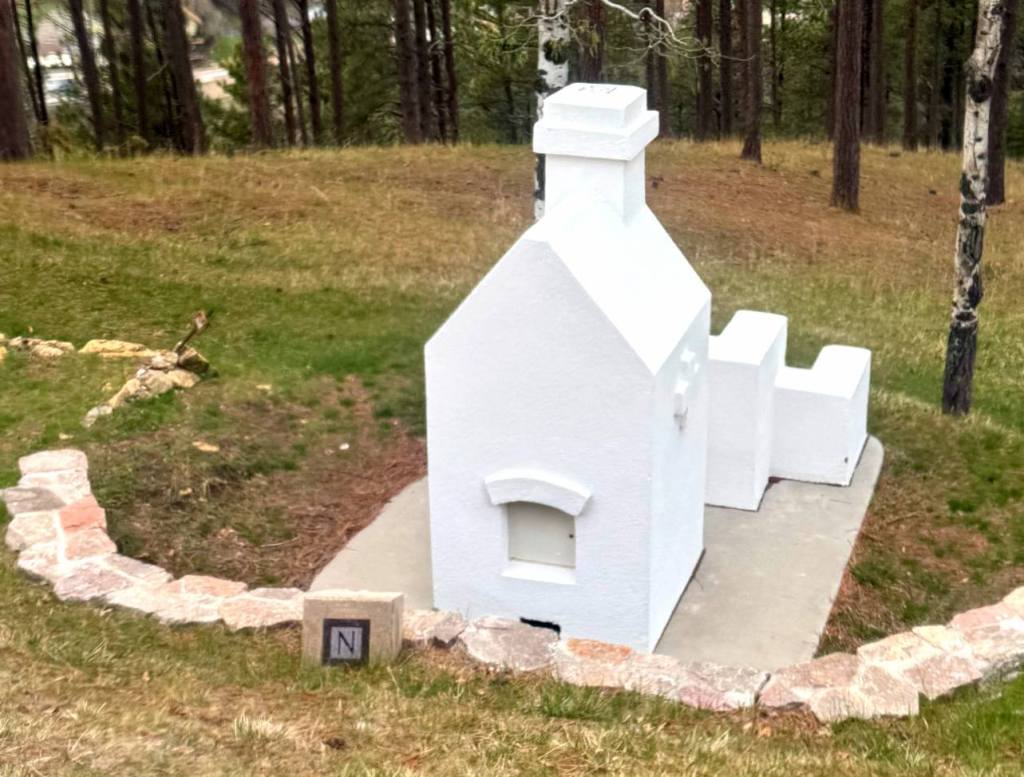
You can also find sections for Masons, veterans, and children. New burials have not been accepted since 1949 because most of the spots have been filled.
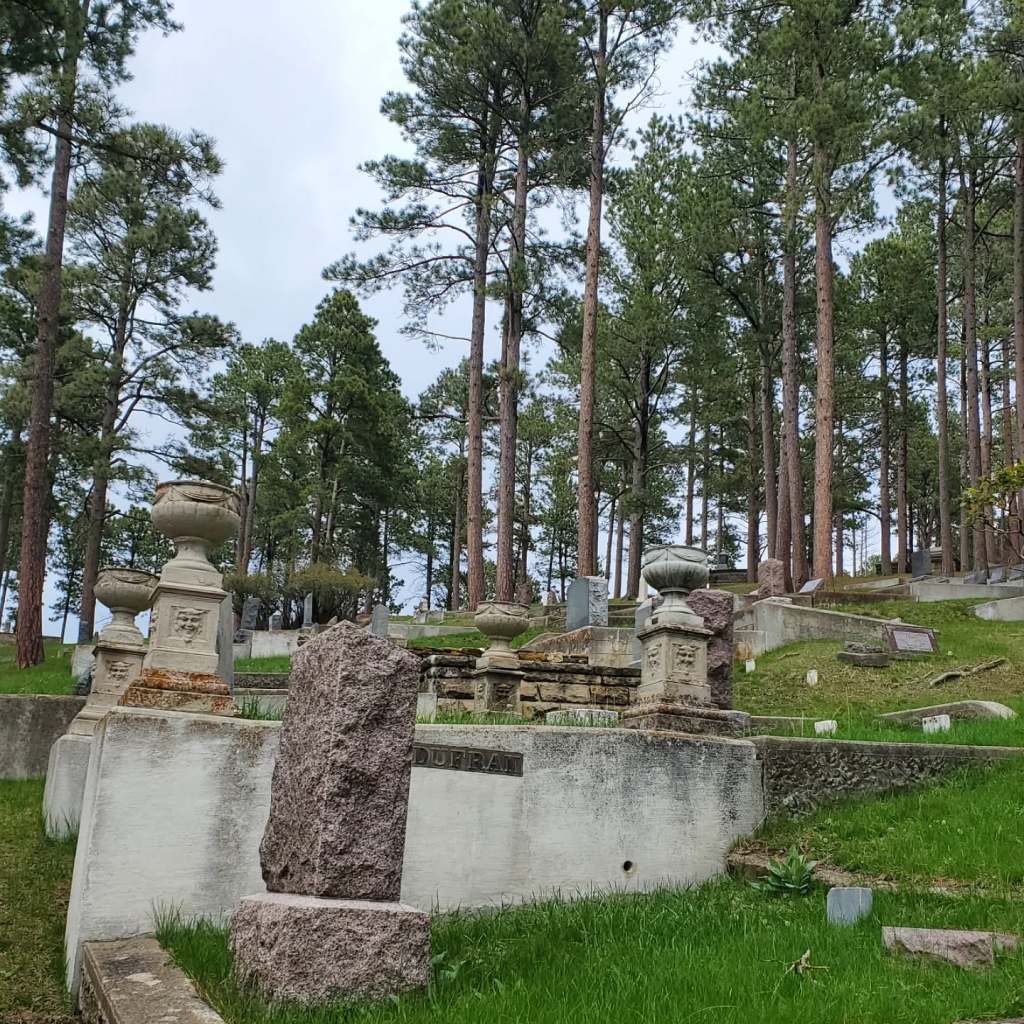
Freemasons took part in naming the cemetery streets, and many of them are influences by stories of Solomon’s Temple and the Christian Bible.
When the original caretakers deeded the cemetery to the City of Deadwood in 1938, officials partnered with Deadwood’s Chamber of Commerce to promote the cemetery for tourism, and it was later closed to motor traffic to preserve it.
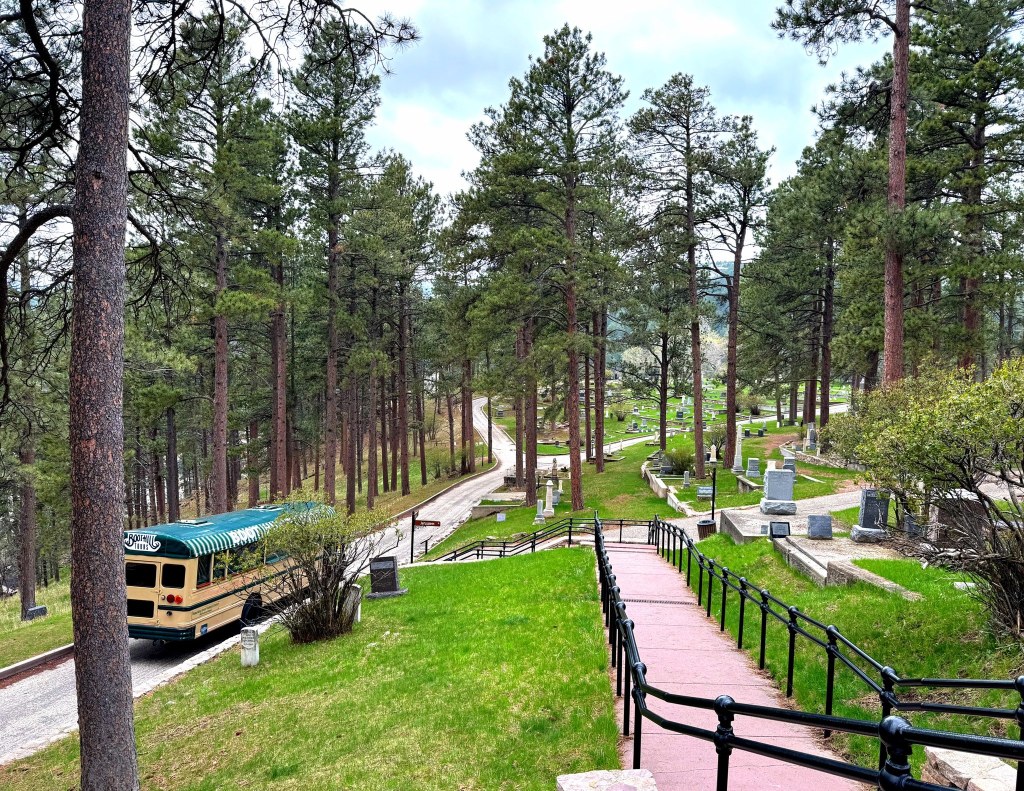
Wild Bill, Calamity Jane, and Potato Creek Johnny can all be found in the same section.
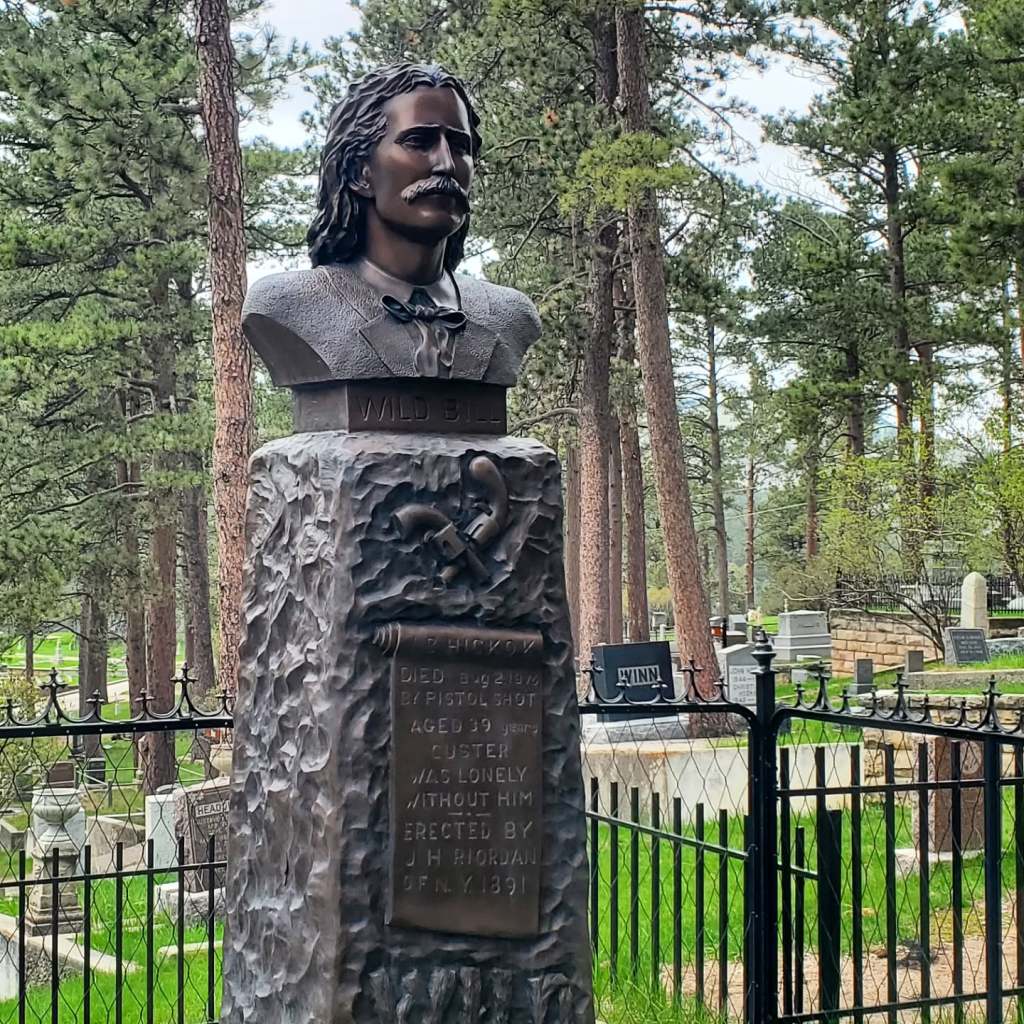
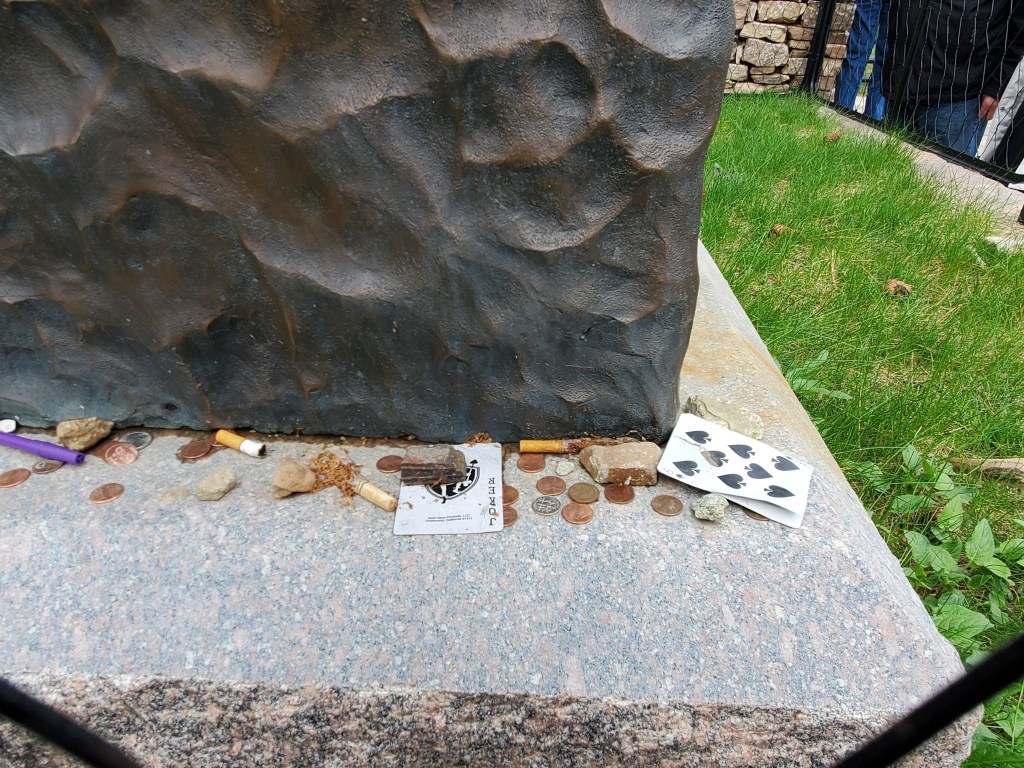
It is customary to leave money, cigarettes, playing cards, and other tokens on Wild Bill’s memorial.
Calamity Jane is in the same plot, so she is easy to find.
Johnny’s memorial is more simple, just an engraved marker on the wall.
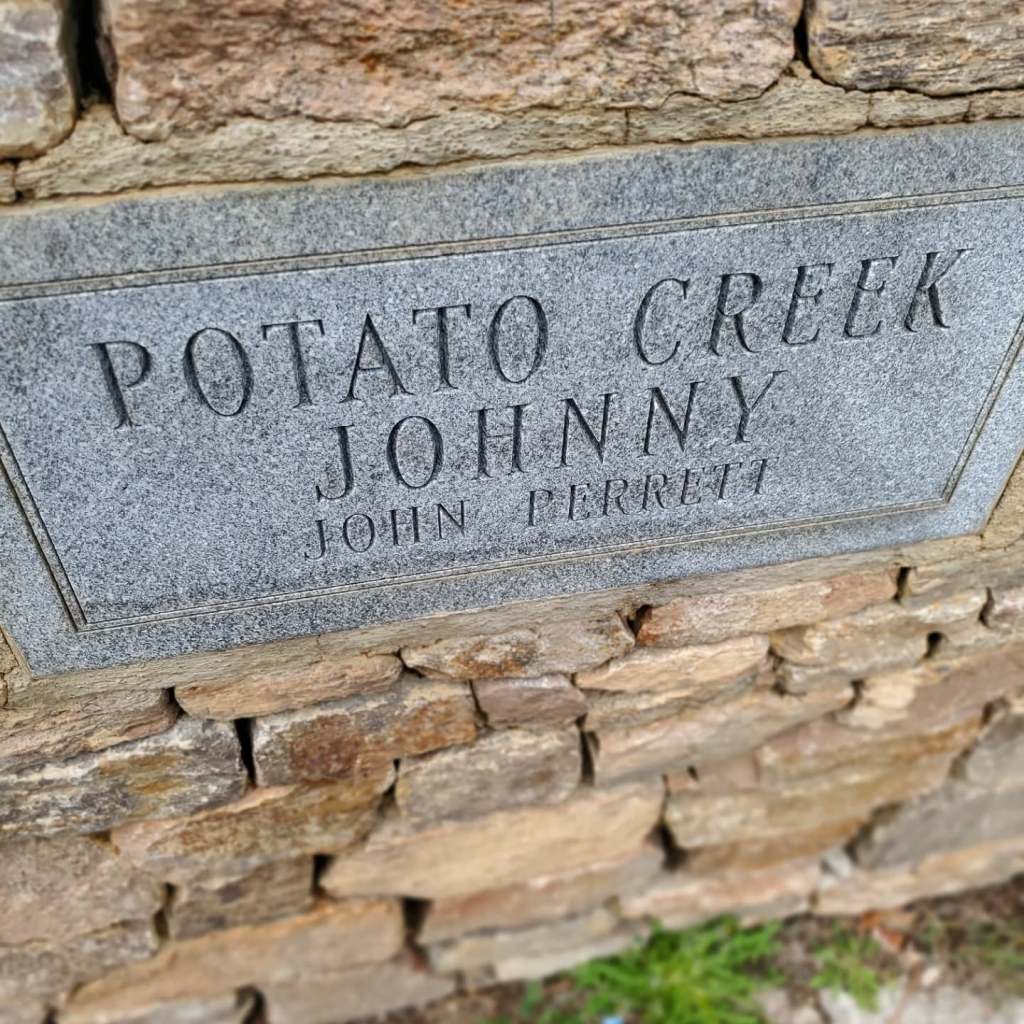
You may be pleased to learn that Dora DuFran, one of the most notorious madams in the entire Black Hills and friend Calamity Jane, is buried in Mt. Moriah with her husband and pet parrot, Fred.
Also interred there are Harris Franklin (Deadwood’s richest businessman), John McClintock (owner and operator of the Deadwood-Spearfish stagecoach line and Deadwood historian), and a memorial (but not actual grave) of William Emery Adams.
MUSEUMS
Speaking of William Emery Adams, he was one of the first men to arrive in Deadwood and make a name for himself.
He became the mayor, a notable philanthropist, and is the namesake of the Adams House and Adams Museum.
His Queen Anne style home was built in 1892, and the Deadwood Historic Preservation Commission in 1992. After nearly eight years of restoration, it was opened to the public as a house museum in 2000.
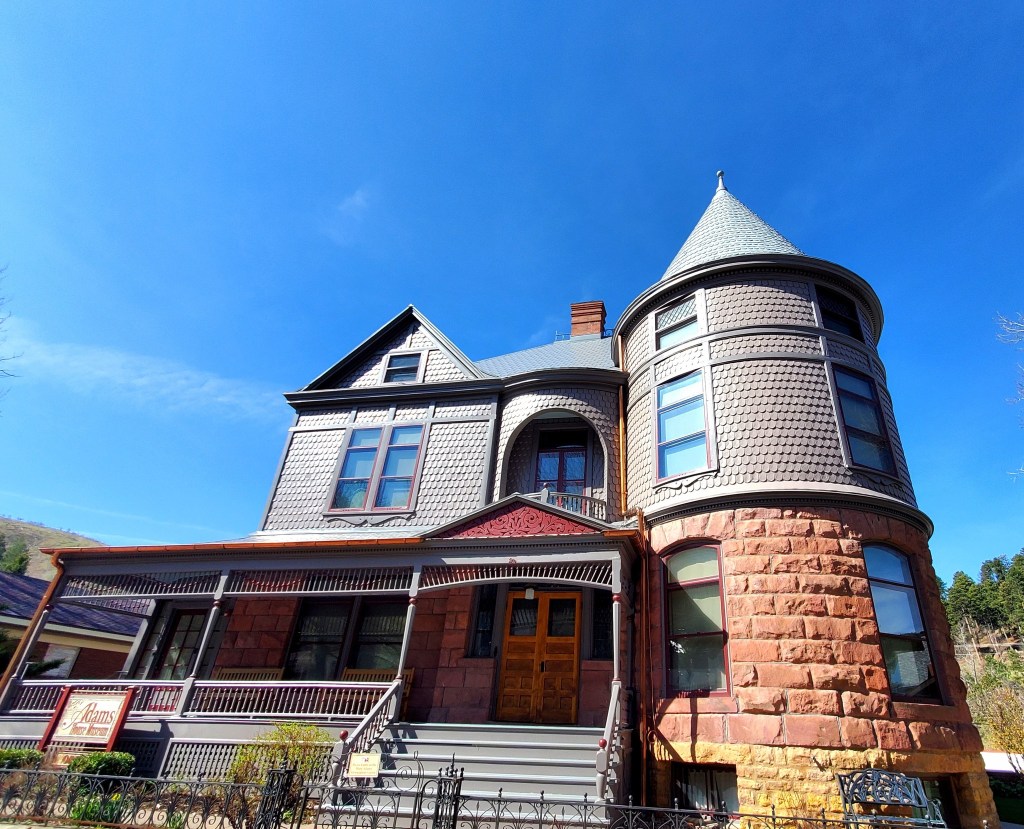
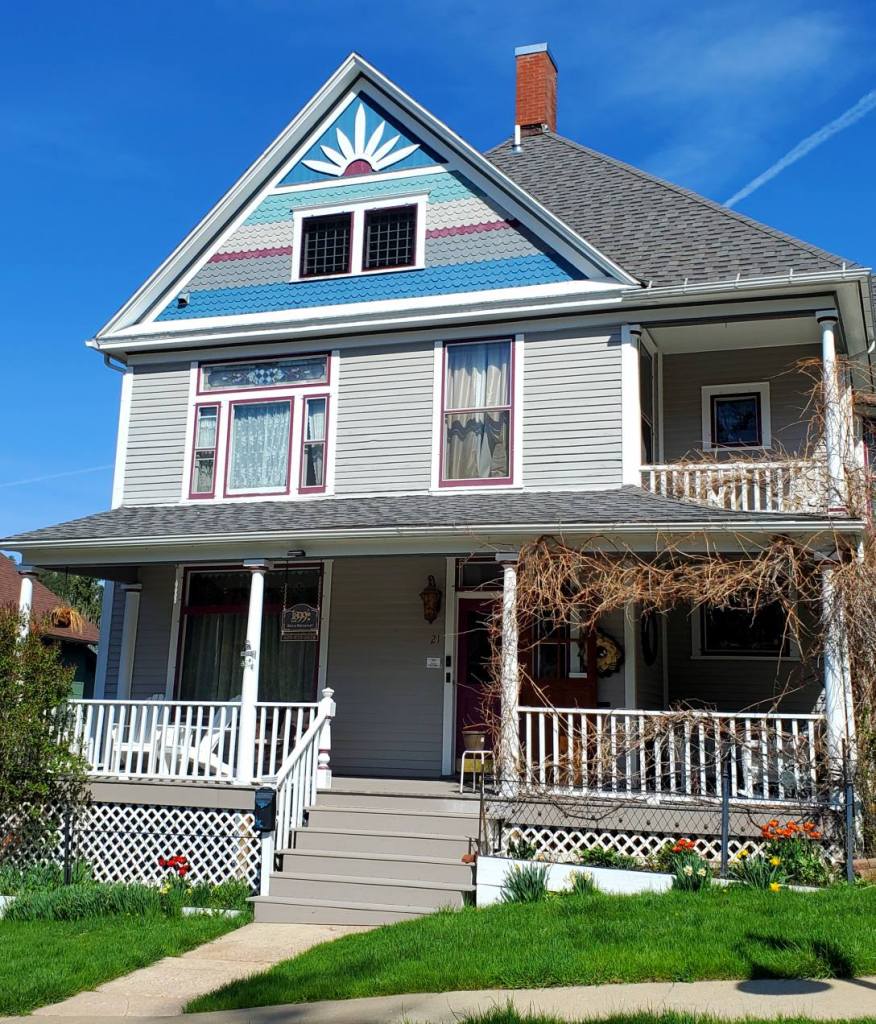
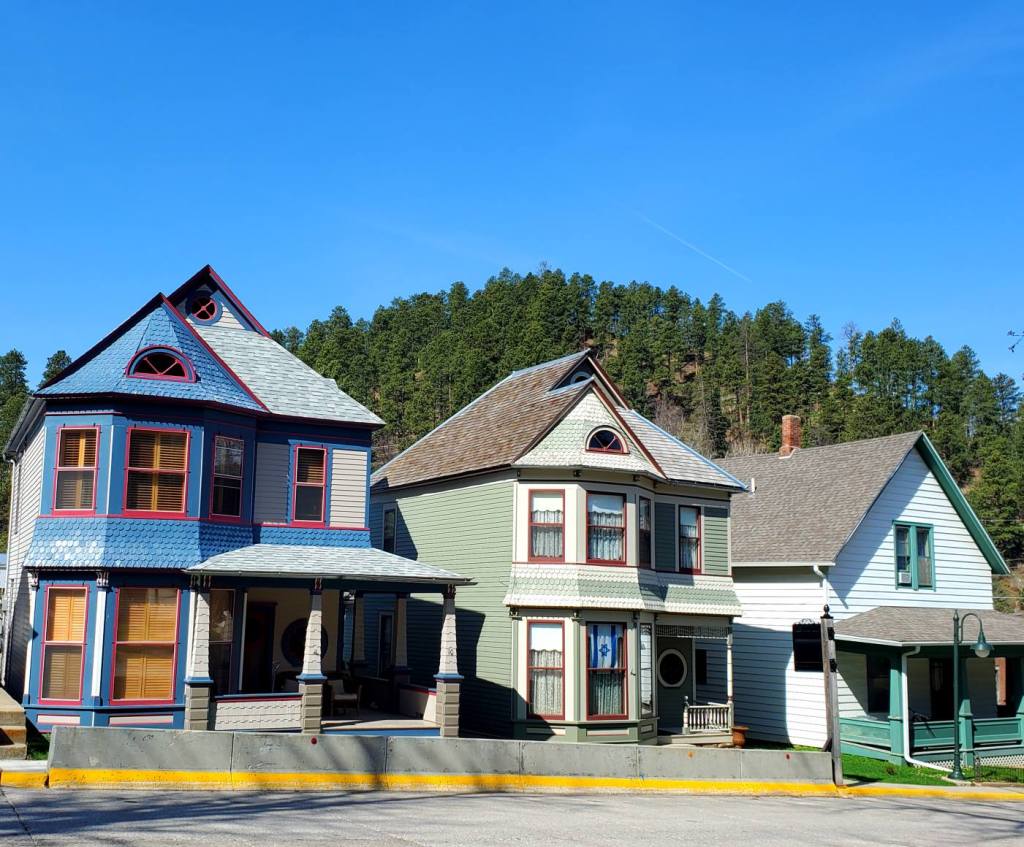
The Adams House is located in the neighbourhood that you pass through on your way to Mt. Moriah Cemetery, and I really loved some of the other nearby houses.
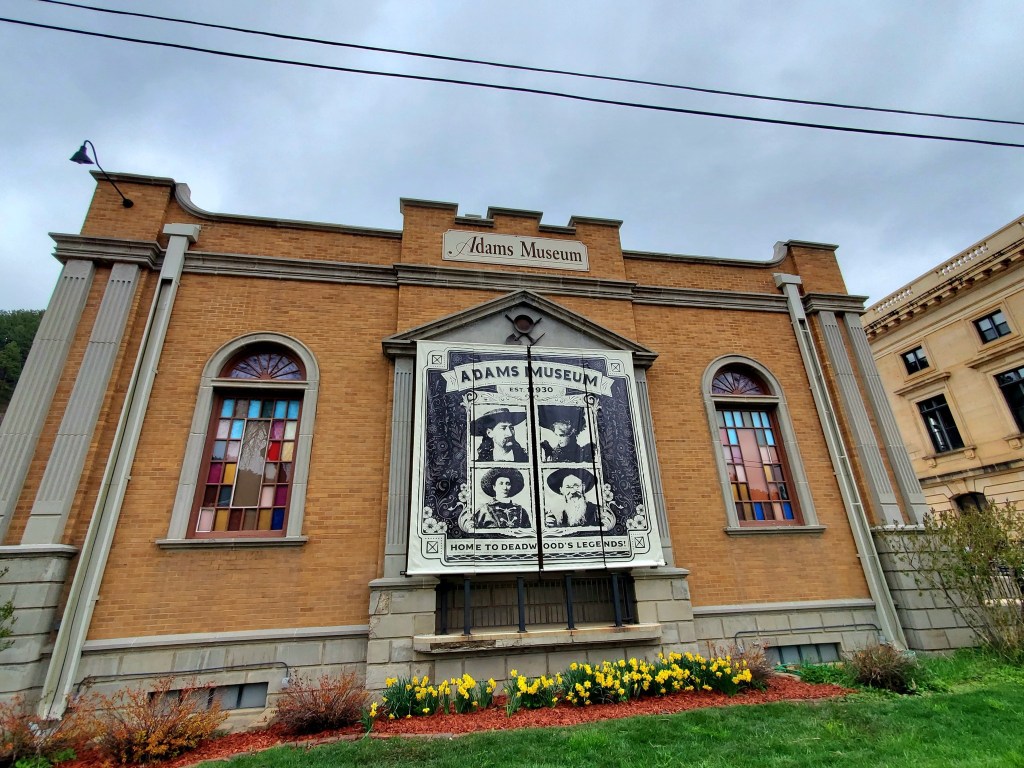
ADAMS MUSEUM is one of Deadwood’s many awesome museums, and this one is dedicated to preserving the history of Deadwood and the greater Black Hills region.
W. E. Adams bought this building, founded the Adams Museum, then donated it to the City of Deadwood in 1930.
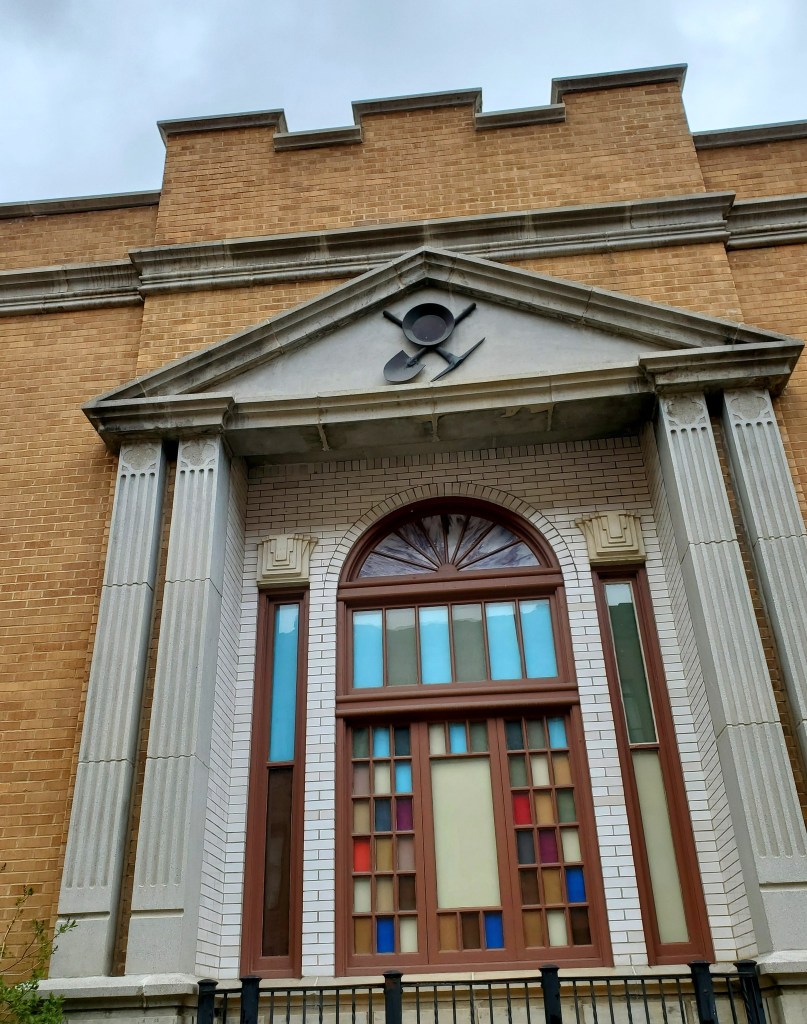
These stained glass panel windows filled us with delight, and we loved seeing them from our lodging at Iron Horse.
DAYS OF ’76 MUSEUM
In 1924, the first Days of ’76 celebration began and its purpose was to honour the area’s first white pioneers, prospectors, miners, and madams.
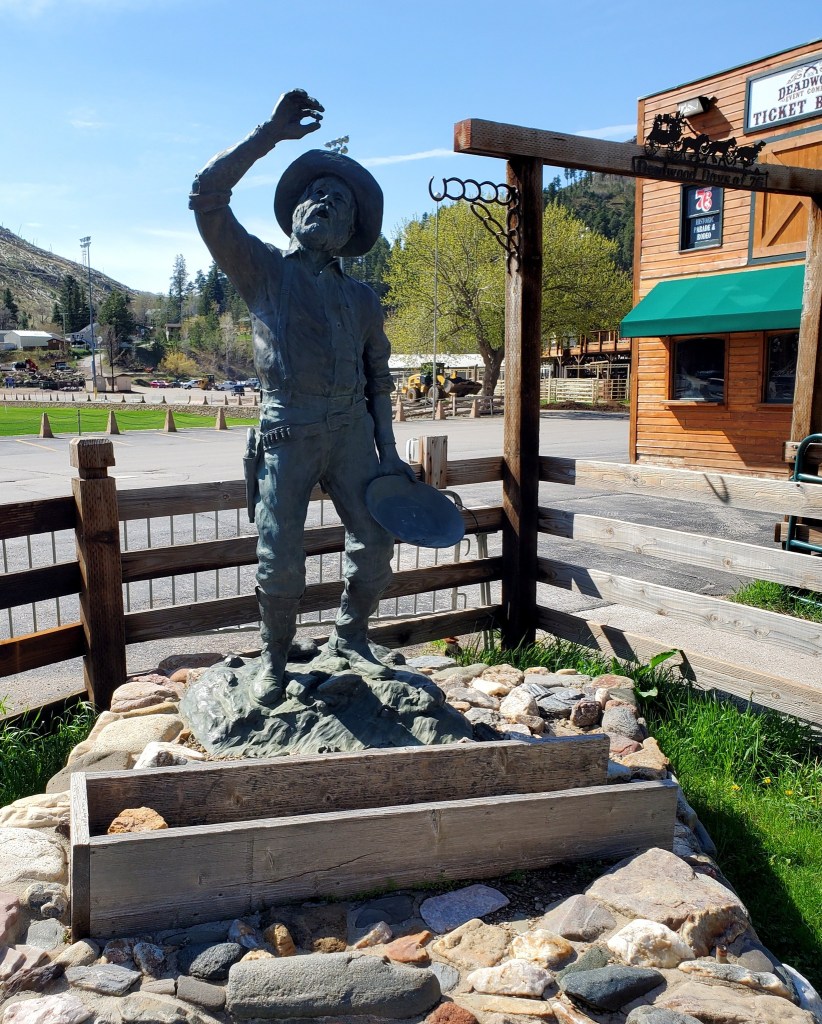
Each July, the festival continues, featuring parades and niche displays like a collection of the town’s historic horse-drawn vehicles.
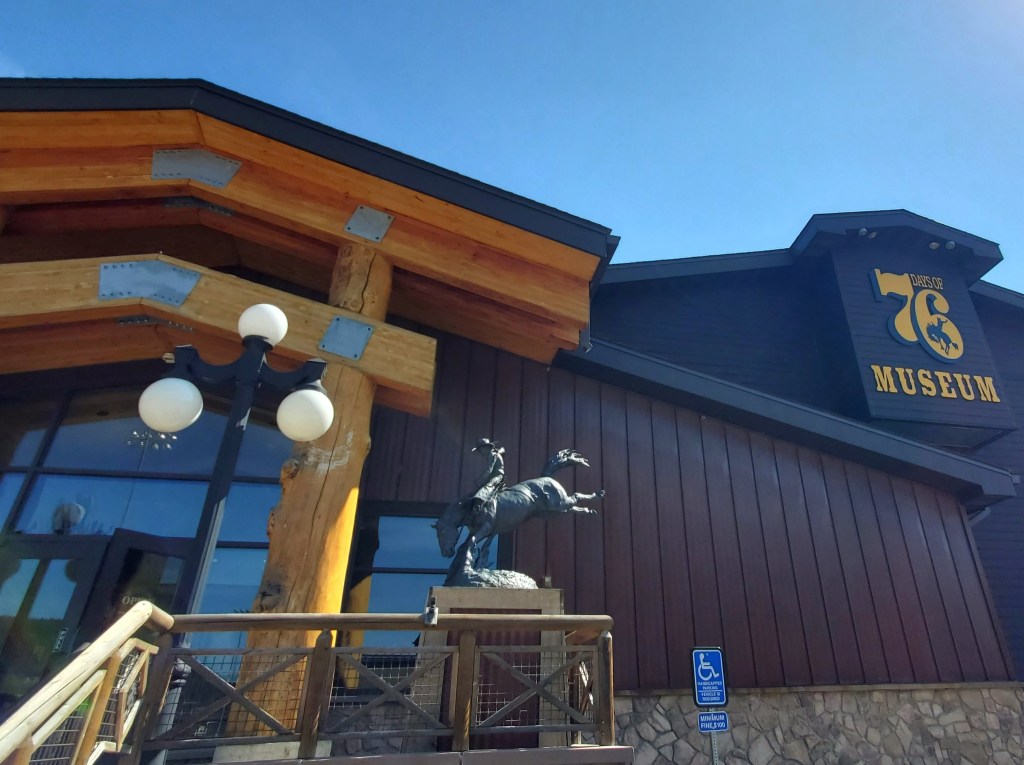
The Days of ’76 Museum was originally created as a place for safekeeping all of the stagecoaches, clothing, archives, and other artifacts of the festival, but eventually it opened as a museum to the public.
One exhibit alone, Deadwood: A Story of Movement and Change, spreads out across 7,000 square feet and tells about how Deadwood’s early transportation system helped develop the American Western frontier.
Other exhibits include dozens and dozens or carriages and various vehicles, historic firearms, larger than life panoramic photographs and drawings/paintings of Deadwood’s Main Street, and interactive displays.
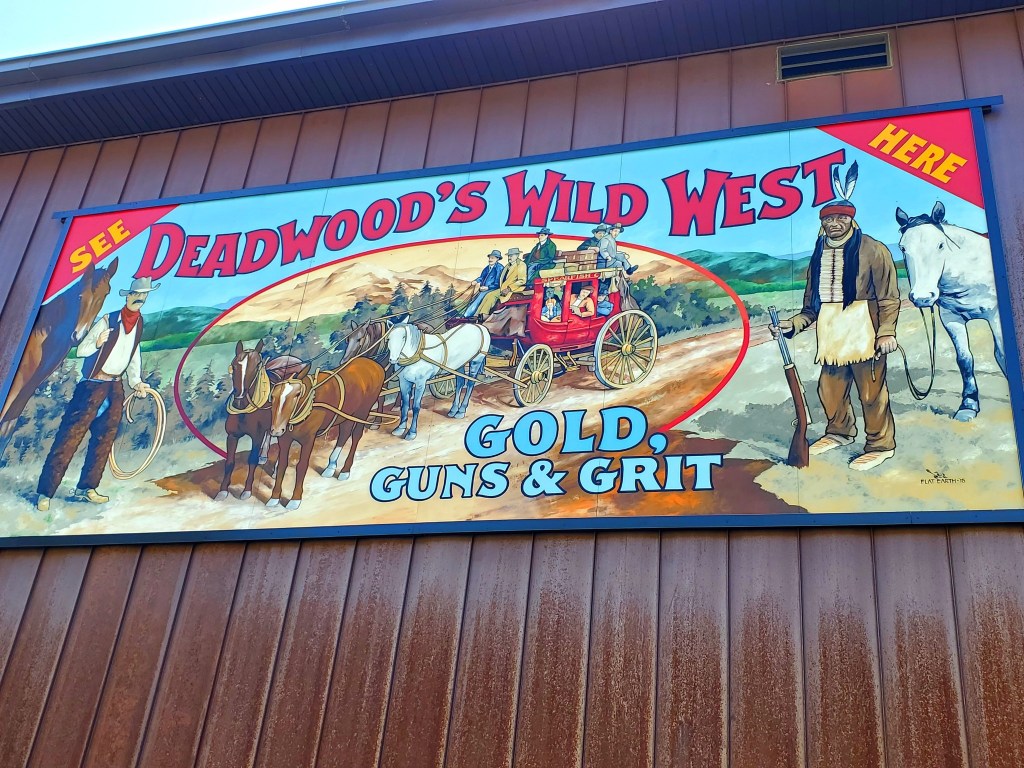
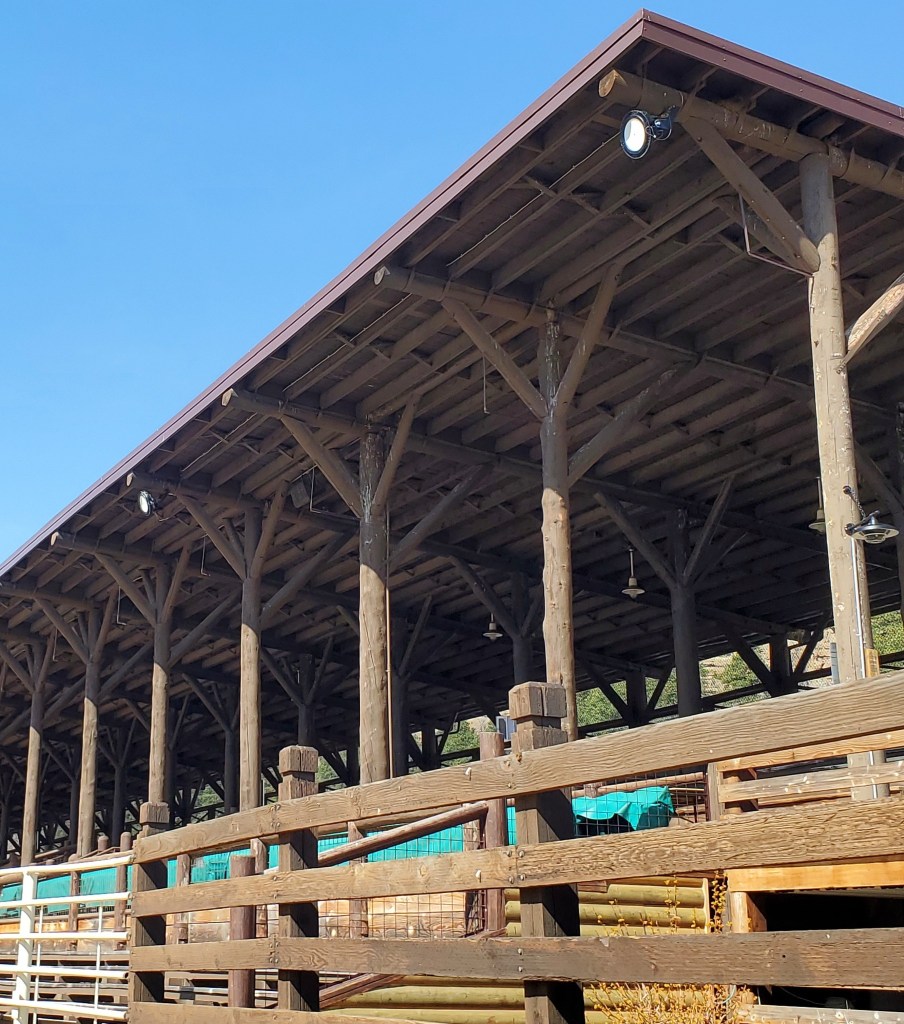
Outside, check out the massive arena where the the Professional Rodeo Cowboys Association holds rodeos. PRCA is the world’s oldest and largest rodeo-sanctioning body, so if you love rodeos, this place is for you.
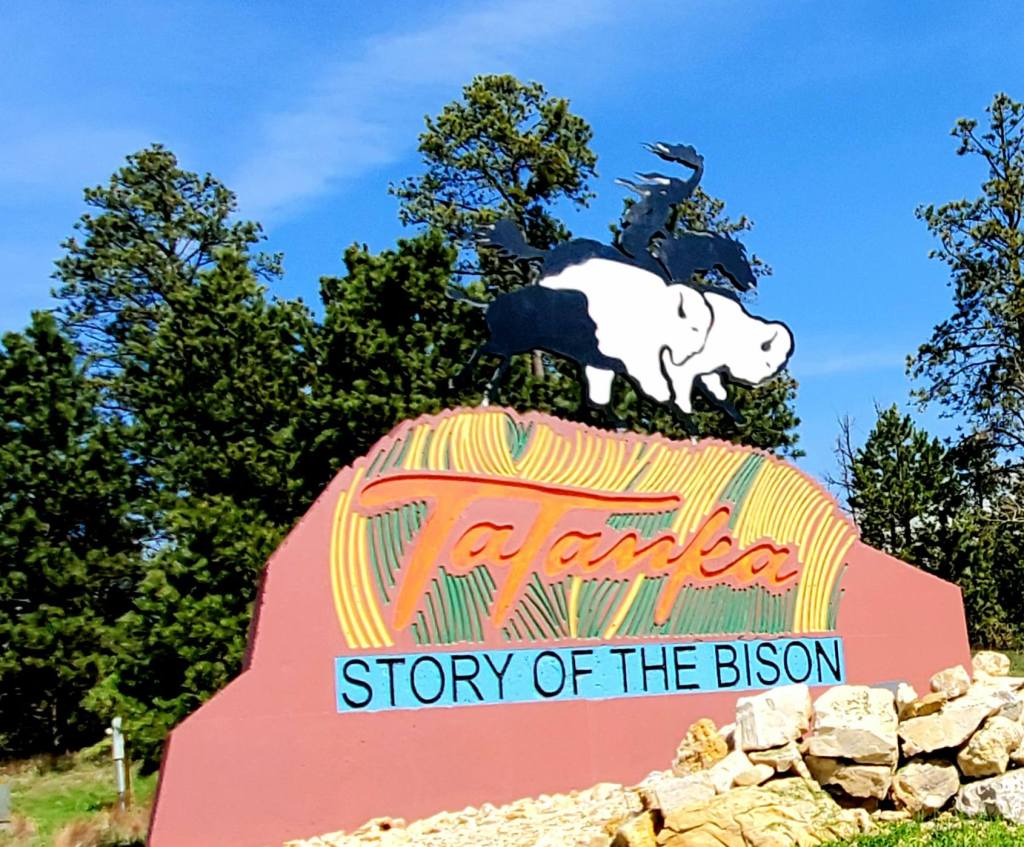
TATANKA: STORY OF THE BISON MUSEUM came about after Kevin Costner developed a serious bond with the Lakota people and this region while filming Dances With Wolves.
He was eventually inspired to found this museum that focuses on the relationship between the Lakota Nation and the North American Plains Bison.
Costner’s character in the film was named Tatanka. If you have not seen it, do it now.
The museum features an enormous bronze installation of 14 bison being chased by three Lakota warriors on horses. Ta’Tanka, at the center, is the world’s third largest bronze sculpture. I was apparently so awestruck that I failed to take a photo.
Each exhibit in the museum tell of how the bison is the embodiment of Lakota resilience, perseverance, and culture.
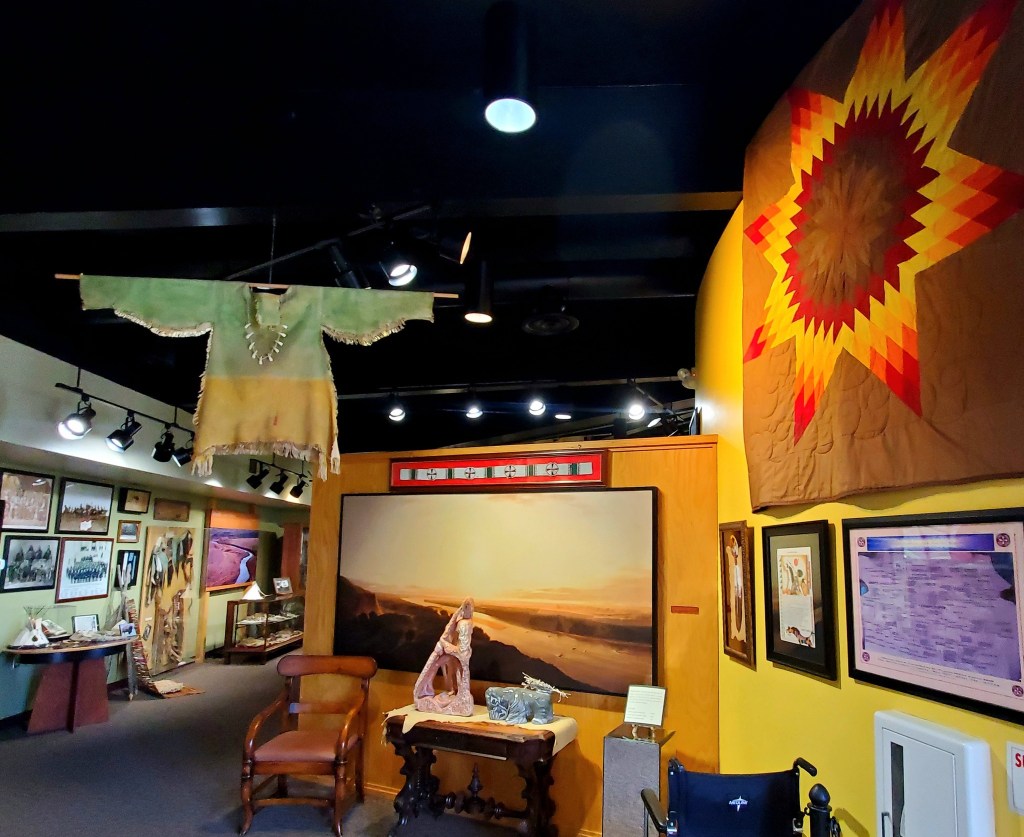
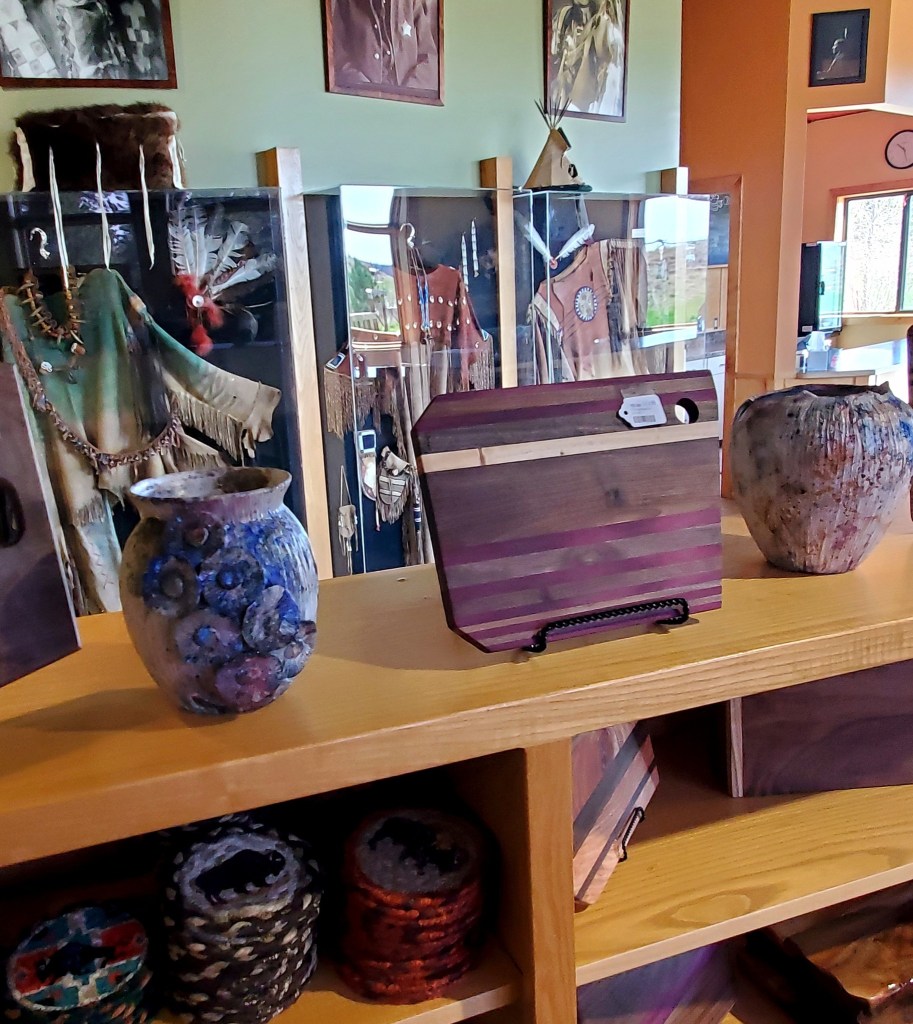
I really enjoyed their gift shop because it showcases Lakota made products and Native American owned businesses.
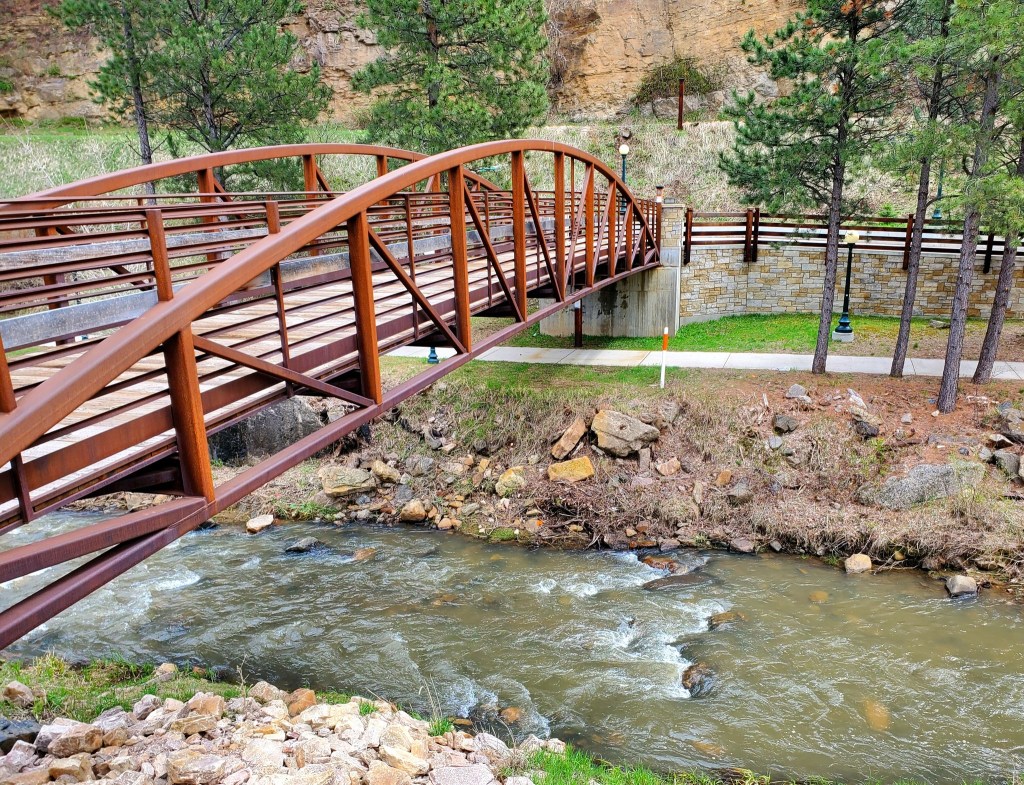
DEADWOOD’S WELCOME CENTER has a few small exhibits and all the maps, brochures, guides, and coupons you could possibly need for your trip to Deadwood.
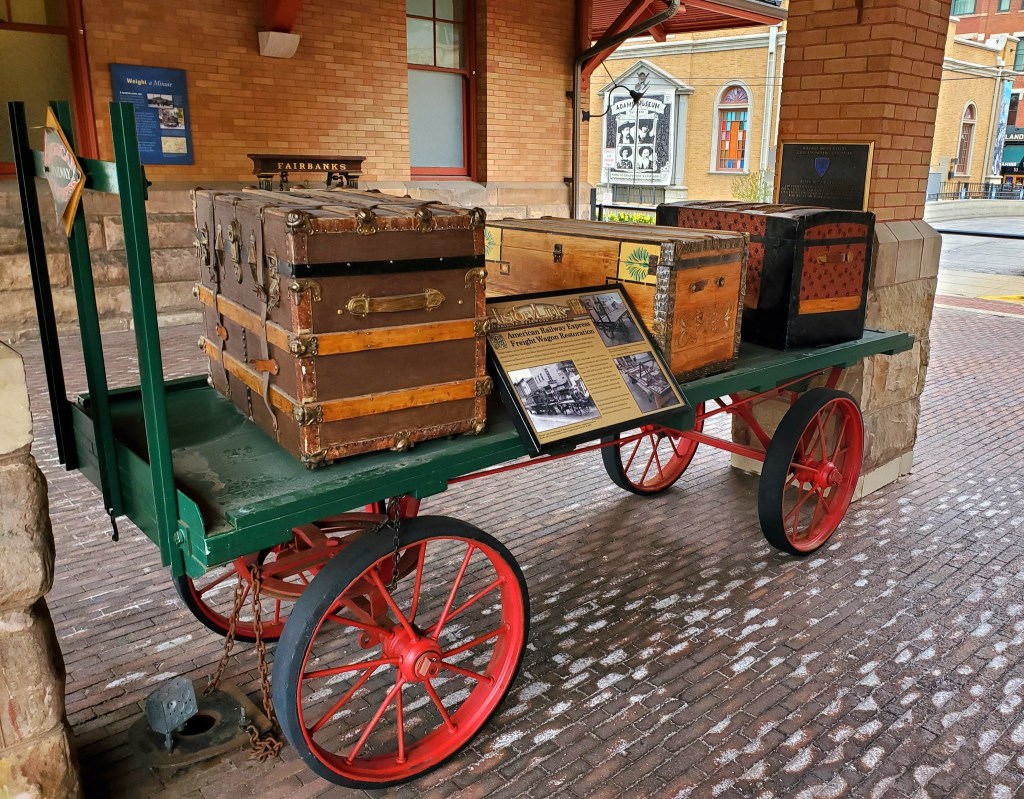
DEADWOOD HISTORY & INFORMATION CENTER is really a museum of its own and should not be skipped on your museum tour. You will spot it in a historic 1897 Fremont, Elkhorn & Missouri Valley Railroad passenger depot with a display of antique trunks out front.
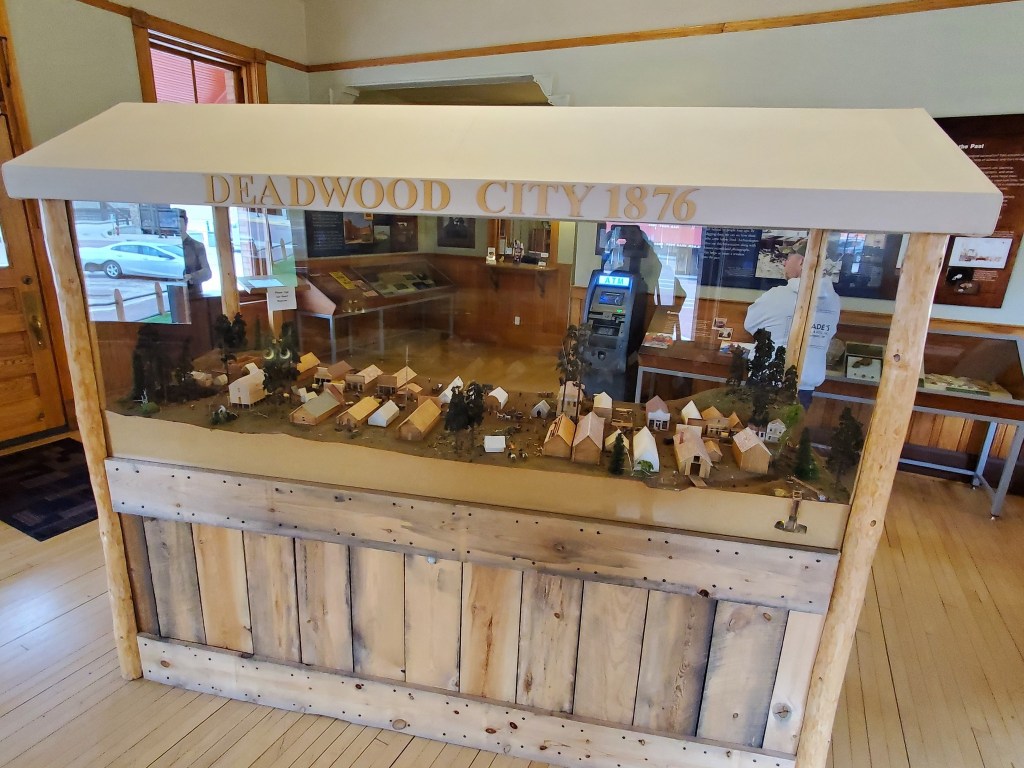
Go inside to see model displays and historical info, book your guided tours, or browse a selection of local authors and artists.
Speaking of tours, we had a very enjoyable experience with Boot Hill Tours. This provider is the only entity with a permit to drive through Mt. Moriah Cemetery, which absolutely influenced our decision.
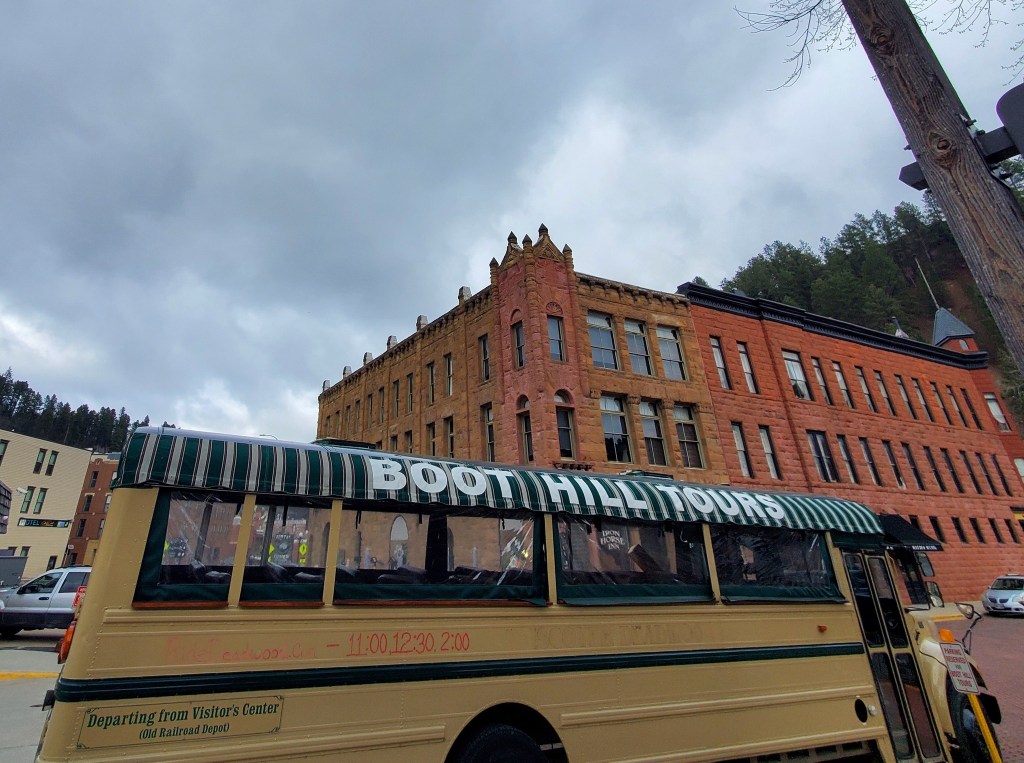
THE CITY OF DEADWOOD TROLLEY system is also a great option for when you have been walking for days and those old dogs are barkin’.

HISTORIC HOTELS & INNS
If you know us, you know that we love asking historic hotels to give us a tour. Deadwood did not disappoint.
BULLOCK HOTEL (website has expired) was Deadwood’s first hotel, established by Seth Bullock who I mentioned before.
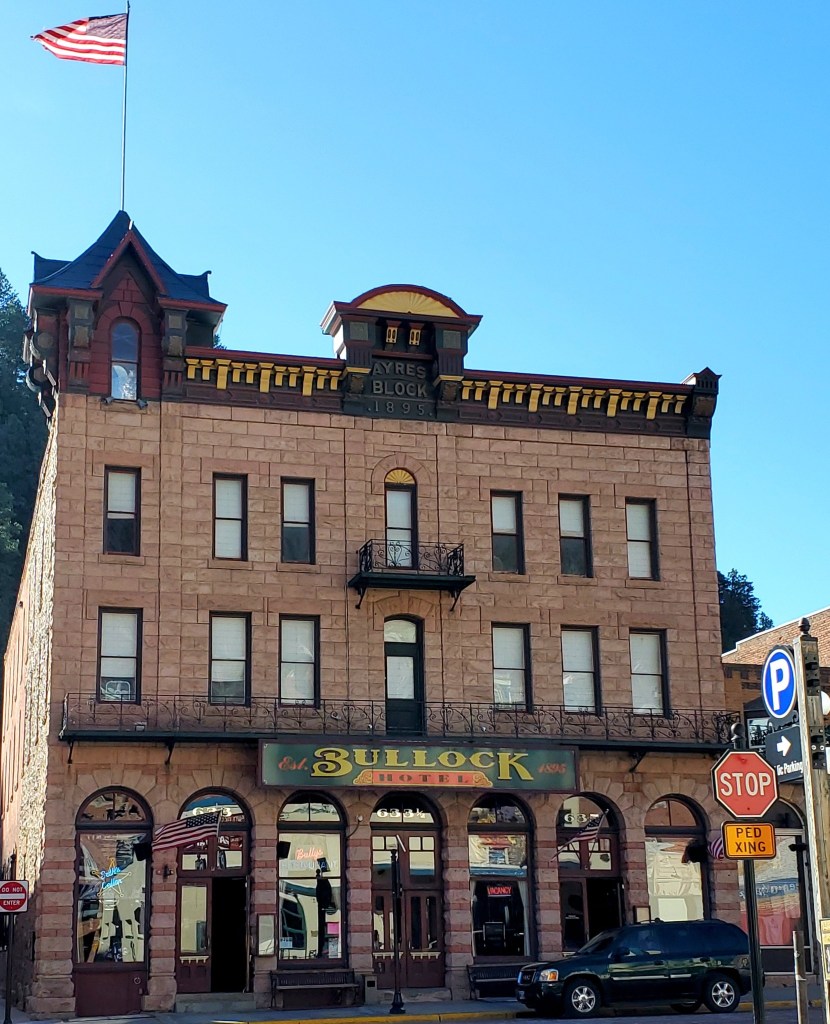
He allegedly haunts the halls still, and you can even book a ghost tour.
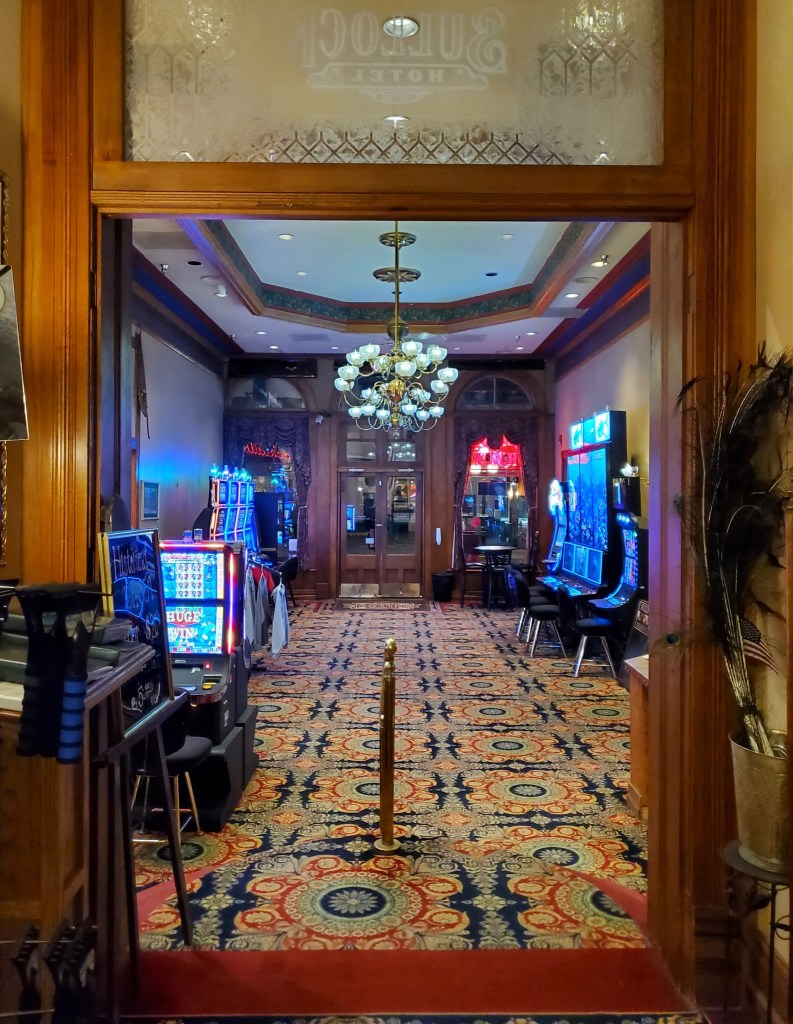
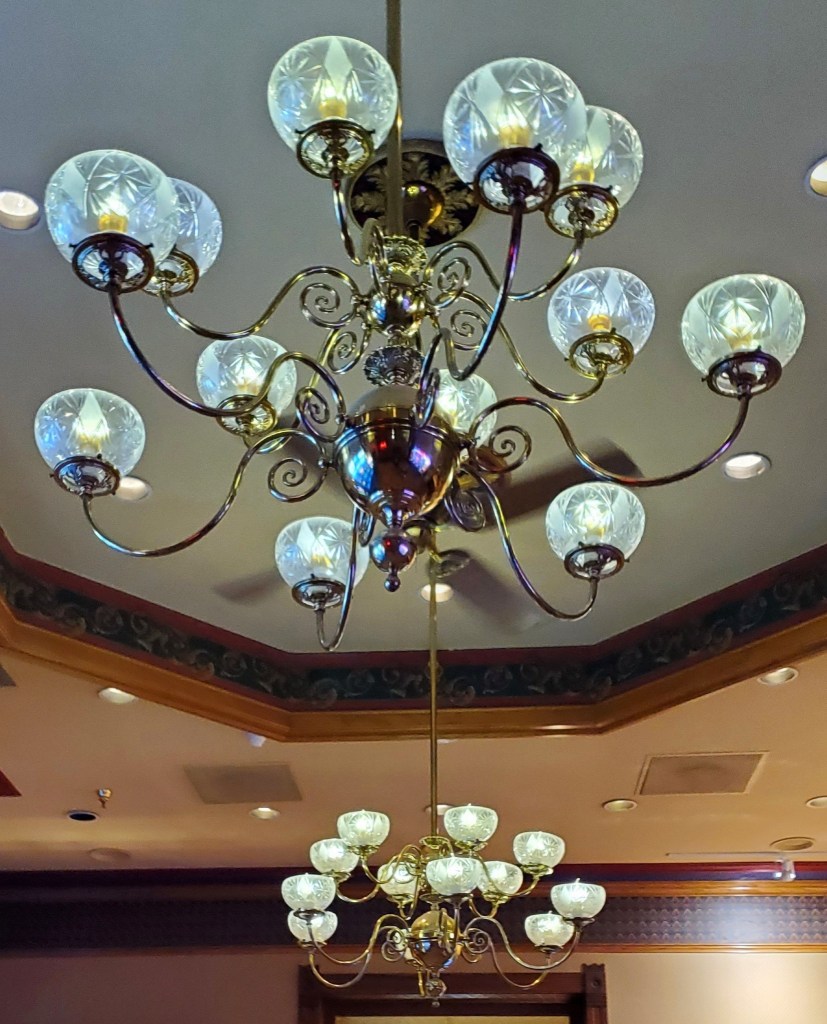
I was absolutely mesmerized by the chandeliers, not just by how sparkly they looked in contrast to the rustic cowboy aesthetic, but by how many of them we saw.
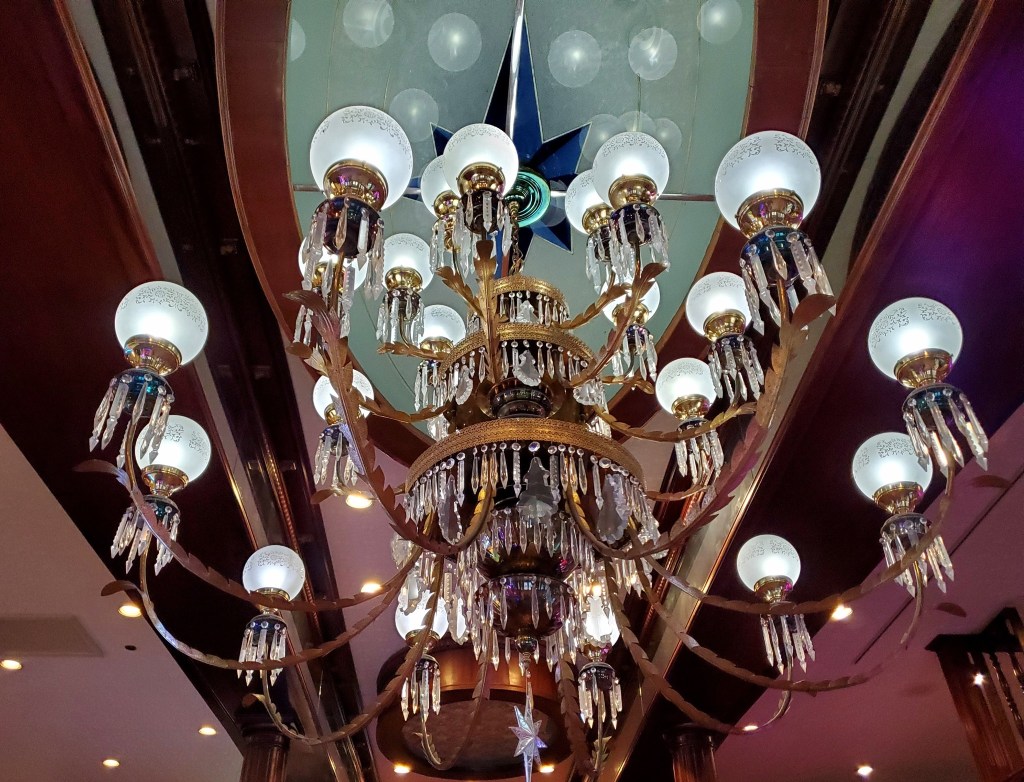
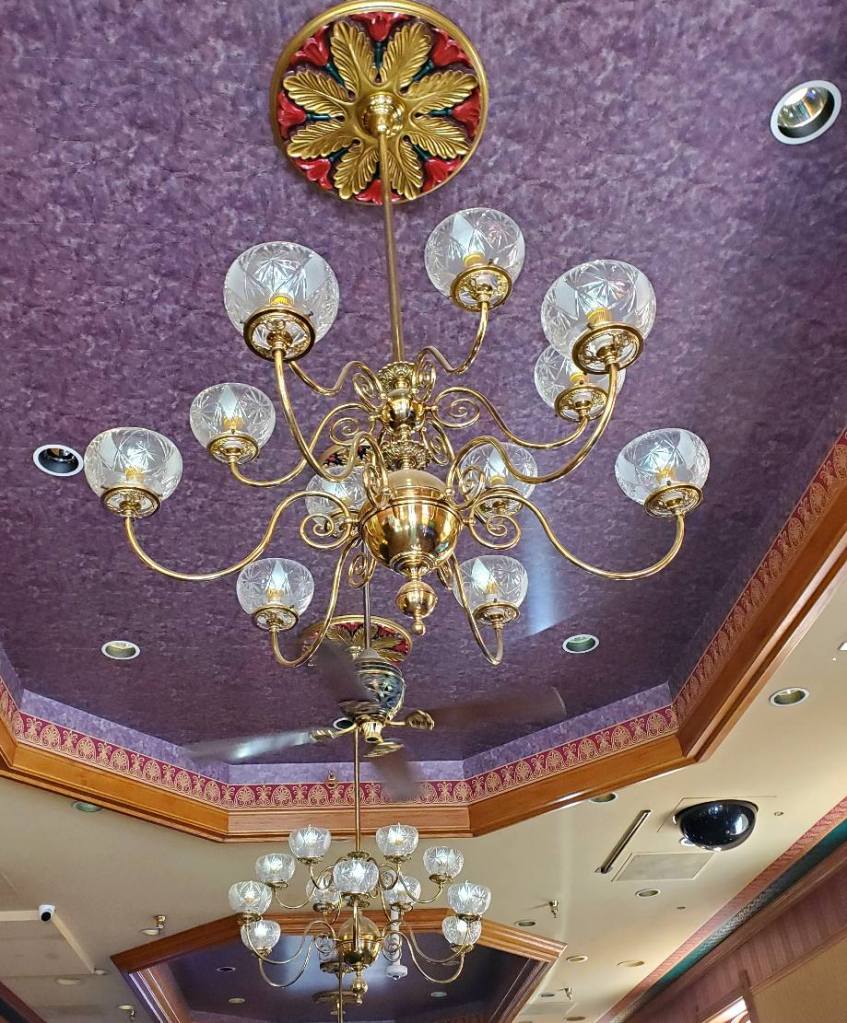
There were so dang many.
We did not spend the night at the Bullock Hotel but signed up for a brunch reservation and were the first guests in.
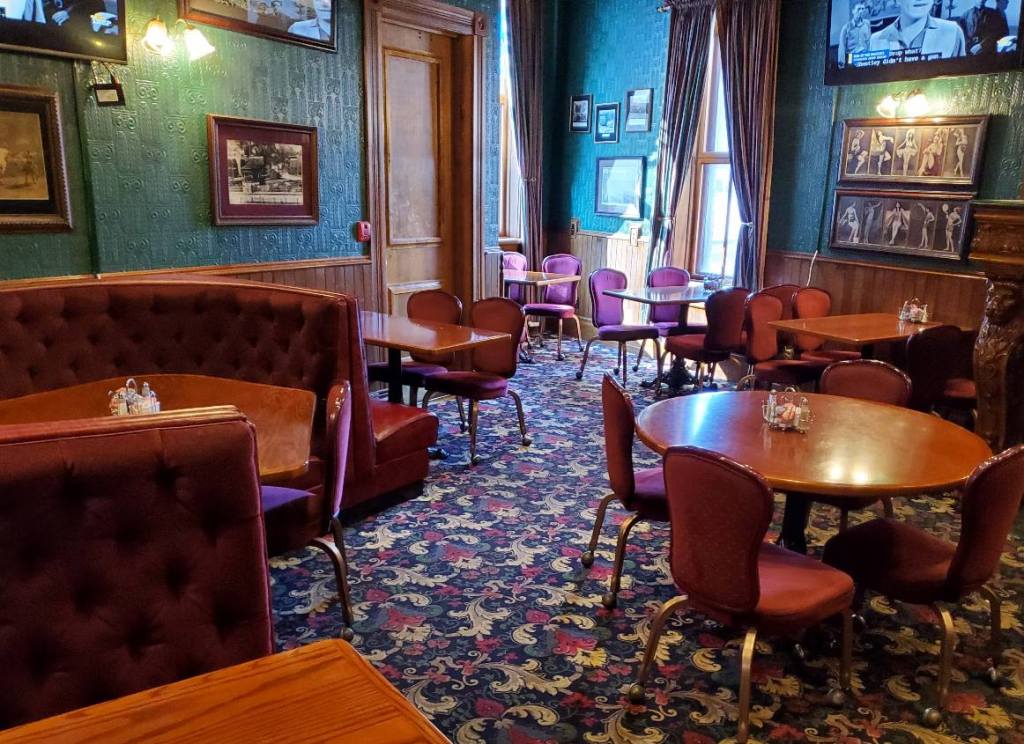
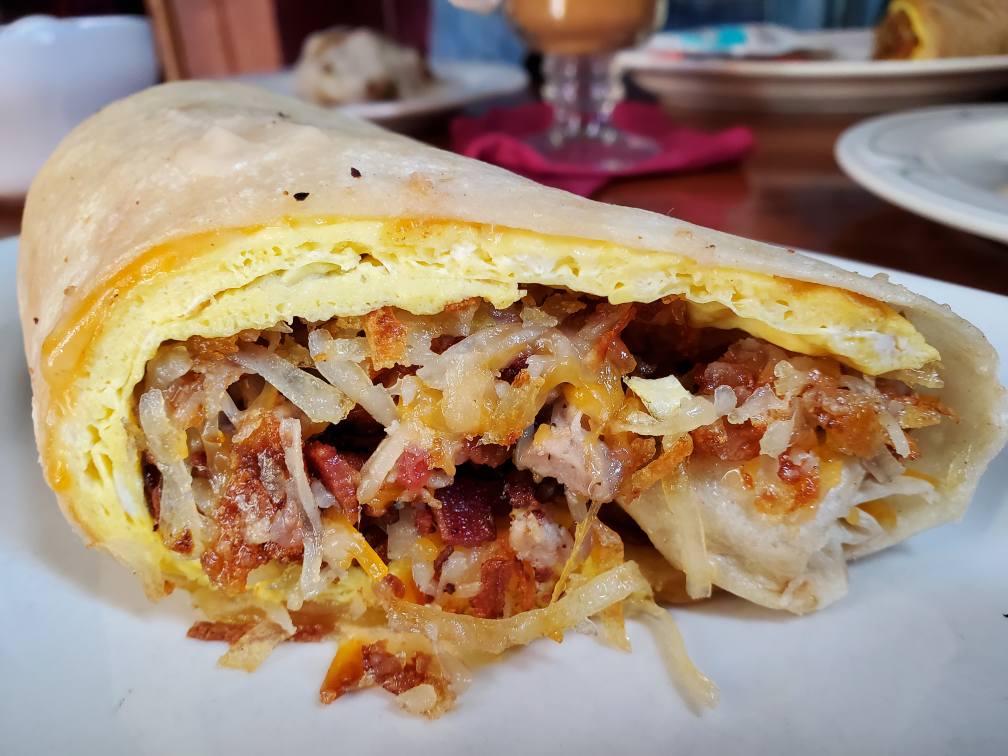
Their breakfast burritos were fire.
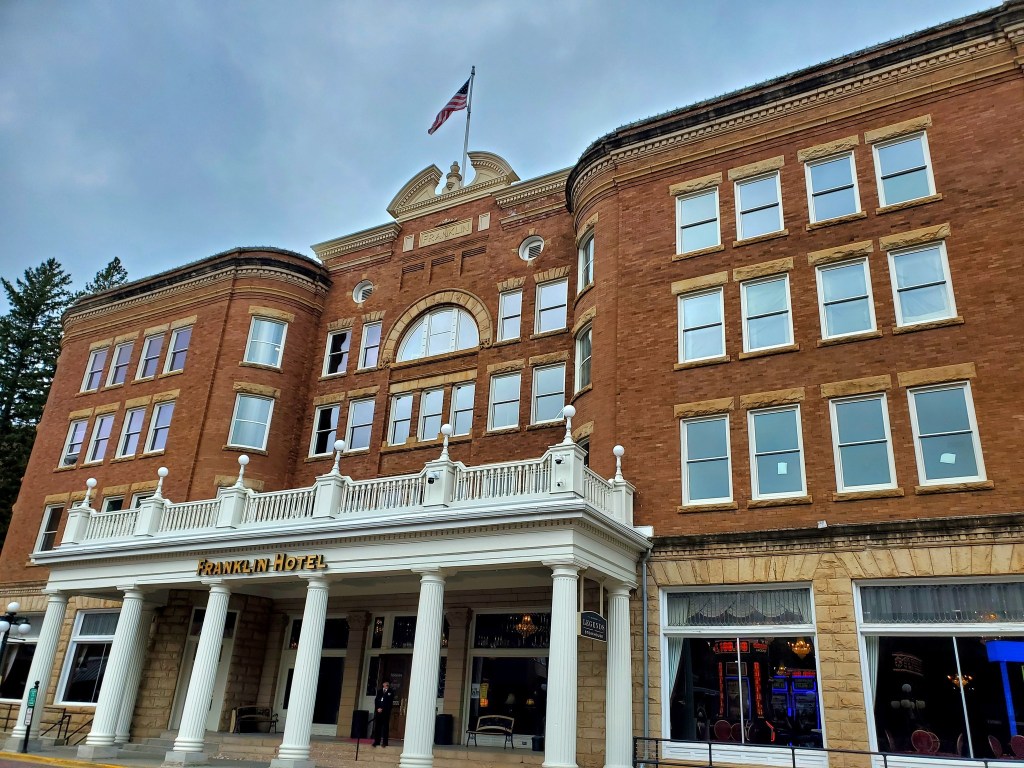
FRANKLIN HOTEL, now called SILVERADO FRANKLIN, is a historic hotel and gaming complex known for having the largest Poker Room in Deadwood.
More interesting to me, the first gold strike in Deadwood took place just a few feet from the hotel.
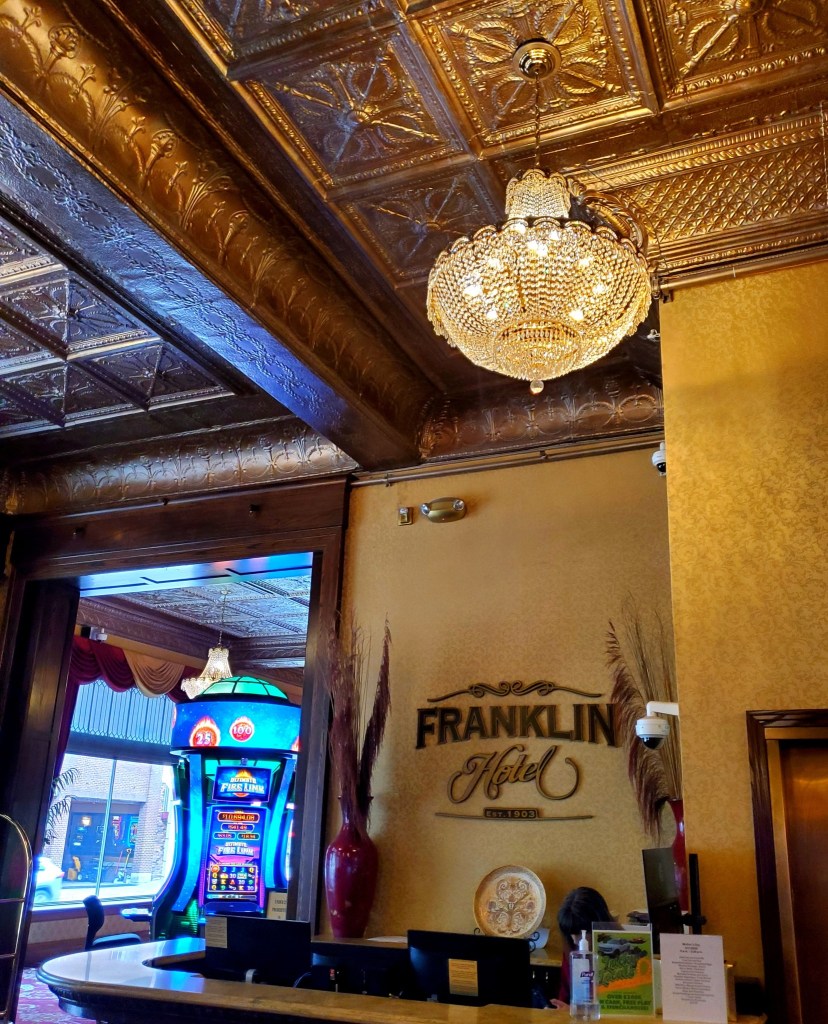
More delicious chandeliers were spotted inside the Franklin Silverado.
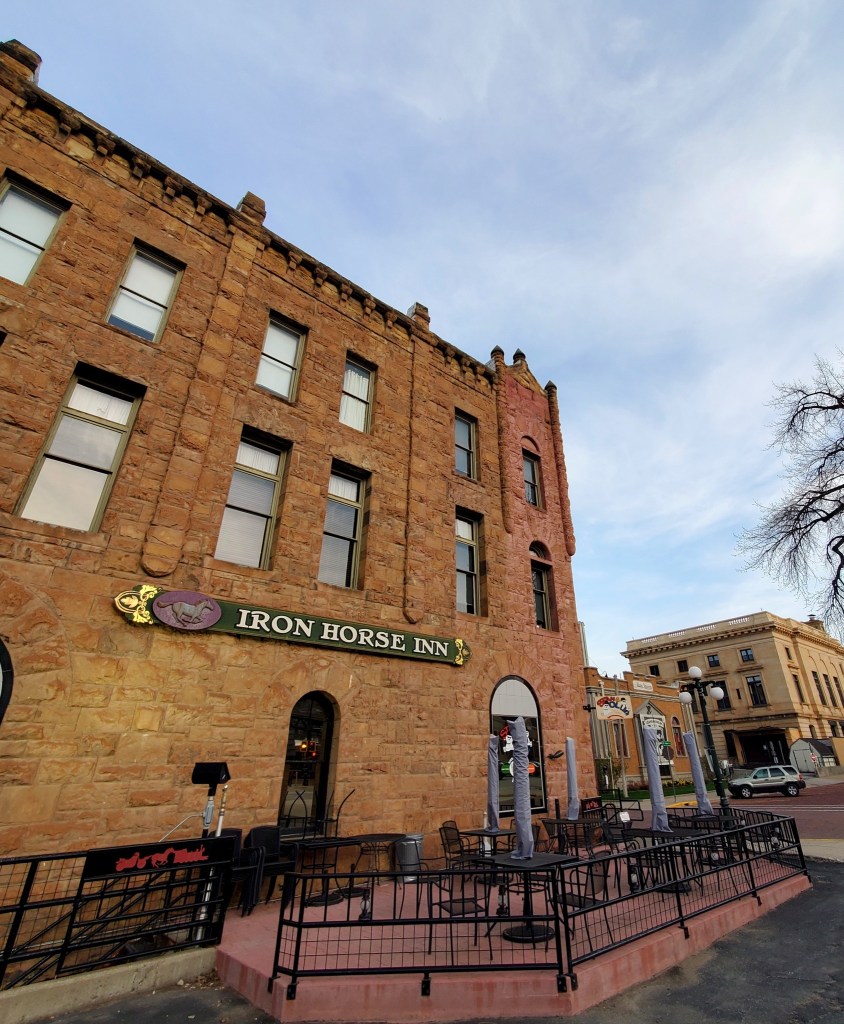
IRON HORSE INN was our home for a few days, and we loved it.
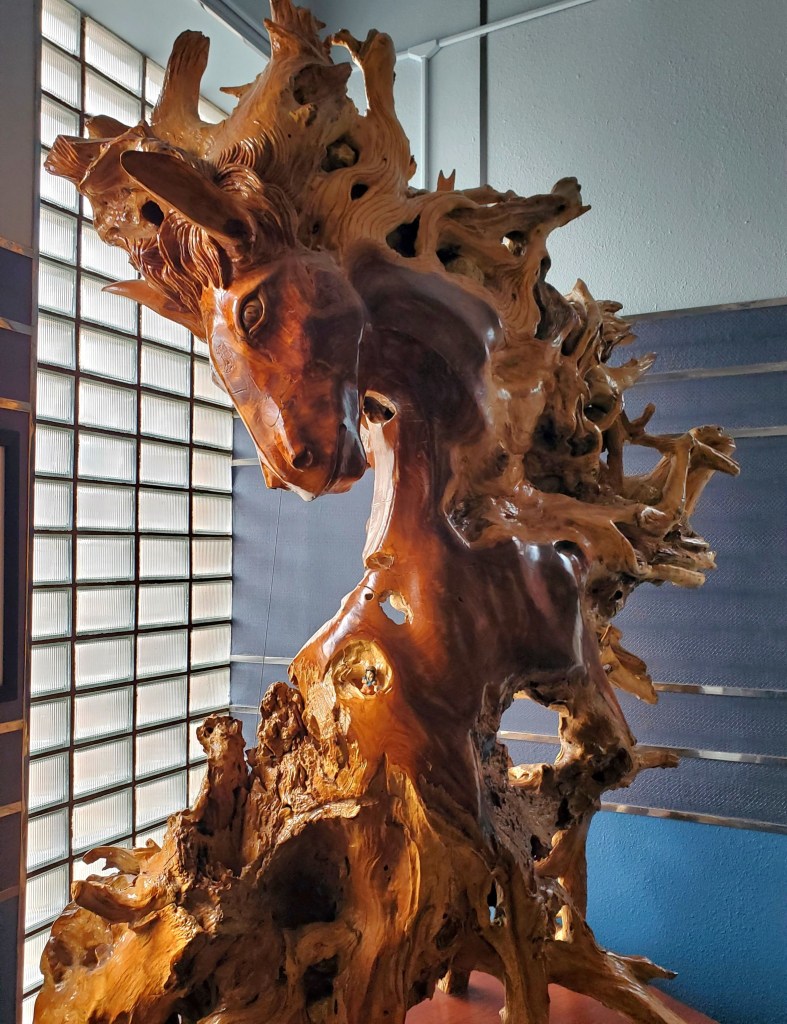
The lower level has a gift shop and pizza parlor in the same wide open living room space where the concierge desk is. You can also find several intricately carved wood horse statues in the front windows.
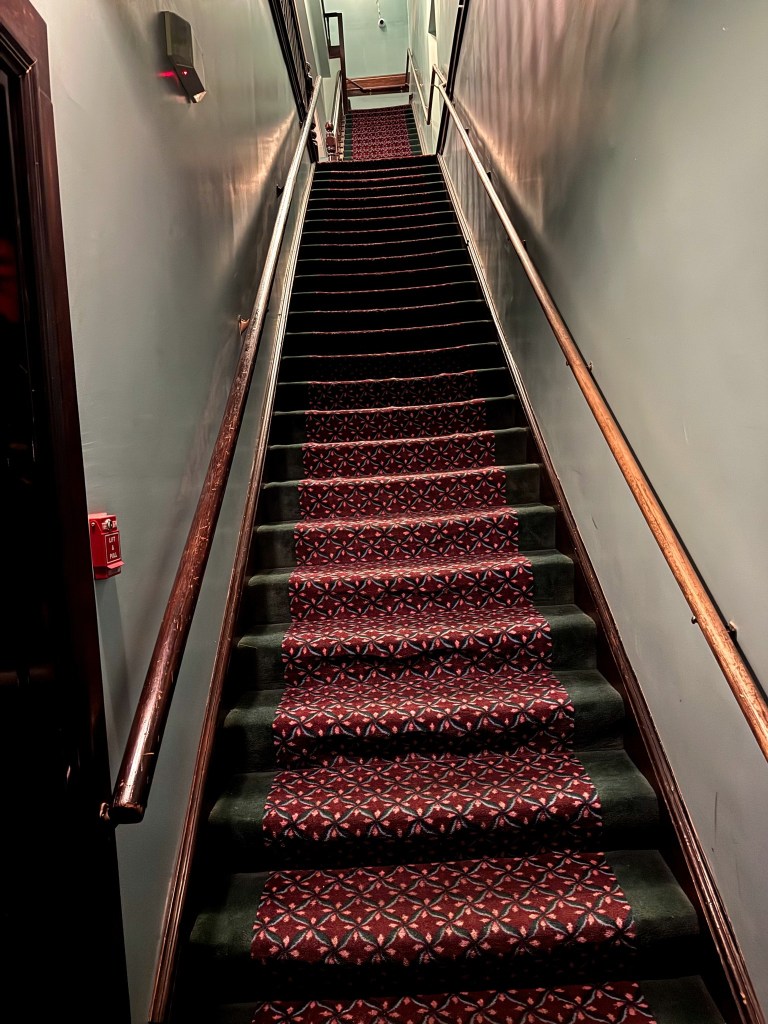
“Sometimes” the elevator is out of service, so get ready for these bad boys several times a day.
Neither of us have any current physical limitations and we welcomed the burning of a few extra calories, but make sure the staff knows of any accommodations needed when you book.
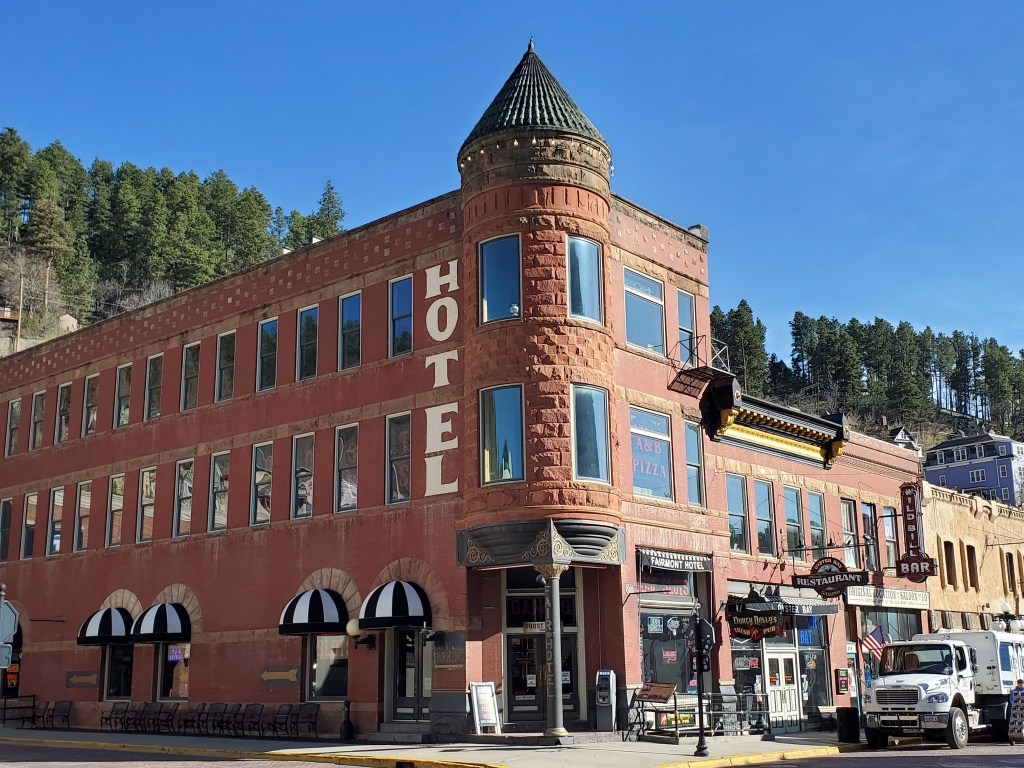
FAIRMONT HOTEL is a wild place even by Deadwood’s standards. It was a brothel and bar in its previous life, but is now a bar, pizza and oyster restaurant, and casino.
There has been so much reported paranormal activity at the Fairmont that they had to close the upper floors to guests, and the hotel has been featured on several paranormal shows like Ghost Lab.
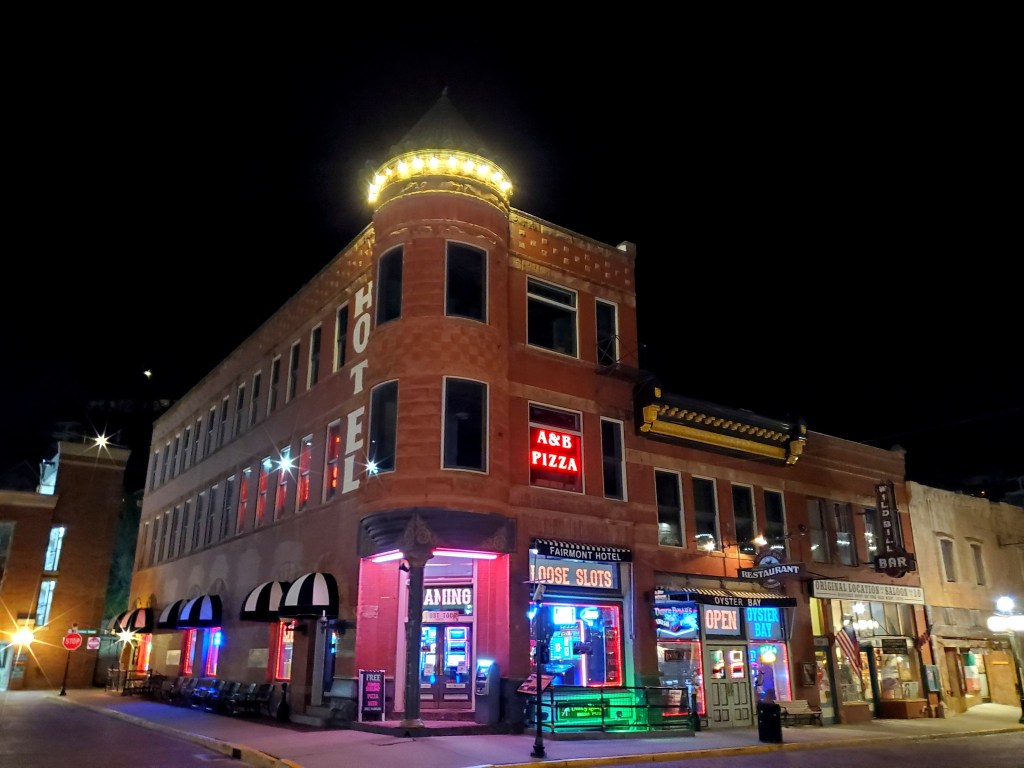
At night, they will lure you in to visit with signs advertising free pizza and oysters, loose slots, and an assortment of other offerings.
You can wander through and grab a free slice or a slimy snack to go any time the signs are on. I was too suspicious of an unsupervised buffet, but you can do it. It’s a thing you can do.
HISTORIC SALOONS
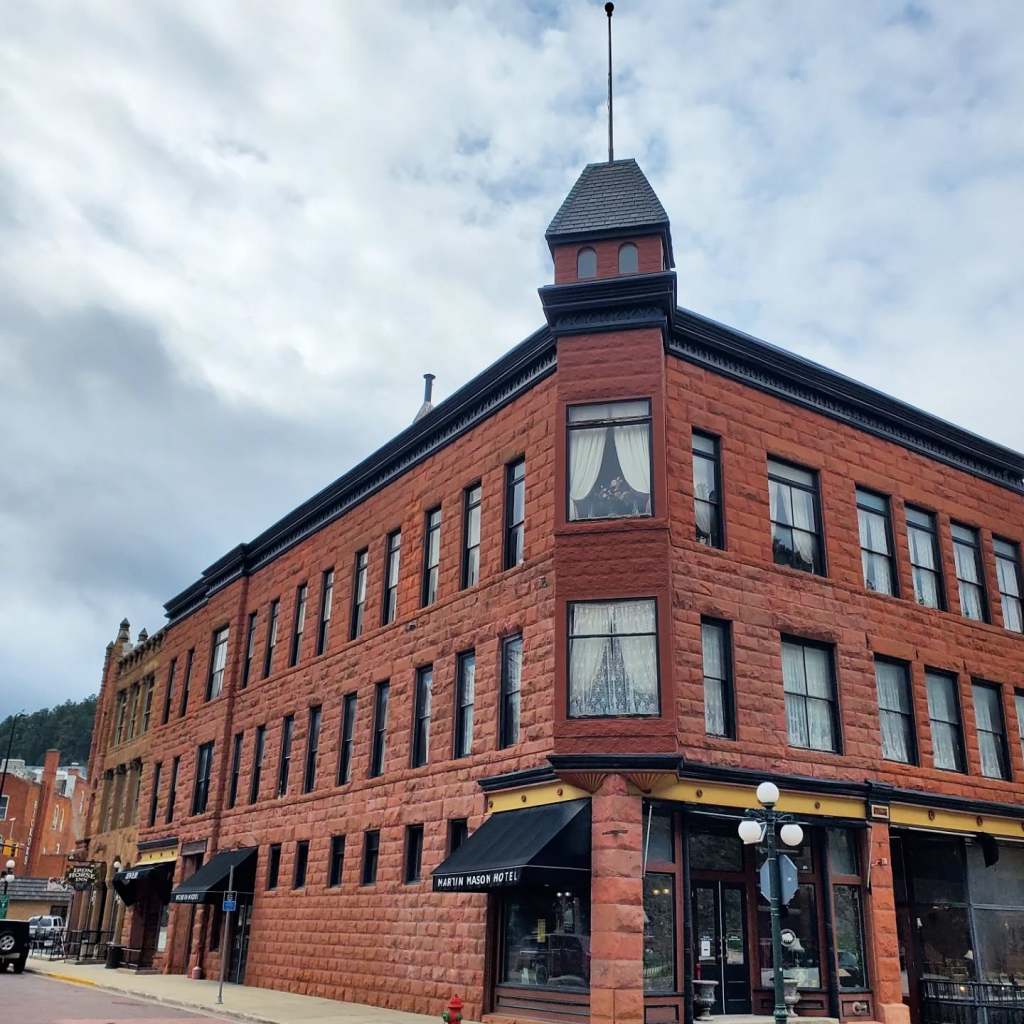
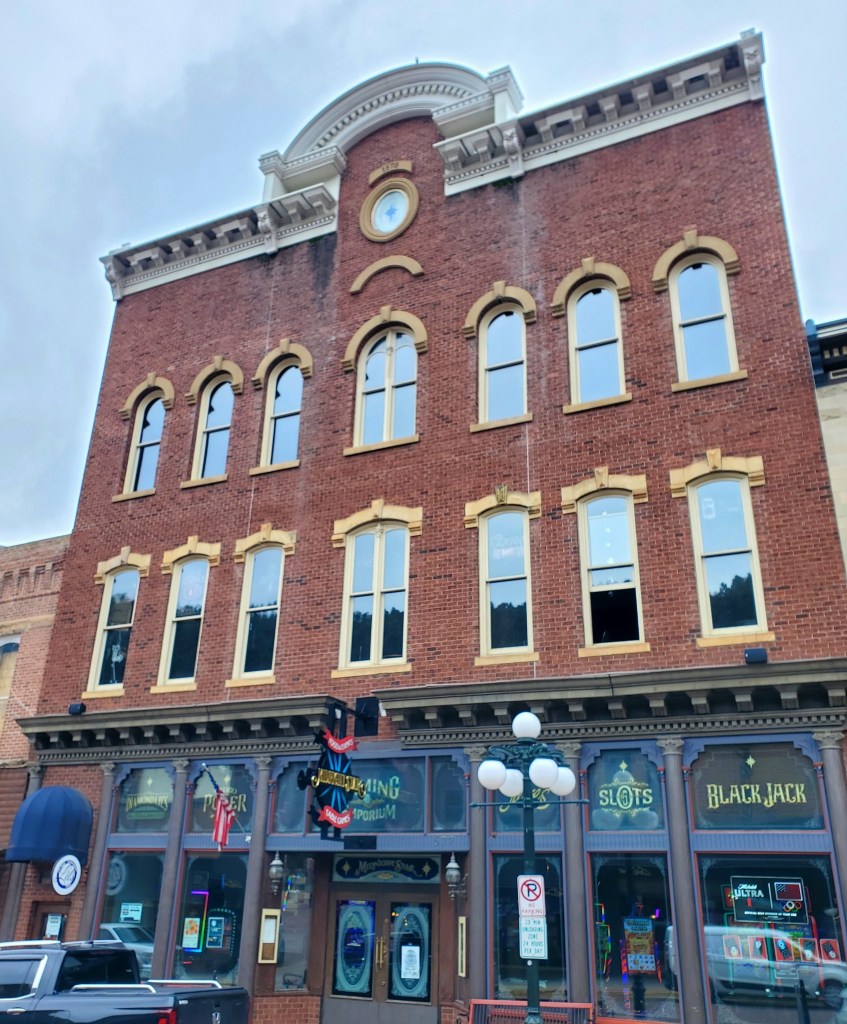
Deadwood boasts a significant collection of 1800s architecture, and many of them have museums and inns on the upper floors.
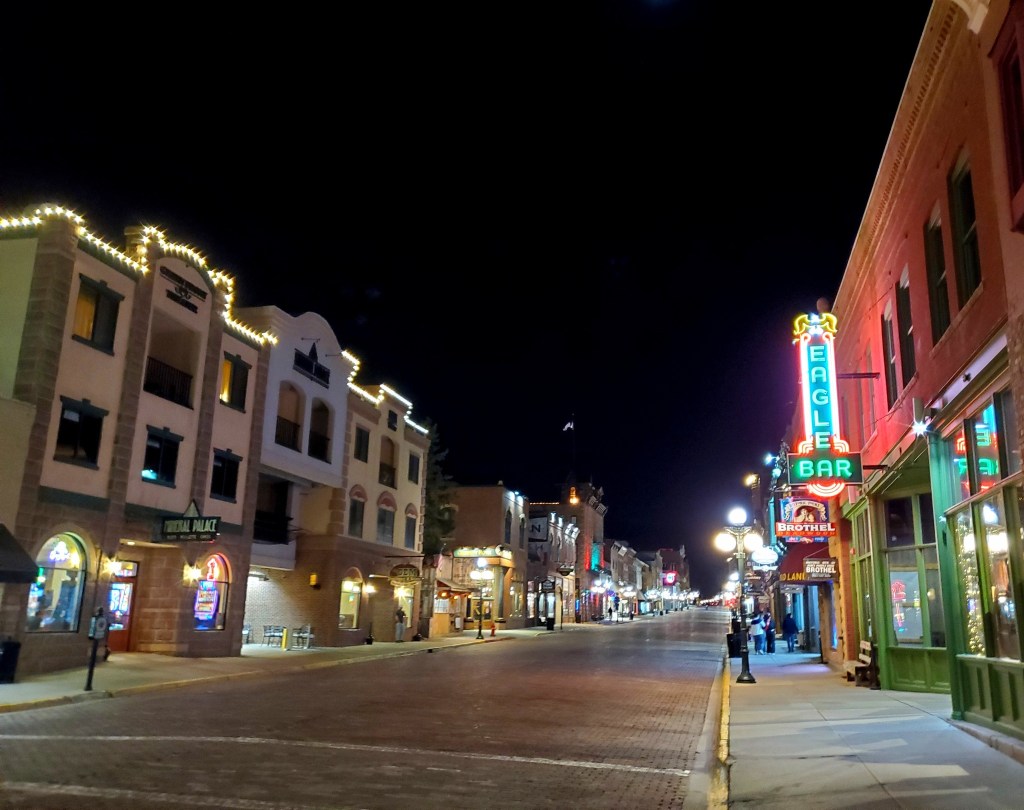
The lower level or street level of each building is typically a casino. It may be an official full-service casino with all the bells and whistles, or some strange empty room with two or three neon slot machines and no one else around.
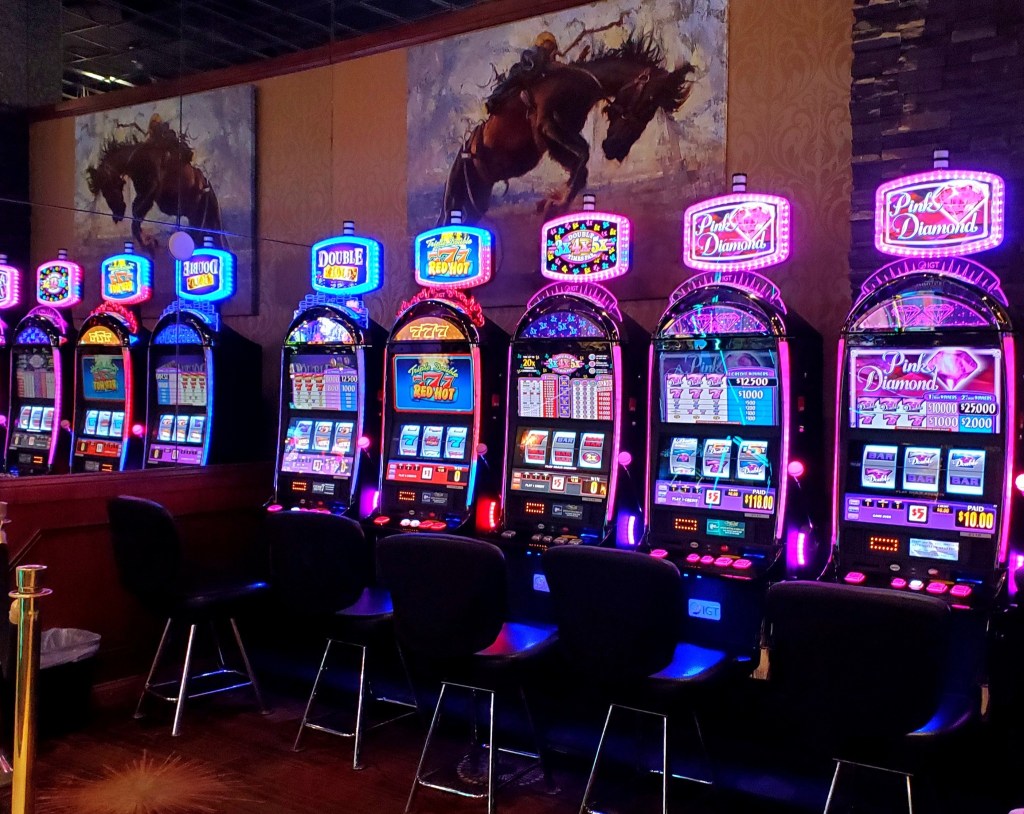
Casinos in Deadwood are much like public street lamps and sidewalks. They are all over the place, available to everyone, and seemingly with no rules or expectations or supervision.
(look at these chandeliers!)
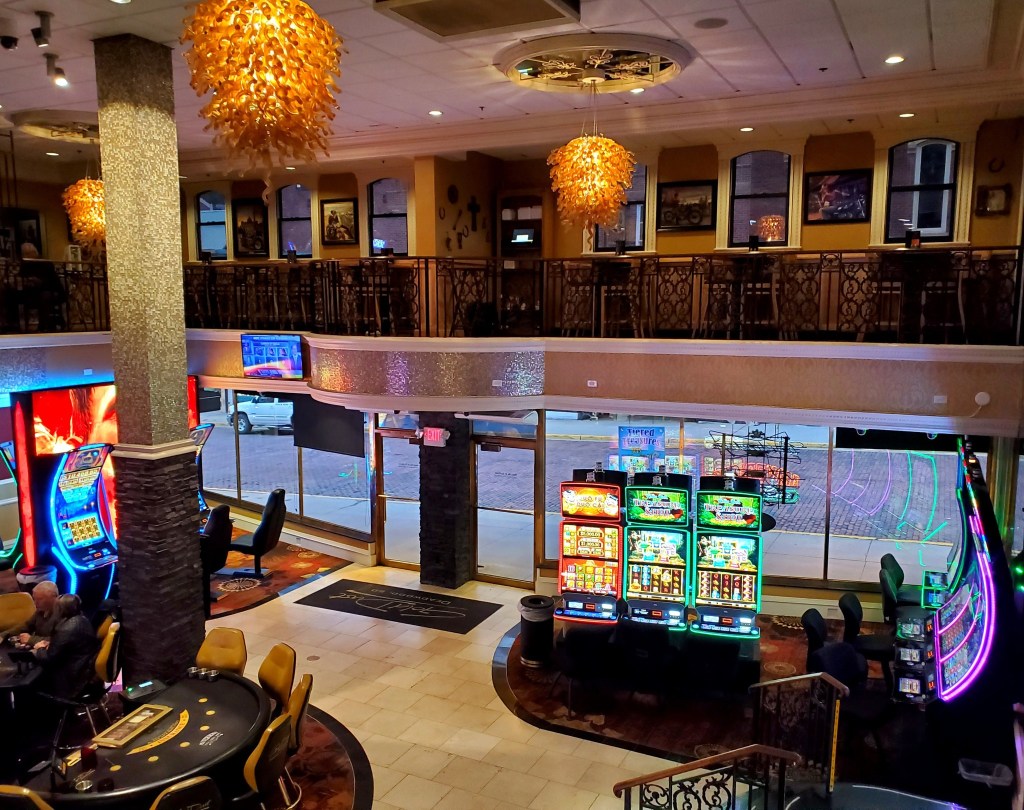
I find it disturbing and eerie, especially when the only person you may see is slumped over with their face nearly attached to the screen while they mindless drop in tokens or swipe their card like a zombie.
To each, their own.
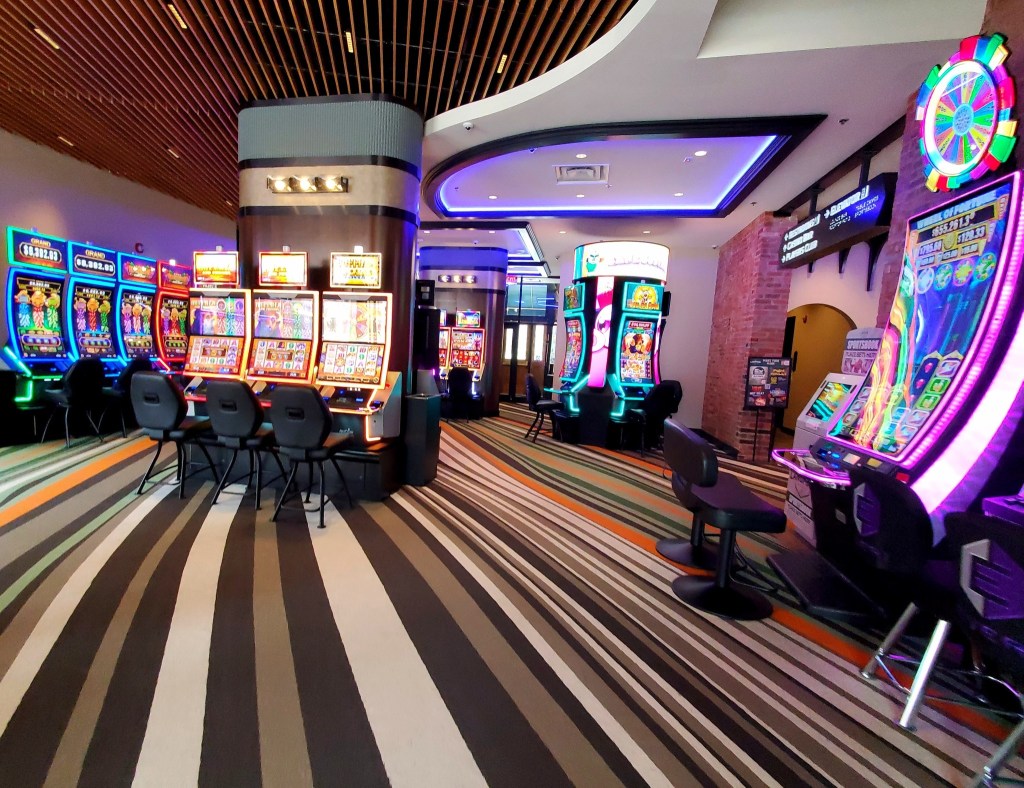
I would love to write about each and every saloon we visited in Deadwood but there are dozens, and I don’t want this to turn into a 45-minute read. Here are a few highlights:
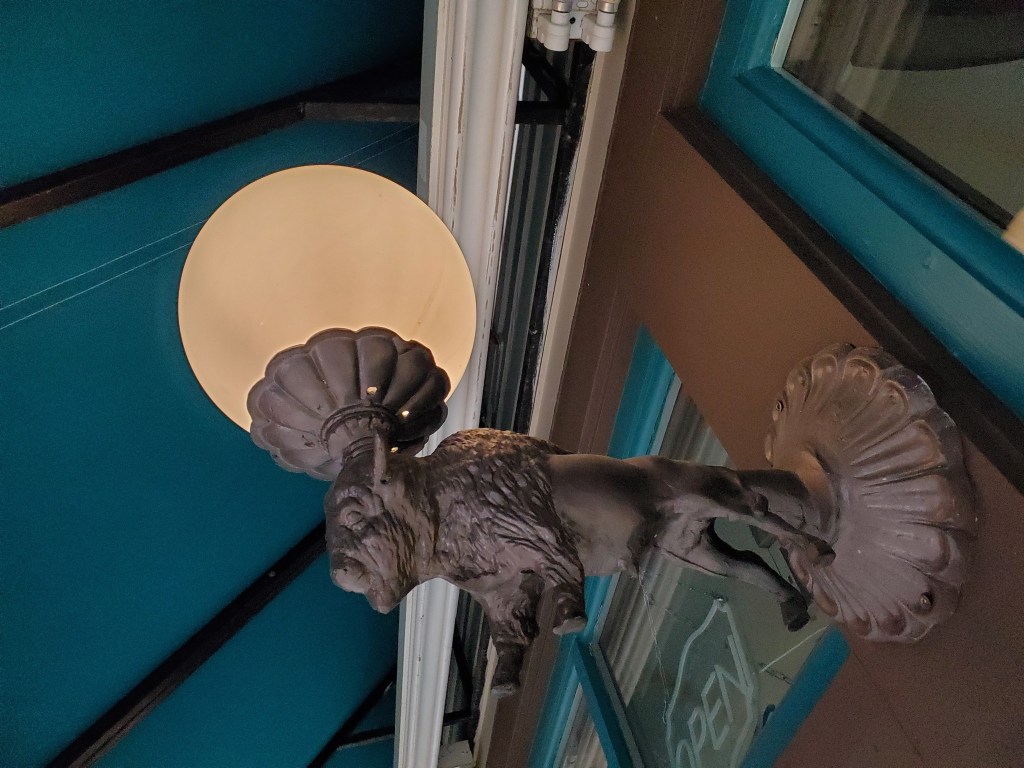
BODEGA is oldest saloon in Deadwood and the oldest bar in South Dakota, established in 1877 exactly where it sits now. It was originally named The Buffalo Bar but is now called Buffalo Bodega Complex, Bodega Bar & Brew, or simply Bodega.
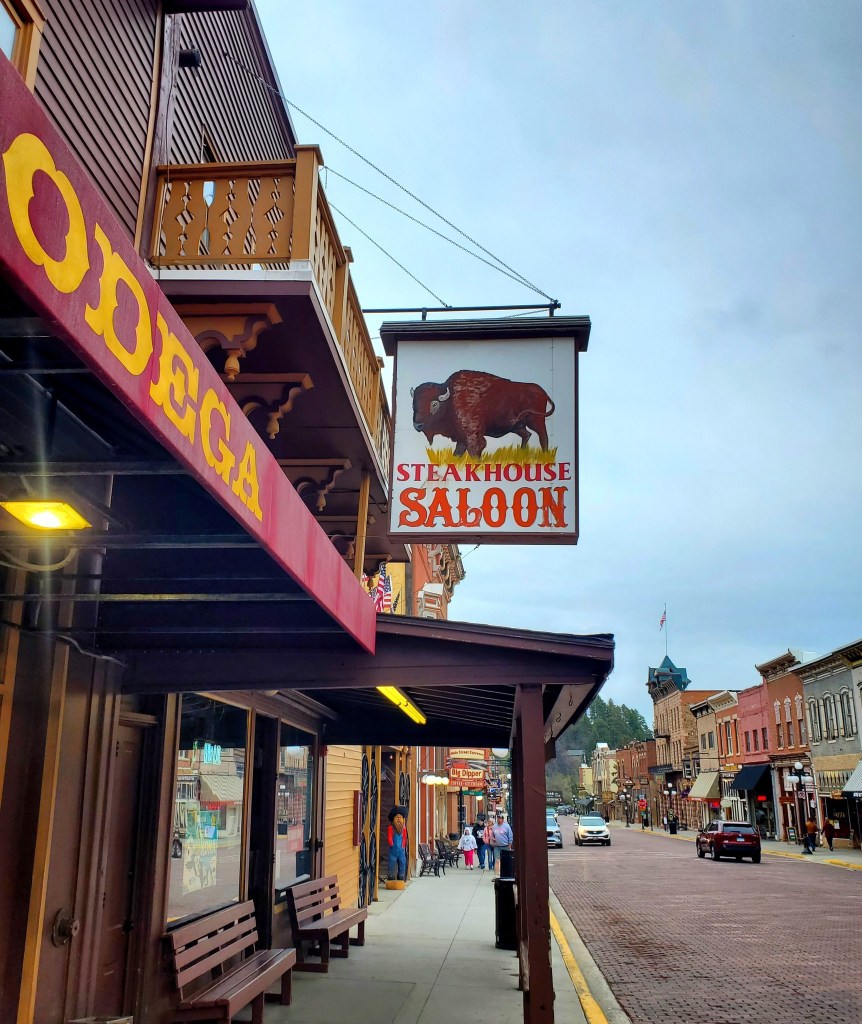
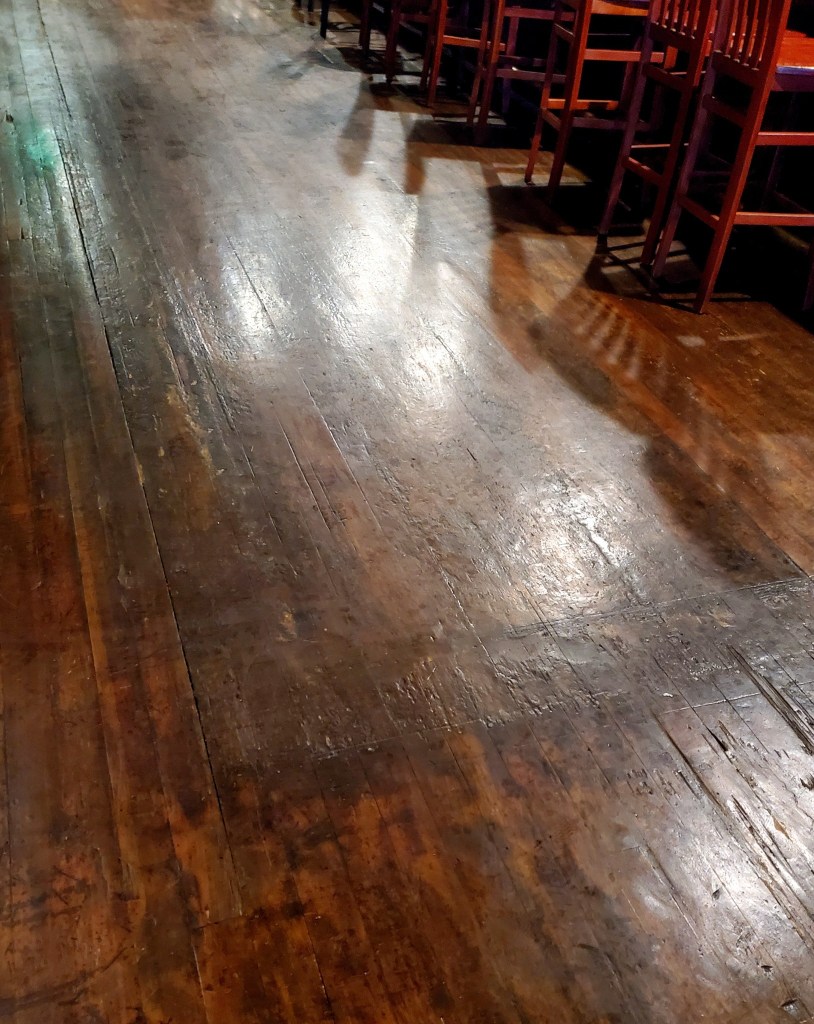
We made fast friends with the folks at Bodega. Our bartender even gave us a tour and pointed out that the floors are original.
WILD BILL BAR (shady website) is the actual site where Wild Bill Hickock was murdered, which is also the site of the ORIGINAL Saloon No. 10.
When Saloon No. 10 moved to a new location down the street, Wild Bill Bar opened in the murder spot.
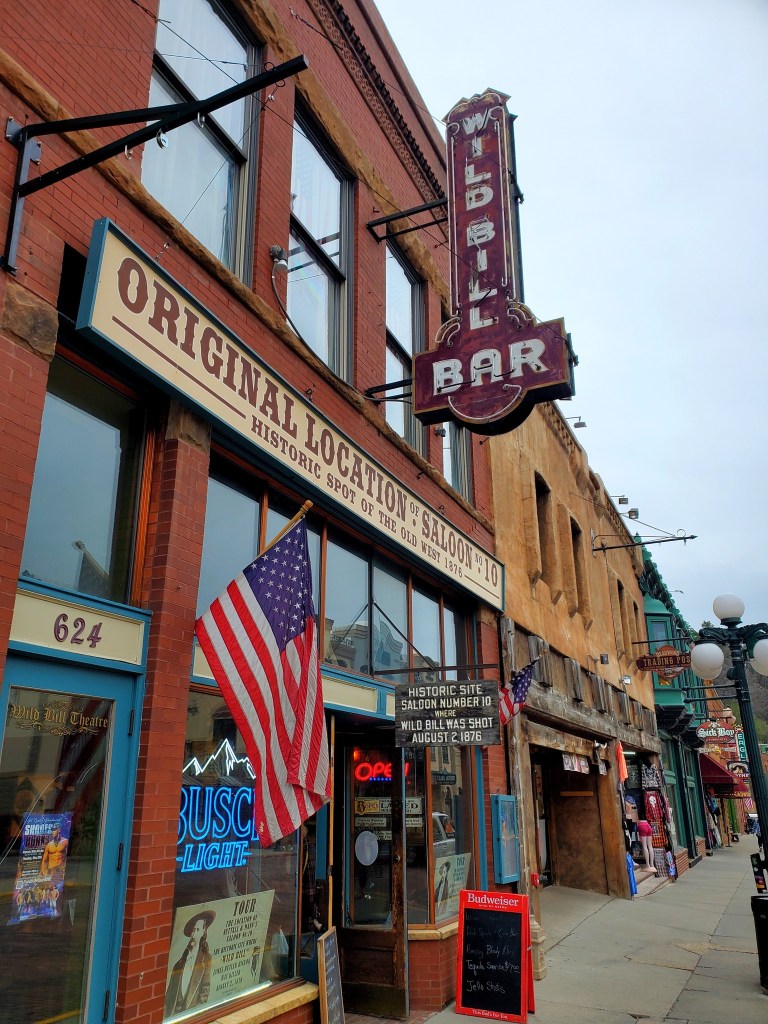
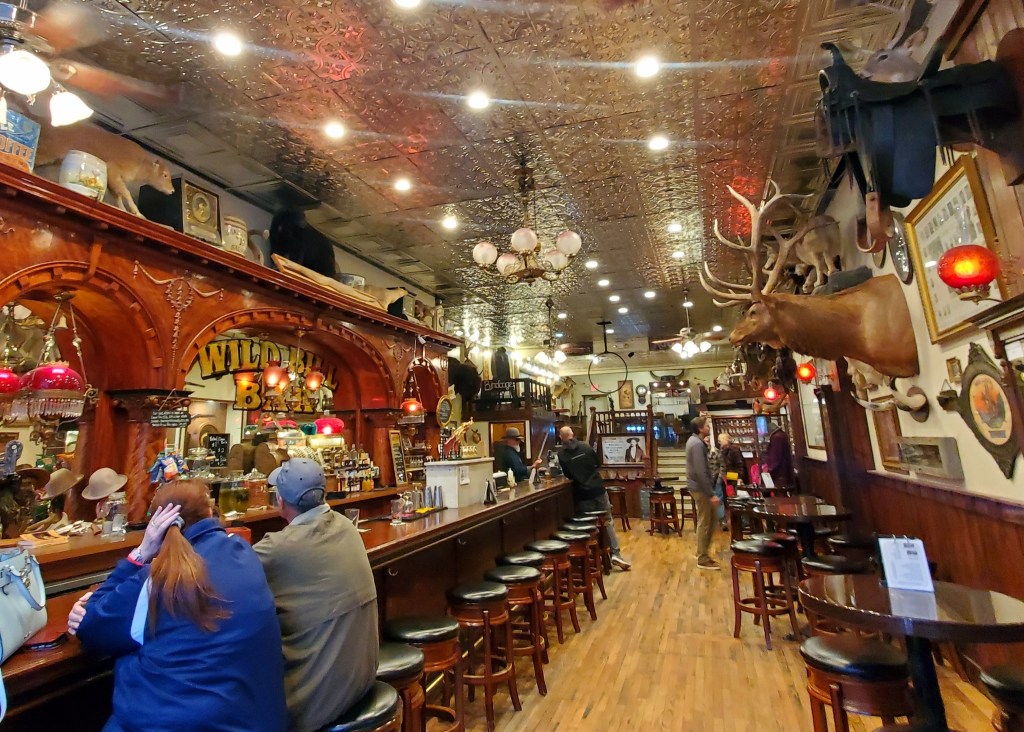
We were just amazed with some of the stuff they have in Bodega and Wild Bill Bar.
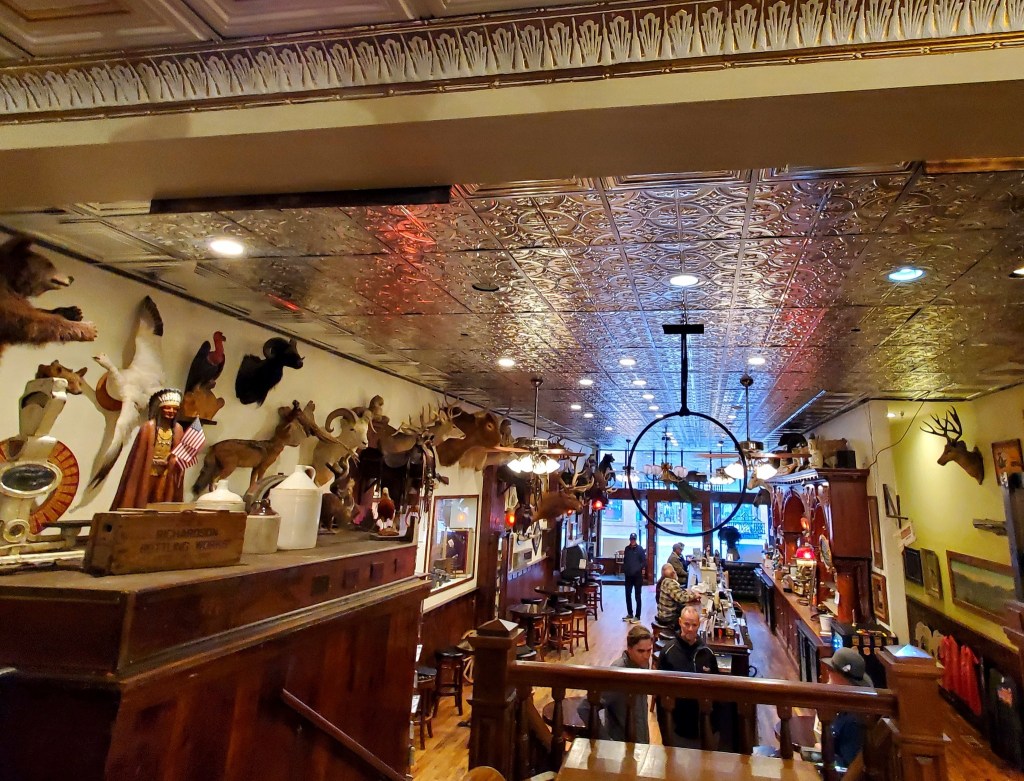
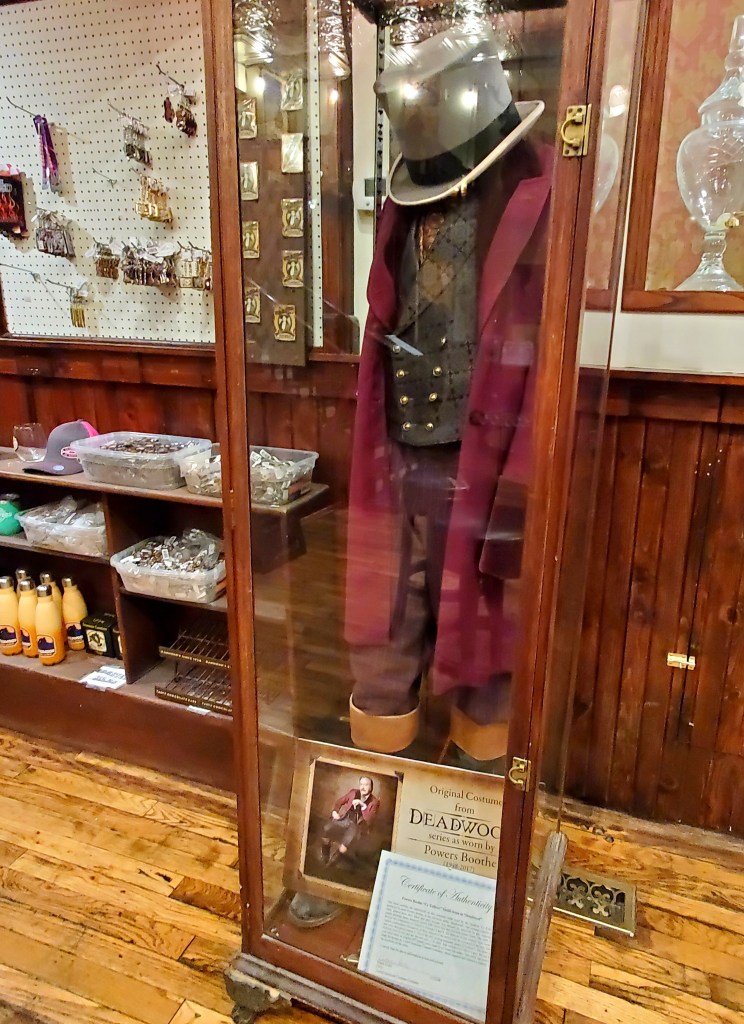
Saloon 10 has been voted the rowdiest place in Deadwood.
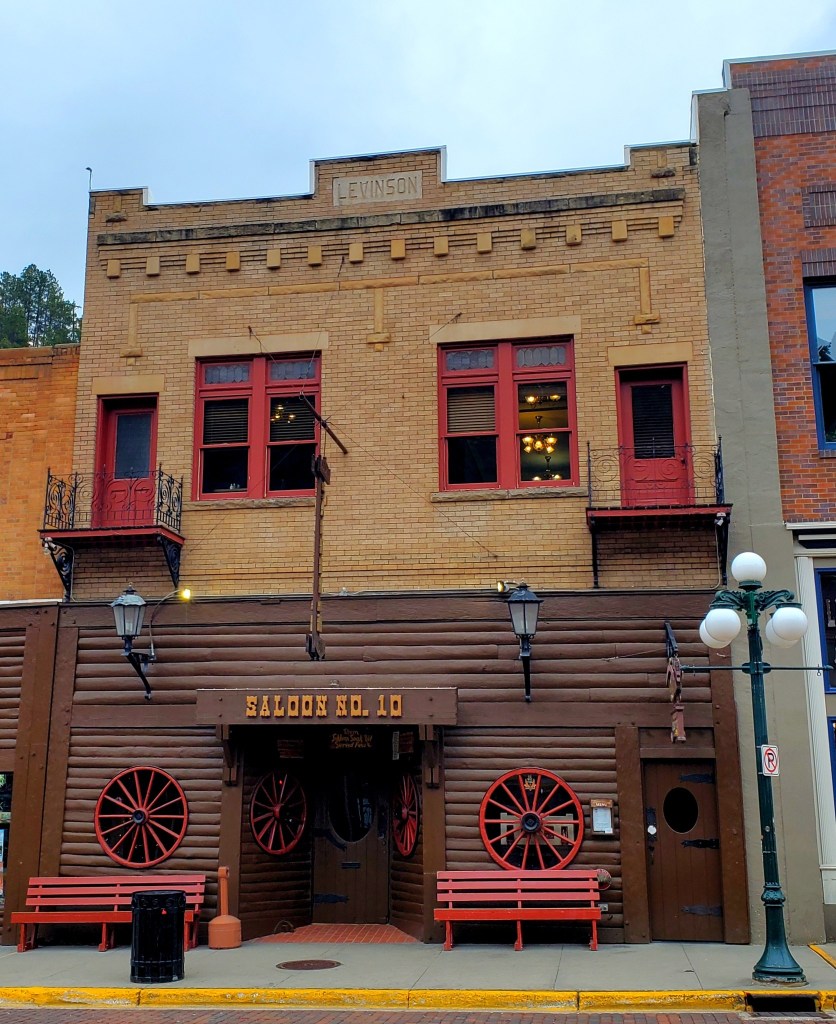
This is this quintessential wild west saloon and I love its decor in all its tacky, and often authentic, glory.
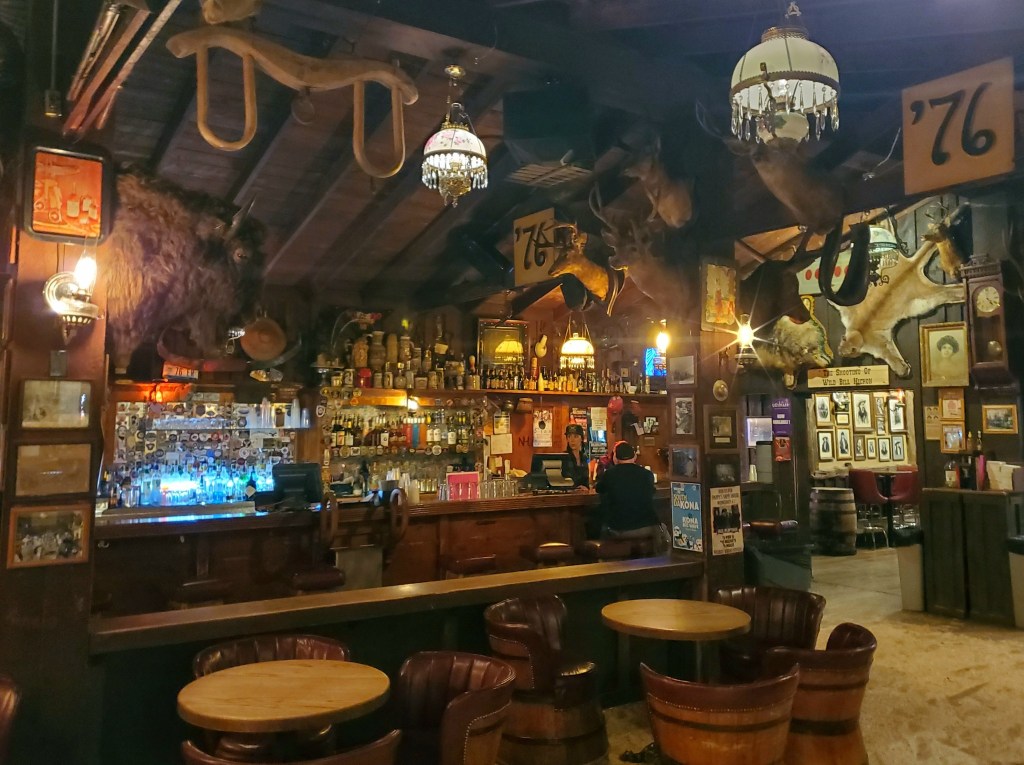

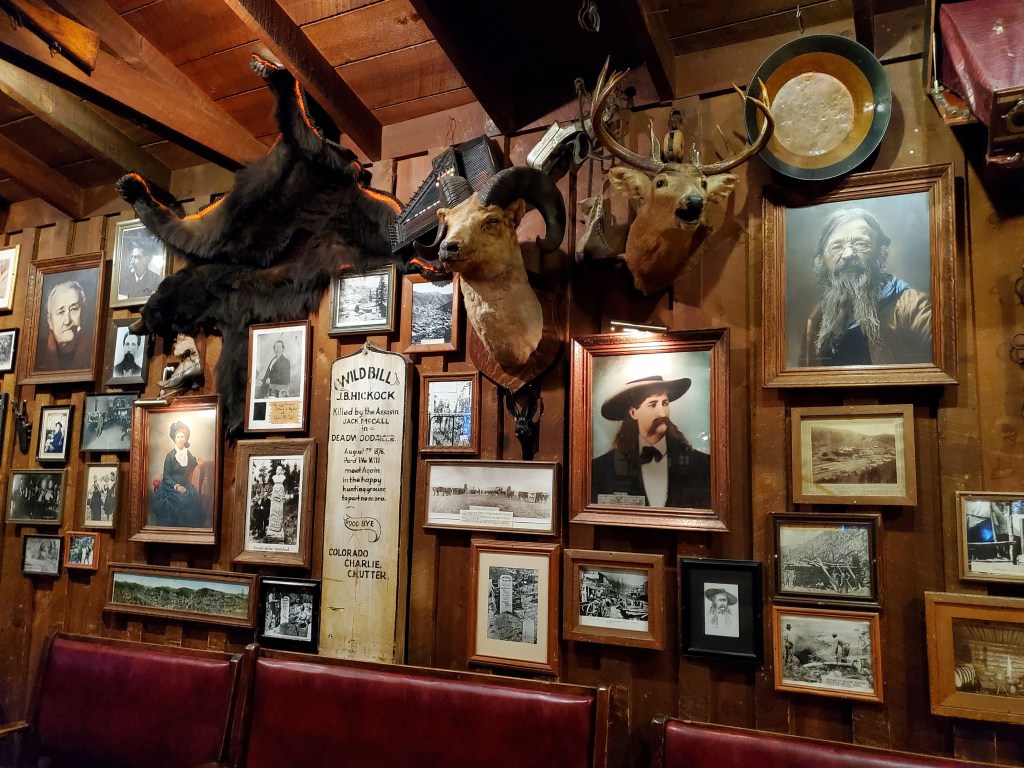
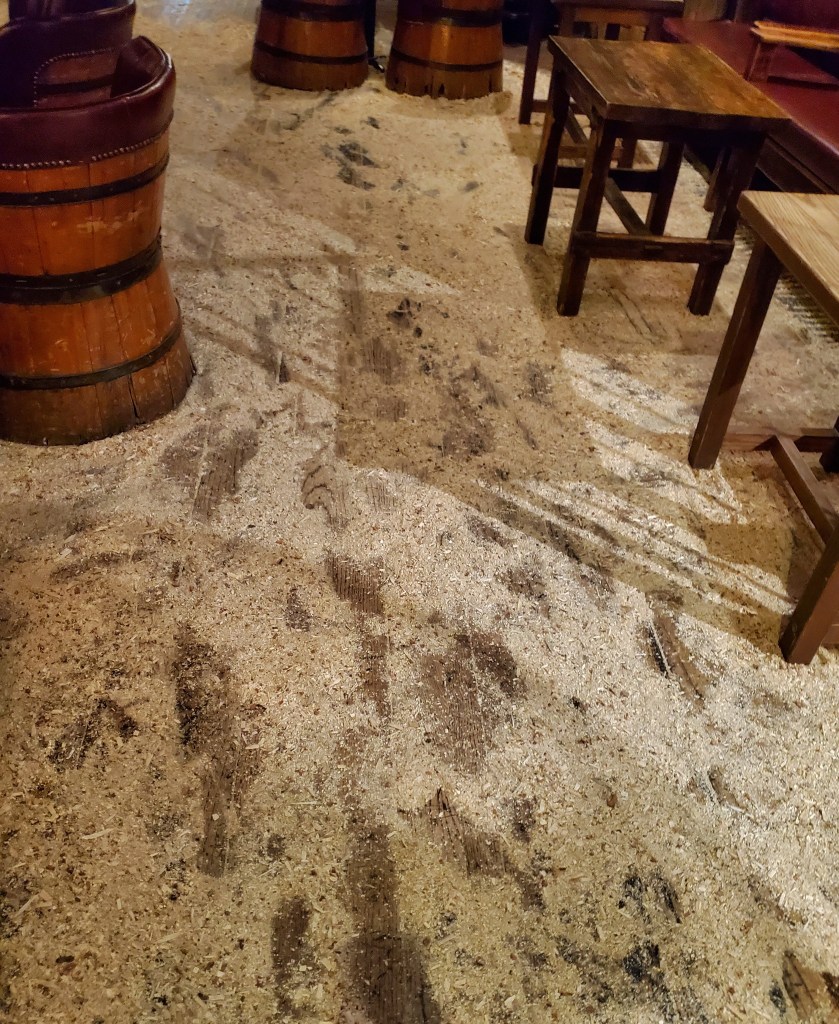
Peep the photo of Wild Bill on the wall, looking out over the sawdust covered floors.
MAVERICK’S was the answer almost every person gave us when we asked them about their favourite Deadwood restaurant.
Their biggest flex is steaks and burgers, but they still have a few options for anyone who does not eat red meat.
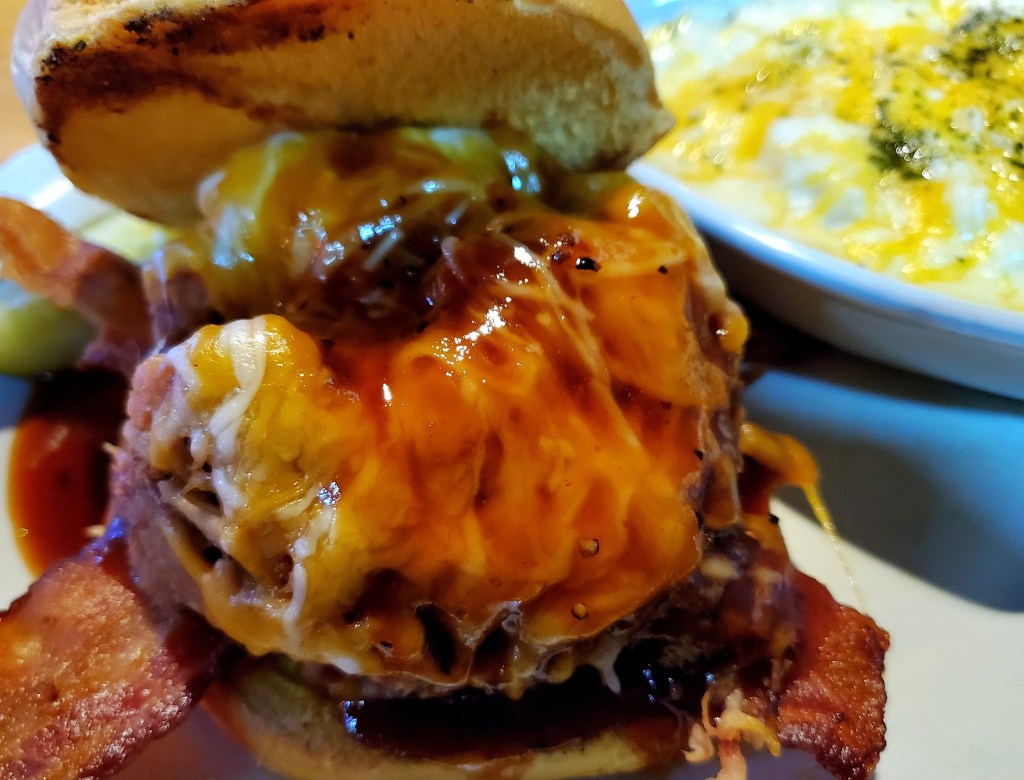
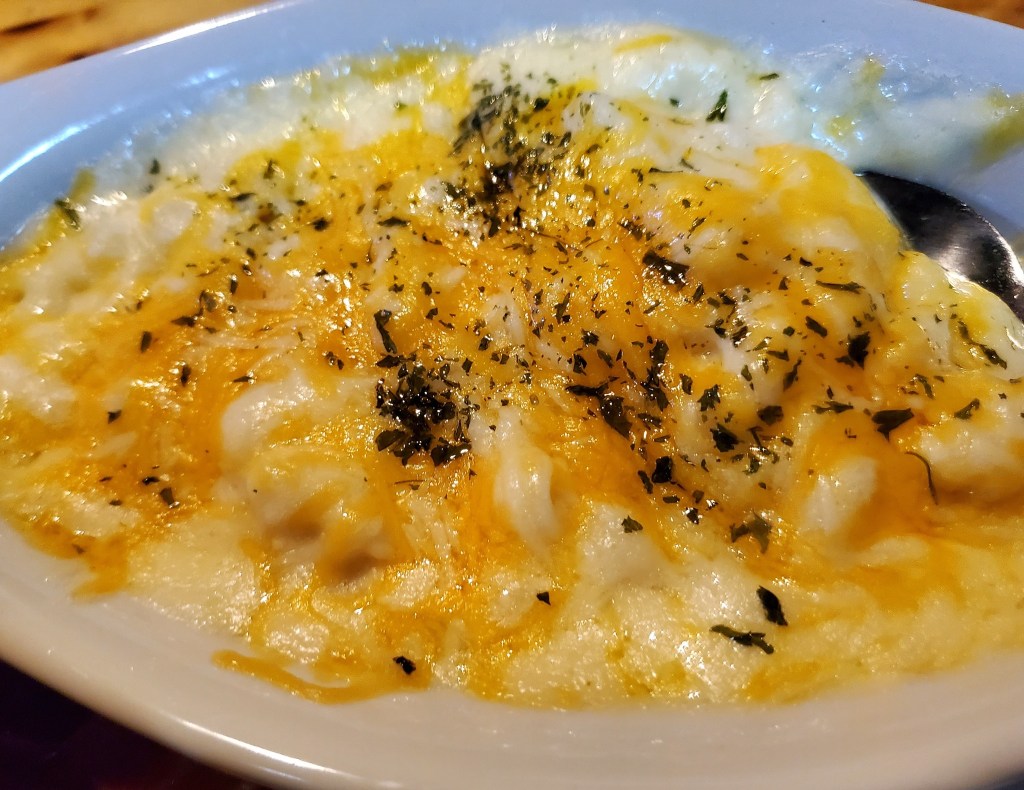
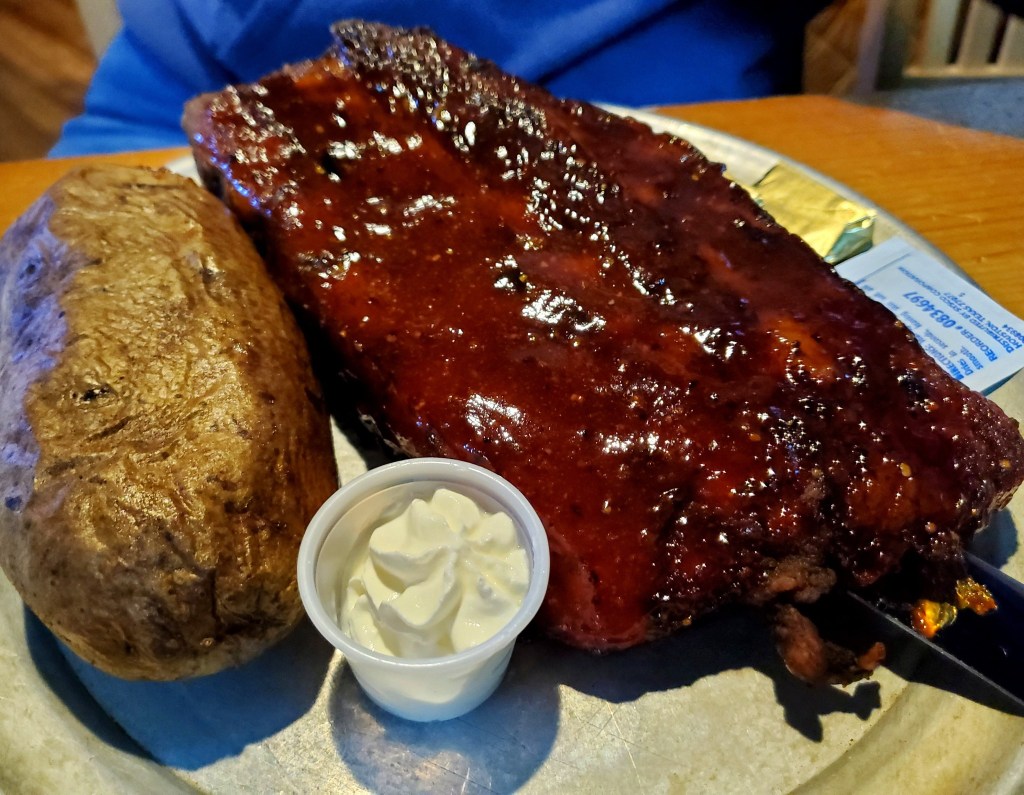
I had pulled pork with macaroni and cheese, and my friend got their signature pork ribs. She still frequently talks about them nearly eight months later.
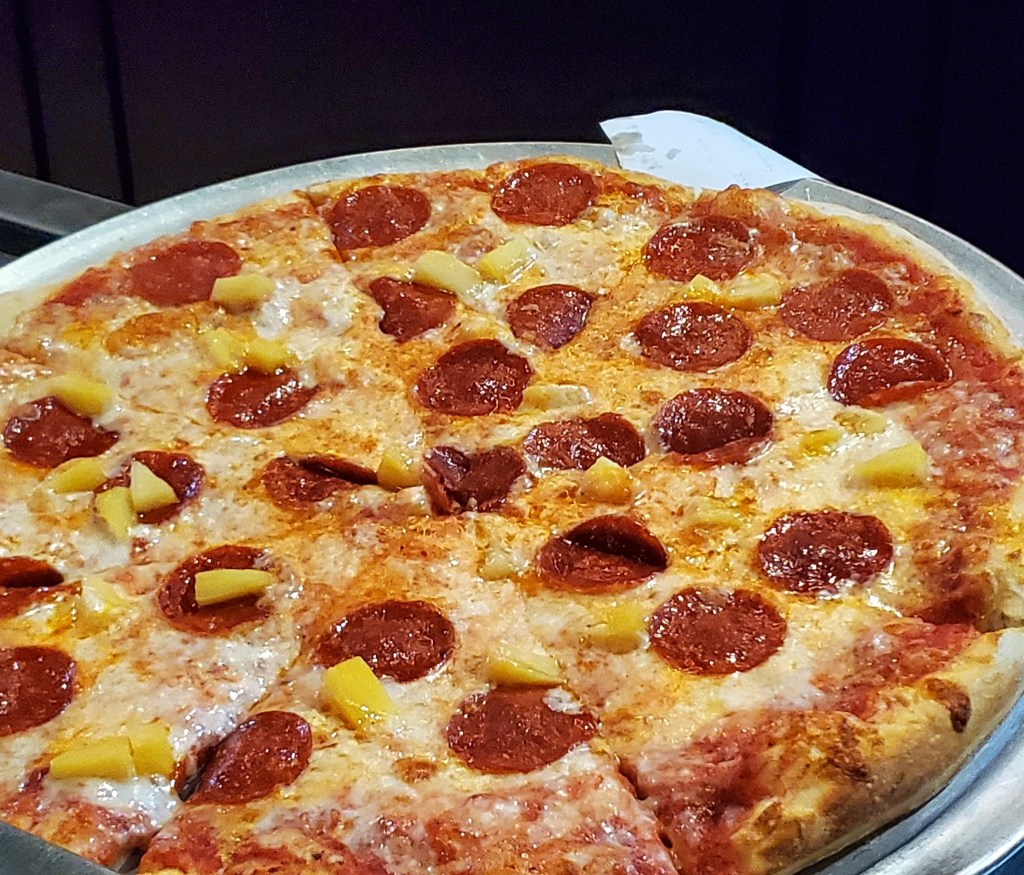
BLOODY NOSE has rad late night vibes and offers pizza by the slice. Our new friends ordered this beauty:
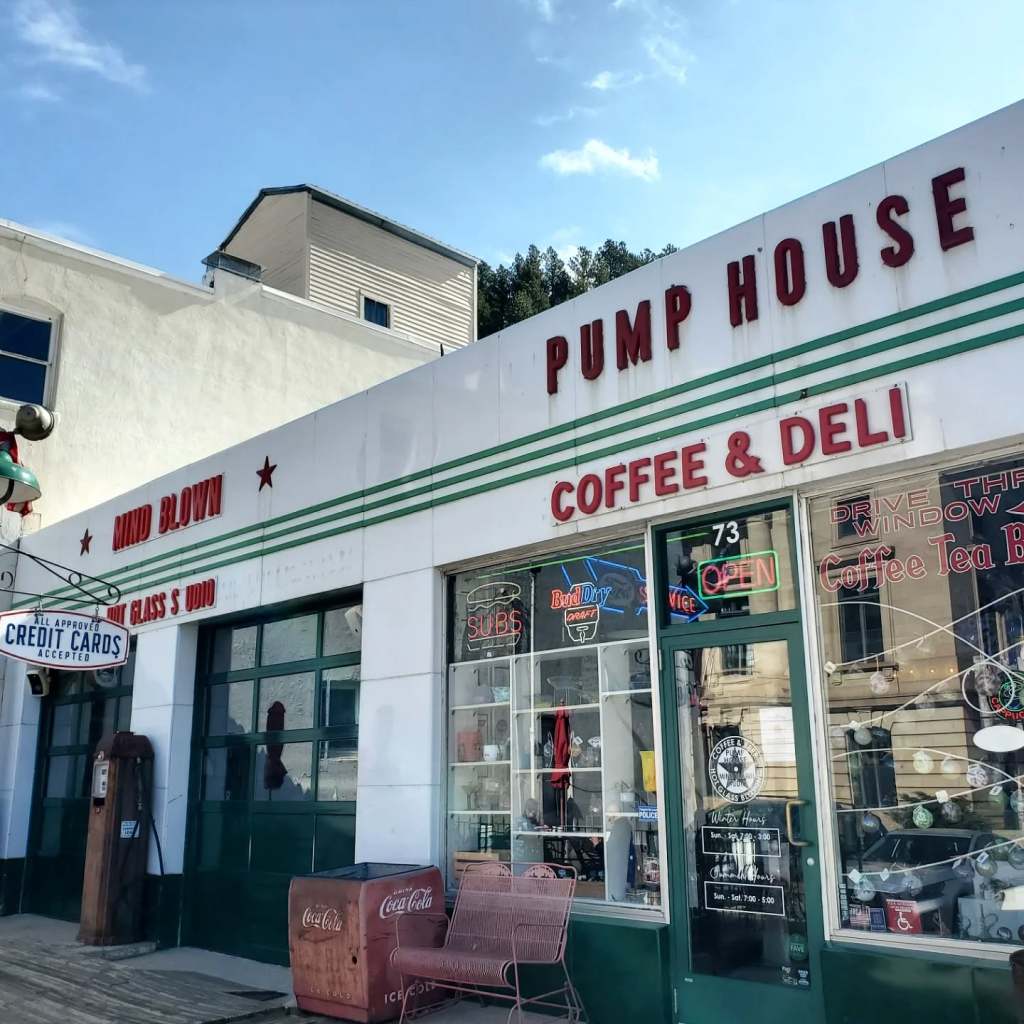
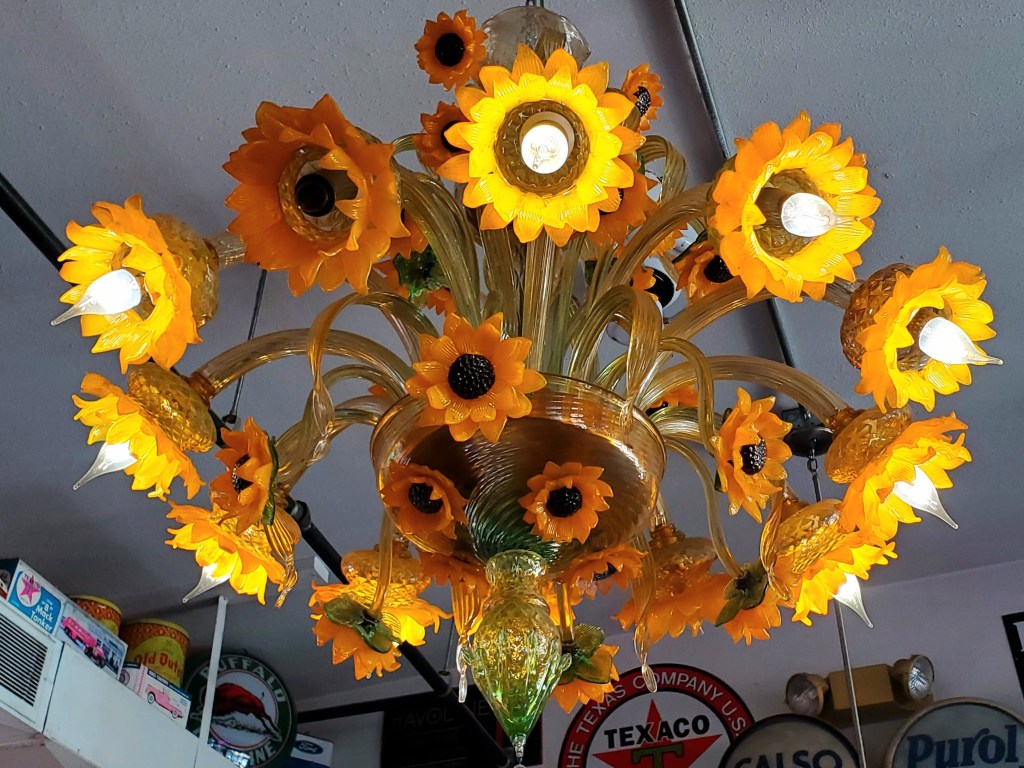
PUMP HOUSE COFFEE & GLASS BLOWING SHOP is one of the few places in downtown Deadwood that does not contain a casino or slot machine, and it is primarily a morning/afternoon spot.
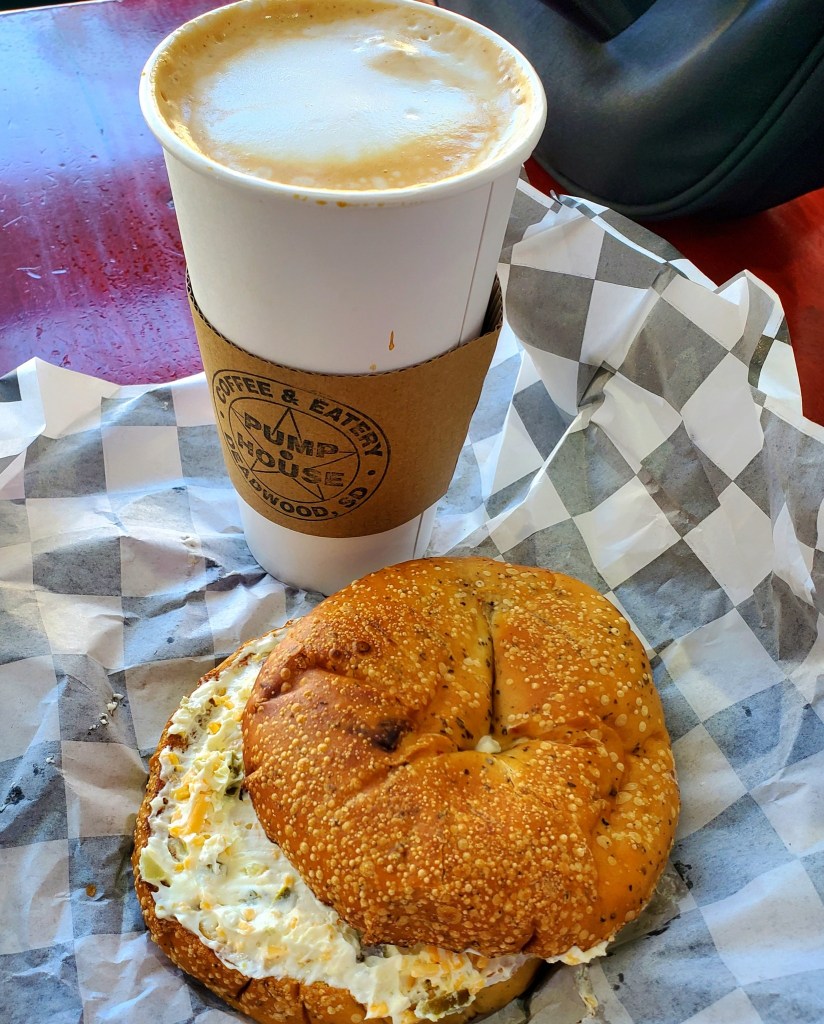
We devoured their jalapeño cheddar cream cheese bagel.
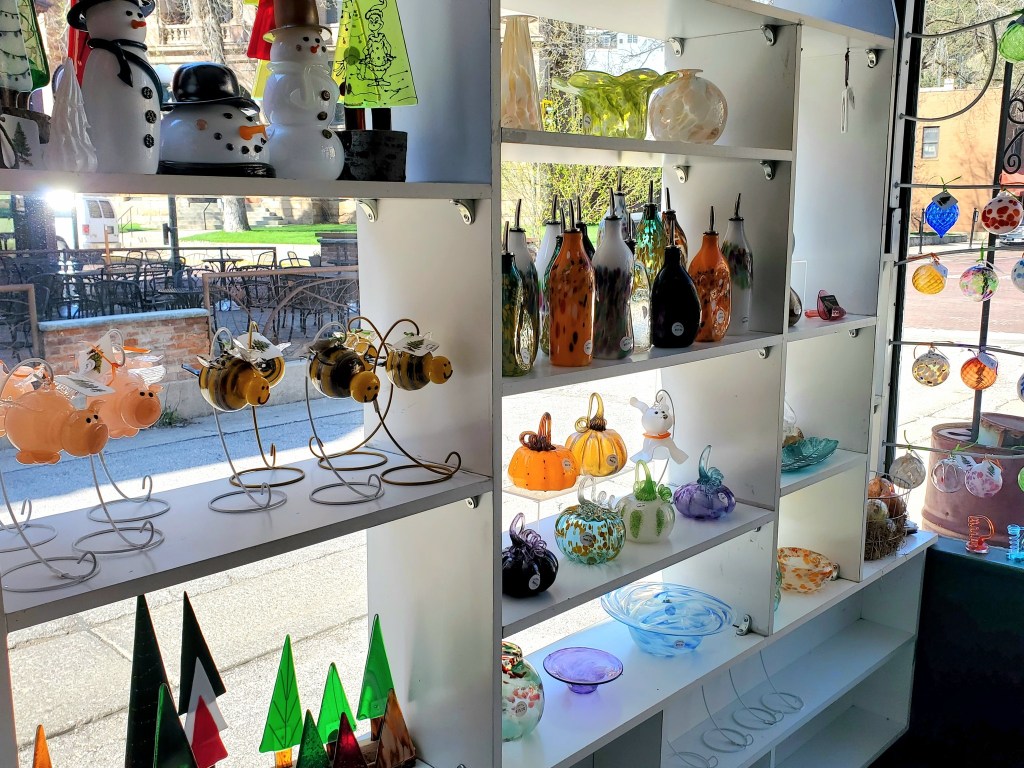
Be sure to check out the beautiful sculptures and other items on display and for sale.
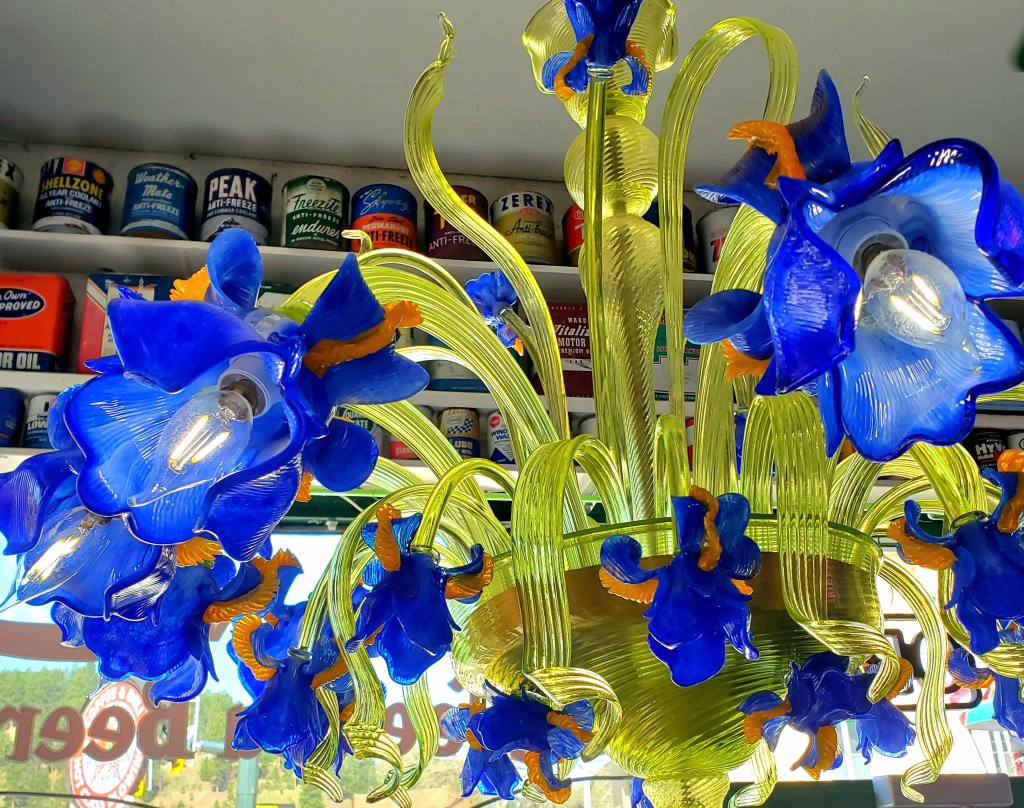
…like these chandeliers.
ODDS & ENDS
We noticed or outright learned a few things about Deadwood that do not exactly fit in the previous categories.
CHINATOWN was an ethnic enclave that developed right in the middle of the booming gold mining culture in Deadwood’s early days. This Chinatown was the largest outside of San Francisco and was larger than any others known in the US.
Chinese immigrants thrived on lower Main Street by developing a system of laundry houses. They were also known to take over abandoned mining claims, and their success in finding the treasures that had been uncovered or unnoticed by white miners caused a lot of undeserved friction against them.
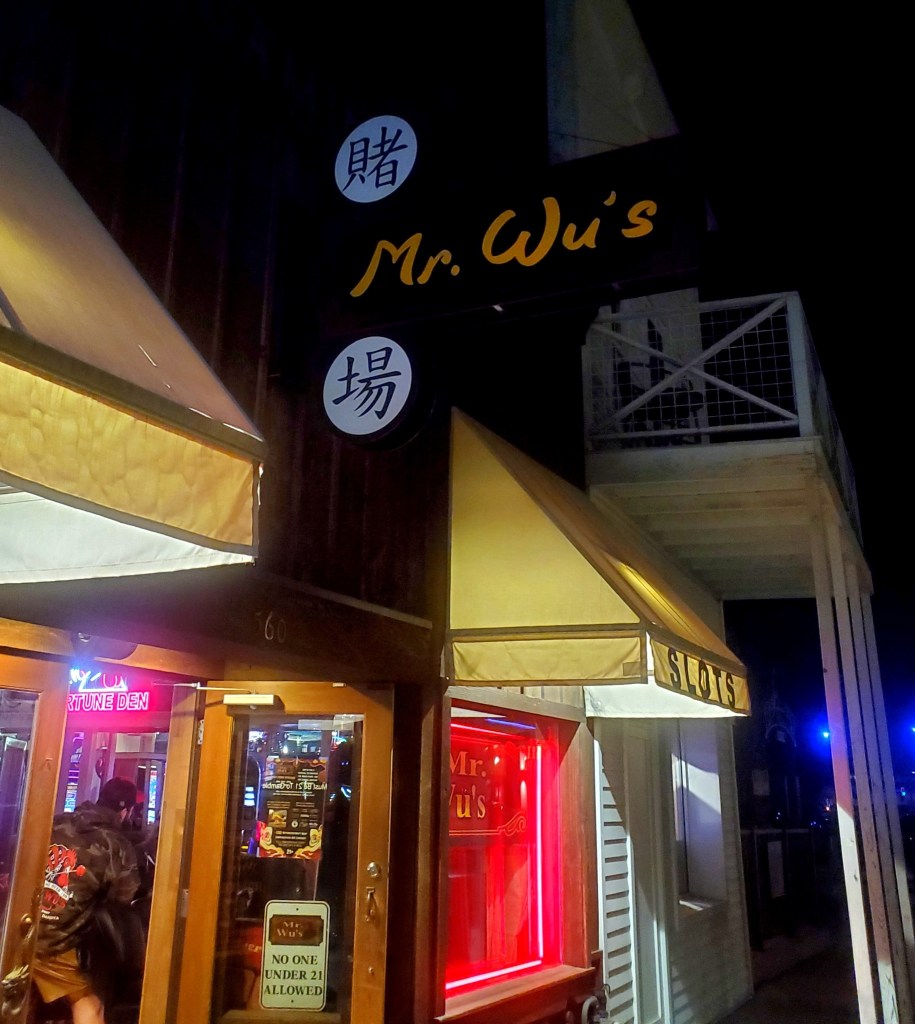
MR. WU’S is a casino and bar named after Wong Fee Lee, aka Mr. Wu, who was a beloved Chinese immigrant and notable businessman in Chinatown. Unlike his portrayal by an actor in the tv series, Deadwood, Mr. Wu was known for his kindness, philanthropy, and integrity.
Deadwood locals created a statue to honour Mr. Wu on Main Street, right after we visited.
Deadwood officials have hired the South Dakota State Archaeological Research Center to survey the area of historic Chinatown for artifacts before the construction of new buildings take place.
Check out this YT video:
https://www.youtube.com/watch?v=W_R7HpPGLjo
MOUNT ROOSEVELT FRIENDSHIP TOWER
After President Theodore Roosevelt died, his friend and Deadwood sheriff Seth Bullock joined forces with the Society of Black Hills Pioneers.
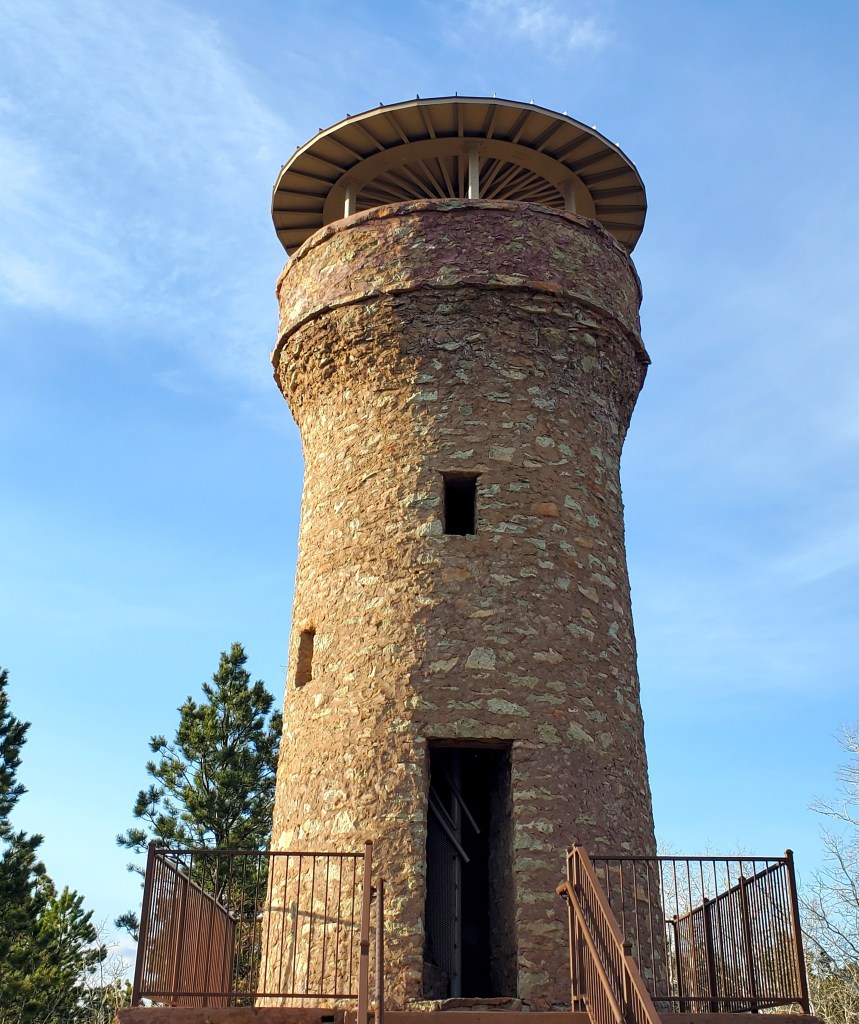
Together, they built the first known monument dedicated to Roosevelt and named it the Mount Roosevelt Friendship Tower.
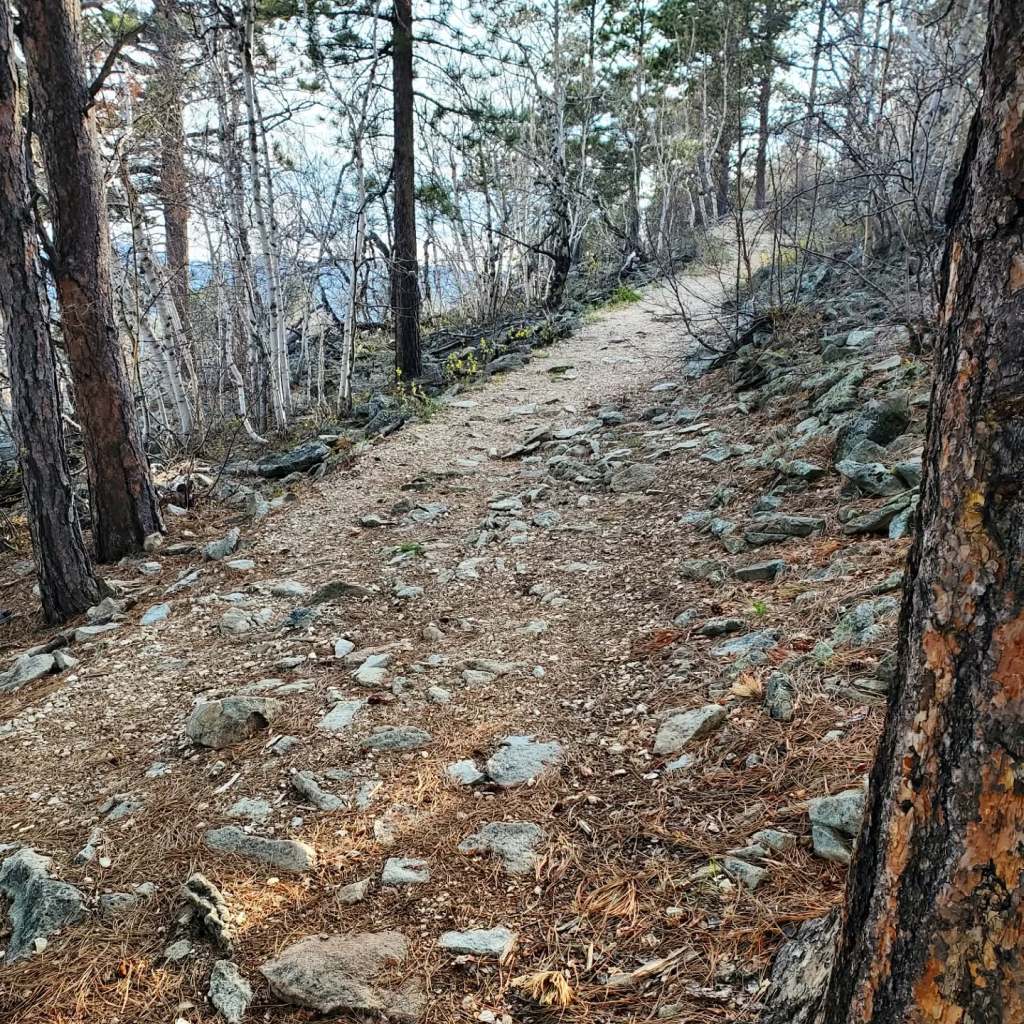
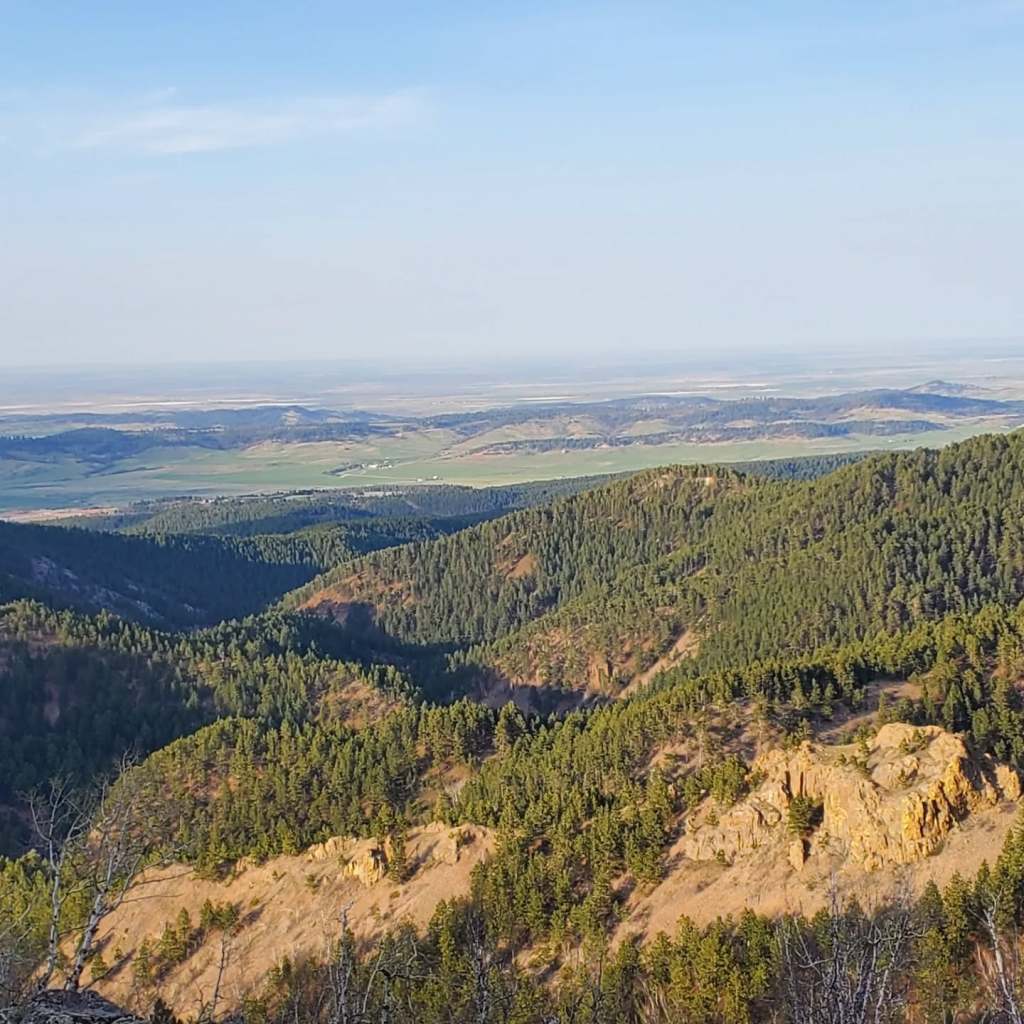
From the parking lot, the hike to the monument is less than a mile, but it has some steep spots.
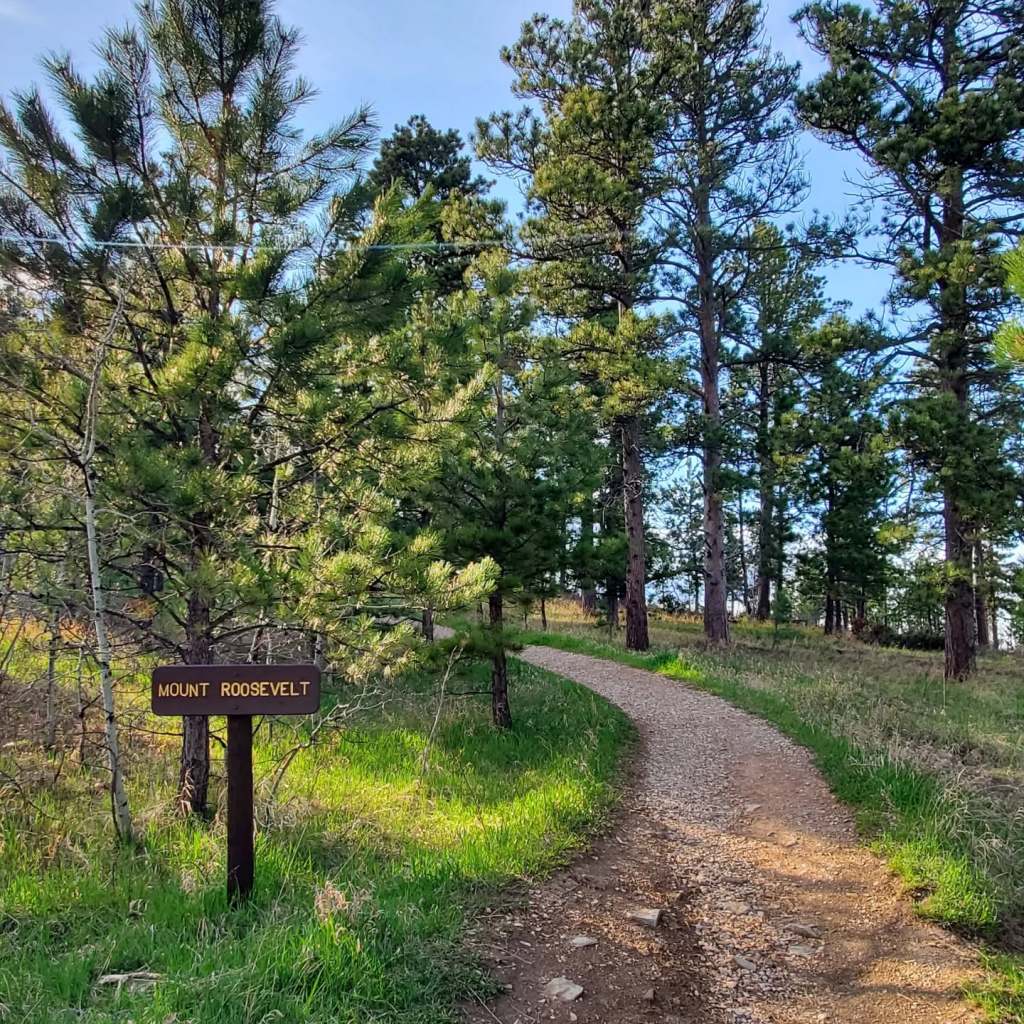
The view along the way is so lovely.
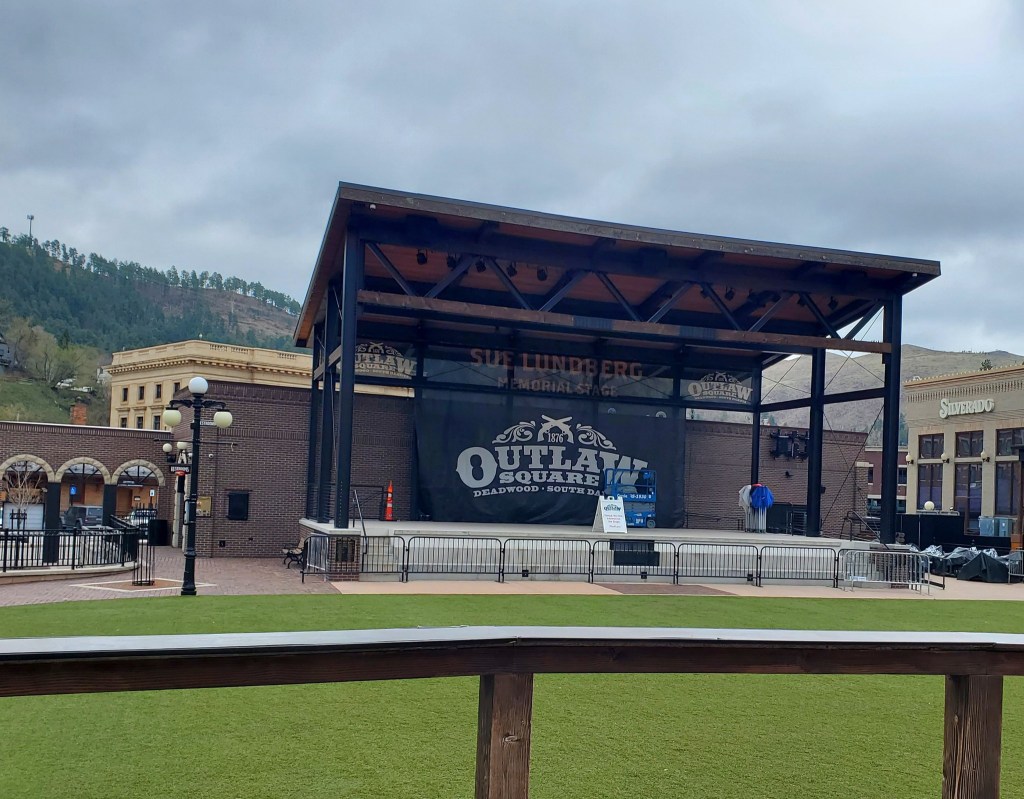
OUTLAW SQUARE is a wide open place in the middle of downtown where you can catch dramatic re-enactments and festivals, but it also seems to just be one of those rare places that you are allowed to exist without paying a fee or being harassed by law officials.
A speaker system blasts high energy rock music into the ether, day and night.
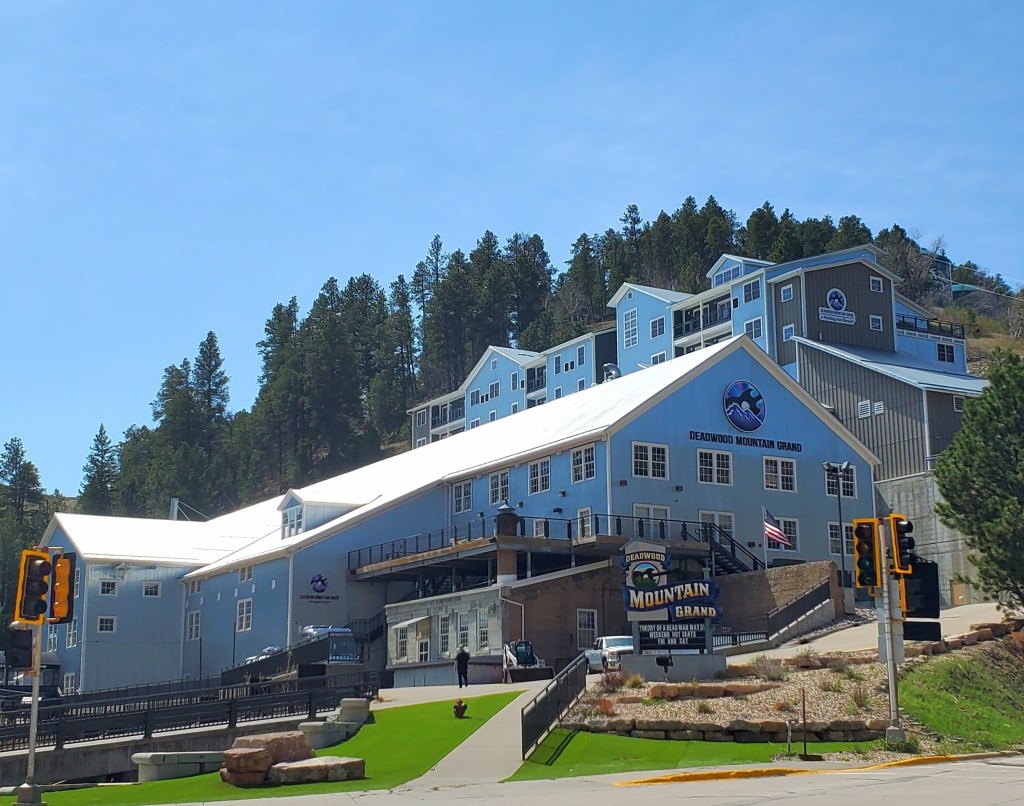
MOUNTAIN GRAND is a luxury resort hotel that is owned by a massive corporate chain now, but it used to be a slime plant.
Oh yes, a SLIME plant!
The Homestake Mine Slime Plant was built in 1906 to extract gold from a slime of crushed ore, cyanide, and mercury in water. I laughed every time we saw it, recalling scenes of Double Dare and You Can’t Do That On Television, but the slime once used at Homestake was certainly no harmless green flour jelly.
I do not know if we can call this a famous historical site, but keep that in your notes.
We saw SO much while we were in Deadwood that I can hardly believe we missed anything, but the City of Deadwood Archive & Archaeology Lab, the Broken Boot Gold Mine, a Deadwood Alive show, and a walk the Mickelson Trail remain unchecked on our list. Next time.
In the area for a while? Follow me through the Black Hills National Forest to the Crazy Horse Memorial, Mount Rushmore, the Badlands National Park, Wall Drug, Wind Cave National Park, Custer State Park, Spearfish Canyon, Rapid City, and Lead!
*************
© Fernwehtun, 2015- Current. Unauthorized use and/or duplication of this material without express and written permission from this site’s author and/or owner is strictly prohibited. Excerpts and links may be used, provided that full and clear credit is given to Fernwehtun and Fernwehtun.com with appropriate and specific direction to the original content.

 Fernweh, An Ache for Distant Places
Leave a comment