
Photo below is shared from RomaniaTourism.com which credits Sorin Onisor:
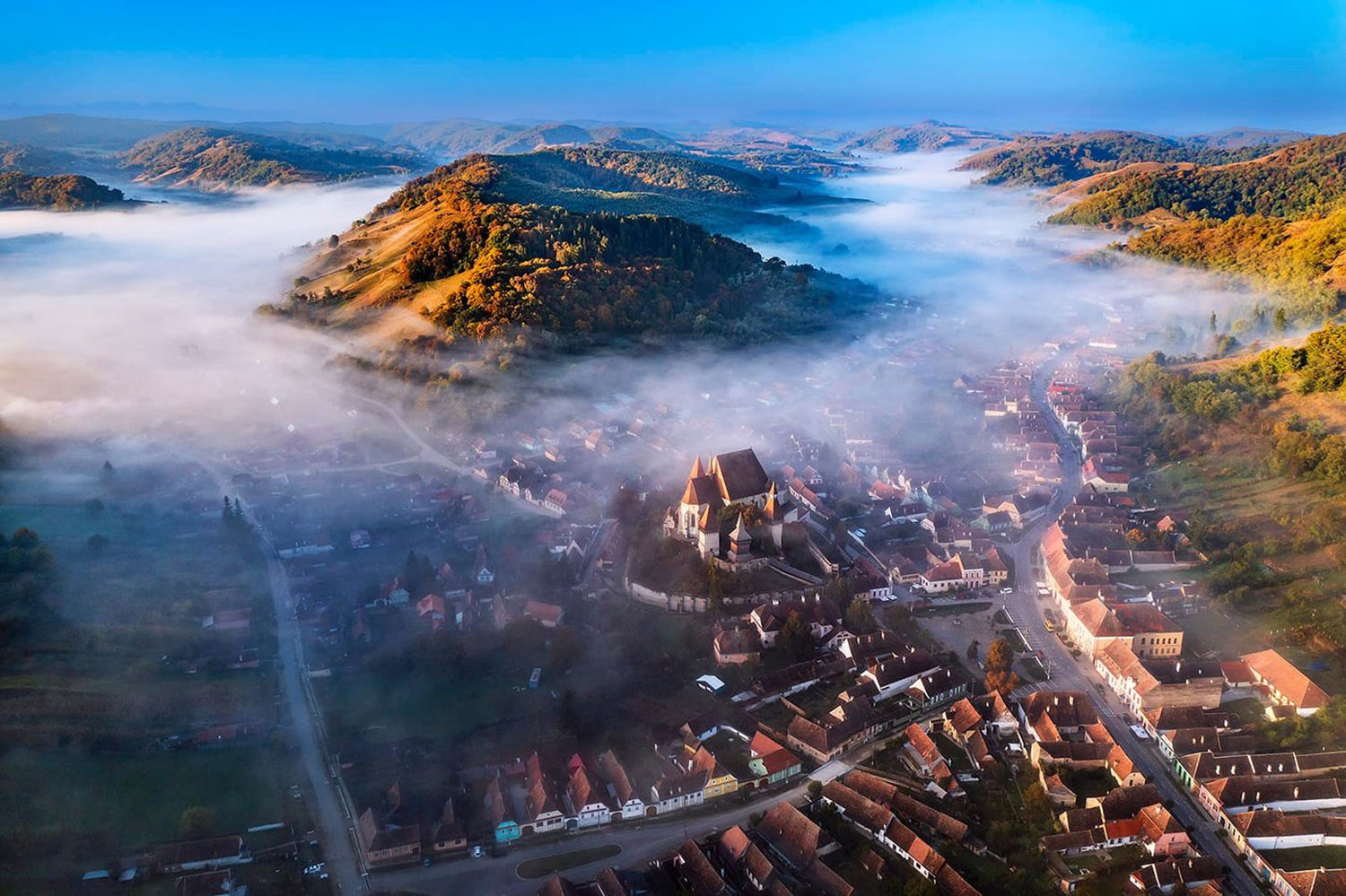
BIERTAN is a Transylvanian village in Sibiu County with around 1,500 people, founded by Saxons in the early 1200s.
It served as the center of religious activity of Transylvanian Saxons for nearly three centuries, between the 1570s through the 1860s. Biertan was also a hub for merchant commerce for a few hundred years.
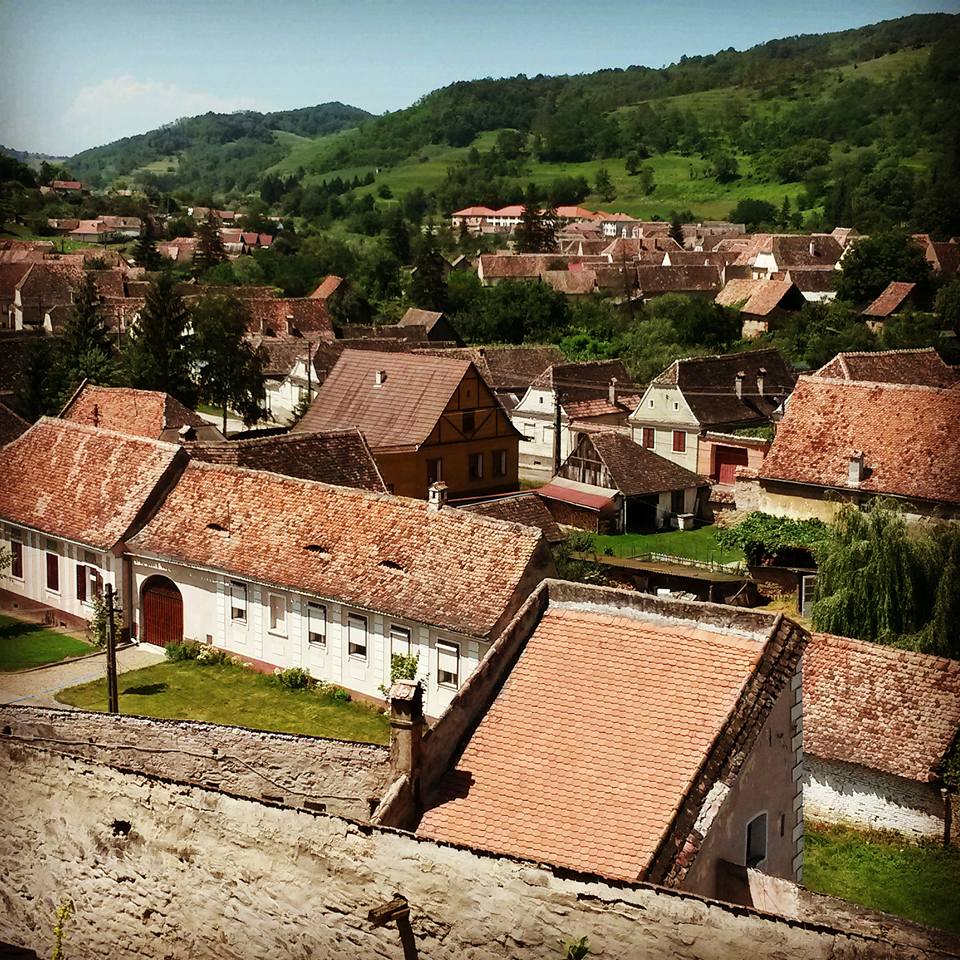
At one point, Biertan’s population grew to well over 5,000, until the nearby city of Sighisoara started blossoming. Most Saxons left after WWII, and even more fled after the Cold War ended.
People in Biertan still work their land with hand-driven machinery, travel by horse-drawn carts, and cross the worn cobblestones of the village market to sell their goods.
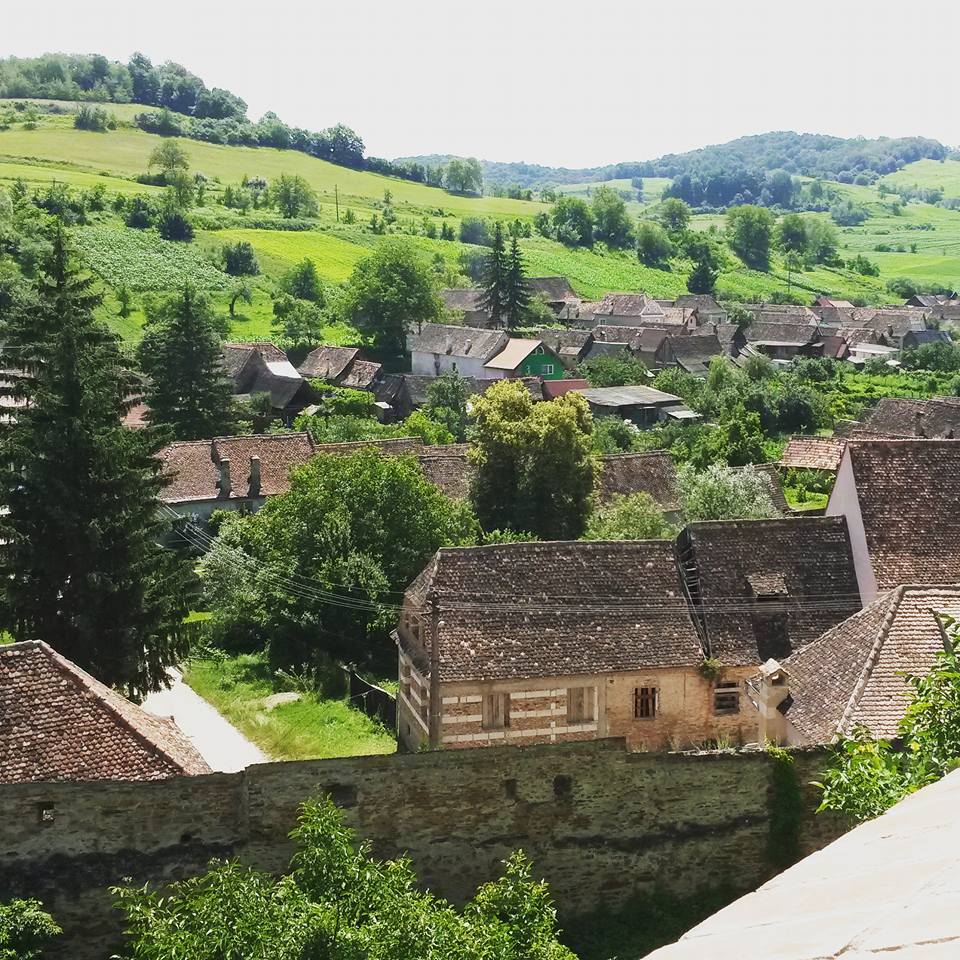
Rolling hills and vineyards surround the village. Biertan wine was once an extremely popular product around the region but now, only a small number of farmers and winemakers continue to produce.

Biertan has been a UNESCO World Heritage Site since 1993 and has been the home site of the annual GetTogether festival for descendants of Transylvanian Saxons that now live all over the world. This is the largest gathering of its kind.
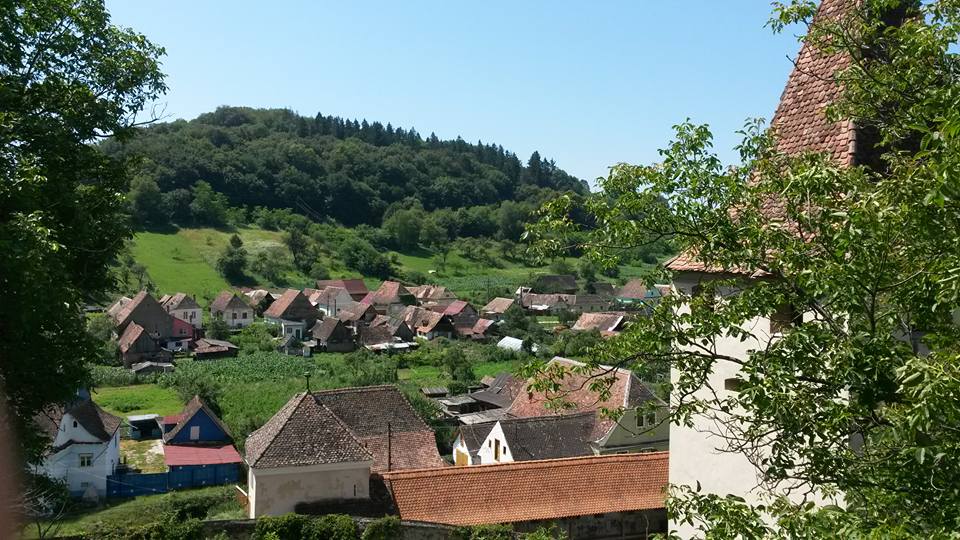
BIERTAN FORTIFIED CHURCH
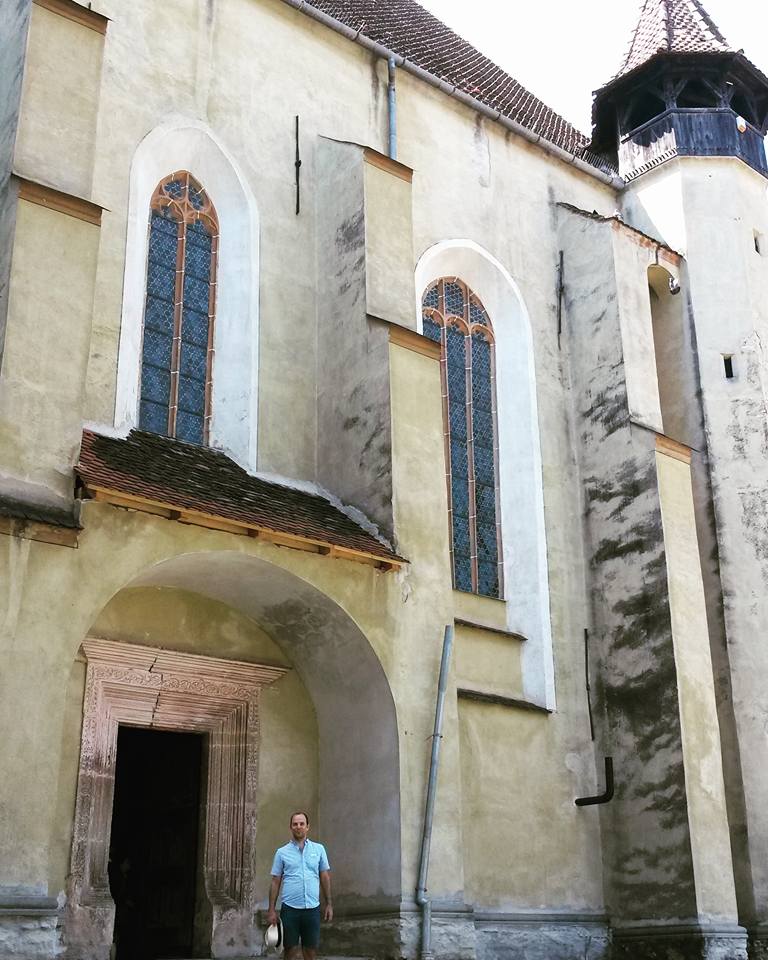
Biertan is most famous for its fortified church, one of the largest and most stunning in all of Transylvania.

Biertan Church has been named a historic monument by Romania’s Ministry of Culture and Religious Affairs.
Construction first began between 1490 to 1524 but various additions continued until the late 1800s. This was originally a Roman Catholic church, though it later became a Lutheran church after the Reformation period.
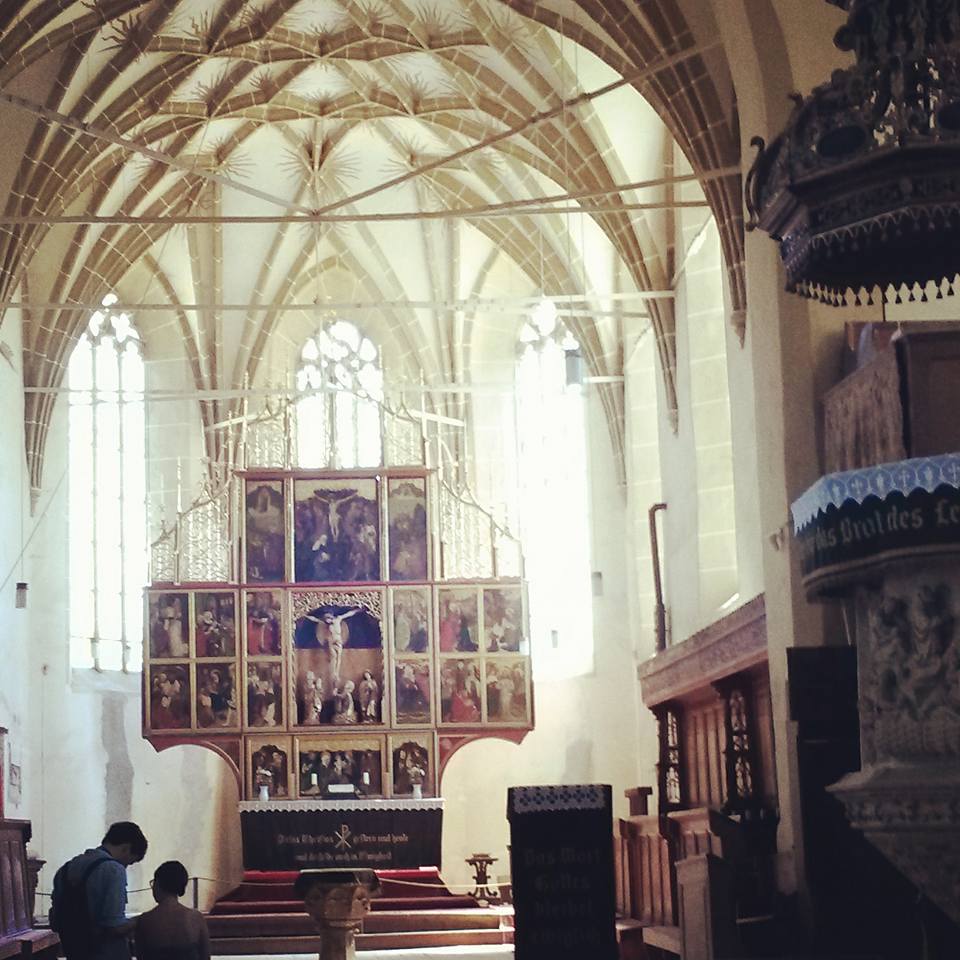
Inside the church, there are nearly 30 mural panels painted on its original altar, the largest in all of Transylvania. The paintings are said to have been inspired by the Scottish Abbey in Vienna.
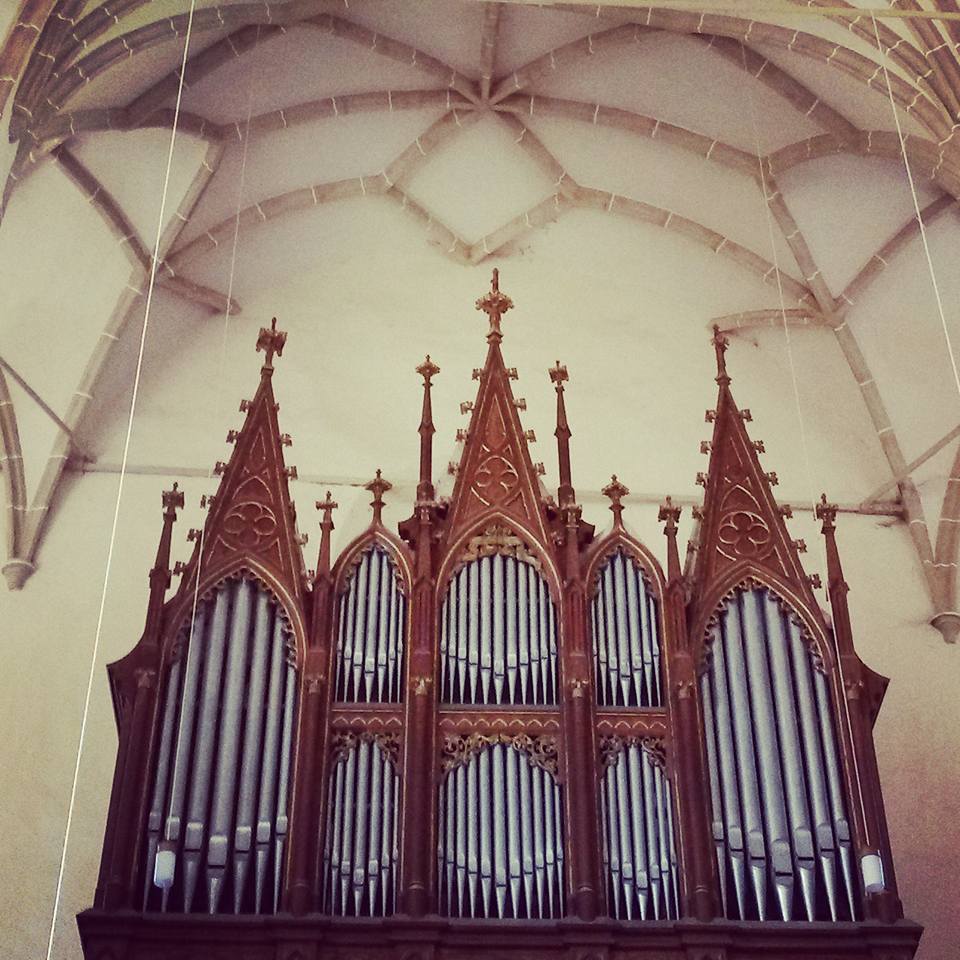
This 1869 organ has nearly 1,300 pipes and 25 registers that bellow and hum when played. Just as the church did for many of its features, officials turned to a company in Vienna to build the organ.
The original painted and carved pews, and the Bishop stools, are still in tact on either side of a massive stone podium.
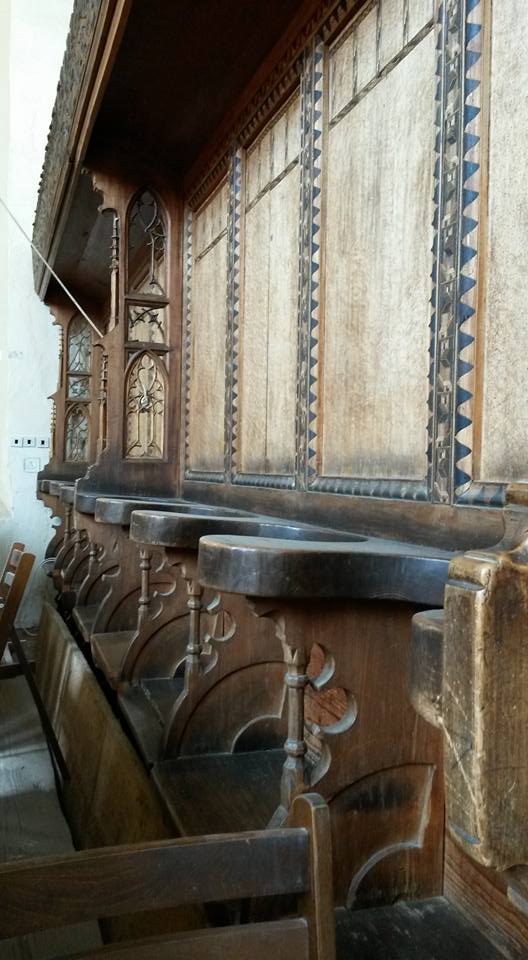
Central to its sanctuary, a large monument is inscribed with the old Saxon German phrase “I am the Bread of Life.”

Massive stone carvings commemorate the former Bishops of the church and line the walls of an inner chamber.

Believe it or not, the most popular tourist draw in Biertan is to view the door of its church sacristy.
The lock on this door was designed in 1515 and features a deadbolt lock that was so complex and impressive, it won an award at the Parisian World Fair in 1889.
With one turn of the key, the gears and inner workings of a 19-point locking system are set in motion, making it impossible to penetrate.

The fortified walls surrounding Biertan’s church are an incredible 35 feet high and are made of three layers.
Its innermost layer shapes the Romanesque walkways that lure you around each turn through sculpted archways and trellises.

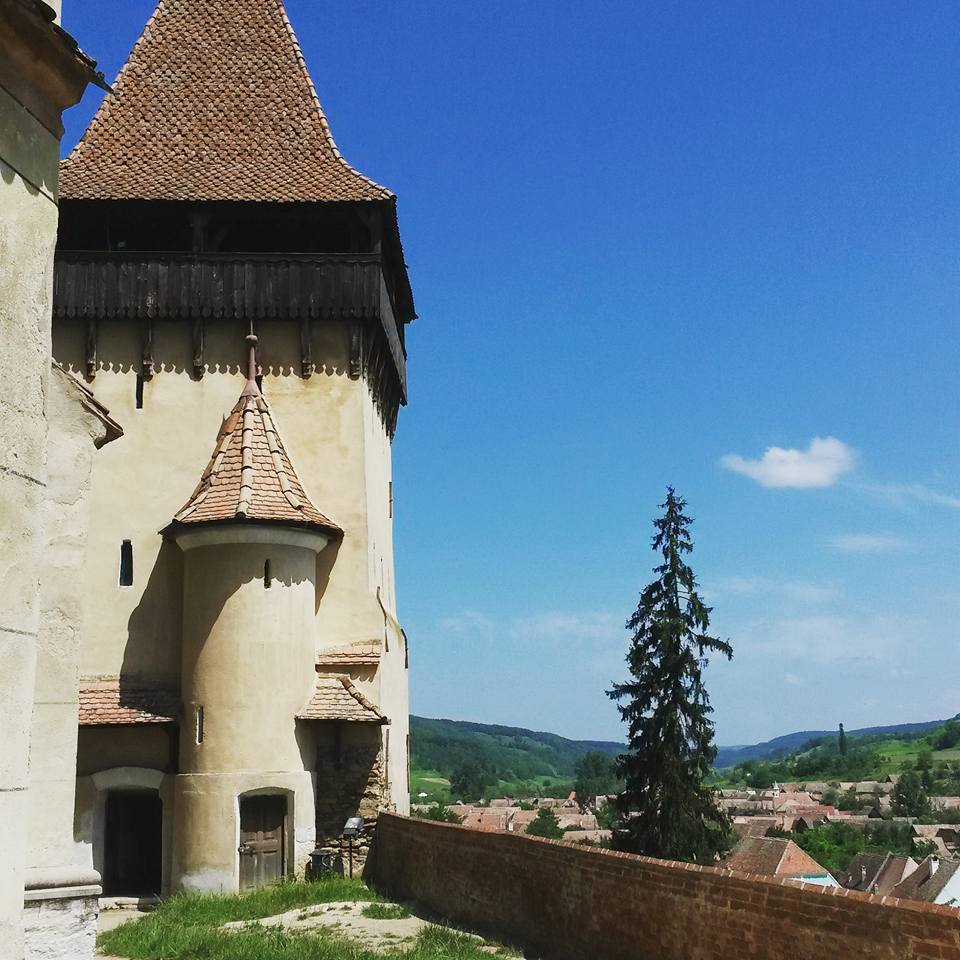
Each wall is connected to the next by a system of towers and gates. Invaders hardly stood a chance against the church with protection like that.

Overhead, interior walls are covered in artisan tiles and multiple species of ivy that creep in out of all the dark spaces.

Out in the courtyard, and from various viewpoints within the church, you can see the historic towers spread out around the village.

The Bell Tower and Clock Tower are two of the most impressive ones among nine total.

Marriage Prison Tower
For me, the most interesting tower is the Marriage Prison Tower. There is a legend that when a married couple petitioned for divorce, they were forced to spend weeks locked inside the prison chambers.
Together they shared one, just one, of what little items they were given; one bed, one spoon, one chair, one pillow, one blanket, and so on. The tower now has a small set up with mannequins to drive the point home.
I am not sure if it was intended more to emphasize that in the eyes of the law they are considered one, and so it should continue to be, or if it was to remind them how dependent on each other they are in this world.
Maybe it was for something else entirely.. Either way, only one couple is documented to have actually went through with the divorce over a span of a few centuries.
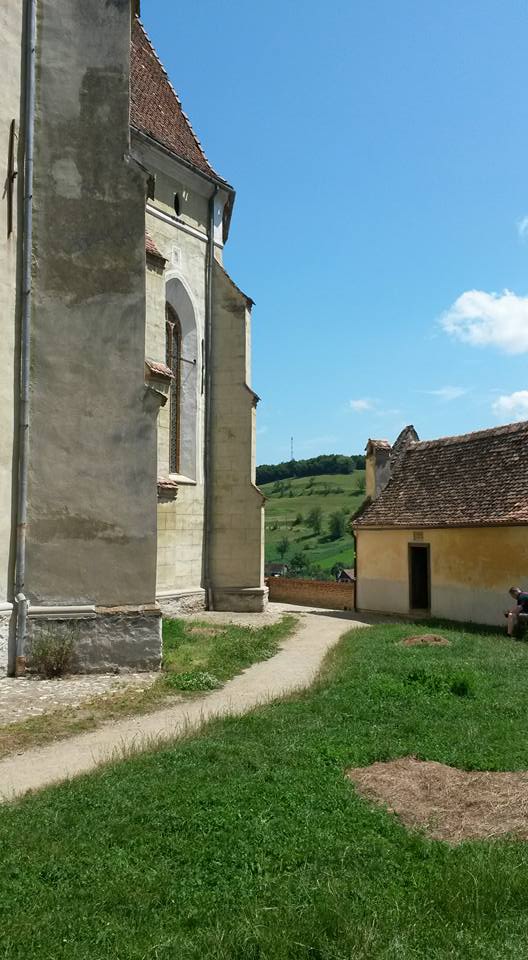
After Biertan was made a UNESCO World Heritage Site in 1993, six other nearby villages with fortified churches were added and enlisted to form a type of complex that they refer to as “the” commune.
I am in disbelief at how little there is to be found online about this outside of Romania’s official tourism website and a few crowdsource sites like TripAdvisor.

Although most of them are originally Saxon (and one Hungarian) and would be more appropriately called their original German (or Hungarian) names, you will find them on Romanian maps and tour guides by their Romanian names of Câlnic, Dârjiu, Prejmer, Saschiz, Valea Viilor, and Viscri.
Fun fact: Biertan was featured on two postage stamps in 2011 as a cultural collaboration between Germany and Romania.

Biertan is not difficult to reach. We hired a car from Sighisoara, and the drive was around 25 minutes. Walk along the cobblestone path, climb the stairs past the museum and book/souvenir shop, and up you go. Here is an official link with video and photos.
In the area for a while? Follow me to Sighisoara and the Szekelyfold!
*************
© Fernwehtun, 2015- Current. Unauthorized use and/or duplication of this material without express and written permission from this site’s author and/or owner is strictly prohibited. Excerpts and links may be used, provided that full and clear credit is given to Fernwehtun and Fernwehtun.com with appropriate and specific direction to the original content.

 Fernweh, An Ache for Distant Places
Leave a comment