

CUMBERLAND GAP
Cumberland Gap is known as “America’s first great gateway to the West” and is situated in the Cumberland Mountain ridge of the Appalachian Mountains.
This region was inhabited by many Native American tribes long before Daniel Boone, Thomas Walker, and the like “discovered” it in the 1750s.

Cumberland Gap has a vast history of bloody battles between Native Americans and European settlers, combined with horrors of being a mining town that has led to an extensive collection of ghost stories and reports of hauntings.

Cumberland Gap territory encompasses the meeting point of Kentucky, Virginia, and Tennessee, and its status of being the only continuous pass in the Cumberland Mountains has historically made it a highly desired area to control.

CUMBERLAND GAP NATIONAL HISTORICAL PARK
Cumberland Gap is most famous for the Cumberland Gap National Historical Park, officially managed by the National Park Service. The park covers more than 14,000 acres and has protected caves, historical settlements, and more than 80 miles of trails.
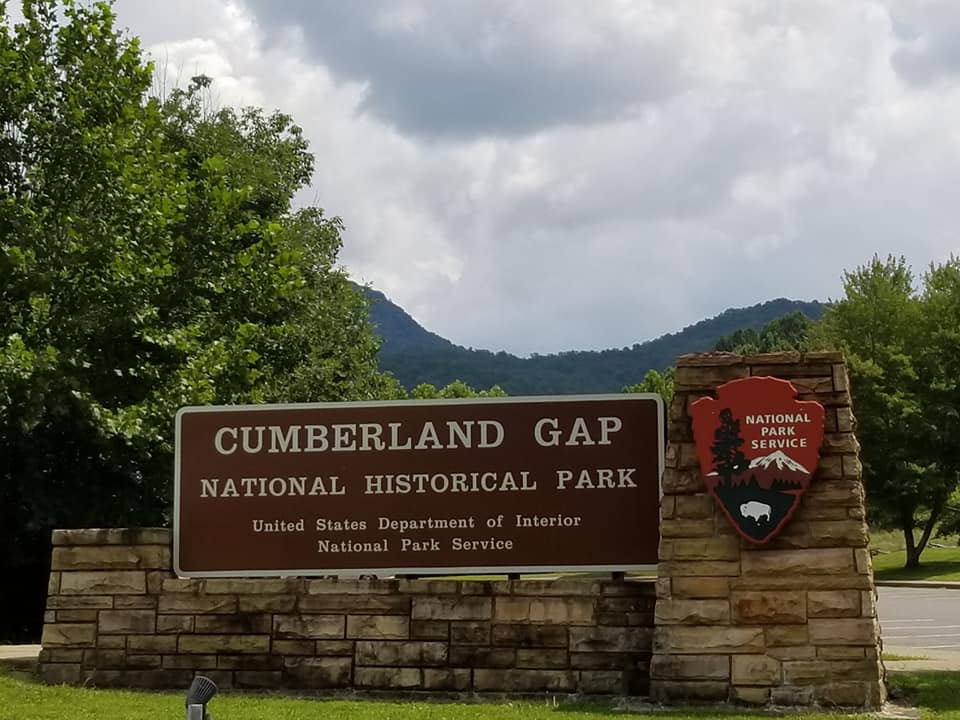
Pinnacle Overlook is the most popular tourist stop in the park. A simple, flat parking lot connects with several broad stairs that rise past the public restrooms. Just follow the sign.

Before you go: there is plenty of parking and the walk to the overlook is not steep or overtly dangerous. The overlook has handrails and there is a public restroom where the parking lot meets the stairs to the path.

Follow normal mountain precautions like bringing water and wearing sunscreen and proper shoes. We forgot all of those things and I wore flip flops, but don’t be like us.
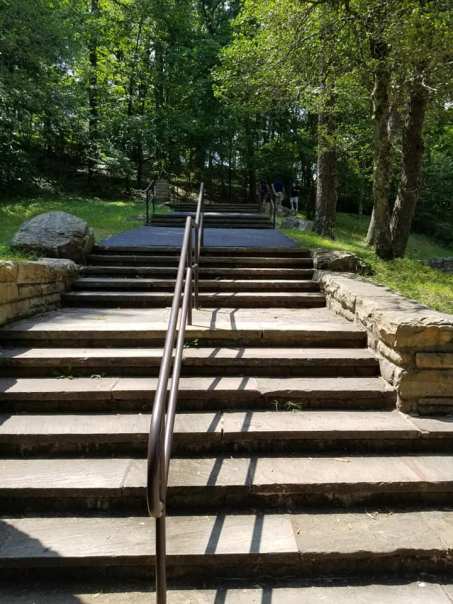
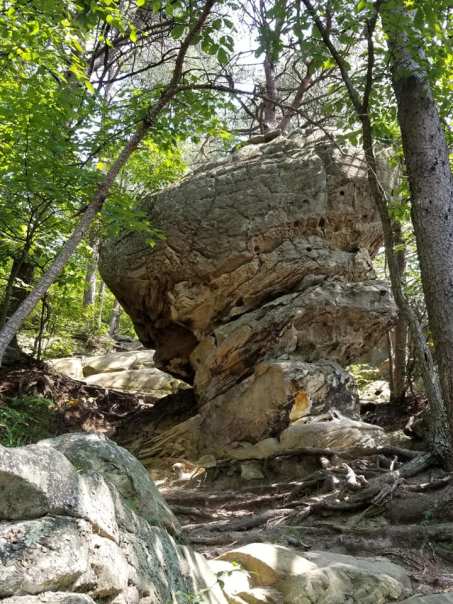
While walking the trails, watch out interesting rock formations and wildflowers.
Cumberland Gap is home to several endangered species of plants and animals like the Indiana bat, Northern Long-eared bat, the White fringeless orchid, and Blackside Dace fish.

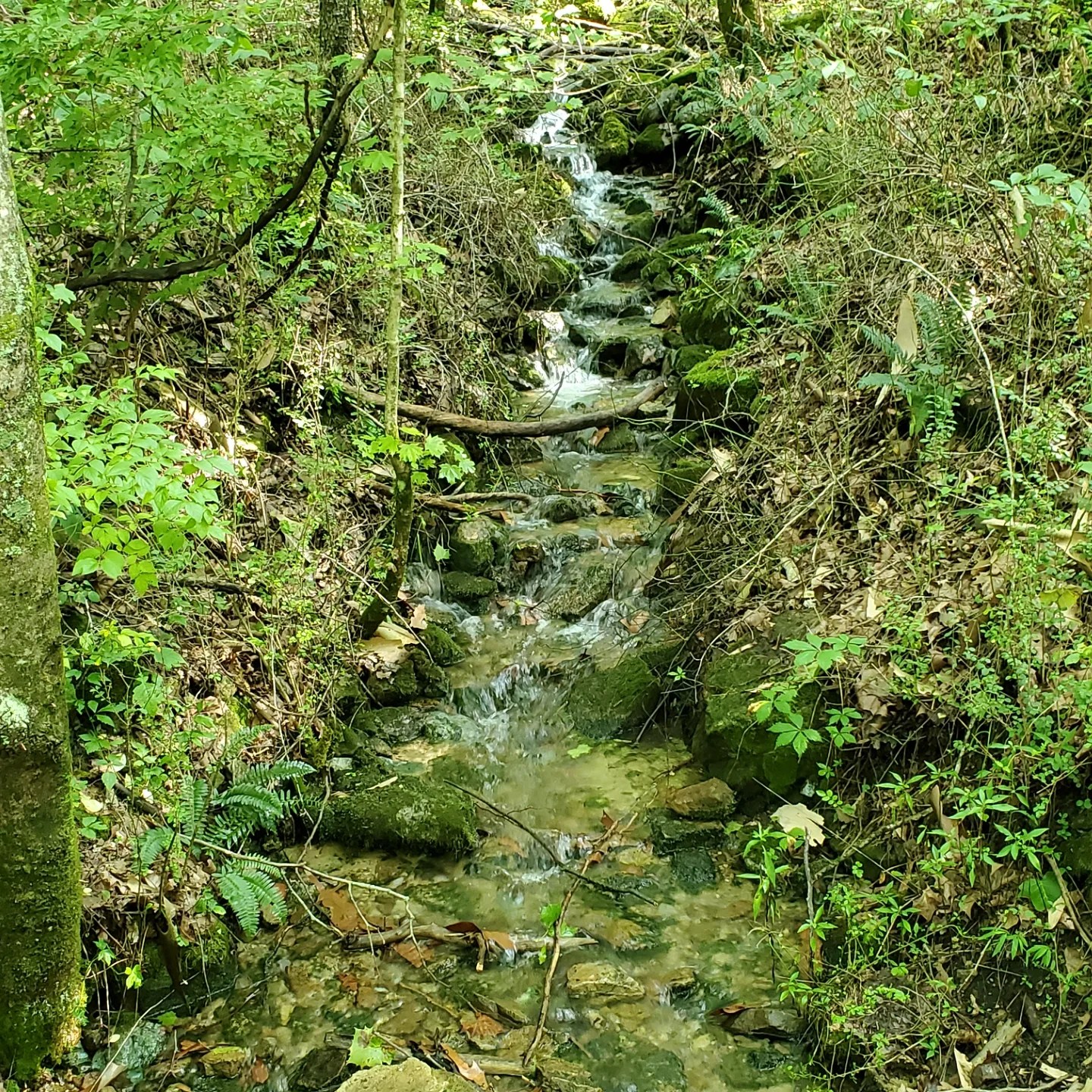
Lots of quiet creeks and side trails lead visitors to the overlook.
From the main path, you can access other trails like Fort McCook and Harlan Road Trails. Reserved ranger-guided hikes are also available and you can view the full hiking and camping map here.

The overlook itself is a spacious flagstone area with lots of room to check out the panorama view.

Once you reach the outlook, the view is spectacular.

The Pine Mountain Thrust Sheet and Pineville Gap are two geological structures that helped create this unique region.
You can learn more about the geology and biological history of Cumberland Gap here or the National Parks Services geological guide here.

IRON FURNACE
The Iron Furnace is another popular place to visit in Cumberland Gap.
This blast furnace was built out of large sandstones in the early 1800s during a boom of iron and limestone mining.

There are safety bars over the entrance but a camera trick allowed me to capture this view through the top.

The furnace was originally called Newlee’s Iron Furnace and, beside it, a great waterfall flowed down the mountain to service a hammer mill.
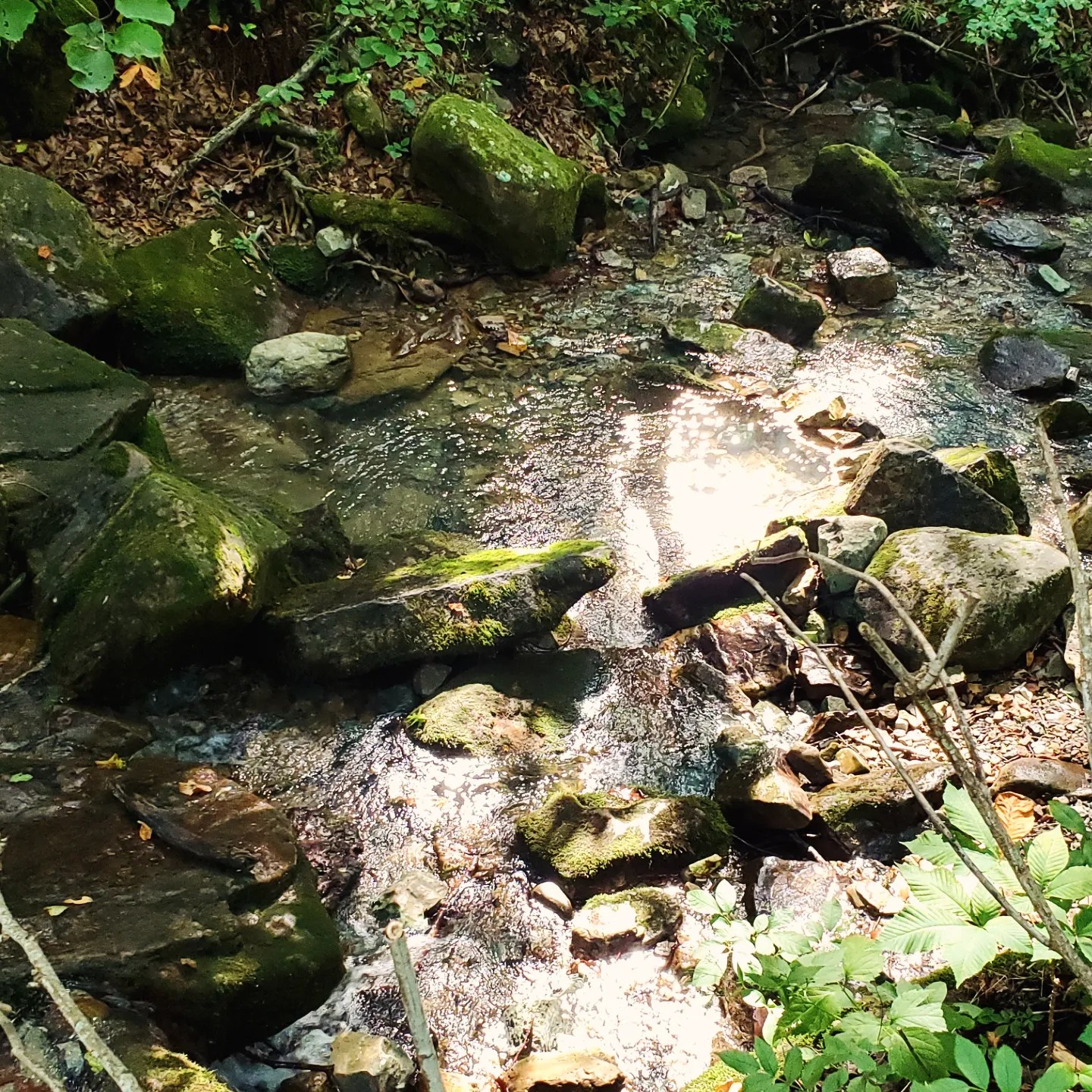
I remember my mother telling me that she used to go swimming in the waterfall when she visited as a kid, and that the water was so fresh and clean back then. In the early 90s, I was still able to wade around in a shallow basin.
When I visited a few years ago, the waterfall had been dried out for a long time and the rock bed was full of trash, but in 2024 it appeared to have been cleaned up and had enough water to sit in and enjoy.
There are several creeks near the Iron Furnace that seem to be doing just fine.
CUMBERLAND GAP TOWN SQUARE
Cumberland Gap is synonymous for the town proper just as much as it is for the Pinnacle Overlook.

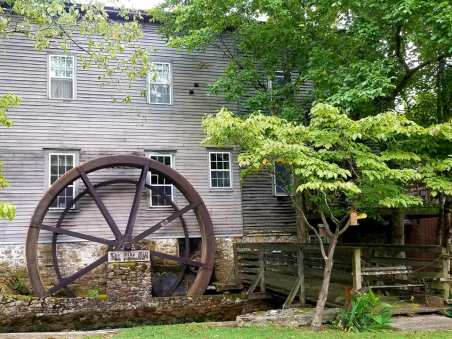
The Olde Mill Inn Bed & Breakfast has been welcoming guests for quite some time now in this renovated old building, with its original water wheel still on the side.

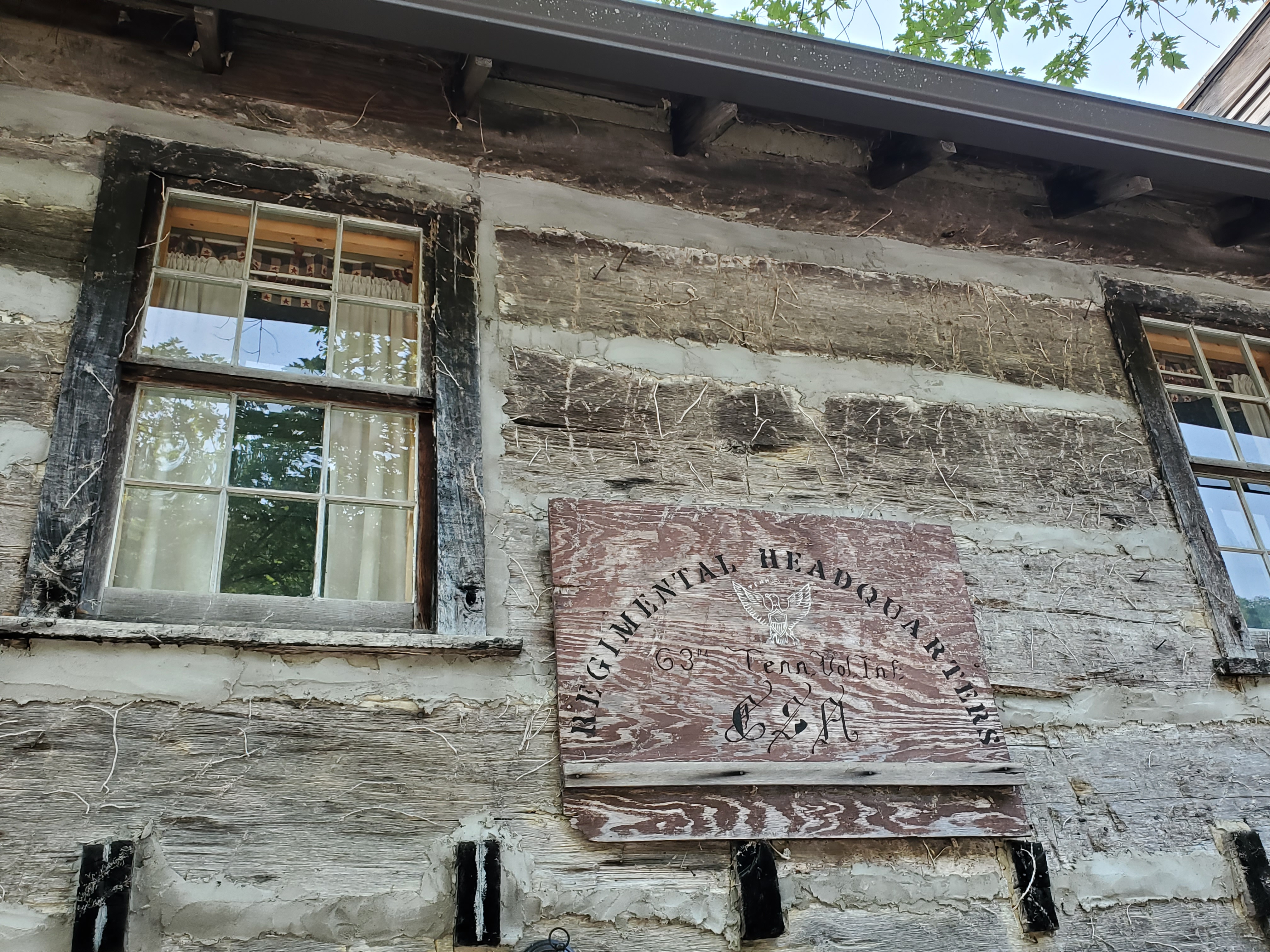
Less obvious is the Regimental Headquarters sign on its front exterior that leaves me with many questions.
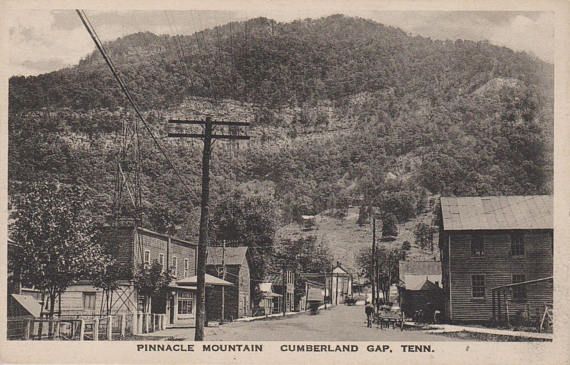
Twenty five years ago , the small number of businesses open were pretty much found one central block. I found the image below on Pinterest with no author or origin listed, and I am pretty certain the building on the right is what is now the Olde Mill Inn.
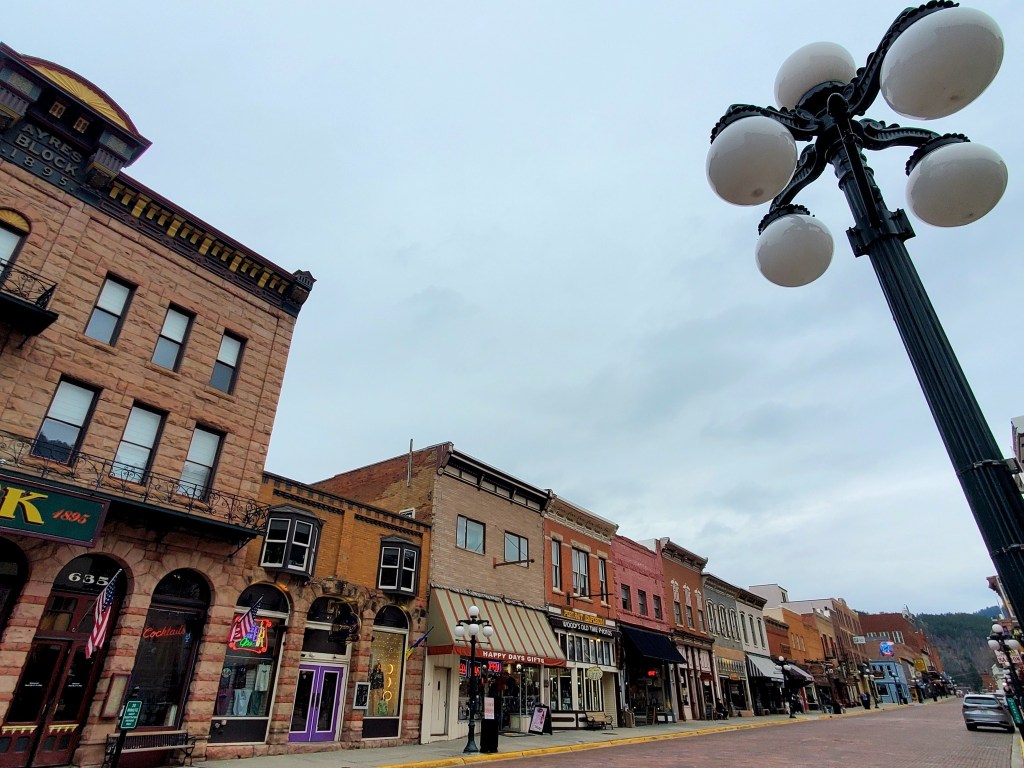
Now the town has expanded into several blocks lined with antique shops, a bar, coffee shops, cafés, a gallery, commissary, a bed & breakfast, and a bicycle museum.

At Gap Creek Coffee House & Café, the staff was on point and the chai, latte, and smoothies were all delicious. This café is a known hotspot for the Lincoln Memorial University college students and many active / athletic types.
My favourite part about this location is the large dog-friendly spaces outside, near the creek, and under the shade trees.

Hill Folk is a grocery and herb shop that, in 2024, just celebrated its second year in business.

In an area where healthy, fresh food and herbs can be sparse if not inconvenient, this place is doing the lord’s work. We could not resist buying bushels of hand-picked cherries, maple sap soda, and other treats.

As a practicing herbalist myself, I recognized that many of the brands they carry are legit.

The owner told me that their bulk herbs and farm goods are all locally-sourced by their own hands or from others in the community.

There is usually some type of Farmers Market or craft fair or local festival going on in the town square, and more cute shops keep opening in the old historic buildings.
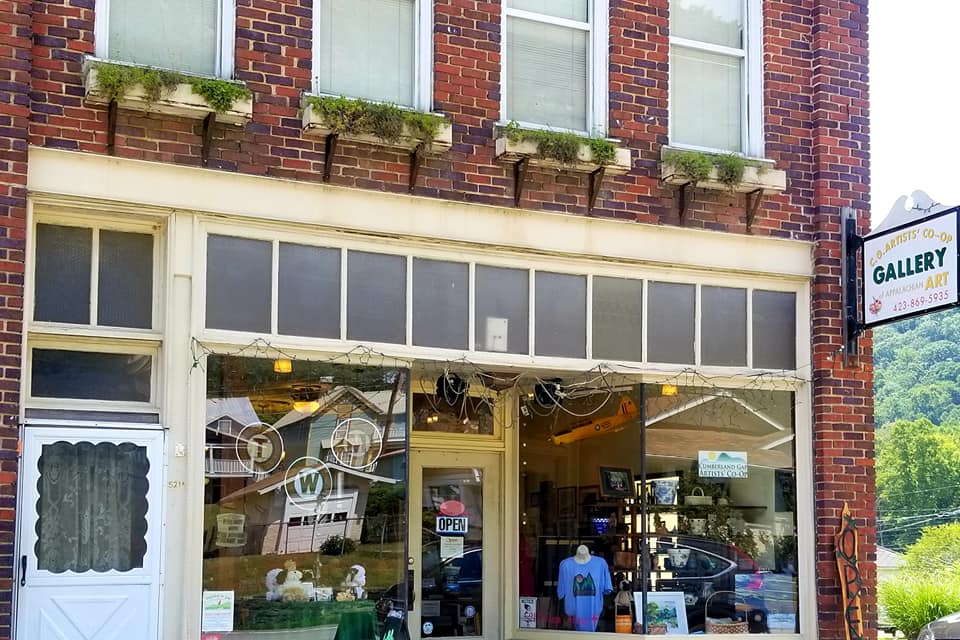

Pick up a new treasure at Whistle Stop Antiques and Gertie’s Commissary while you are there.

The Visitor Center doubles as the Cumberland Gap (C.G.) Artist’s Co-op, a gallery of Appalachian ants and crafts.
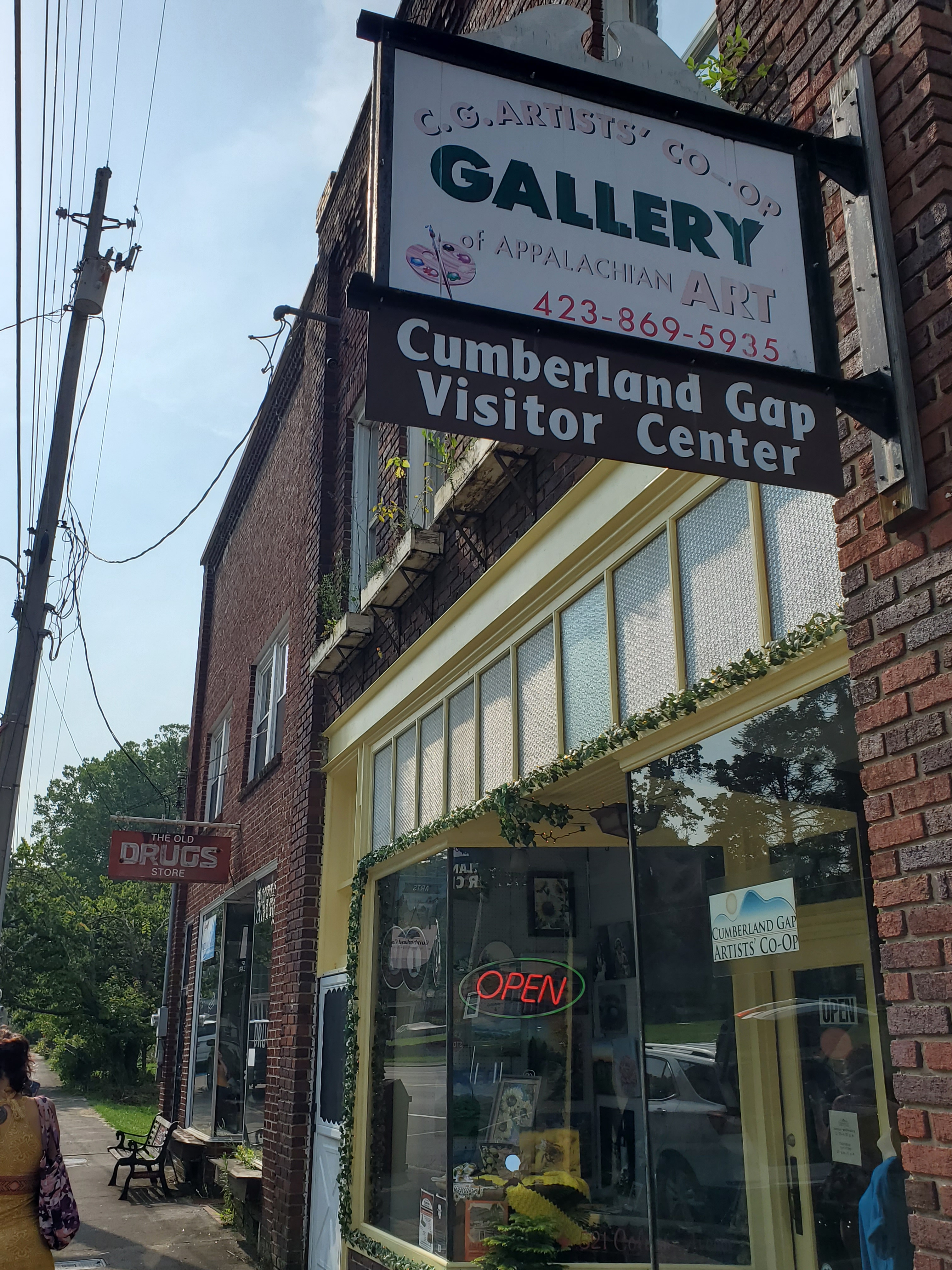


The Co-op shares an attractive building with its neighbor, the Old Drugs Store. This former pharmacy is currently an antique store, but has no website.

Things seem to be pretty informal there all around, actually. There is a sign on the door that typically displays hours of operation, but theirs has a note that says “If I’m here, I’m open. If I’m not, I’m not.” Fair enough.

The Little Congress Bicycle Museum has been drawing visitors since 2003, and sits in a building that is in much better shape than many of the surrounding structures.
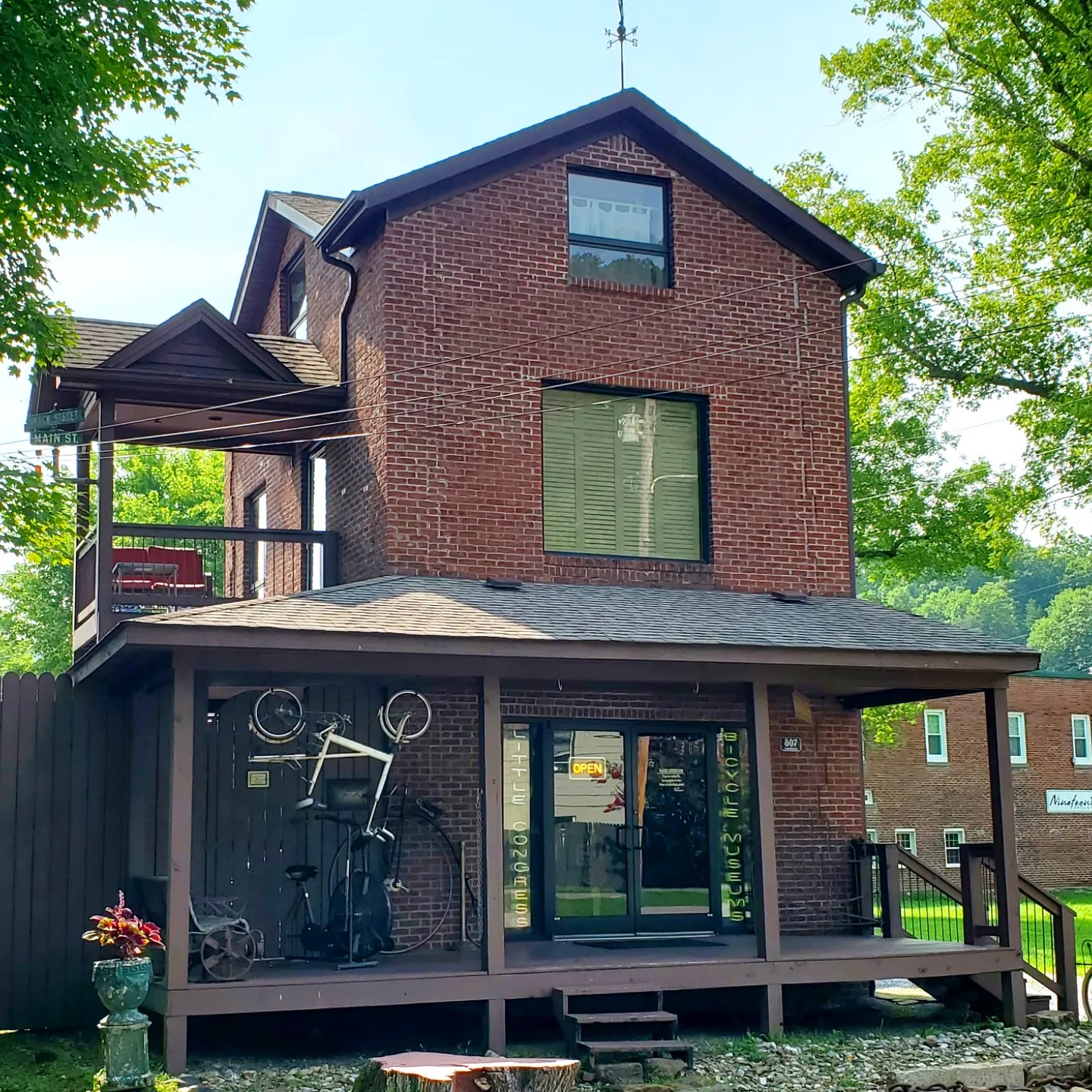
Around the edges of town are some really lovely buildings like this church, and multiple Victorian and Colonial houses.


I don’t remember much from my very first visit to Cumberland Gap as a child except the Iron Furnace, wading across the waterfall, and the tiny town center that was condensed into one building that served as the post office, bank, and other civil purposes.

City Hall has apparently been in this building since 1925 but I do not recall seeing any activity there during a handful of visits.

The Russell Berkau Memorial Park is dedicated to a man who moved into Cumberland Gap in 1902, purchased and revived the Pinnacle Wagon manufacturing company, and eventually branched out to becoming the first Ford company dealer and distributor of fertilizer and other agricultural supplies. among other accomplishments. It is unknown if he remained in Cumberland Gap until his death in 1936.
The park has a shelter that has been painted somewhat recently and serves as a stage to host live music and theatrical events.

There are more interesting sites and historical markers everywhere you look in Cumberland Gap. It brings me joy to see a place that was commonly known as a dilapidating old mine town start to take on new life. Kudos to everyone who has worked hard to beautify a place that was once defined by its destitution.
WHEF (Witnessing History Education Foundation) created a documentary about Cumberland Gap and the real story of its famed citizen, Daniel Boone.
In the area for a while? Follow me to Mamawfest in Harlan, Lexington, or Louisville!
*************
© Fernwehtun, 2015- Current. Unauthorized use and/or duplication of this material without express and written permission from this site’s author and/or owner is strictly prohibited. Excerpts and links may be used, provided that full and clear credit is given to Fernwehtun and Fernwehtun.com with appropriate and specific direction to the original content.



 Fernweh, An Ache for Distant Places
Leave a comment