

CAVE HILL CEMETERY
Cave Hill Cemetery is the largest in Louisville, Kentucky, and one of the largest in the country. It spans around 300 acres compared to Hollywood Forever Cemetery’s 62 acres.
Cave Hill Cemetery was intentionally created in the “rural garden” style that was unique to the United States in the Victorian Age, which incorporated elaborate headstones with botanical gardens, water features, wildlife, an arboretum, and even a cave.
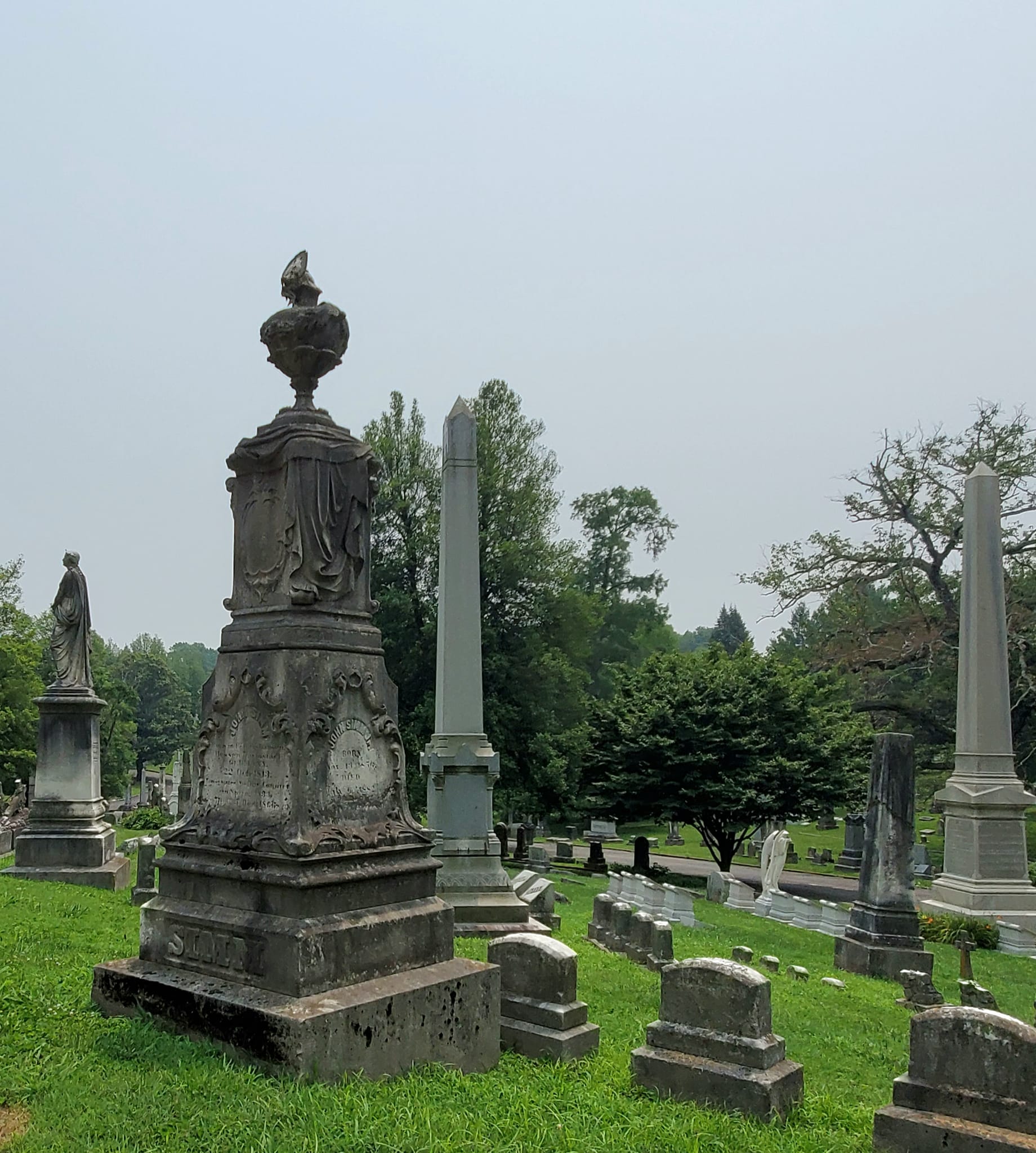
Such cemeteries utilized natural landscapes and were intended to be a destination for the Living to rest, enjoy picnics, and spend the day appreciating an outdoor museum of art and nature, just as much as they were to house the Dead.

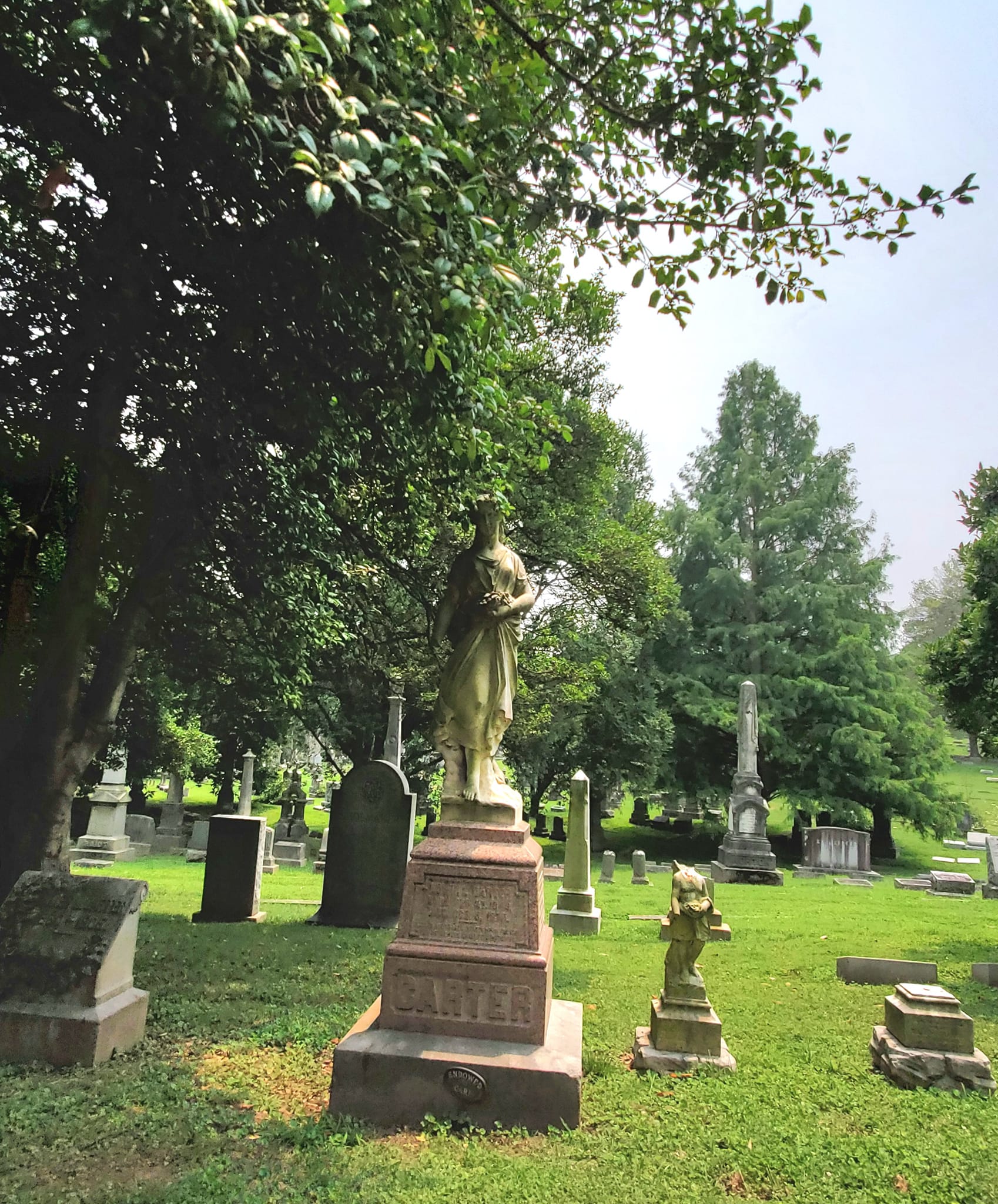
Victorian extravagance was all the rage in its early years, and led Louisville’s most wealthy to have monuments and statues created abroad in Italy and Greece then have them shipped into the cemetery, sometimes 10-15 years before their deaths.
The tradition to flash one’s wealth and status even post mortem has continued, supported by a significantly large number of marble, granite, concrete, and bronze artists in the Louisville area.
Say what you will about that but this place is fascinating and beautiful, and only sometimes a bit extra.

Before becoming a cemetery, the land was owned by the family of William Johnston and was first utilized as a farm. Johnston passed away in 1798 and the City of Louisville purchased the land in the 1830s.
Cave Hill Cemetery was chartered and dedicated in 1848. It has five man-made lakes that are fed by Beargrass Creek that springs from an actual cave, though that cave is now off-limits to the public.
A longtime nickname of Cave Hill Cemetery is the “City of the Dead” as there are more than 130,000 interred and room for over 20,000 more. It is an active cemetery where individuals are still being buried.

NATIONAL CEMETERY
Cave Hill has a National Cemetery in its northwest corner. These six plots honour soldiers of the American Revolutionary War and other wars, more than 6,100 Union soldiers and around 230 Confederate soldiers, in the National Cemetery alone.
More soldiers, including British and German soldiers, are buried throughout the rest of the cemetery.
Cave Hill Cemetery has been on the National Register of Historic Places since 1979, with the National Cemetery added separately in 1998.
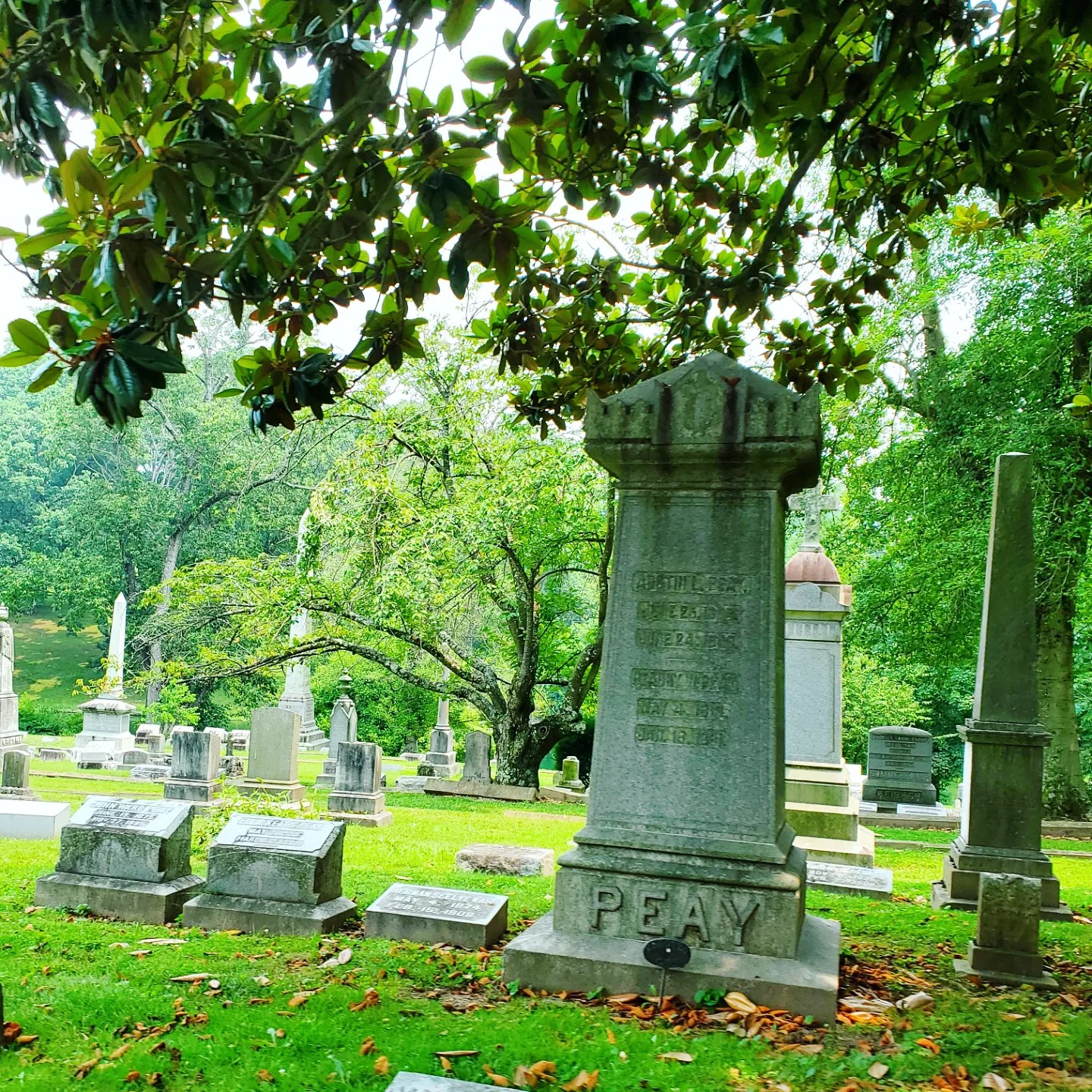
Some of the most notorious people buried at Cave Hill Cemetery include Muhammad Ali, Louisville founder George Rogers Clark, riot grrrl rocker Mia Zapata, Harry “The Frito-Lay Magician” Collins, bourbon magnate Julian Proctor “Pappy” Van Winkle, and “Happy Birthday to You” composer Mildred Jane Hill.

James Graham Brown, a developer and entrepreneur famous for building the historic Brown Hotel, Brown Theatre, Brown Garage, Kentucky Towers, and the Martin Brown Building (later called the Commonwealth Building) has been interred in Cave Hill Cemetery since his death in 1969.
This map will help you find whoever you may be looking for.

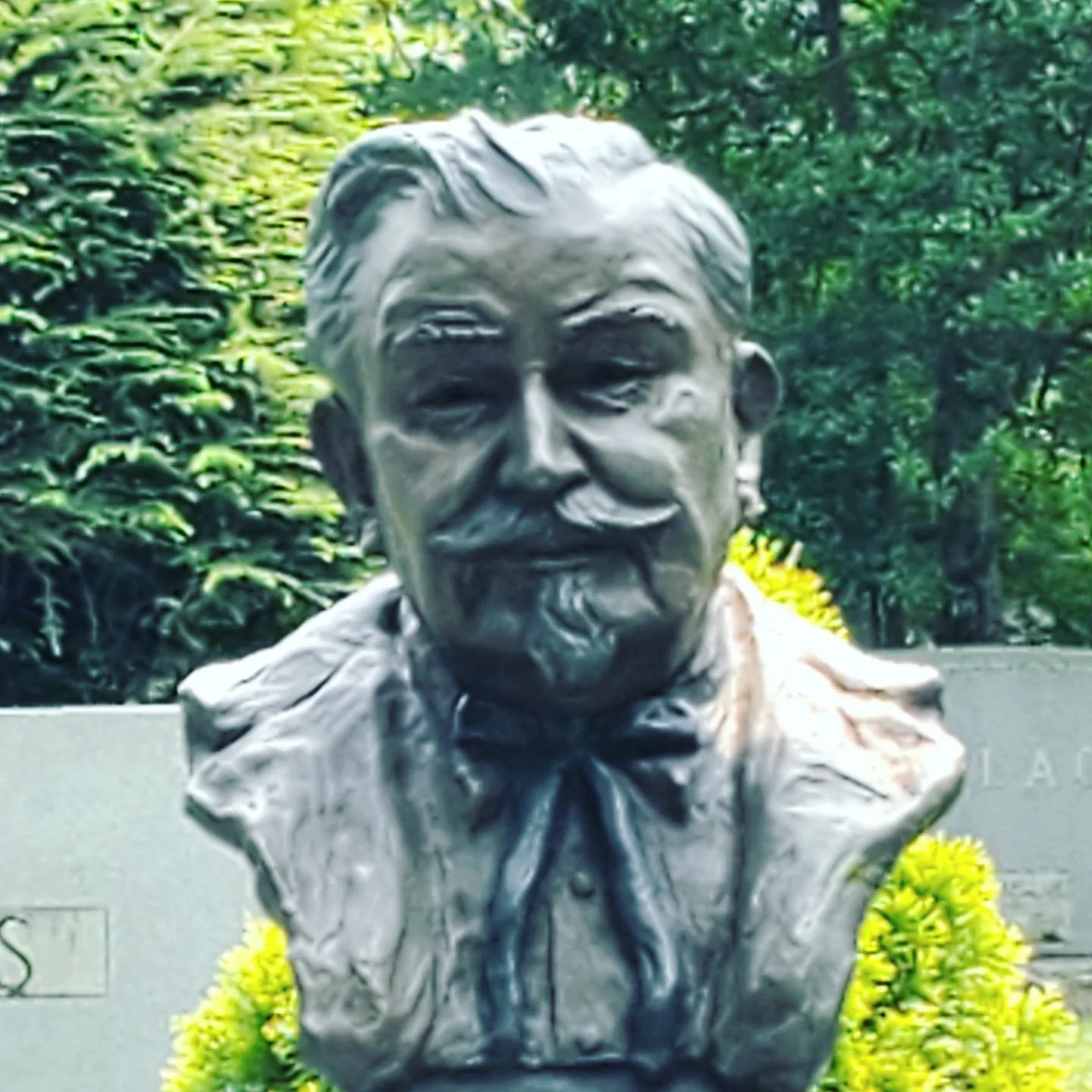
Sanders is most famous for founding Kentucky Fried Chicken, but there is so much more to his story. Be sure to visit the Colonel Sanders Park and KFC Museum if you are ever in Corbin, Kentucky.
His daughter created the bust of him at the site, and he oversaw the design of his final resting place before his death in 1980. Sixteen years later, when I was in middle school, his wife Claudia passed away.
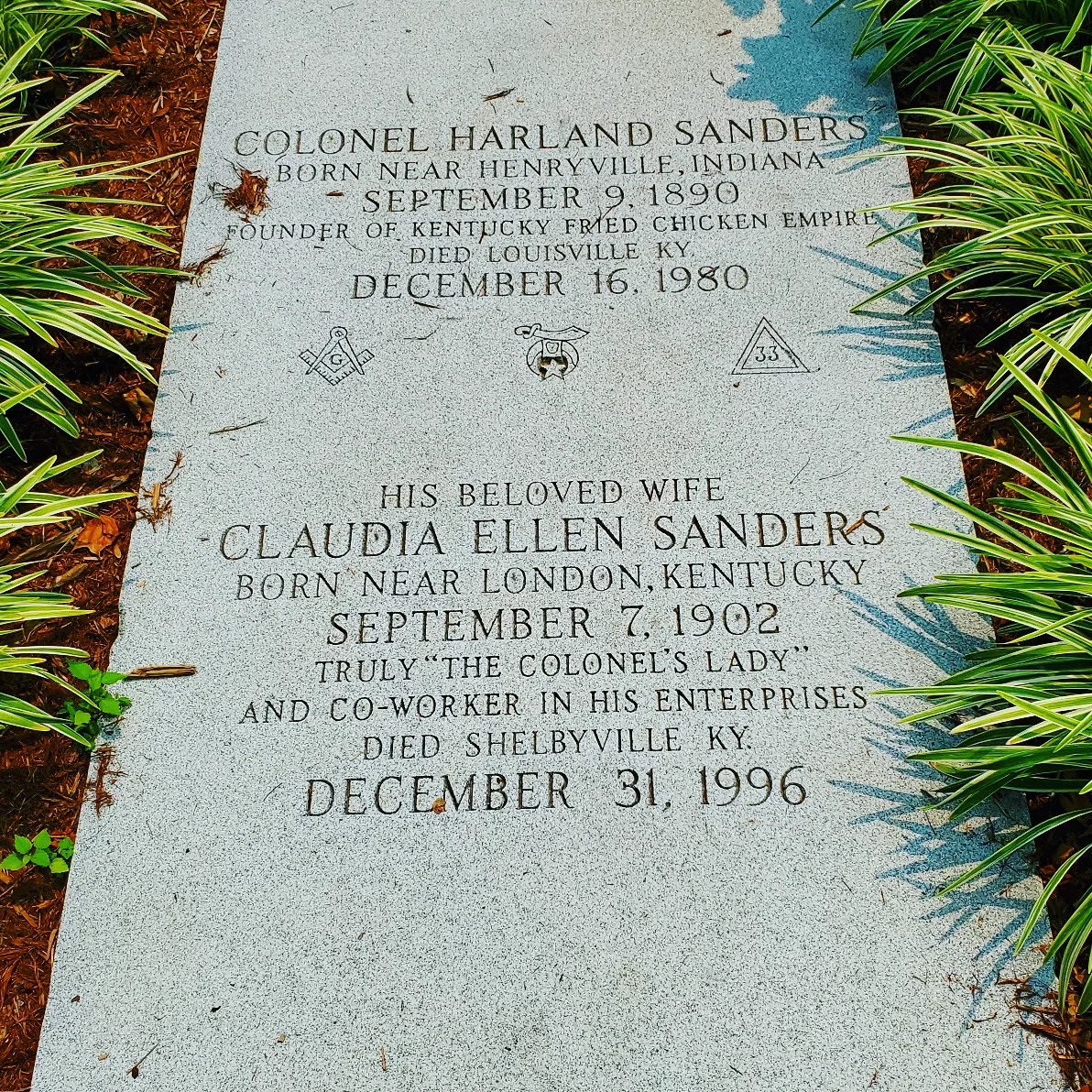
Sanders and my grandfather both lived in Louisville at the same time and share the same surname as mine. My grandfather has always told me that they were widely acknowledged as being cousins.
I do not know anyone from that branch of the family tree, but if any of you end up reading this, drop me a line!

EASTERN CEMETERY
Eastern Cemetery is adjacent to, but not part of, Cave Hill Cemetery. I mention this because it is often mistaken as another one of Cave Hill’s features.
Eastern Cemetery once served as a final resting place for the city’s unidentified deceased. Places like these are often called Pauper’s Graves or Potter’s Fields, and are where the unfortunate or “undesired” deceased were and/or are buried.
In 1989 and well into the 1990s, Eastern Cemetery was the subject of a horrifying scandal after a “whistleblower” exposed the terrible mismanagement of bodies and burials in this cemetery.
Staff were exposed for reusing burial plots and conducting mass, illegal burials. Donated cadaver parts were found haphazardly scattered all over the grounds, inside various facilities, and in trash receptacles.
Families who had paid for their loved ones to have proper burial plots in Cave Hill Cemetery were devastated to discover that many of the bodies were simply dumped in the Eastern Cemetery instead.
There is a staggering discrepancy of almost 140,000 individuals interred with only 16,000 identifiable graves.
Bodies are no longer interred in the Eastern Cemetery, but no official entity has taken responsibility for remedying this disaster. Eastern Cemetery is currently maintained solely by the Friends of Eastern Cemetery nonprofit organization and other volunteers.
You can learn more about that by watching this free documentary on YouTube:
CHURCH OF ST. MARTIN OF TOURS
A mile or so from Cave Hill Cemetery is another fascinating and macabre site, the shrine of Martyred Saints Magnus and Bonosa. The preserved skeletons of these holy saints are inside the St. Martin of Tours Catholic Church on Shelby Street.
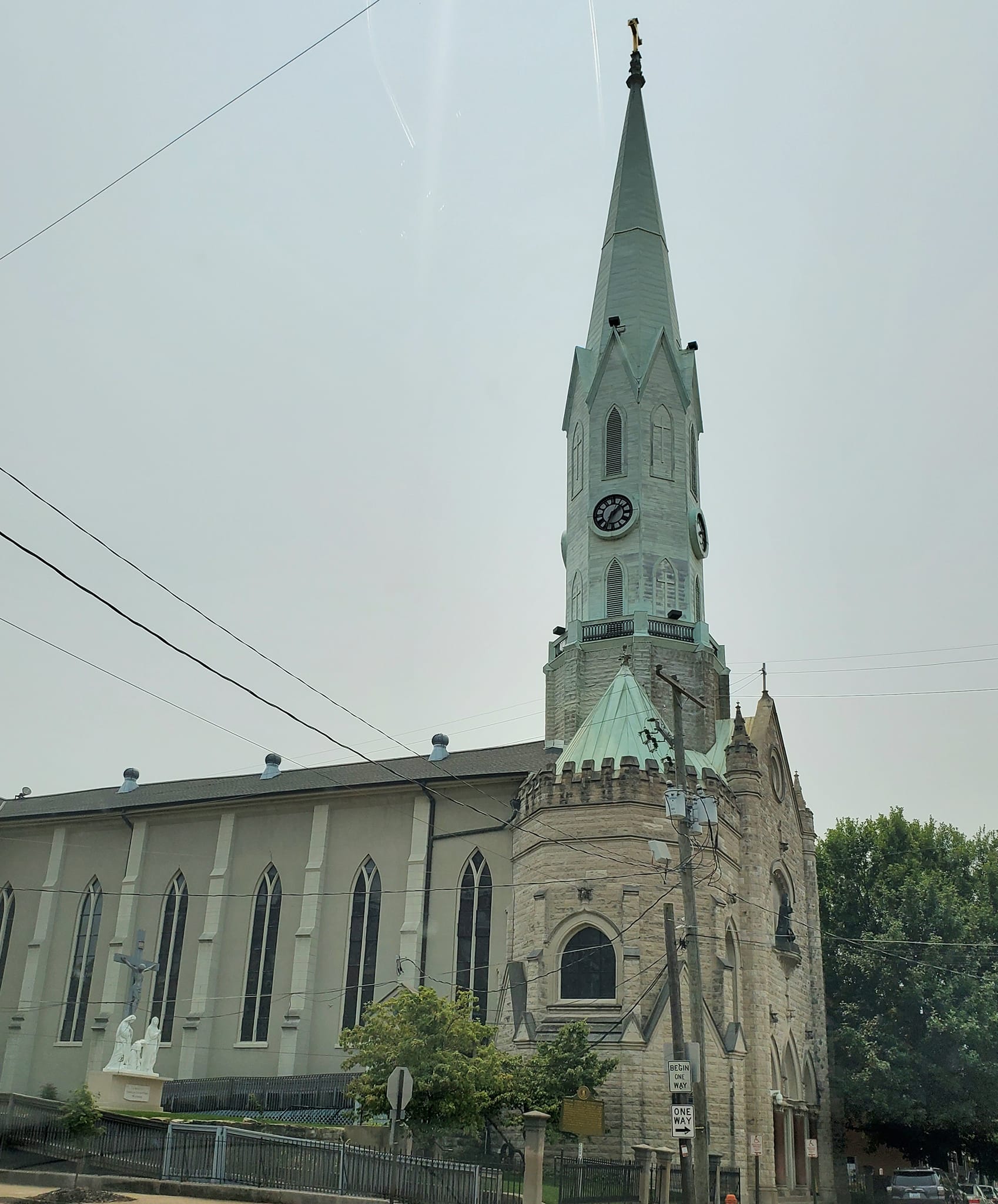


There are many interesting places near St. Martin of Tours like the old Waverly Hills Sanitorium, Maple Hill Manor, Liberty Hall, the Loudon House, and the Highlands district.






************
© Fernwehtun, 2015- Current. Unauthorized use and/or duplication of this material without express and written permission from this site’s author and/or owner is strictly prohibited. Excerpts and links may be used, provided that full and clear credit is given to Fernwehtun and Fernwehtun.com with appropriate and specific direction to the original content.


 Fernweh, An Ache for Distant Places
Leave a comment