

Big Bone Lick is located in Union, Kentucky, just minutes off I-75. What’s a lick, you ask? Oh, I’ll tell you.
A “lick” refers to a salt lick, as in, the water there is really salty. Prehistoric animals used to wander over to the salt springs for a little lick of salty goodness when they needed a fix.
Many of them had very large bones. Do you see where I’m going with this now?
Salt, Sulphur, & Shale
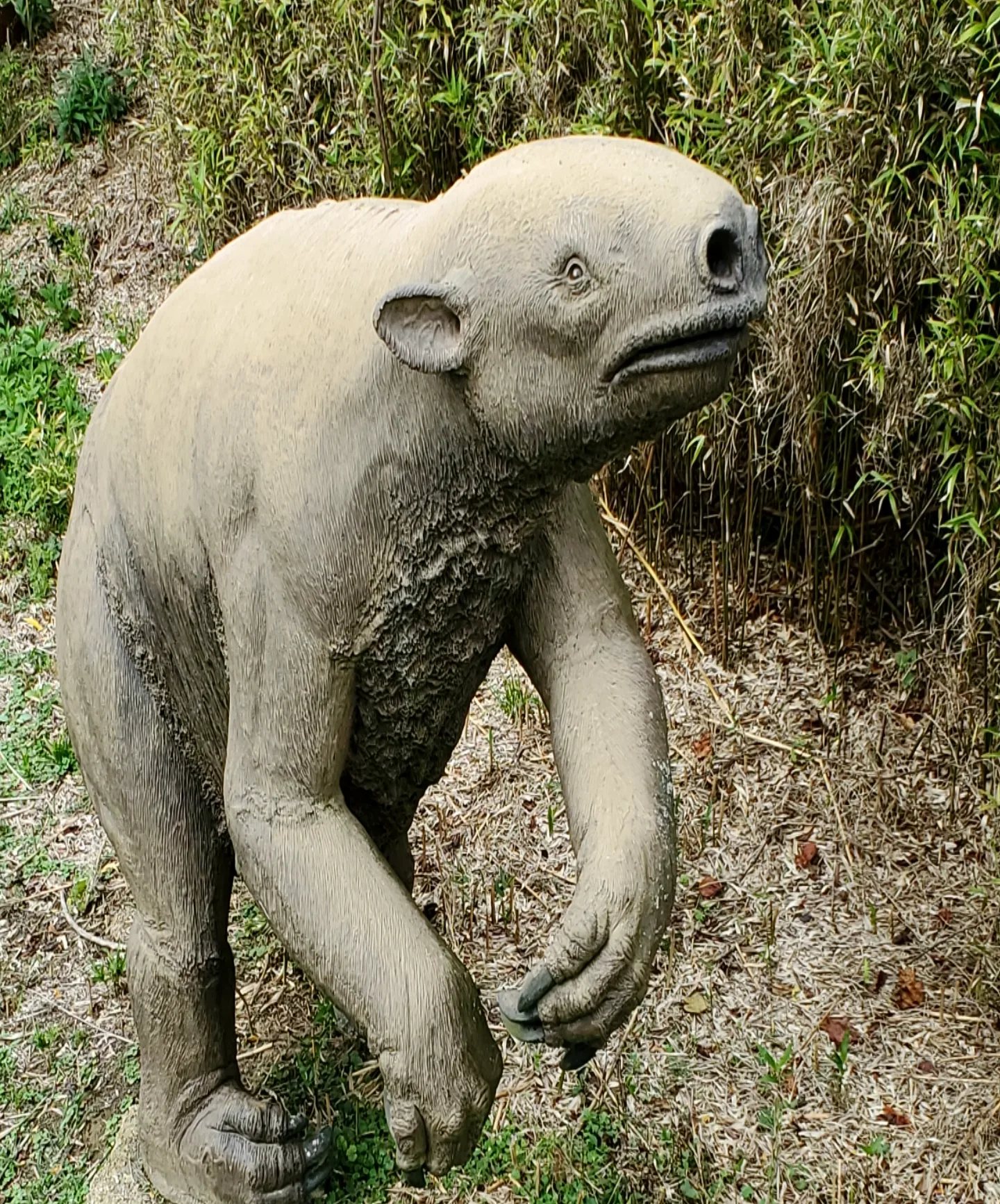
The reason there are so many bones here is that the mineral content in the water created swampy, slick, quicksand-like grounds around the water and the animals would often get stuck and die.
These minerals included salts from underground limestone and shale. I noticed that the water still has a very briny sulphurous stench and a milky appearance. Delicious.
Not Fat, Just Big Boned.
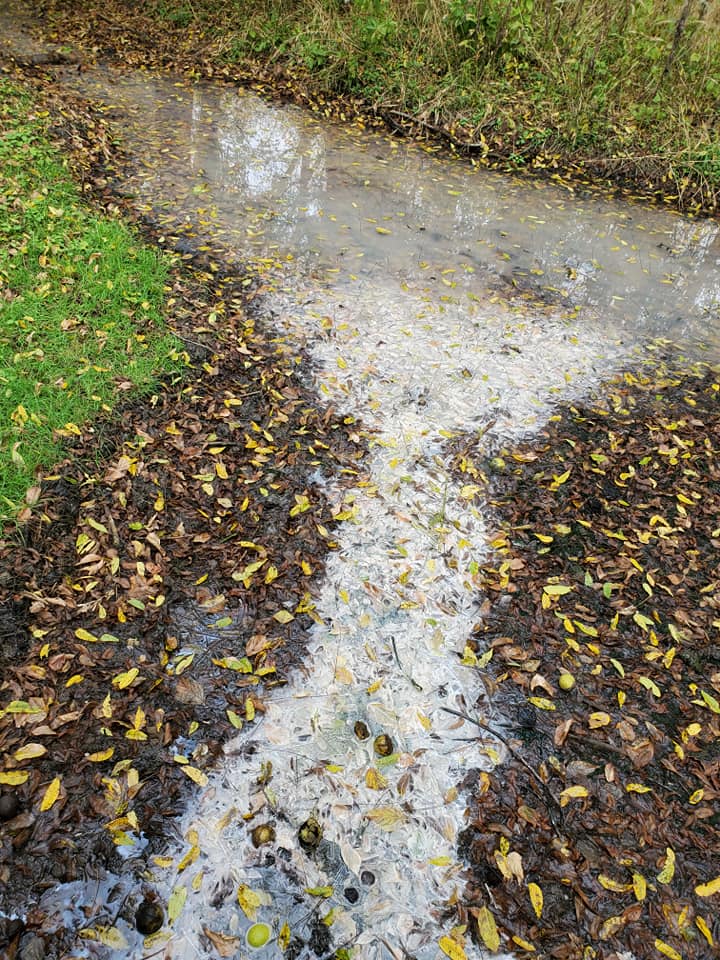
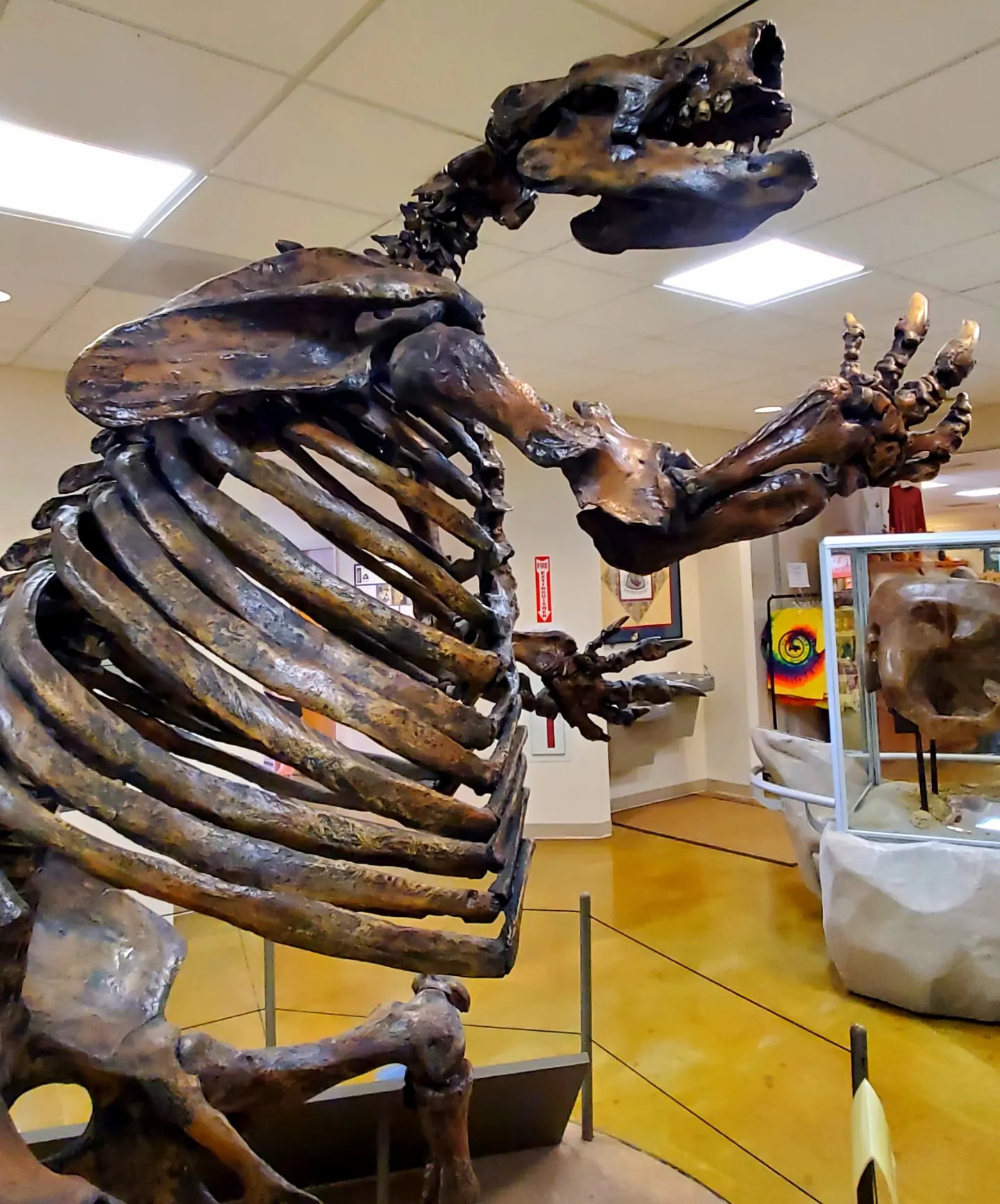
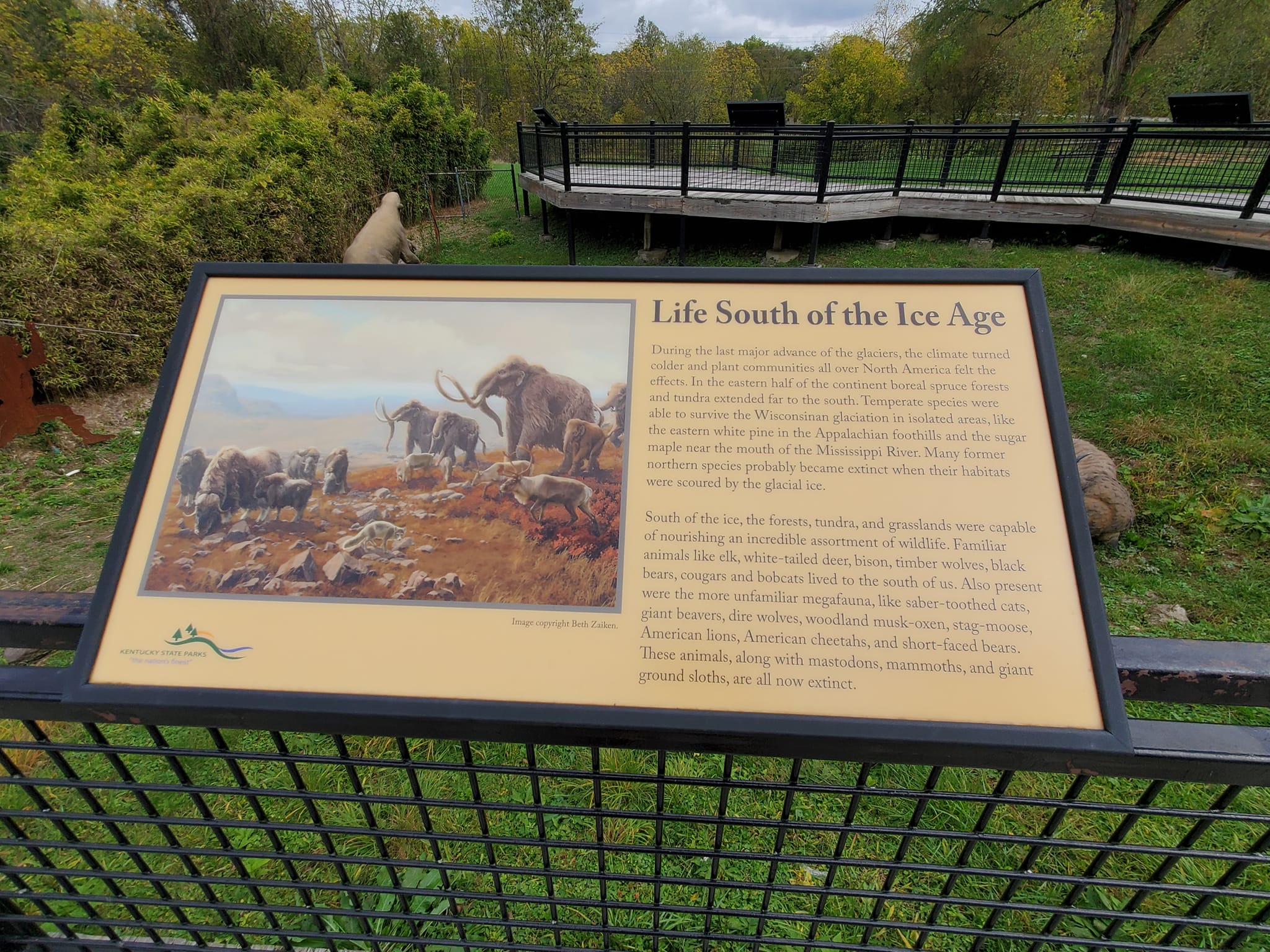
Megafauna from the Pleistocene (aka the Ice Age) Era like mammoths, mastodon, bison, giant ground sloths, stag moose, saber-toothed cats, bears, musk oxen, deer, elk, and even tapir once thrived here.
Thousands upon thousands of skeletons, fossils, teeth, and other random bones have been unearthed at this site to provide evidence.

Scientists speculate that some of the animals may not have lived precisely in this region very long before the Ice Age, but were forced to move along with massive sheets of ice as they shifted and separated, and made their new homes here.
Many archaeologists and paleontologists have written about how ironic it is that the same mineral salts the animals came here to consume for survival also led to their deaths and is simultaneously the reason their bones were so well preserved.

What Started It
There is a long history of white dudes coming here to steal ancient animal bones and fossils then acting like they discovered the place, only to be apprehended by the Shawnee who lived there at the time.
Most invaders just had their new goods confiscated, but some were killed. I would be pretty mad, too, if I had to constantly run these people off my property.
I won’t bore you with each individual name, date, types of bones that were fought over, and all that. It just happened a lot. A lot.

Thomas Jefferson, of all people, is credited for being the most instrumental person in leading paleontology to become a legitimate science, as well as bringing recognition to Big Bone Lick.
His fascination with some bones he found here, particularly the Megalonyx Jeffersoni which was later named after him, created a decades-long love affair of collecting and facilitating paleontology research.
Not So Ancient History
The Boone County Historical Society was tasked with forming a park on this site in the 1950s, and so the Big Bone Lick Historical Association was created for that specific purpose.
Nearly 17 acres were purchased, then the Association partnered with the Kentucky State Commissioner and Kentucky Department of Parks to Garner additional protections and resources.

By the 1970s, Big Bone Lick was listed on the National Register of Historic Places, but it would be another twenty years before the museum was complete. Over the course of these years, the park expanded to over 500 acres.
Additional rewards and recognitions continued to flow in, like becoming a designated National Natural Landmark, a Lewis & Clark Heritage Trail Site, and the Birthplace of American Paleontology.
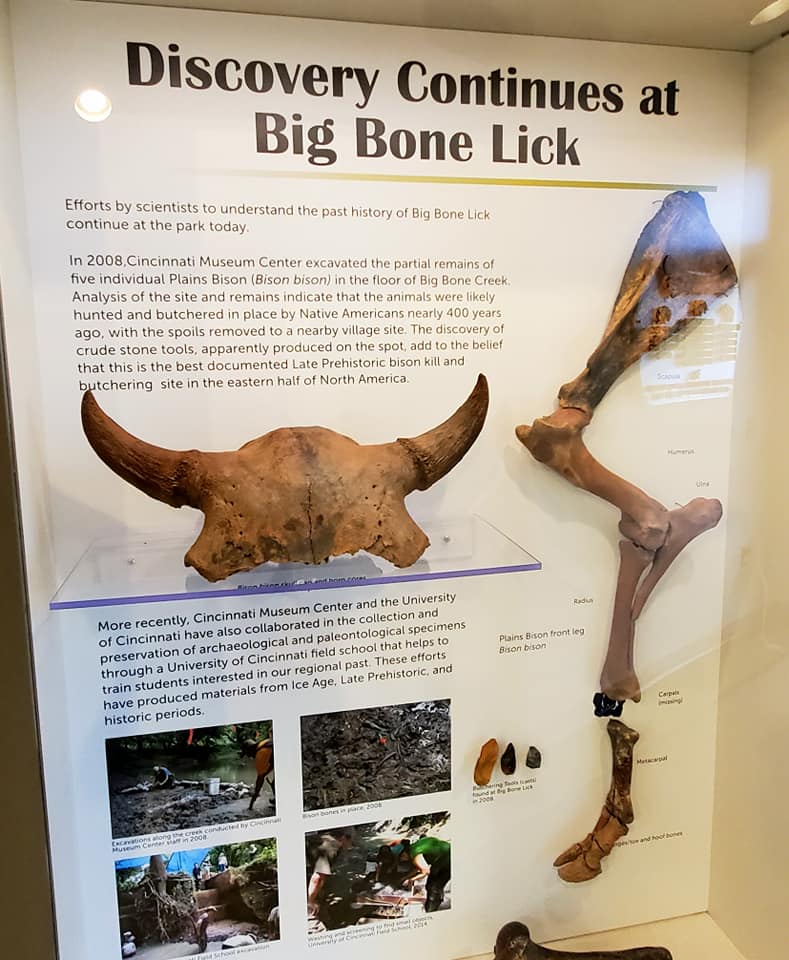
Ongoing excavation projects over the decades have continued to turn up additional skeletons and fossils, even some from humans.

Where the Bison Roam
There is a small herd of bison living in the park. You can see them most days, but as my luck would have it, I could not see any when I visited.
These fellas are the largest land mammals on the continent, so I am not sure how they managed to hide, but I was told they tend to do so on cold, rainy days like that one.

Following the Trails
I took the half-mile Discovery Trail, the 0.9 mile Big Bone Creek Trail, and the 0.5 mile Bison Trace Trail while I was there.
There are a few additional trails that are the same or even longer lengths but I had already walked a few miles somewhere else that morning before arriving at Big Bone Lick and I had had enough.
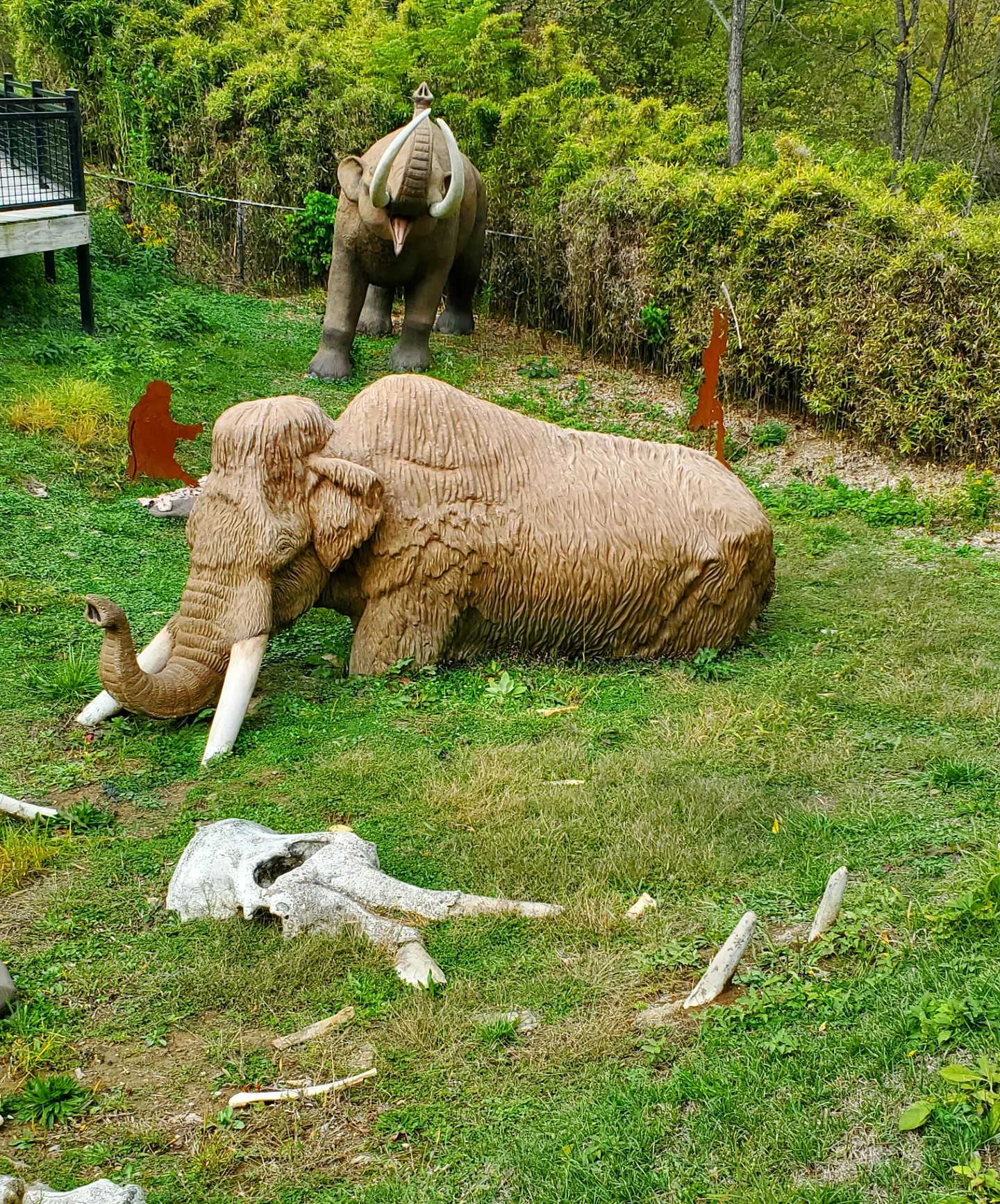
The Discovery Trail starts right outside of the Visitors Center and loops around the “Swamp” diorama of various megafauna roaring and lying around.
Real animal bones are scattered about, and thin metal silhouettes of early humans munching on their innards are wobbily staked into the ground.

An elevated boardwalk connects a series of informative plaques that mostly explains what the hell is going on.
Salt Significance
Salt production was such a huge industry in the late 1700s and early 1800s and state officials created special laws to safeguard mineral springs and facilitate salt production.
Then came the popularity of using mineral springs as a health spa further into the 1800s.
In 1815 the Clay Hotel was built and named after Henry Clay, a famous Kentucky politician and social figure. Visitors came in from all over the world to take part in the latest craze now that salt production had slowed to a halt in favour of other locales.

This and many other facets of Big Bone Lick’s history of salt are celebrated at the annual Salt Festival. The Northern Kentucky Sierra Club even hosts events sometimes.
I was sad to miss the Salt Festival by only one week, but I anticipate returning next year.

In the area for a while? Follow me to Mammoth Cave National Park!
********************
© Copyright Fernwehtun, 2015- Current. Unauthorized use and/or duplication of this material without express and written permission from this site’s author and/or owner is strictly prohibited. Excerpts and links may be used, provided that full and clear credit is given to Fernwehtun and Fernwehtun.com with appropriate and specific direction to the original content.

 Fernweh, An Ache for Distant Places
Leave a comment