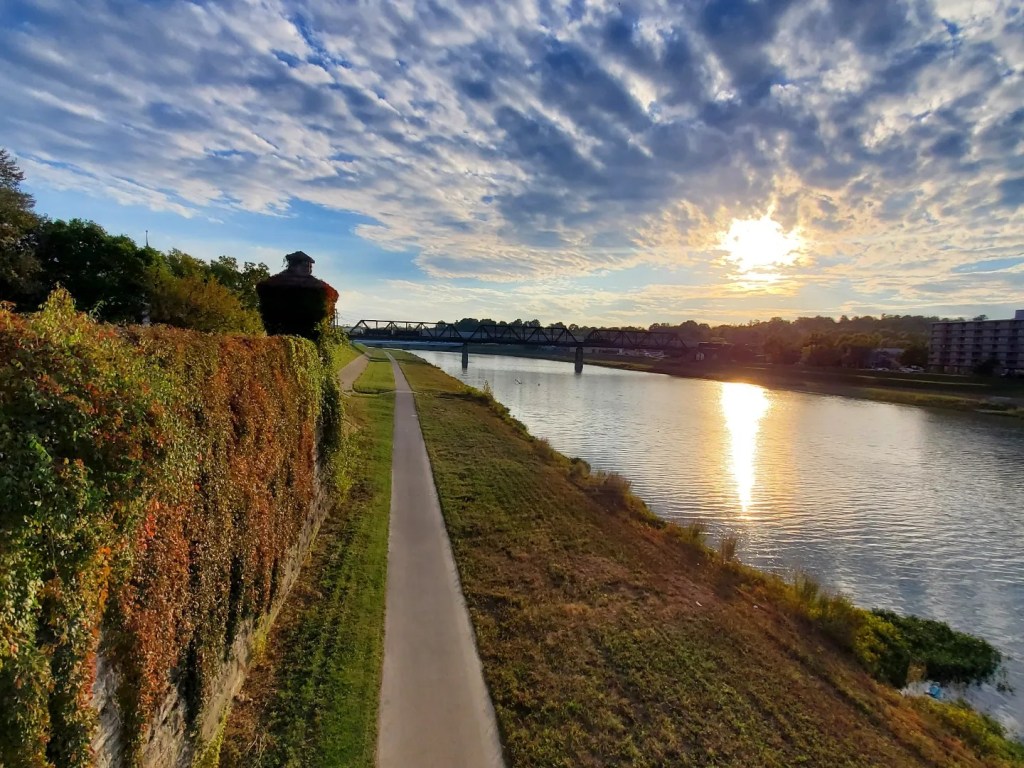
My first mistake in Hamilton, Ohio was to assume it was just a small and modest town. I was pleasantly surprised to roll in knowing nothing, and to learn that it is called the City of Sculpture.
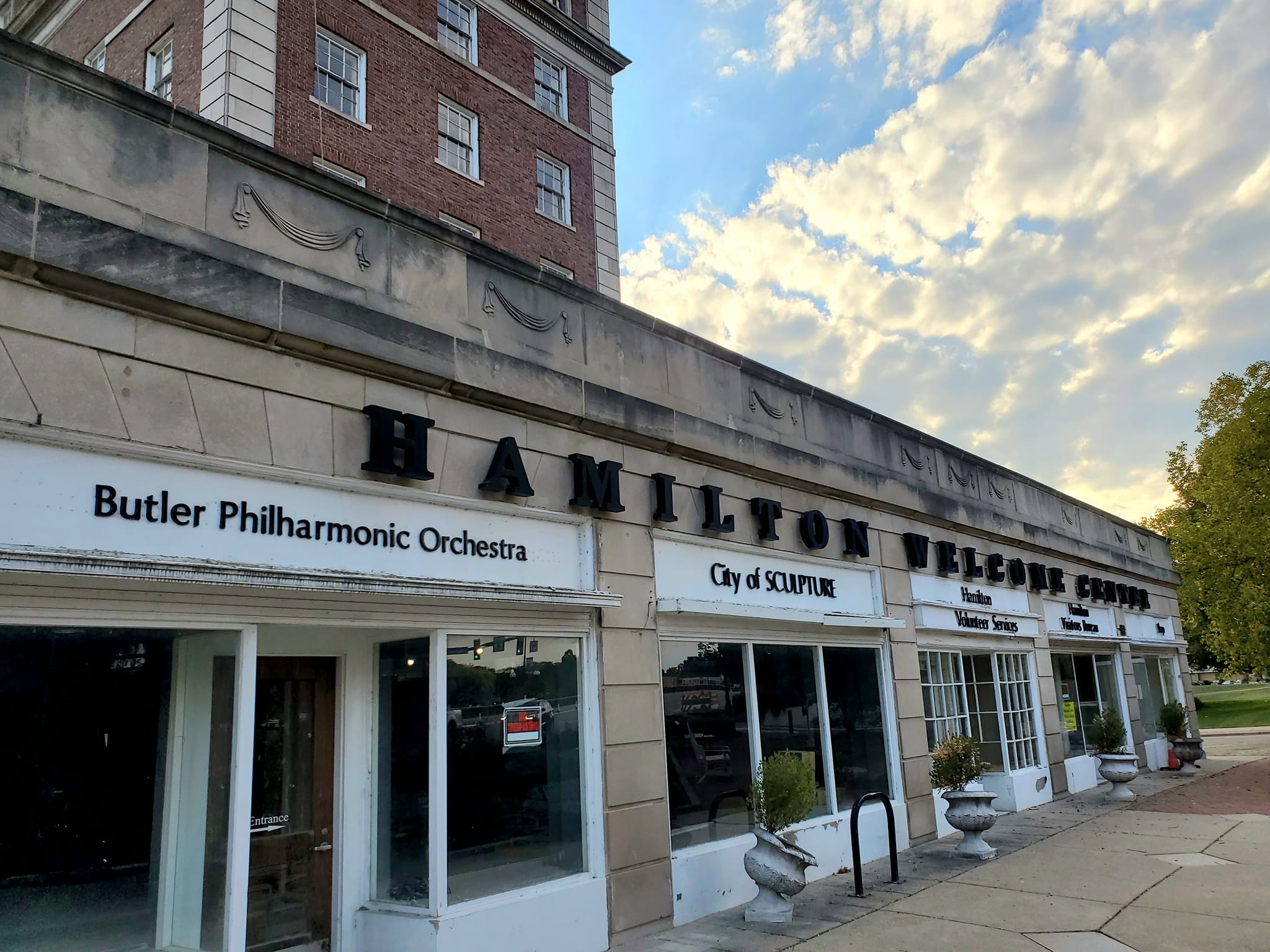
Hamilton is located in Southwestern Ohio about halfway between Cincinnati and Dayton, just near the Ohio-Indiana state line.
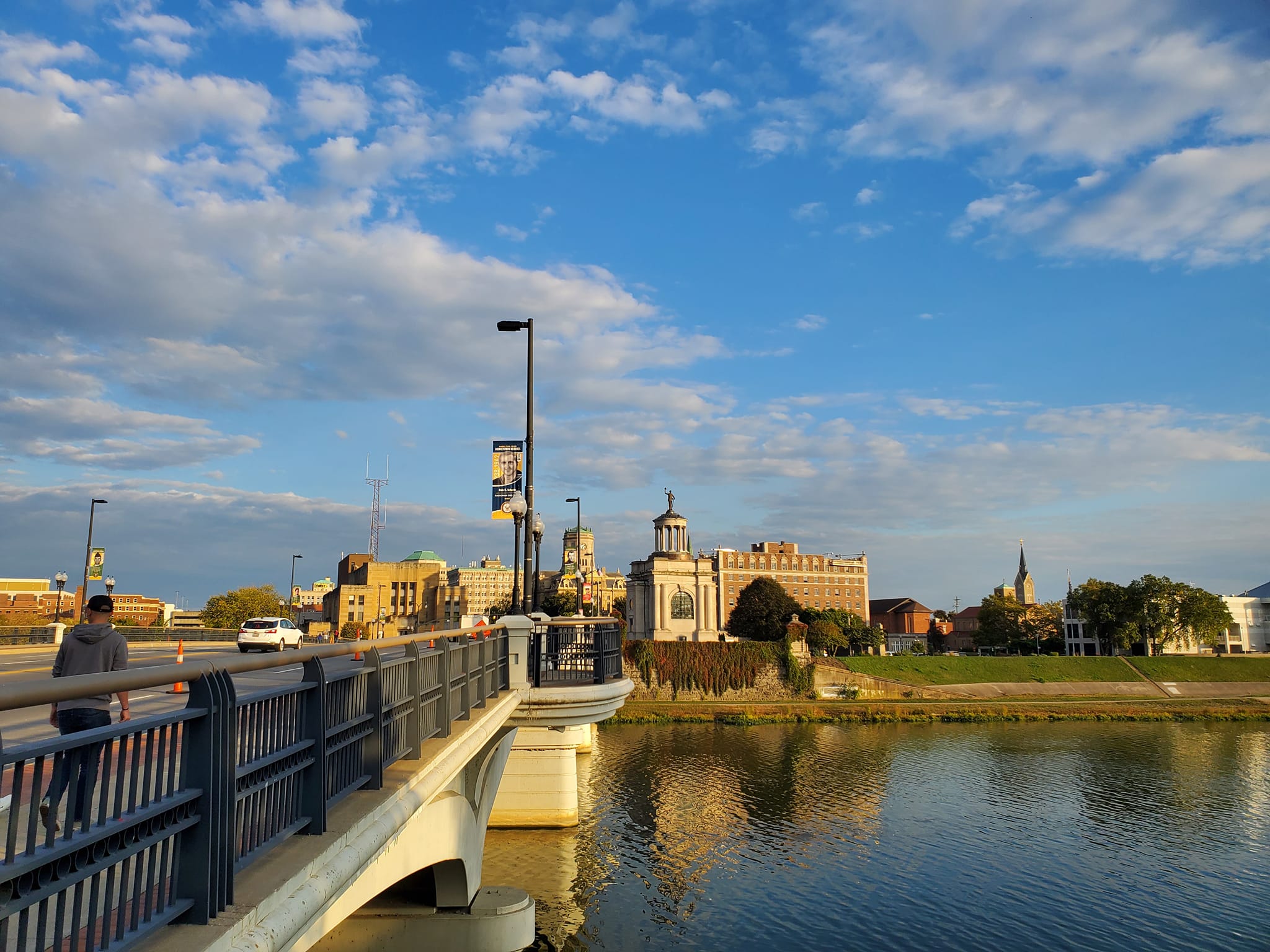
It has three historic districts that include the German Village, the Rossville district, and the Dayton Lane Historic district, but I first fell in love with its riverfront.
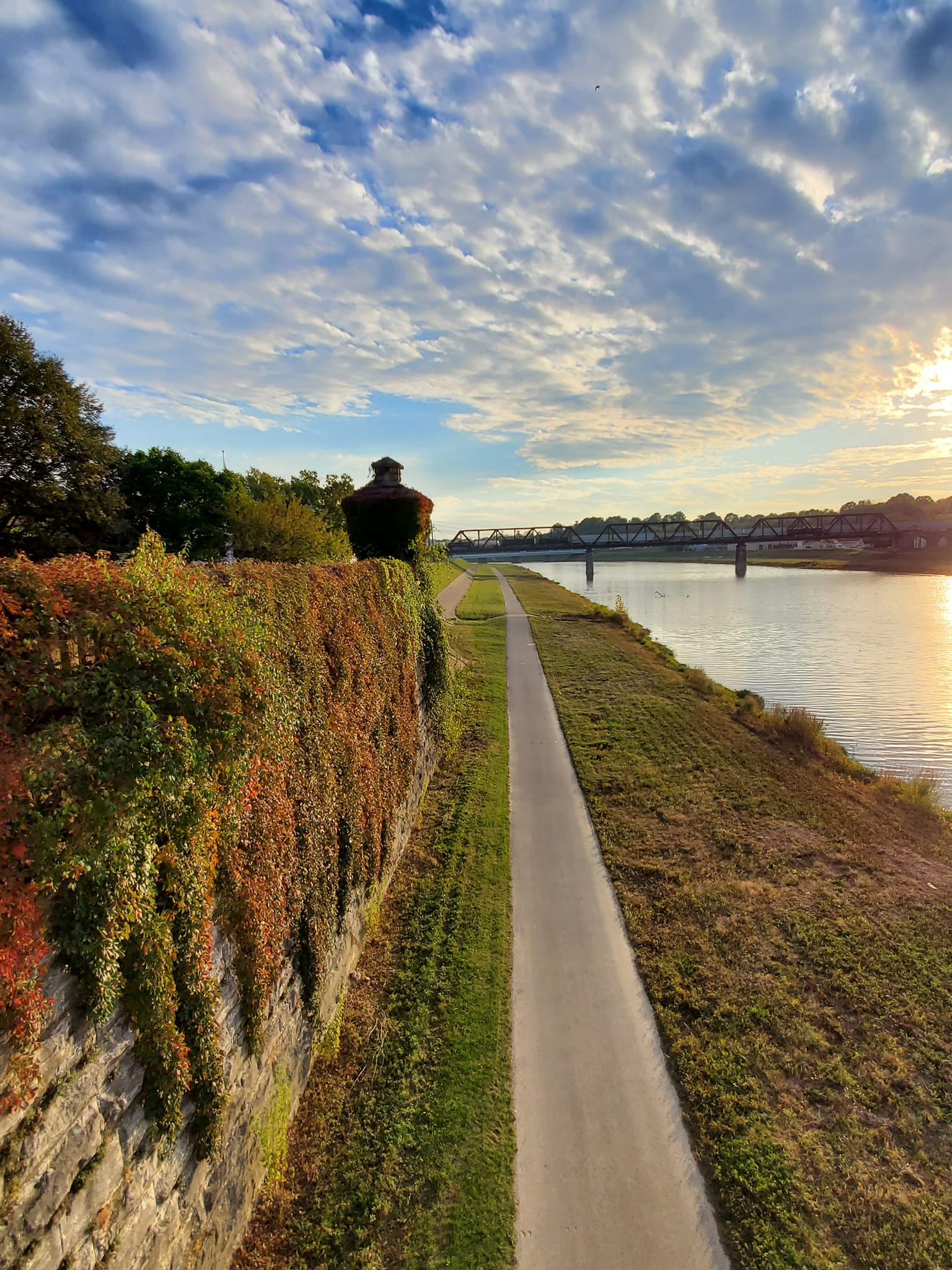
This refers to the monument park adjacent to the Hamilton Visitors Center/ Butler Philharmonic, the High-Main Street bridge and its bronze medallions, and other sculptures along both sides of the Great Miami River as it flows past downtown Hamilton.
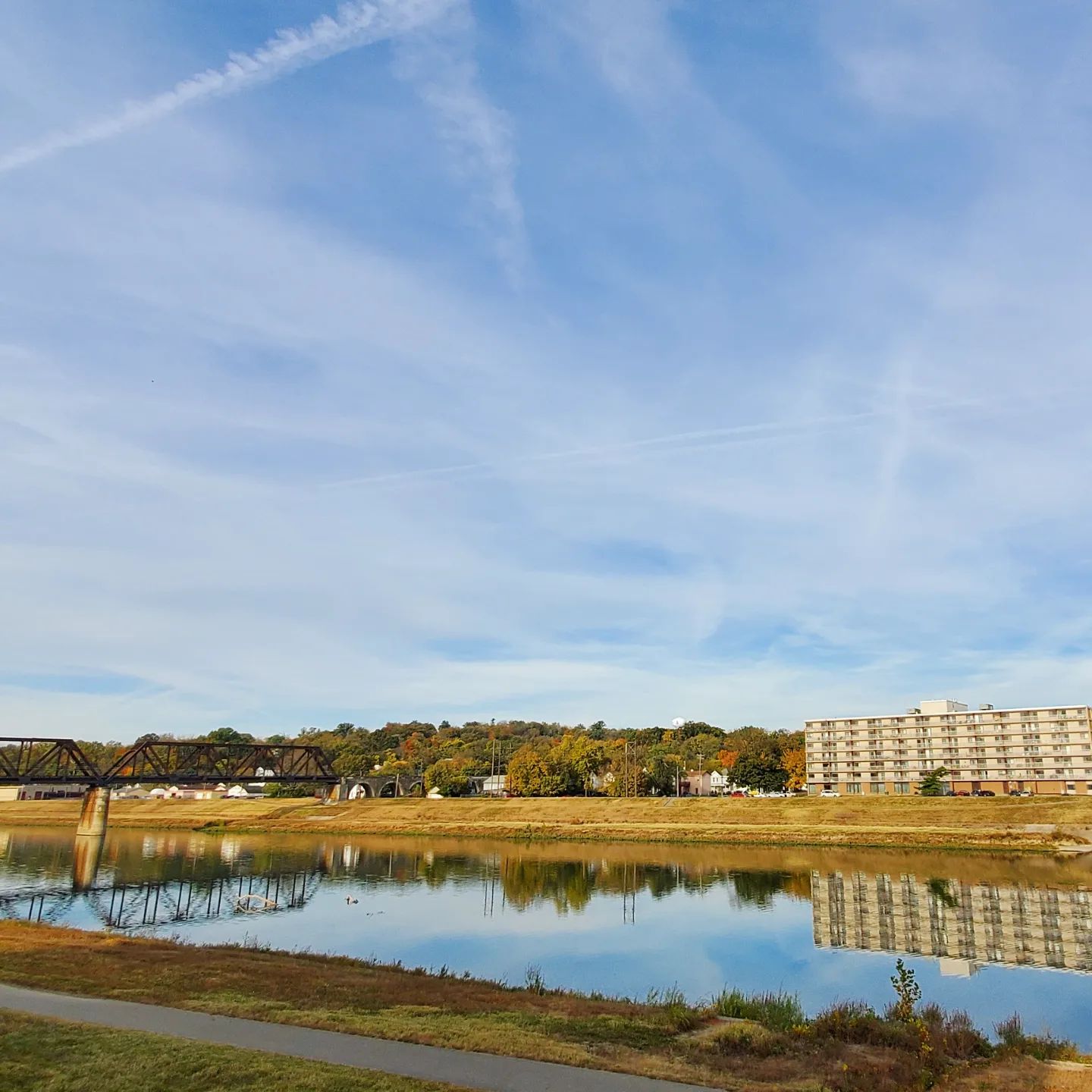
Abraham Lincoln once gave a speech here when it was called Hamilton Station in support of his friend William Dennison while he was running for Ohio governor. He described the area as “this beautiful and far-famed Miami Valley is the garden spot of the world.”
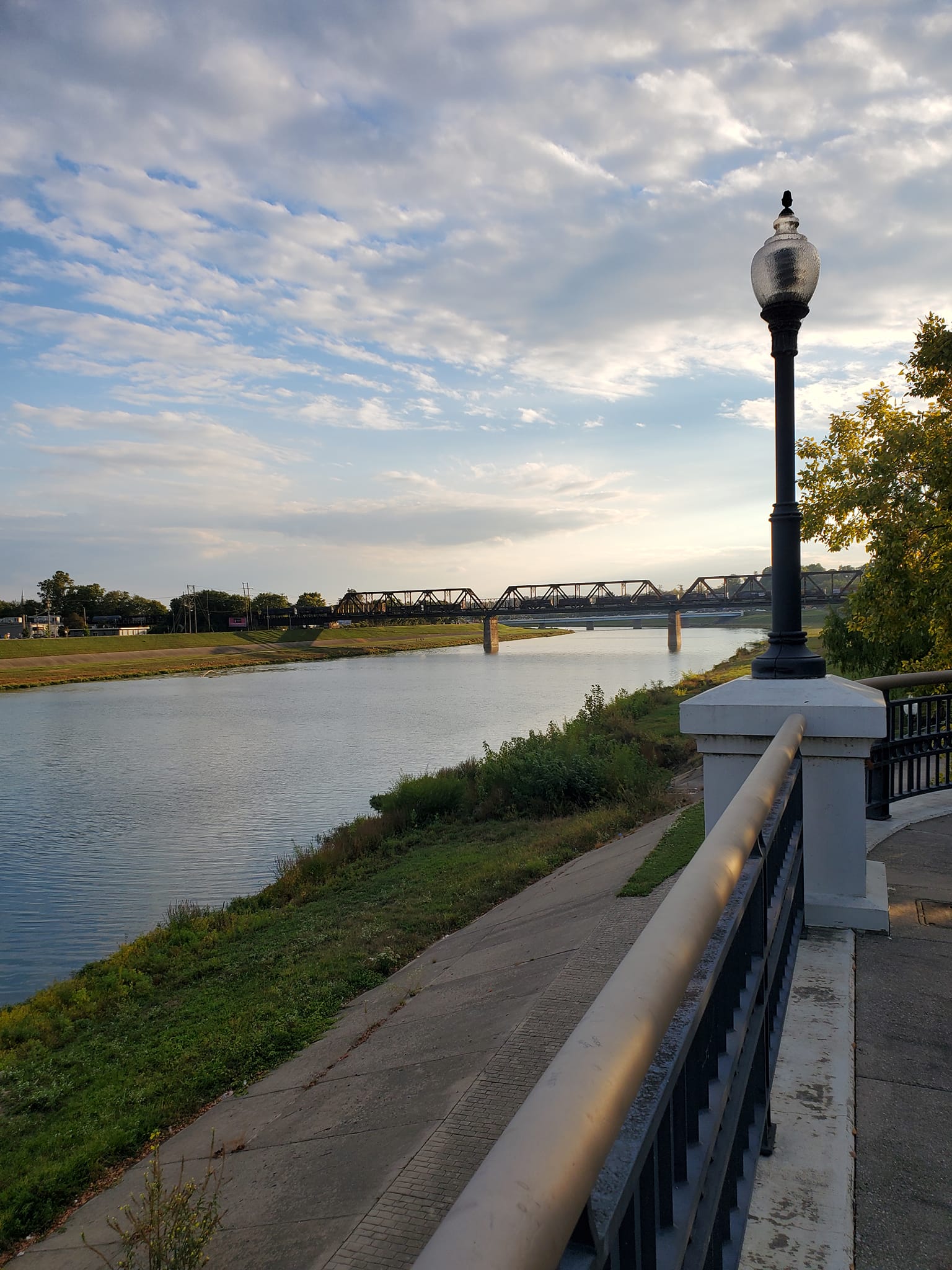
Hamilton was first called Fort Hamilton when it was founded in 1791.
The fort functioned as a military supply station for two notable Generals “Mad Anthony” Wayne and Arthur St. Clair, though it was named to honour Alexander Hamilton.
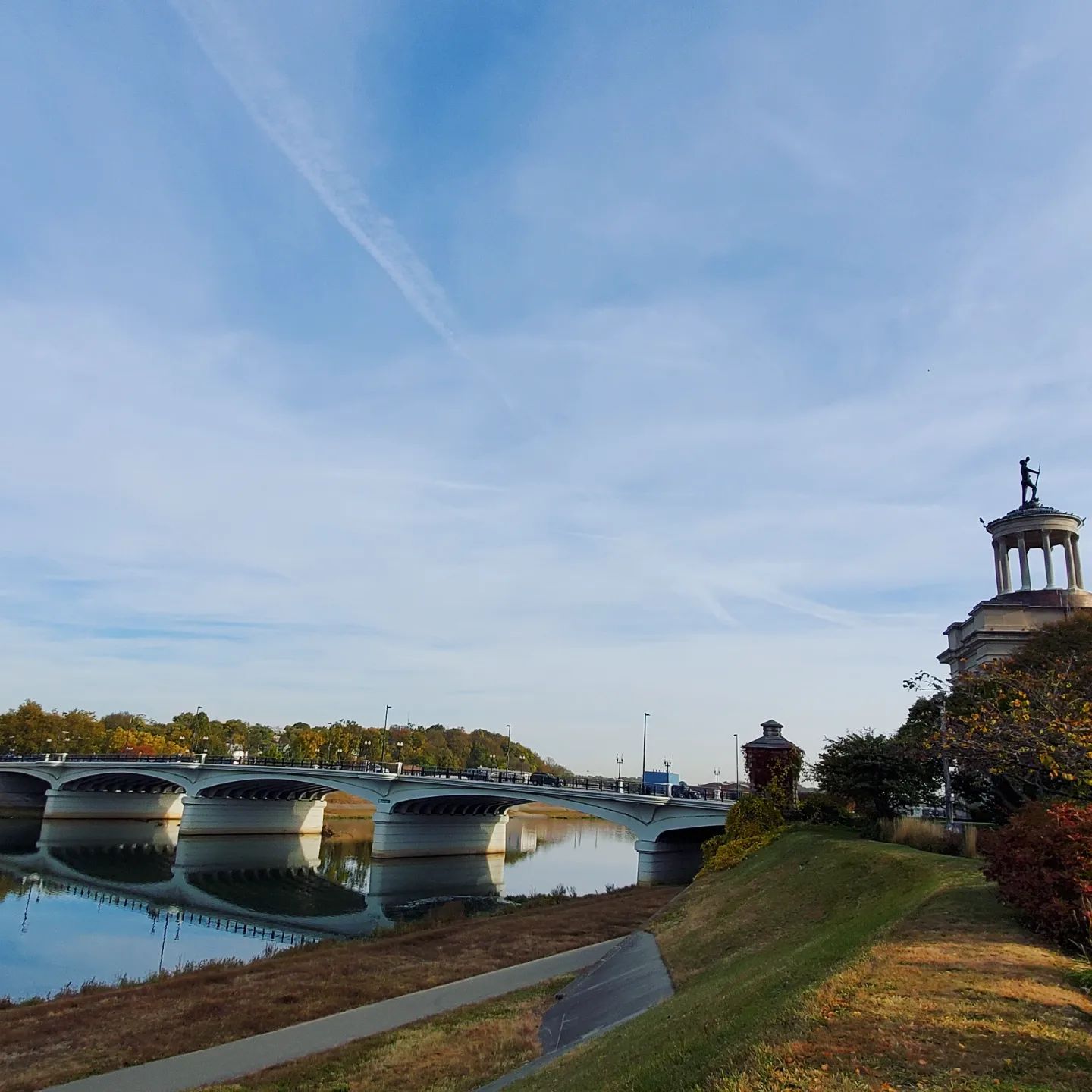
Within a decade, the fort became less popular and was eventually abandoned. This area along the river was used more often as a trading post, and the land surrounding the fort was platted out for residential use.

RIIVERFRONT PARK
Some of the most prominent monuments along the riverfront are in what is loosely known as the Riverfront Park or Monument Park.
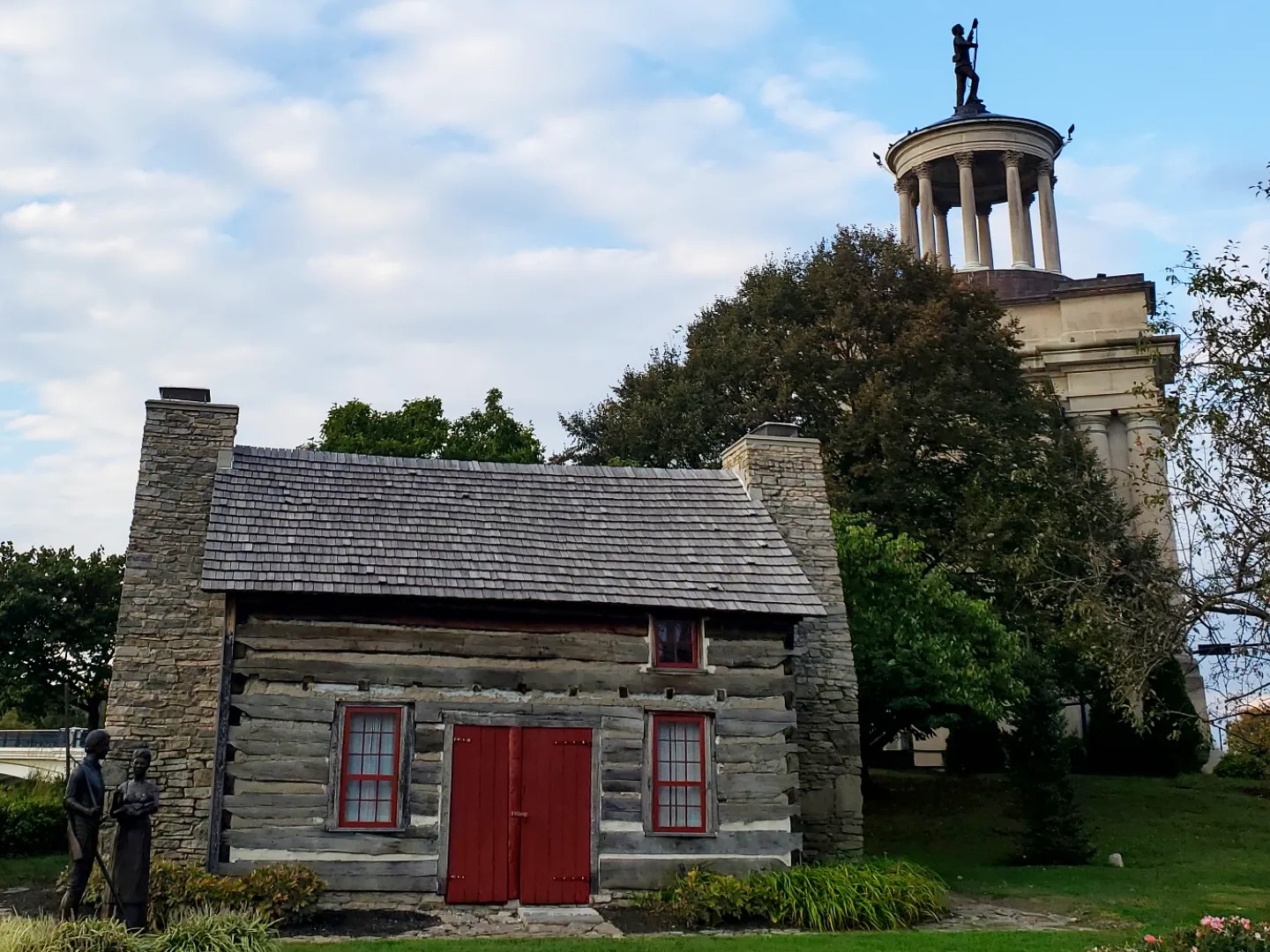
The Soldiers, Sailors, and Pioneers Monument below is the most impressive, first financed in 1899 and completed in 1906. It stands on the old Fort Hamilton site in honour of all Butler County veterans, including some life-sized stained glass panel art dedicated to women who served.
This monument is considered a neo-classical structure and is made of “Indiana” marble, which is a local material as Hamilton is near the state line.
The building hosts a museum, a model scale of Fort Hamilton, and artifacts from Butler County and its military history. There is a giant, 3500 pound bronze sculpture on top called Victory-Jewel of the Soul that depicts a local hero named Billy Yank.

In the park surrounding the monument you can see a replica of a cabin that was typical during the time of Fort Hamilton, and various other sculptures.
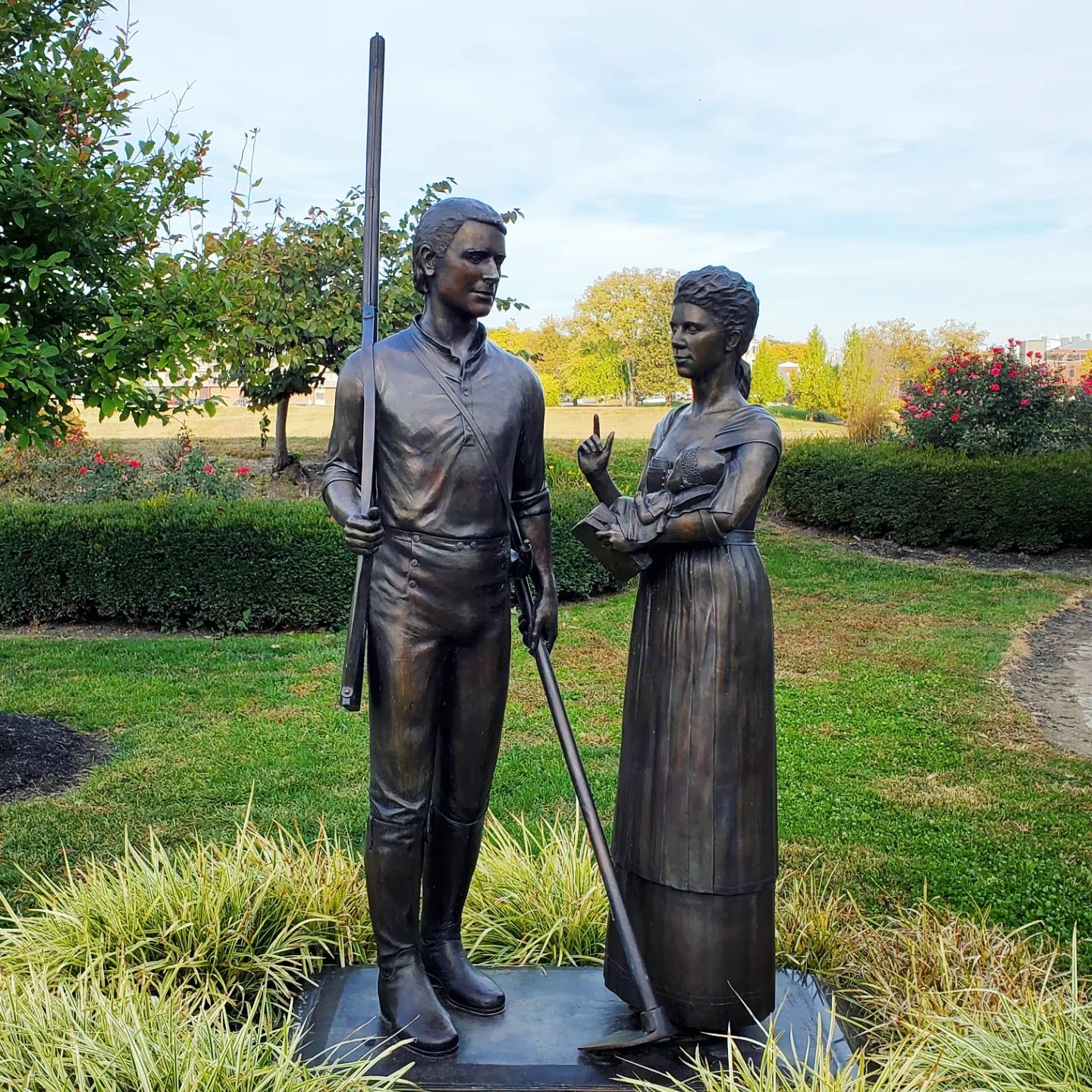
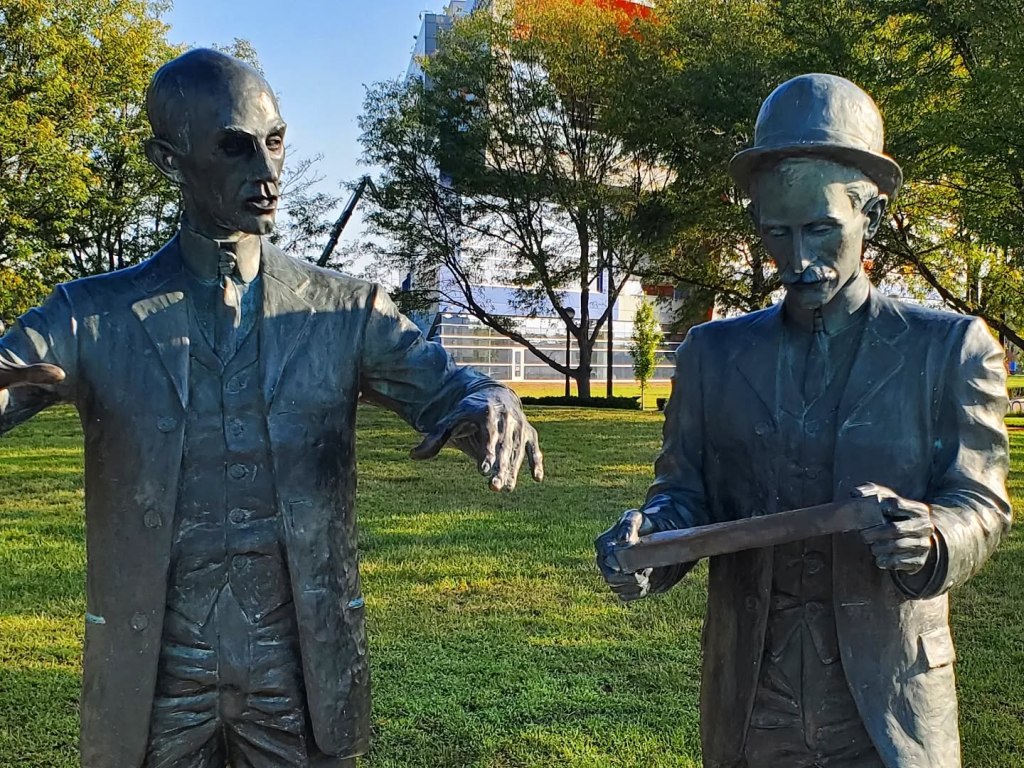
Bronze sculpture depicting some of Fort Hamilton’s first settlers.
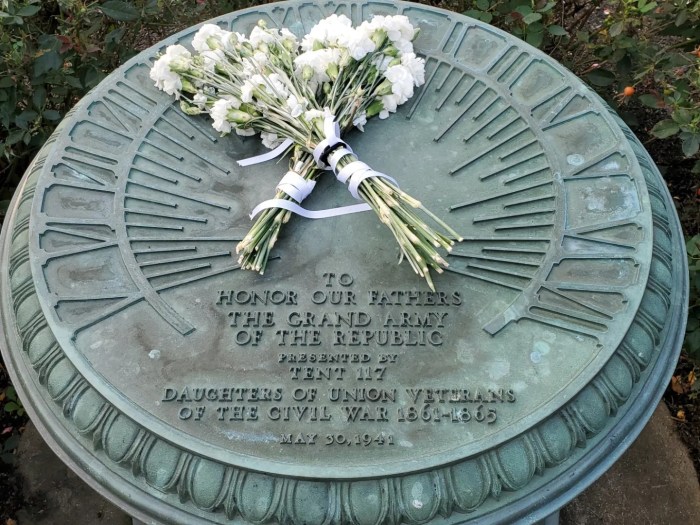
Another tribute to Butler County veterans.
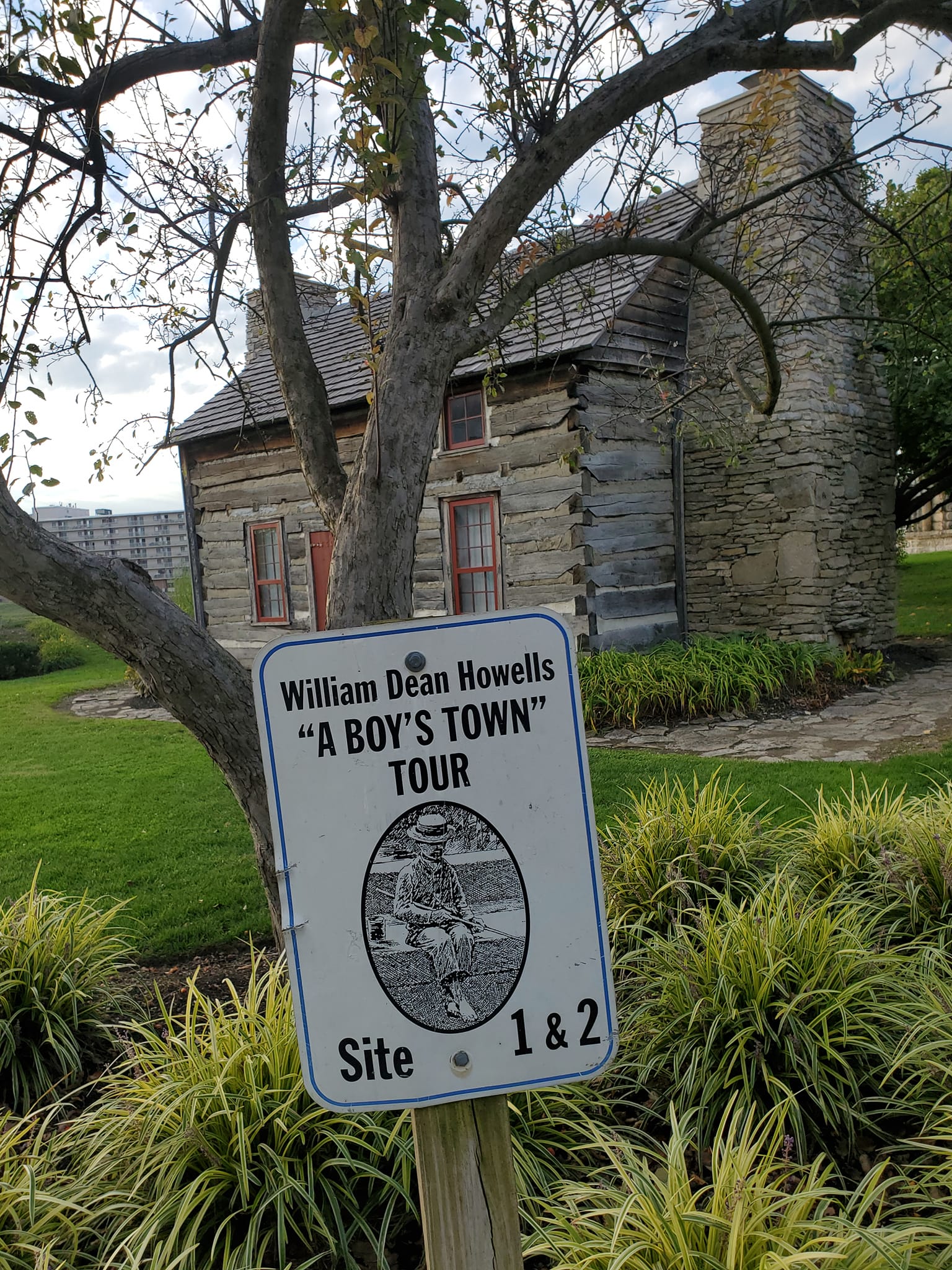
The Riverfront monument park is also the first and second stop on the William Dean Howells’ A Boy’s Town literary walking tour.
Howells was a prominent author with a multitude of publications, an editor of Harper’s and the Atlantic Monthly, is given credit for discovering Mark Twain and Walt Whitman, for documenting the history and life growing up in Hamilton’s early days and what the canal industry was like, and he gained notoriety for his nontraditional but progressive views on women’s rights, racial issues, and anti-war stance.
I have a found a couple other signs for additional stops of the tour, but can not find an actual website or comprehensive map. Try your best, I guess?
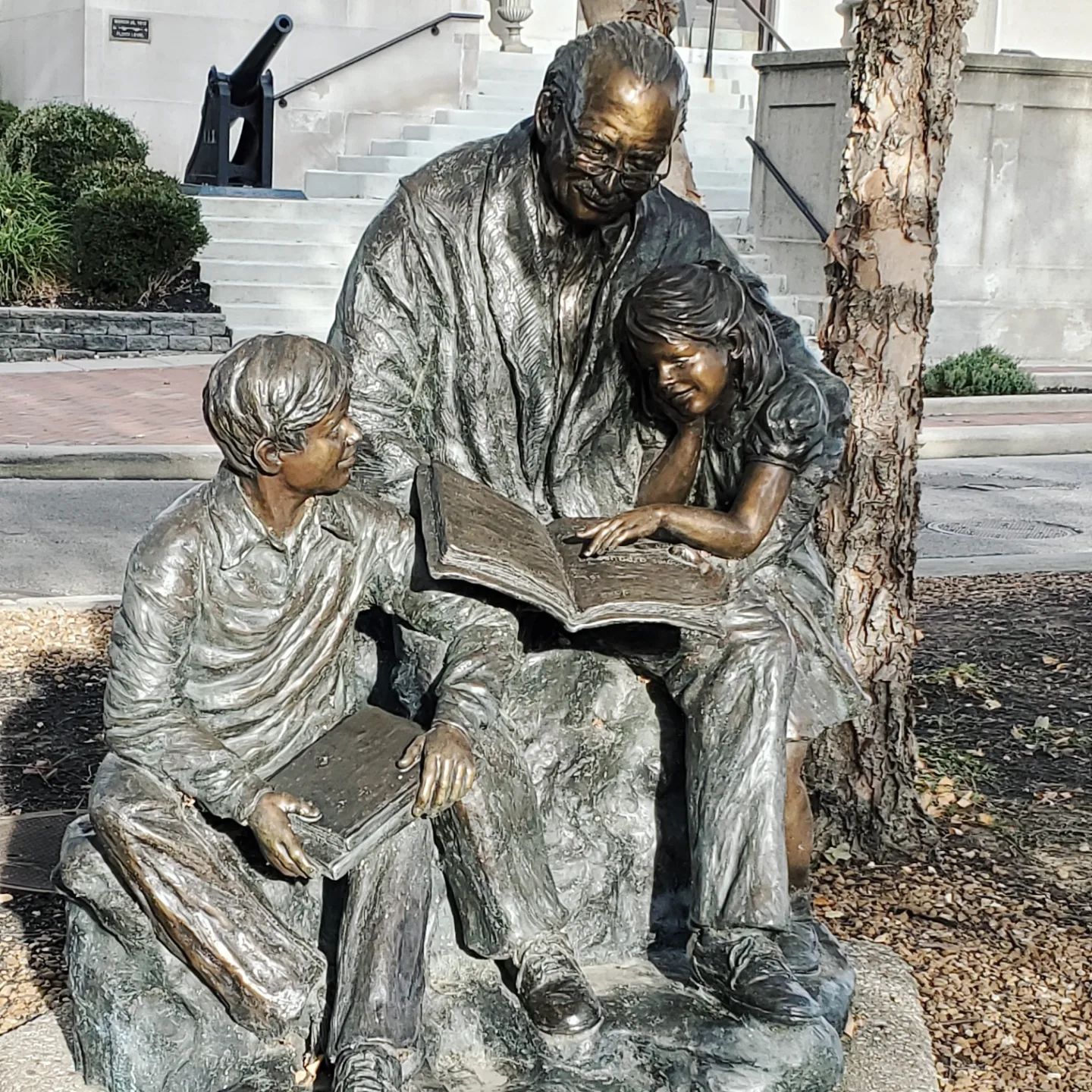
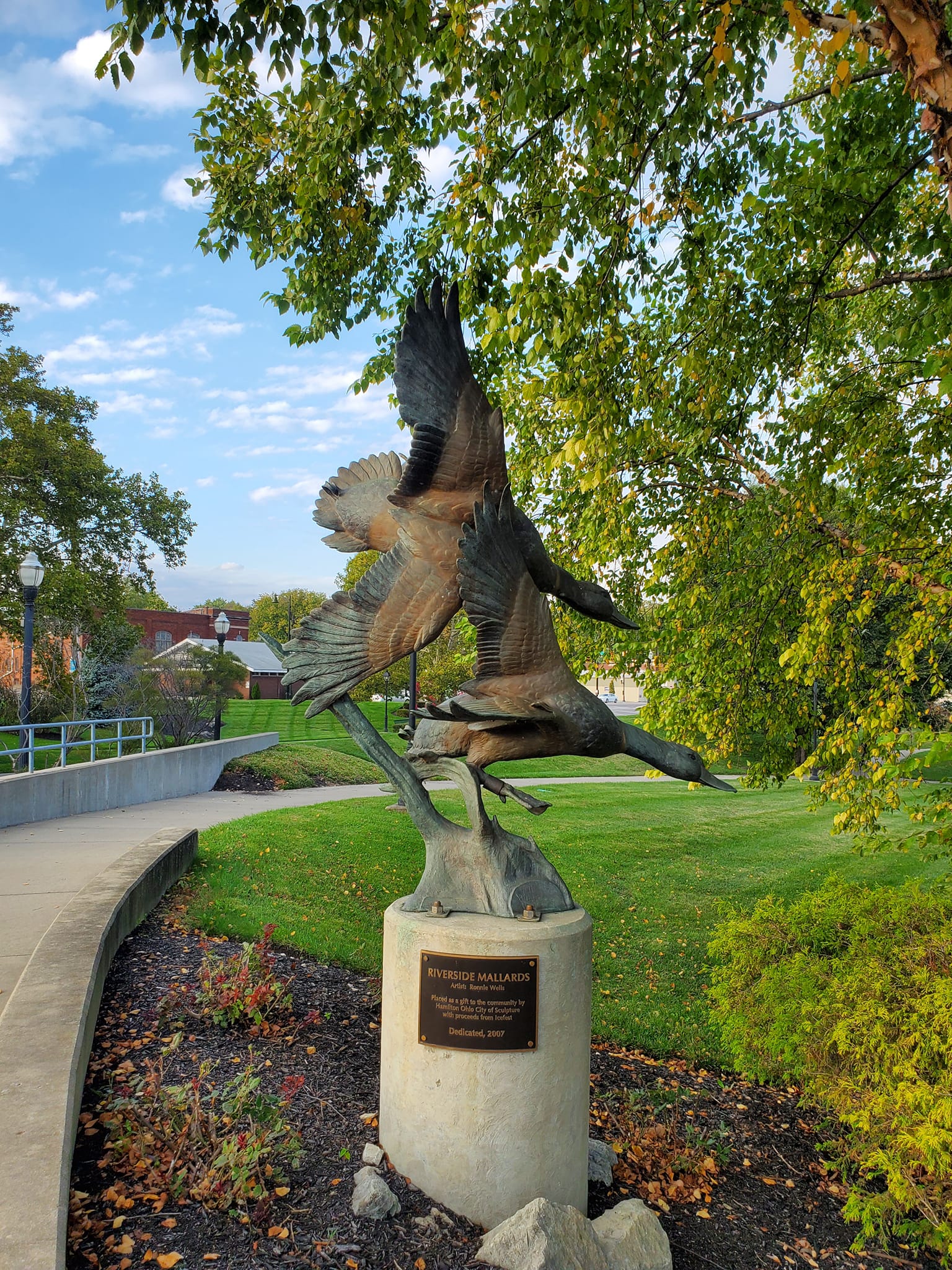
Further down, you will see more bronze sculptures depicting literary scenes from books by another local author, Robert McCloskey, and more.
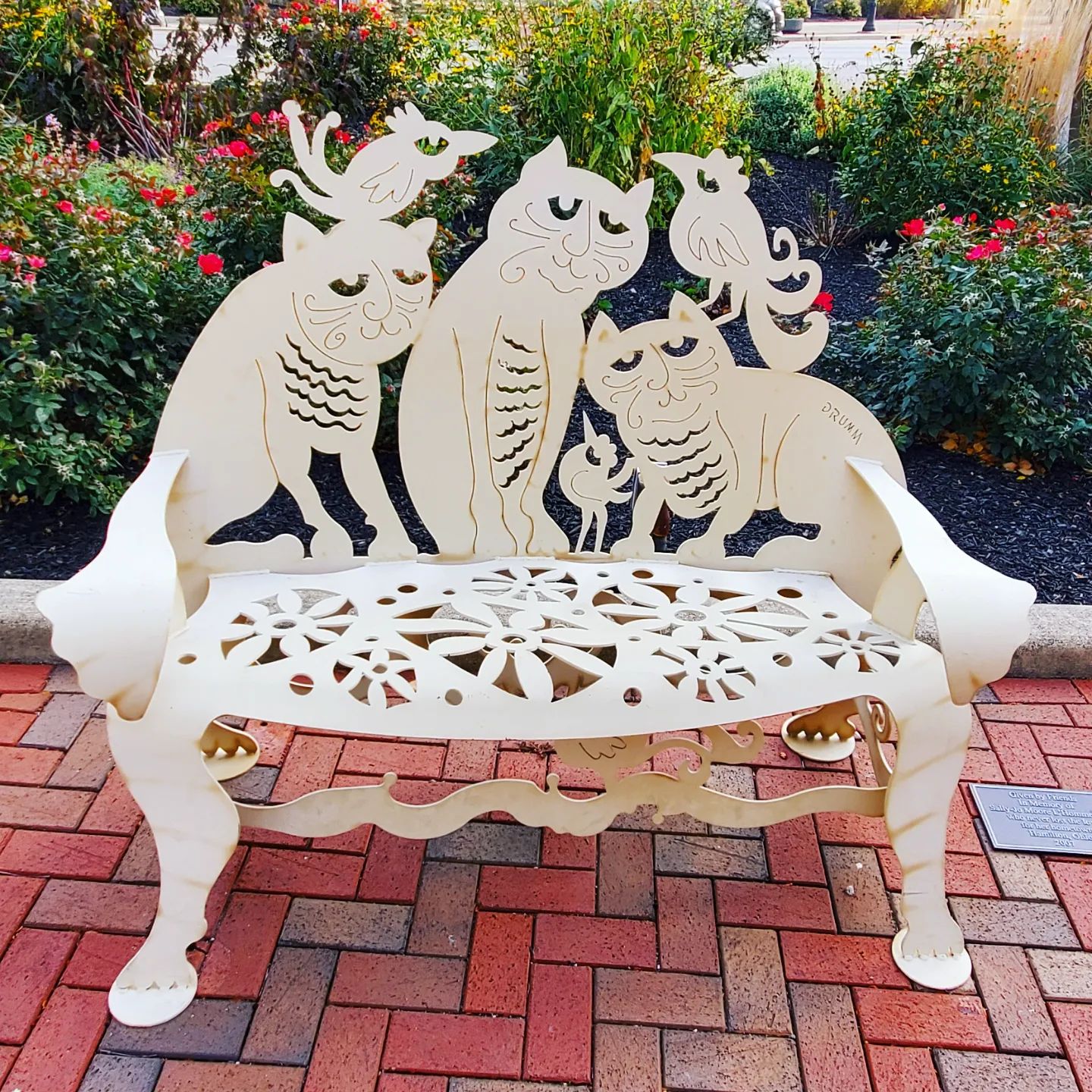
I kind of hate/love this unnerving bench sculpture of birds and “cats” in front of the visitors center, and I have to stop each time I pass it.
The park ends where it meets the Fitton Center for the Arts and its Carruthers Center, which may or not be a Ballroom now.
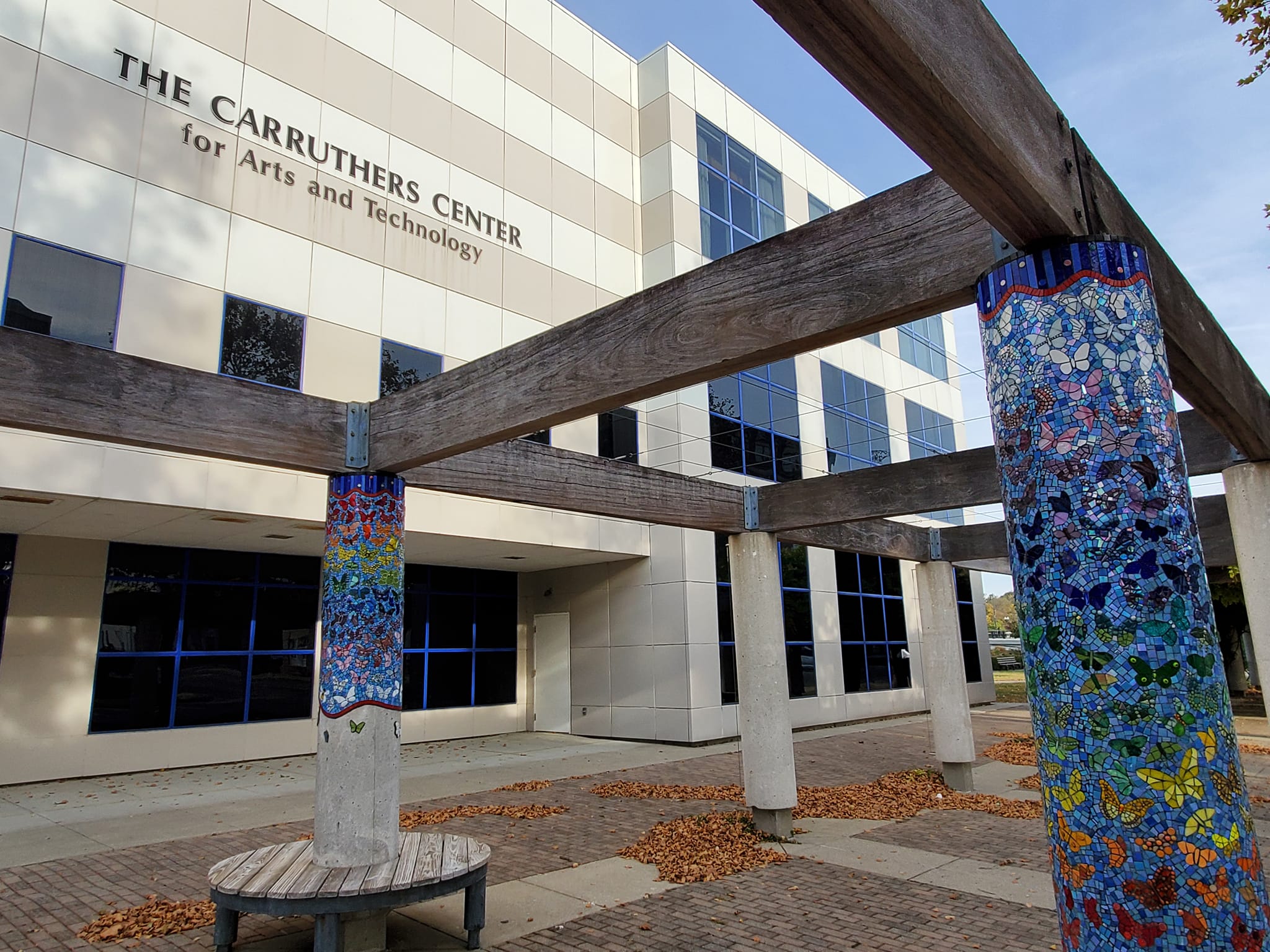
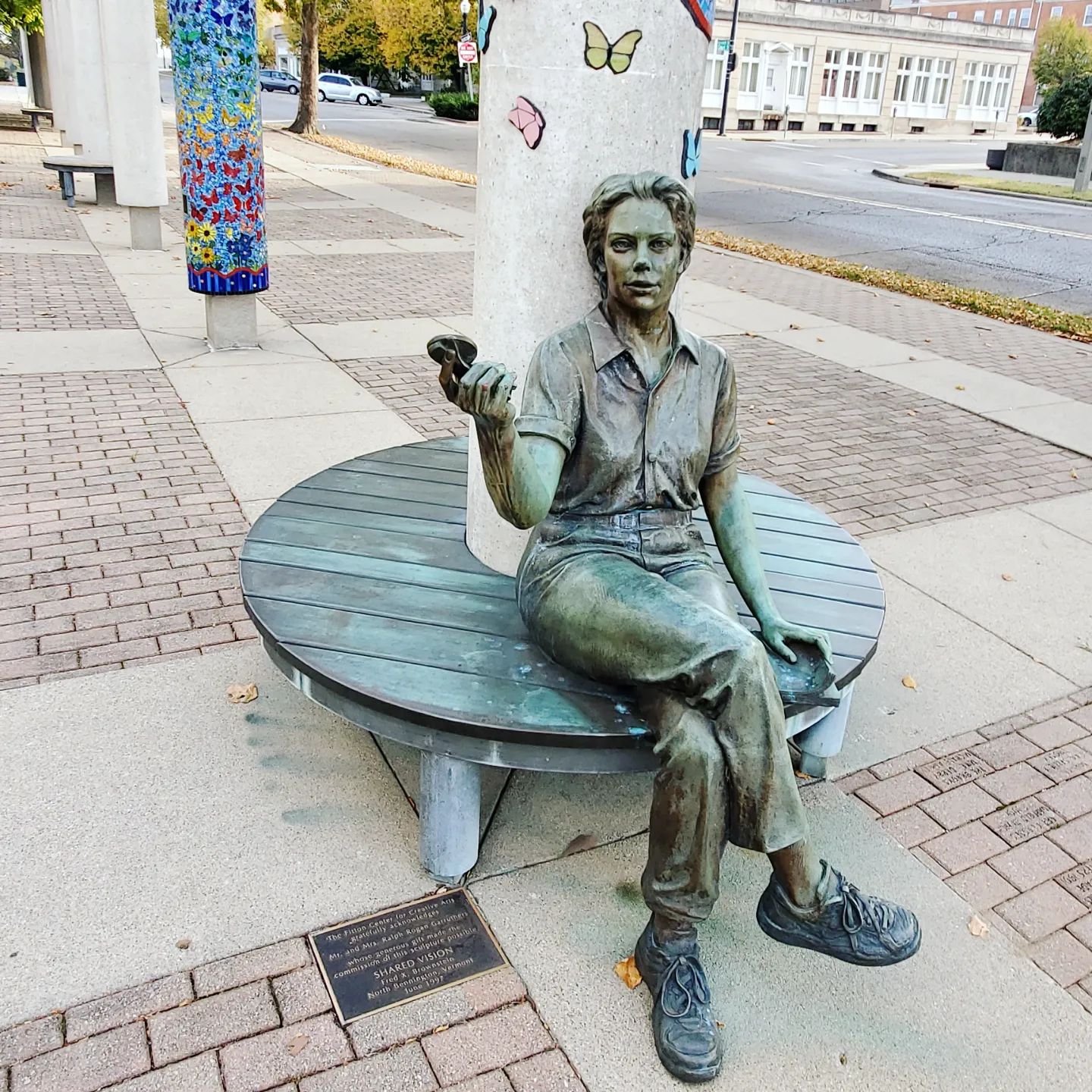
Between the two institutions, you can usually catch a variety of rotating exhibits and events.

HIGH/MAIN BRIDGE & MEDALLIONS
High Street and Main Street are one in the same in Hamilton, but it is called High Street east of the river, and Main Street west of the river. The switchover happens as you cross the High/Main Bridge.

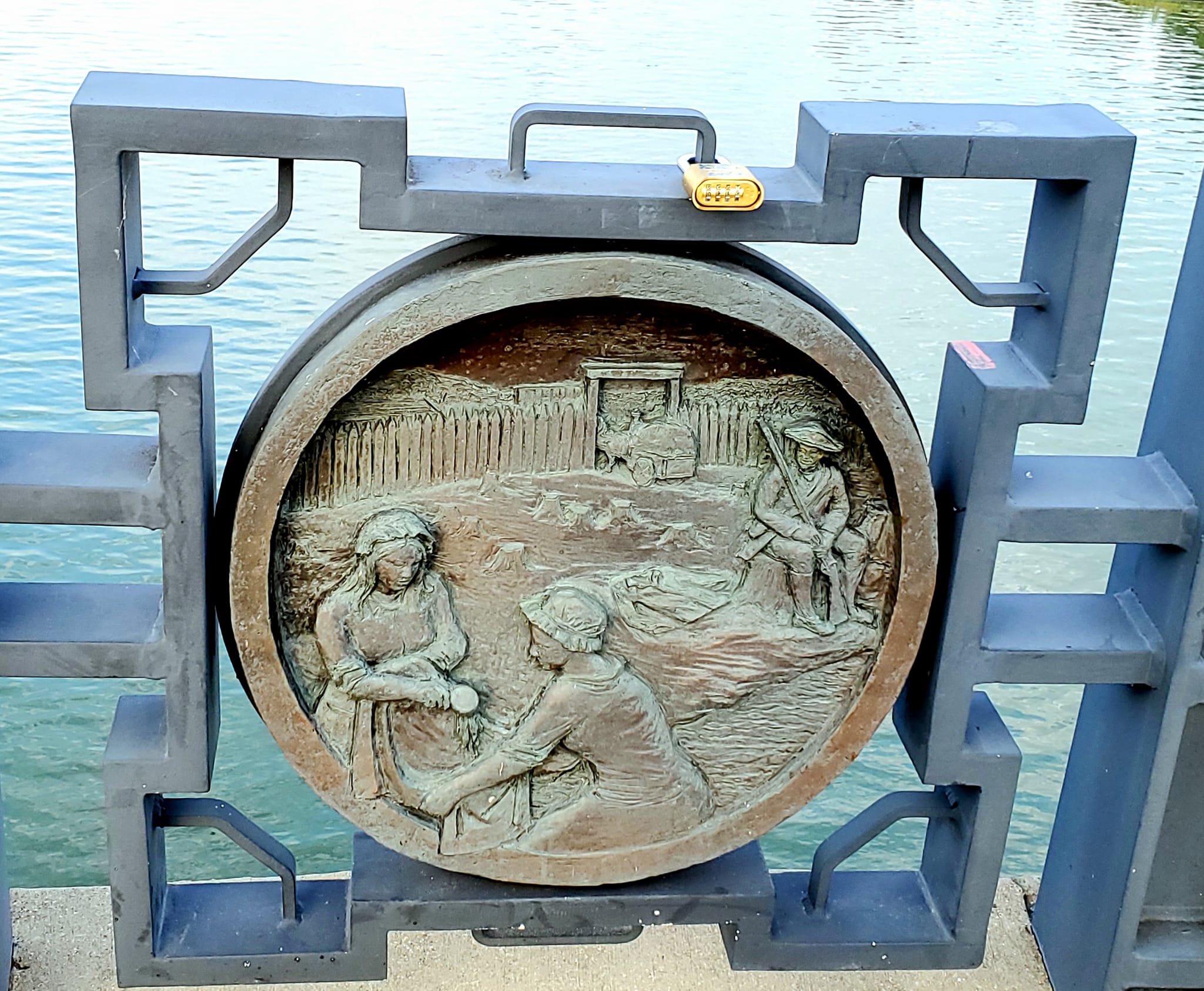
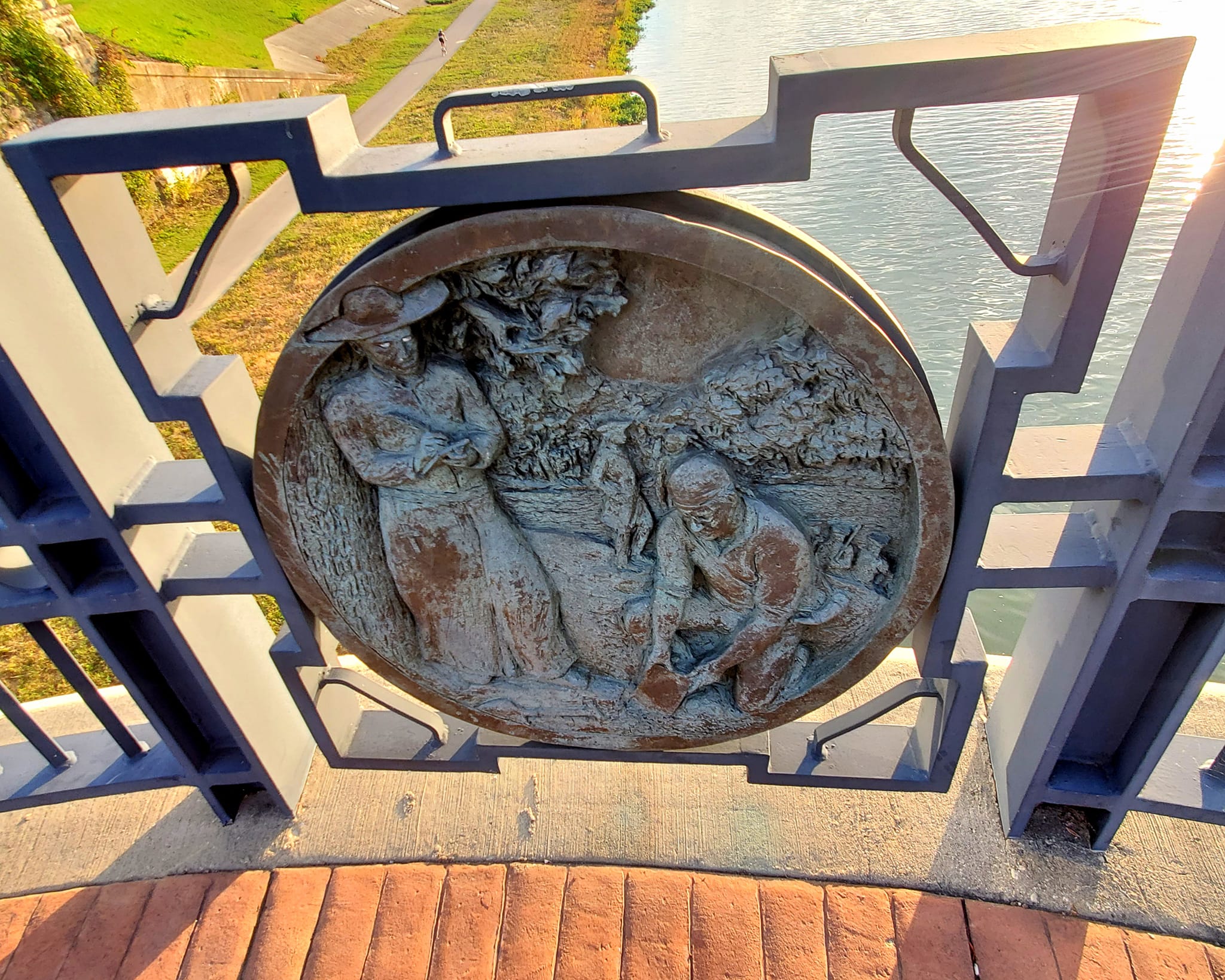
There are eight bronze medallions installed by artist Tom Tsuchiya (aka Norikazu) on both sides of the bridge, each depicting a different cultural attribute, event, or scene of Hamilton and the Miami River.
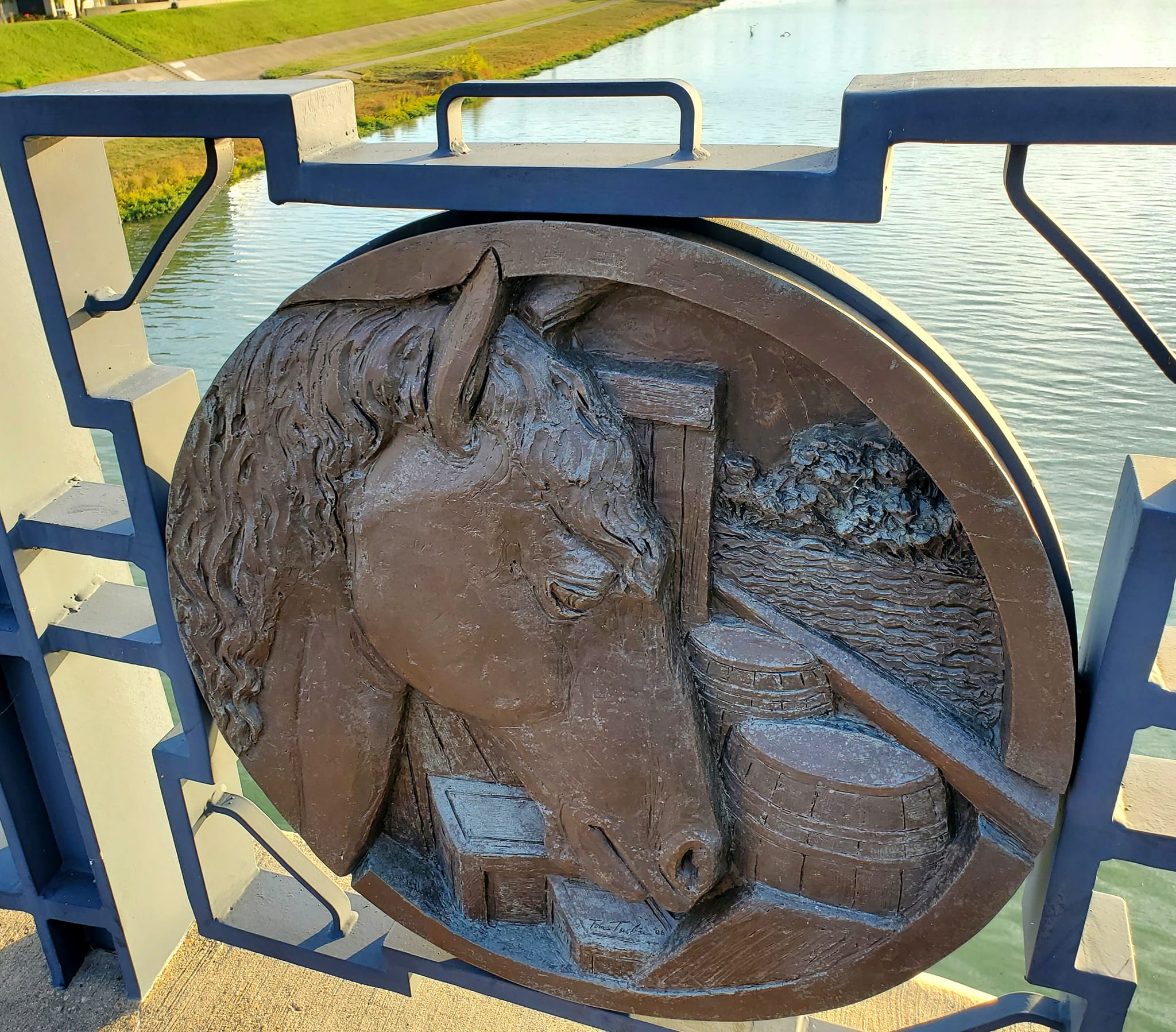

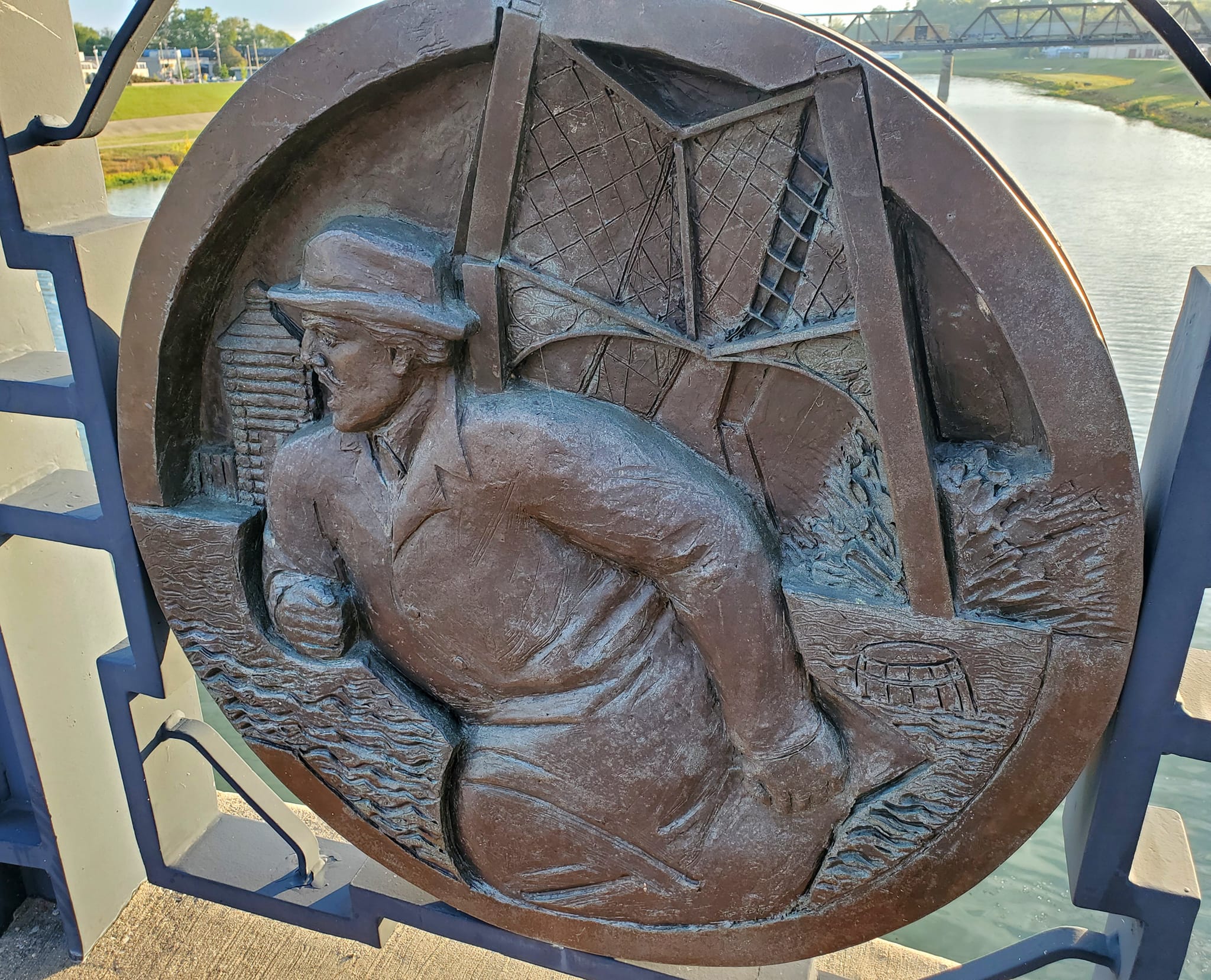
More specifically, they honour the French settlement, early trade routes on the canal, developing industries, the old Miami Bridge, Native Americans, Fort Hamilton, and the Great Flood.
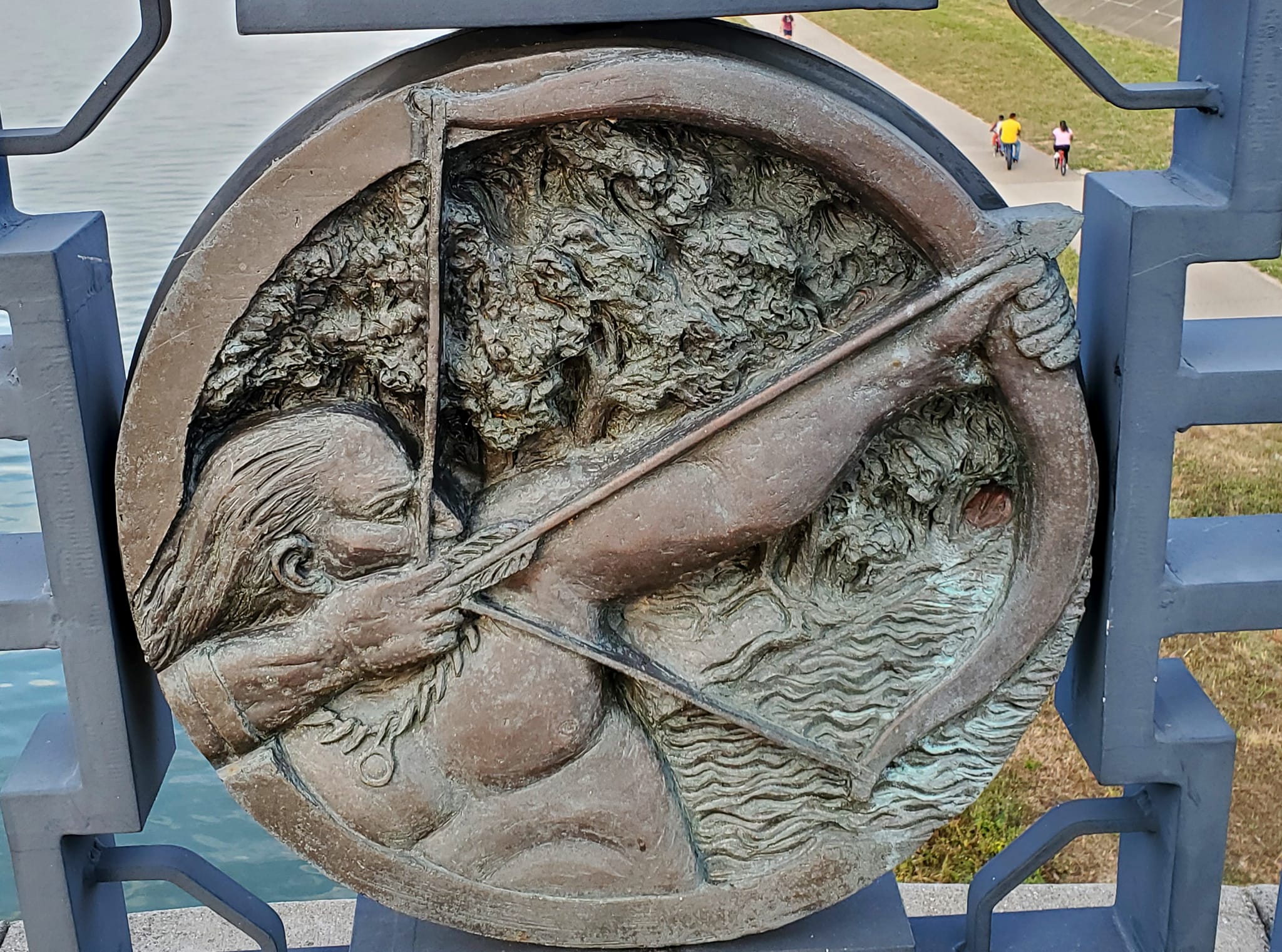

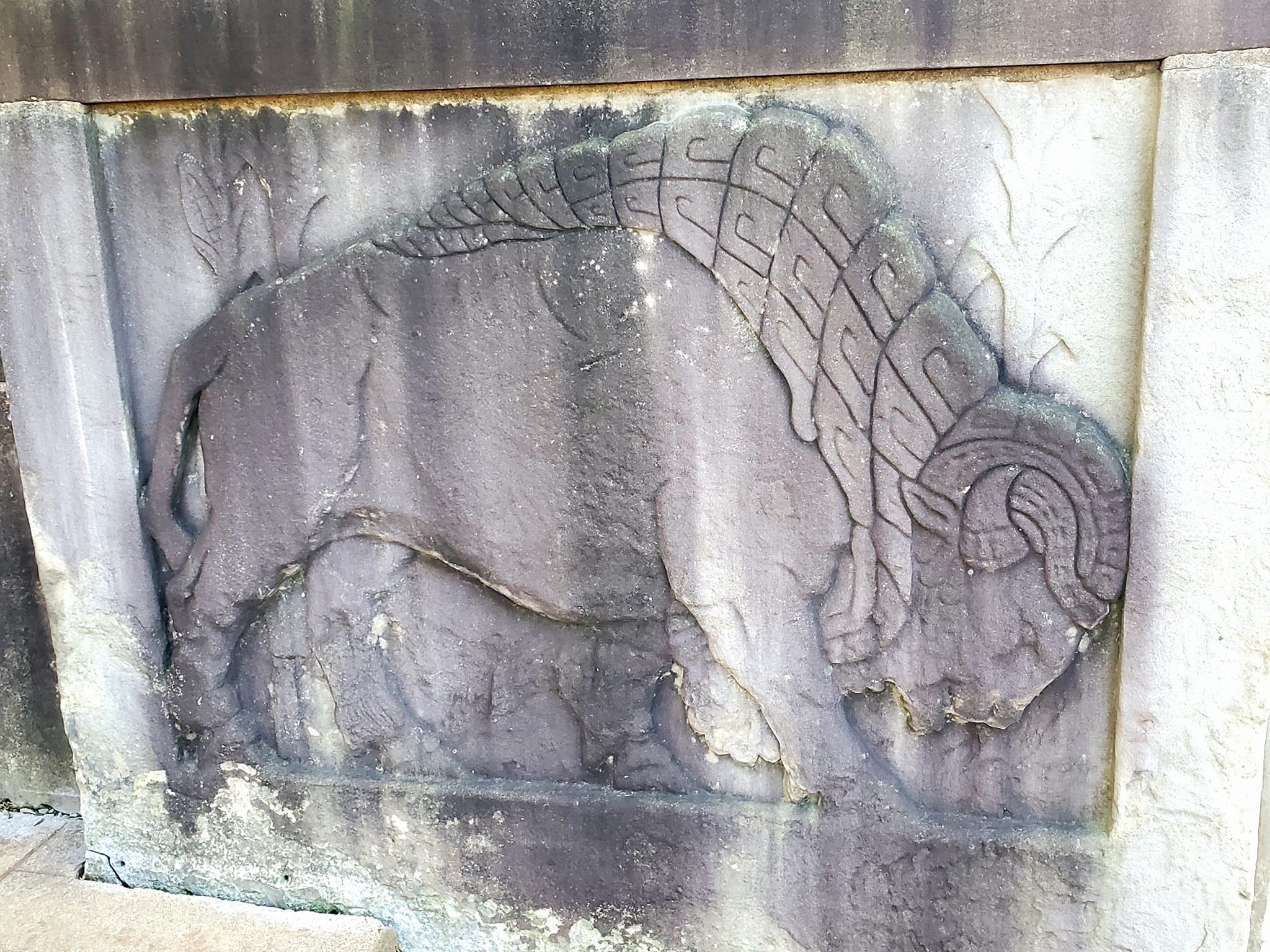
No disrespect, but the one below gives me the willies. Why are her eyes glowing? Who has been rubbing and scratching on those two tiny slits so much that it has worn the bronze? What is going on in Hamilton at night?!?!
Anyways, at the eastern end of the bridge where the road becomes High Street, look out for little nooks and parks with more sculptures.
There, you will see Heritage Hall, which is displays items form the personal collection of Hamilton’s most successful and celebrated writer, Robert McCloskey.
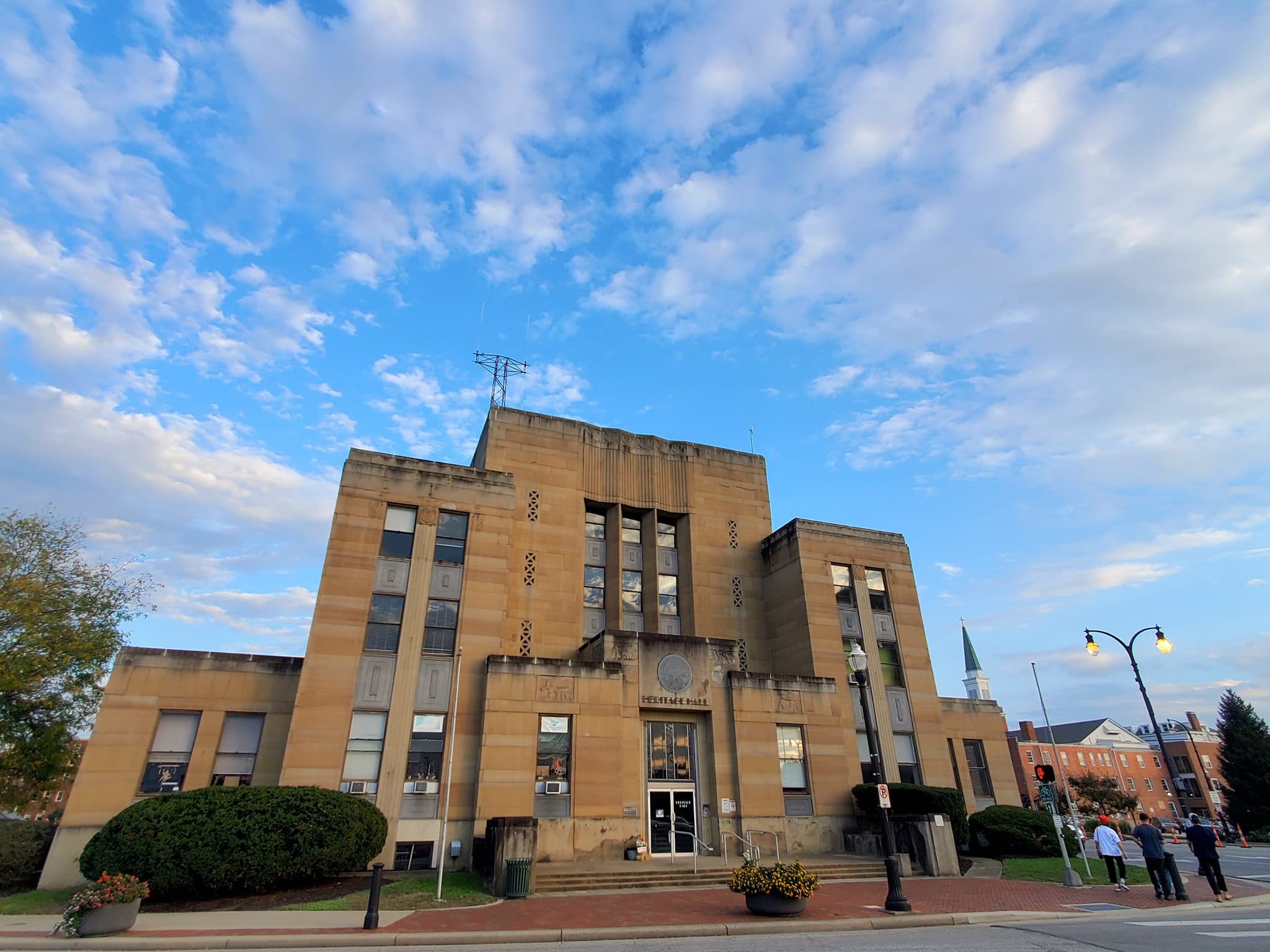
You will also be entering the western boundaries of Hamilton’s German Village to the left (north), and the downtown central business district by continuing straight along High Street.
Just around the corner behind Heritage Hall is one of my favourite spots in town, Municipal Brew Works.

Be sure to check out the rest of Hamilton’s German Village, then make your way back to High Street to explore the central business district. High Street is a broad boulevard with equally wide medians full of sculptures, historic plaques, and flowers.
My favourite part is the gigantic sculpture of Alexander Hamilton in his billowing cape.
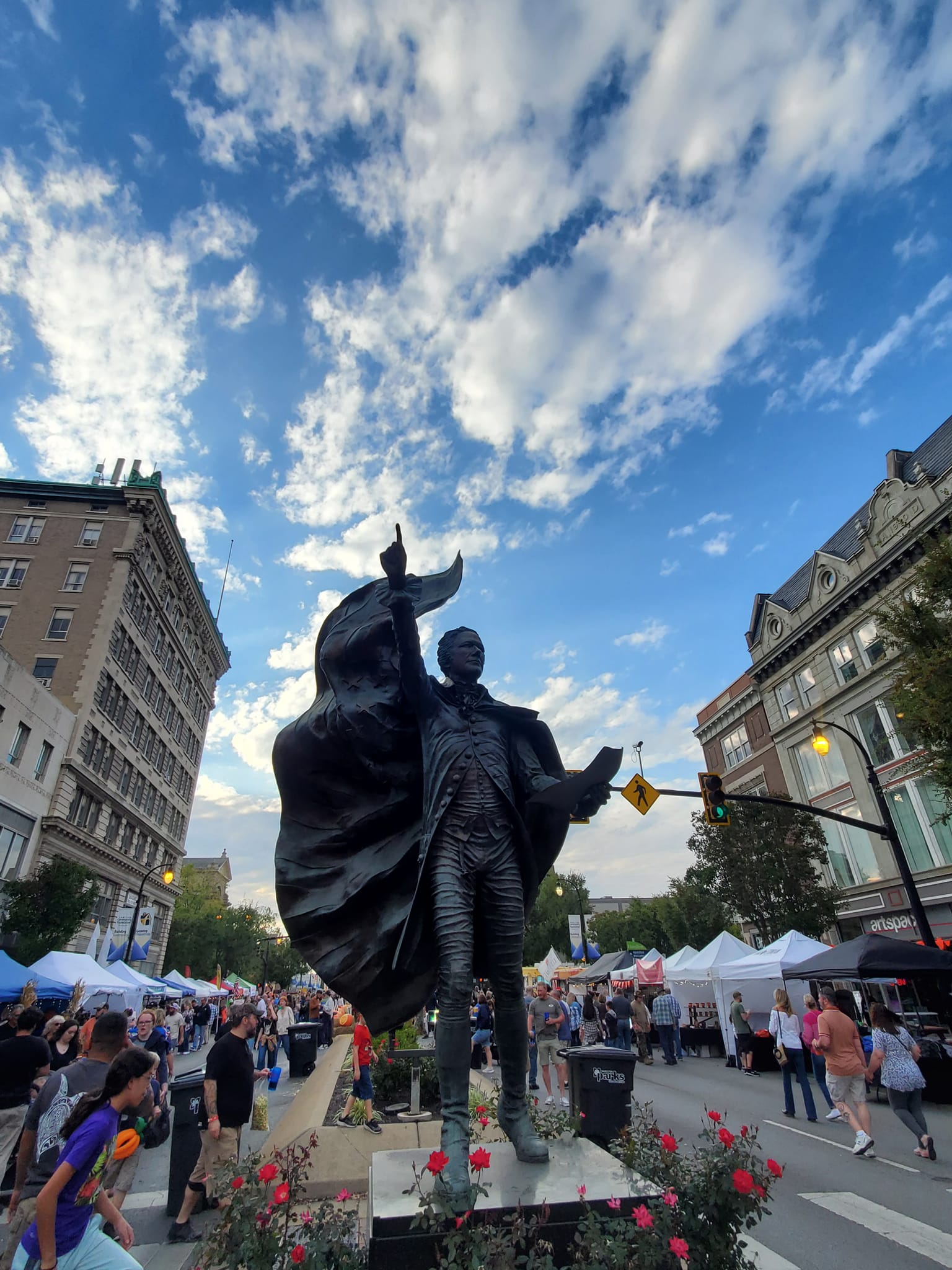
This thing is so majestic, I have to post it from a slightly different angle.

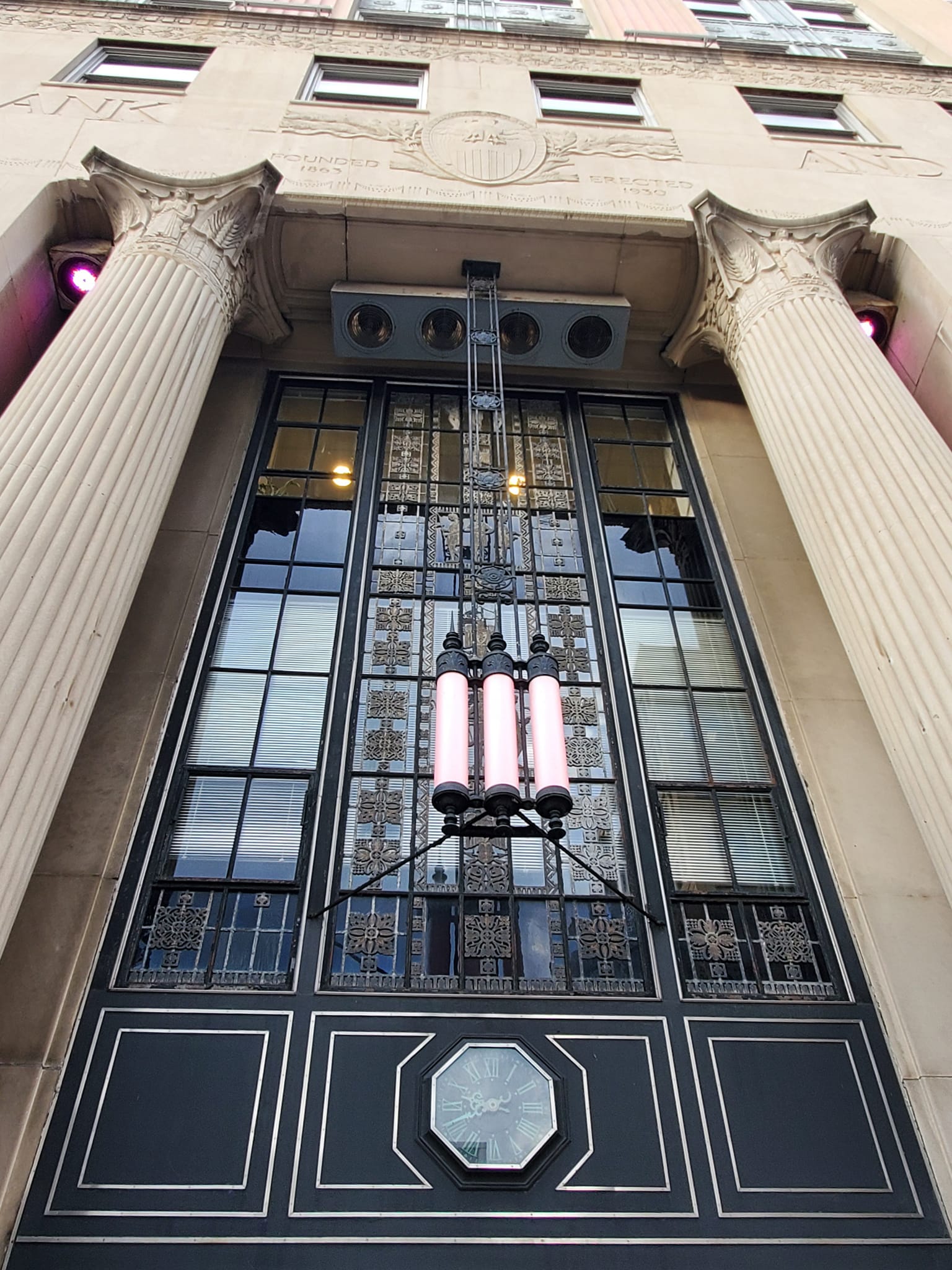
Some other attractive buildings along High Street are the Courthouse and the Second National Bank.
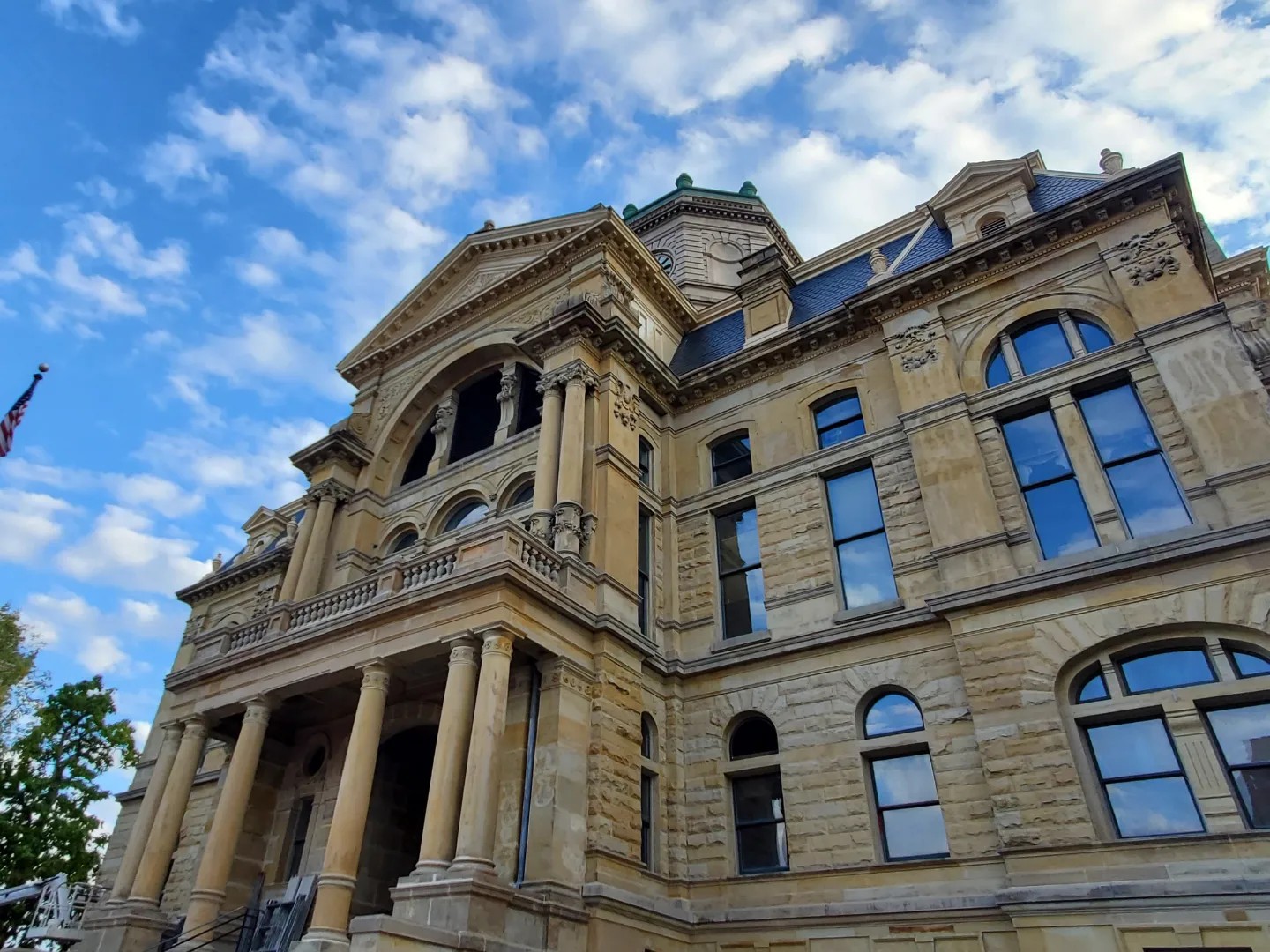
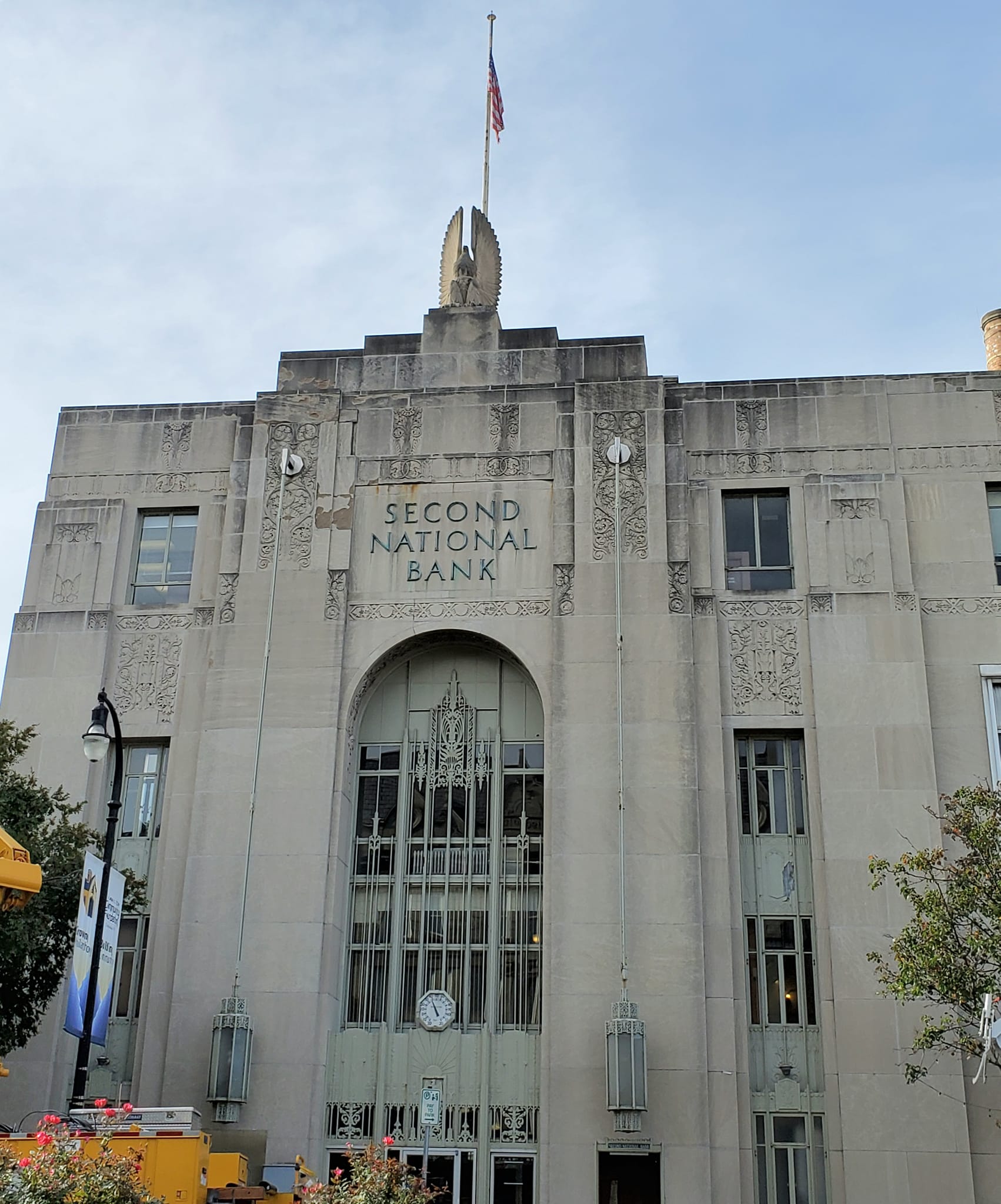
Just LOOK at the details in the design of this place!
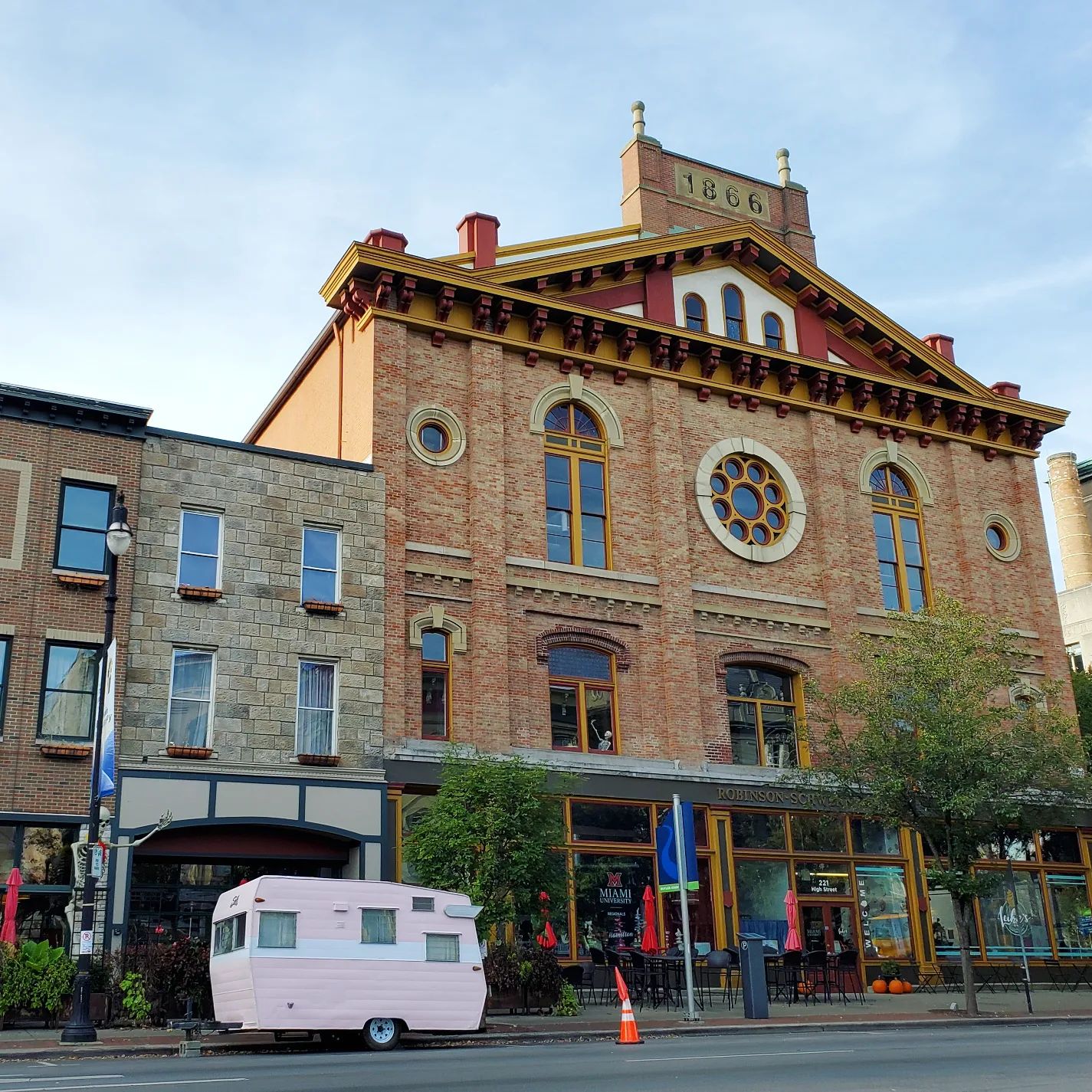
The Robinson-Schwenn Building, formerly the 1866 Dixon Opera House and Globe Opera House, is now home to Miami University. It is definitely one of my favourite buildings in Hamilton, and it was added to the National Register of Historic Places in 2000.
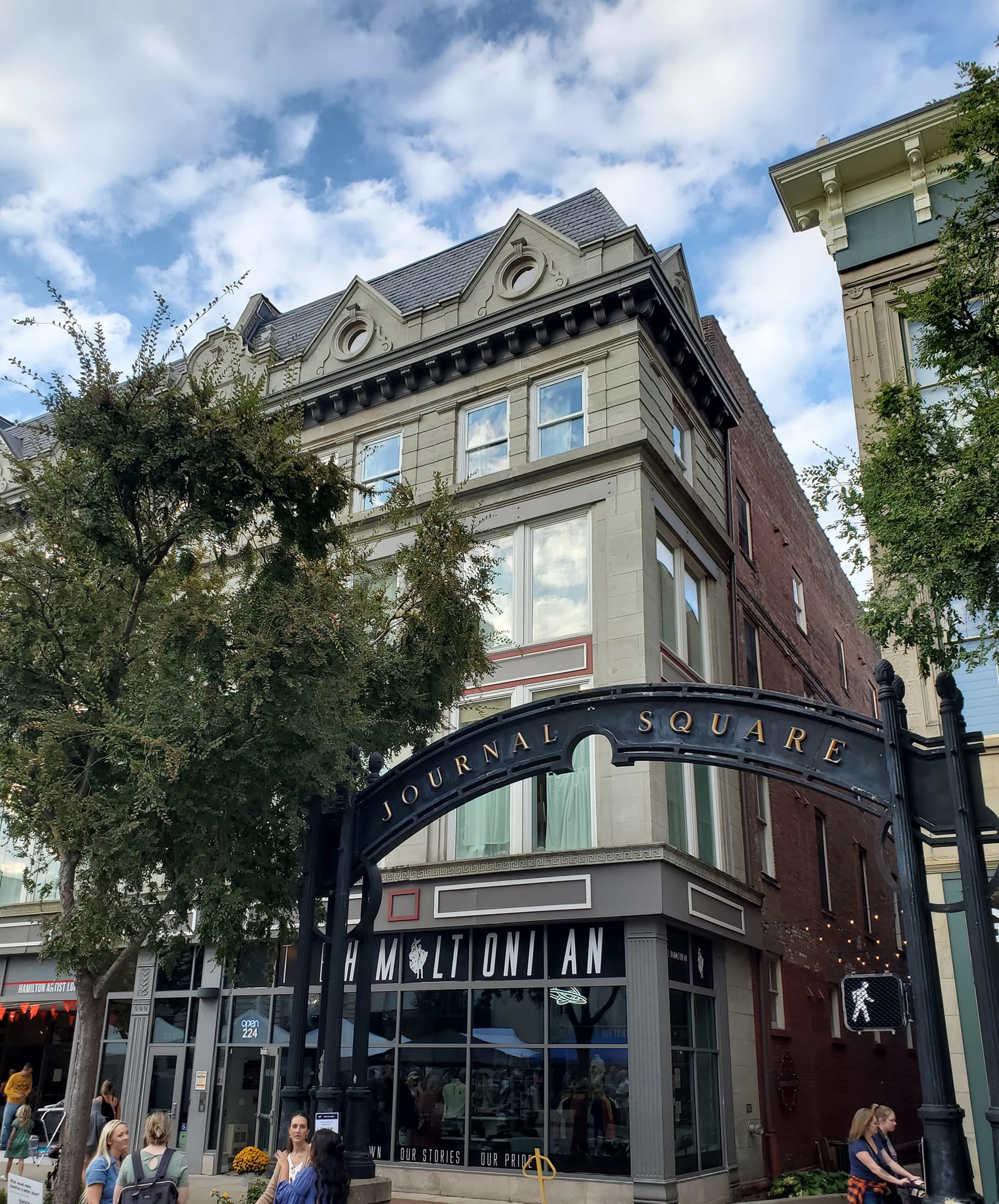
Journal Square has a cute little breezeway park and some more plaques, in addition to all the shops and cafes lining High Street.
There are just so many cool types architecture to admire in Hamilton.

Hamilton has some cool murals too, especially around and under its bridges and overpasses.
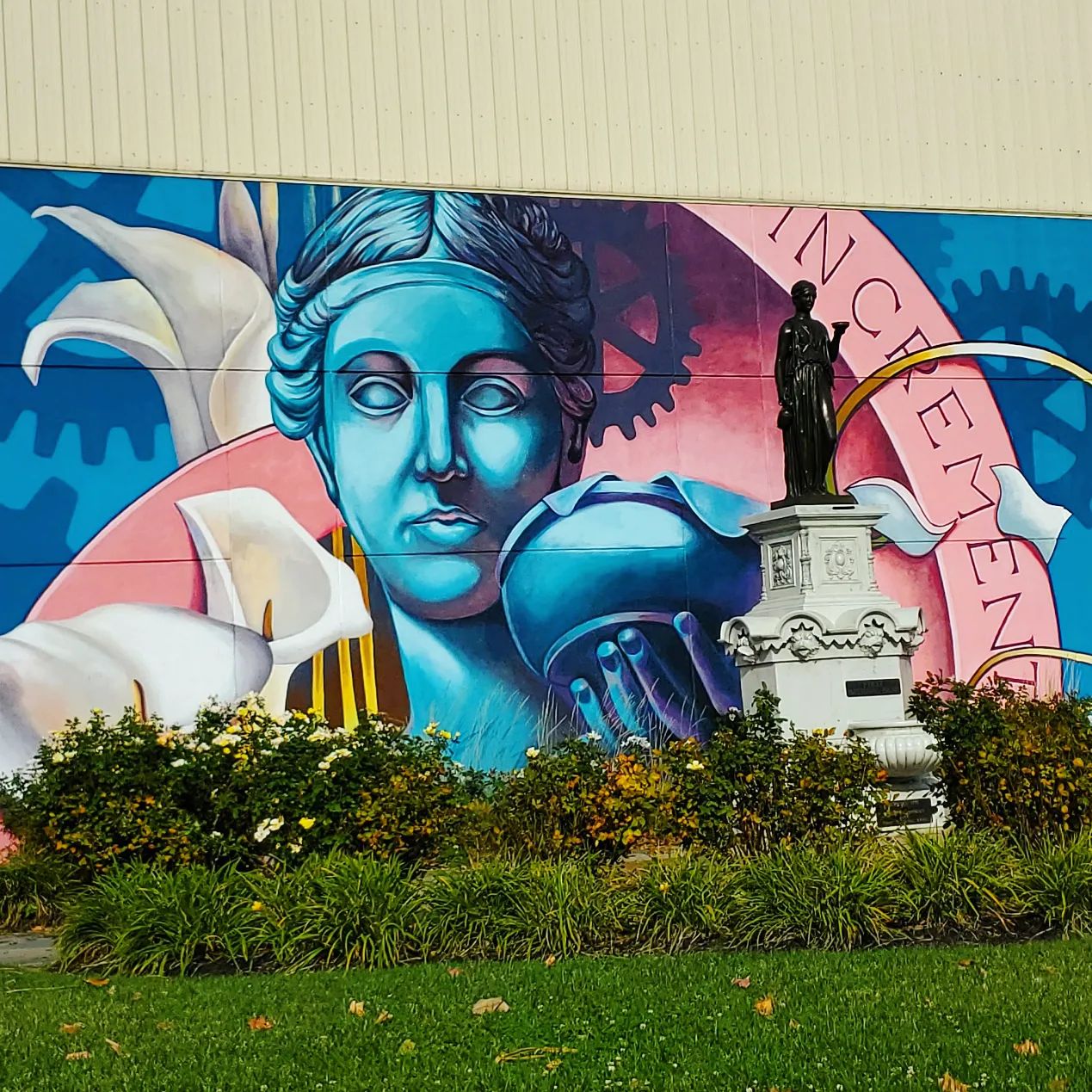
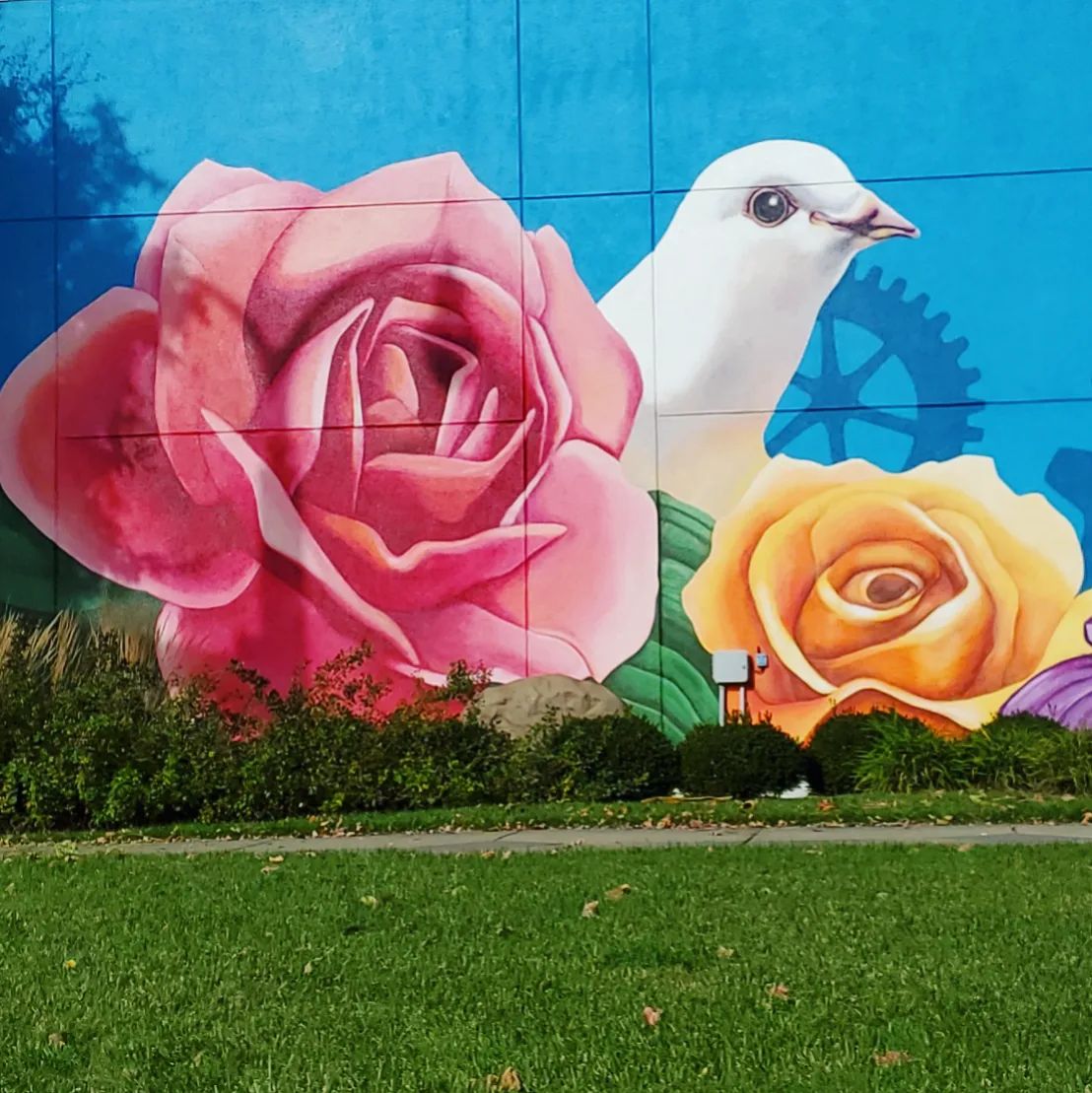
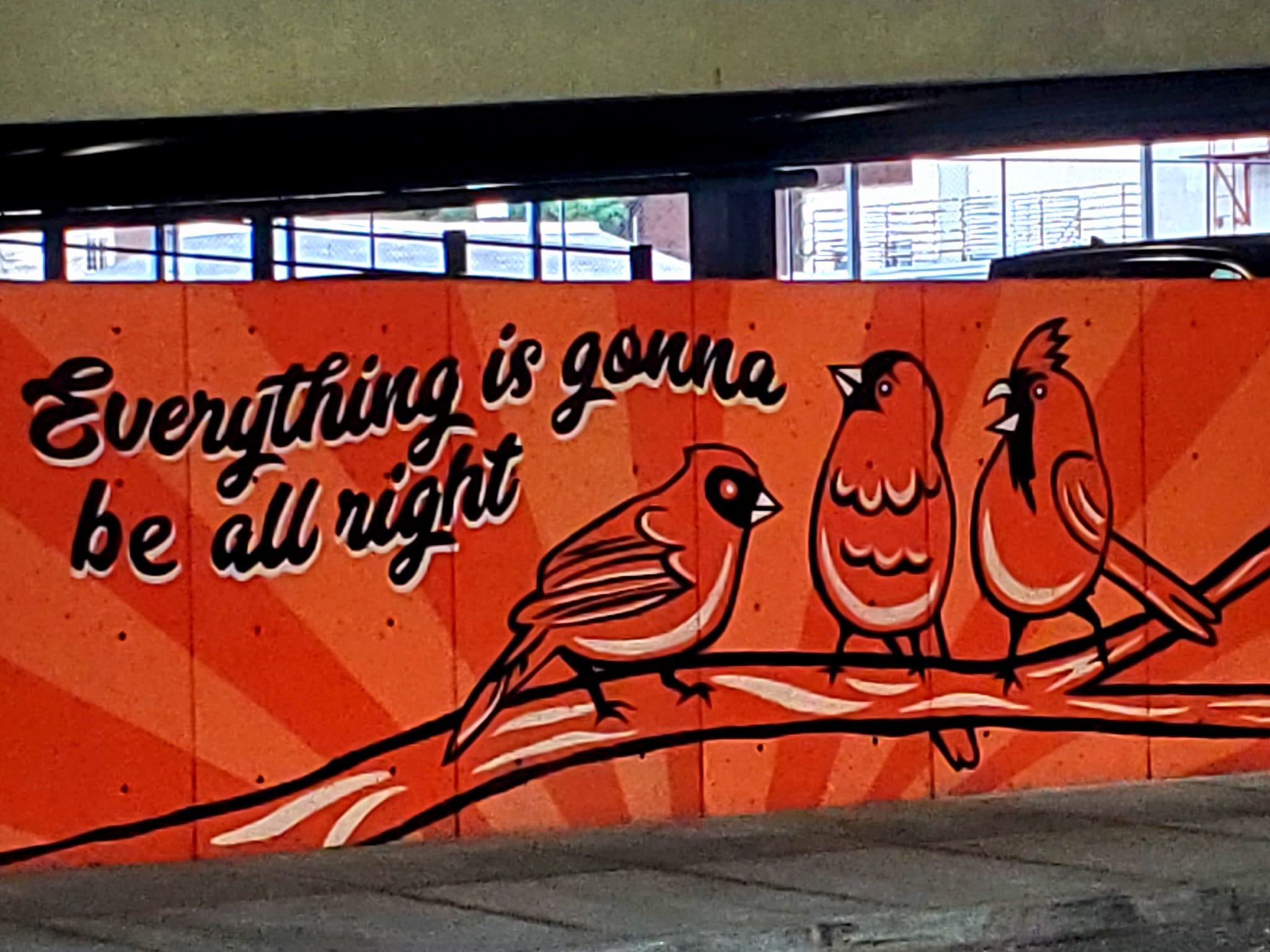

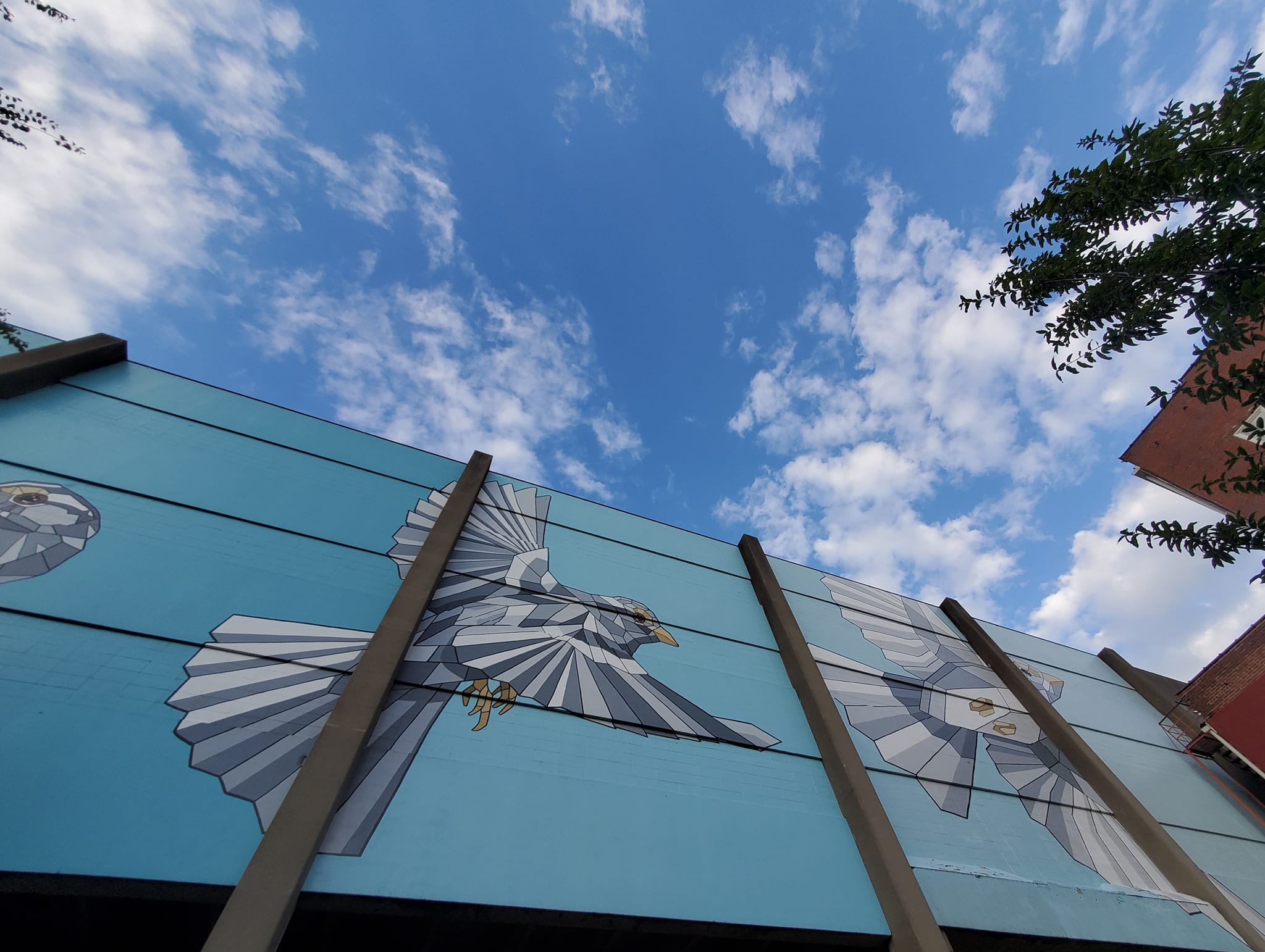
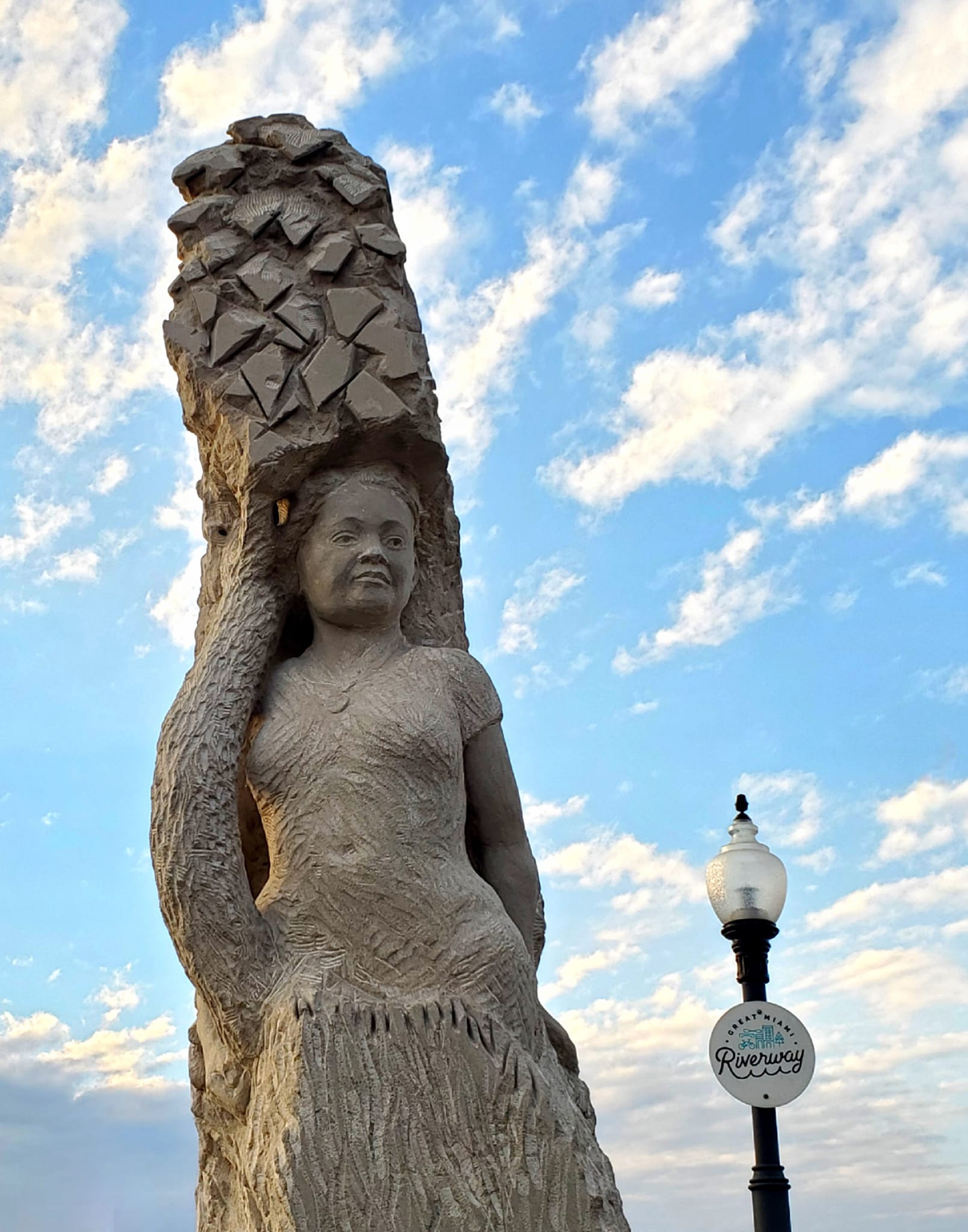
Look out for even more random sculptures peeking out behind trees, around buildings, in the bushes, and where you may least expect them.
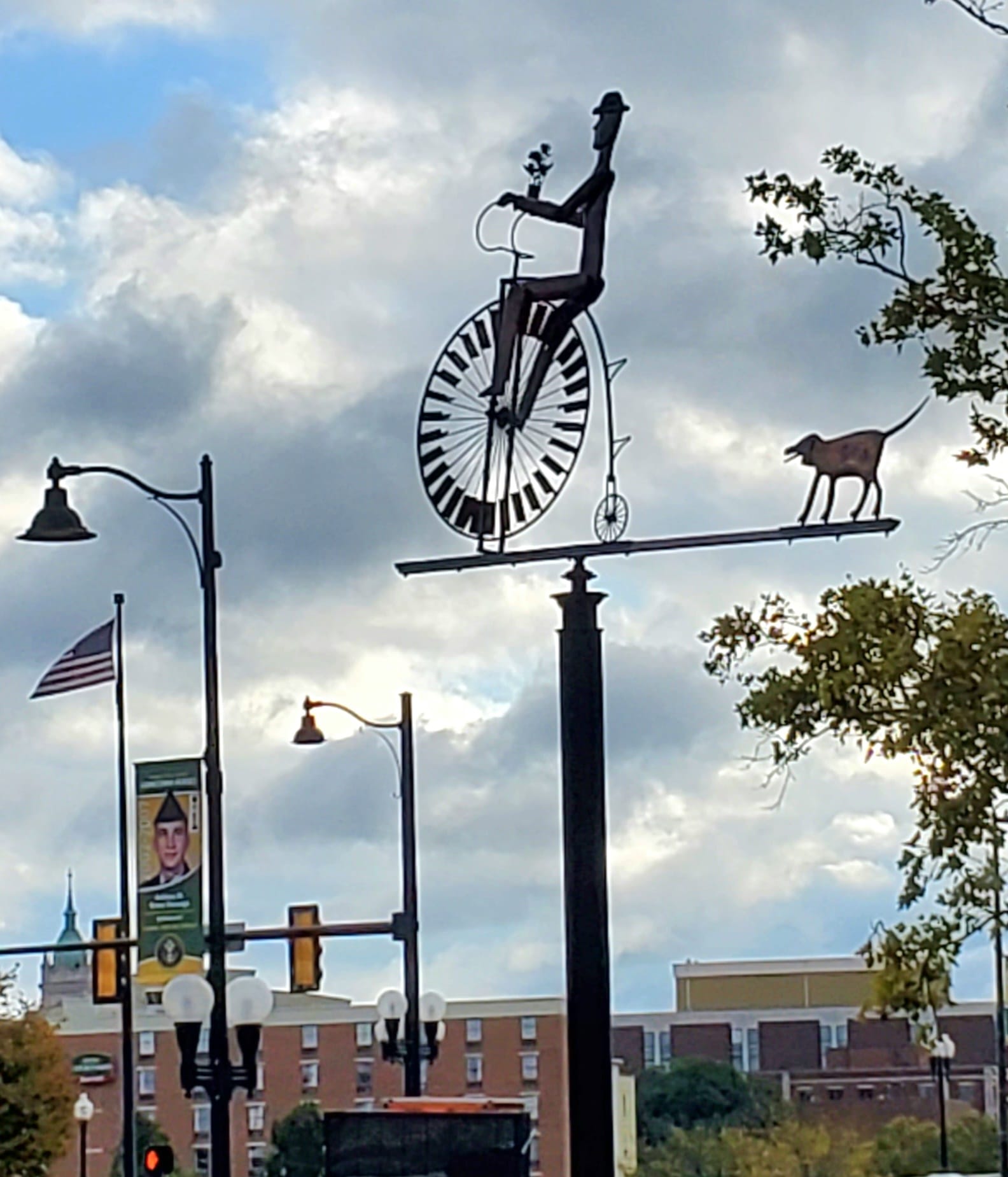


Check out this website for a more extensive list of where to find sculptures around Hamilton.
There is a sculpture map available from the Fitton Center’s Streetspark project really cool guided tour of Hamilton available, and another tour on Otocast that I found helpful.
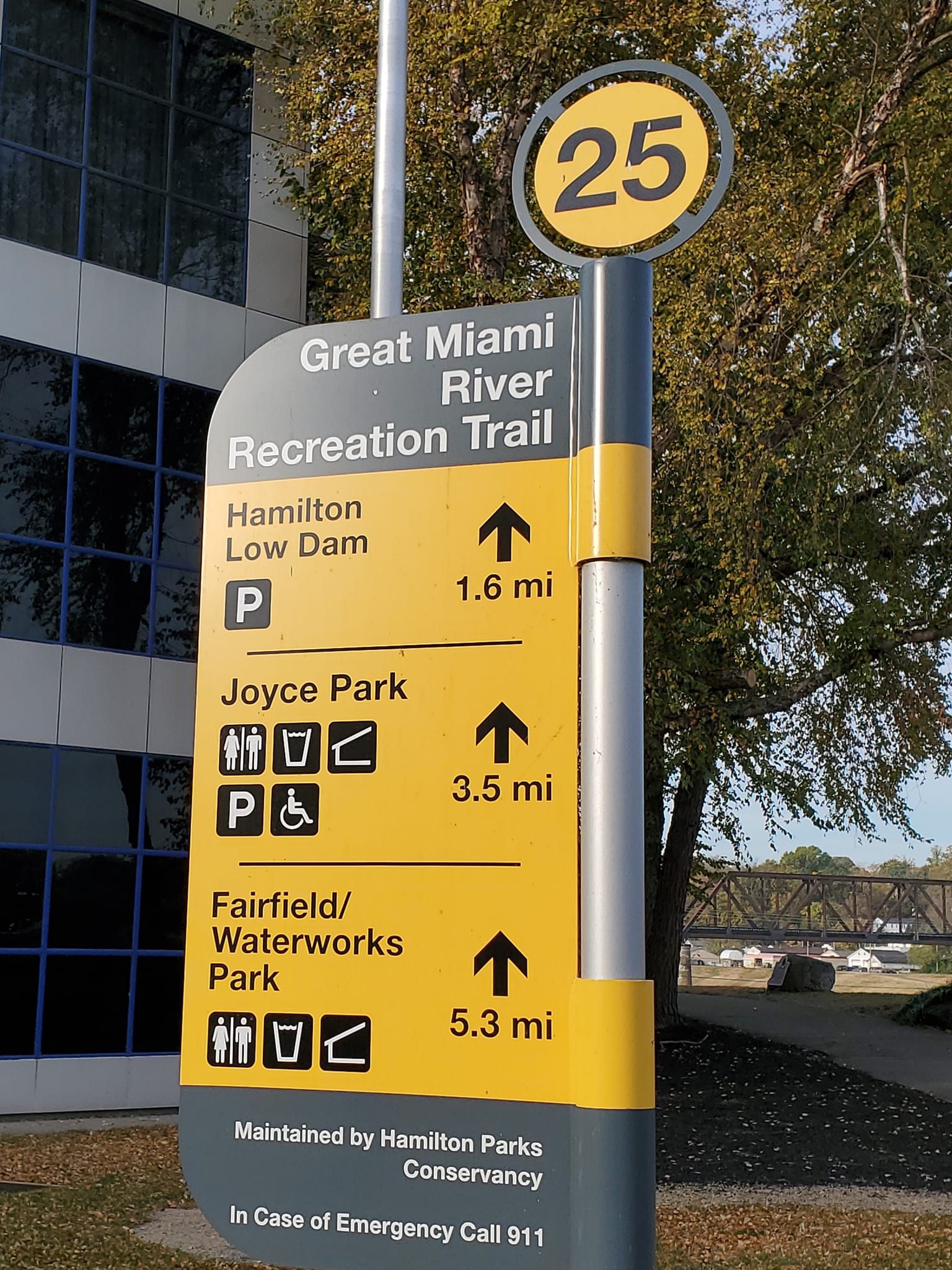
Try to get some time in on the trails around the Great Miami River while you are in Hamilton, too.
PYRAMID HILL SCULPTURE PARK & MUSEUM
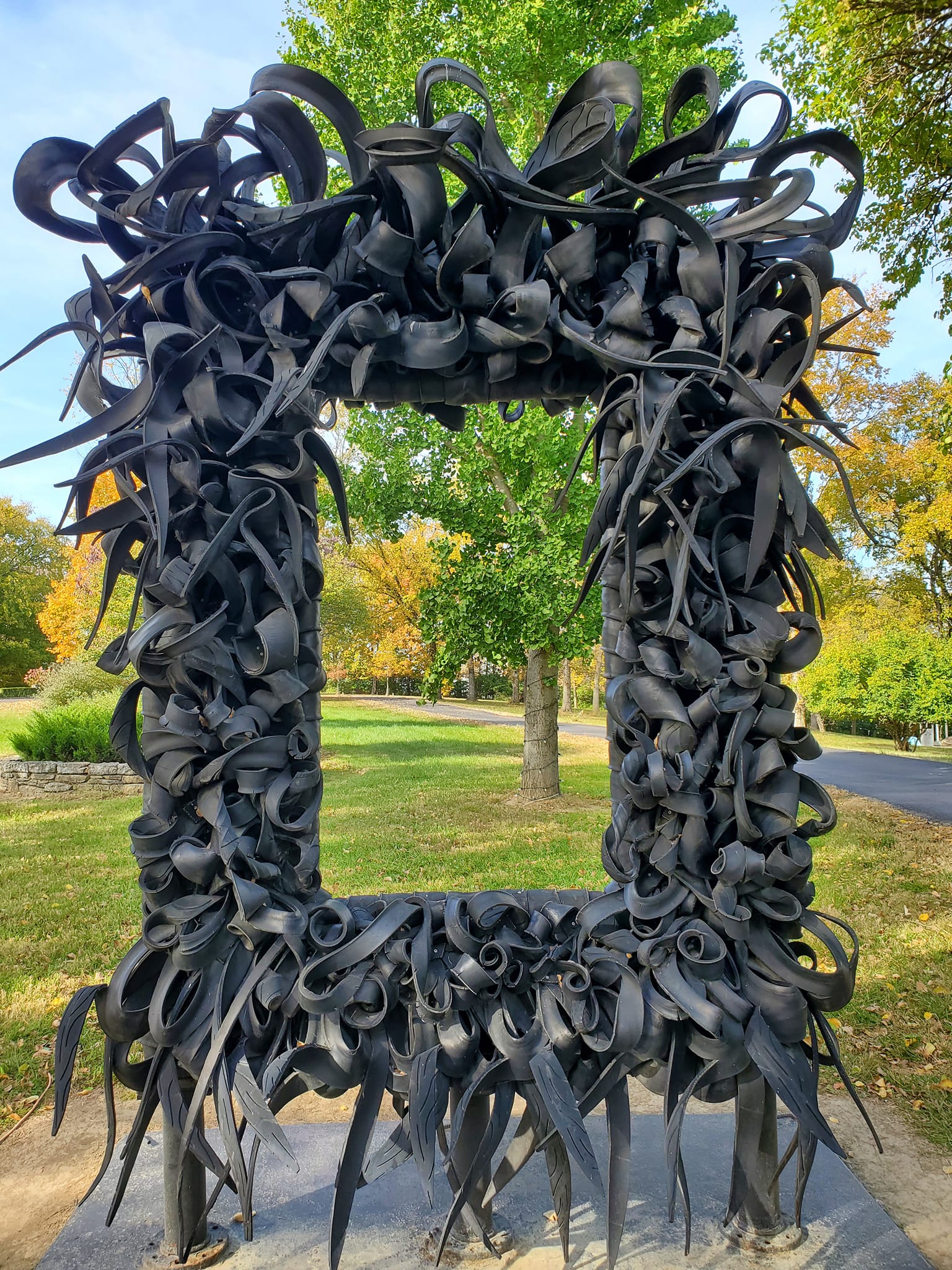
Pyramid Hill is an outdoor sculpture park and museum, and features the indoor Ancient Sculpture Museum onsite.
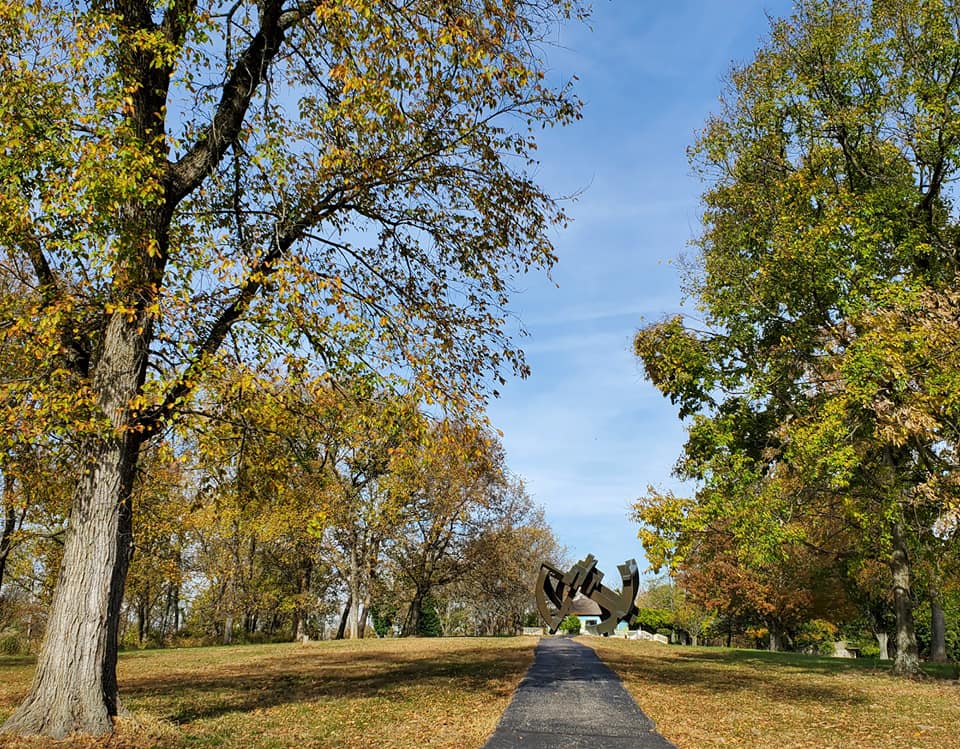
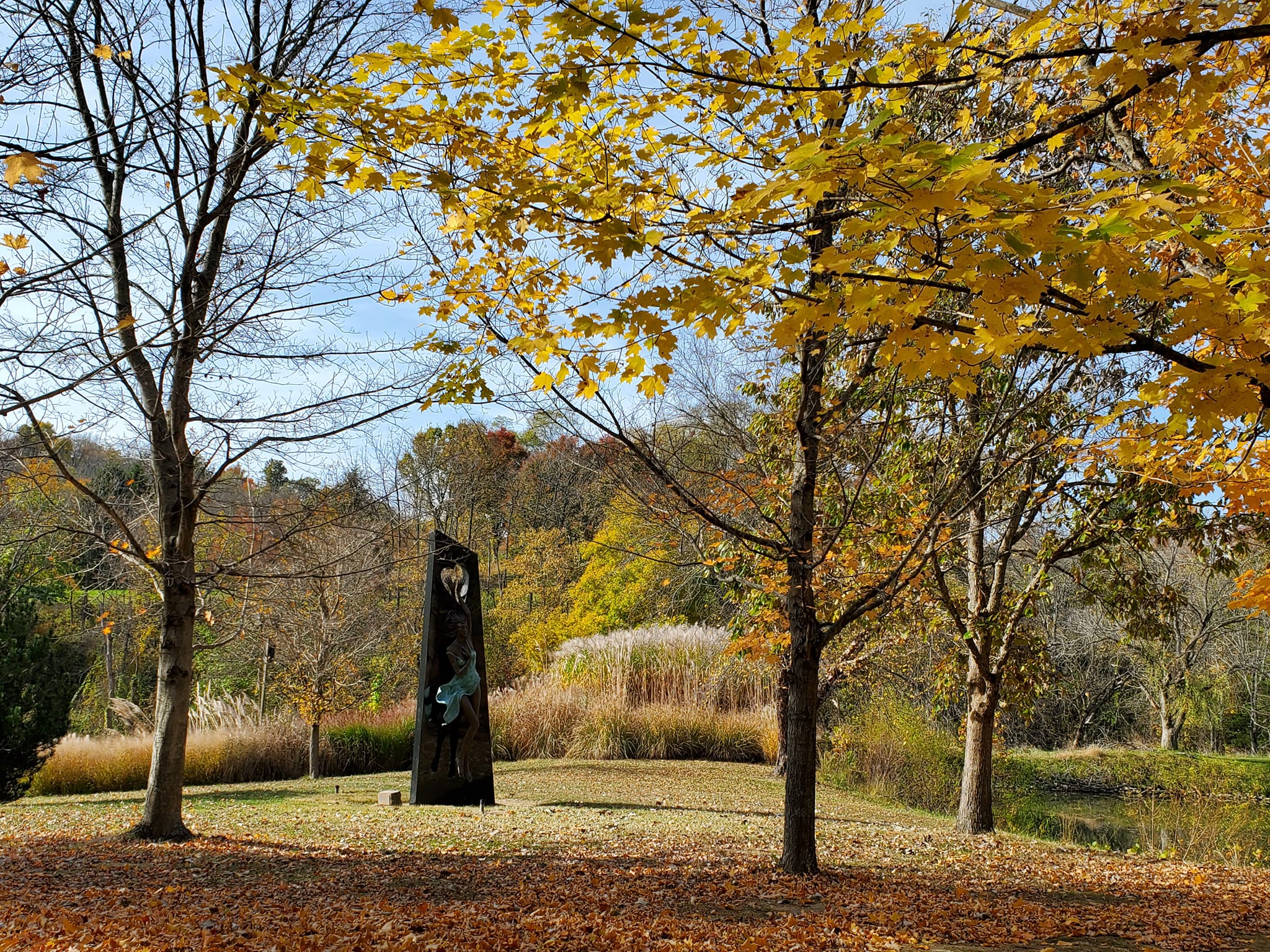
It opened in 1997 after a decade of hard work by founder Harry T. Wilks, and hosts popular events that draw more than 30,000 people each year like Holiday Lights on the Hill, Journey Borealis, and the Art Fair.
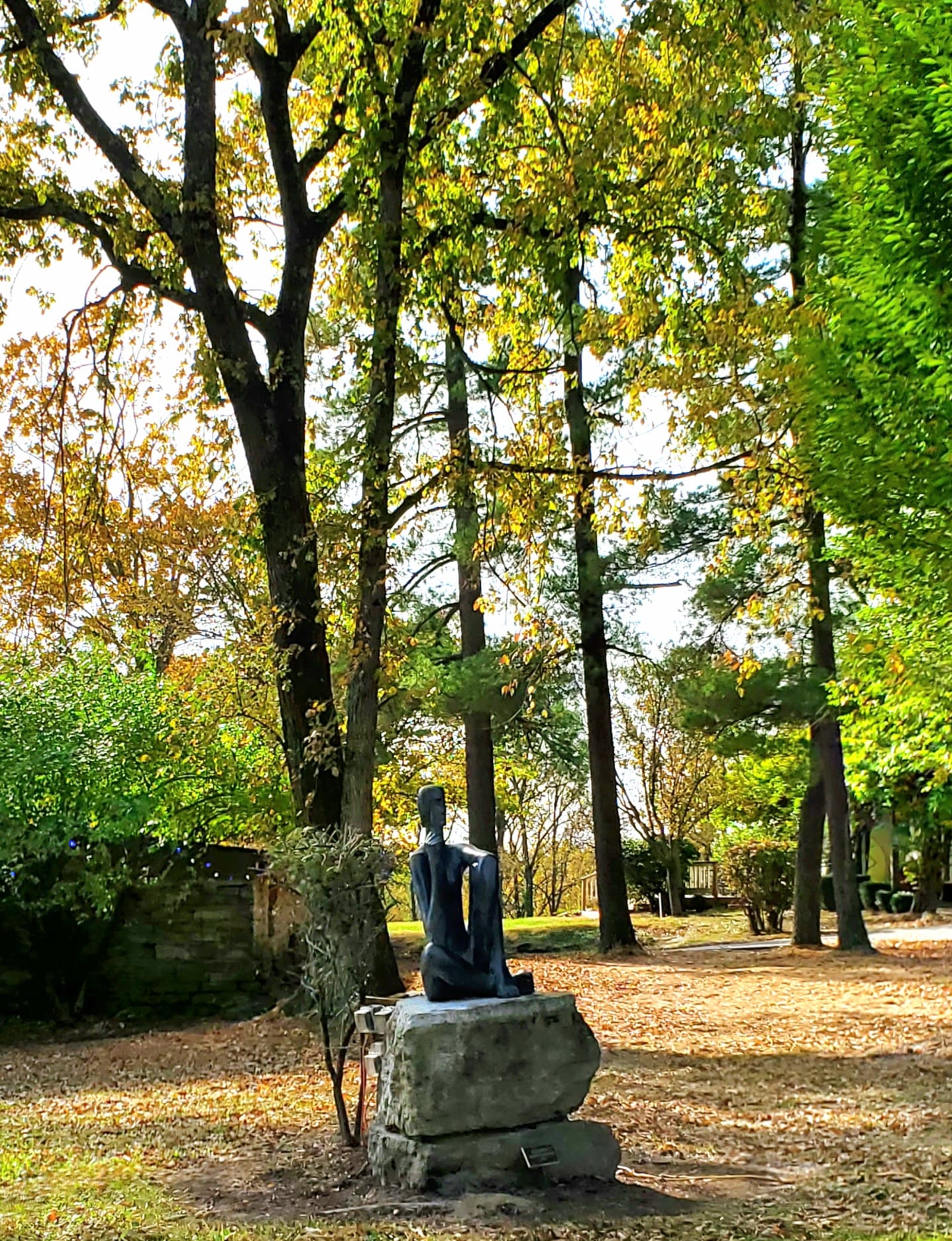
The park has a popular wedding and event venue near its lake, but most visitors spend their time wandering its 300 acres from one installation to the next.
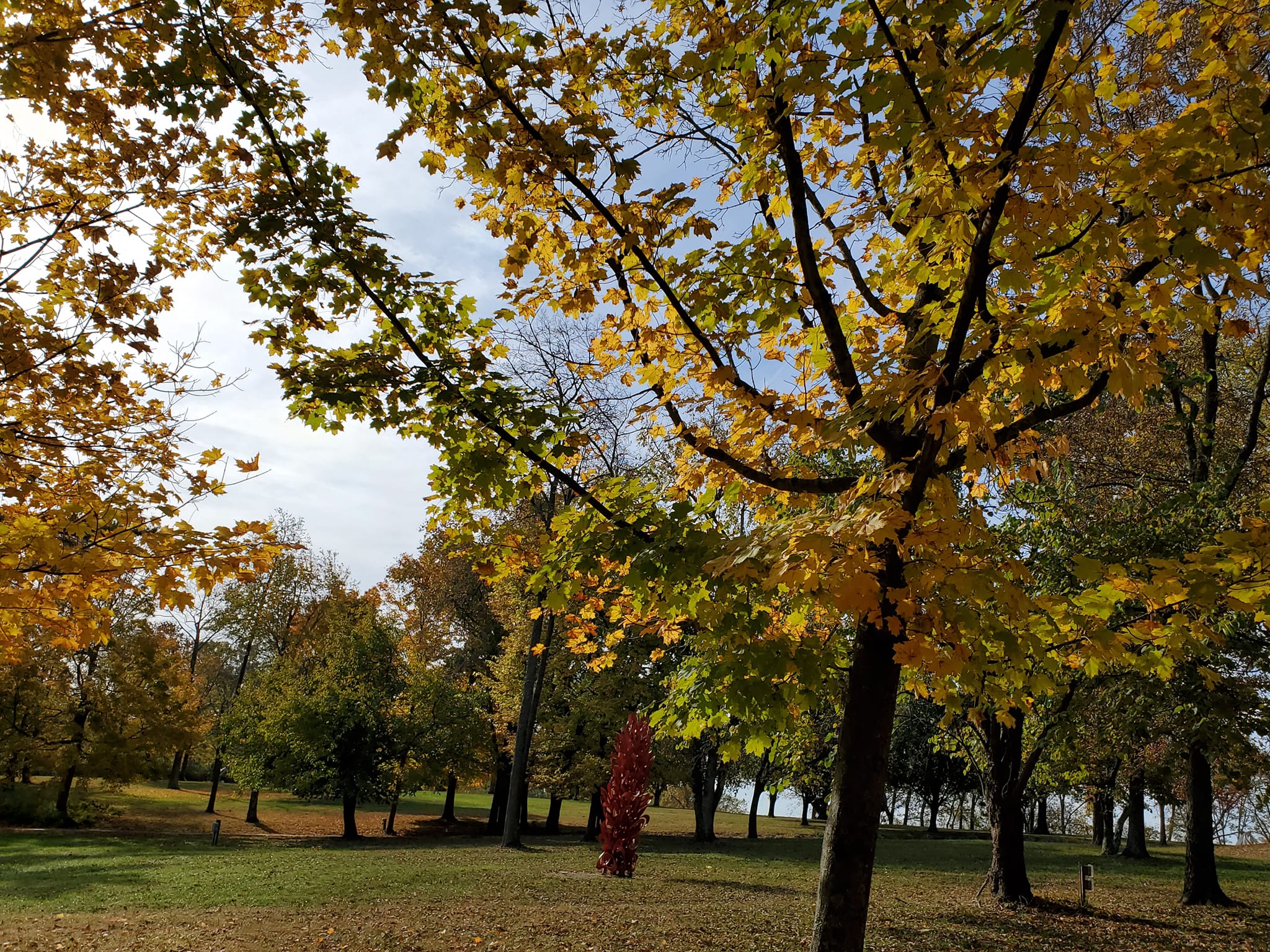
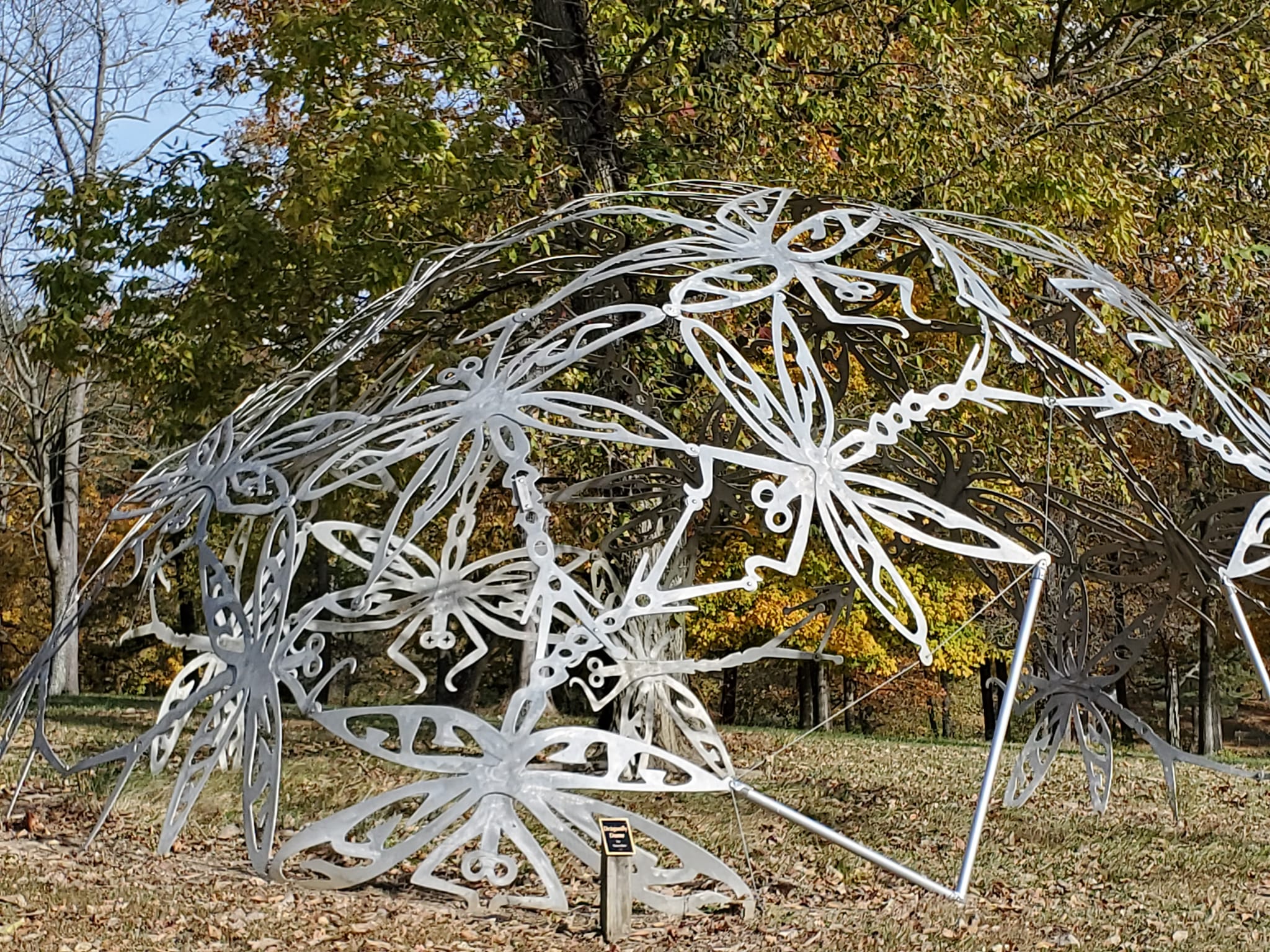
You can tour the park by driving the main gallery loop and getting out on foot, or by renting an “art cart” golf cart.

In the area for a while? Follow me to Hamilton’s historic German Village, the Dayton Lane Historic District, and to historic Rossville.
********************
© Copyright Fernwehtun, 2015- Current. Unauthorized use and/or duplication of this material without express and written permission from this site’s author and/or owner is strictly prohibited. Excerpts and links may be used, provided that full and clear credit is given to Fernwehtun and Fernwehtun.com with appropriate and specific direction to the original content.

 Fernweh, An Ache for Distant Places
Leave a comment