
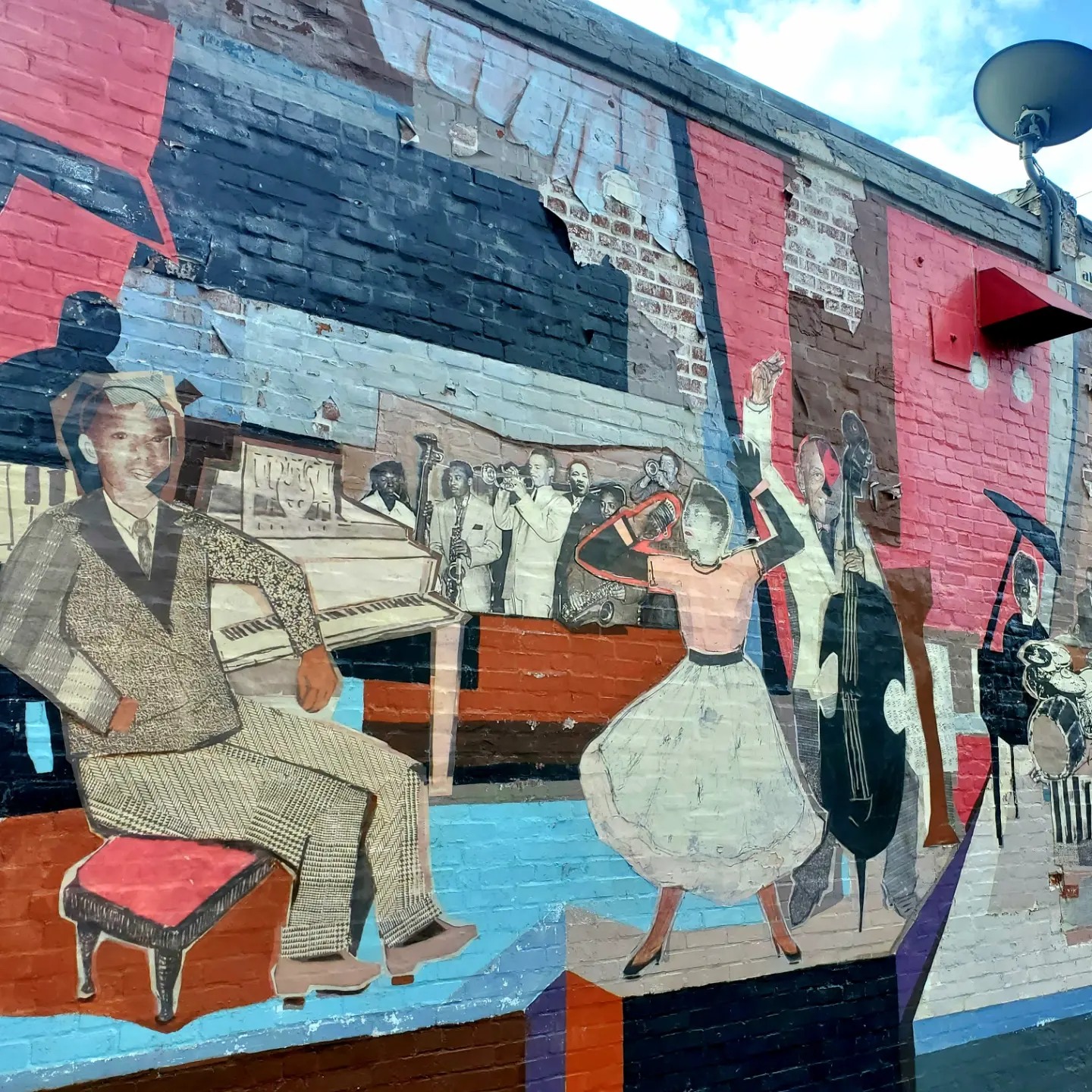
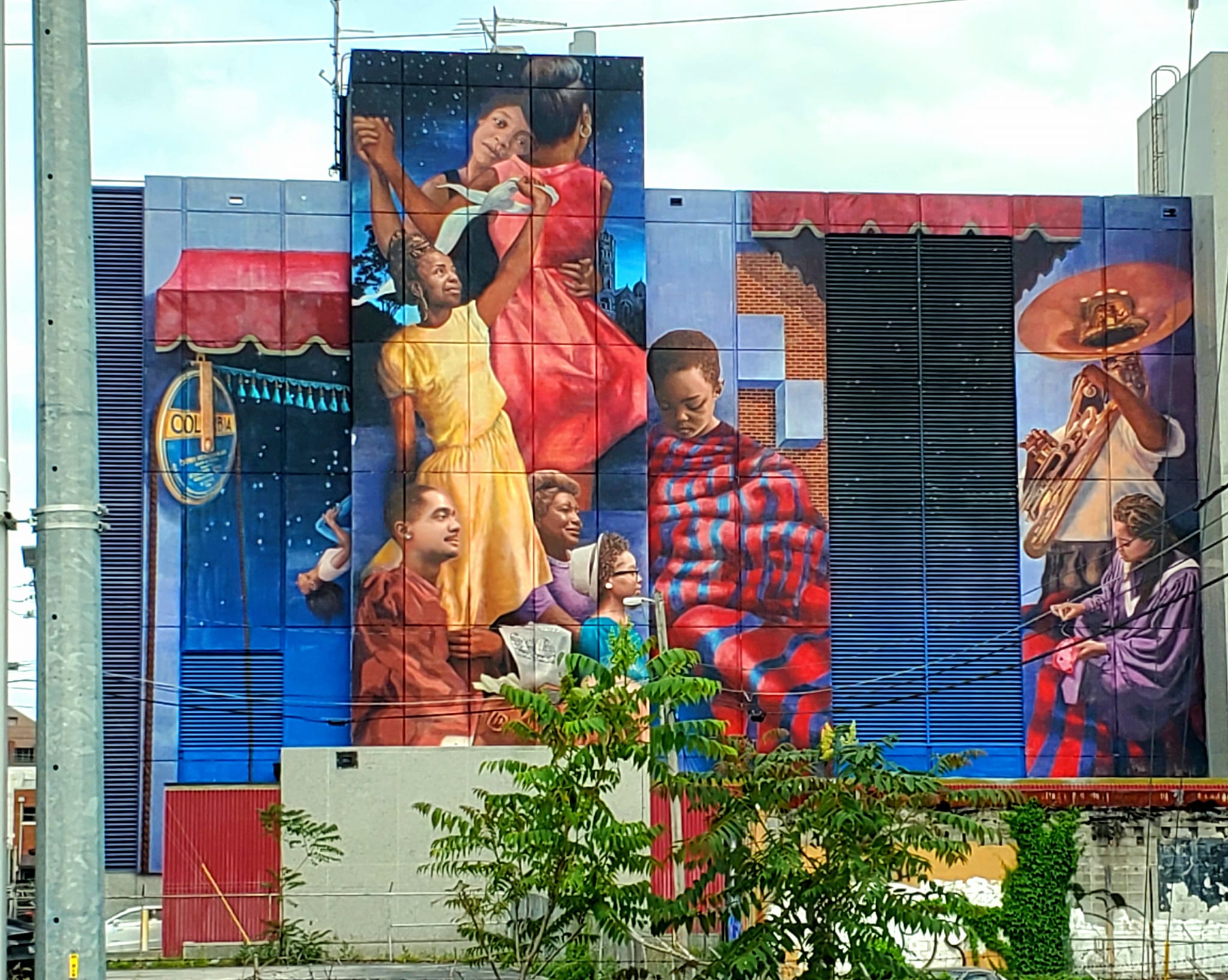
There is a fascinating mural in Chattanooga on the side of the old Live & Let Live Barber Shop and Laundromat on Martin Luther King Junior Boulevard.
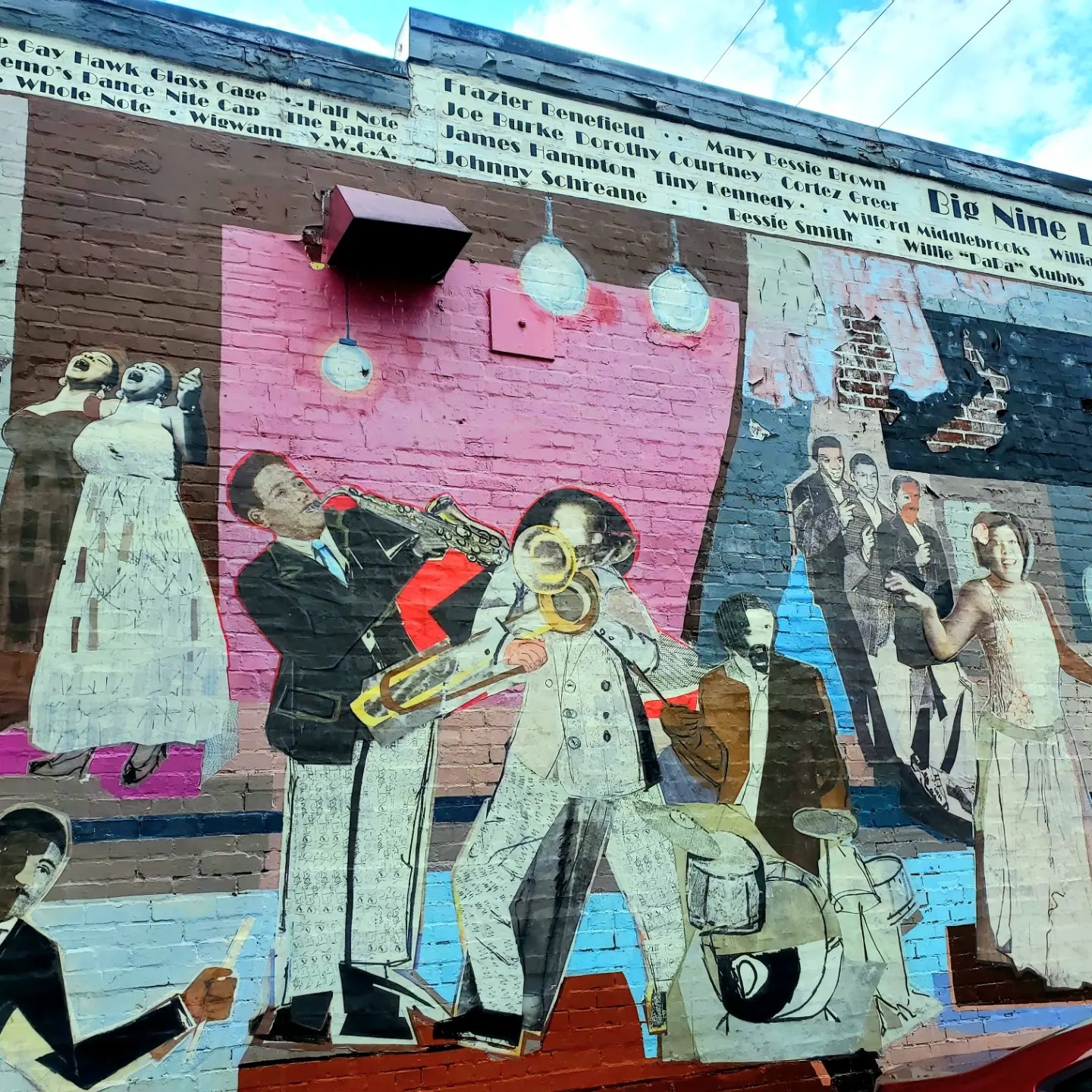
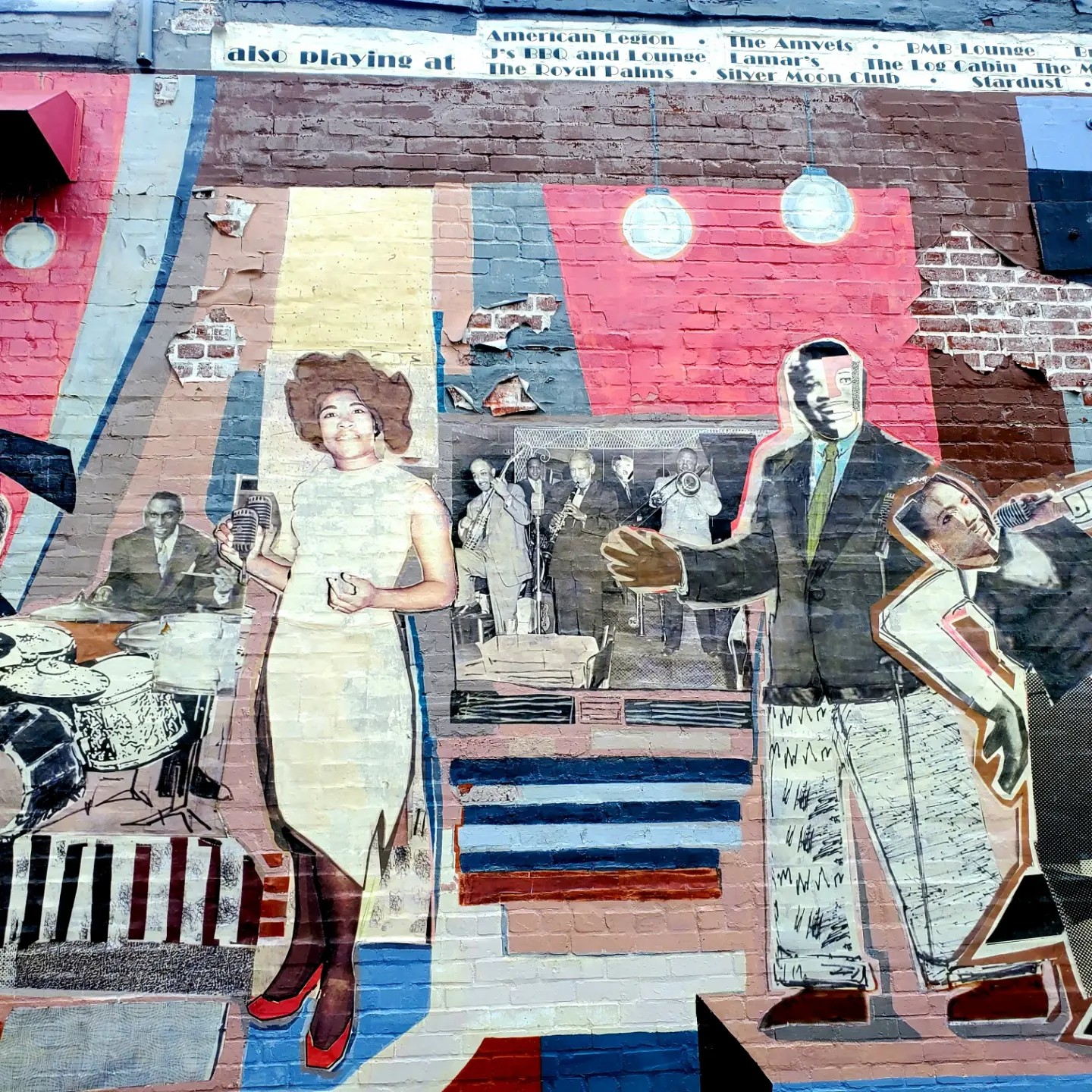
I have driven by it for over a decade and become instantly excited by its wild decoupage cast of jazz and blues musicians with their instruments amidst a club scene that sprawls across an entire side of the brick building. It is truly something to behold even with age and fading.
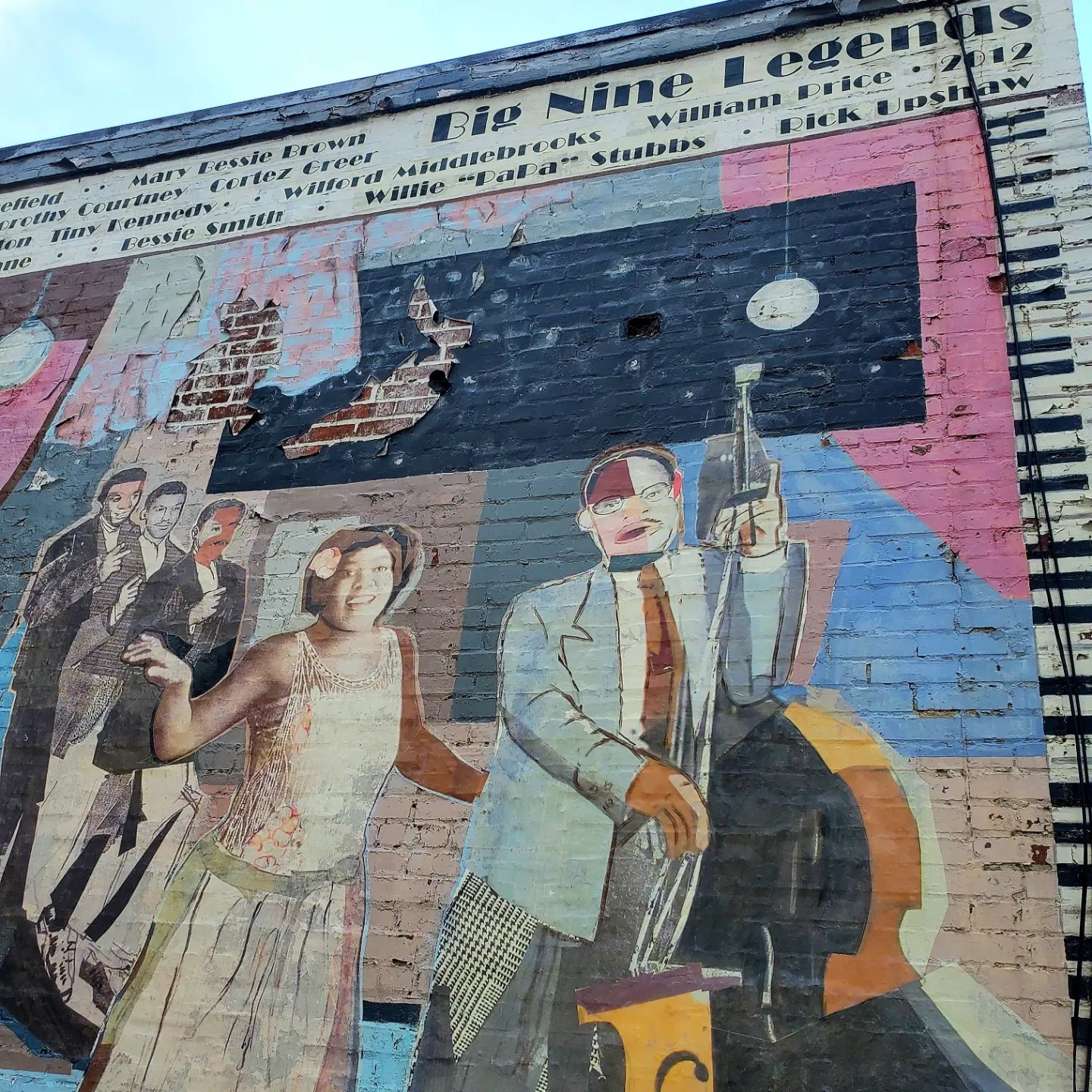
The Big Nine Legends mural is a mixed media project completed in 2012 by teen and adult residents of the surrounding MLK community and various organizations.
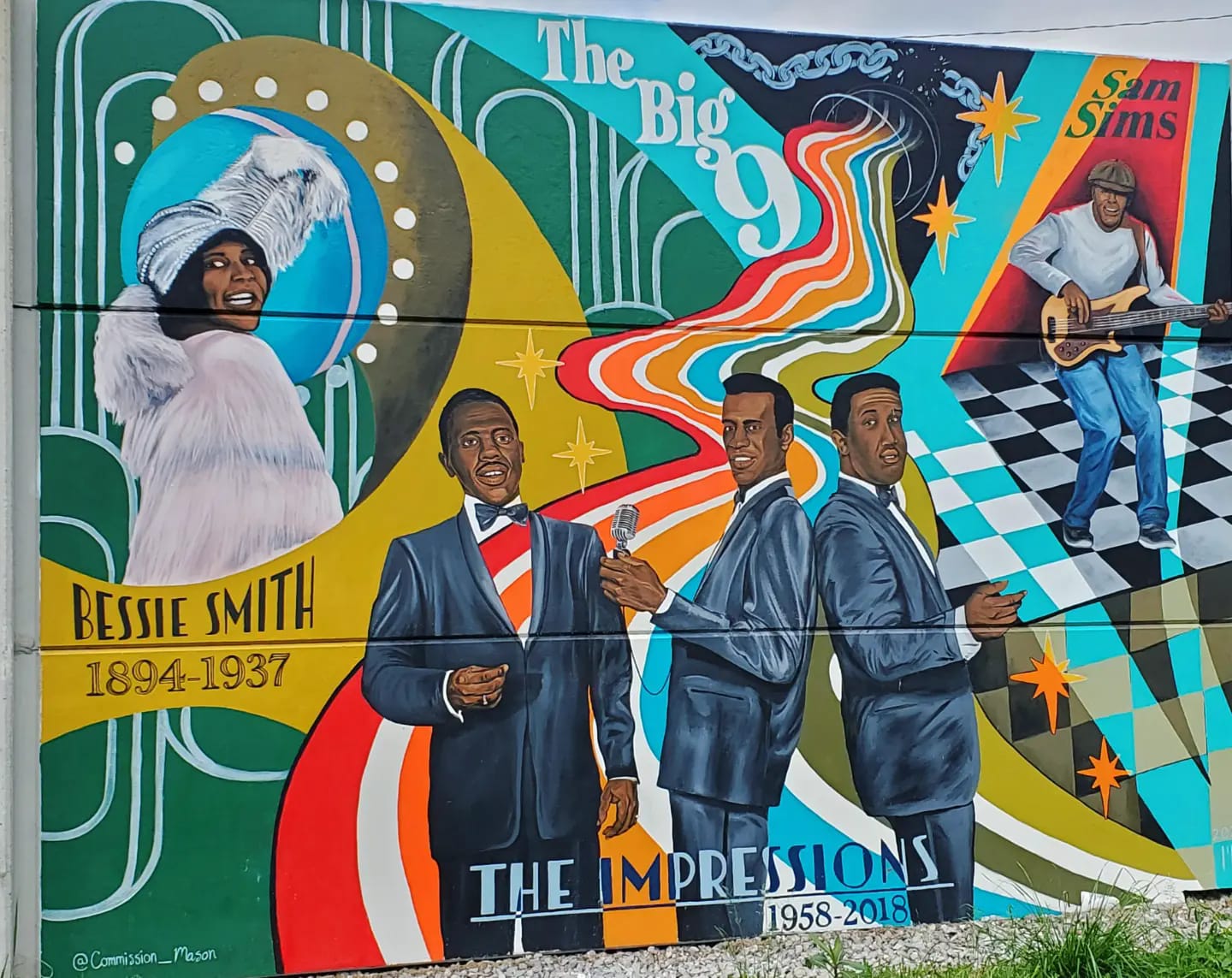
Mark Making facilitated the 60′ x 18′ mural that features Bessie Smith, William Price, Mary Bessie Brown, Willie Stubb, and other influential musicians from Chattanooga’s historic Ninth Street era.
 Most of us think of Bourbon Street in New Orleans or Beale Street in Memphis when talk of great Blues, Jazz, and Soul meccas arise.
To be fair, not many us were even alive between the early 1900s through the 1970s to know that Chattanooga, Tennessee was just as much of a hub for Black and African American music back then as Memphis and New Orleans ever were.
Chattanooga’s historic Ninth Street was known as The Big 9 during those decades. It was not renamed Martin Luther King Junior Boulevard, aka MLK Blvd, until 1981.
Homegrown musicians like Bessie Smith, Sam Gooden, Fred Cash, Valaida Snow, Cora “Lovie” Austin, Clyde Stubblefield, Jimmy Blanton, and Lenell Glass sparked their fame on the streets of Chattanooga.
Many of them moved on to form famous bands and perform with other famous musicians.
Bessie “Empress of the Blues” Smith was the most famous female blues singer in the 1920s and 1930s, Gooden and Cash formed The Impressions with Curtis Mayfield, Austin toured with Louis Armstrong, Stubblefield played with James Brown, Blanton joined Duke Ellington’s ensemble, Glass played with Aretha Franklin, Miles Davis, and Buddy Guy, and that was just the start of it.
World-famous acts already knew about The Big 9.
Artists like Count Basie, Ella Fitzgerald, Howling Wolf, Cab Calloway, Louis Armstrong, Duke Ellington, Muddy Waters, Wilson Pickett, Jimi Hendrix, Ray Charles, and James Brown would wrap up shows at larger venues nearby and beeline it to blues joints like the now defunct Nightcap, Brown Derby, and Whole Note on Ninth Street to check out local artists and even jump on stage to join them.
Many of these amazing artists stayed at the old Martin Hotel, the largest Black hotel in the South. It was located right where the Bessie Smith Cultural Center is now, with a historical marker on site.
Ninth Street was a legend in its own right, but the actual street could have been a Ninth Street in any city at that time. The district was born of segregation; the city’s Black and African American population had been shuffled into a confined part of town and had to create their own shops, services, and entertainment out of necessity.
From there, the people brought a special flair to it, though. It was unlike most cities had ever seen.
The Big 9 became a melting pot of so many distinct, vibrant personalities and creative musicians that would have done well if given more opportunities out in society, but the concentration of so much talent in one place made Chattanooga’s Ninth Street phenomenal.
After the much needed changes brought on by the Civil Rights Movement and the eventual desegregation of Chattanooga, musicians in the Black and African American community gained more opportunities and mobility to live and perform elsewhere.
This sadly led to a decline in population of Chattanooga’s great musical talents, and The Big Nine district became a ghost town. Clubs, business, parks, and homes were all abandoned and left to dilapidate. The area still struggles today.
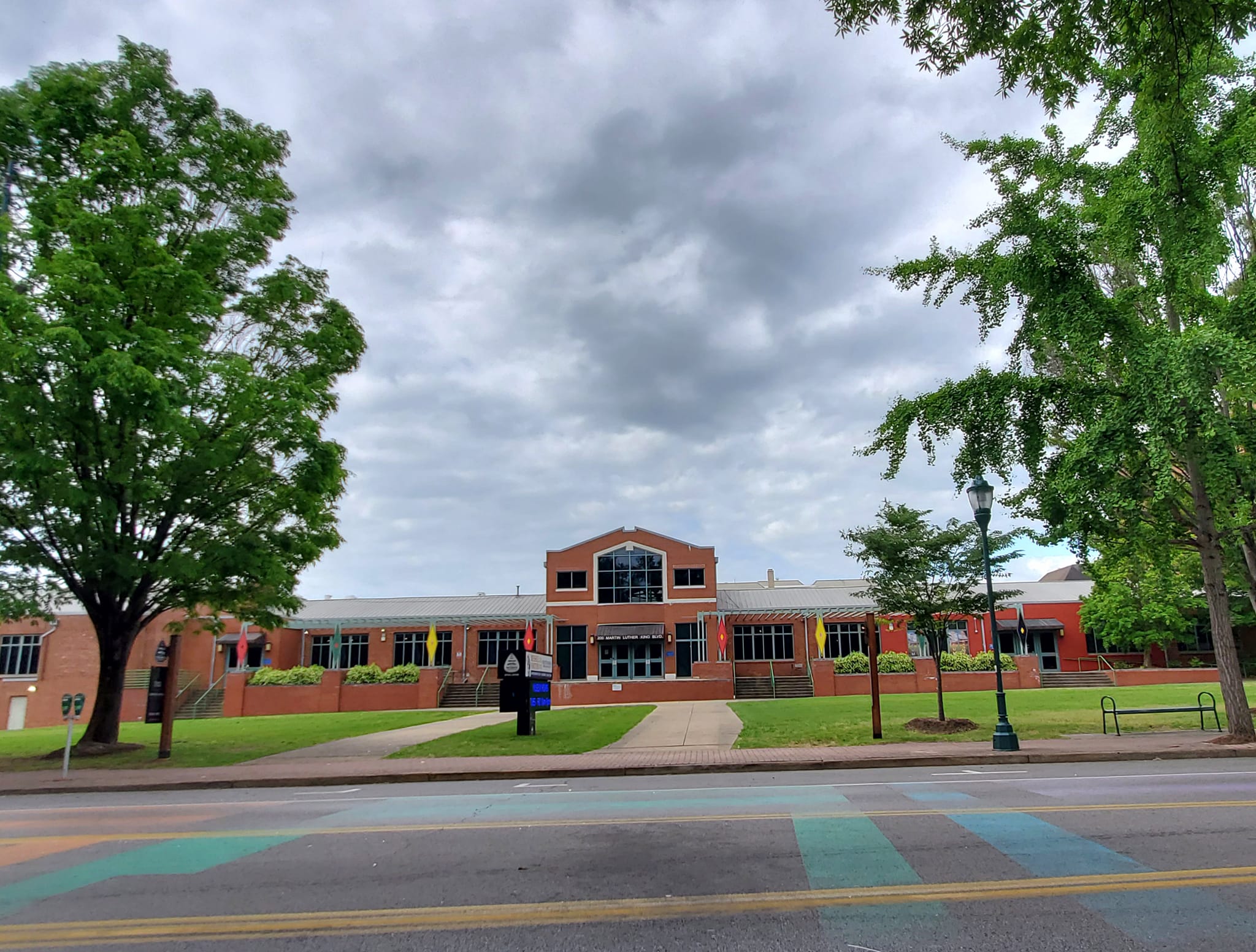
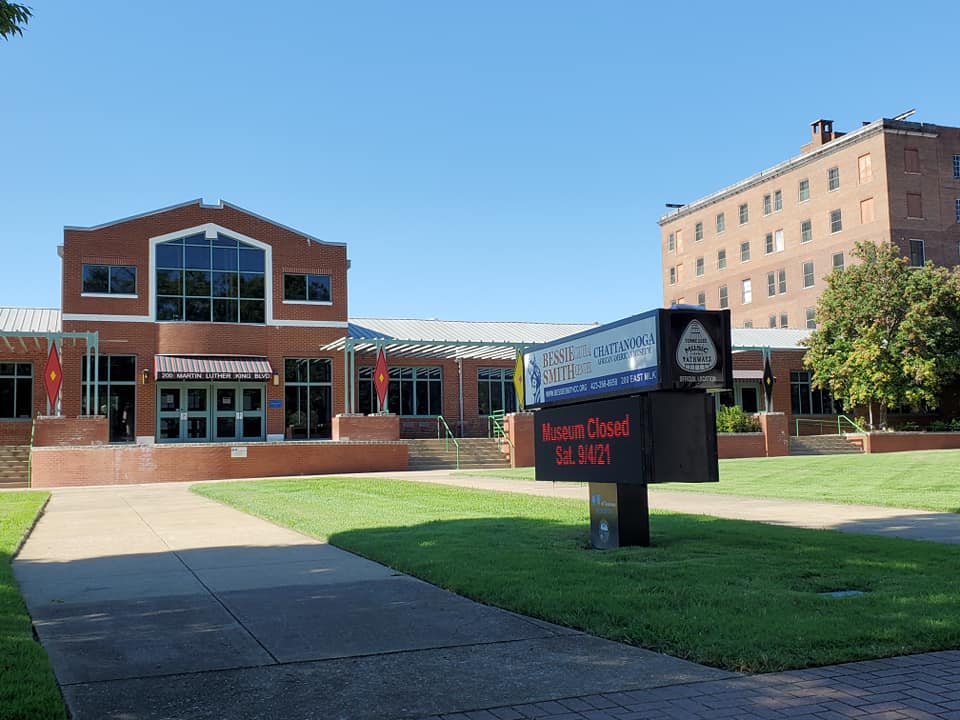
The Bessie Smith Cultural Center holds volumes of Chattanooga history, especially that of the Black and African American community, of the African Diaspora, of Bessie Smith, and of Big 9 music history.
Bessie fans will enjoy walking along the Tennessee Riverwalk to see artifacts of her life, all the way to Blue Goose Hollow where Bessie performed as as child. The annual Bessie Smith Big 9 Music Fest is also a hit.
Songbirds Guitar & Pop Culture Museum is another essential stop for Big 9 history. Check out exhibits like the classic “The Big 9” and “The Impressions: From the Big 9 to the World Stage” as well as a rotation of special features.
The museum is managed by the Songbirds Foundation and has a collection of stories, interviews, posters, photos, instruments, and other memorabilia from the Big 9 heyday.
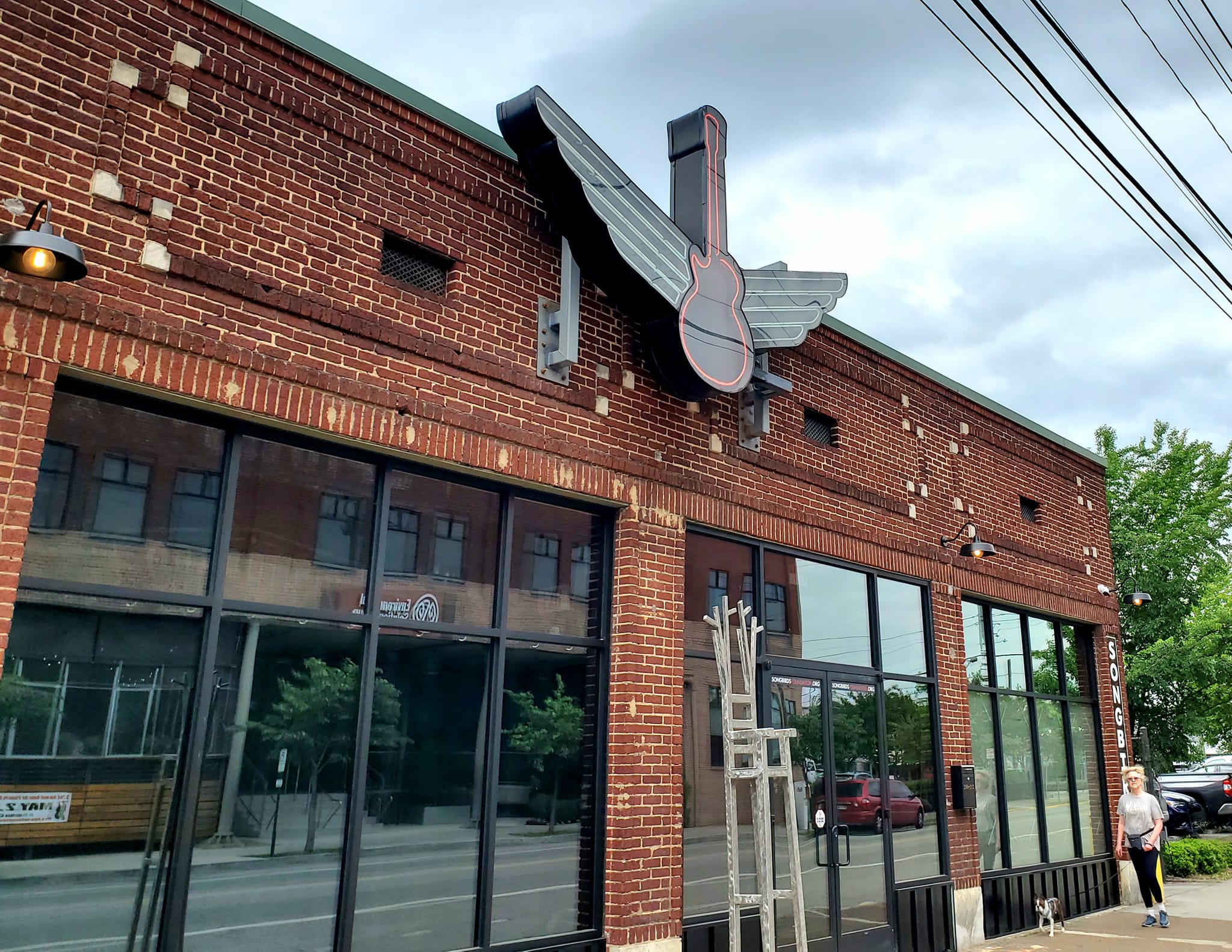
Curators at Songbirds hope to restore Chattanooga to the status it deserves as a legendary music city, alongside Memphis and Nashville, by preserving and sharing its history and impact with present and future generations.
I found two rad videos online produced by Songbirds. This one below is an interview/overview of the Big 9 as it was:
This is a fun one called “Bessie & The Big 9 – Songbirds Radio Hour”
In my research, I read about a podcast called Stories from The Big 9 about Historic Ninth Street, the Big Nine, and the MLK Blvd neighbourhood that is produced by local UTC students. It does not seem to be uploaded as a podcast anymore, but you can still listen to episodes on this website.
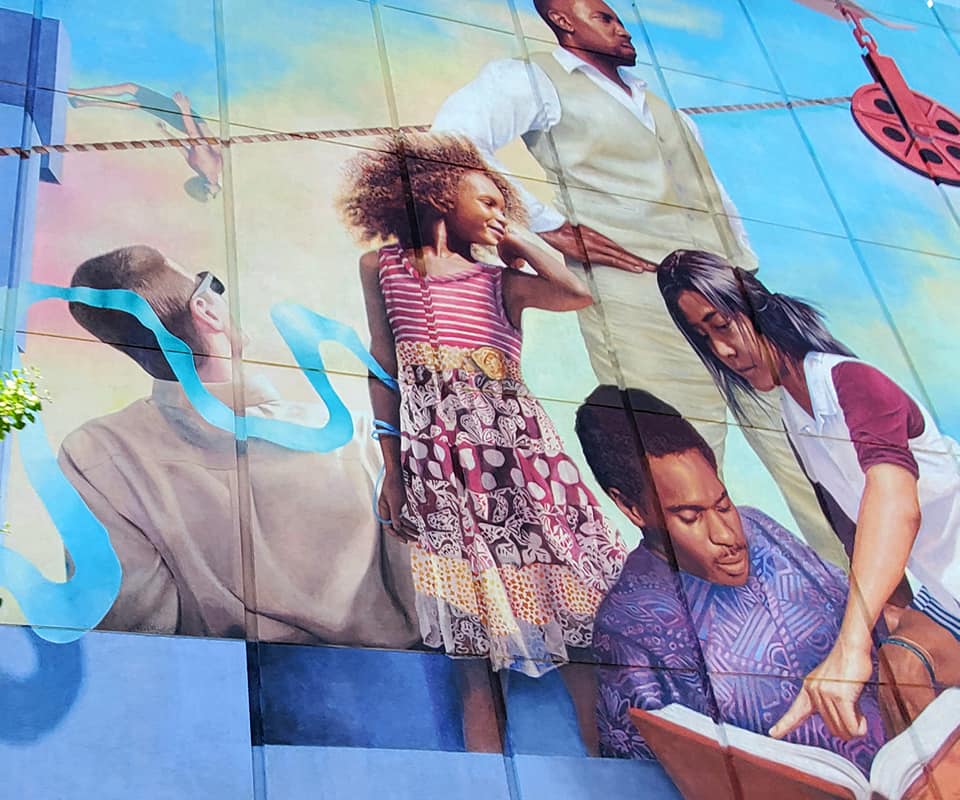
Let’s talk about more of the murals in the neighbourhood. The most well-known is Meg Saligman’s 2016 “We Will Not Be Satisfied Until…” mural at 300 E MLK Blvd.
Saligman’s mural is the largest in the southeastern USA region, the first mural to wrap an entire city block, and at the time of writing this it is one of the five largest murals in the country.
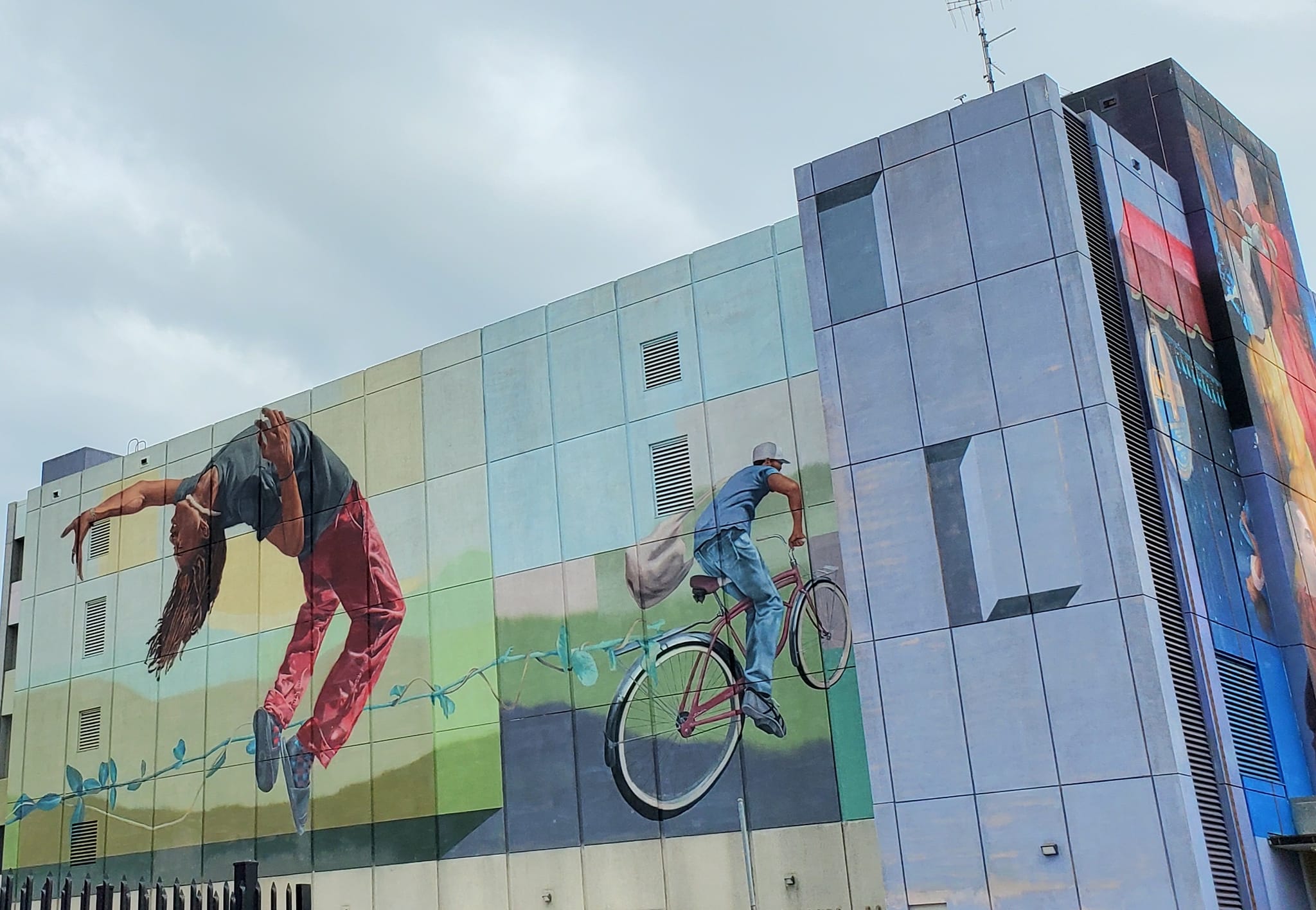
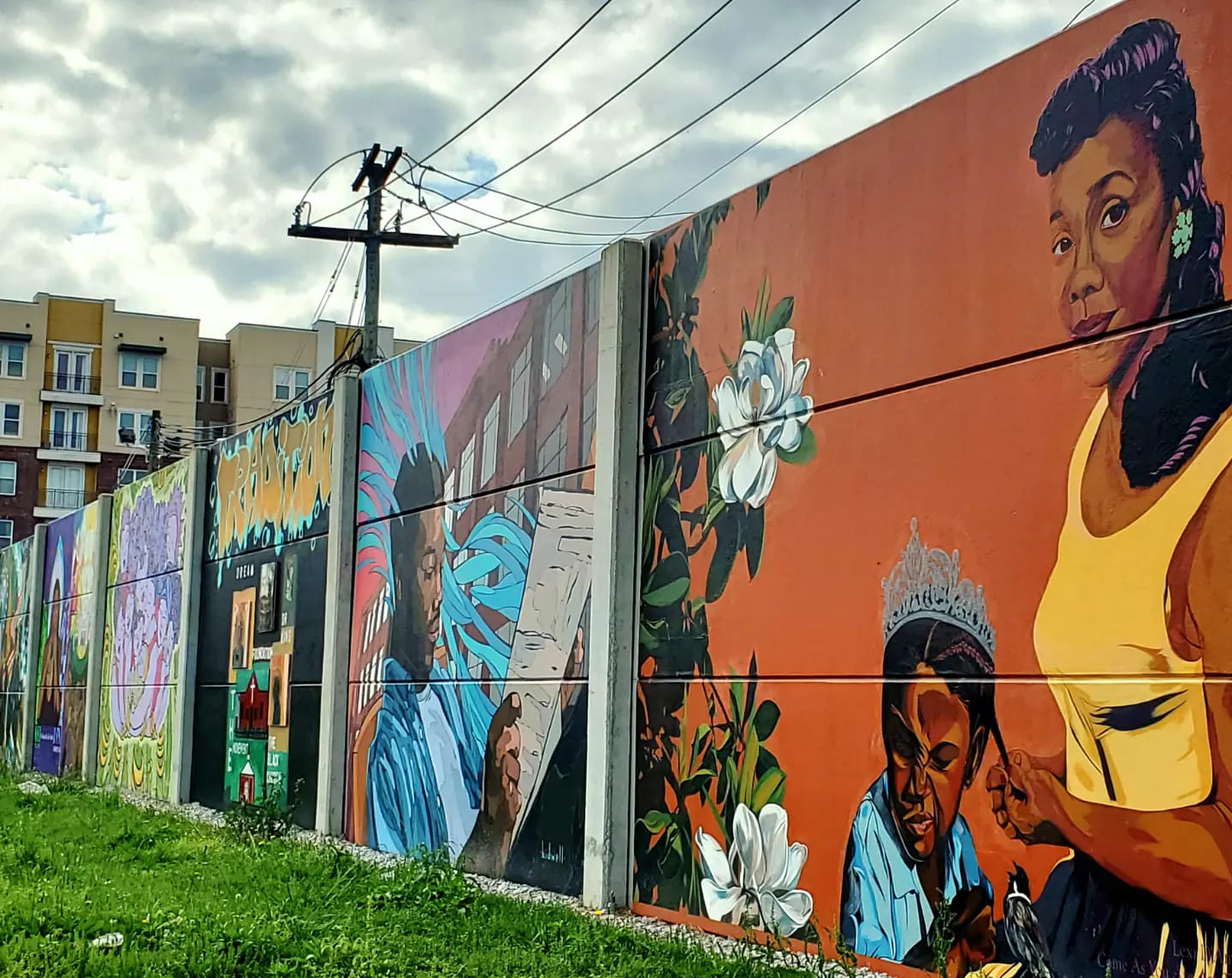
A site called “Mural Alley” is even more impressive, though the alley is actually just one segment of the entire perimeter of a much smaller building.
It sits about a block or so from the huge building that showcases Meg Saligman’s mural.


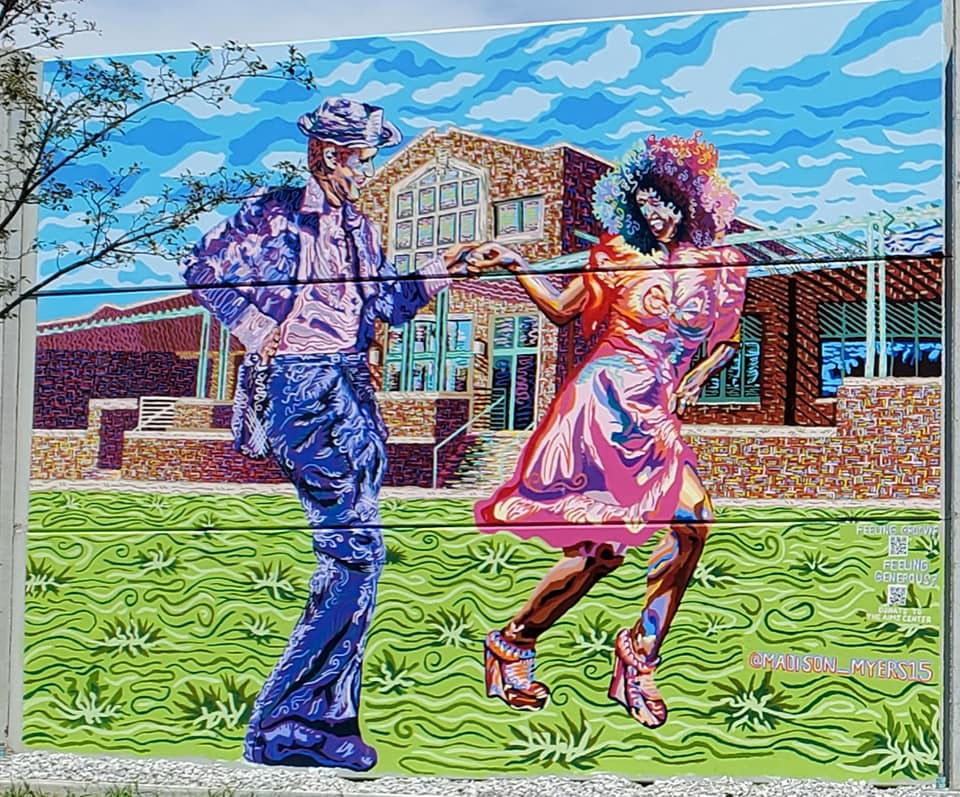
You can find “Mural Alley” at the corner of Foster Street and 10th Street.
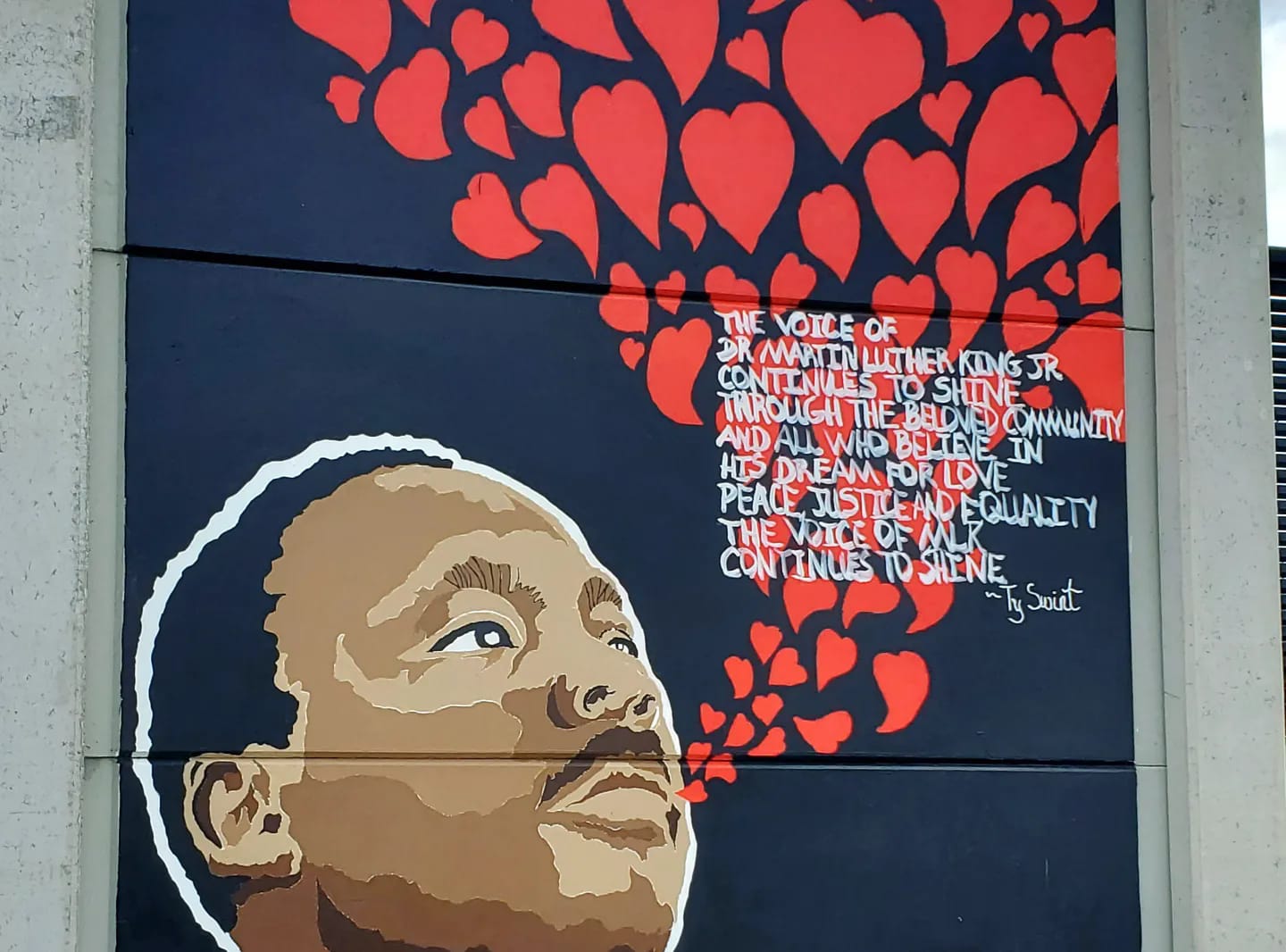

I do not know anything about the building itself. Information about “Mural Alley” is non-existent online aside from a pin on Google Maps.
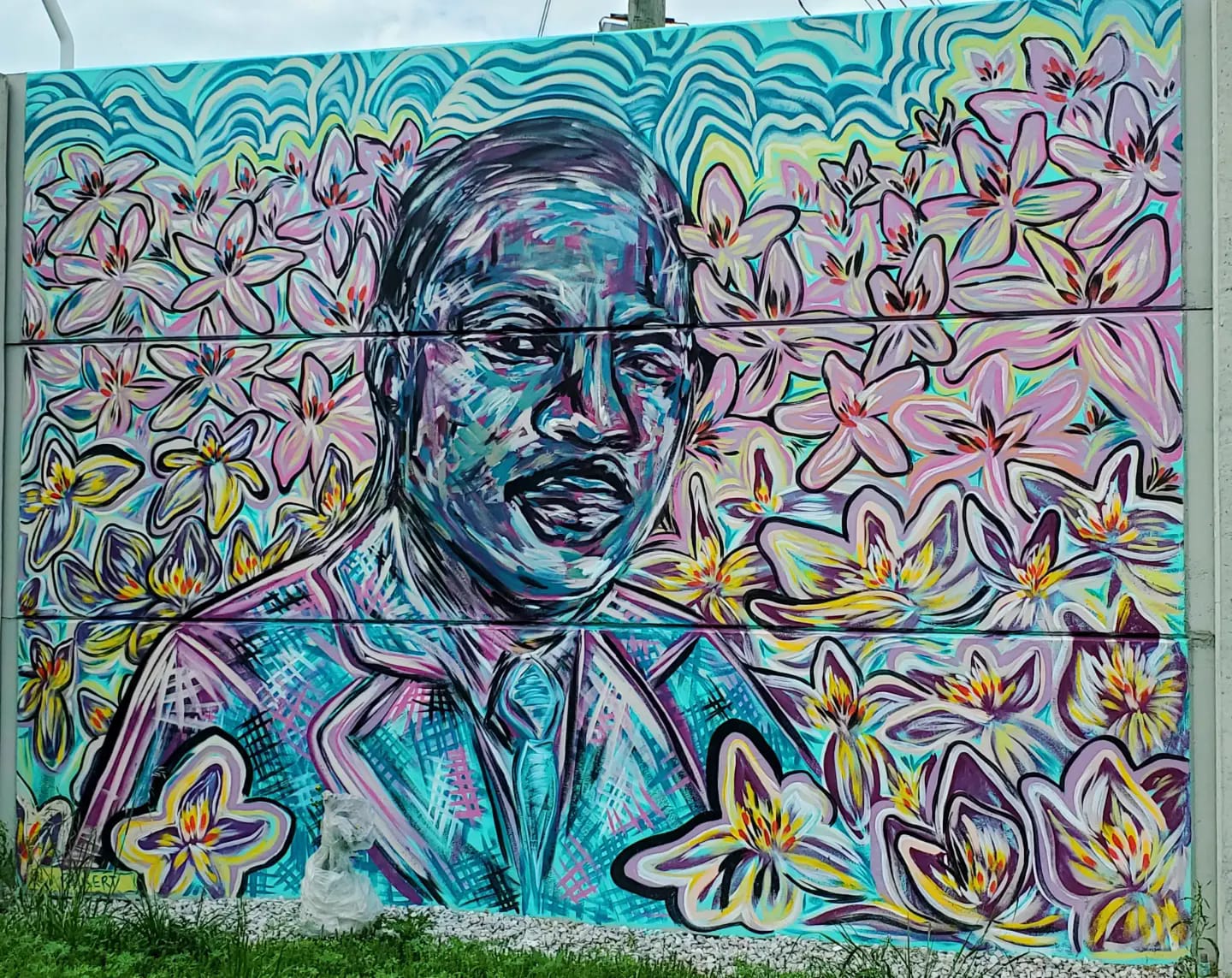

Please send me a link if I have missed something.


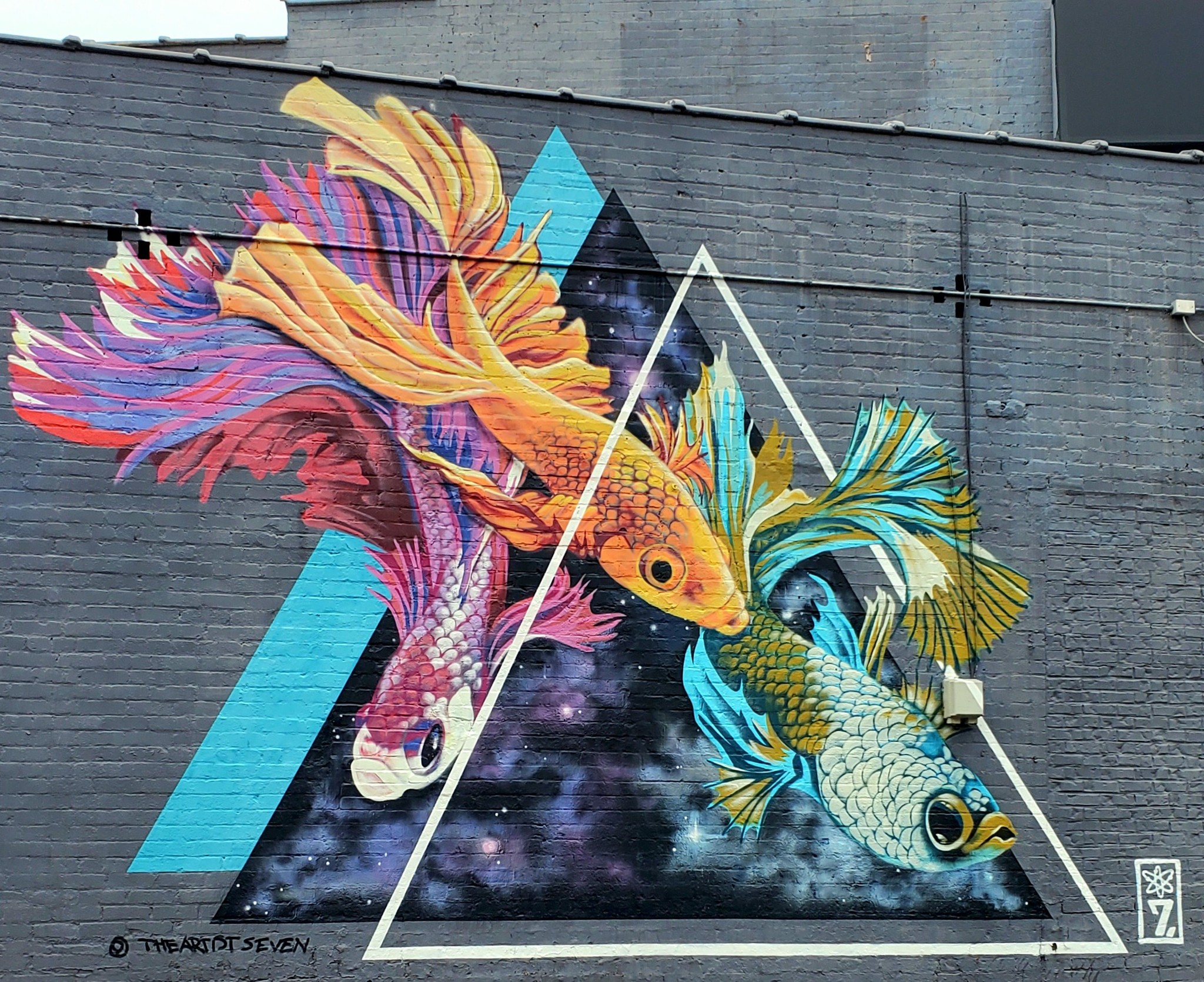
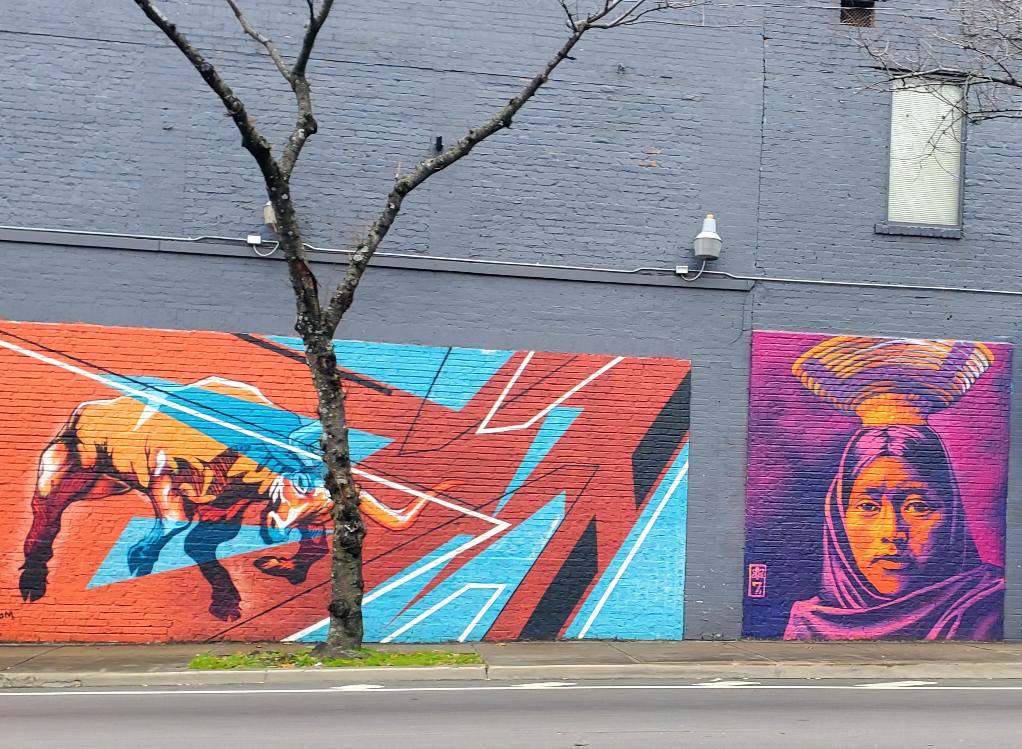
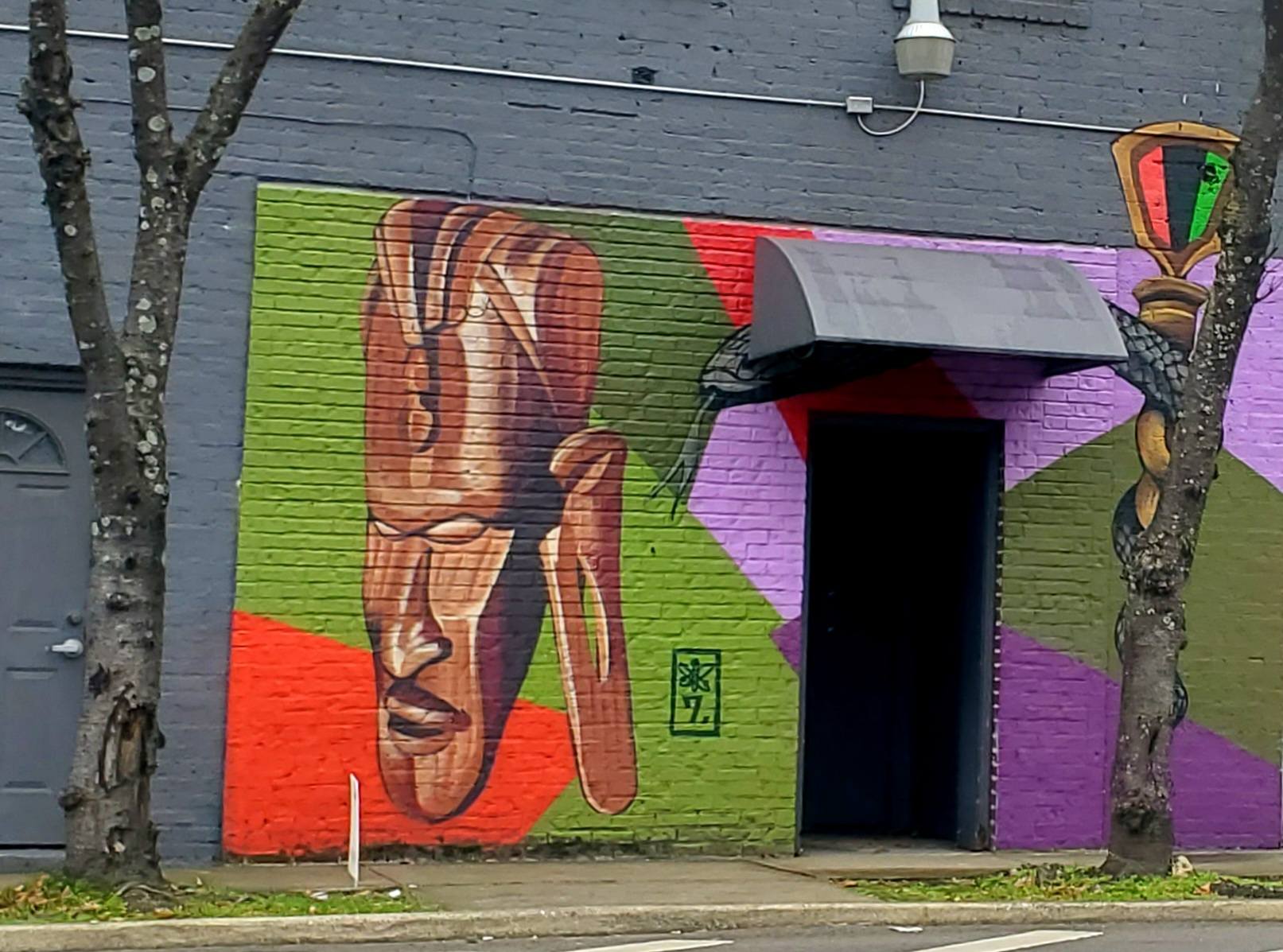
You can view the artists’ tags on each individual mural to learn more about them.
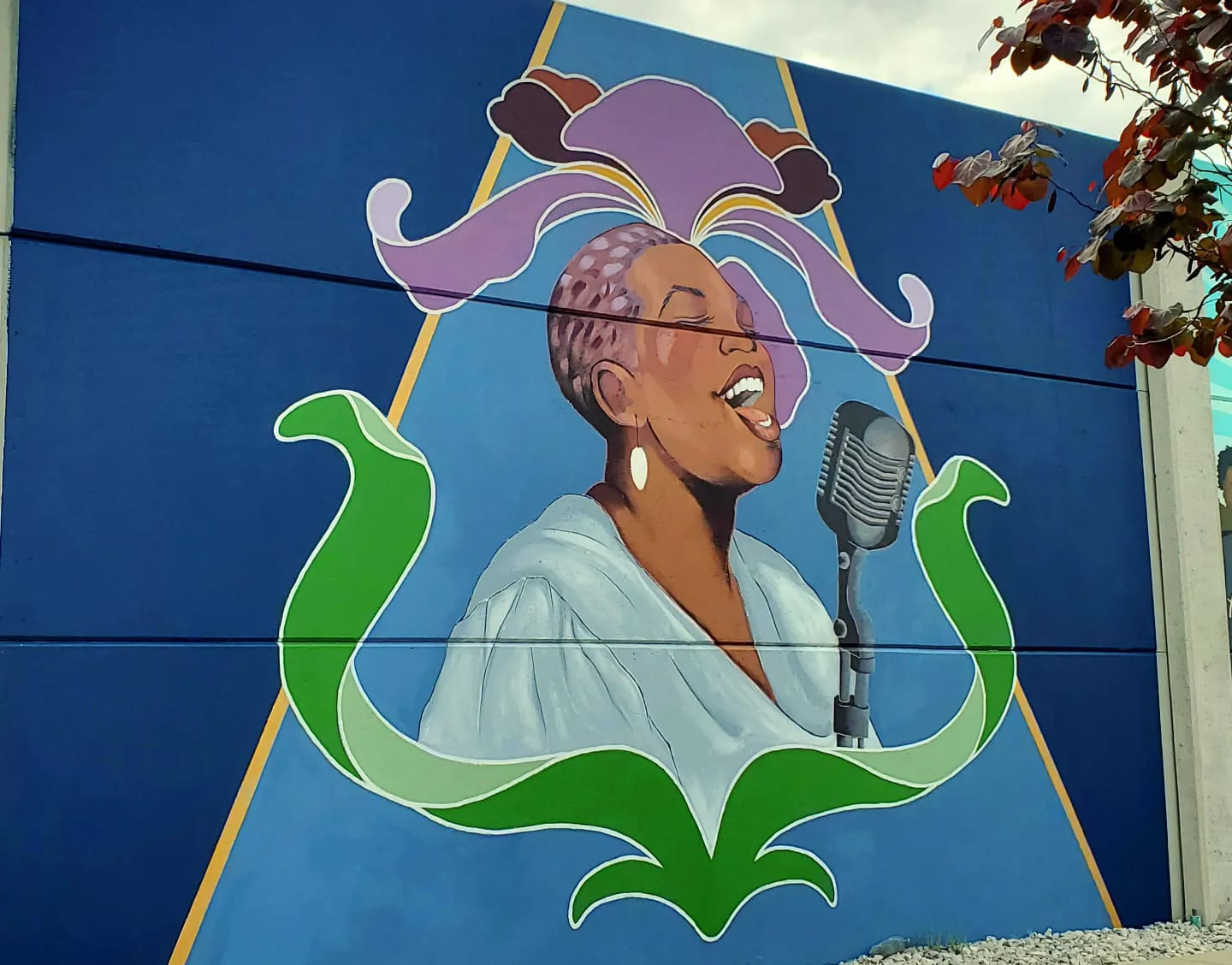
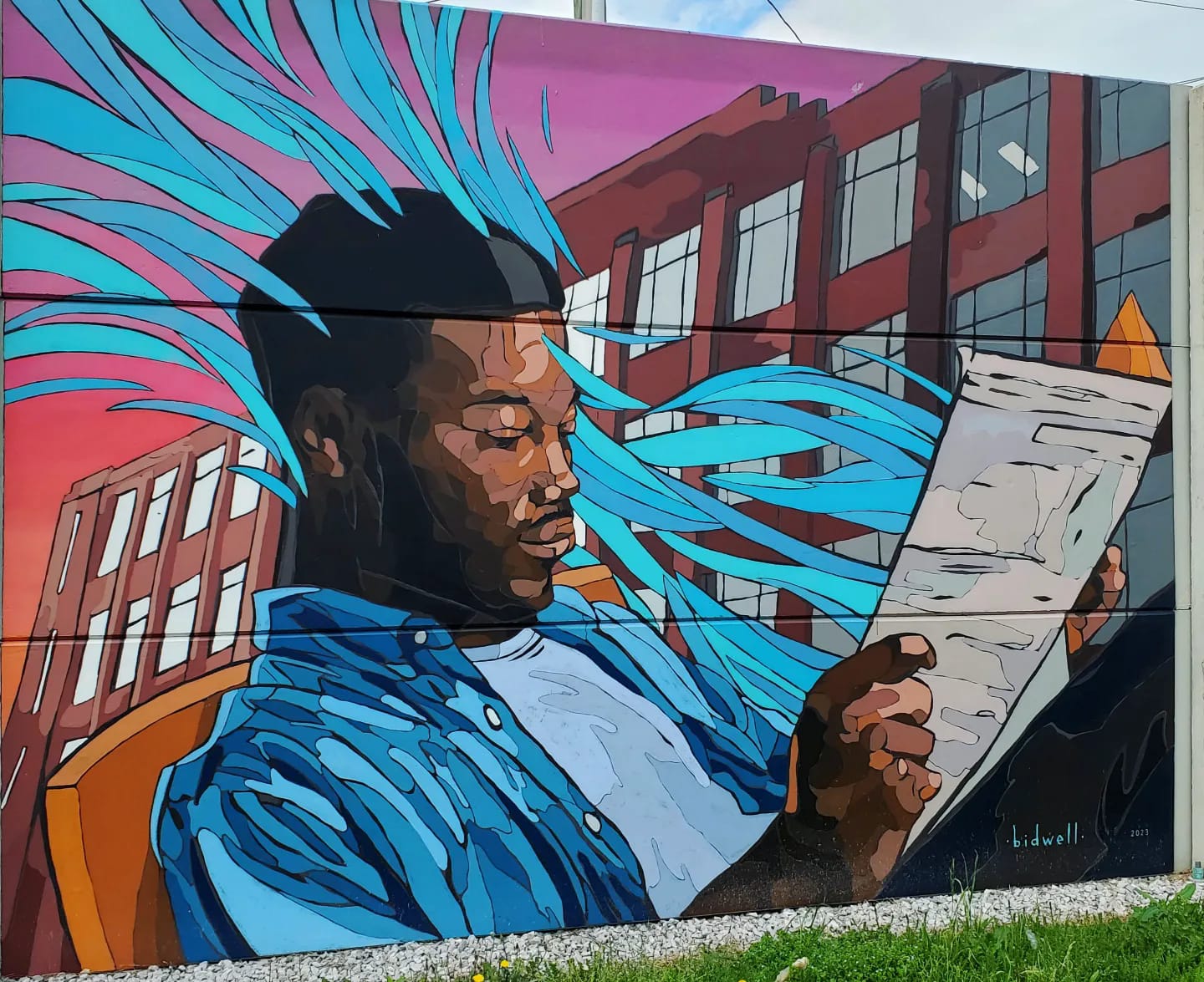
I have no prolific commentary or insight beyond what the artists might say for themselves on their websites, but wanted to share a few photos I took of my favourite pieces.


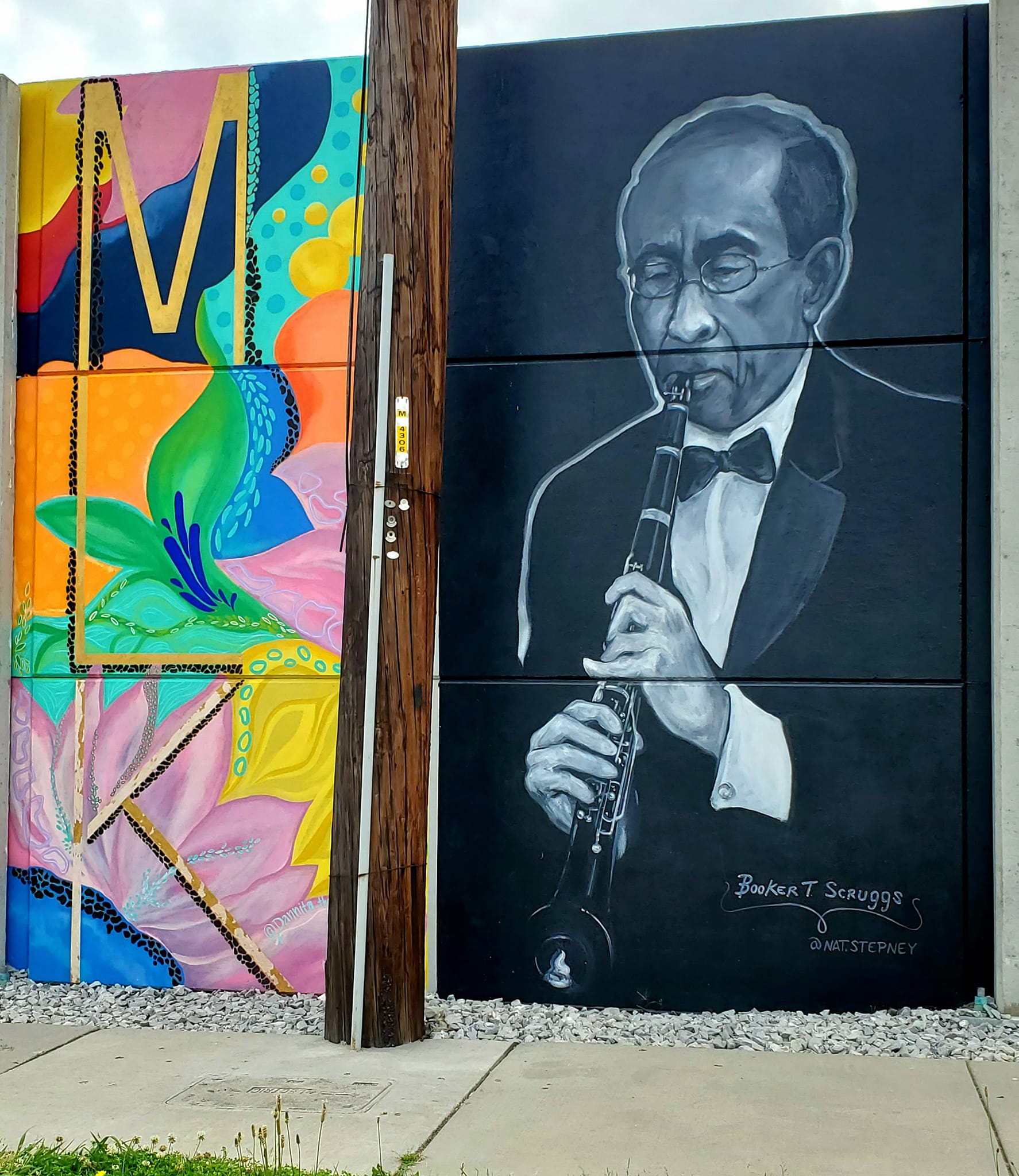
Soul food is abundant in the MLK neighbourhood with local favourites like Memo’s, Uncle Larry’s, Champy’s, Chatt Smoke House, Bad wRAPs Soul Food, and Big 9 Street Food.
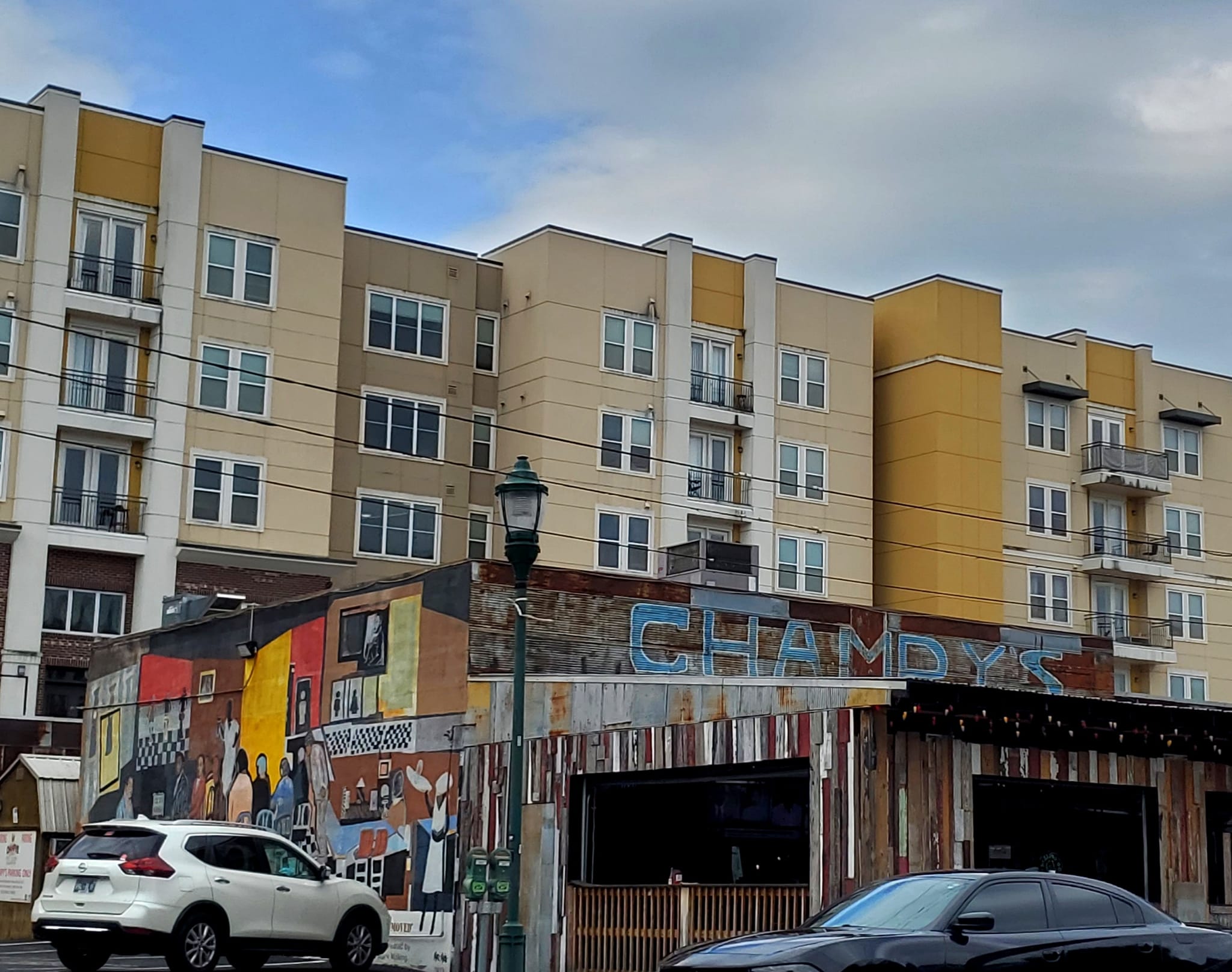
As early as 9 am you can watch the chef at Champy’s tending his giant barbecue smokers outside in the parking lot, with murals of Bessie Smith and others standing tall around him.
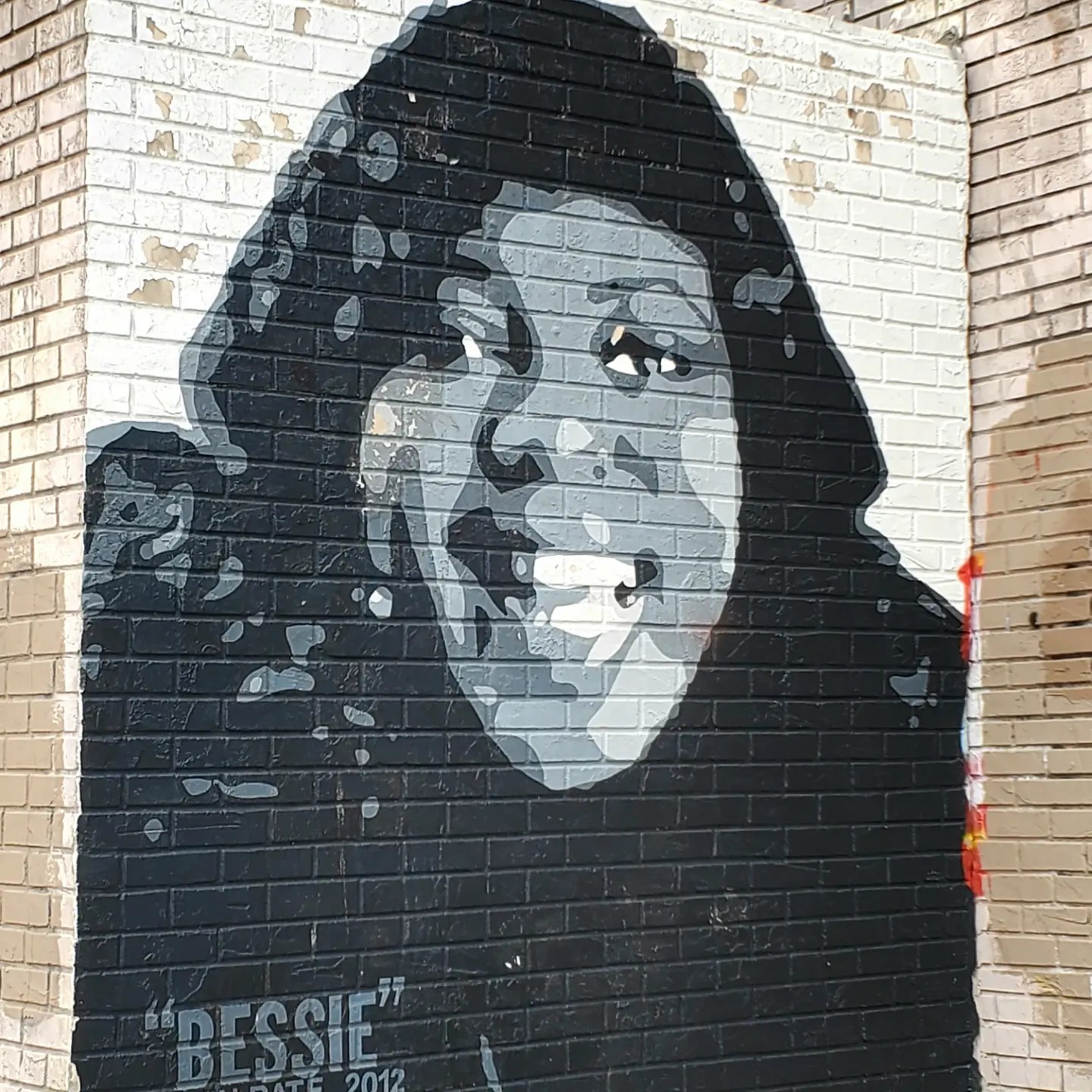
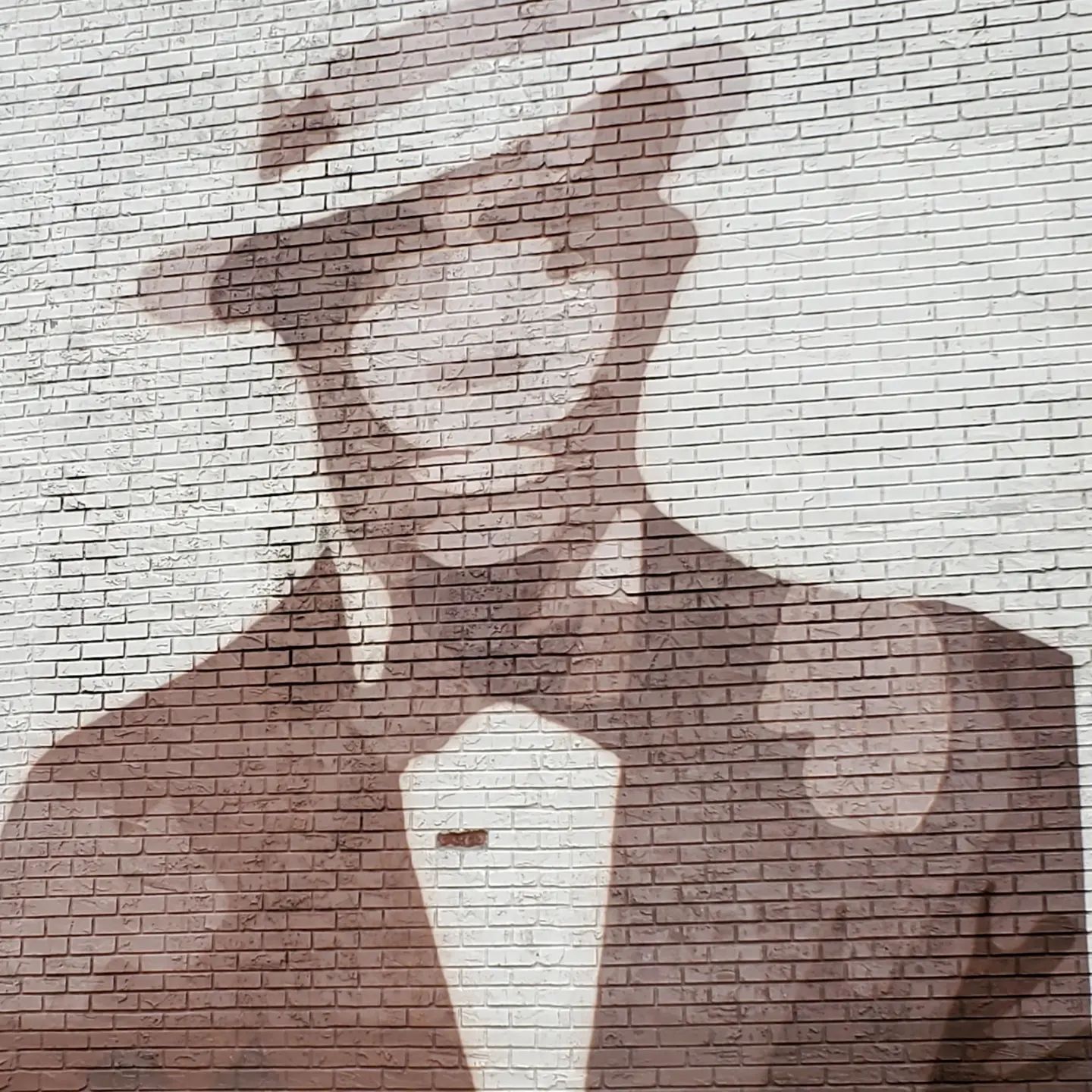
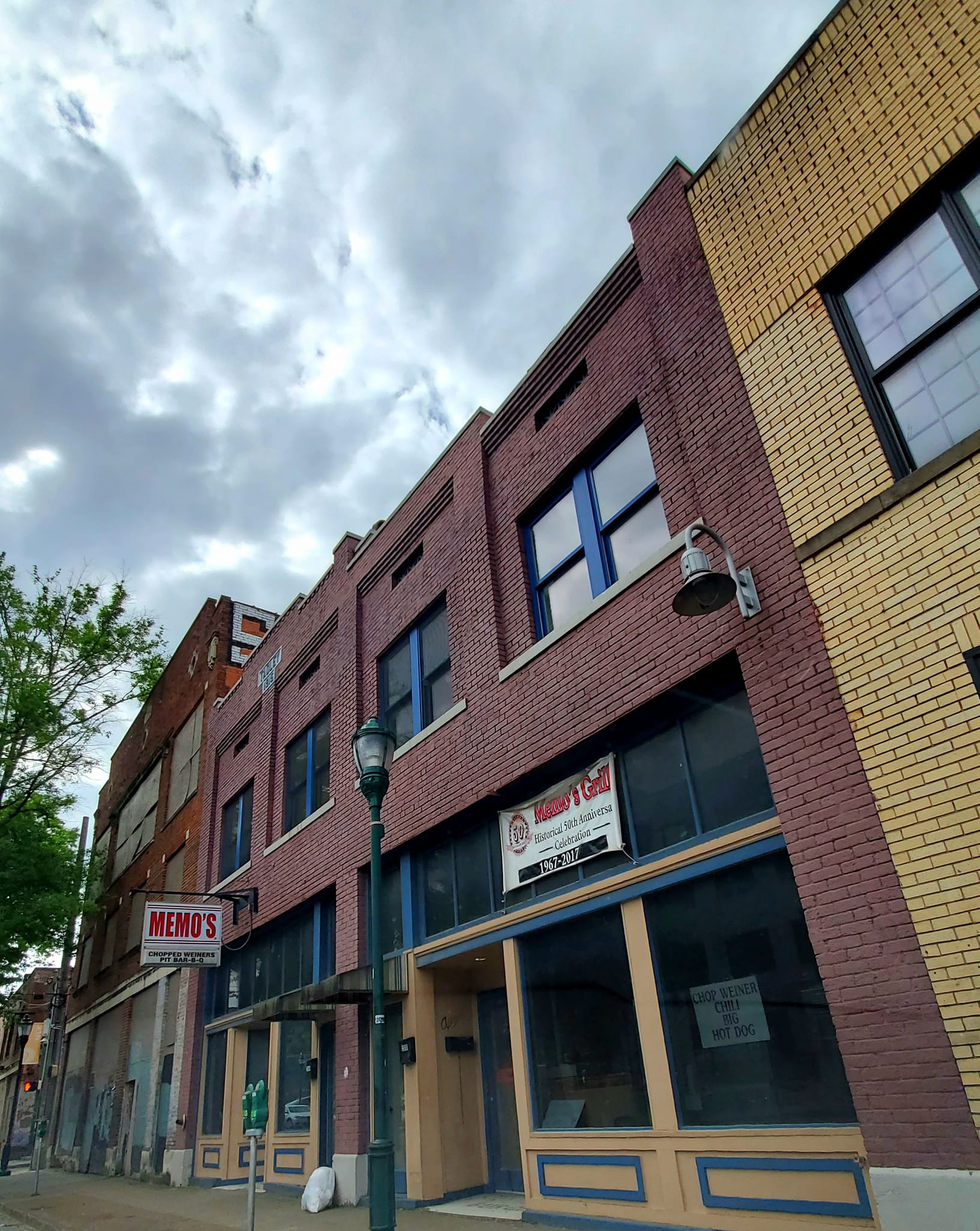
Memo’s Grill (no legit website) is one of the longest-operating, black-owned Chattanooga businesses. Their specialty dish is the Chopped Wiener Plate, essentially a deconstructed chili dog that locals have been eating up for over fifty years.
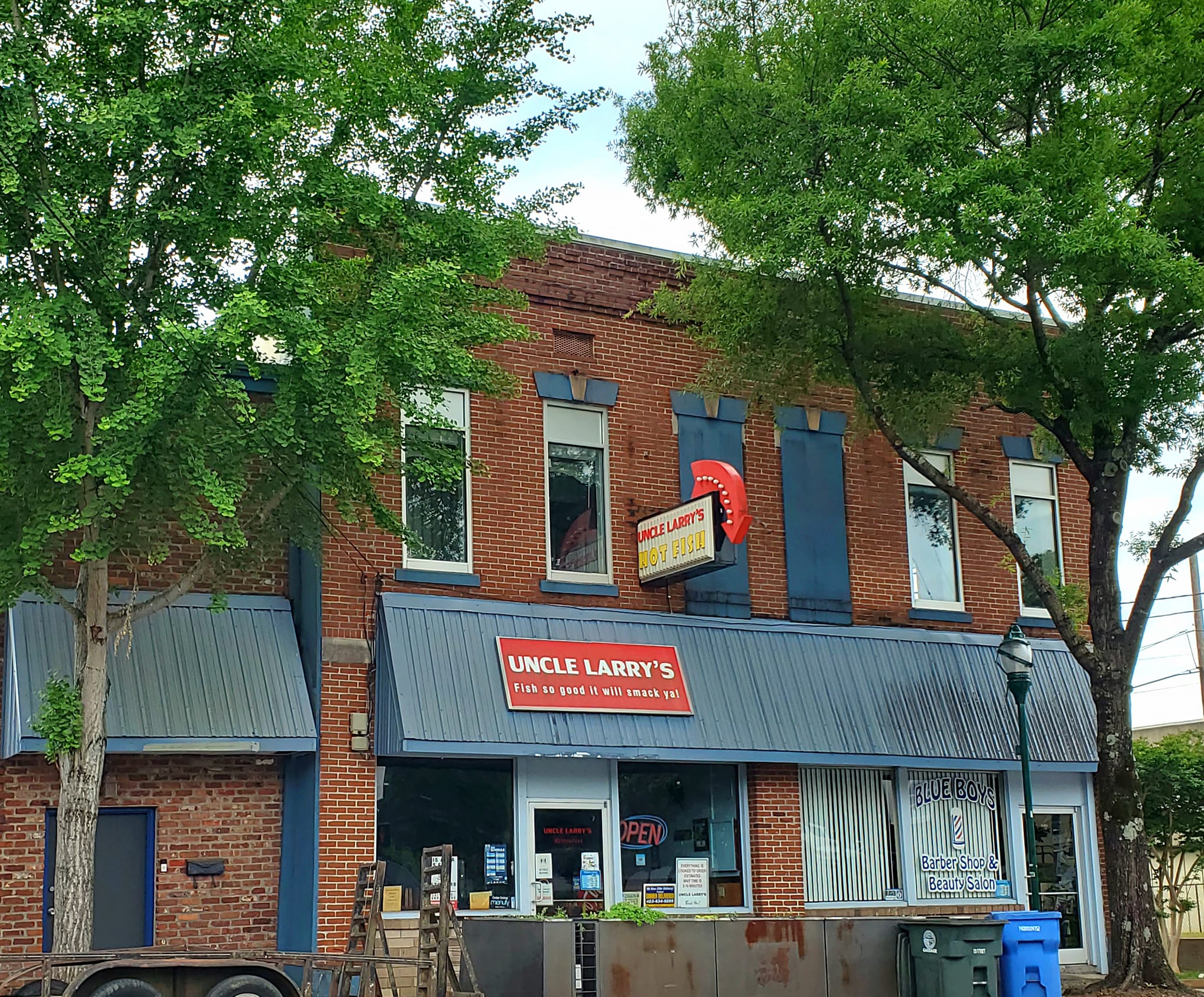
Uncle Larry’s Fried Fish now has four locations in Chattanooga and their slogan is “Fish so good it will slap you.” Gosh, I really hope not.
They have been going strong since 2013 so they are definitely doing something right.
The Lantern Coffee Co. and Burlaep Print & Press are two great coffee shops in the MLK neighbourhood.
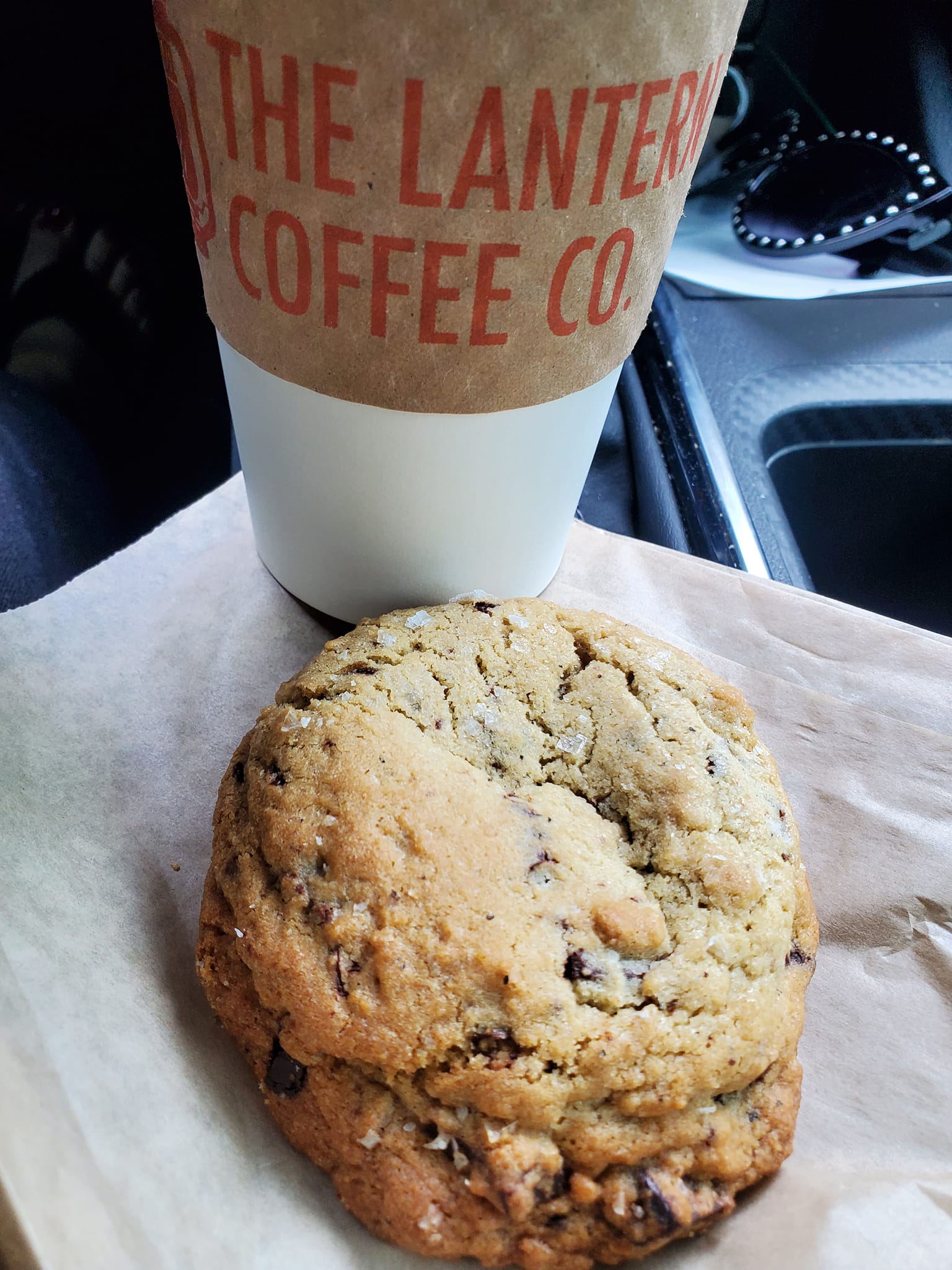
Lantern hosts live music events and has killer salted chocolate chip cookies.

Burlaep Print & Press is particularly rad because in addition to being a fun coffee shop space, they are, and were originally, a printing press that supplies local and regional businesses and organizations with the coolest gear.
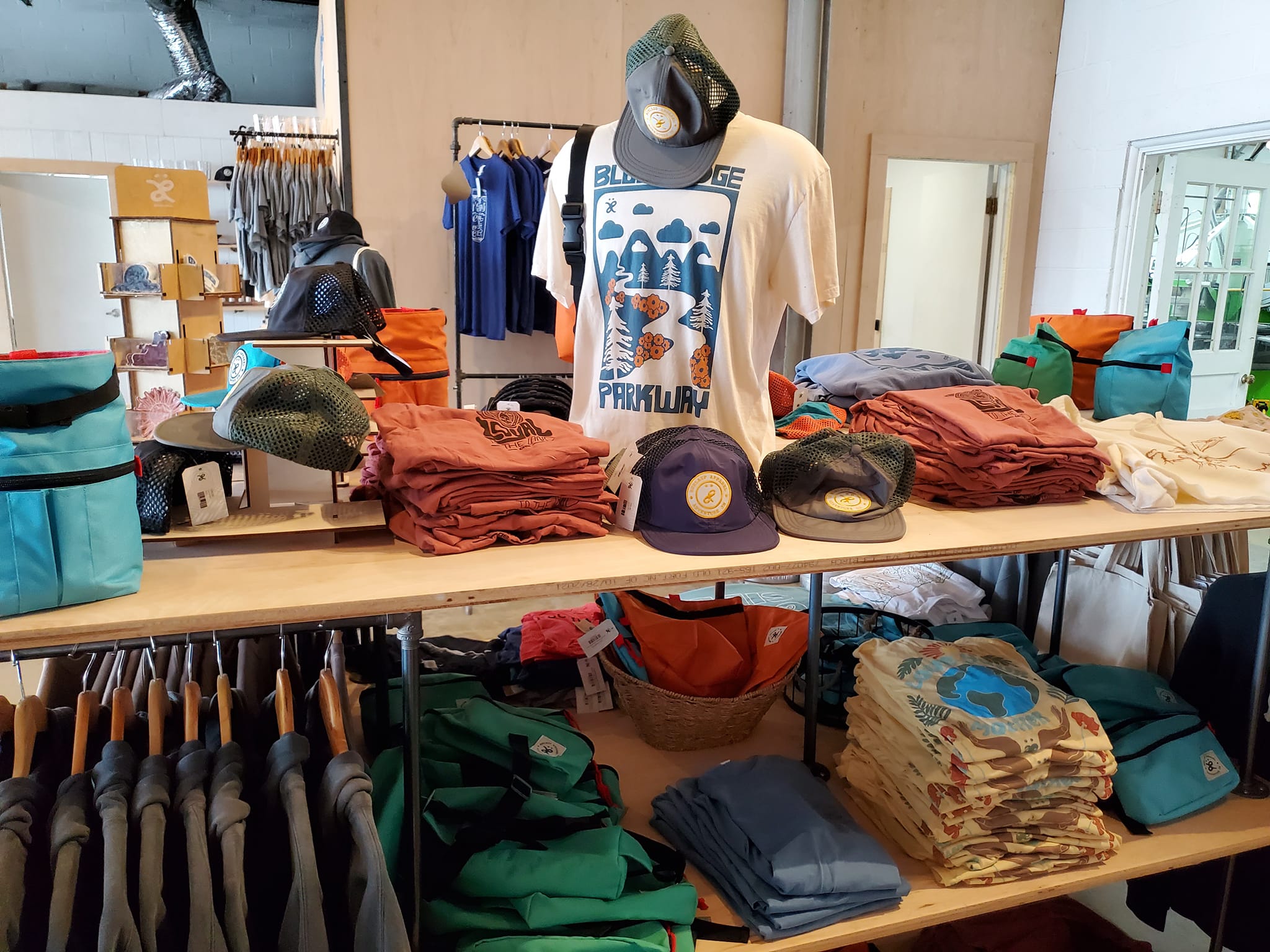
I had a good time nosing around and watching the presses run while waiting for my latte.
Should I have, though? No one stopped me.
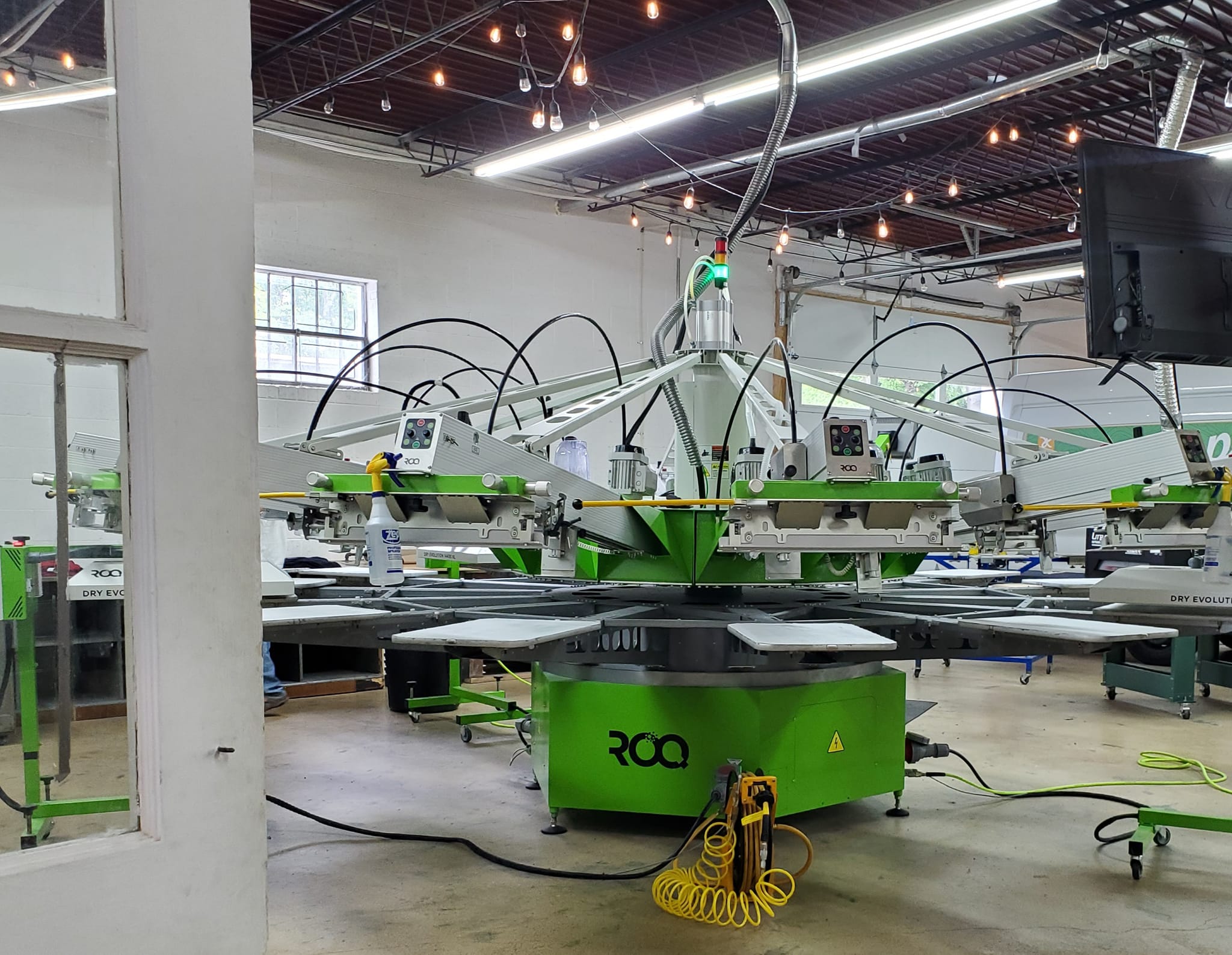
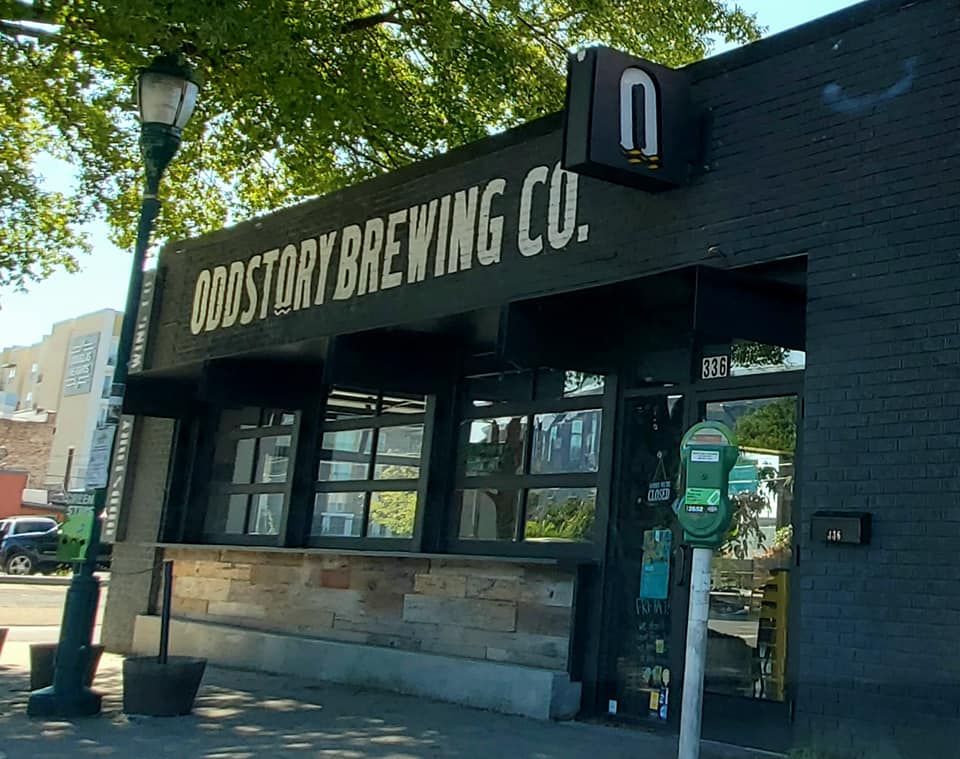
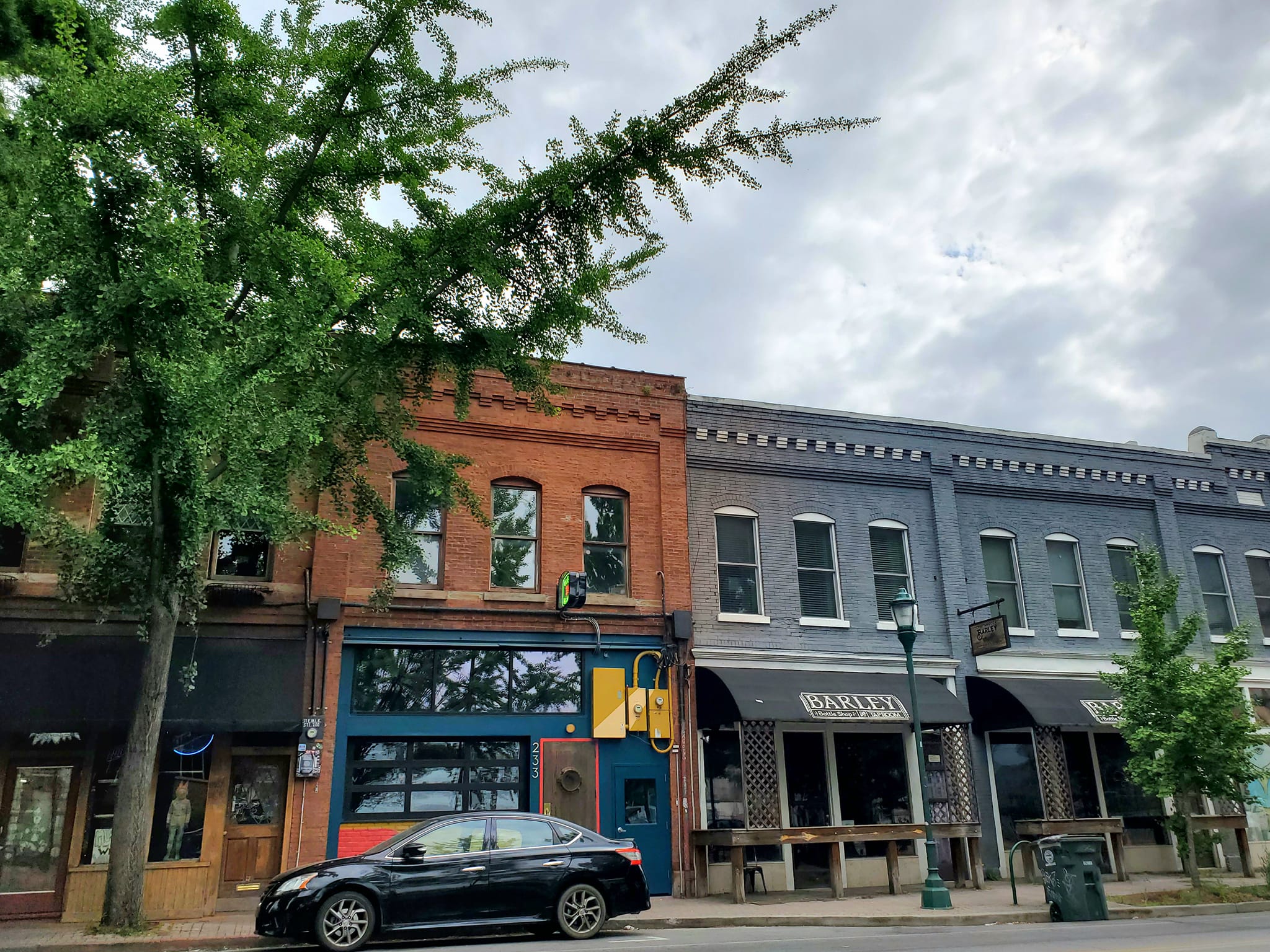
For cocktails, craft brews, and live music, stop by JJ’s Bohemia, Hutton & Smith Brewing, Bless Yer Heart, The Bitter Alibi, and Oddstory Brewing.

ChattTaste.com offers guided walking tours focused on food in the MLK neighbourhood and you can book your own tour here.
I have not done it myself but it looks fun. Holler at me if you take the tour and tell me which restaurant you like best.
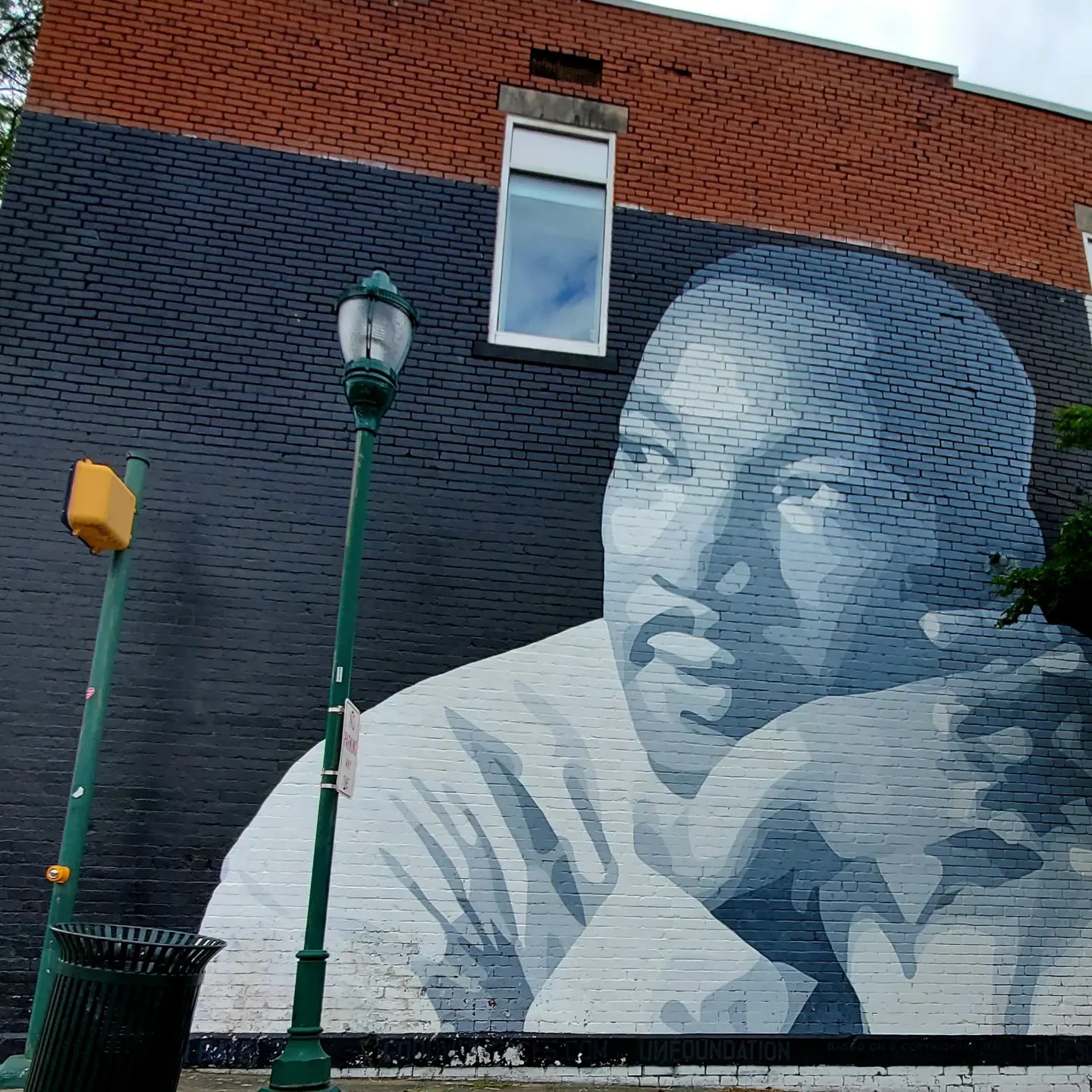
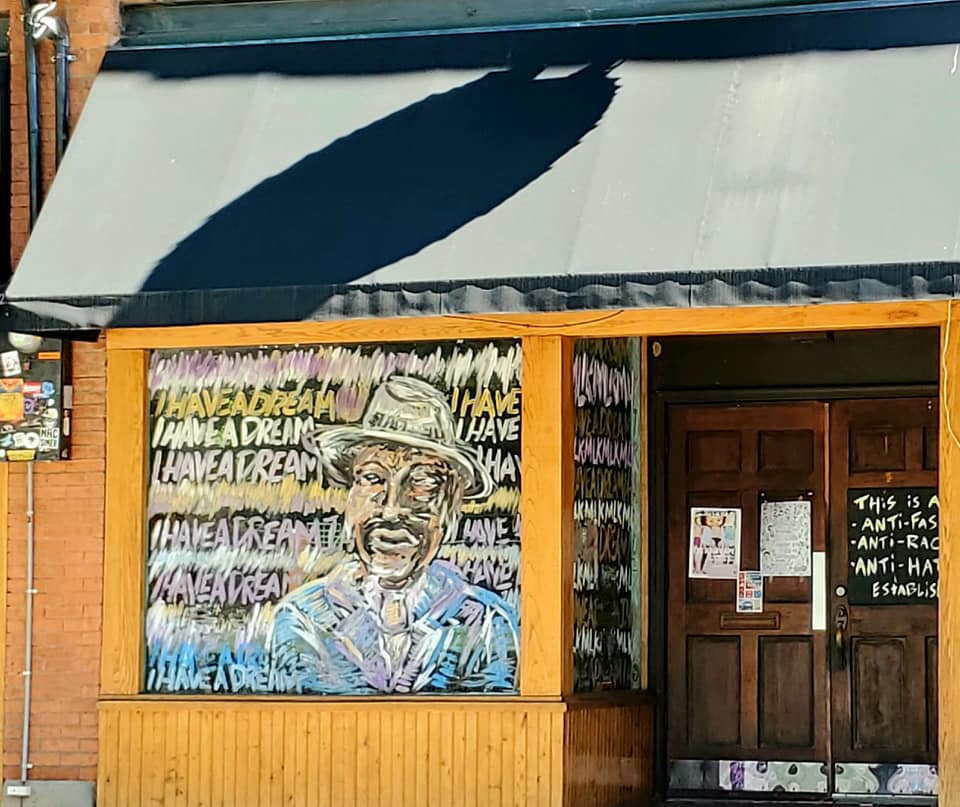
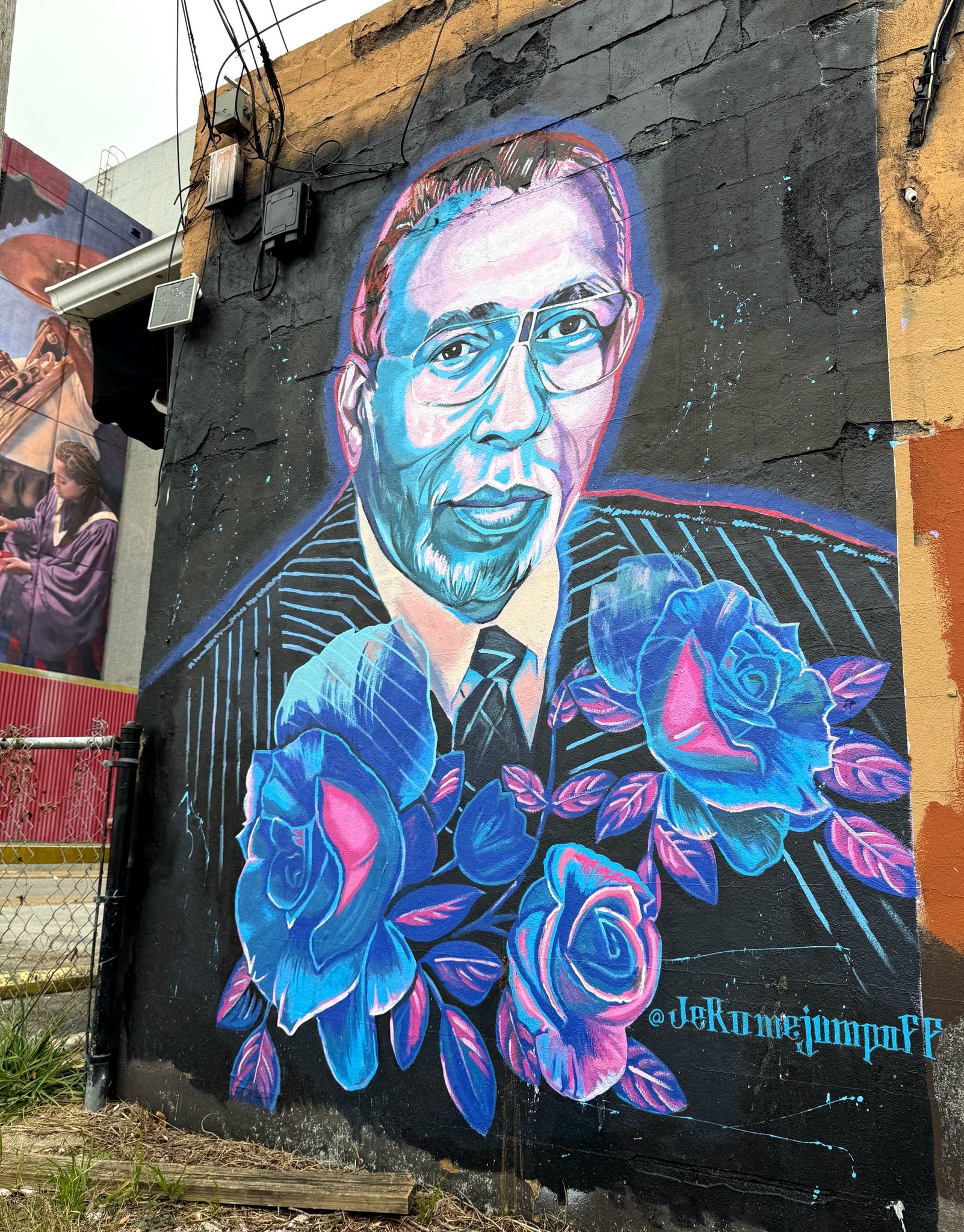
There are so many other fantastic murals in the historic Ninth Street / Big 9 District, now known as the MLK neighbourhood around MLK Blvd. One of the most beloved murals is the one of Dr. King himself, above.
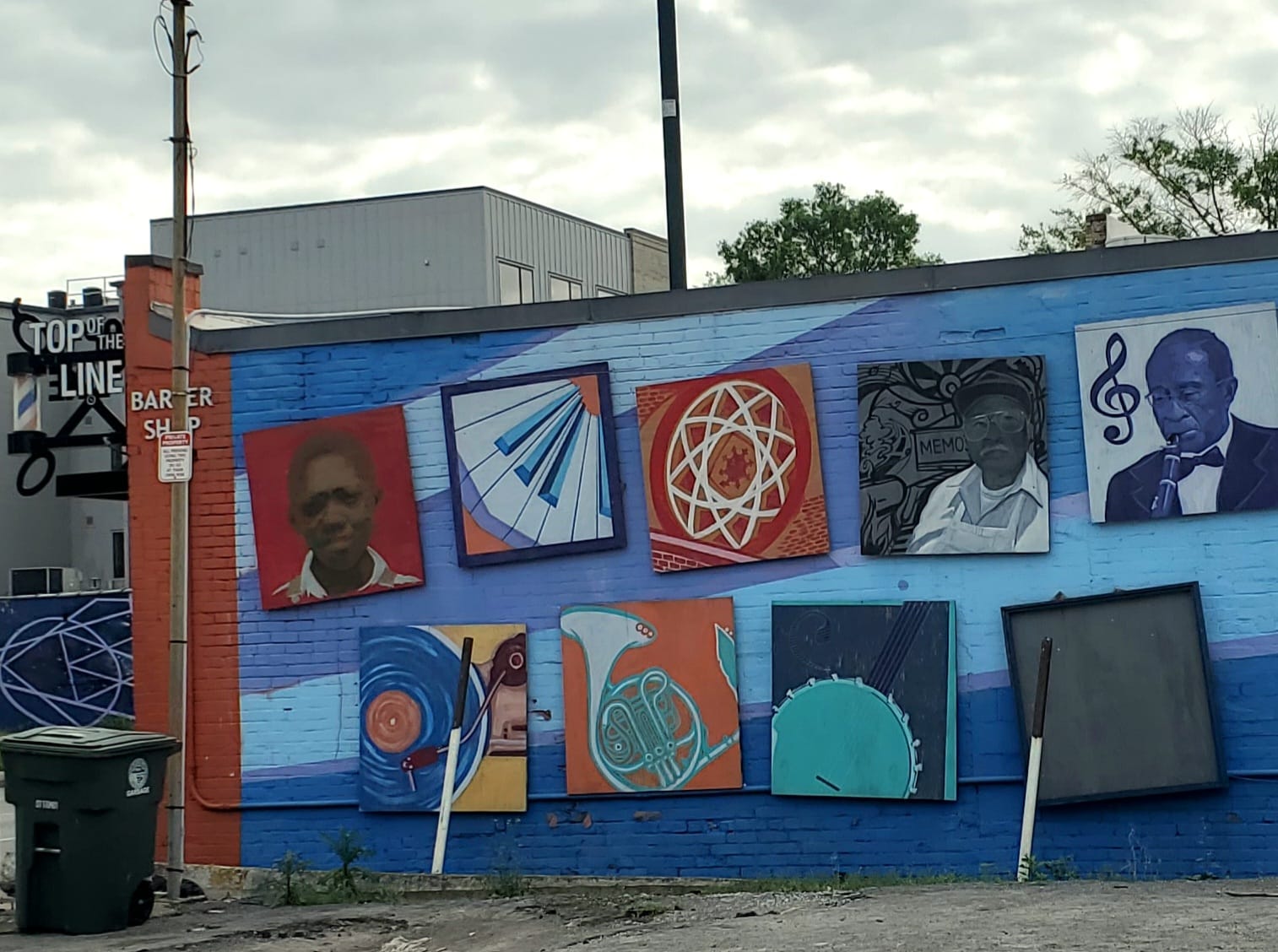
Top of the Line Barber Shop has an interesting piece on its exterior, too.
More modern murals unrelated to the Big 9 are creeping in over the exteriors of newer apartment buildings and student housing.
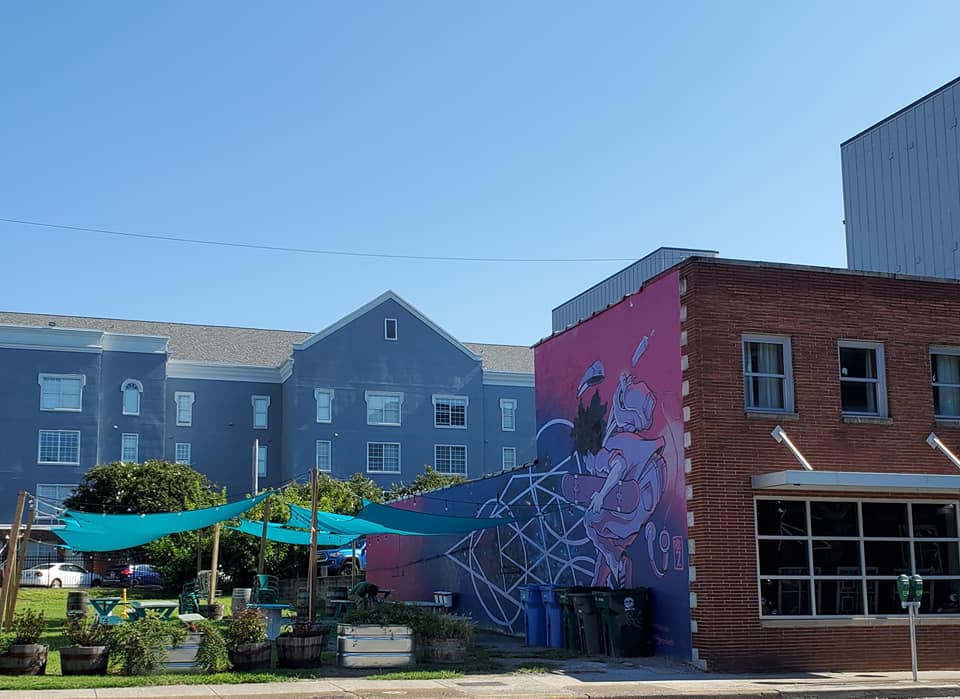
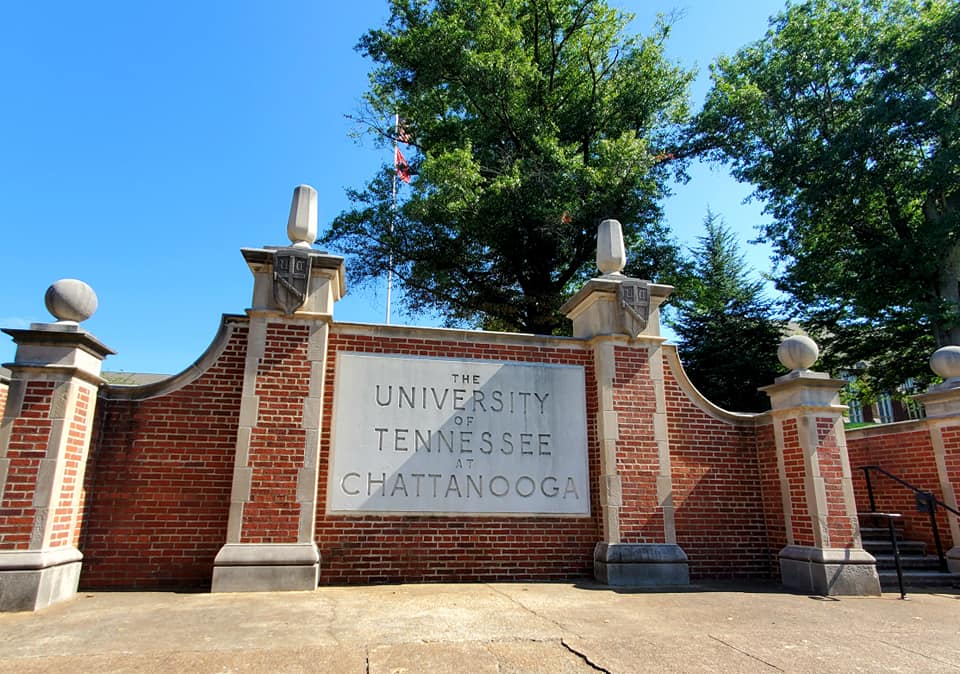
That tracks because the MLK neighbourhood is so close to the University of Tennessee – Chattanooga that the boundaries frequently overlap.
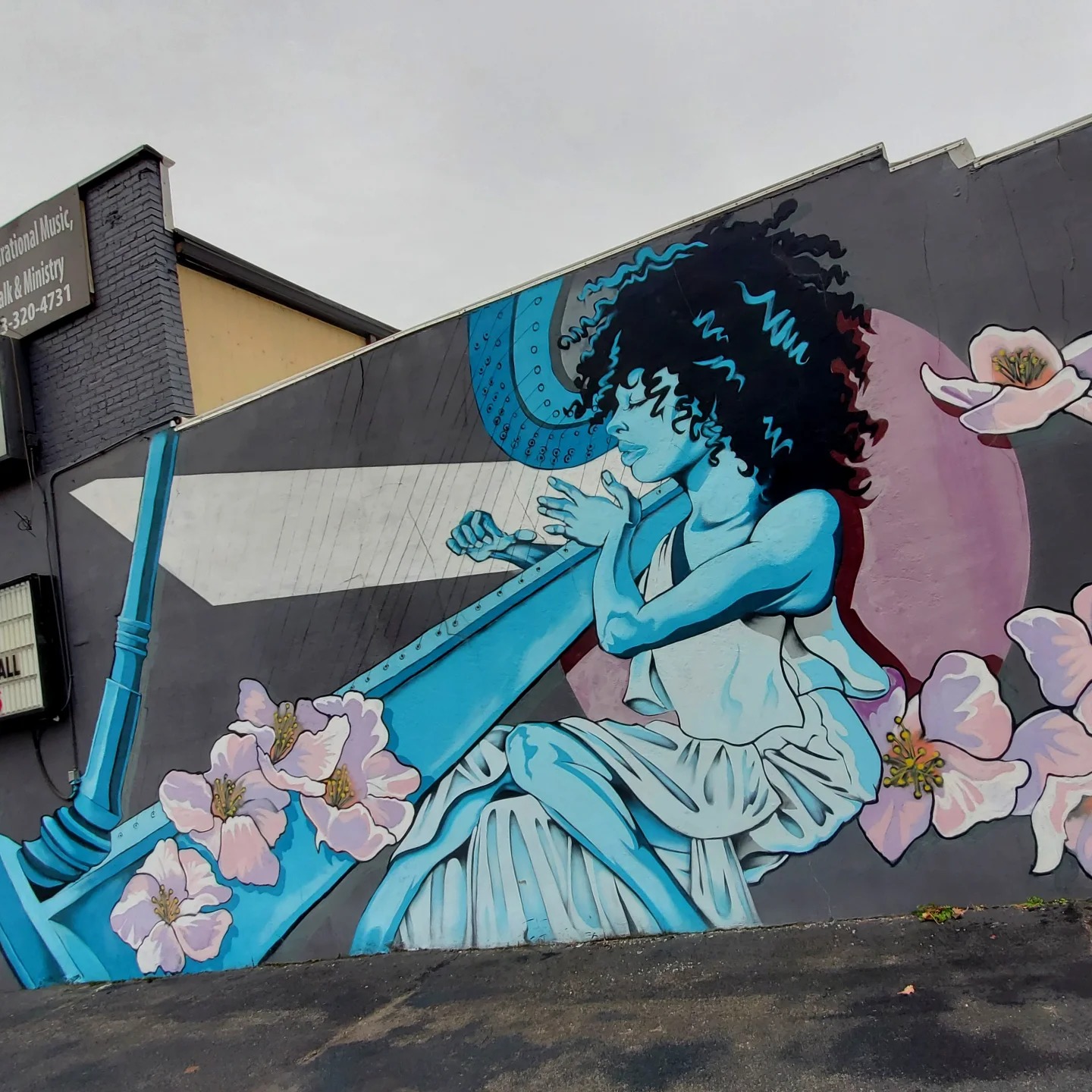
Most newcomers have no idea about the history of the Big 9.
Other attractions nearby include the Chattanooga Zoo and the Chattanooga National Cemetery, as well as the whole of Chattanooga.
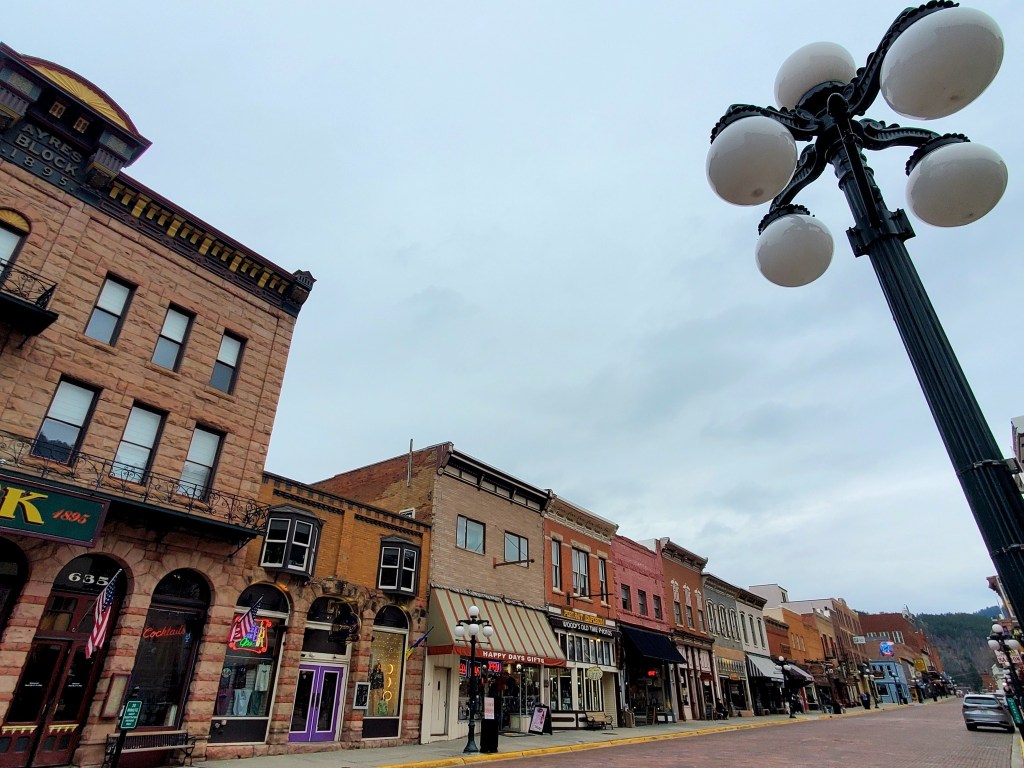
In the area for a while? Follow me to downtown Chattanooga and the Southside district.
*************
© Fernwehtun, 2015- Current. Unauthorized use and/or duplication of this material without express and written permission from this site’s author and/or owner is strictly prohibited. Excerpts and links may be used, provided that full and clear credit is given to Fernwehtun and Fernwehtun.com with appropriate and specific direction to the original content.

 Fernweh, An Ache for Distant Places
Leave a comment