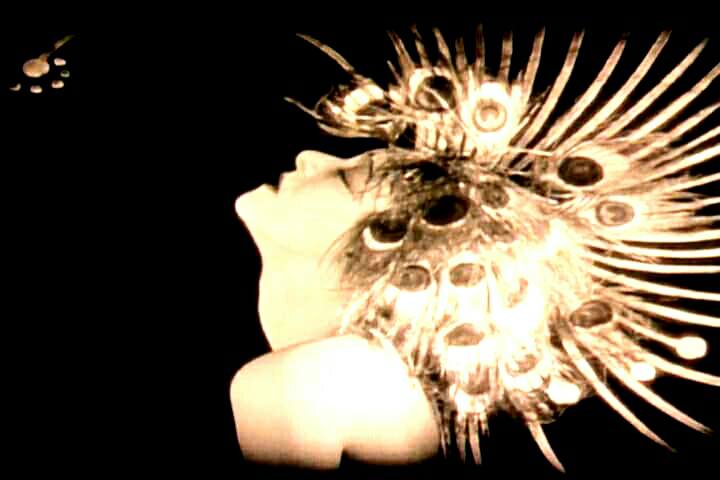

Mark Twain wrote this about Heidelberg, “I have never enjoyed a view which had such a serene and satisfying charm about it as this one gives” in his book A Tramp Abroad and it still rings true.
Heidelberg’s official song “Ich Hab’ mein Herz in Heidelberg Verloren” translates to “I Lost my Heart in Heidelberg” and was first recorded in 1925 by Fred Raymond.
Here is a 1955 version by Hans Maria Linz:
HEIDELBERG
In the heart of Germany, Heidelberg rests over the Odenwald Mountains and is divided in two by the Neckar River. Records dating back to the year 1196 first mention the city being named Heidelberg.
Archaeologists and historians have dated the earliest settlements of modern-day Heidelberg by the Celts around 600,000 BC, later inhabited by Romans within a fortified part of what is now the Neuenheim district until it was abandoned in the third century.

CITY OF ROMANTICISM
Fast forward through some history about “royals” that I always find insufferable, to the War of the Palatinate Succession, where the French army all but destroyed Heidelberg.
It was rebuilt, trading its more primitive style for Baroque architecture, and began attracting some of Europe’s finest poets, philosophers, professors, scholars, and authors. This soon earned Heidelberg the nickname “City of Romanticism.”
Heidelberg is also known as the “City of Literature.” In 2017, Heidelberg was named a UNESCO City of Literature after being a member of the its “Creative Cities Network.”
Nearly every street or corner in Heidelberg’s Altstadt (old city) has a bookstore or library of some sort, and the city hosts an annual Heidelberg Literature Days festival. This really demonstrates how much its prolific creative output weighs in.
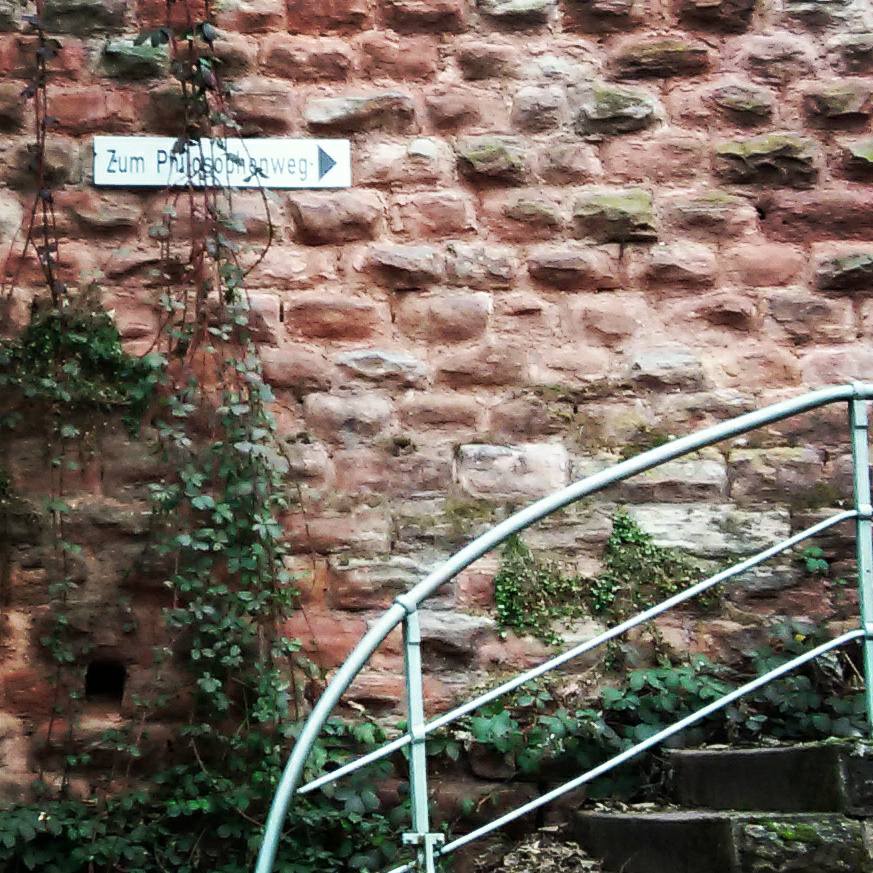
PHILOSOPHEN WEG
Among the brilliant minds making their homes in or finding inspiration in Heidelberg were Martin Luther, Mark Twain, Victor Hugo, Joseph von Eichendorff, Friedrich Hölderlin, and Clemens Brentano.
The Philosopher’s Way is a popular spot in Heidelberg where they were known to walk and do some of their greatest thinking. The walking path is still utilized by students, residents, and tourists when a little inspiration or time to reflect is needed.

From the busy hub of Bismarckplatz where Hauptstraße reaches the Theodor Heuss Brücke, I took Uferstraße to Bergstraße in order to reach the beginning stairs of the 1.5 mile Philosophenweg nature walk.
The trail follows along the Neckar River from an elevated curve in the mountain and ends with Schlangenweg trail which leads you back down the mountain to the Alte Brücke.
There are other paths you can take but that could lead you around for hours, and I would not recommend doing that by yourself. I have heard the Philosophenweg is best enjoyed by taking the route in the reverse direction to spare you the steep climb.

HEIDELBERG UNIVERSITY
Heidelberg is a college town in the Southwestern region of Baden-Württemberg, Germany; home of the famous Heidelberg University and a major hub for science.
This highly respected college was built in the late 1386, making it Germany’s oldest university, and it remains one of the most prestigious academic and scientific centers worldwide.

CITY OF SCIENCE
Back in 1945 when Heidelberg was taken hold of by American armies, the historic Neuenheimer Feld campus became the HQ of the US Army in both Europe and in NATO. In the 1980s, the campus was given new life with the establishment of the Heidelberg Technology Park (HTP) and was backed by nearly 80 different research organizations in biotech.
In addition to Heidelberg University and HTP, this world-renowned “City of Science” is home to the Max Planck Institute for Astronomy since it was established in 1978. Other branches of the Max Planck Institute are for Nuclear Physics and Foreign/International Law.
That same year, the European Molecular Biology Laboratory, Europe’s leading Life Sciences research institute opened in Heidelberg.

HEIDELBERG CASTLE
Heidelberger Schloß (Heidelberg Castle) is the most frequently visited castle ruins in all of Germany, and it is high up on the castle list for Europe as a whole.
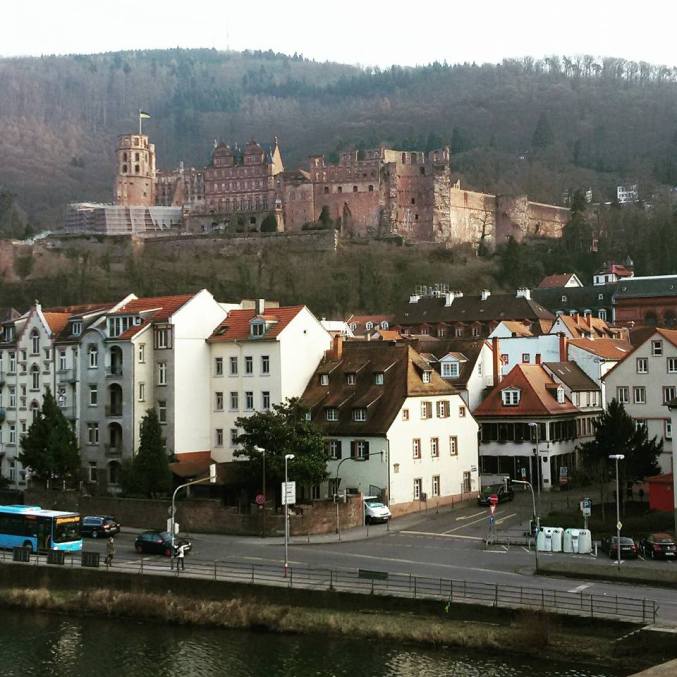
It was and still is the most prominent Renaissance castle outside of the Alps, and it sits nearly 300 feet above street level.

At one point there were two castles, but lightning burned the upper one in the 1500s. The existing one we see today was partially rebuilt in 1214, and it was also lightning struck in the 1700s.
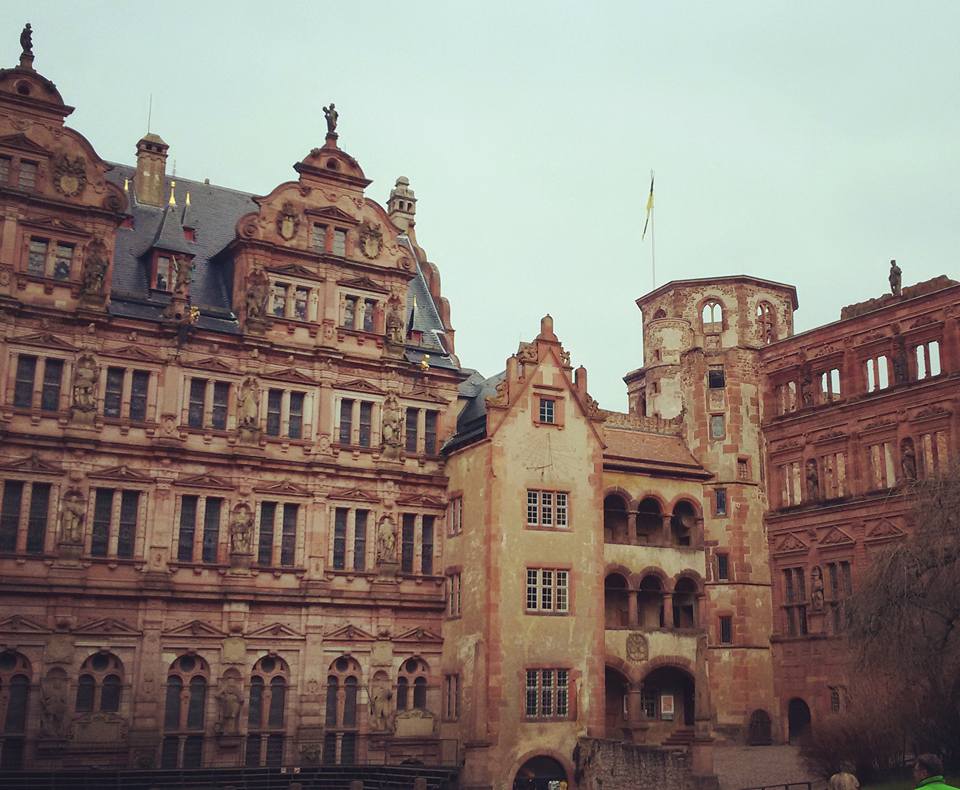
Only one section, the Friedrich building, has been completely restored. Both castles were put to ruins with fire and lightning bolts many times over.
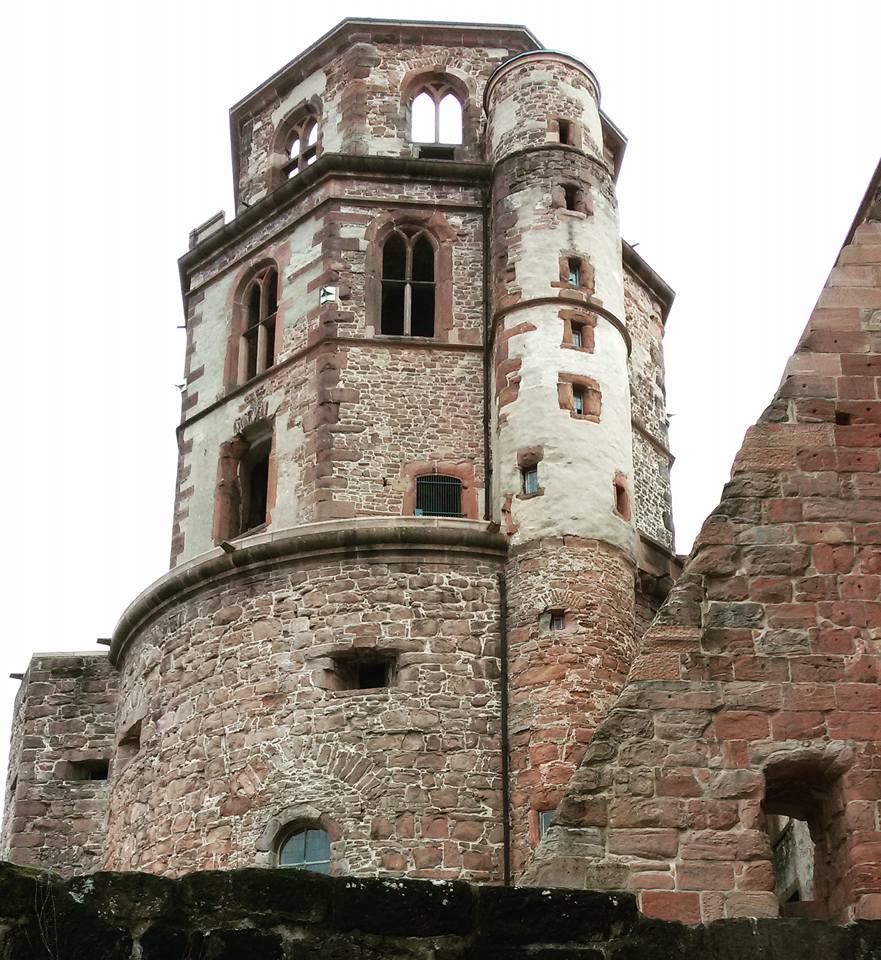
The worst damage to the castle was during the Nine Years War. In March of 1689 the French military attacked and were advised to destroy the land, leaving only scorched earth.

In the late 1600s, a famous-for-the-sake-of-being-famous royal threw a massive tantrum then destroyed the castle and surrounding town during the War of Succession, leaving the Hotel Zum Ritter as one of a few survivors.

Rumour has it that a French general fell in love with the castle town and secretly spared it from total annihilation by directing citizens living at the foothills to start fires and create lots of smoke to make it look like the army had burned down the houses.
Reconstruction began immediately but the French army kept returning with more severe orders. The newly fortified walls of the castle successfully prevented them from entering, so they destroyed them with mines.

Here is a YouTube video estimating the damage:
Heidelberg Castle withstood centuries of repeated brutal attacks, yet went unscathed during both World Wars. The castle did not suffer any damage during either World War, save for when the German military blew up the bridges to keep invaders from having access.
They were rebuilt quickly.
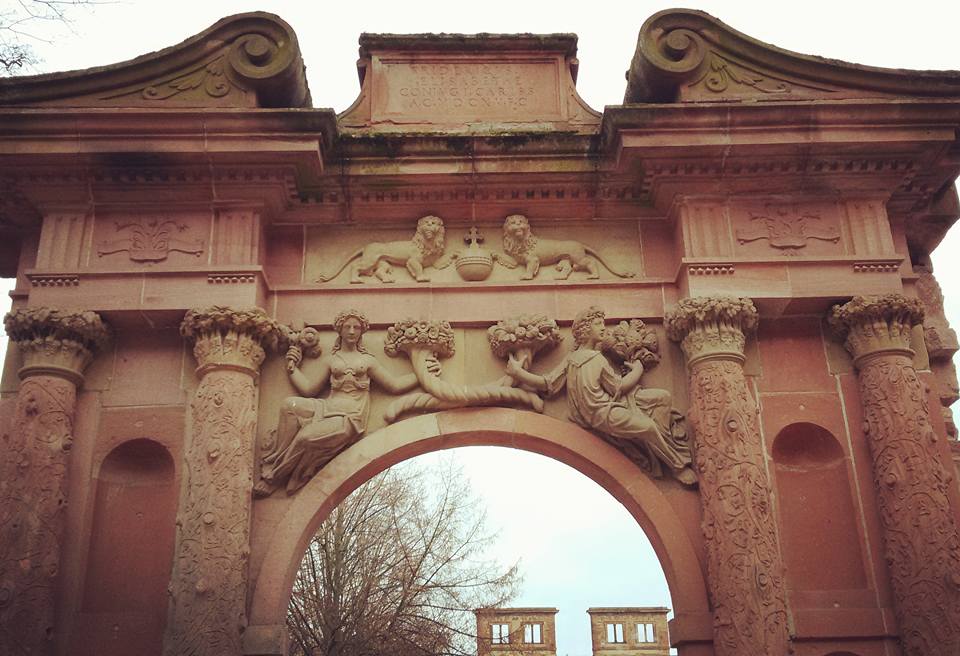
When you arrive at the castle entrance and exit the train, follow the path that takes you past the tourist center, then you will see Elizabeth Gate to your left.
Friedrich V commissioned this gate to be built in a single night as a surprise for his wife Elizabeth Stuart back in 1615.
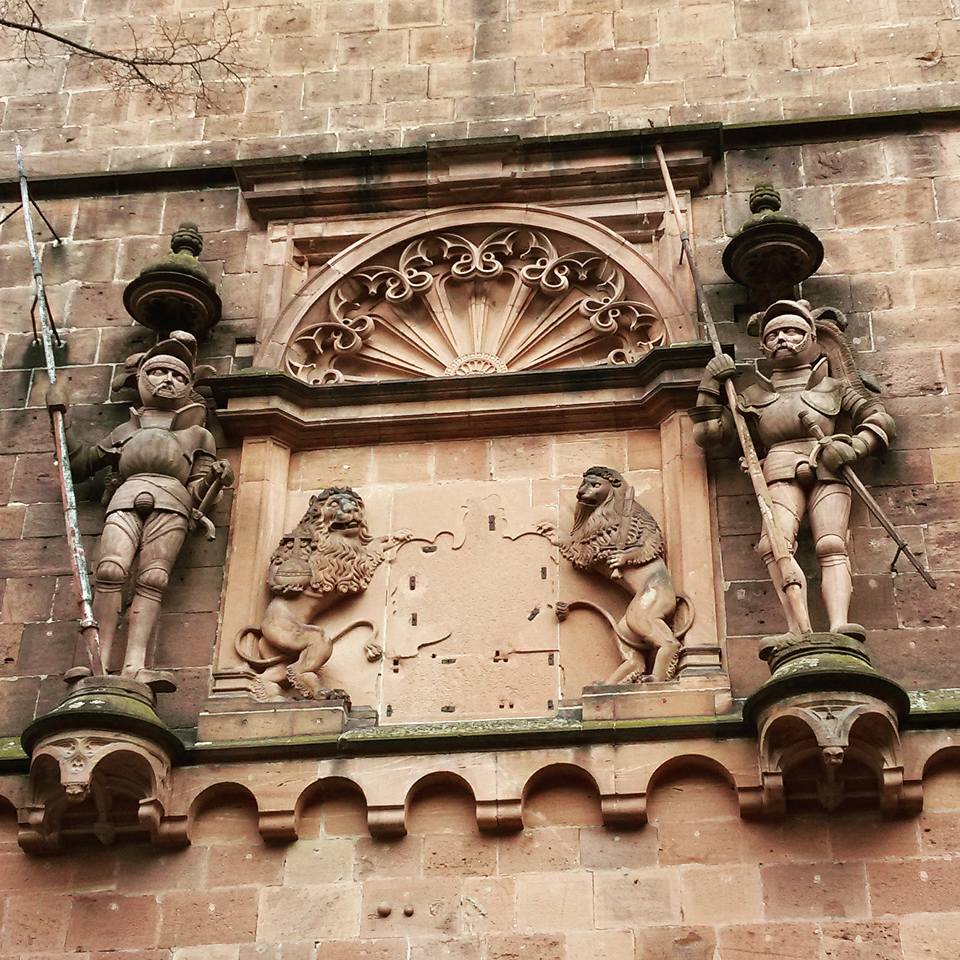
When you pass through Elizabeth Gate, you will reach the Bridge House where guards check your passport and tickets.
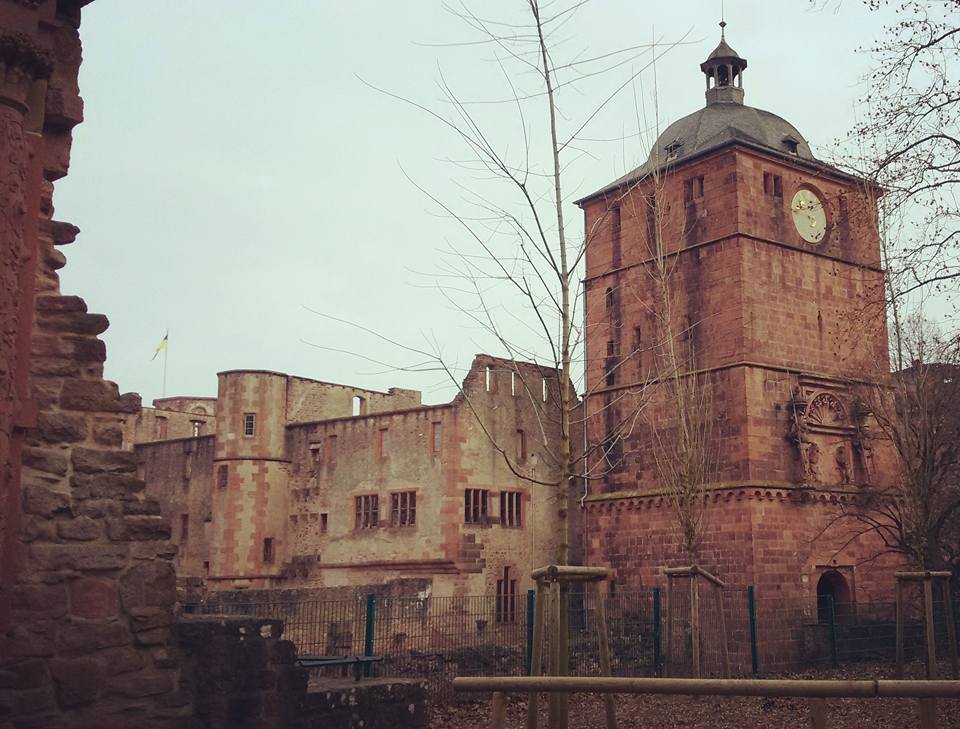
You can then walk through the Clock Tower and into the courtyard.

Once you are inside the courtyard, you can roam freely. You will see the Deutsche Apotheke Museum, a bakery, café, and restaurant.
The Heidelberg Tun is the world’s largest wine barrel and holds nearly 60,000 gallons. Visitors can climb the stairs and walk over the top of the barrel, which stands 23 feet tall and nearly 28 feet wide.
Victor Hugo, Mark Twain, Washington Irving, Jules Verne, Herman Melville, Mary Hazelton, and other great writers have made references to this gigantic barrel in their work.

I just want to mention this statue of Vater Rhein casually lounging by his fountain in the Upper Prince garden.

ADMISSION & ACCESS
To the best of knowledge, you can still purchase a “Panorama” pass at the station in Kornmarkt Square that takes you all the way up to the top of the Heiligenberg Mountain. The journey is divided into two segments with a station in the middle, and includes admission to the castle and other attractions like the Pharmacy Museum.
If you prefer to hike or walk the lower or upper segment of the journey, you can buy a ticket for the rest. Always refer to the official website to know what the current options are.

HEIDELBERG FUNICULAR
After touring the castle you can either return to the town level or continue going up the mountain on the Heidelberg funicular that leads to the Königstuhl.
This funicular was built in 1907 and runs almost one mile, making it the longest track in Germany.

It is made primarily of wood, a major contrast to the modern Bahn train that runs to the castle.

Riding the funicular’s steep 45-degree gradient was thrilling and somewhat frightening. This photo was taken about 2/3 of the way up and I could just faintly make out details of the Alte Brücke bridge.

KÖNIGSTUHL
Above the castle is the Königstuhl (King’s Seat). This level of the mountain is home to a Falcon sanctuary, the Forest Adventure Nature Park, Paradise Park, a café, an exhibit on the Bergbahn, and some other beckoning places I did not dare enter.

Station Königstuhl has the unsettling energy and appearance of an abandoned, haunted Soviet space station. Here, you are more than 1,800 feet above sea level and 1,400 feet above the city.
 I
I
I found the Maschinenraum (Machine Room) below the station and got to check out all the gears and levers as they were cranking and pulling.

TINNUNCULUS
The Tinnunculus Falknerei is a refuge for endangered peregrine falcons, and it is not uncommon to see flocks of exotic birds and fruit trees growing here that are typically found only in the Mediterranean.
Heidelberg climate is the warmest in Germany and it has provided fertile ground for non-native plants and animals, making it a center for nature studies. That being said, the difference between temperatures on the ground versus this high up, this time of year, was a bit painful.
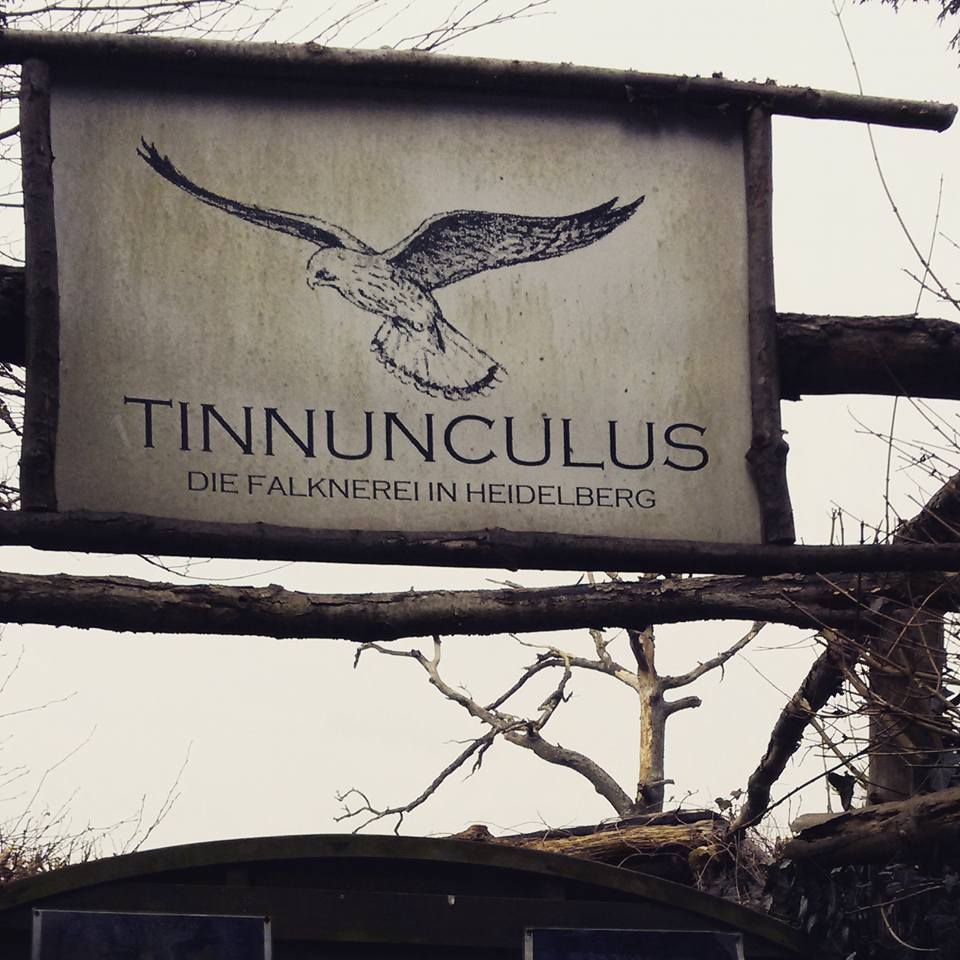
Beyond the Falkenrei, a trail of sculptures along the Forest Adventure Trail leads to the Märchenparadies, a Fairy Tale themed park.
This sculpture was my favourite.

My limbs were starting to get stiff, my teeth were chattering, microscopic icicles were forming in my nostrils, and I was both alone and unprepared for exploring a wintry forest, so I passed on taking the full hike up to the very top.
Only two other people were brave (or crazy) enough to hang out on this mountain in the middle of February. They had began coughing and gasping even before I did. We all rode back down together.

ALTSTADT
It was easy to figure out the main roads of the Altstadt (old city) district. Hauptstraße begins near the Karlstor gate by Heidelberg University and leads all the way through Alt Stadt to Bismarckplatz, the main transportation hub.
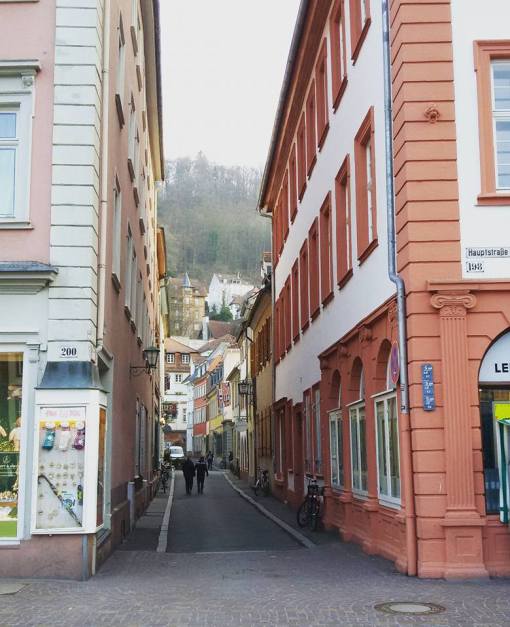
Steingaße (Stonegarden) is the short street that begins at the Alte Brücke gate, meets the patio of Goldener Hecht. It stretches another block or so until it intersects with the main street, Haupstraße, one of the longest pedestrian shopping streets in all of Europe.

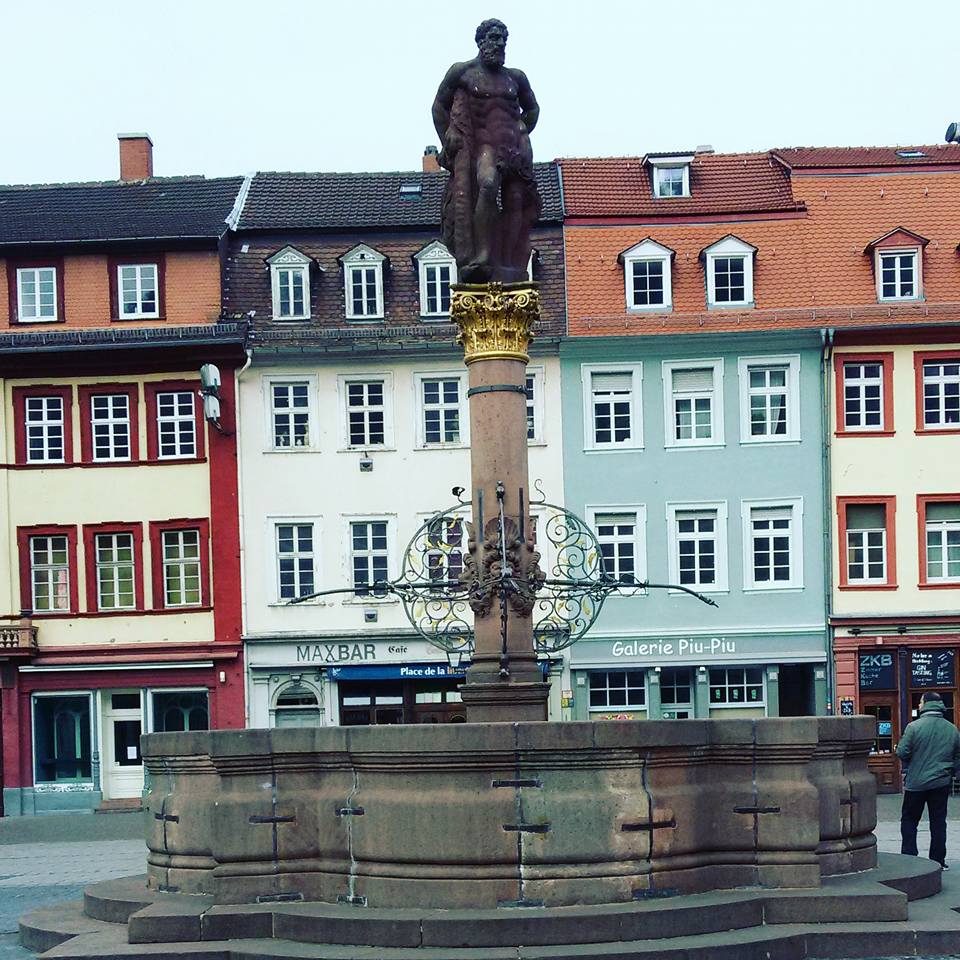
There are many large, open squares filled with clothing and specialty shops, memorial fountains, and sculptures along the way.
TWO BRIDGES
The Alte Brücke (old bridge) and the Theodor Heuss Brücke (bridge) frame the Altstadt district of Heidelberg. Both bridges were blown up in World War II by German soldiers to keep an Allied forces attack at bay, and rebuilt shortly after.
The trek from bridge to bridge along the river is approximately 1.5 miles; a 3+ mile route each loop, and I made it countless times.

Alte Brücke
Heidelberg’s sandstone Old Bridge was built in the late 1780s after several of its predecessors had been destroyed.
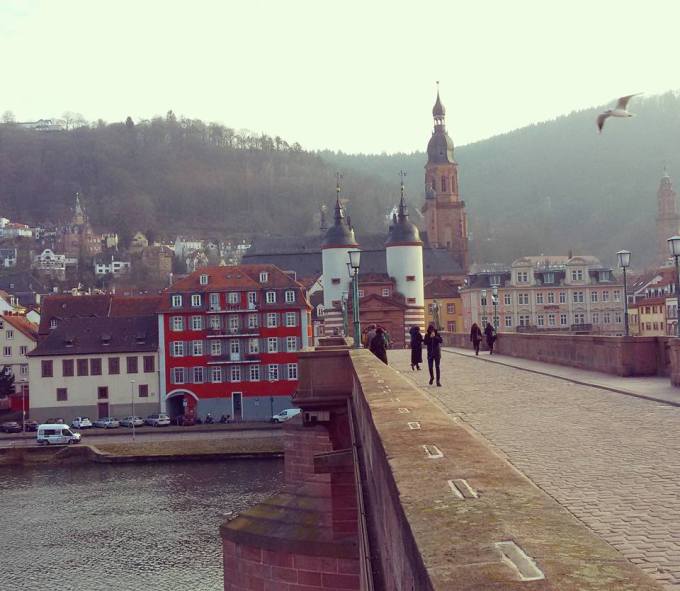
Everyone’s favourite statue here is the Heidelberg Affen. This cheeky monkey was originally sculpted in the 1500s with one hand holding a mirror and the other grabbing its behind, but the statue went missing during once of France’s many attacks.
The statue you see now has been changed, with the latter hand showing the ancient sign of the horns. It is quite comical if you think of him as a rock-n-roller, but when fingers are facing down, it is historically an old world gesture to ward away evil.

Superstition says that touching the fingers will bring you back to Heidelberg some day, that touching the mirror brings wealth, and finding each of the mice nearby will bring loads of children. I was sure to avoid those mice.
On the opposite side of the gate there is a bronze “memo” with a poem written in 1632 by Martin Zeiler, posing the mocking question:
“Why are you staring at me?
Haven’t you seen the old Monkey of Heidelberg?
Look to and fro,
There you will find many more of my kind”
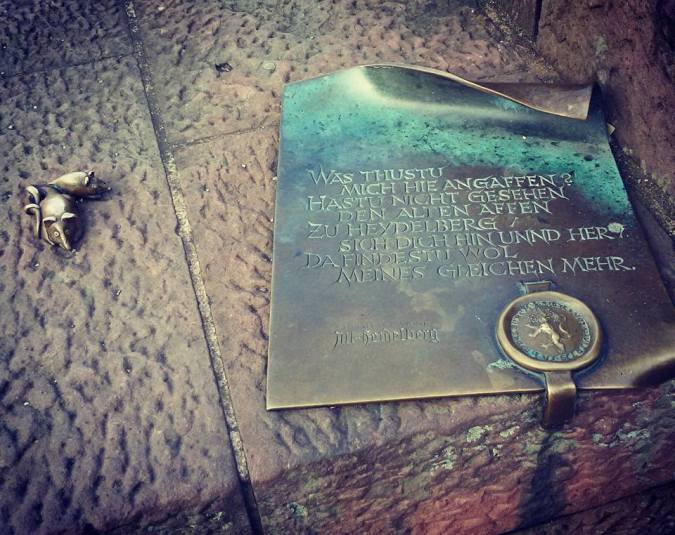
From my interpretation, all of this combined creates an epic insult. The monkey’s behind is pointed toward the nearby town of Mainz, which Heidelberg electorates had serious beef with back then.
The monkey’s mirror is a way of suggesting that the Mainz government should really check themselves, grabbing its behind was an obvious vulgarity, and the poem is basically saying “You think I’m an ass? We all feel this way about you!”
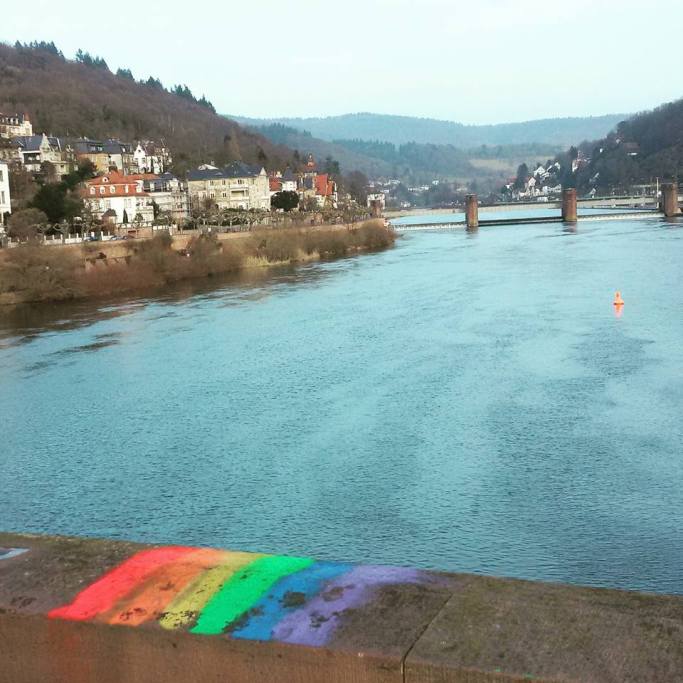
Hotel Goldener Hecht
I stayed in the historic Hotel Goldener Hecht located immediately near the towers of the Alte Brücke gate. Tourists come here at all hours to take photos, pose with the monkey, and walk across the iconic bridge.

Drinking coffee and people watching from my bedside window was very entertaining. I could not find a better location if I had wanted to. Most of the places I wanted to visit were within a few blocks, maybe a dozen at most.

Theodor Heuss Brücke
Heuss was a celebrated journalist who became the first President of the Federal Republic of Germany in the late 40s. This bridge, his namesake, frames the opposite side of the Altstadt just across from the Alte Brücke.
A gorgeous tree-lined promenade connects the two main bridges. The main districts of historic Heidelberg are Altstadt and Bergheim, and across the river is Neuenheim. It is an easily navigable town, and it is impossible to get lost if you can see the water.

Heiliggeistkirche
The Heiliggeistkirche (Holy ghost church) was nearby and open for free tours. Lore of this church is that when the Elector Ruprecht III became King of the Holy Roman Empire in the year 1400 over German nations, he chose this church as his burial site.
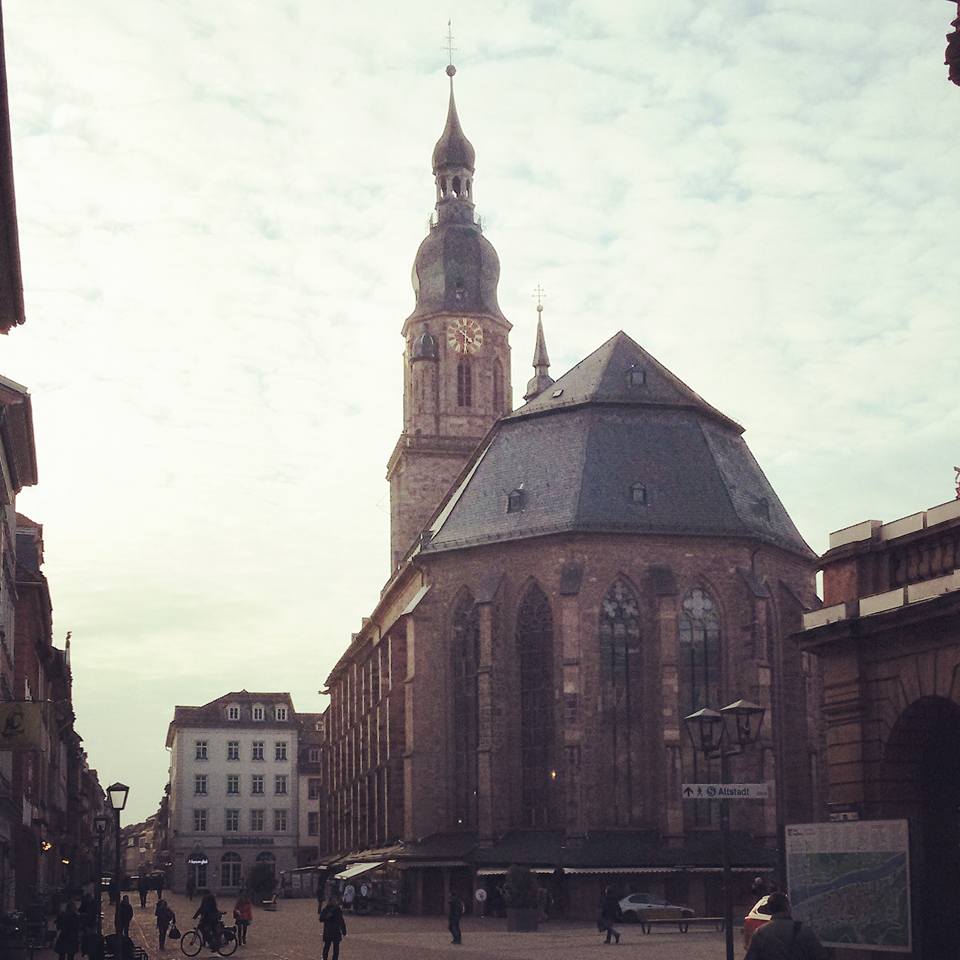
The church was prepared for him in 1410 but construction continued until the year 1544.

Zum Essen
There are more places to eat in Old Town than any king could conquer in a few days. I wandered through many of the central squares, taking inventory of it all before committing.

Most streets in the Altstadt are made of cobblestone and there are cafes, restaurants, bars, souvenir shops, department stores, boutique hotels, and bakeries on every block.
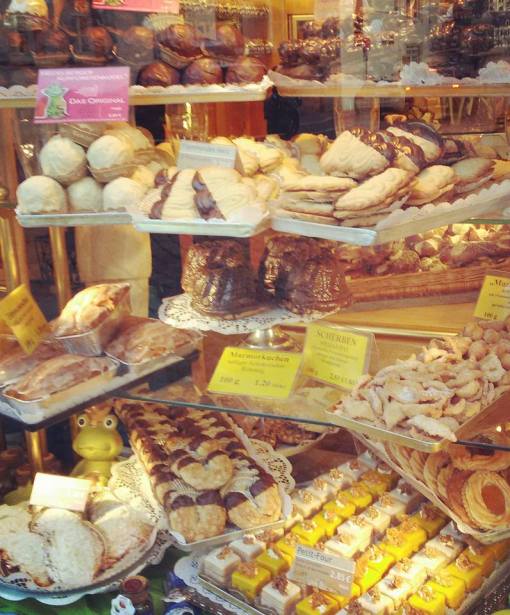
On my first night, I ate at a place with no sign. What drew me in was the graffiti and hip hop vibe. From outside under the neons, it looked like a dive but inside it was spacious and tidy.
They were blasting Dr. Dre and gave me something called “The Heavy Breather” so my reservations were quelled.

From my credit card statement, I learned the restaurant is called Joe Molese Burgers. I could hardly get through a single, but they have triple burgers covered in any type of sauce or add-on you could imagine. Now that I have seen the photos on their site, I definitely sold myself short.
Strangely enough, I learned that Heidelberg has been recognised by the German UNESCO Commission and the Conference of Ministers of Education and Cultural Affairs for its significant contributions to the genre of German language hip hop and the bulk of work that has been created by Heidelbergers.

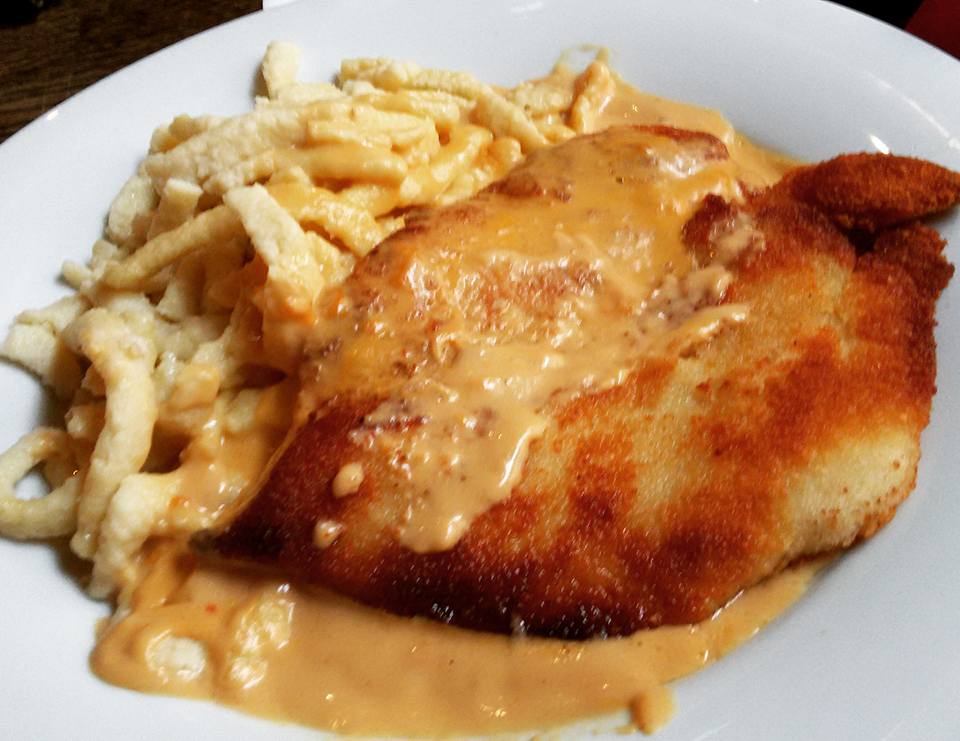
Another great place to eat is called Bier-Brezel. My #foodgoals for the day had been to find Rahmschnitzel, and I did, and it came with salad and spätzle. I opted for the Moroccan mint tea service also.
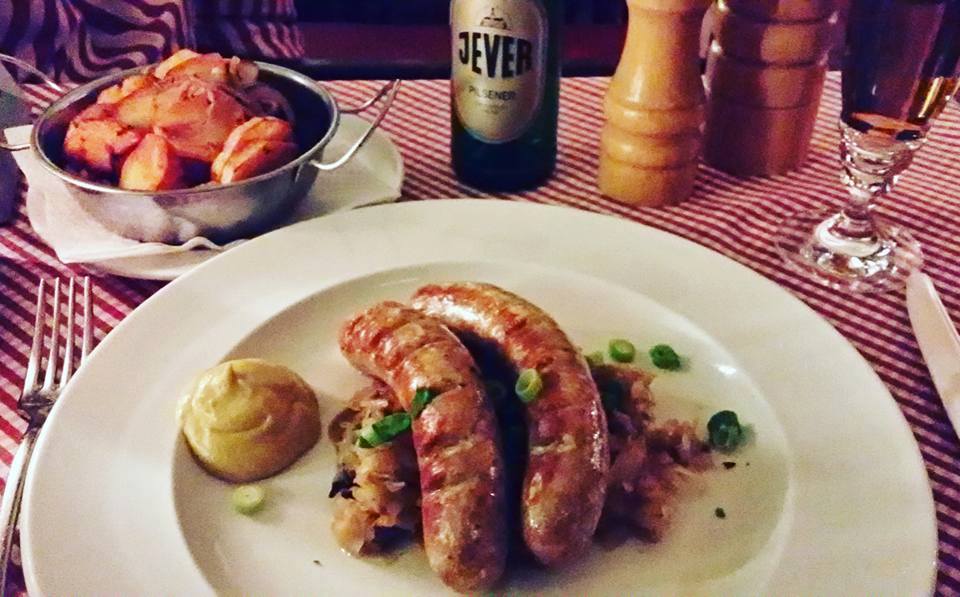
Standard German fare can be found everywhere here, but I must give credit to the Goldener Hecht restaurant. On my last night there, when I had not eaten a single meal with them, they invited me down for their specialty wurst, sautéed cabbage, caramelized potatoes, and an ice cold Jever. It was the perfect send off.
For drinks, my favourite place was Vetter’s Brauhaus. It was not the most exciting or youthful place, but was perfectly cozy and had lots of window spaces with wide wooden sills to curl up in and read my book when my feet were too achy to walk any more.
Vetter has won awards around the globe for having the highest alcohol content in their beers. The barman and I had a joke that since it was just a few steps from my hotel, we could tie a rope around my waist to my room door so I could really let loose one night and just reel myself in later. Maybe if I had stayed a few days longer.

ODDITIES
Heidelberg is also full of many past and present mysteries, some darker than others. Brutal attacks from foreign armies, inexplicably destructive lightning bolts, and questionable fires plagued the land in earlier centuries, among other problems of the time.
In 1907, a jaw bone was found belonging to Homo Heidelbergensis, the earliest living proof of humans in Europe. Some dating methods place him living here around 600,000 years ago. It belongs to the permanent collection of Heidelberg University’s Geological-Paleontological Institute.
The first President of the Weimar Republic, Friedrich Ebert, was born and buried in his native Heidelberg.
During the 1930s and 1940s, Heidelberg was a Nazi hot spot. Faculty of the Heidelberg University had compiled a list of outsiders (non-Aryans) to hand over on their own volition before Hitler took the reins, sending a large amount of their colleagues and neighbours straight to their deaths.
A secret formerly-Nazi amphitheater called Thingstätte still has its home high up in the mountains, though it is mostly used for local raves now.
In 2012, the Documentation and Cultural Centre of German Sinti and Roma was established and also serves as a place of remembrance for victims of Nazism in general.

Then there is the creepy Studentenkarzer jail for students of the University, with unsettling drawings scrawled over the walls.
The Student Jail was first used for misbehaving university students as early as the 1600s when being jailed became a rite of passage for many students.

Inevitably the jail turned into a party house, and now the building serves as a living memoir of campus life and of those who stayed.
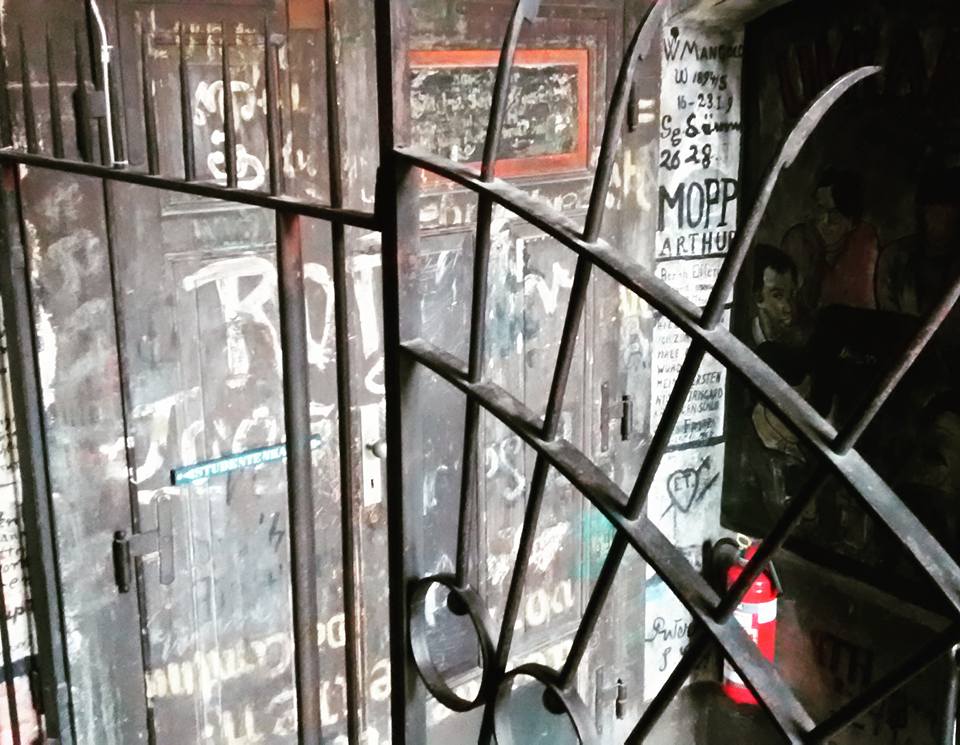
The museum contains their works of art, political expressions, artifacts, furniture, books, plans for rallies, and other student activities over the centuries.

Heidelberg has earned a new name in recent years, Bahnstadt, meaning Railway City. This name refers to the district that has emerged in an old sprawling freight station, but also to the Bahnstadt Campus where up to 12,000 people can be housed while conducting research for their jobs at Skylabs. It has a strange and suspicious vibe to it, but I am also just creeped out by all the places with “Live. Work. Play.” slogans. I am definitely interested in learning more.
Heidelberg was also recently recognized in 2021 as a Forest Capital by the PEFC and commended for its commitment to sustainable forest management.
There can be no question that Heidelberg is a fascinating city with diverse interests and industry-leading resources.

In the area for a while? Follow me to Berlin, Munich, or Köln.
*************
© Fernwehtun, 2015- Current. Unauthorized use and/or duplication of this material without express and written permission from this site’s author and/or owner is strictly prohibited. Excerpts and links may be used, provided that full and clear credit is given to Fernwehtun and Fernwehtun.com with appropriate and specific direction to the original content.



 Fernweh, An Ache for Distant Places
Leave a comment