
NORTHERN IRELAND & THE REAL WESTEROS
A short trip through Northern Ireland from Belfast up to the Giant’s Causeway has many attractions along the way; many that were used as filming locations for the serial Game of Thrones. Not having watched it, I was still just as thrilled as the next person to visit these beautiful landmarks.
Now is a good time to mention that Northern Ireland is a completely separate country from the Republic of Ireland. It is officially part of the UK, but the Republic of Ireland is not. It’s a whole thing.

Known as the King’s Road in Season 2 of Game of Thrones, the Dark Hedges are a massive cluster of beech trees lining both sides of a lengthy segment of road amid the farmland of Ballymoney.
A character named Arya runs away through this path at the beginning of Season 2. We were told the locals HATE Game of Thrones because of the wear, tear, chaos, and traffic it brings to this small farming village. I am convinced they shovel their foul-smelling animal waste along the sides of the street to seek revenge against tourists.
And I get that. Really, I do.
Thankfully we were able to visit this landmark when we did. Within two weeks of our visit, a ban was passed that prevents thru traffic down the lane by non-residents, due to rapid damage on the environment.

DUNLUCE CASTLE
Known in Game of Thrones as the Seat House of Greyjoy/Castle Pyke, Dunluce Castle is located in Bushmills at the very top of Northern Ireland. Built in the 1200s, it ended up in the hands of a family who renovated it in classical Scottish style.
Dunluce Castle is no longer occupied and is not safe enough to be accessible to the public. Our guide told us that a long time ago, the kitchen suddenly parted and slid into the sea, so the family and residents abandoned the castle.
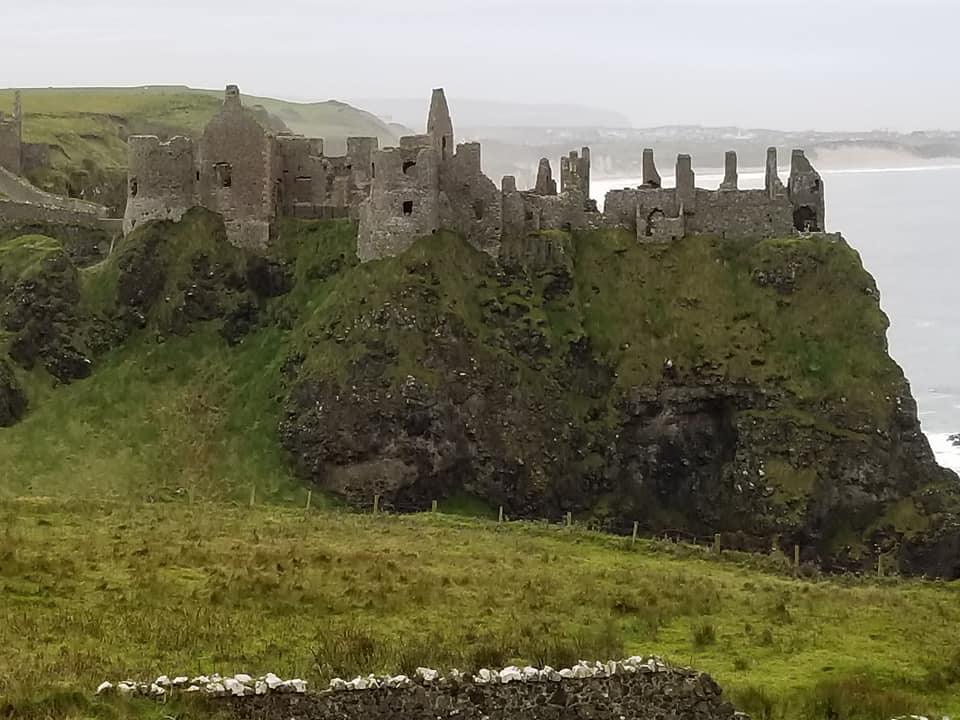
The town of Dunluce itself was built around the castle and soon after burned to the ground in the 1600s. Excavation was not initiated until only a few years ago, and some archaeologists speculate that Dunluce citizens had pioneered indoor plumbing and grid-style road systems even though the Romans took credit for both innovations in the 1800s.
Dunluce Castle has inspired a surprising number of songs and poems, possibly even being the inspiration for parts of the Chronicles of Narnia.

GIANT’S CAUSEWAY
At the tip top of Northern Ireland, central to the coast of Antrim, is the Giant’s Causeway. You will find this geographic sorcery in the city of Bushmills, UK and it is about an hour’s drive from Belfast.
Giant’s Causeway was named a World Heritage Site back in 1986, the same year the Visitor Center opened, and it is one of top four greatest natural wonders of the United Kingdom.
Local lore spins the tale of an Irish giant named Finn McCool that picked a fight with a Scottish giant he had heard of named Benandonner. There are many variations of this story, including how it was told to us by our guide, but this is my understanding.
Finn built a causeway stretching across the sea to Scotland, running his mouth the entire time. When he finally caught a glimpse of the massive Benandonner, he ran home to his wife.
Finn’s wife Oona is the real legend here. When her pompous idiot of a husband shoved MOSS in his EARS and ran to her crying for help, she acted fast.
Oona wrapped Finn up in swaddling crib clothes like the true man-child he was and when Benandonner came thundering across the causeway to fight Finn, she convinced him that Finn was really her baby.
Benandonner fled in fear, imaging how large Finn must be if the baby was already such a giant, yet Finn gets all the credit for saving Ireland and has bars named after him all around the world.

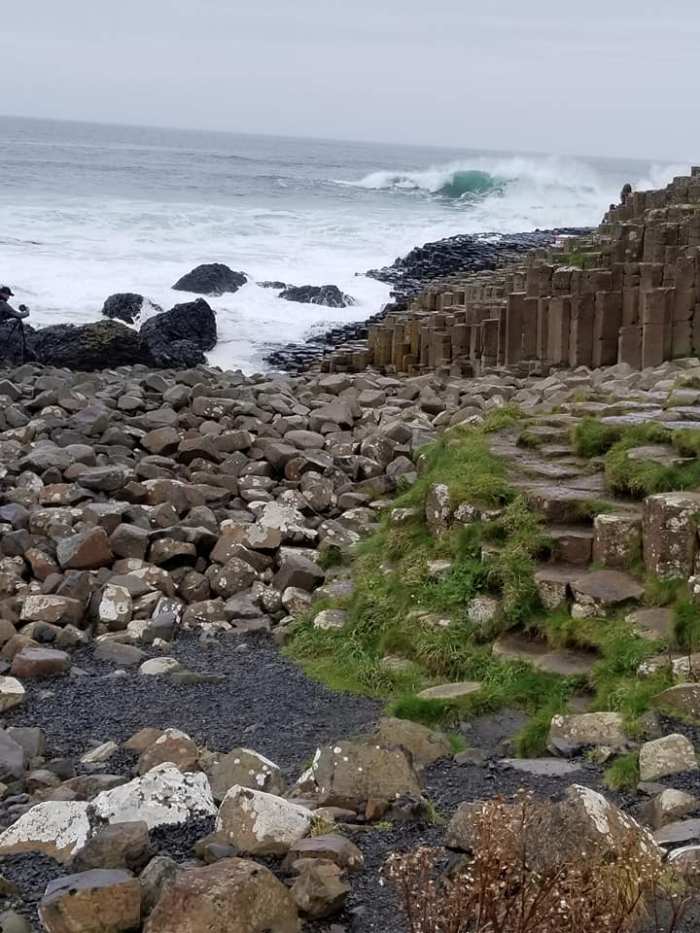
Large stones, shoe-shaped boulders, and other curious structures scattered across the beach and in the water are said to be the remnants of this potential battle.
During the Paleocene Epoch, the area now known as Antrim in Northern Ireland had loads of volcanic activity and frequent eruptions of basalt lava.
As the lava cooled over the land, which was largely filled with chalk, it left hexagon-shaped cracks that went downward into the soil and later resembled a honeycomb.

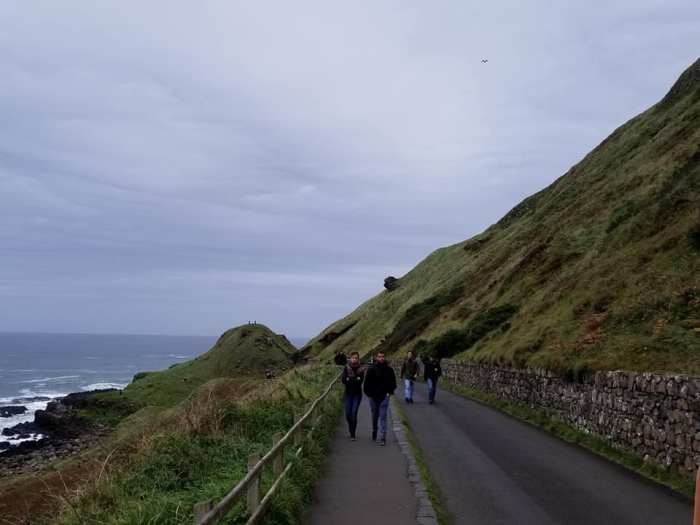
From the visitors center, take a 15-20 minute leisurely walk through the hills before you reach the rocky beach and the famous hexagonal basalt pillars.
Some of these “honeycomb” columns are nearly 40 feet high and there are around 40,000 of them. Bases of the columns are below water and the tops form a trippy sort of tile floor you can climb across.
Surrounding cliffs have large sheets of solid lava in them, and some are almost 100 feet thick.
Research here has been ongoing for many years to determine the exact scientific and natural processes that created this world wonder, but if you ask a local, it was Finn McCool.

BALLINTOY
The small village of Ballintoy is just outside of Bushmills and has fewer than 170 residents.
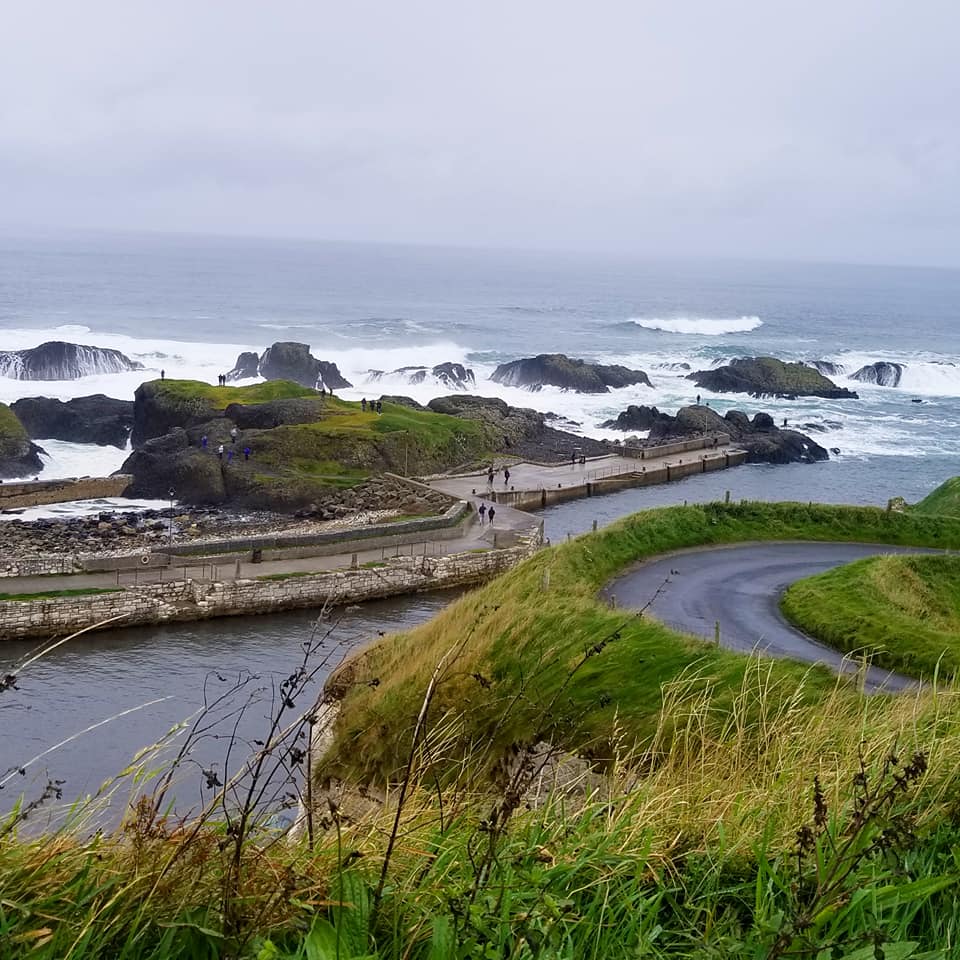
Fun fact: to get there we drive right through Ballymena, where the handsome Irish actor Liam Neeson was born.
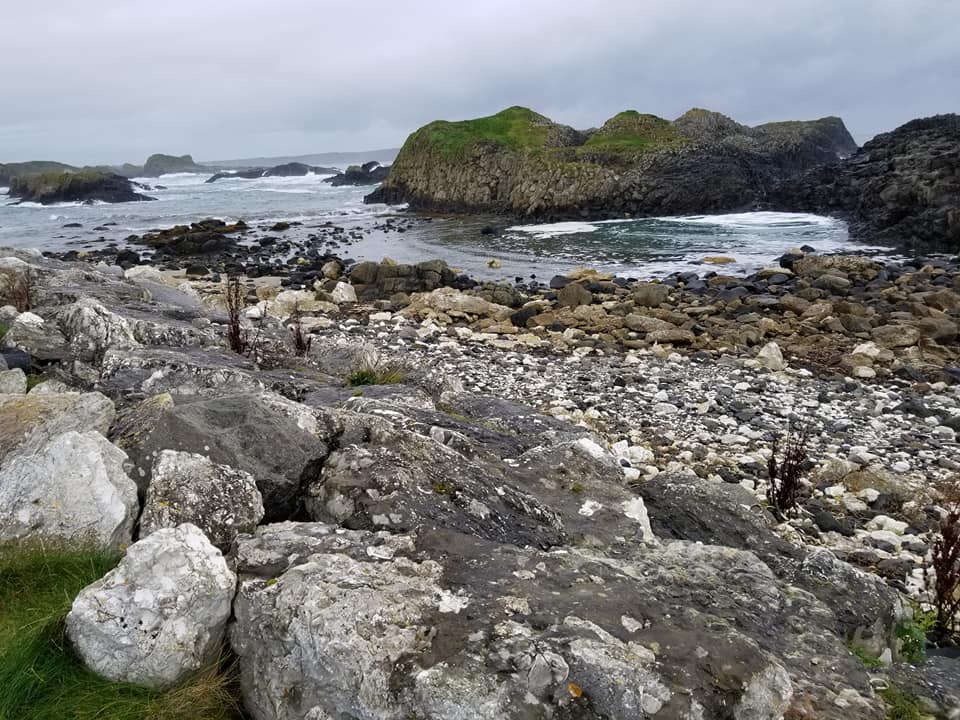
Ballintoy Harbor is known as Pyke Harbor in Game of Thrones, seasons two and six. I was not able to get the full story on this episode, but one of the Greyjoy guys comes back from Pyke after a long time and the scene takes place here.
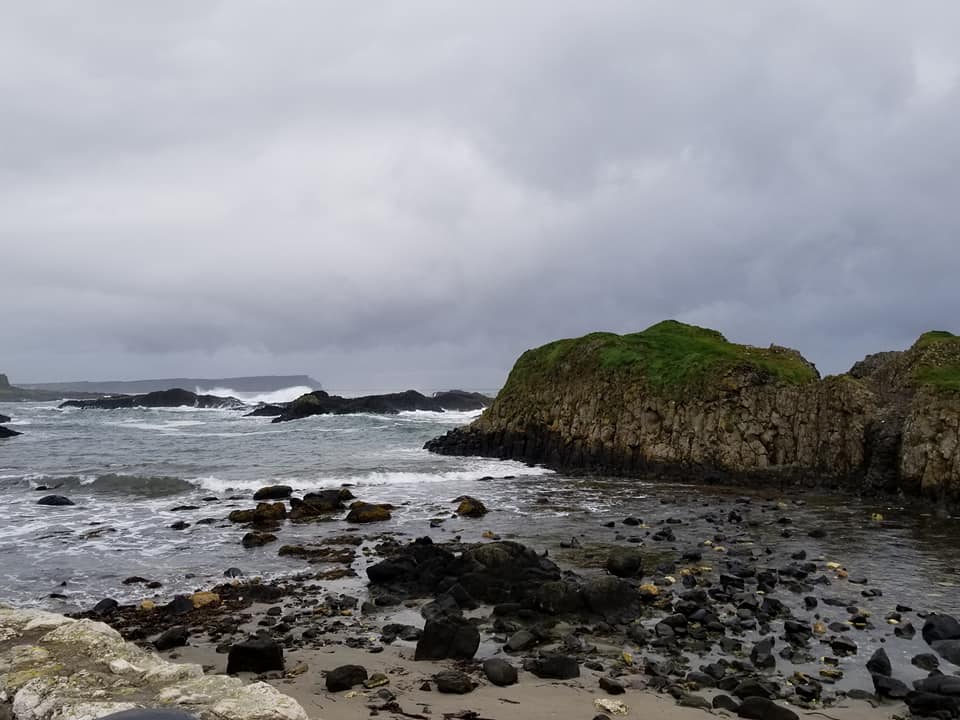
He docks his boat and climbs out of it and someone challenges him to do something. It also may or may not be known as the Iron Islands in another episode.

I really loved the old 1813 Ballintoy Parish Church and its graveyard with all sorts of interesting headstones.

I sat behind a massive rock wall as waves splashed high above it. Artistically carved ravines usher the water into unique forms and swirls in all directions.

We saw a spooky cave we wanted to explore, but had to keep moving. Our guide told us these caves are not actually connected to a cave system and are more like hollows instead.

There is a little café near the end of the winding road, but otherwise it is a quiet fishing village.

LARRYBANE & THE CARRICK-A-REDE
Larrybane is a large rock quarry by the sea that was used in many scenes throughout the series. Unfortunately it was full of tour buses and charters, but there were some great views of the sea.

Above, in the distance, we could see the Carrick-A-Rede rope bridge through the two cliffs. This bridge connects to a tiny island and was also featured in an episode of Game of Thrones.

BALLYCASTLE, BALLYVOY, & BALLYPATRICK FOREST
After several hours on foot, we were happy to take a trip through Ballycastle, Ballyvoy, and through the dreamy Ballypatrick Forest.
We passed a dapper hunting party on horseback and a massive bicycle marathon while traveling through.
CUSHENDUN
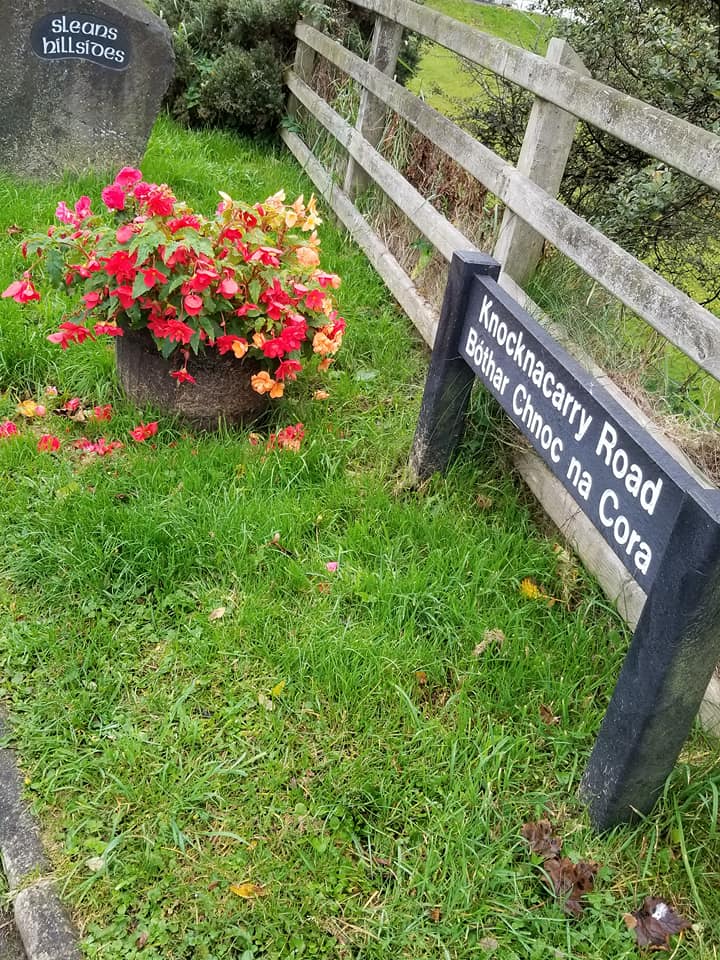
The small retreat town of Cushendun has a memorial statue of a beloved pet goat near the entrance bridge. There is a live goat, Aileen, who lives alongside it.

We were told that Aileen’s predecessor had to be put down after contracting an animal virus. The townspeople adopted a new goat but quite never got over the loss, so they had a monument created for her.

That does not seem fair to Aileen, if you ask me, but she seems happy and well cared for.

In one Game of Thrones scene, a lady in a red cape births a shadow baby that kills people later. This scene was filmed in the Cushendun Caves, and the site has become a very popular tourist destination since the episode released.

Our guide told us that this site is called “Melisandre’s Cave” in Game of Thrones, and this is where she climbs out of a boat.

If that is a spoiler, you already know far more than I do and ever will about that show.

In some parts of Northern Ireland, there is a mild uneasiness still lingering about the political climate of Brexit, Unionists, Protestants versus Catholics, and so on, that is mostly confined to signs posted in residential yards or messages painted on random walls.
Everyone we met was cheery and welcoming, there was no perceived danger, and we felt completely safe. I only mention this because a few people asked me if there was still any Troubles activity going on when they found out I went to Ireland.
If you find yourself in Ireland or Northern Ireland with a day to spare, step outside the city to visit the rocky beaches and natural wonders of County Antrim.

In the area for a while? Follow me to Belfast, Dublin, Connemara, or County Galway.
*************
© Fernwehtun, 2015- Current. Unauthorized use and/or duplication of this material without express and written permission from this site’s author and/or owner is strictly prohibited. Excerpts and links may be used, provided that full and clear credit is given to Fernwehtun and Fernwehtun.com with appropriate and specific direction to the original content.



 Fernweh, An Ache for Distant Places
Leave a comment