Custer State Park was the first and largest state park in South Dakota when it was established in July of 1919.
It was named after Lieutenant Colonel George Armstrong Custer who noticed gold during an expedition he lead through the area, which contributed to it becoming a state park.
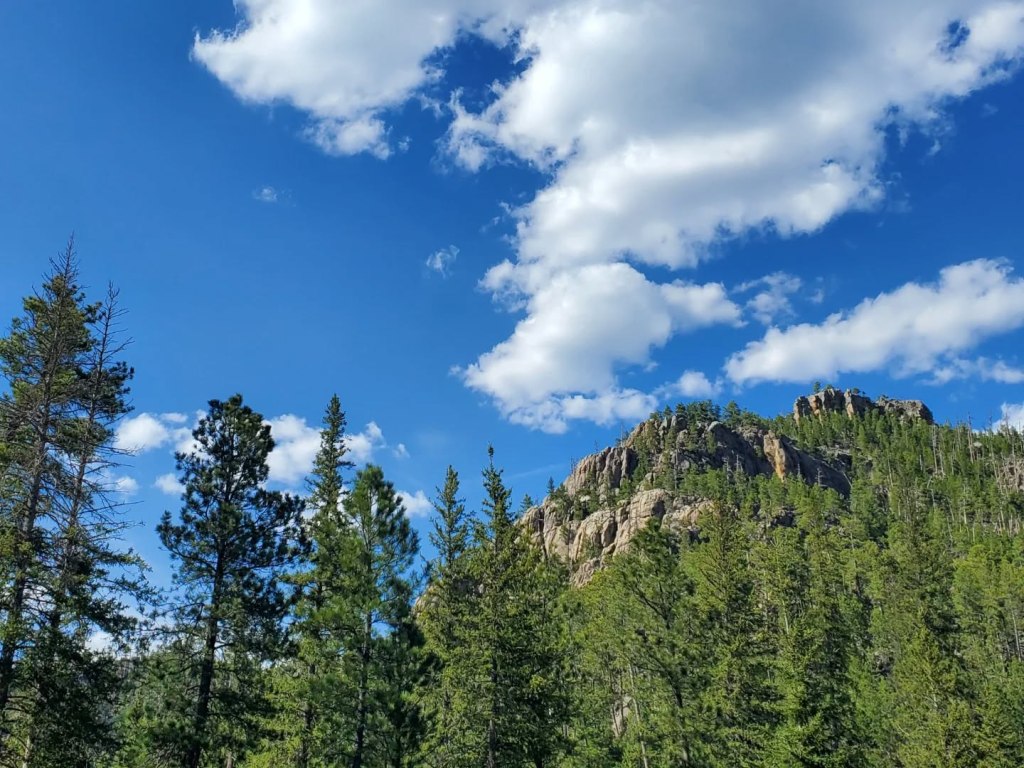
Land in the Black Hills Forest Reserve was traded for land in Custer County and Harding County back in 1910, and the adjoining land became the Custer State Forest.
Within a few years, former governor Peter Norbeck pushed for the creation of Custer State Park which now covers more than 71,000 acres.
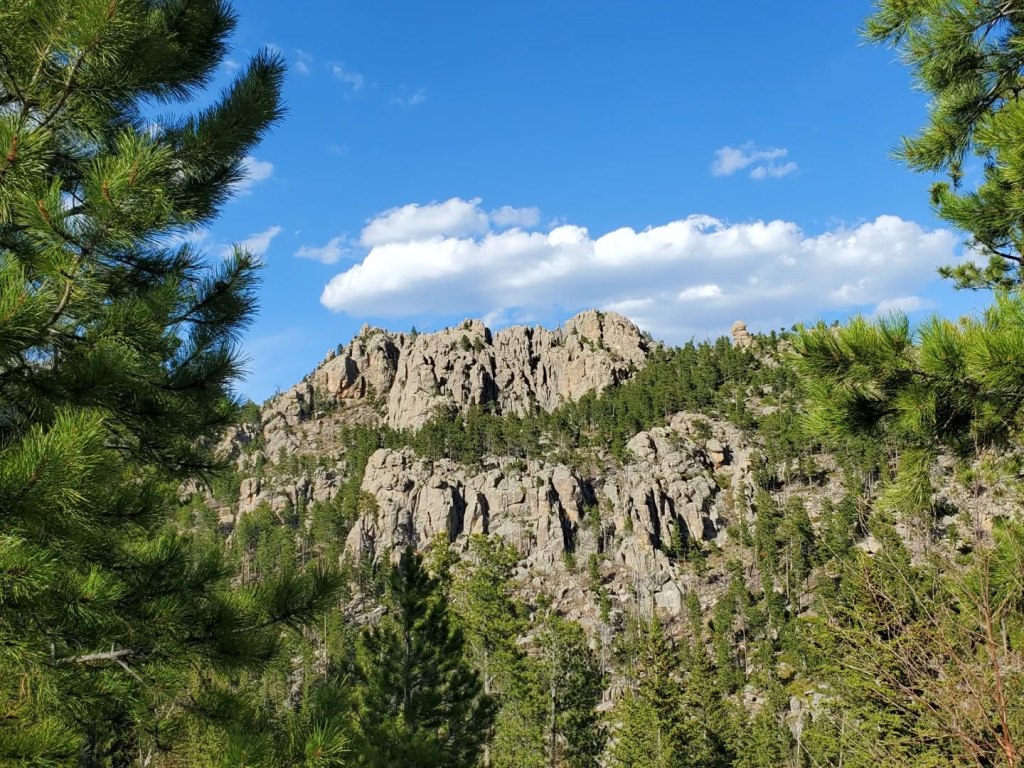
This land first belonged, and legally still belongs to, the Lakota people even though control of it has been seized by white folk and US Government powers.
Celebrated Oglala Lakota leader, Crazy Horse, sat by Sylvan Lake for his vision quest(s) to gain clarity and courage before he went on to fight his famous battles.
It remains a place of serenity and mysticism.
Popular movies like The Last Hunt, How the West Was Won, and A Man Called Horse were filmed in Custer State Park, demonstrating how beautiful it is and how essential it is to the American Western backdrop.
There have been several devastating and unforgettable fires in the park since it was first created. In 1921 the original Game Lodge opened in October but burned just two months later.
The Galena Fire of 1988 burned over 16,000 after lightning struck. More than 4,500 acres of the park burned in 1990 during the Cicero Peak Fire, with more than 14,000 acres just outside the park boundary burning as well.
The 2017 Lake Legion fire holds record as the largest wildfire in South Dakota when nearly 54,000 acres burned.
Most recently, in 2021, the Sylvan Lake Lodge had an electrical fire but it was pretty well contained to one wing of the lodge and most of the damage has been restored.
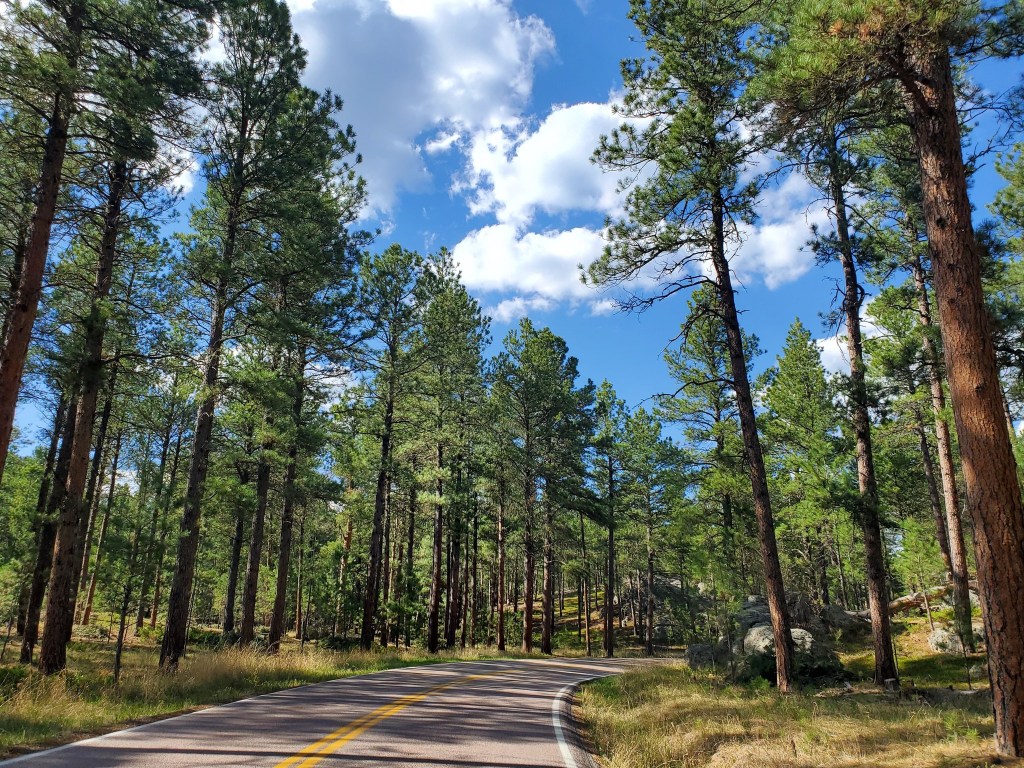
Today, Custer State Park is home to variety of wildlife and people visit from all over the world for hiking, camping, fishing, biking, and other fun outdoor activities in this unbelievable scenery.
Hiking trails in Custer State Park are between 0.3-12 miles, and you can check out this Hikers Guide and a Map Guide for the Hiking, Biking, & Horse Trails for more detailed info.
The 7.1 mile Black Elk Peak Loop leads to the highest point in all of South Dakota, and the 1.6 mile out and back Cathedral Spires Trail are both extremely popular.
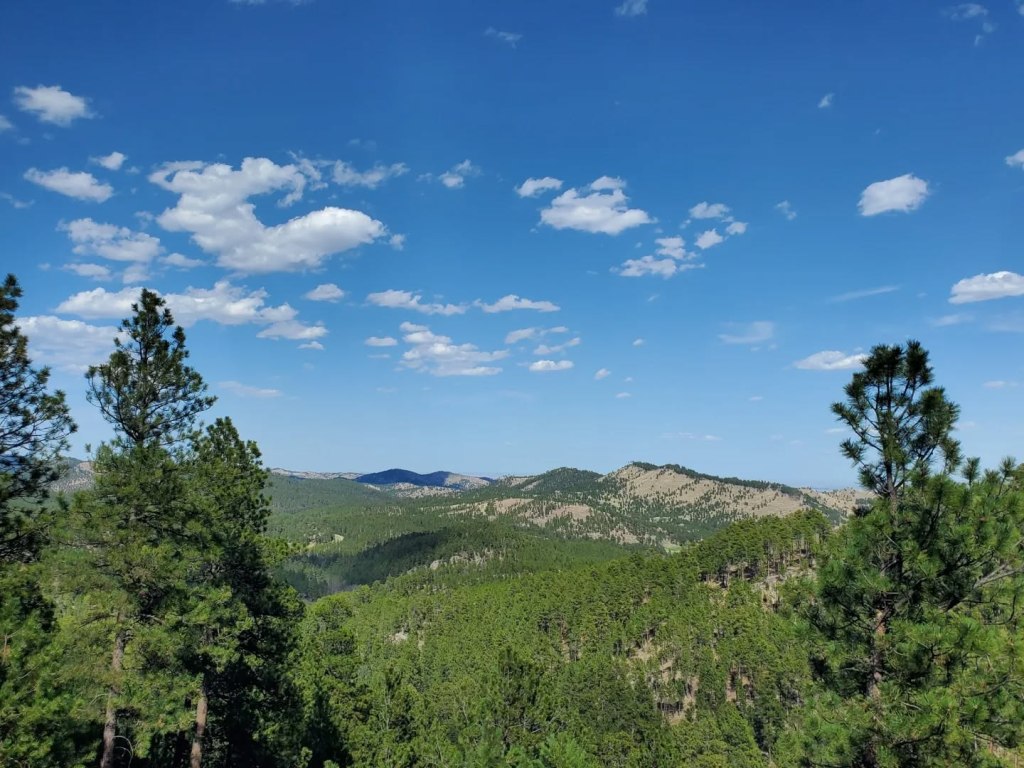
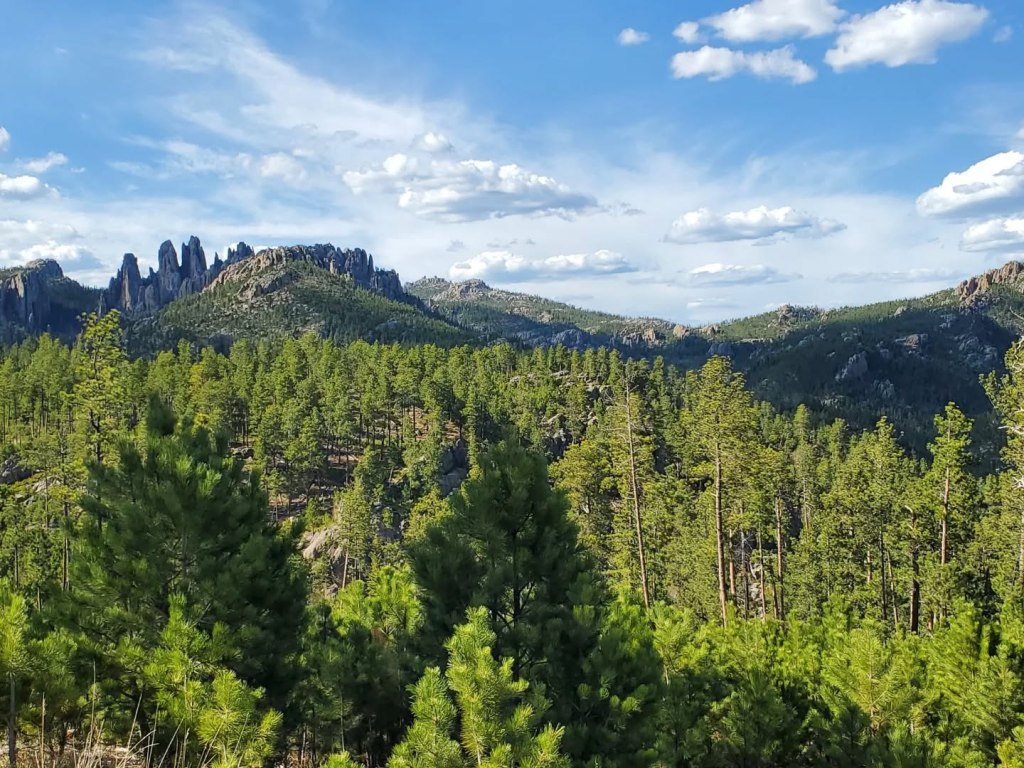
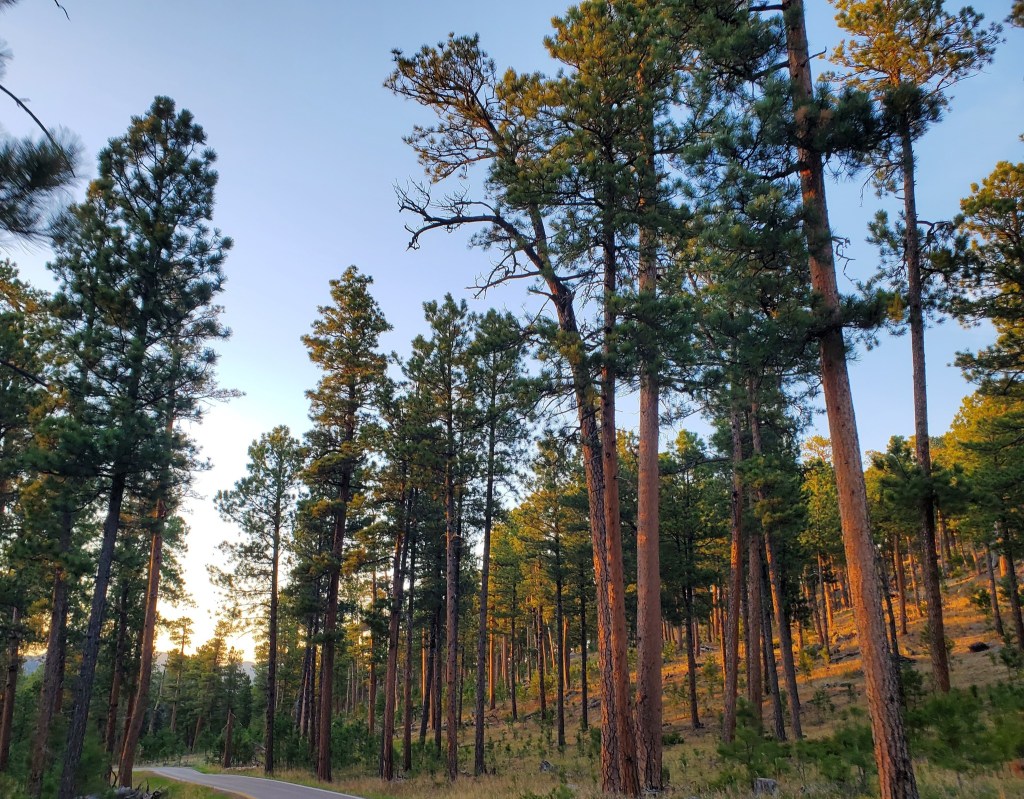
One of the most impressive things about Custer State Park is its diversity. After a day driving and walking through the park, we felt like we had visited a dozen completely different geographic and contextual locations.
Each curve of the scenic byway felt like were we leaving a forest for a stunning landscape of granite castles; from a serene lake to a mysterious cave; from a bright and sunny greenspace to a roller coaster of a mountain road. It just kept changing.
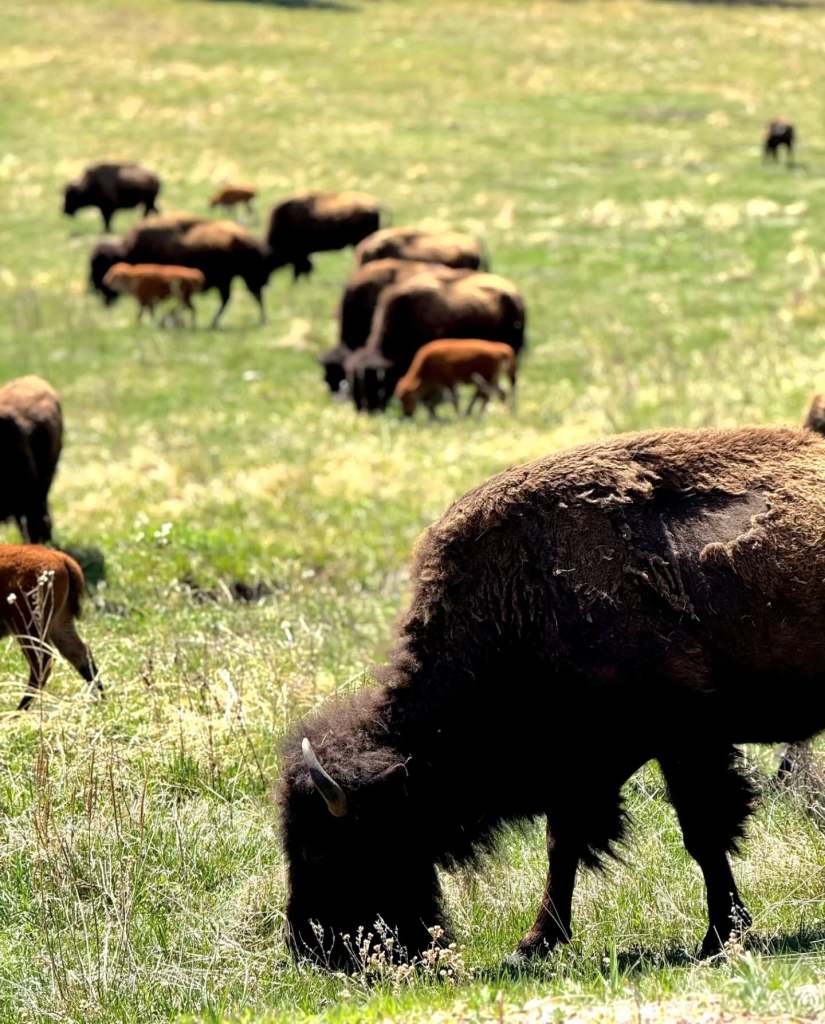
WILDLIFE
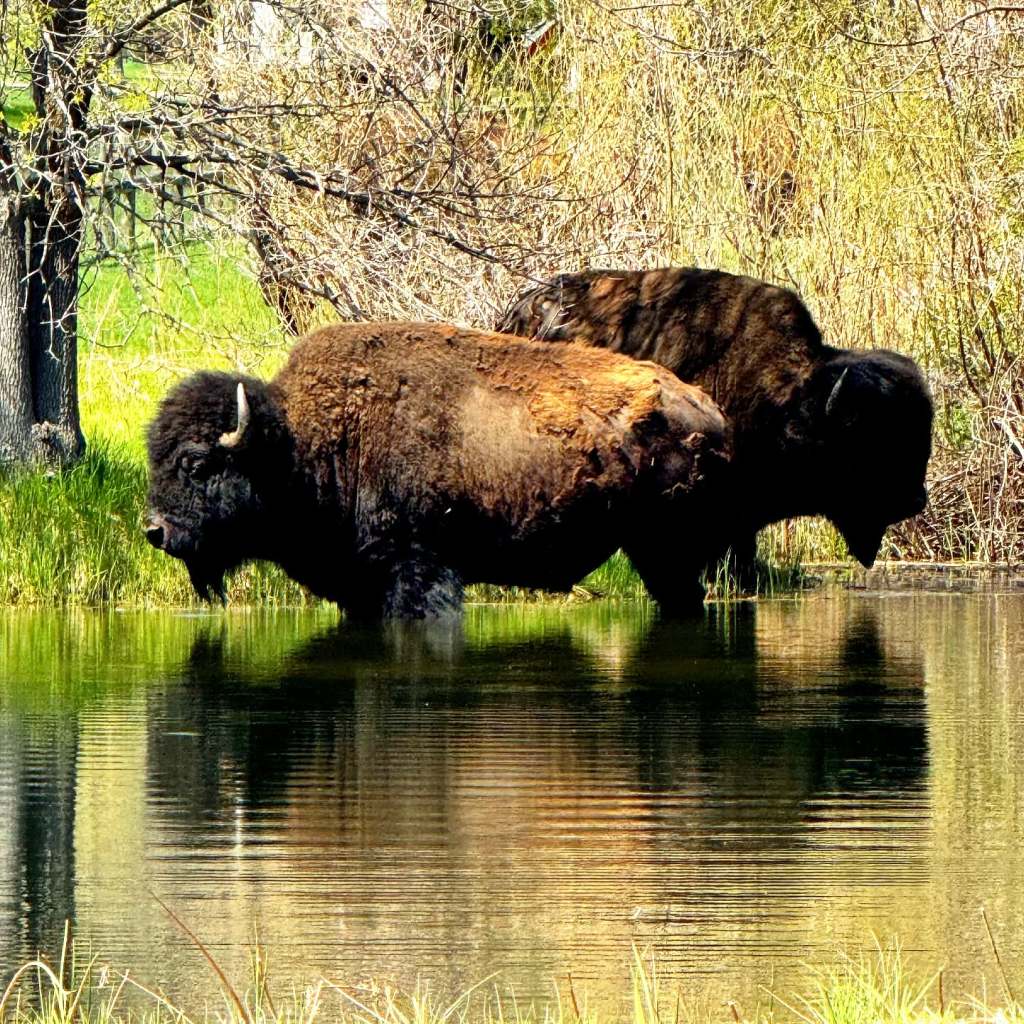
Custer State Park has over 1,300 bison roaming within it boundaries and we were so thrilled to see them, especially the new babies.
Stop by the Bison Center to learn all about them and take your pick of Bison and Tatanka souvenirs.
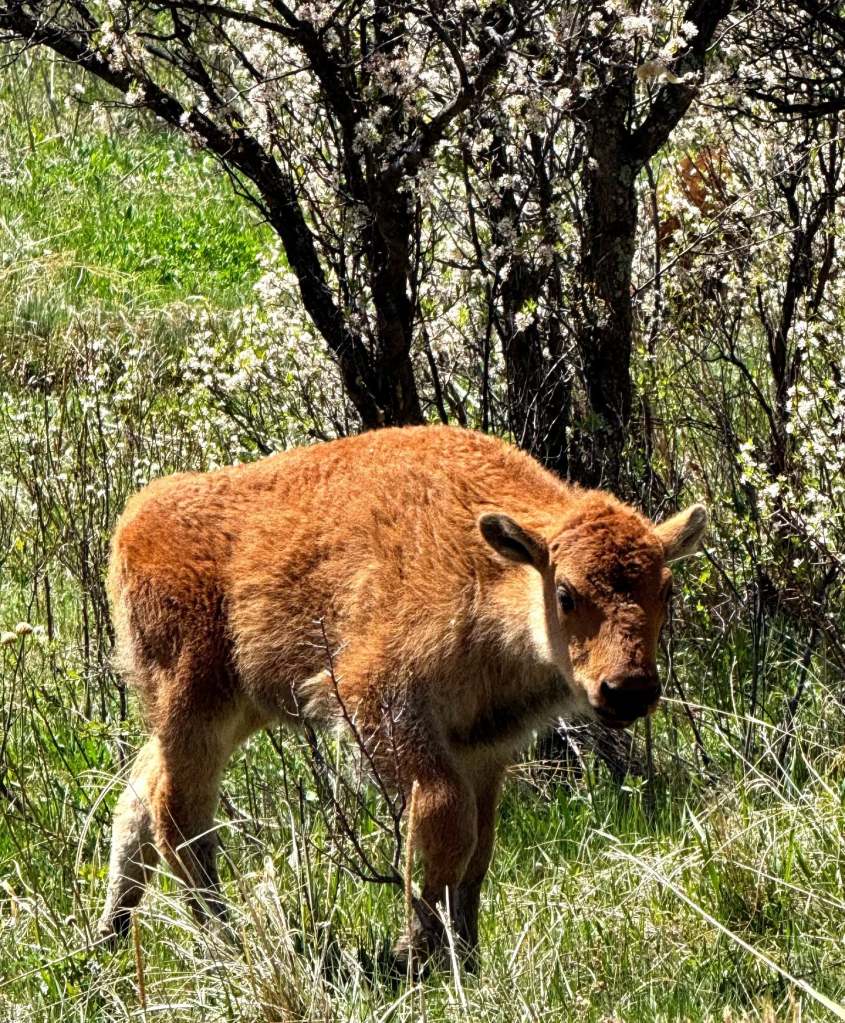
Be on the lookout for other celebrated animals in the park like pronghorn, coyotes, elk, deer, prairie dogs, and burros. We had heard so much about the “Begging Burros” of Custer State Park but unfortunately were not able to spot any when we visited.
I could never get bored spotting Buffy Boys, though.
SCENIC DRIVES
Custer State Park has a few famous scenic drives within its boundary, so much that it basically IS one huge scenic drive.
Wildlife Loop Road and Needles Highway are both pretty much exclusive to Custer State Park, but Iron Mountain Road and the Peter Norbeck National Scenic Byway run through the park and on to other beautiful places.

WILDLIFE LOOP ROAD
Wildlife Loop Scenic Byway is an 18-mile route that you could probably drive in 45 minutes, but doing that without stopping would exclude you from seeing so much.
Most of the photos I have shared so far were taken while we traveled the Wildlife Loop Road.
NEEDLES HIGHWAY
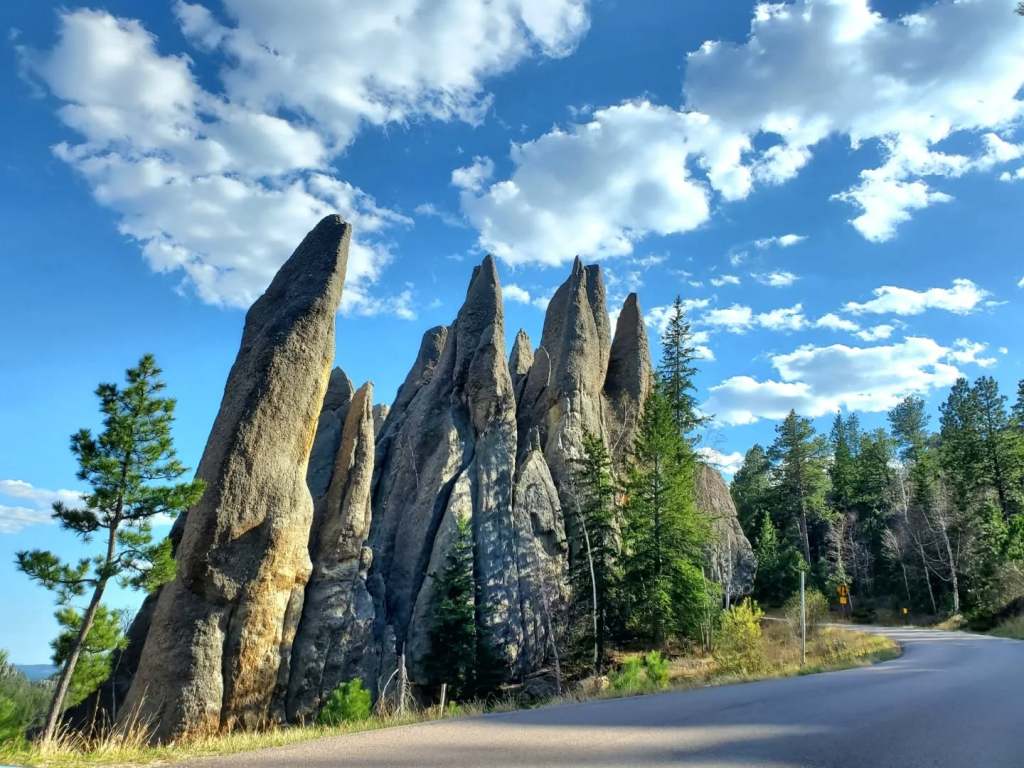
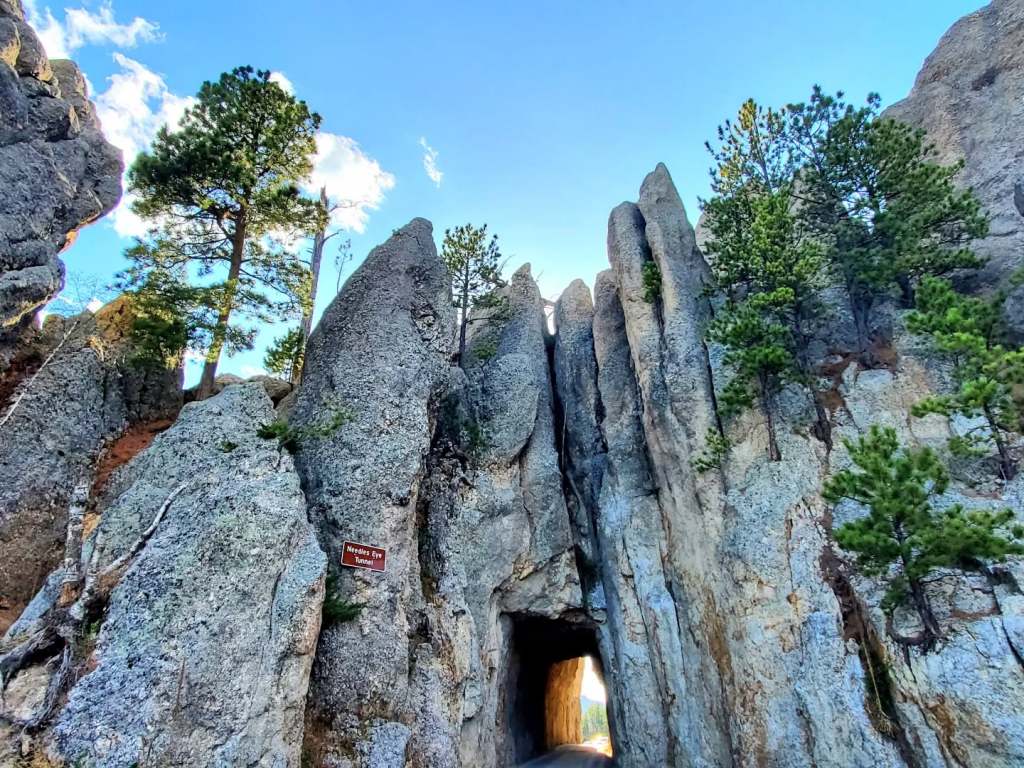
Needles Highway is a 14-mile stretch. Its construction involved two years of labour and 150,000 pounds of dynamite, but the view that snakes its way through castle-like spires of granite is surreal and astounding.

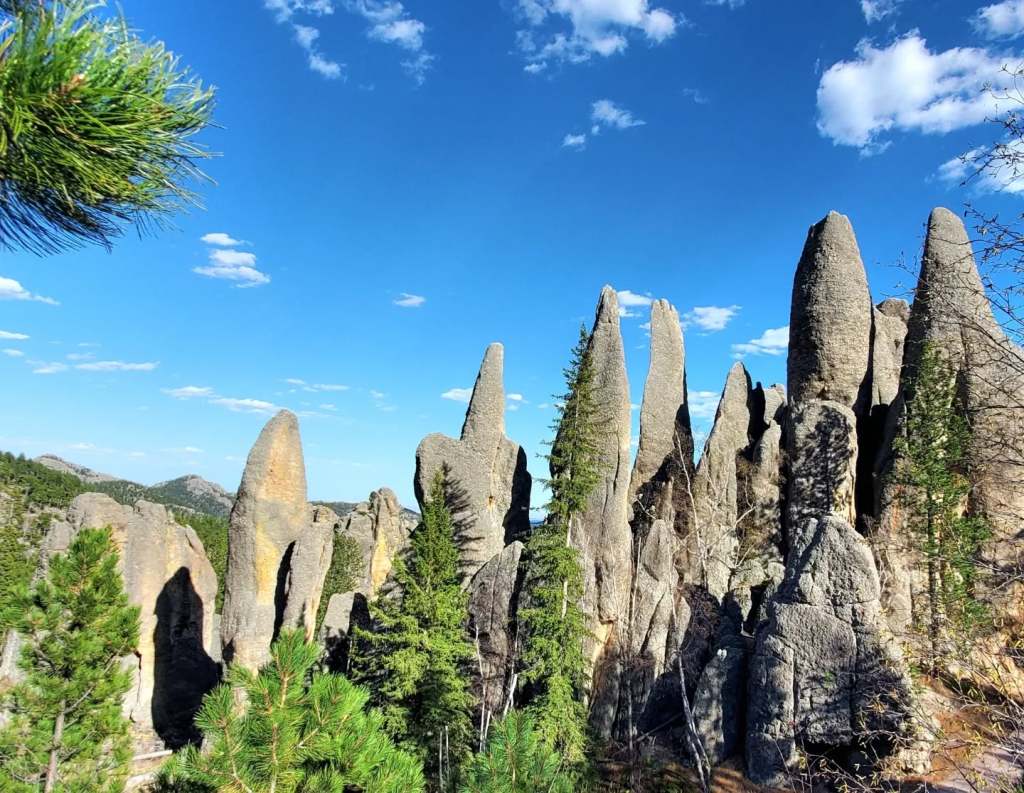
Every turn brought a new and different view.
IRON MOUNTAIN ROAD
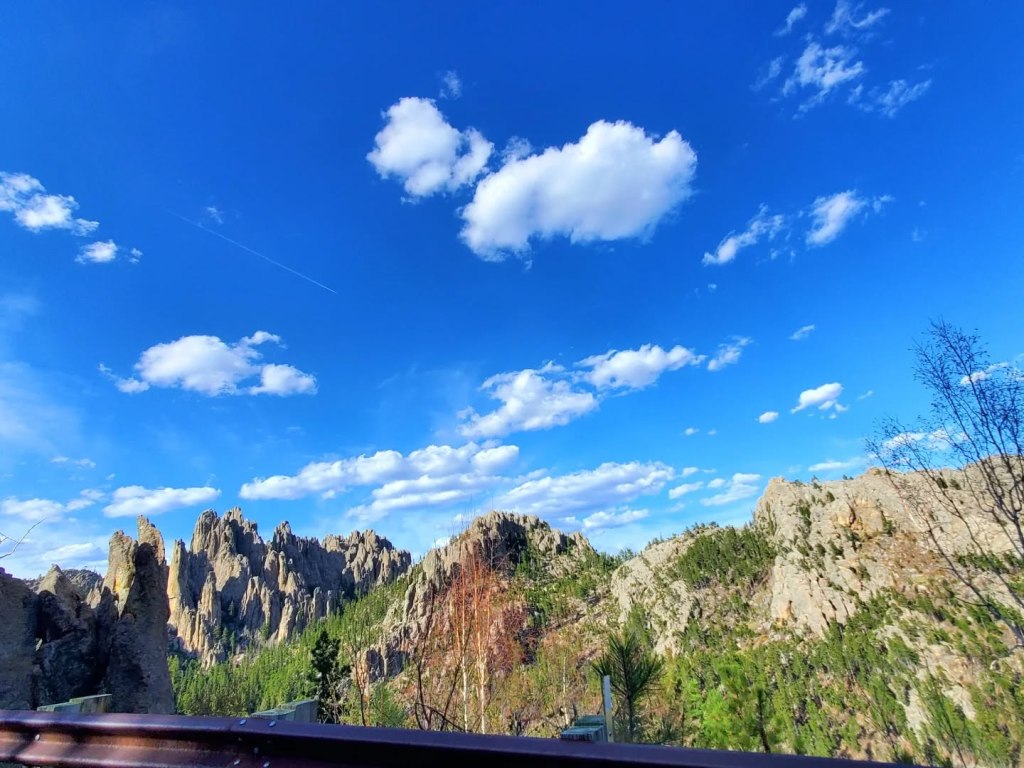
Iron Mountain Road is an 18-mile route that winds like a mountain coaster between the crossing of US 16A and SD-36, all the way to Mount Rushmore.
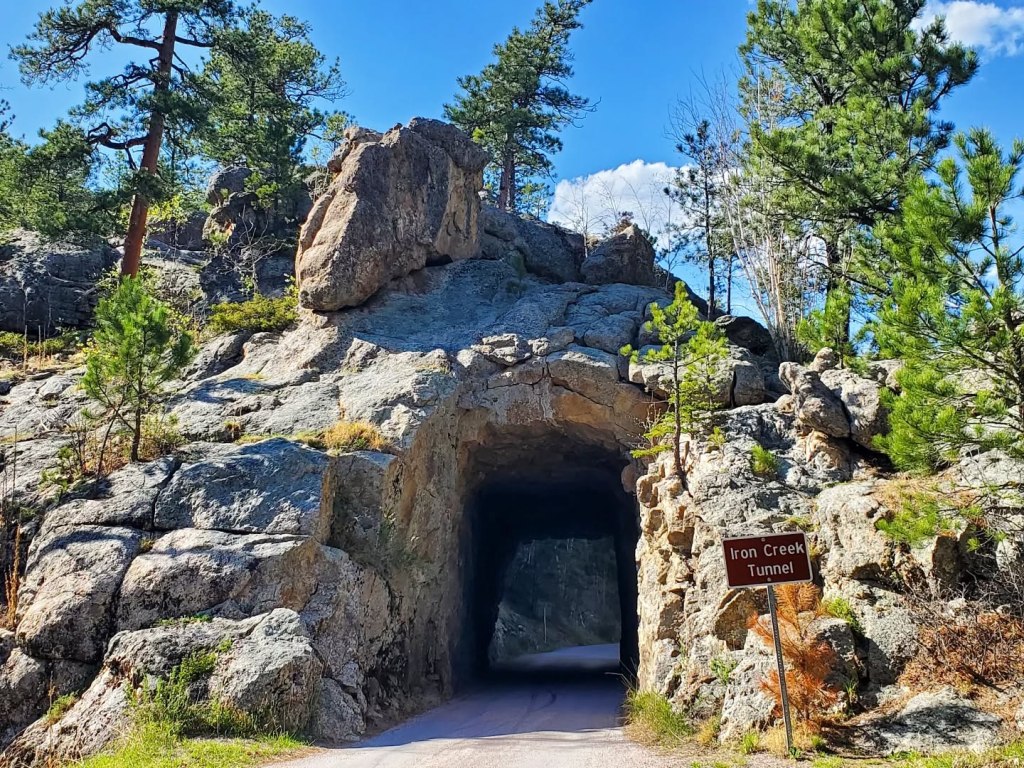
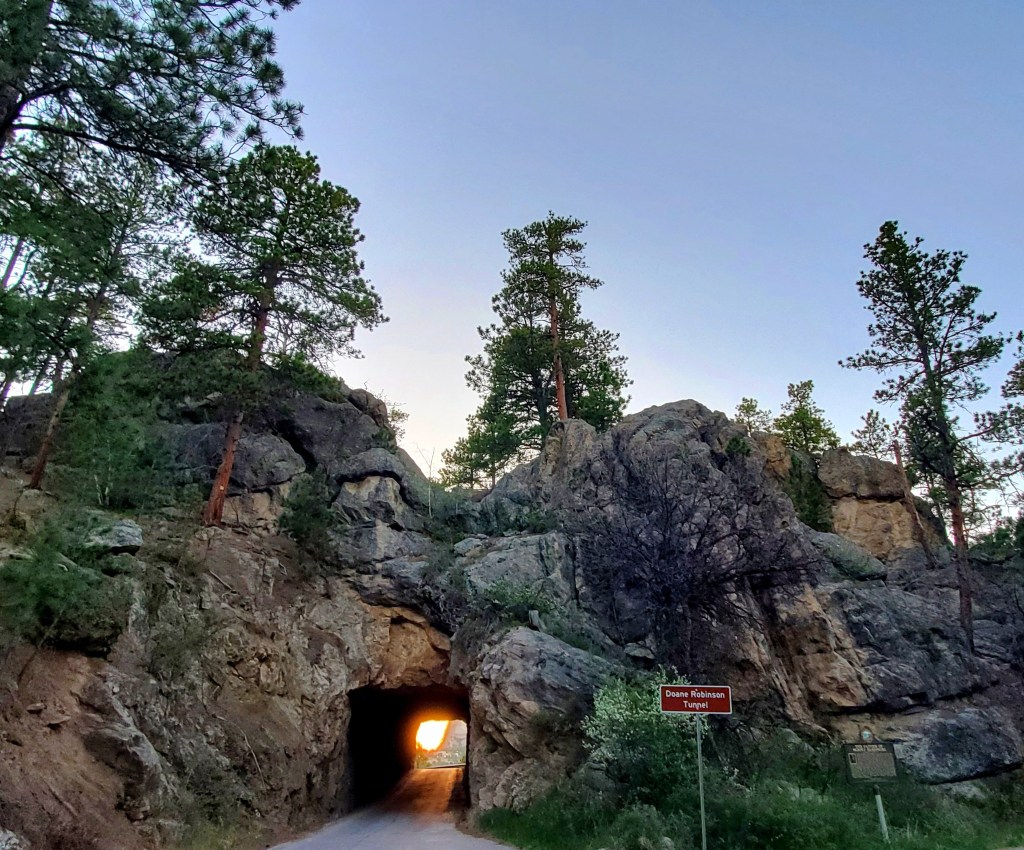
Construction involved using dynamite to blast three different tunnels, ultimately leading to a dead on view of the Presidential faces carved into Mount Rushmore.
It was impossible to capture during our visit because the sun was shining right into the tunnel and blinded us as we exited, but from this side of the tunnel you can see the where the faces emerge.
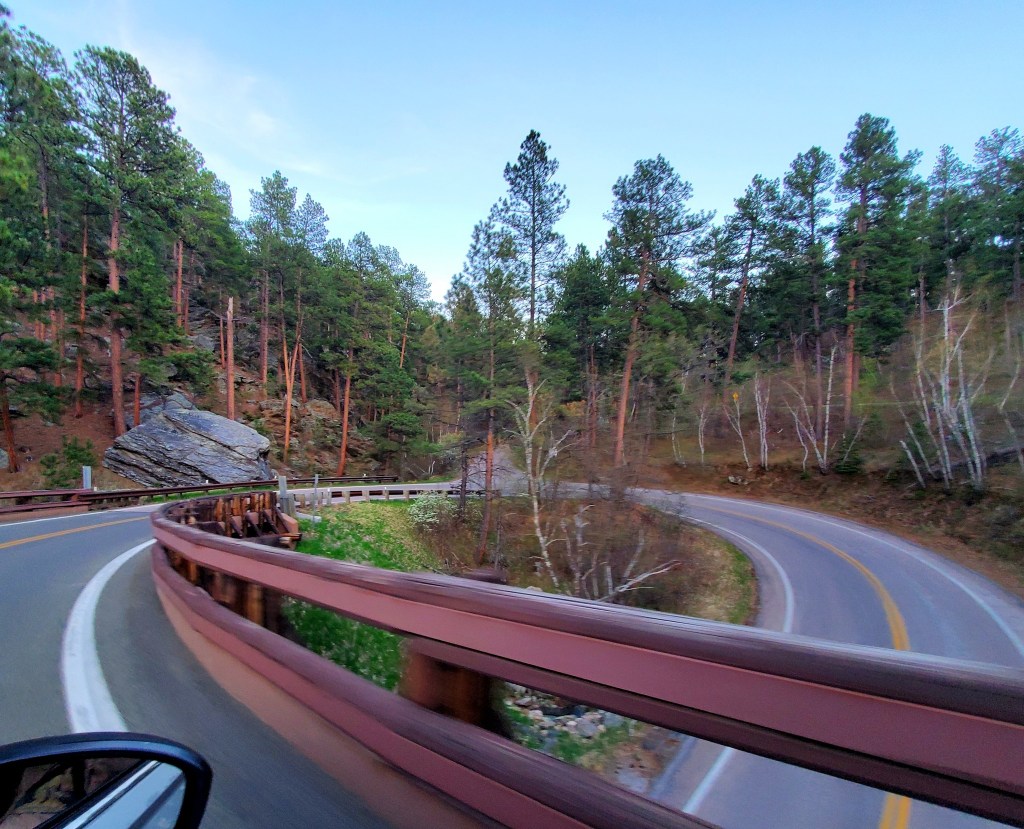
Iron Mountain Road was completed in 1933 and has been described as one of the most “crooked 17 miles you’ll ever drive” by a local South Dakota writer named Bernie Hunhoff.
It is just one segment of the grander Peter Norbeck National Scenic Byway and leads through stone tunnels, hairpin curves, and the spiraling Pigtail Bridges.
PETER NORBECK NATIONAL SCENIC BYWAY
Peter Norbeck National Scenic Byway is a nearly 70-mile stretch that would take between three and four hours to drive, but you could spend a day or several days exploring all the sites it leads to. It is complementary to the previously mentioned scenic drives but extends much further beyond them.
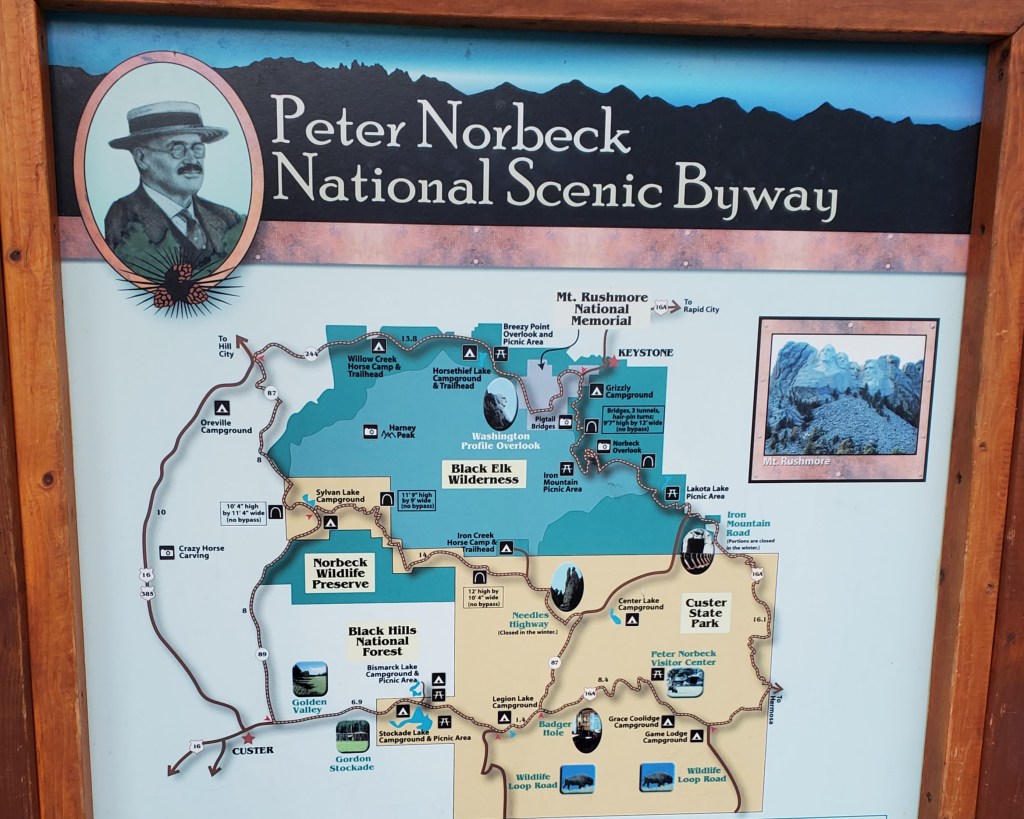
LAKES OF CUSTER STATE PARK
Legion Lake, Sylvan Lake, Center Lake, Stockade Lake, and Game Lodge Pond are the five lakes of Custer State Park.
LEGION LAKE has a great dock for fishing or just watching the water ripple, and a great gift shop.
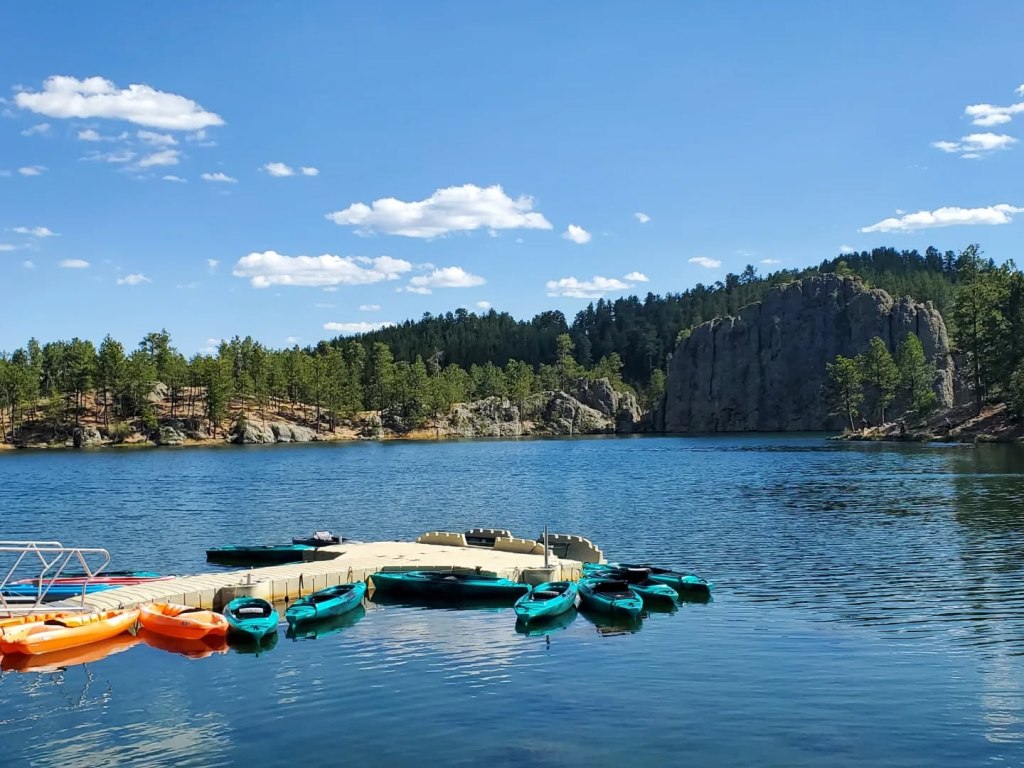
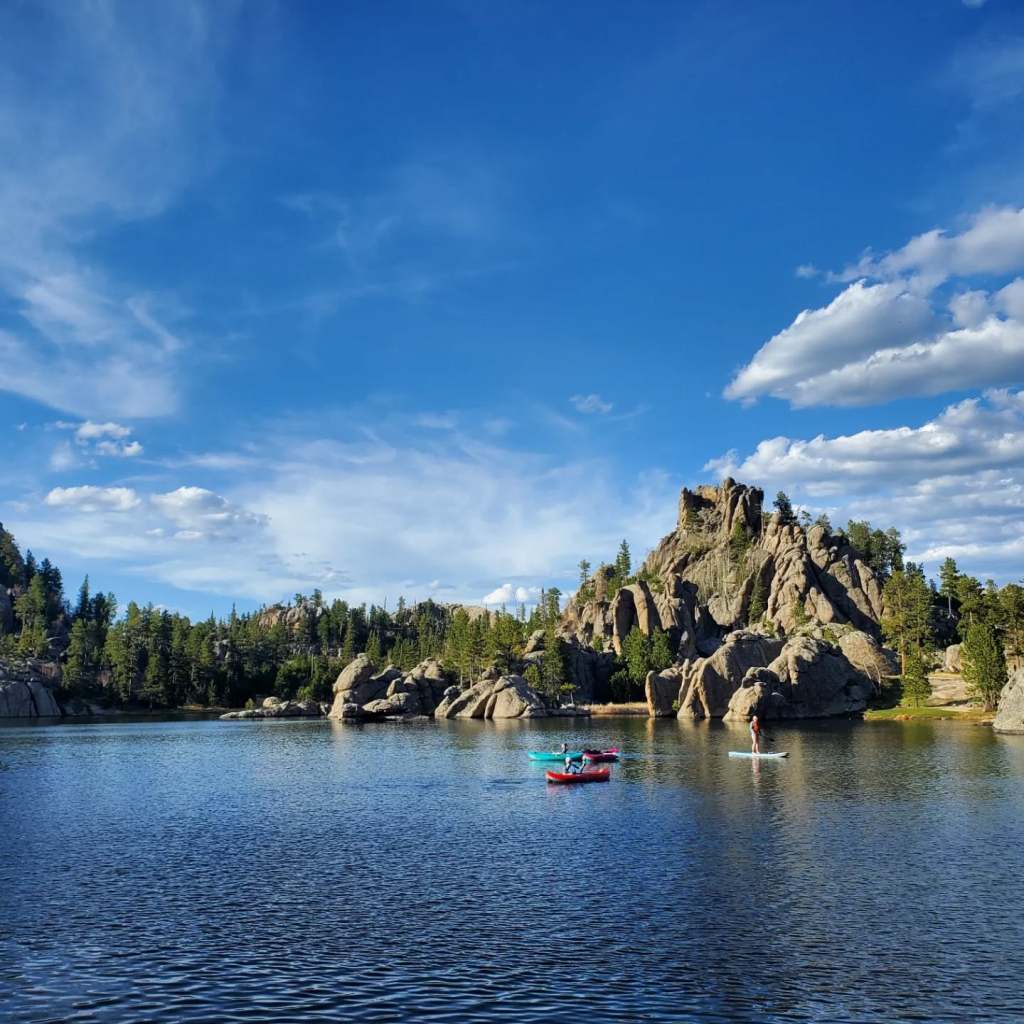
SYLVAN LAKE is the “Crown Jewel of Custer” and we liked it best, so we spent quite a bit of time there.
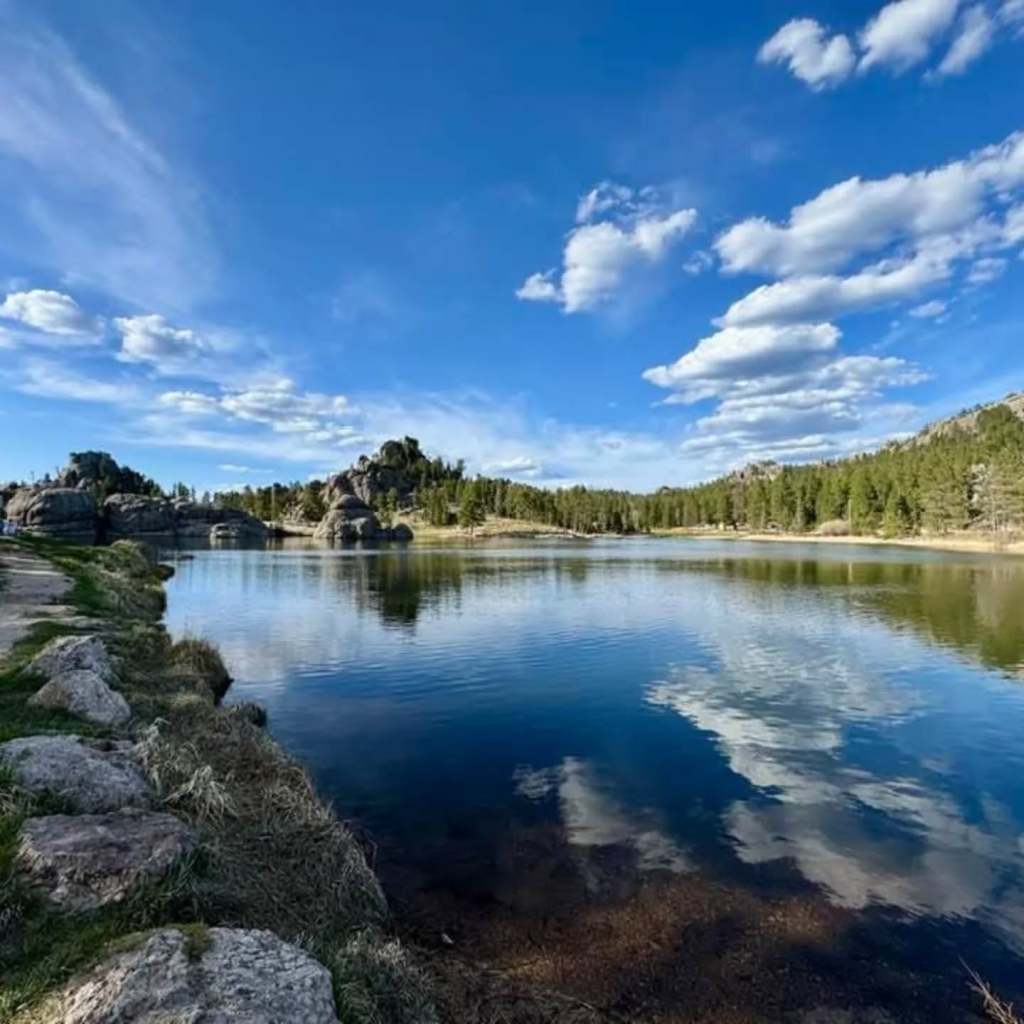
There is a 1.1 mile walking loop around the lake that leads through more granite peaks and tunnels.
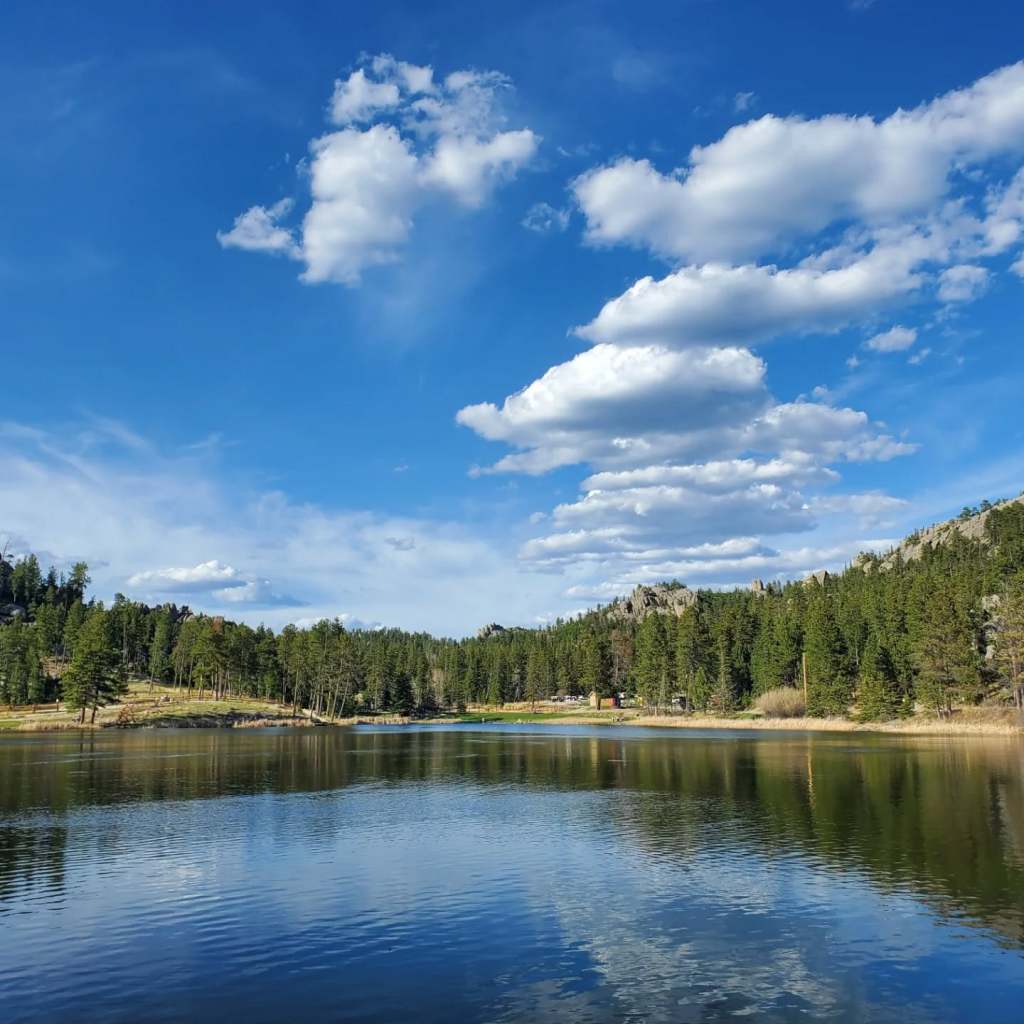
My favourite memory of Custer is when we saw an eagle swoop down and snatch a fish out of the water, but as he ascended back into the sky, he seemed to slow and make eye contact with us for a moment. Was he going to bomb us with the fish? Perhaps, but he must have reprioritized.
He headed off into the distance with his catch, but we will never forget the shimmer of fish scales in his talons.
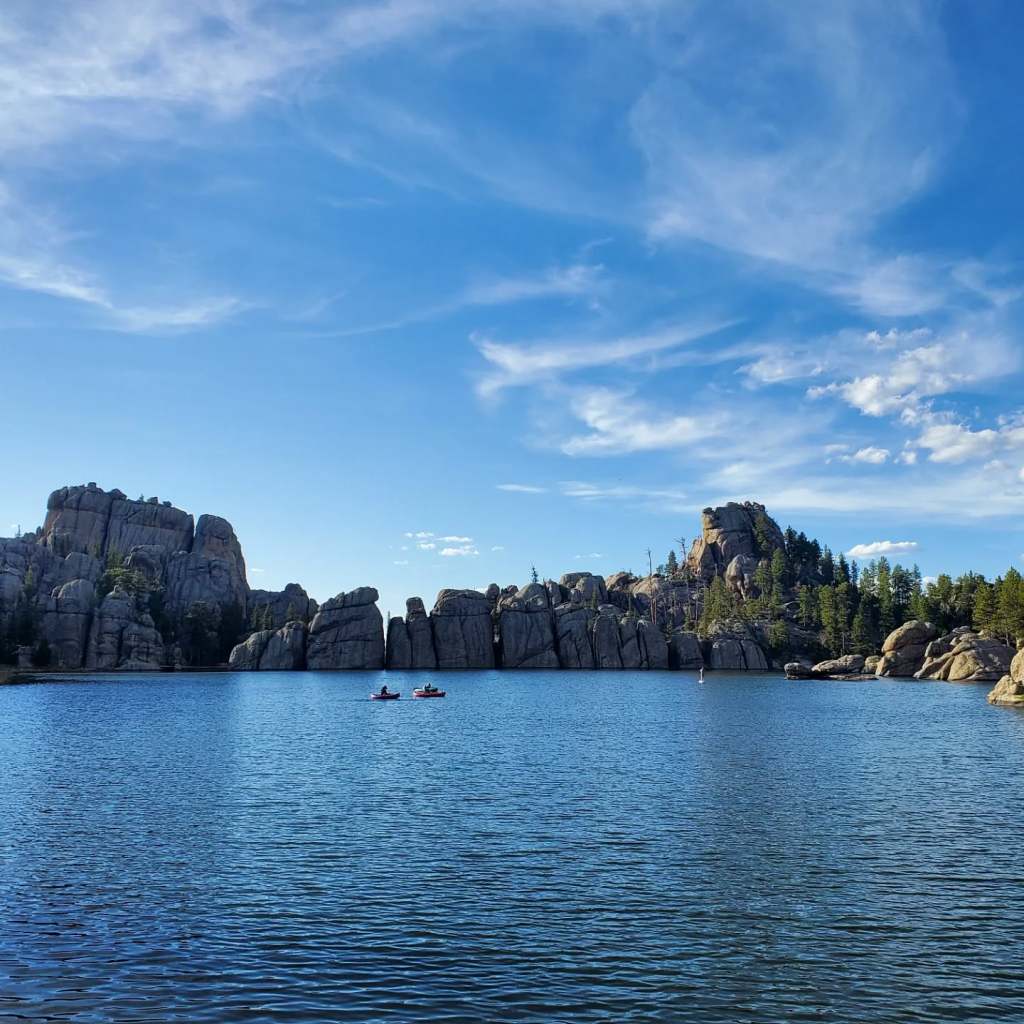
Other people spend the day relaxing on kayaks and paddle boards, or visiting the lodge just up the hill.
Another funny moment was when I decided to stay in the car for a moment and rest while my bestie walked over to look at something that caught her eye.
So there I sat, hot and sweaty, pleading with the AC to get going. I look over just in time to catch this MANIAC crawling across ICE to peer into a mysterious CAVE.
You really do not know what will happen next out there.

EXHIBITS AND HISTORY
After checking out the wildlife and following the scenic byways, you may have seen most of the top attractions in Custer State Park, but there is so much more to it.
Be sure to stop by the Custer State Park Visitor Center, Wildlife Station Visitor Center, the Peter Norbeck Outdoor Education Center which is listed on the National Register of Historic Places, Badger Hole Historic Site (the cabin where South Dakota’s first Poet Laureate lived), the Gordon Blockade that commemorates an illegal occupation during the 1870s, and the Mount Coolidge Fire Tower.
LODGING, CAMPING, AND DINING
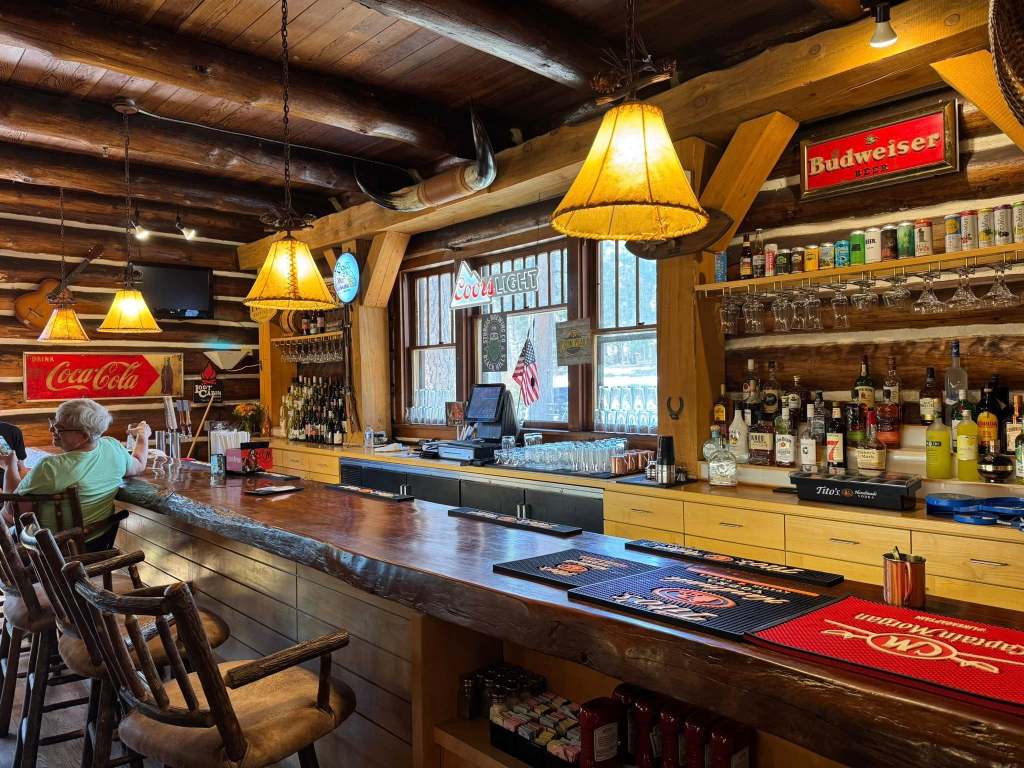
Custer State Park hosts Legion Lake Lodge, Blue Bell Lodge, Sylvan Lake Lodge, State Game Lodge, and many other camping options.
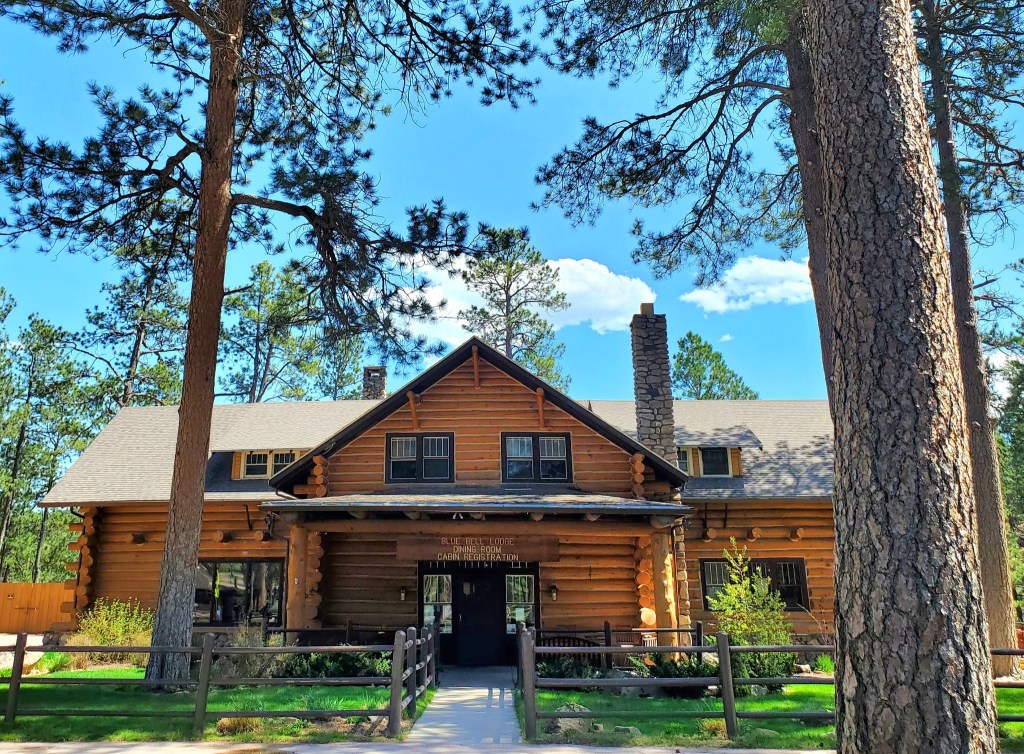
We really loved the Blue Bell Lodge, so much that we stopped in for lunch.
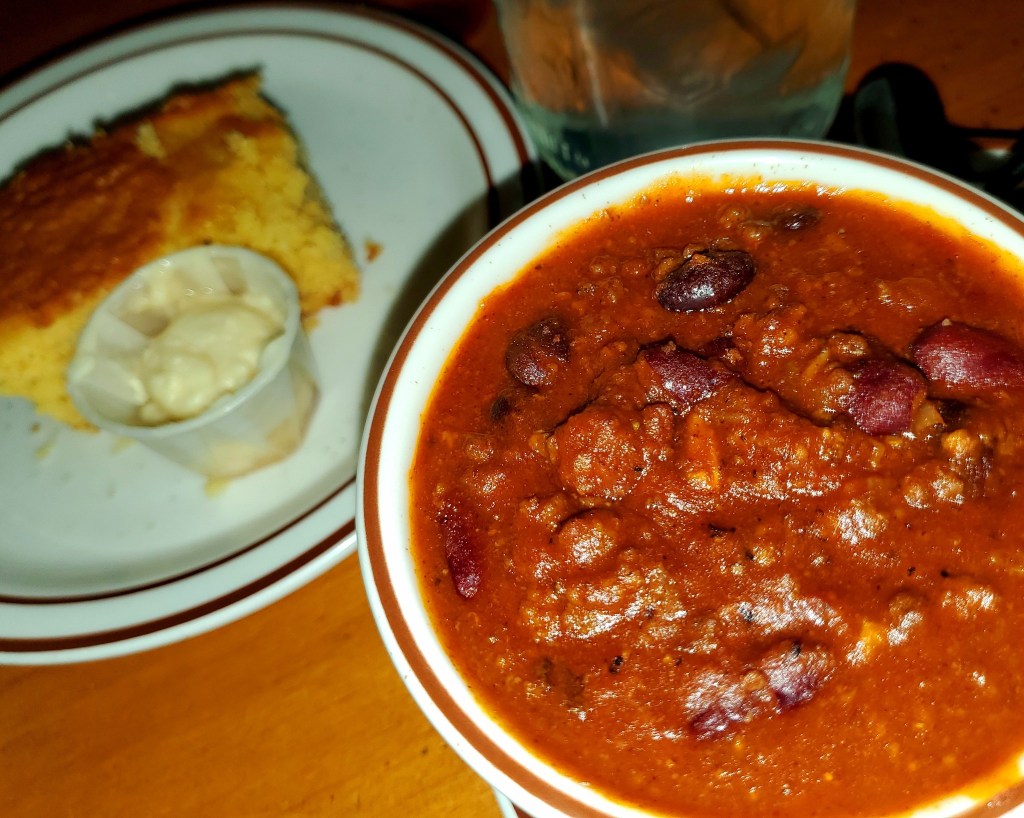
We shared some buttery cornbread and a fresh veggie tray with cheese dip. My bestie got a bowl of their bison chili and I opted for the creamy thyme-infused chicken pot pie.
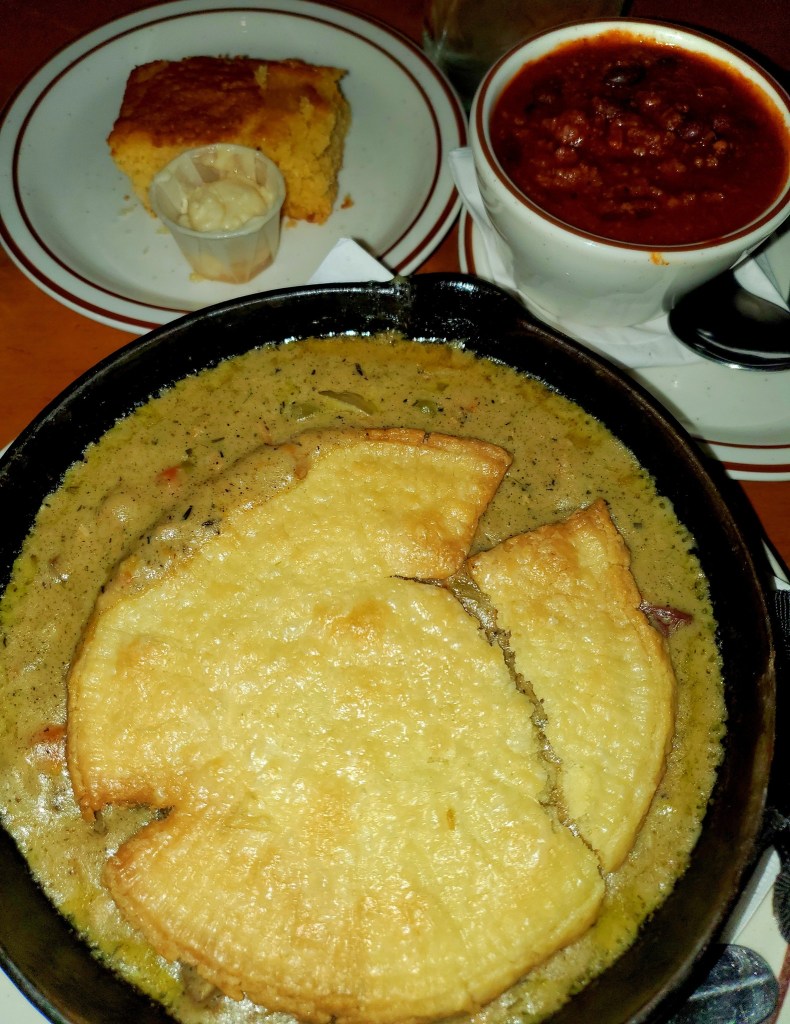
Portions are abundant and more than half of it was boxed up for later.
EVENTS & OTHER INFO
The annual Buffalo Roundup & Arts Festival is centered around its main event, where cowboys and cowgirls (hopefully some cowtheys) get together and put on the show of your life, rounding over 1,300 bison up into a stampede that leads them into their corrals.
You can book a Buffalo Safari Jeep Tour, Hayride & Chuck Wagon Cookout, catch a live show at the Black Hills Playhouse, and attend the Bison Olympics, naturalist programs, Monday night speaker series, Thursday evening adventures, and various workshops.
Before you go, check out the Custer State Park website to learn about park rules, admission costs, open hours, safety tips, weather and closure alerts, and view a park map.
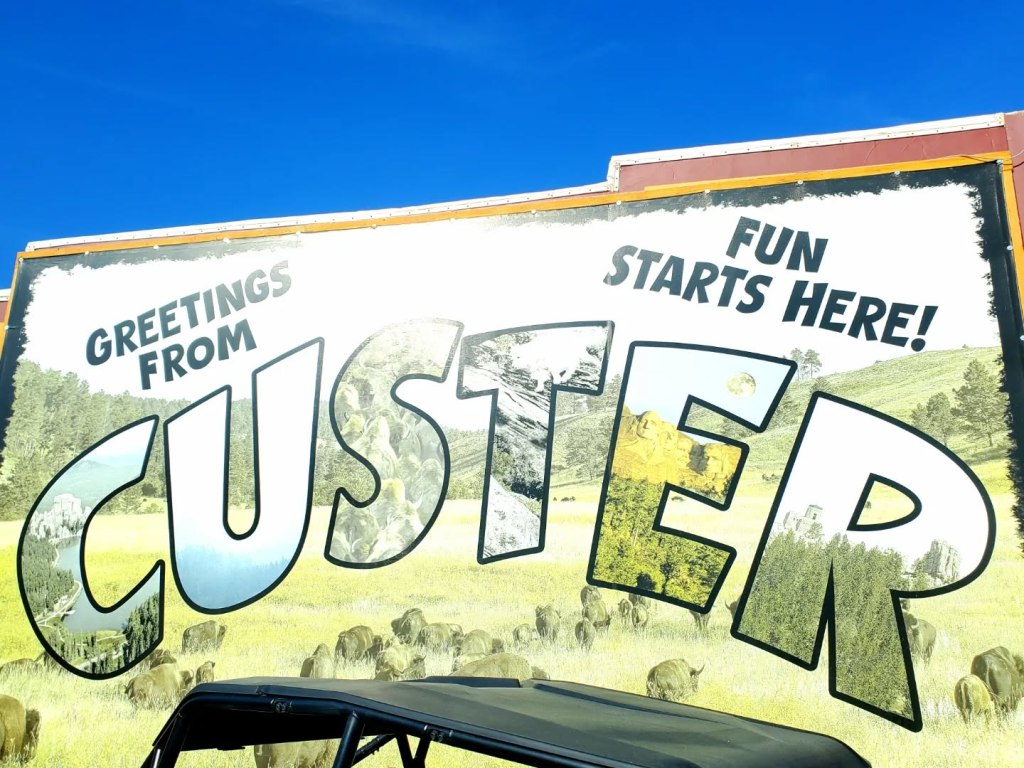
When you visit Custer State Park, plan additional time to walk around the city of Custer.
Tatanka (which means male buffalo) is a great magazine for learning about current event schedules and a general overview of the Black Hills region.
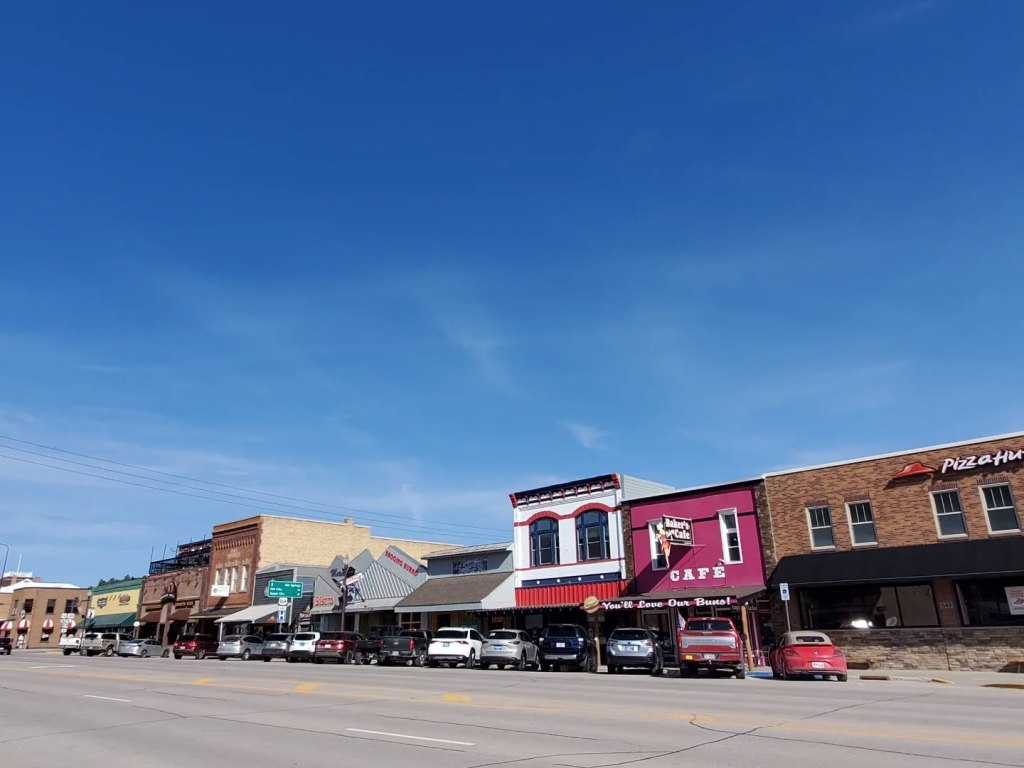
Custer has the distinction of being the oldest town settled by European white folks in the state of South Dakota. It was established in 1875, a solid year before most other South Dakota gold rush towns were formed, leaving Custer a ghost town.
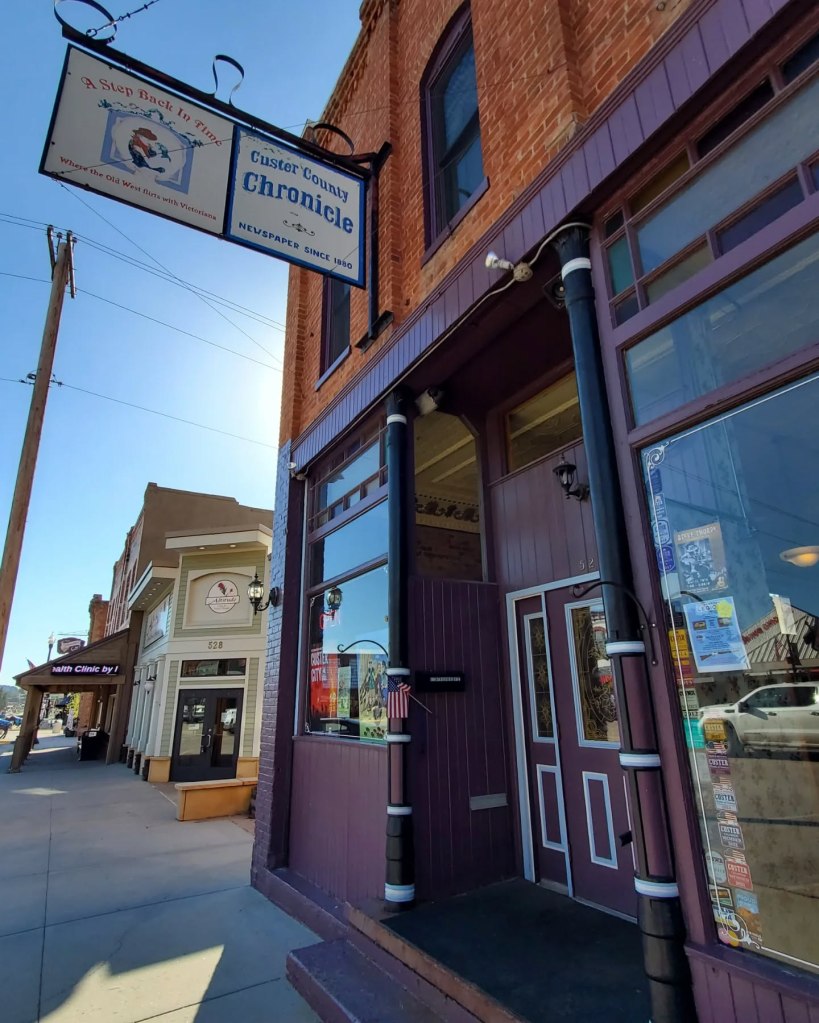
There are around two thousand people in roughly 2.5 square miles of Custer. My favourite thing about the town is that there is a type of wolf, the Custer Wolf, named after it. If ever I could be that lucky.
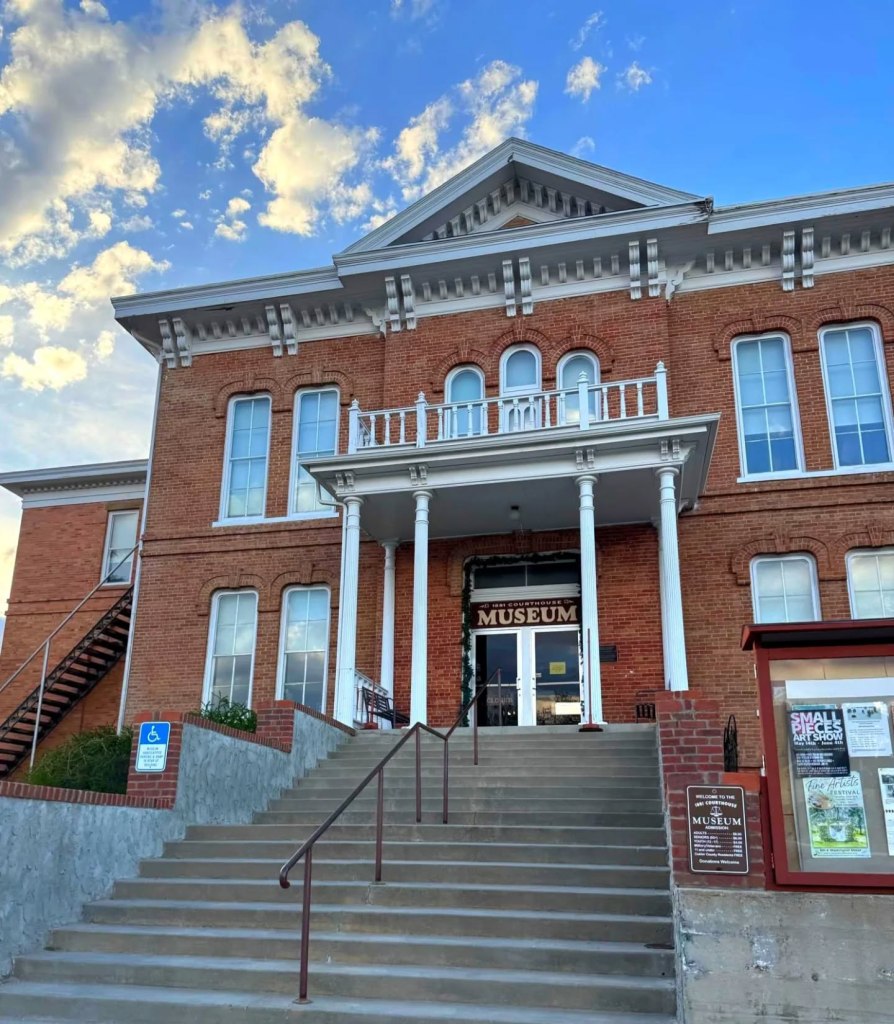
As we walked around town, ignoring obnoxious signs for the most icky misogynist barber shop you could imagine, we learned a few cool facts about Custer.
First, the historic Gold Pan Saloon is the oldest saloon in the Black Hills, and it is still in operation.

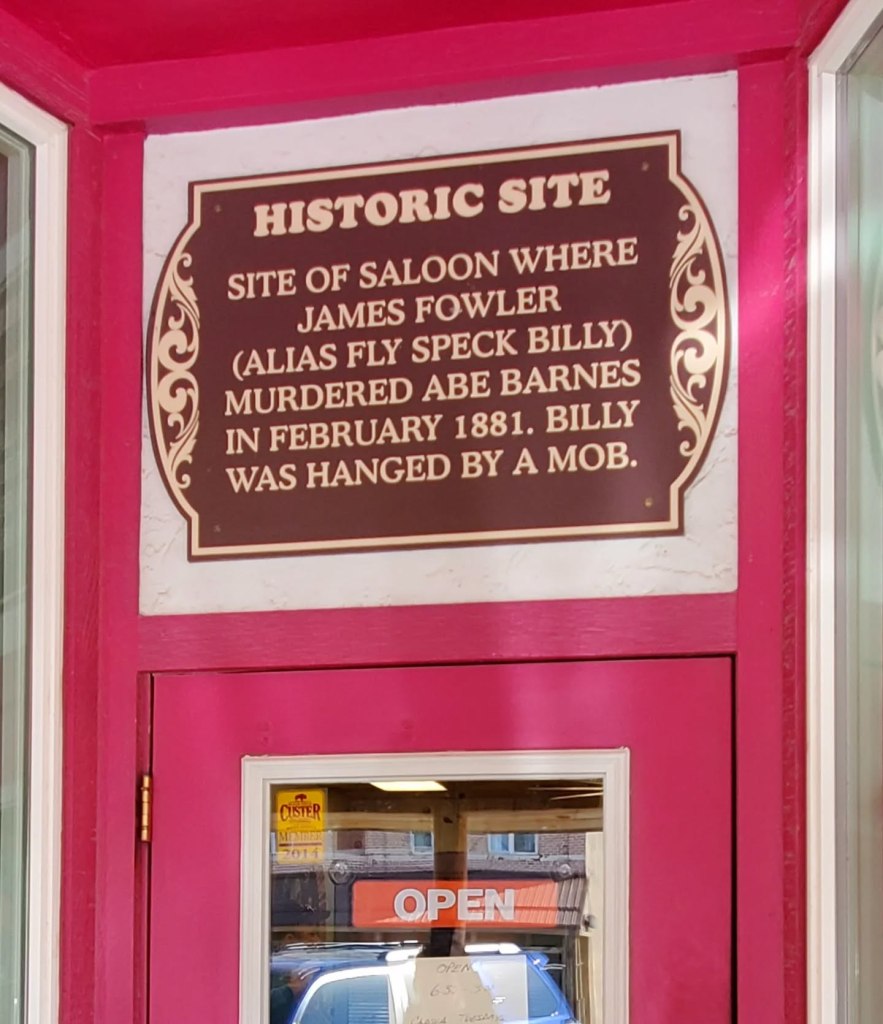
Second, one of the town’s social hotspots doubles as the site of a murder that led to a mob hanging. You can find several other historic markers around town that remind you this is an old Wild West town, not far at all from Deadwood.
Custer was even quieter than some of the other towns we stayed in or visited on this trip. It makes a great home base for exploring the Black Hills, as it sits right in the center of Jewel Cave National Monument, Crazy Horse Memorial, Custer State Park, Mount Rushmore, and Wind Cave National Park.
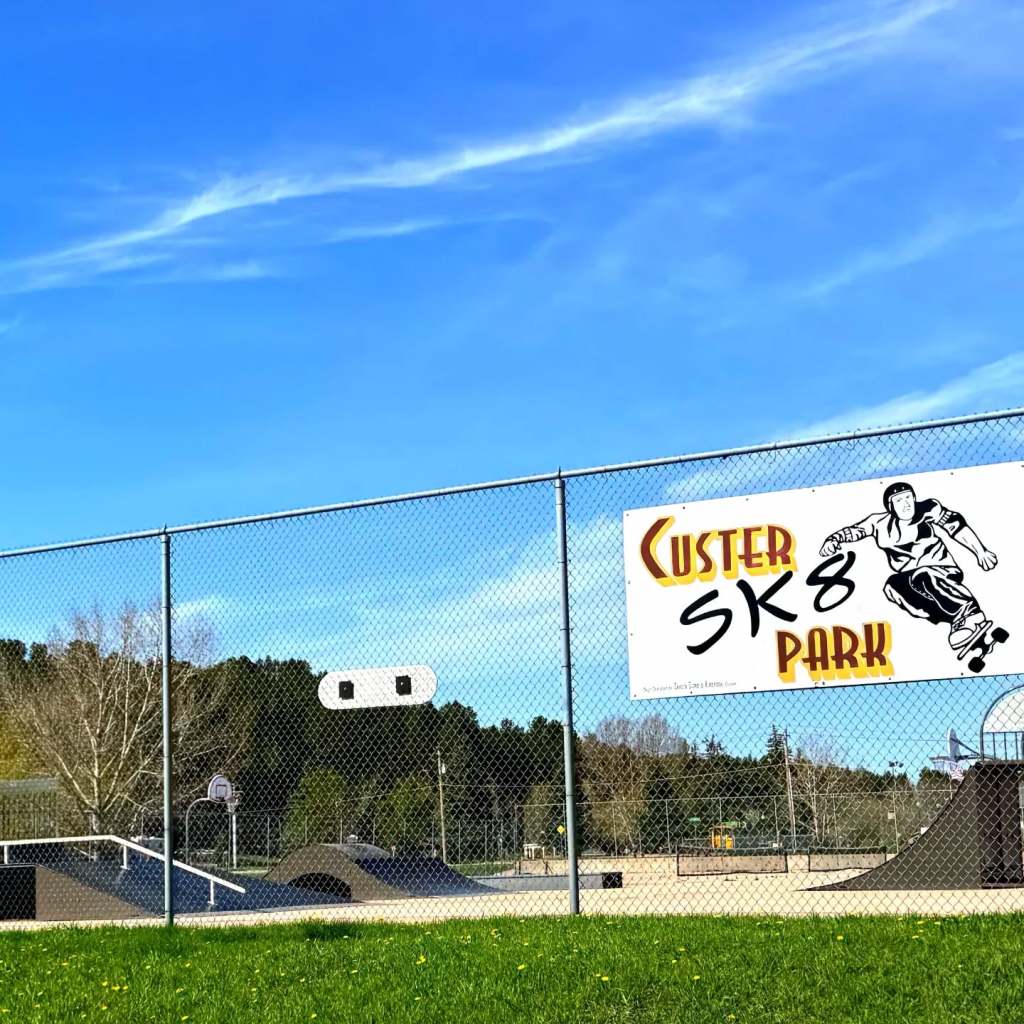
You’ve heard of Custer STATE Park, but have you heard of Custer SK8 Park? One is beautiful and stunning, the other is sick and rad. Catch them both within just a few miles of each other. #gnarlyface
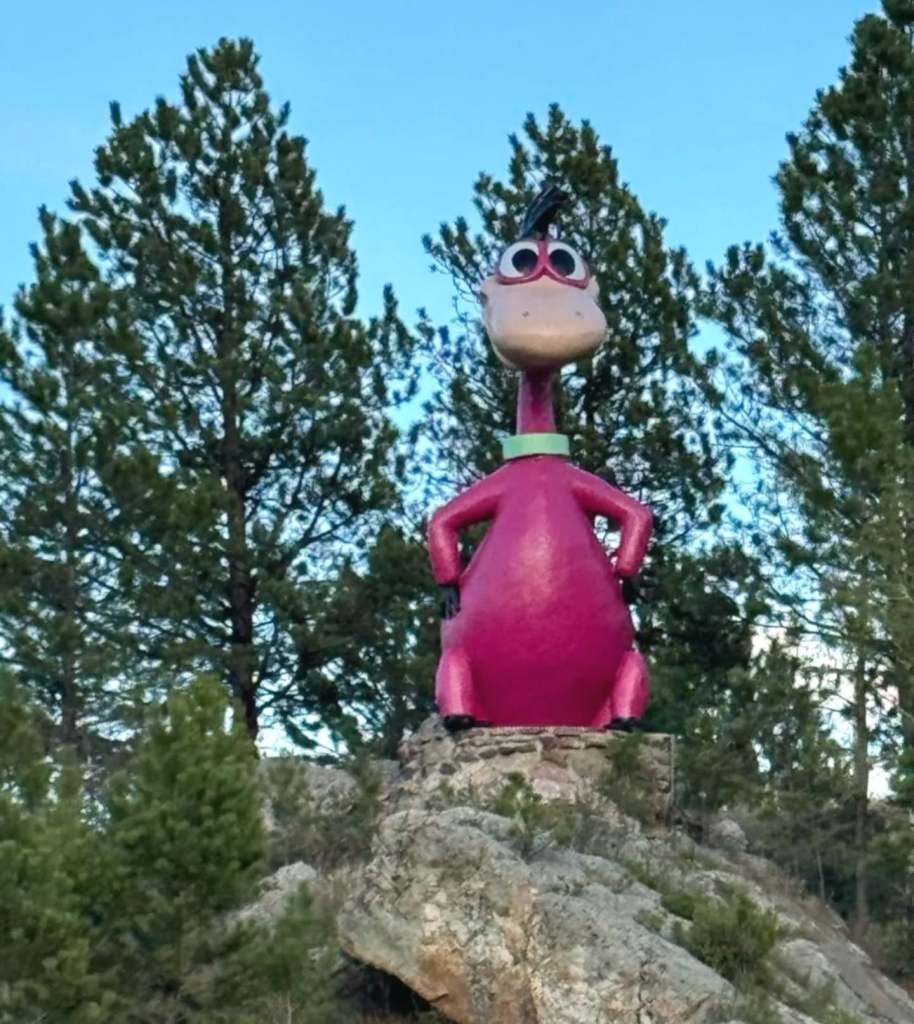
There is an enormous statue of Dino from the Flintstones series, for my fellow roadside attraction fans. This marks where the former Bedrock City theme park operated behind it until 2015, and the site is now a campground.
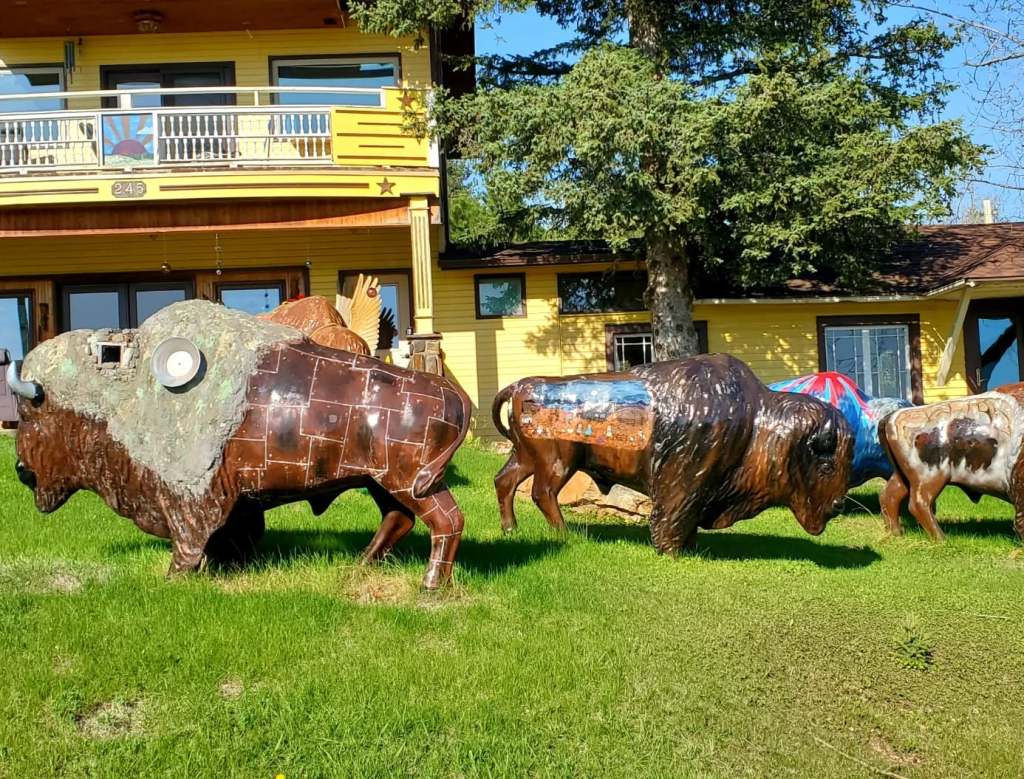
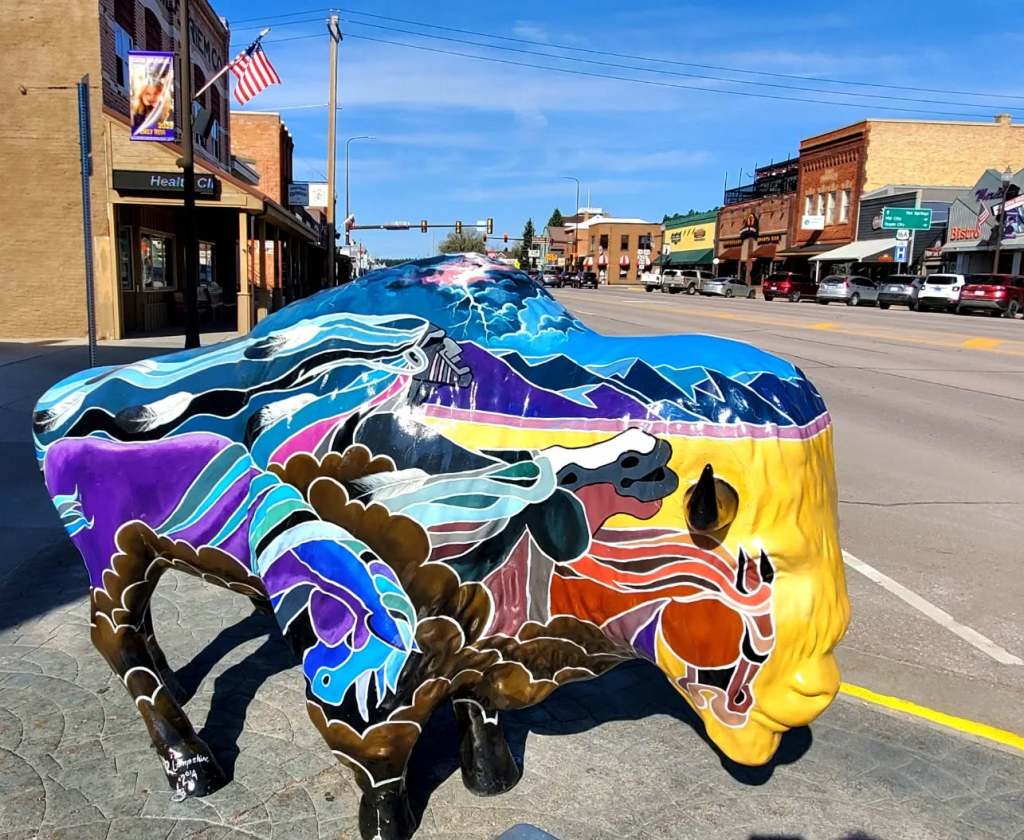
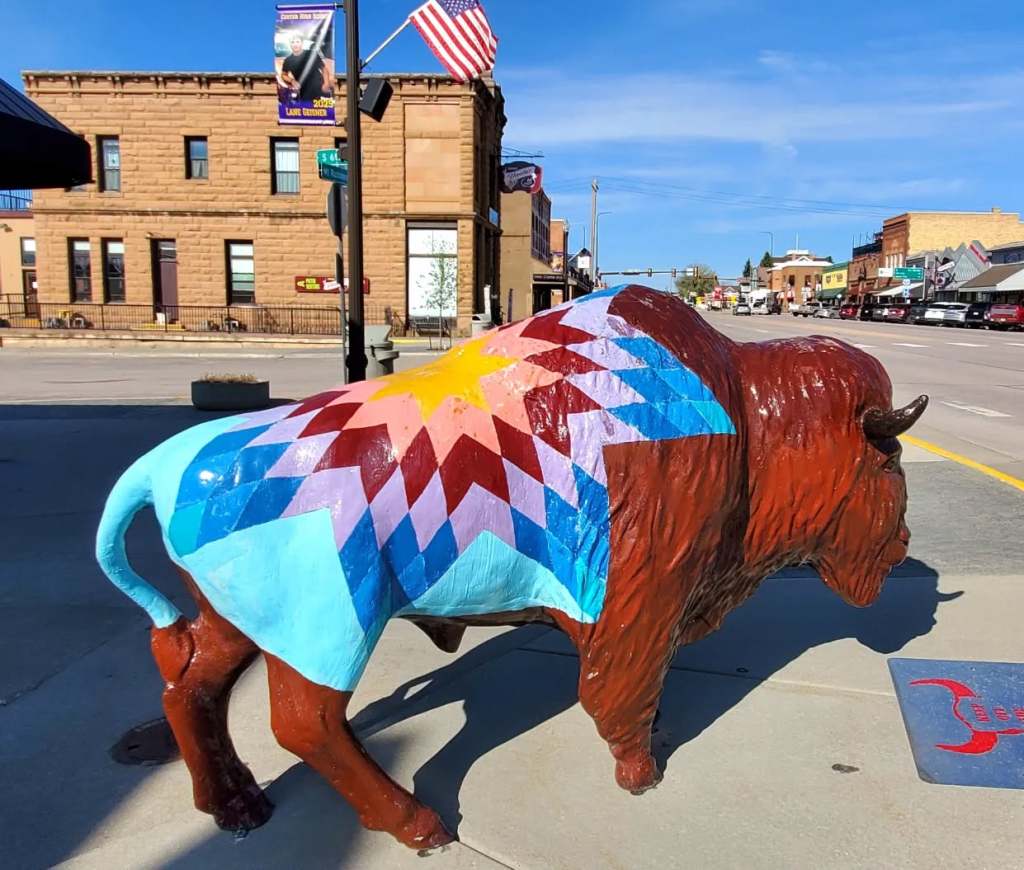
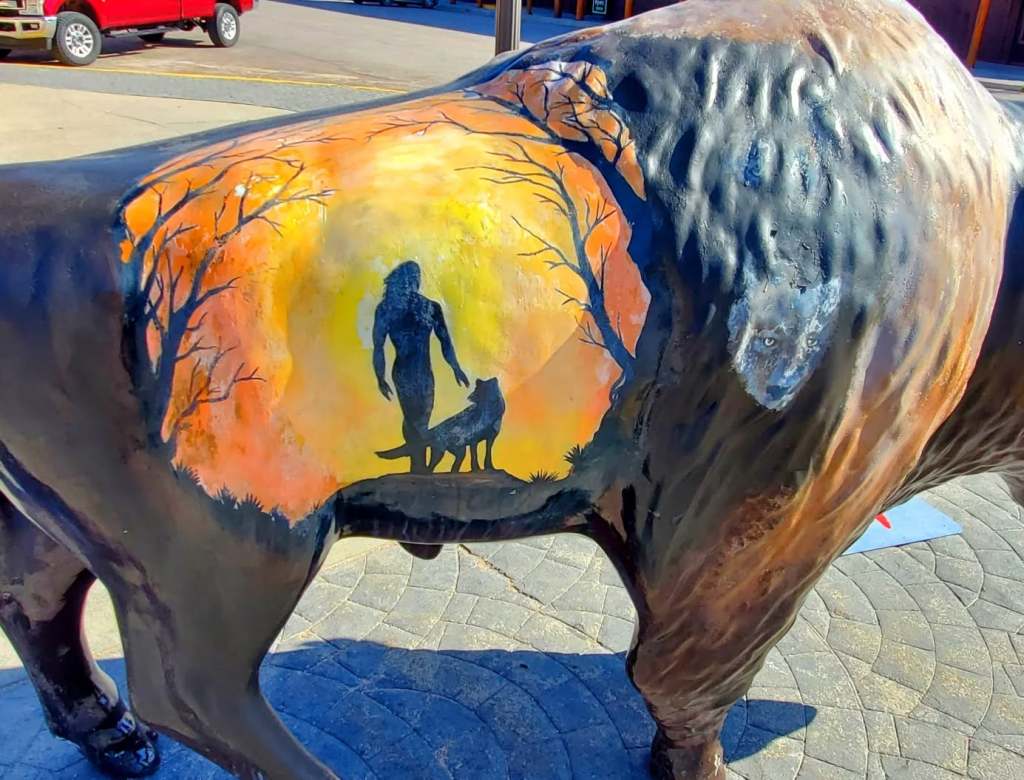
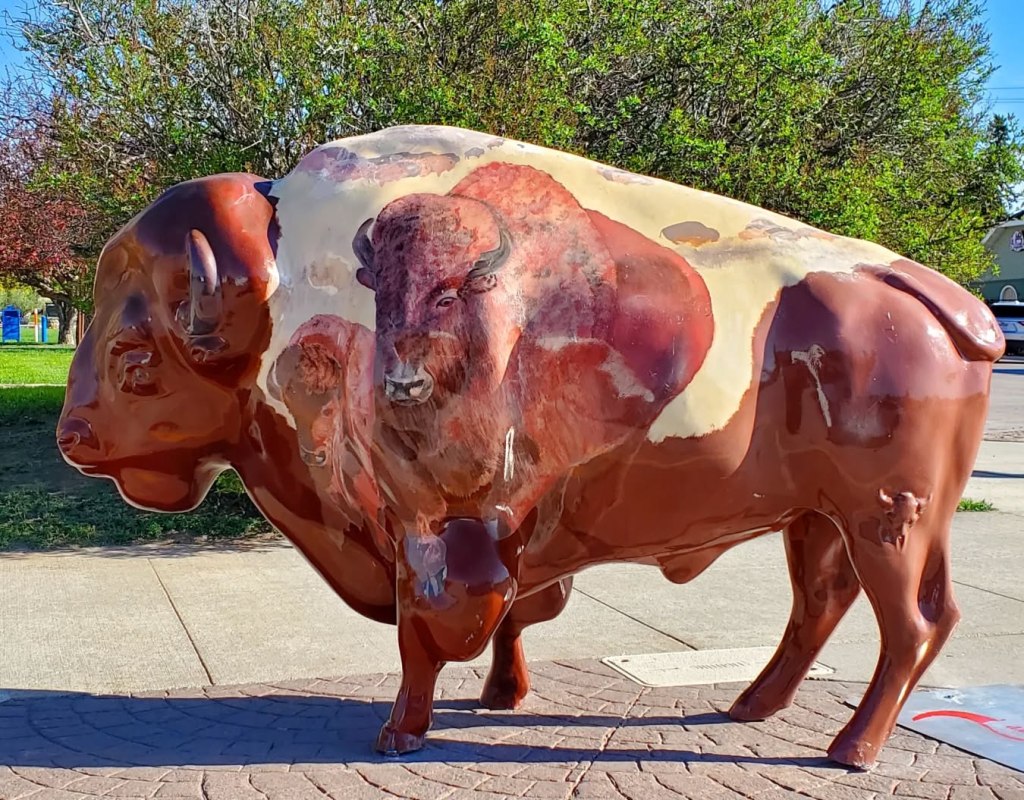
I really loved the Bison statues in Custer, best. We walked through downtown snapping photos of as many as we could find, and found a whole cluster of them in someone’s yard near our AirBnb.
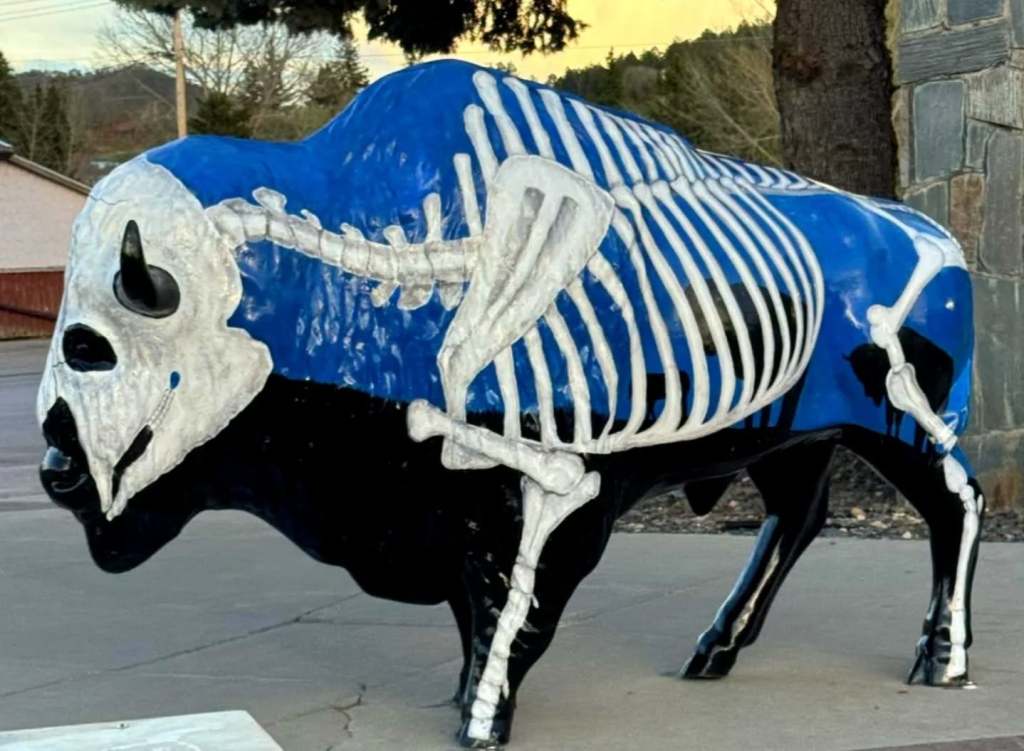
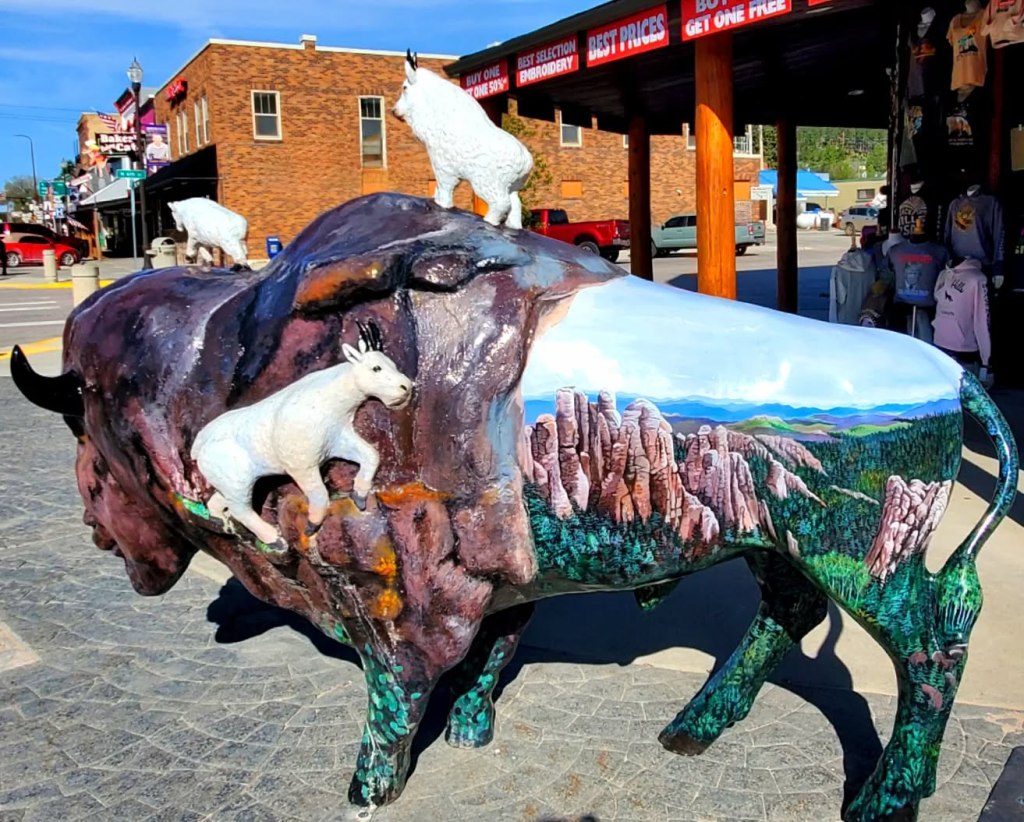
I love when cities facilitate art projects like this, much like the bears of Cherokee and Berlin, the horses of Lexington, or the hands of Berea.

In the area for a while? Custer State Park shares a border with Wind Cave National Park so follow me there and to other rad places in the Black Hills National Forest region like Spearfish Canyon, Badlands National Park, Lead, Deadwood, and Rapid City.
*************
© Fernwehtun, 2015- Current. Unauthorized use and/or duplication of this material without express and written permission from this site’s author and/or owner is strictly prohibited. Excerpts and links may be used, provided that full and clear credit is given to Fernwehtun and Fernwehtun.com with appropriate and specific direction to the original content.

 Fernweh, An Ache for Distant Places
Leave a reply to 11 Places In South Dakota Where Buffalo Burgers And Bison Steaks Steal The Show Cancel reply