

Troy is a small town of fewer than 30,000 people, situated along the Great Miami River in Southwestern Ohio.
It is widely known for its annual Troy Strawberry Festival & Parade that has showcased the area’s best strawberry-based goods like pickles, pies, cakes, sauces, and butters since 1977.
I have a spotty but thrilling childhood memory of my family visiting an uncle and cousins in Troy during the Strawberry Festival, watching the chaotic “bed races” where teams decorate beds and mount them on rolling frames, then race them around the town like boxcars.

Troy is also home to the Western Ohio Japanese Language School that opened in 1988, and to the Hobart Institute of Welding Technology that was founded in 1930.
Charles C. Hobart founded three additional successful businesses in Troy; the Hobart Brothers Company, Hobart Cabinet Company, and the Hobart Electric Manufacturing Company. To celebrate his legacy, the Hobart Urban Nature Preserve is named after him.

Troy is just nineteen miles north of Dayton and even closer to Tipp City, my hometown. Since it is part of the Dayton Metro area, it shares many of Dayton’s attractions and resources.

THE BACKSTORY
Troy was founded in 1808 and named after the ancient Greek city. One of its first white settlers, Benjamin Overfield, purchased a lot of land at the intersection of Mulberry and Water streets. He quickly built a cabin out of beech wood that doubled as an inn for travelers and a tavern for everyone.
Although the tavern was never built with the intention of becoming a courthouse, many consider it Troy’s first of five, and it served as the seat of justice for Miami County between 1808-1811.
The Overfield Tavern is Troy’s oldest surviving building and is now the Overfield Tavern Museum.

Between the Overfield Tavern and today’s courthouse, there were three others. The second courthouse sits exactly where the fourth one still stands near the Oddfellows building on Main Street, and it was in use from 1811 to 1824.
The fourth courthouse was in use from 1841-1888, and its renovation kicked off a years-long controversy involving the closing down of parts of West Main Street.
THPA’s open letter and other online articles addressing the city’s disgust with its mayor and the fight to stop the sale of the building for private profit after it was funded by local volunteers got me a little fired up, though I am assured that the building is now stabilized and on the right path toward redevelopment.

The third courthouse was located right in the middle of Troy’s Public Square where the fountain is now, and it was in use from 1824 to 1841. When it was dismantled in 1841, many of its bricks were repurposed in the next courthouse.
Huge thanks to Ben at THPA for answering my nosy questions.

The fifth and current Miami County Courthouse, below, is fashioned in the Beau Arts motif and was completed in 1888 by architect JW Yost. It has a clock face toward each direction mounted on its dome, and the Lady Justice statue on top stands at 185 feet high.
Its courtyard has fountains and memorial sculptures, and it is a surprisingly relaxing place to hang out.

Troy’s Public Square aka “The Square” actually refers to the traffic circle in the center of town that is filled with a lively fountain and landscaping.
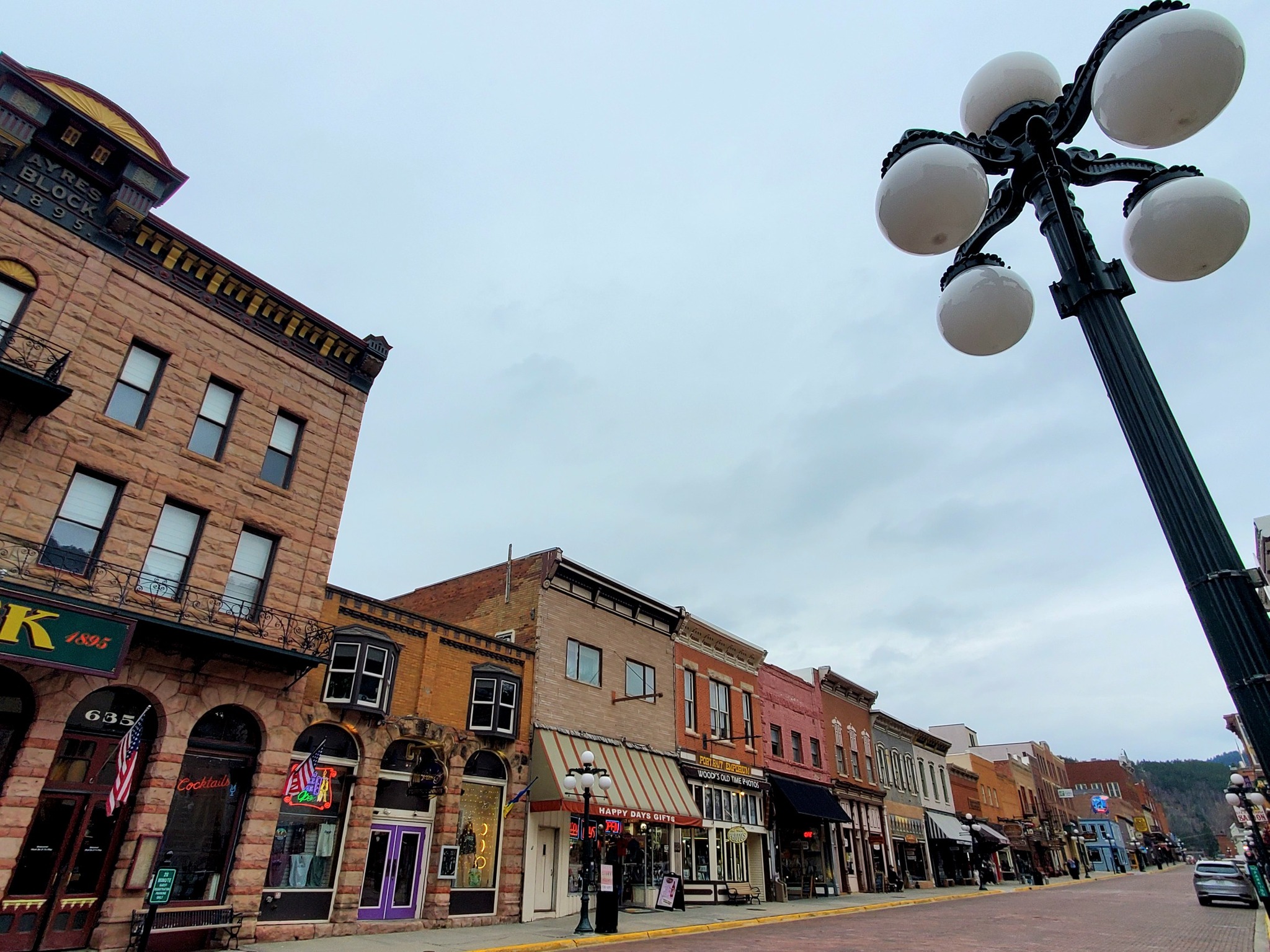
The circle in the middle of the square is surrounded by Victorian buildings on all sides, and many of the buildings are on the National Register of Historic Places.

The Museum of Troy History is also located on Water Street and is a preserved time capsule of Ohio life around the 1850s and forward.
John Kitchen built this home in 1847 and while it is heavy on Victorian decor and furniture, it has everything from an Art Deco collection and various dioramas, to a century-wide collection of yearbooks spanning 1918 to 2018. Perhaps even more now.

The Troy-Hayner Cultural Center on Main Street is a 1914-era Romanesque mansion that once belonged to Mary Jane Hayner, an extravagantly wealthy socialite who married a whiskey tycoon and later built this massive home for entertaining.
When she died in 1942, she left her home to the people of Troy for educational and cultural purposes. It was a library for nearly 35 years until a new branch was built, and its ballroom made it the perfect spot for a ballet studio, music venue, and art gallery.
Eventually it became the Troy-Hayner Cultural Center and continues to host artistic classes, performances, and events. It is also home to the Hayner Distillery Museum.

We found out that Troy Open Studios has created a self-guided walking tour map of all the galleries and creative spacers in town that you can view here.

The Weaver Aircraft Company (WACO) began in Troy in 1919 and was the largest manufacturer of civil aircraft during the1920s-1930s, and creating some of the most popular models of open cockpit & cabin bi-planes from the 1920s until the 1940s, once holding title as the largest producer of civilian aircraft in the world. The WACO Air Museum is a popular attraction, especially among aviation buffs.
Goodrich Corporation still makes braking systems and wheels for the spacecraft in Troy, and the Kitchen Aid cooking line was originally based there.
For more Troy history, visit the Troy Historic Preservation Alliance, the Troy Local History & Genealogy Center, and the Troy Historical Society, which published the book Troy: The Nineteenth Century by Thomas Bemis Wheeler in 1970.

SHOPPING & EATING
Troy has several unique shops downtown, and several national chains like Agave & Rye have opened around Public Square.

Around About Books and Feral Child were most interesting for us.

You can also find several local dining options Purebred Coffee, Ulbrich’s Hometown Bakery, and Speakeasy Miso Ramen Bar.

The beloved Mayflower Restaurant has closed, but people absolutely RAVE about MattyQ’s, even in an online group about Ohio pizza that I am in. We were so full from breakfast that we could not possibly eat again, but it is at the top of my list for next time we pass through.
However, we stopped by Bakehouse Bread & Cookie Company for to go drinks and a few pastries for the roadtrip back home.

In the area for a while? Check out the Brukner Nature Center or follow me to Tipp City, Springfield, Dayton, Cincinnati, and Yellow Springs!

*************
© Fernwehtun, 2015- Current. Unauthorized use and/or duplication of this material without express and written permission from this site’s author and/or owner is strictly prohibited. Excerpts and links may be used, provided that full and clear credit is given to Fernwehtun and Fernwehtun.com with appropriate and specific direction to the original content.


Leave a Reply