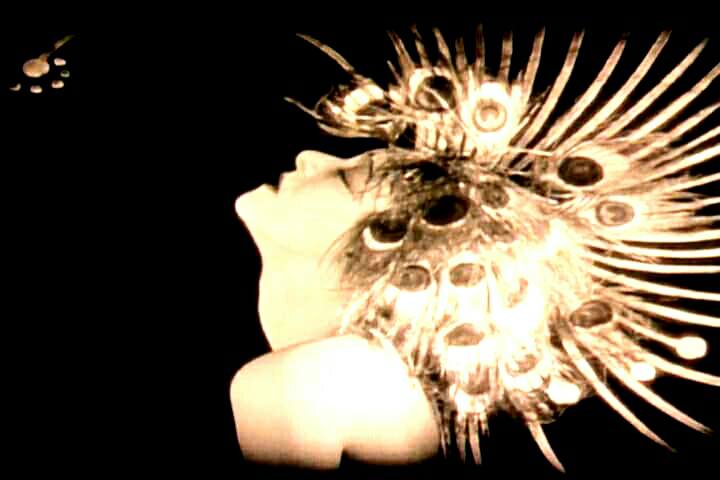
THE WRIGHT BROTHERS
Wilbur Wright (1867-1912) and Orville Wright (1871-1948) grew up in Dayton, Ohio. I was born in Dayton and, like them, my paternal family is also part of the Wright lineage.
Neither Wilbur, Orville, or their older sister Katharine had any children, but their brothers Reuchlin and Lorin each had four. My grandmother was only six years old in 1948 when Orville died, and she insisted that we are distant cousins.
Knowing that connection and spending my earliest years around Dayton instilled a great fascination for the Wright Brothers’ history and heritage that still endures.
Wilbur and Orville were writers, publishers, mechanics, inventors, and entrepreneurs, but became most famous for their work in aviation. The two were marked for their curiosity, innovation, and drive.
They were industrious. Their hobbies and businesses were always developed around science and uncharted technological territory that they seemed to figure out and utilize with ease.
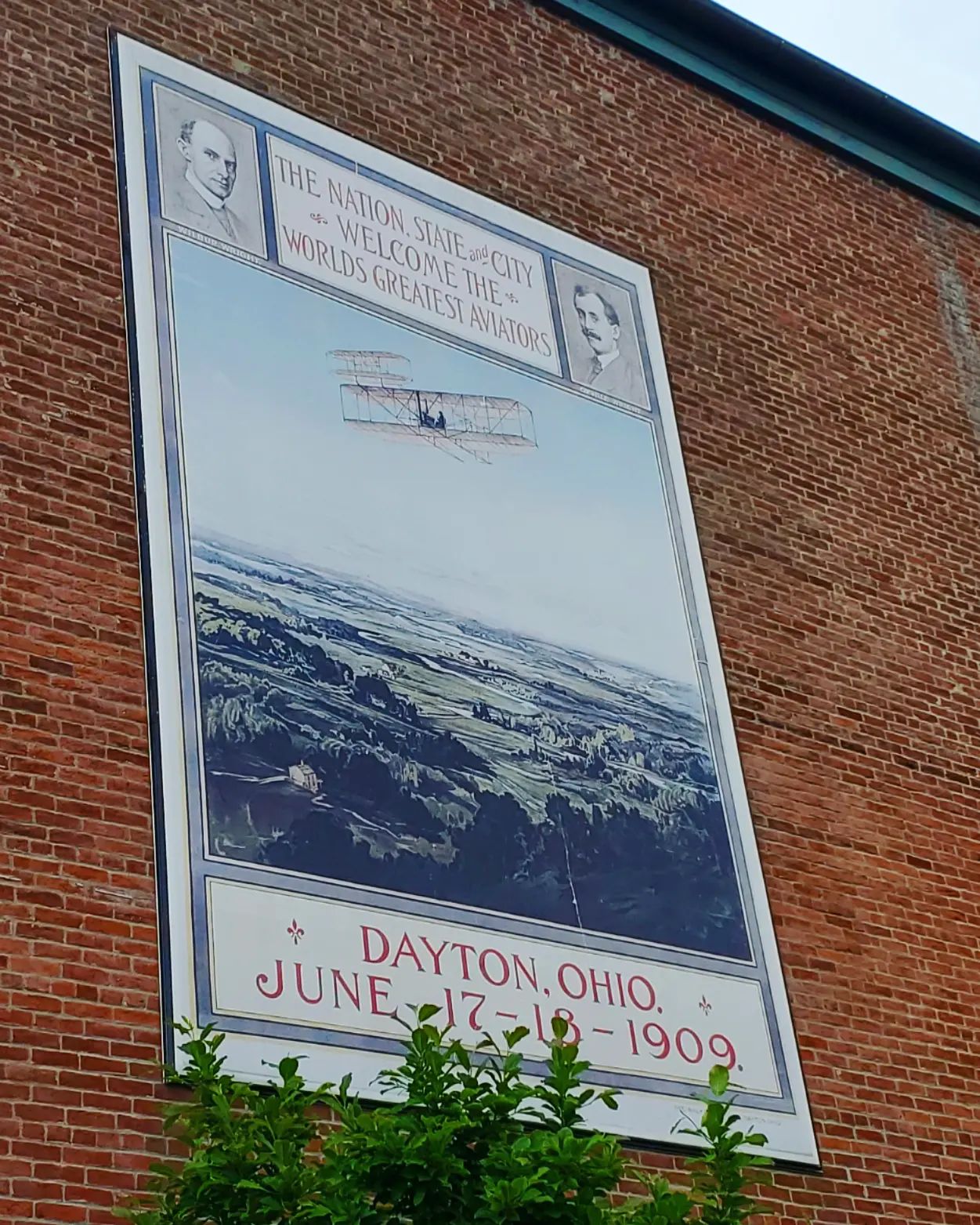
LEGACY OF INNOVATION
Here are some of the Wright Brothers’ earliest innovations:
- Wilbur created a machine that folded newspapers and bulletins for him while Orville made and sold kites for extra cash when they were kids.
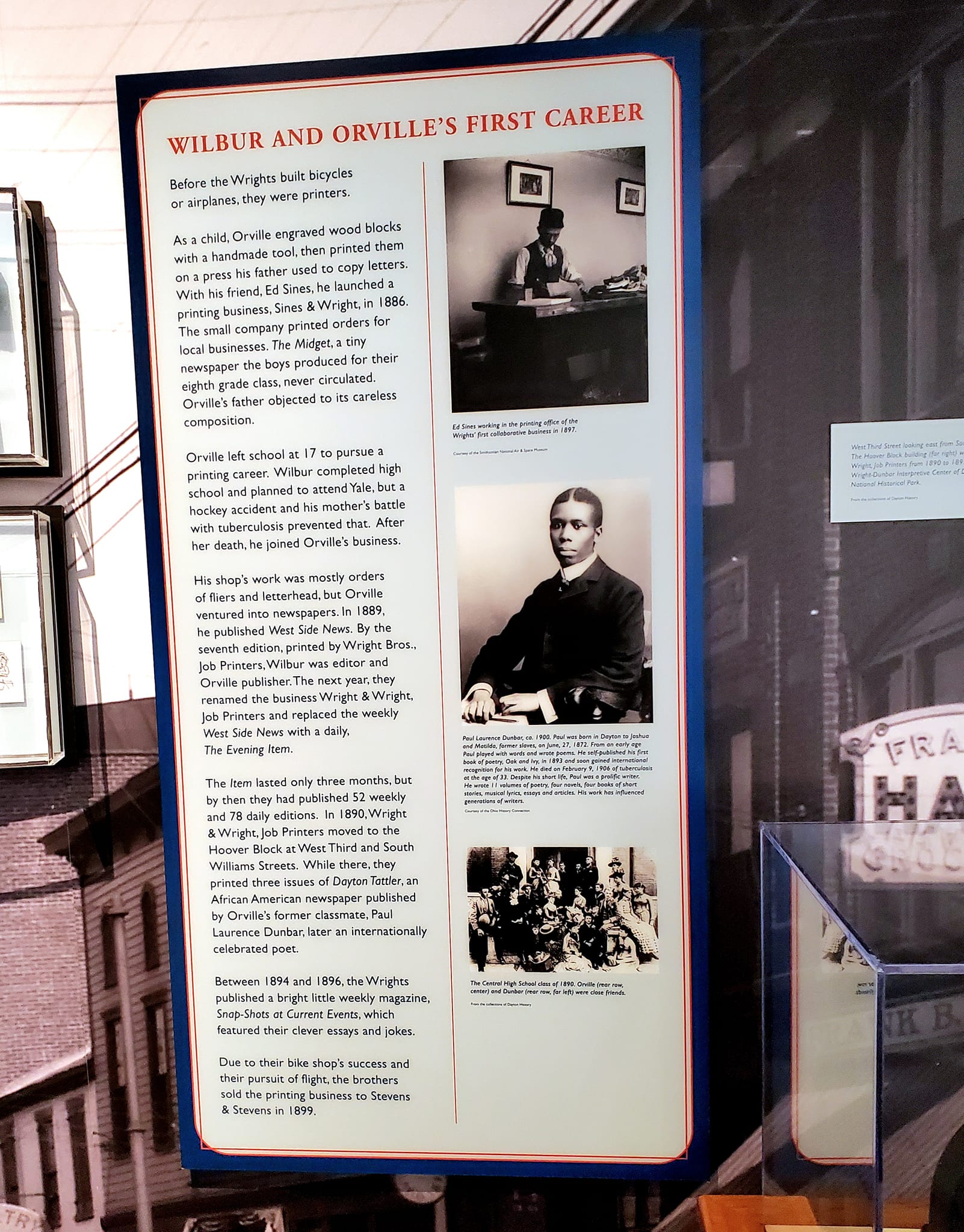
- Orville and a friend created Sines & Wright Printing at age 12 and together they build a 6′ tall, wooden, pedal-operated lathe.
- The brothers opened their first of many joint printing press businesses in their home at 7 Hawthorn Street in 1889.
- They co-published multiple newspapers, bulletins, and periodicals together for many years.
- They opened a bicycle shop in 1892 where they sold and repaired various established brands.
- They created their own brand of bicycles in 1896 and began selling them at their business, The Wright Cycle Company.
- Later in life they went on to develop crucial aviation technology like wing warping, moving rudders, three-axis control systems, wind tunnels, and their famous Wright Flyer models.
For a more extensive list of their innovations on a timeline, check out this site.
Because the Wright Brothers lived, created, and made international headlines in Dayton, the city has accumulated a great number of significant historical sites related to them. Dayton has, with some competition from Kitty Hawk, NC, long been known as “The Birthplace of Aviation.”
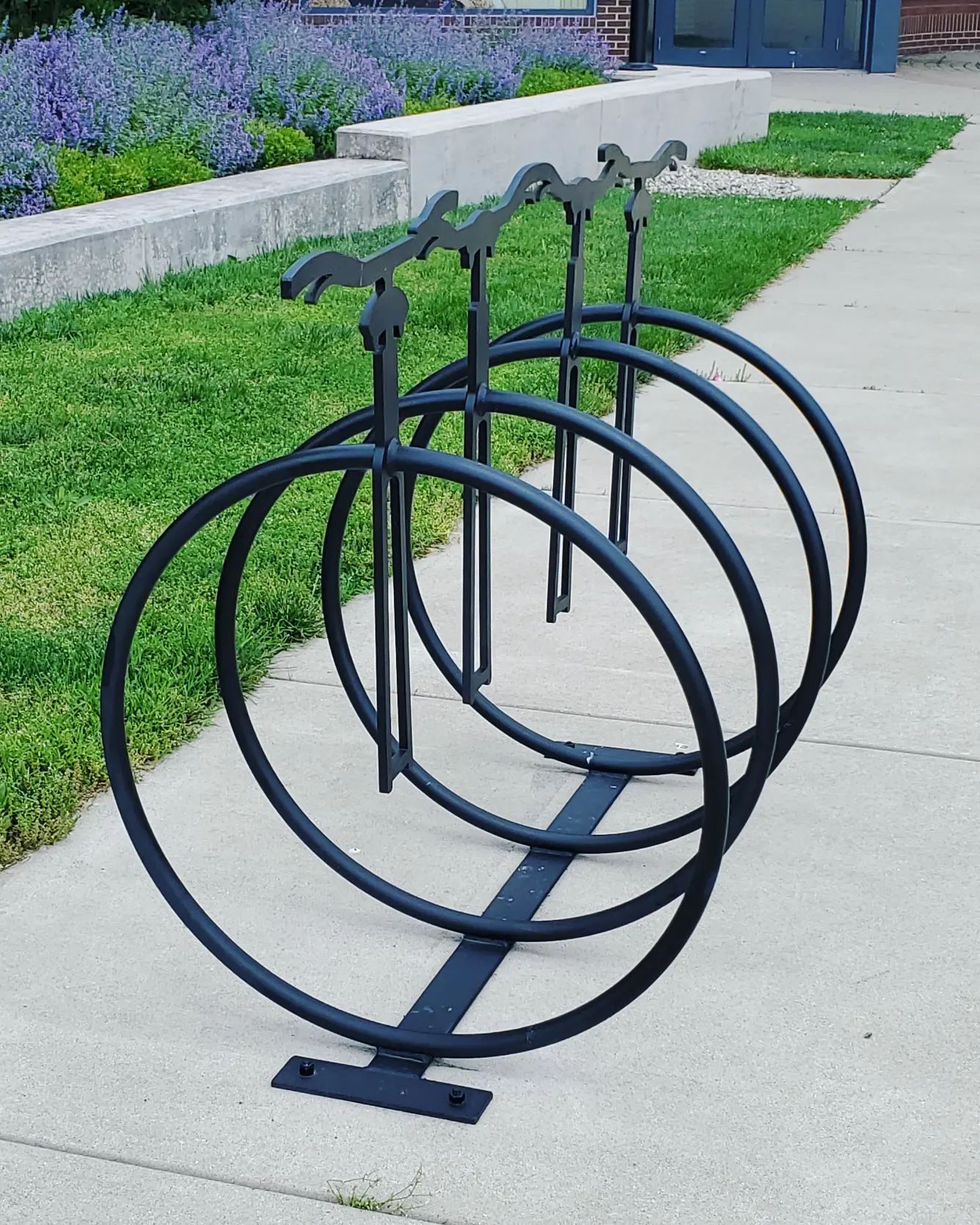
AVIATION TRAIL, INC. is a non-profit corporation that was created in 1981 with the mission to preserve and promote Aviation Heritage in and around Dayton, Ohio and the Miami Valley. That heritage began with Orville & Wilbur Wright’s earliest inventions and continues through the ongoing aviation and aerospace developments of Wright-Patterson Air Force Base.
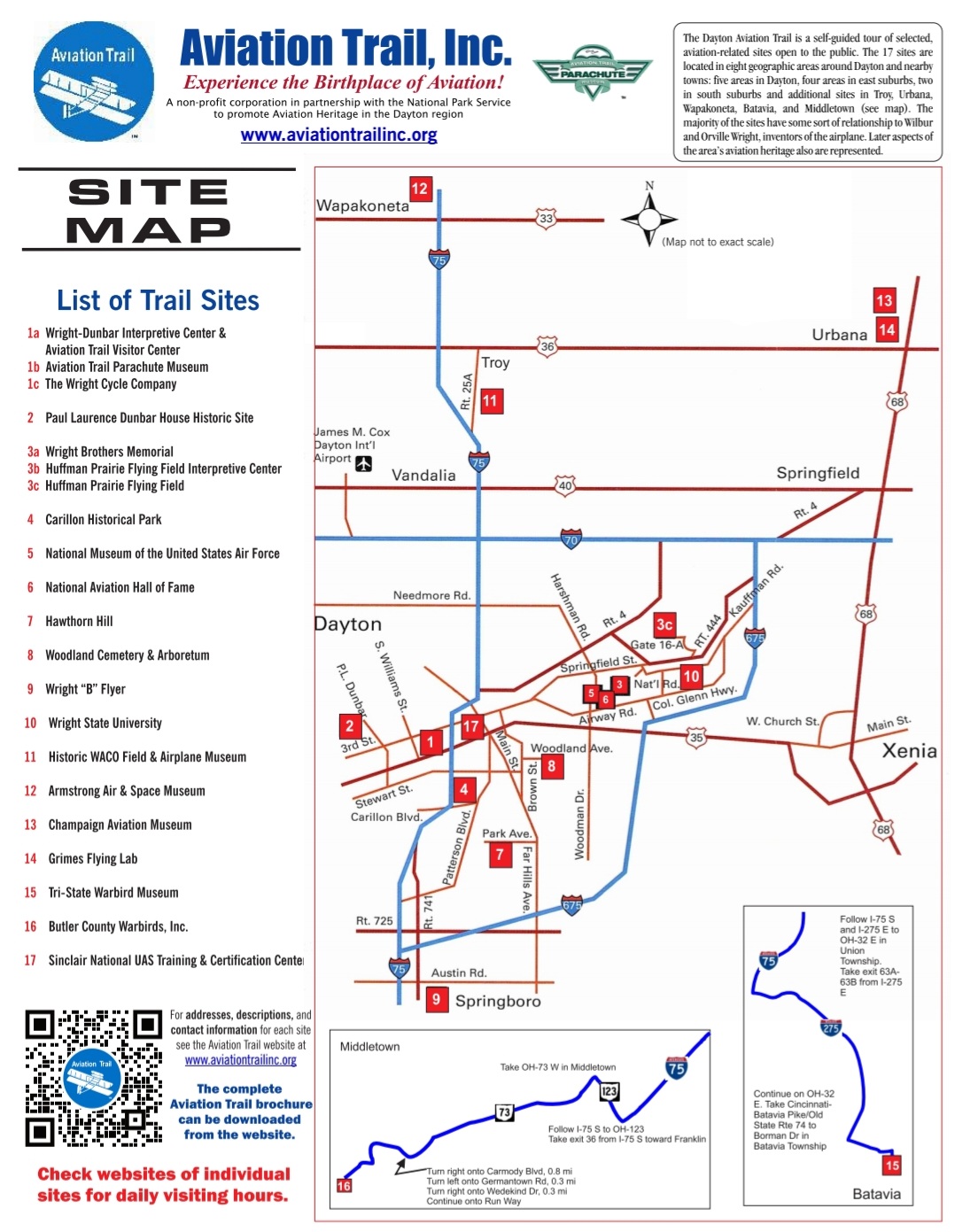
AVIATION TRAIL SITES
The seventeen official sites listed in the Aviation Trail brochure include the Dayton Aviation Heritage National Historical Park as your starting point, then move on to the Paul Laurence Dunbar House Historic Site, Wright Brothers Memorial, Carillon Historical Park, National Museum of the United States Air Force, National Aviation Hall of Fame, Hawthorn Hill, Woodland Cemetery, the Wright “B” Flyer sculpture, Wright State University, and Sinclair National UAS Training & Certification Center in Dayton.
Some of those sites have sub-sites, which mean there are multiple structures to see.

1. WRIGHT-DUNBAR INTERPRETIVE CENTER & AVIATION TRAIL VISITOR CENTER, PARACHUTE MUSEUM, & WRIGHT CYCLE COMPANY
Your starting point on the Aviation Trail is one with three separate facilities to visit. It is listed as:
1a. Wright-Dunbar Interpretive Center & Aviation Trail Visitor Center
1b. Aviation Trail Parachute Museum
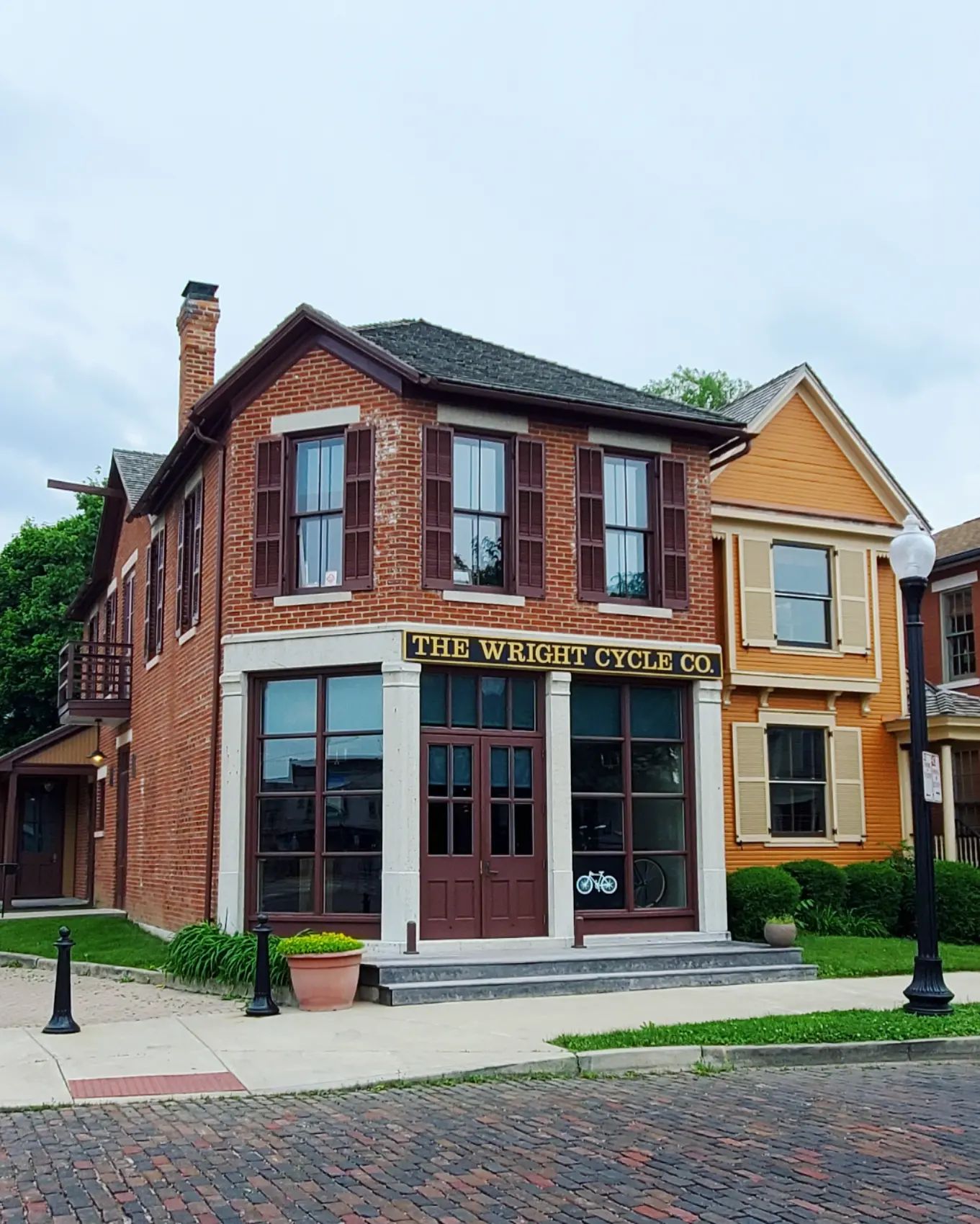
1c. The Wright Cycle Company
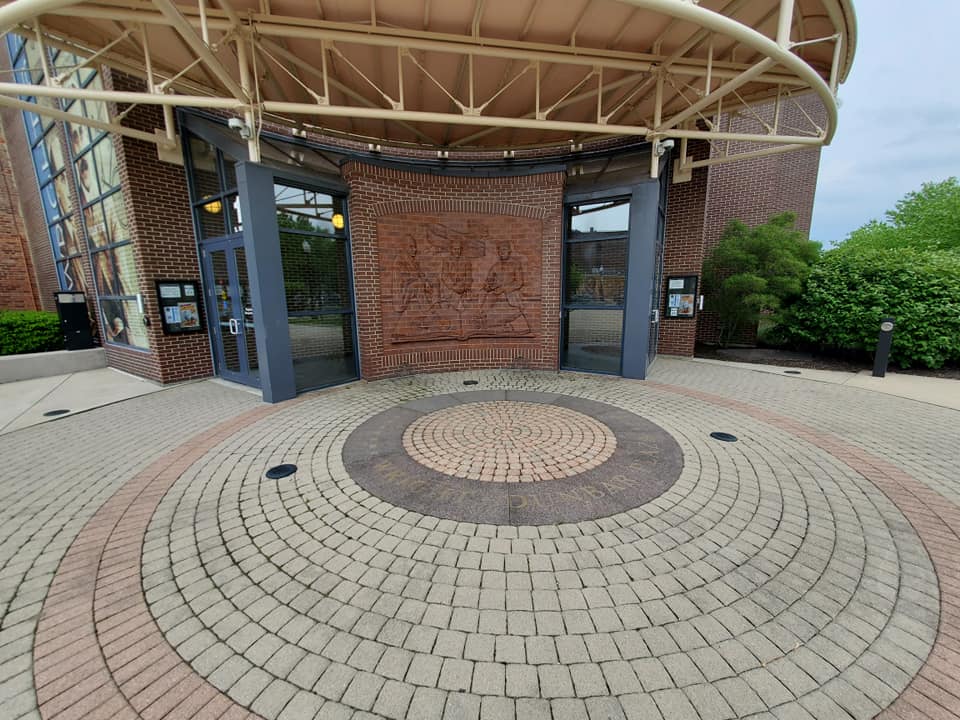
In 1992, Aviation Trail (ATI) founded the Dayton Aviation Heritage National Historical Park (DAHNHP) and procured two historic Wright Brothers buildings on what is known as the Hoover Block. This block sits on the corner of West Third and South Williams Streets in the Wright-Dunbar neighbourhood.
The Dayton Aviation Heritage National Historical Park also preserves and honors the work of Dayton’s own poet, Paul Dunbar, who was a lifelong friend of the Wright Brothers and a legend in his own right.
The Wright-Dunbar Interpretive Center showcases several exhibits on both levels, and a film called Wright Brothers On Great White Wings.

I really liked all the replica models and life-sized infographics.
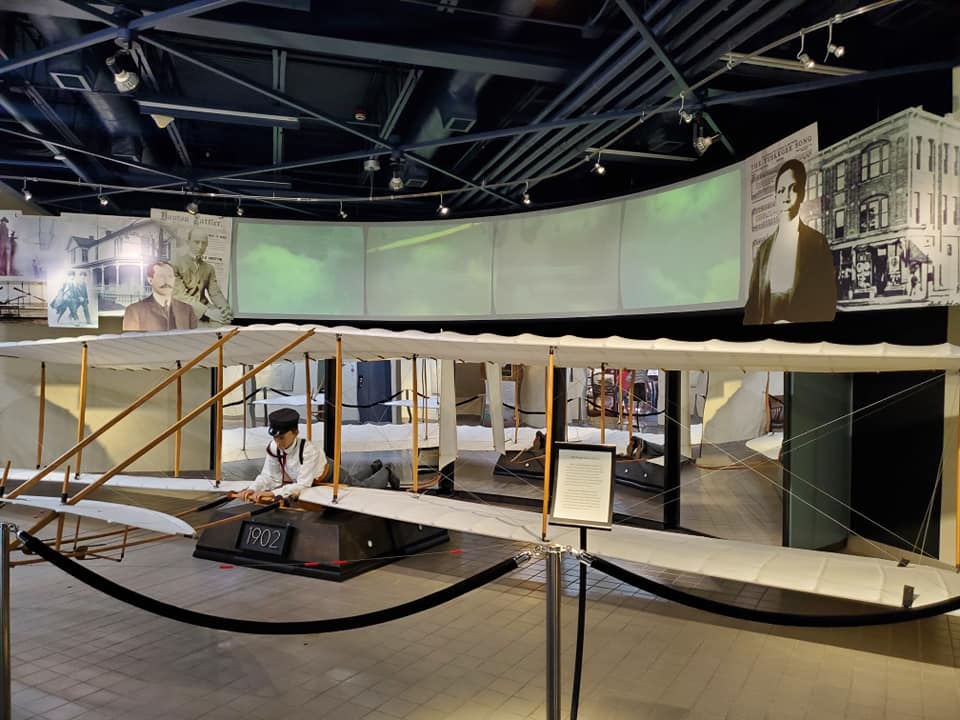
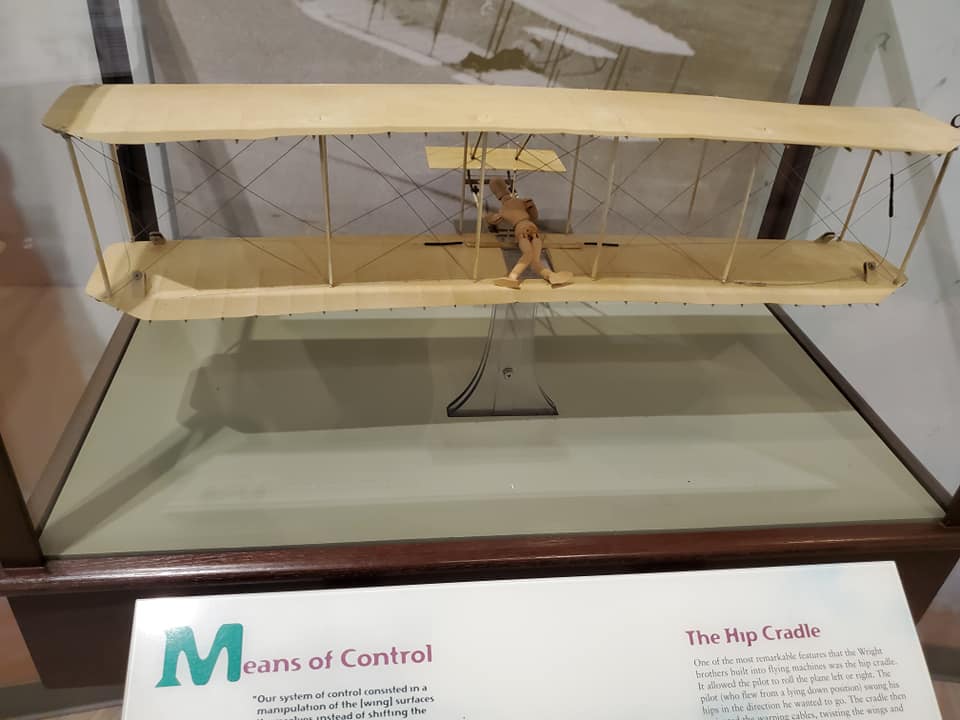
ATI partnered with the National Park Service to create a Visitor Center between those buildings, and it is called the Wright-Dunbar Interpretive Center.
A fifth site, The Aviation Trail Parachute Museum, exhibits tell about the development of the “free fall parachute” that was invented at McCook Field in Dayton, and significant events from then to now.

The Wright Cycle Company is where Wilbur and Orville first began creating some of their famous bicycle models and completing repairs for locals.
ATI privately purchased the Wright Cycle Company building and donated it to the DAHNHP site to create a Wright Brothers museum complex of the three buildings.
Talk to the folks at the Wright-Dunbar Interpretive Center to customize your-self guided tour or for more info on any of the exhibits and buildings on site.
2. PAUL LAURENCE DUNBAR STATE MEMORIAL & HISTORIC SITE
Paul Laurence Dunbar is a renowned African American poet, novelist, author, and even Broadway lyricist. He was one of the first to gain international fame and following. Much of his work was written in a very specific dialect known was known historically as the “Ne*ro Dialect” which I struggle to even type. The dialect is now called African-American English (AAE), Ebonics, or African American Language (AAL) with respect.
Dunbar was a lifelong friend of the Wright Brothers and is even buried near them in the Woodland Cemetery. He was the only African American at his high school in Dayton where he met and quickly befriend Wilbur Wright.
By 16 years old, his poems were being published in The Herald and he was writer-editor of Dayton’s first African American newspaper called The Tattle. In 1893, when he was 21 years old, his first collection of poems called Oak & Ivy was published. A city park in Dayton is called the same name, and this collection led him to meet and befriend other icons like Booker T. Washington and Frederick Douglass.
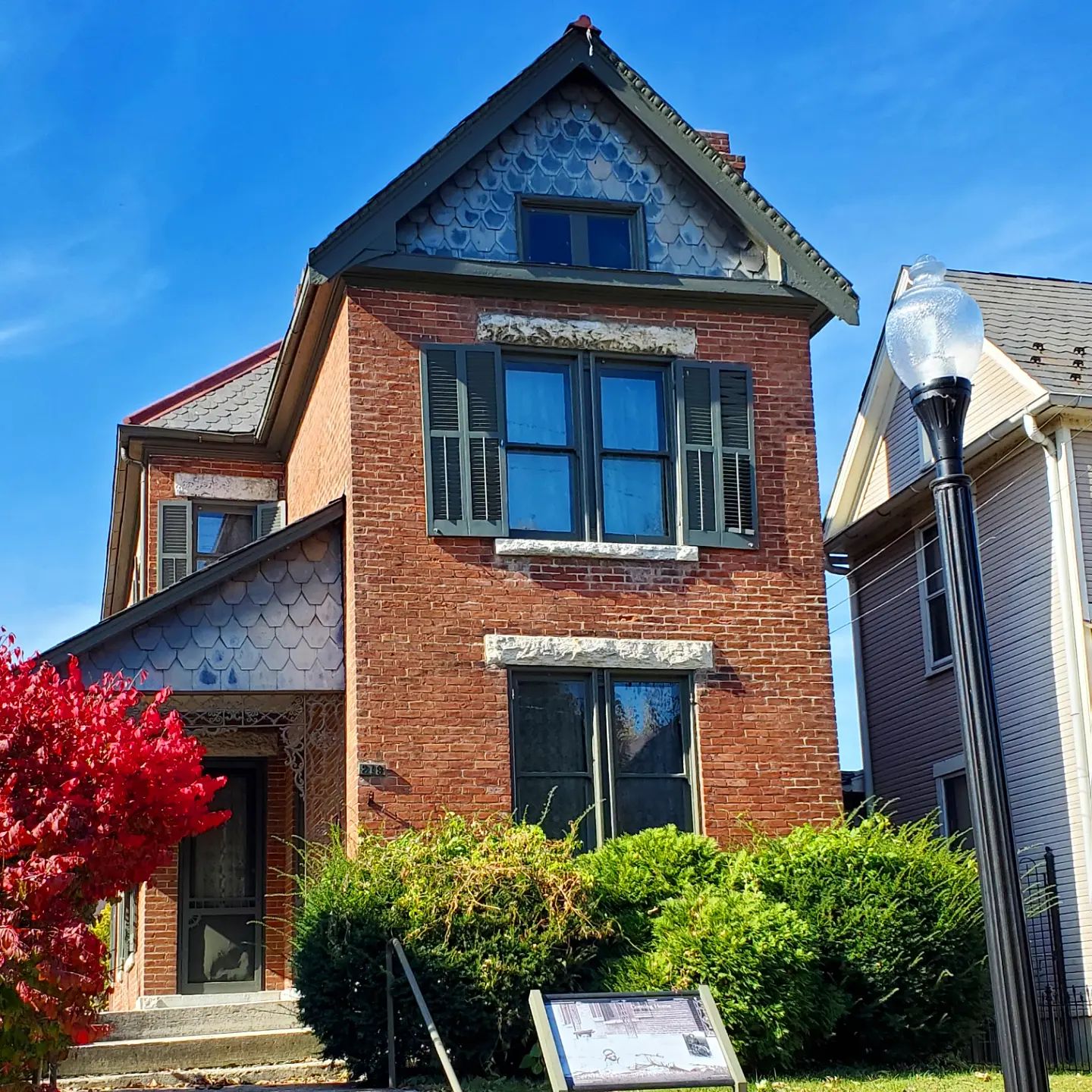
The Paul Laurence Dunbar State Memorial & Historic Site at 219 N. Paul Laurence Dunbar Street is also known as the Paul Laurence Dunbar House. Laurence lived there with his mother from 1904 until his death from tuberculosis in 1906, but she remained there until her death in 1934. The house is part of the greater Paul Laurence Dunbar Historic District that runs along Paul Laurence Dunbar Street for about three blocks, from Edison Street southward to W. Third Street.
The House was added to the National Register of Historic Places in 1980, and the historical district was designated by the City of Dayton in 2001. You can take a walking tour of the entire district by following this link.
3A-C. WRIGHT BROTHERS MEMORIAL, HUFFMAN PRAIRIE FLYING FIELD & INTERPRETIVE CENTER
Stop #3 also has subsites, listed as:
3a. Wright Brothers Memorial
3b. Huffman Prairie Flying Field Interpretive Center
3c. Huffman Prairie Flying Field
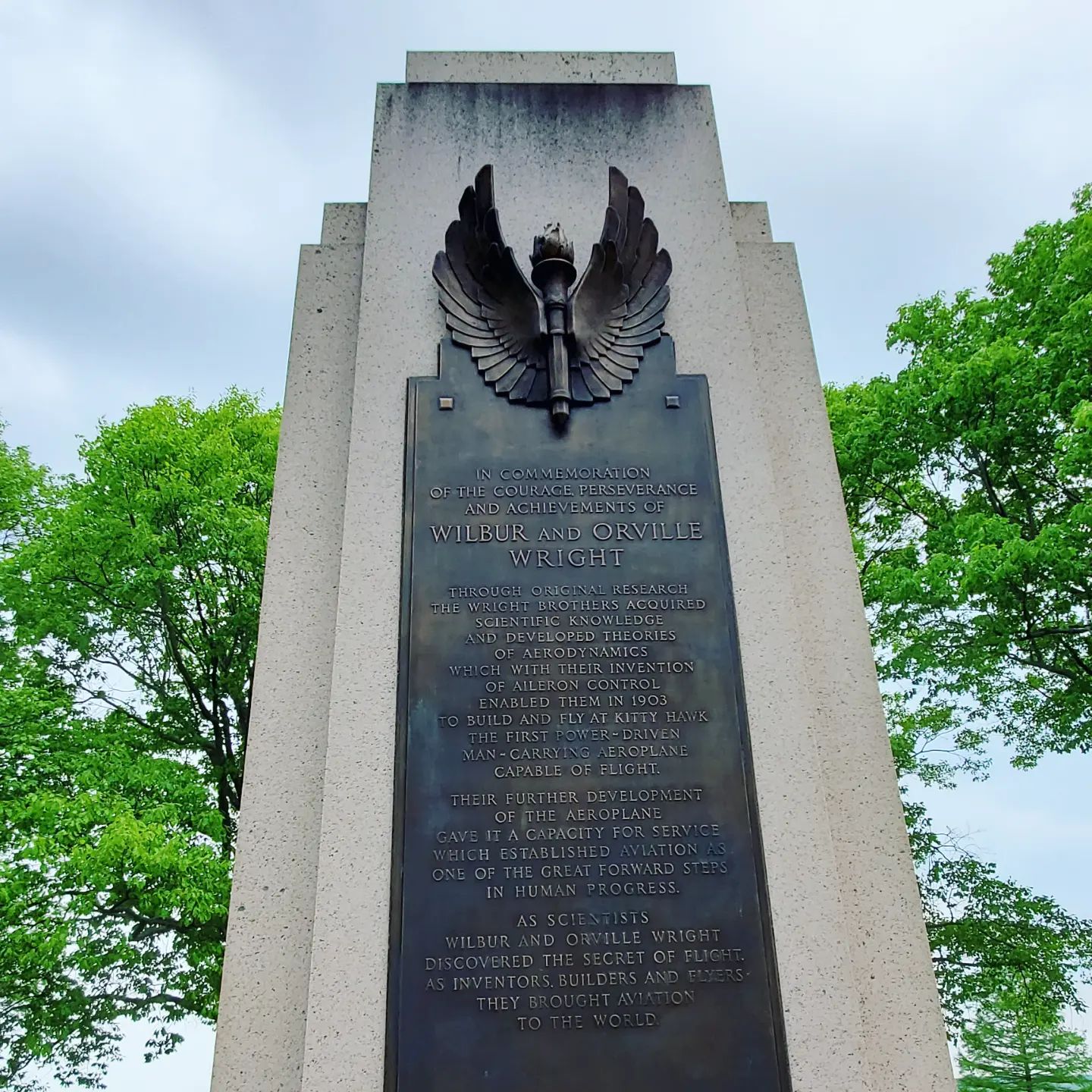
The Wright Brothers Memorial sits on top of Wright Brothers Hill. The 17 feet tall pink granite obelisk is surrounded by a 27-acre landscape and looks out across the flying field.
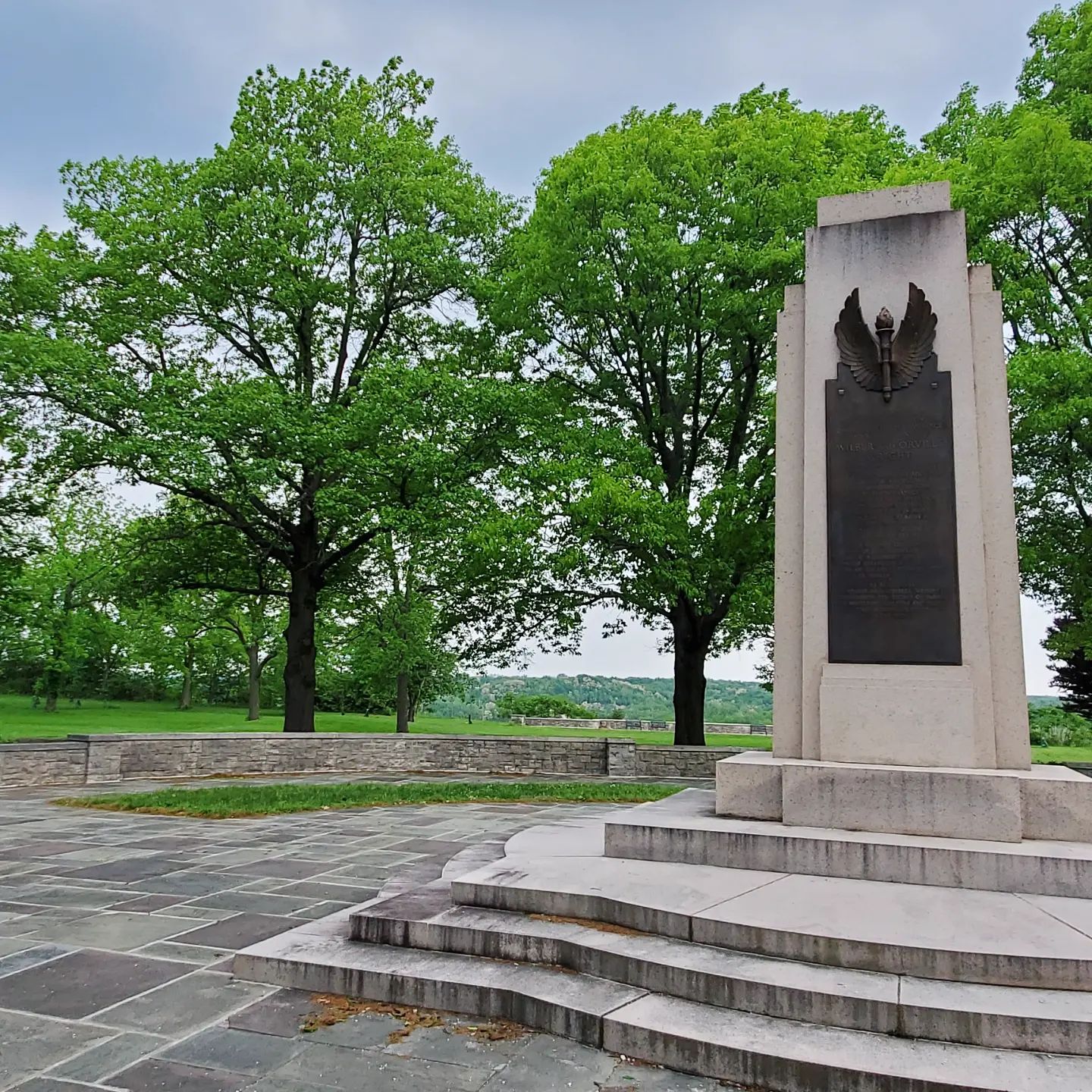
This memorial was dedicated in 1940, to commemorate Orville’s 69th birthday, though Wilbur had already died.
Something I really enjoyed was the Adena Native American mounds and monuments on the same property.

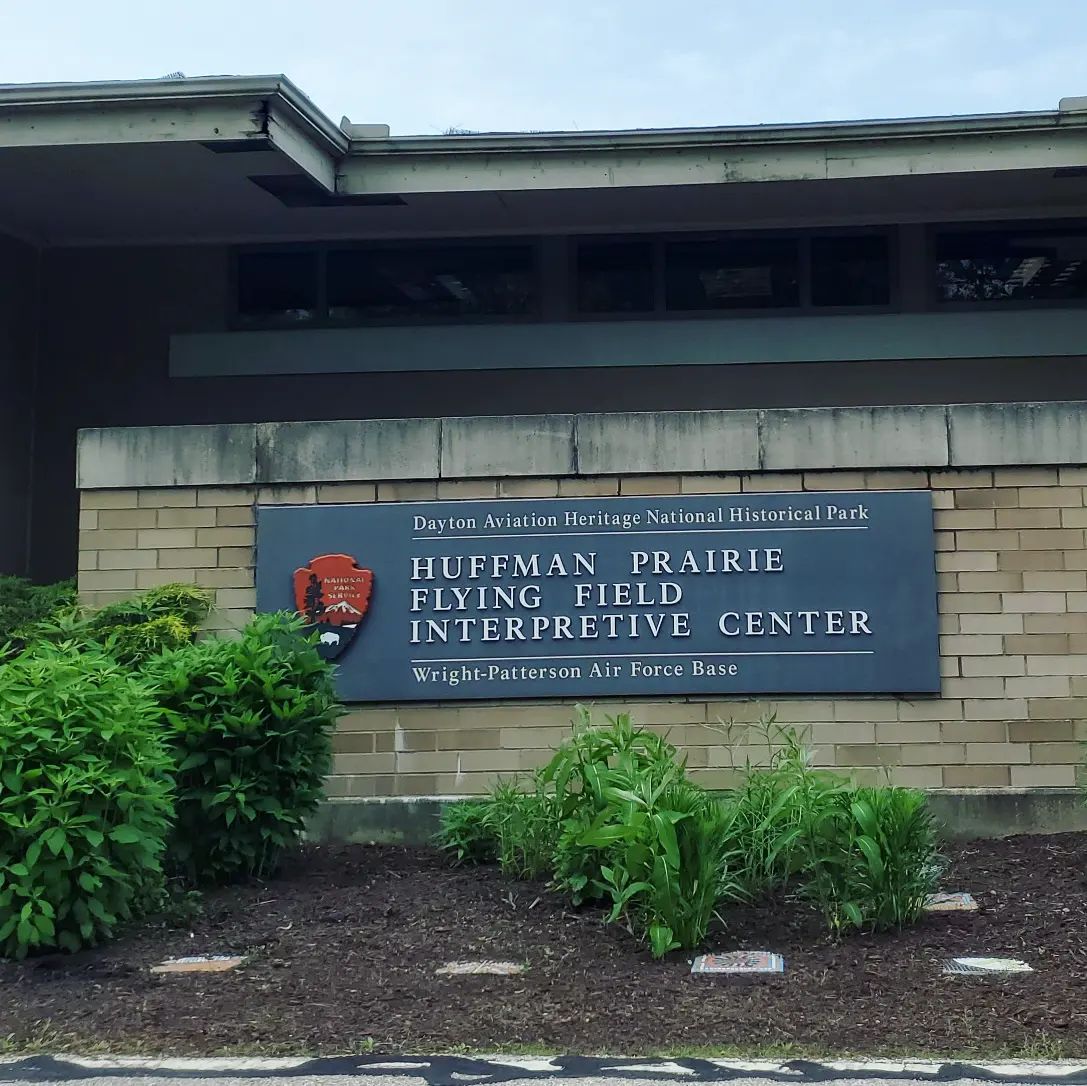
The Huffman Prairie Flying Field Interpretive Center screens a film called Wright Brothers On Great White Wings and hosts several exhibits about the Wright Brothers’ inventions and first airplane out in the prairie in 1904 as well as their flying school that opened in 1910, and some of the work at Wright-Patterson Air Force Base.
It seems as though young Orville Wright was struck with some major inspiration when his teacher brought the class to this prairie on a field trip after botanist John Leonard Riddell had found several new species of plants there.
Riddell, it should be noted, also became a celebrated science fiction writer who published on aerial navigation, so he may been inspired by Orville and Wilbur in return.
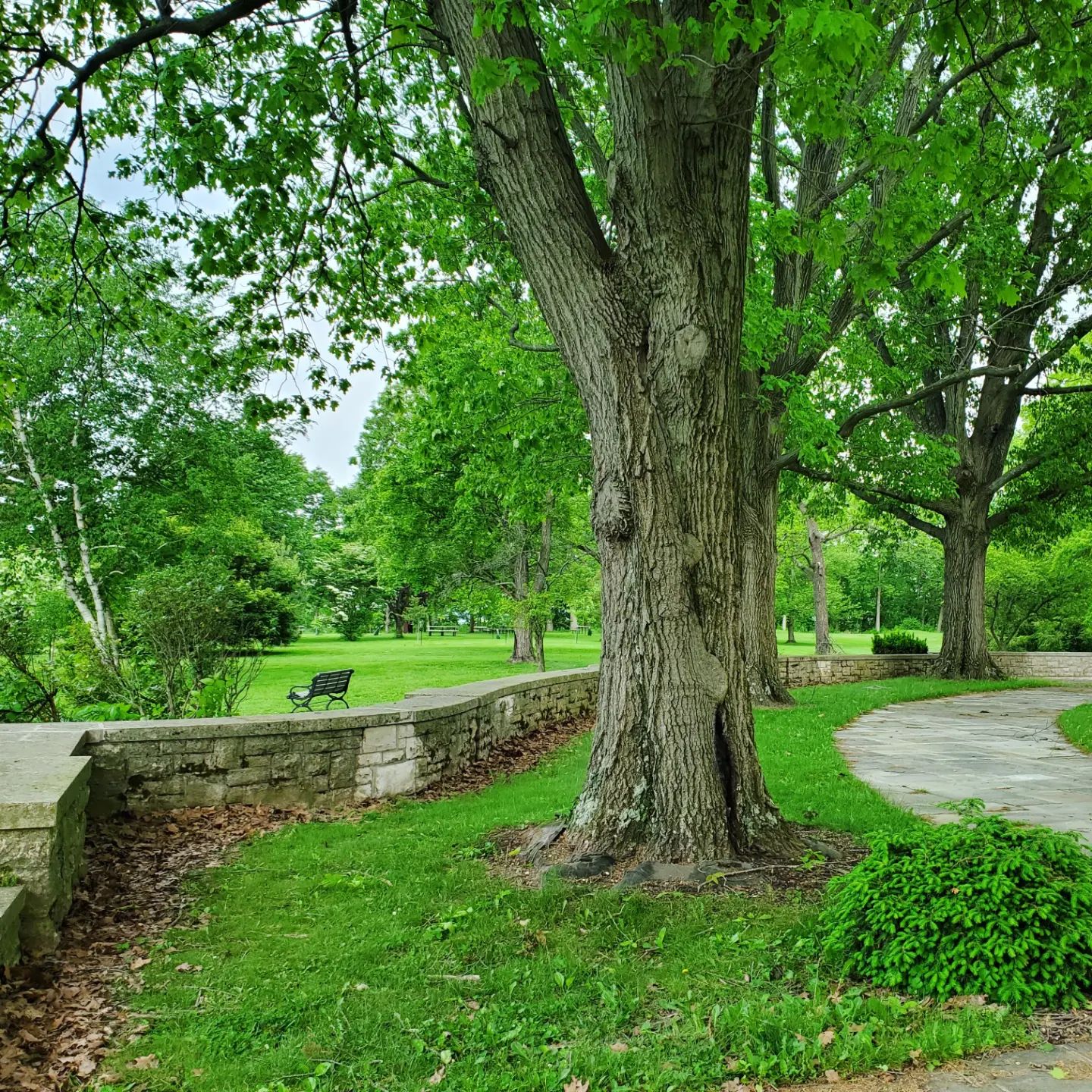
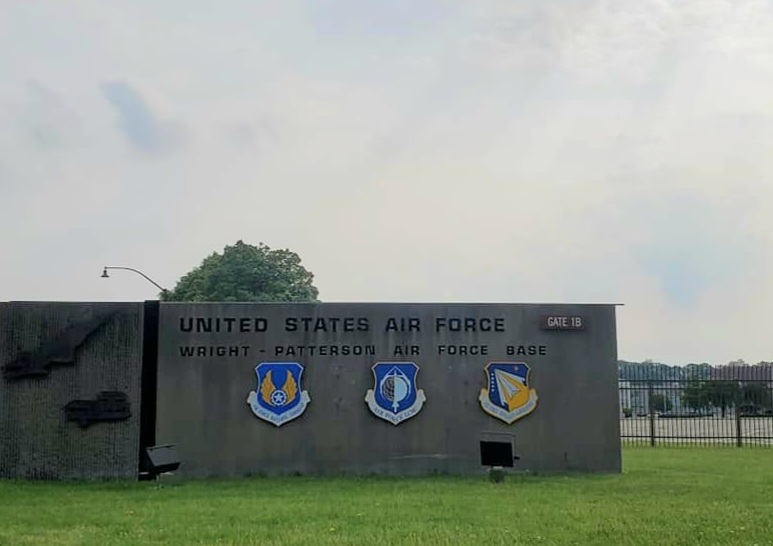
Hap Arnold, the first US Air Force Commander, was one of more than 100 pilots who trained to fly on this field. Within a few decades and multiple expansions, the field merged into what is now the Wright-Patterson Air Force Base.
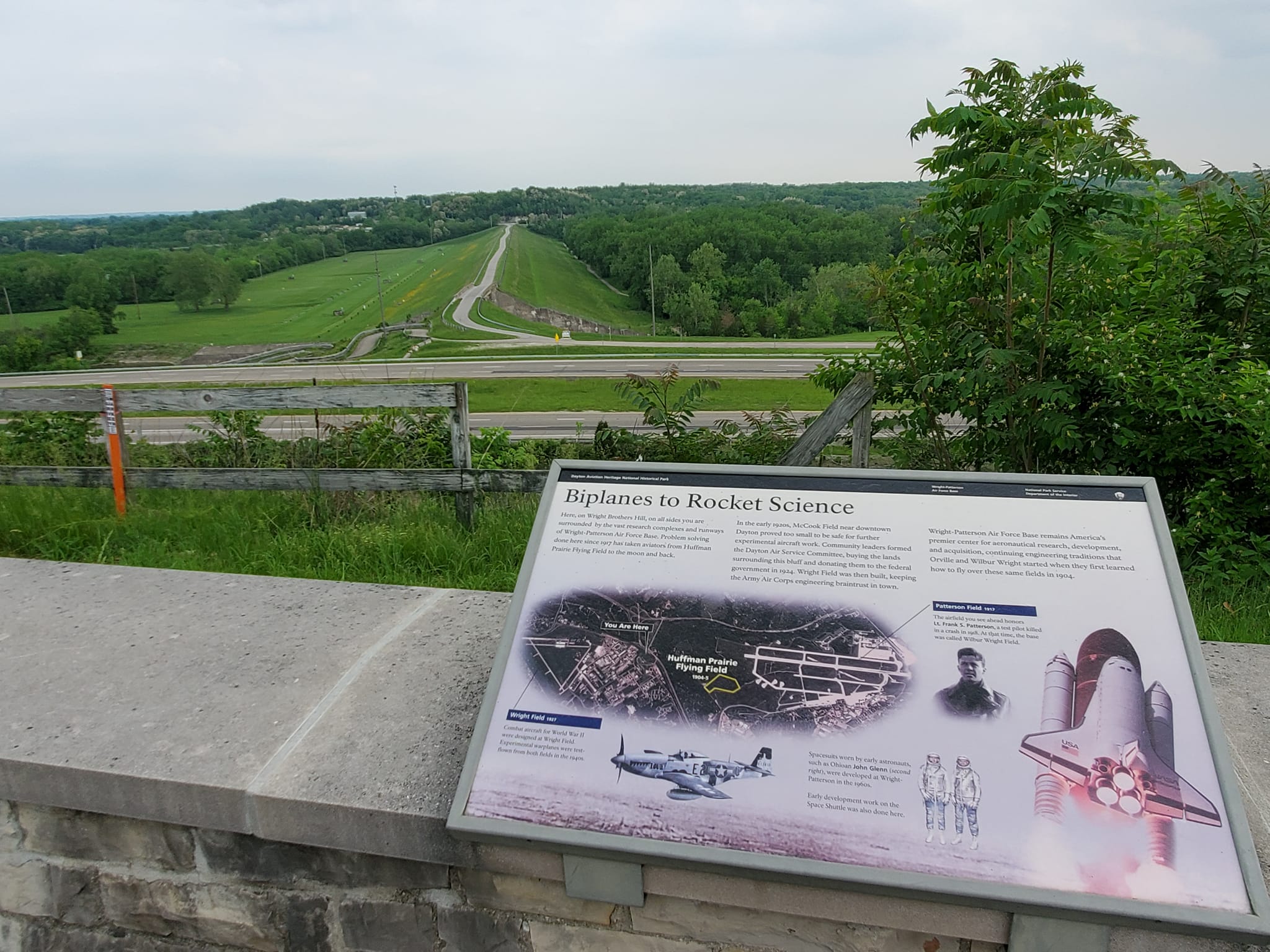
In 1990, the prairie became a National Historic Landmark and in 2002, it became part of the Dayton Aviation Heritage National Historic Park / Aviation Trail.
Beyond the memorial is an overlook with more plaques that tell about various experiments the Wright Brothers conducted on this very site.

4. WRIGHT BROTHERS NATIONAL MUSEUM IN CARILLON HISTORICAL PARK
Since the 1800s, Dayton, Ohio has been to innovation, mechanics, and engineering, what New York City is to music, art, and film. There were more patents per capita in Dayton by the start of the 1900s than anywhere else in the country, earning it the name “Invention Capital of the U.S.”
Wright, Patterson, Kettering, Deeds, and many other big names were just knocking it out of the park, so to speak.
To celebrate, Carillon Historical Park was opened to the public in 1950 and is one of the most extensive collections of Dayton regional history as well as its ripple effect across the globe.
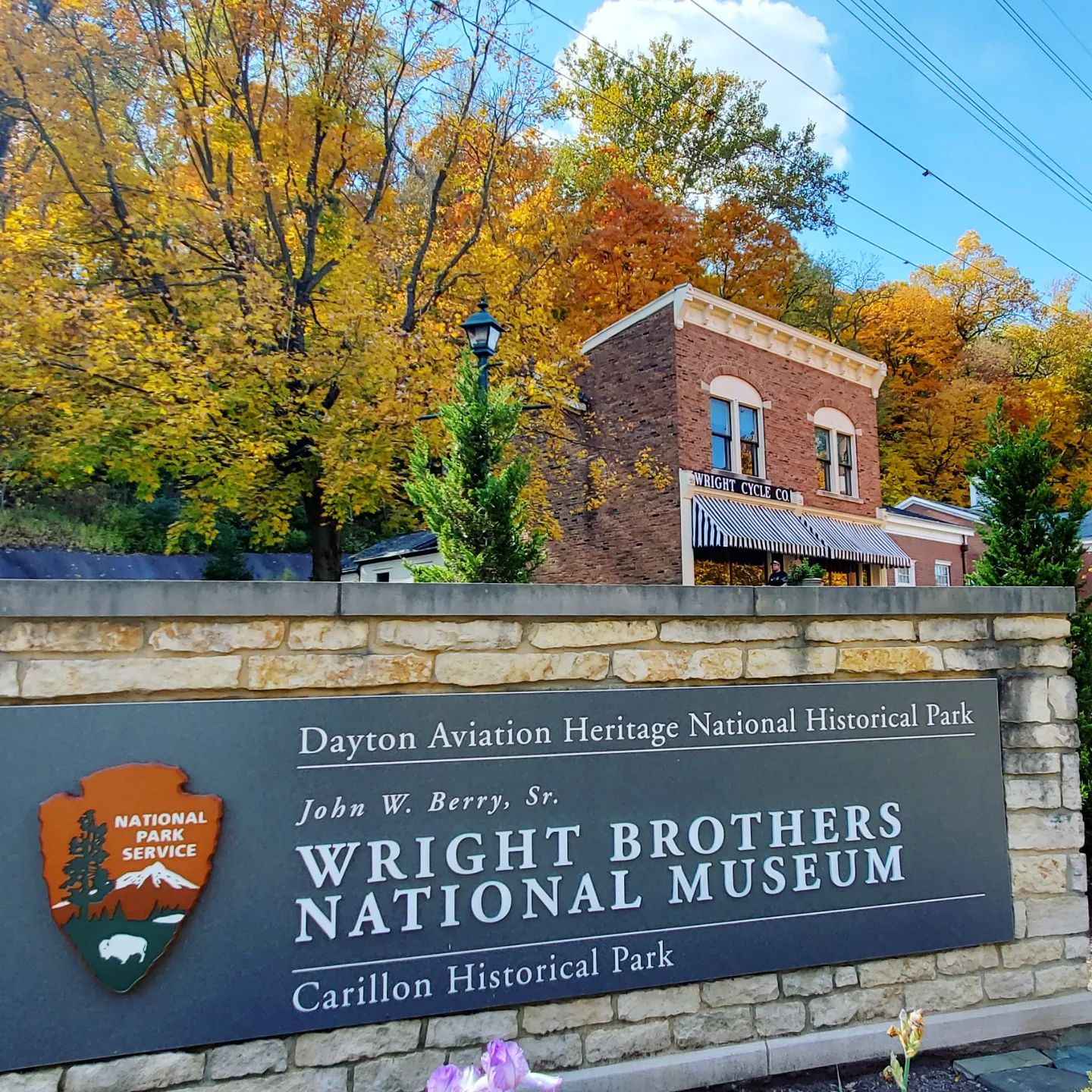
Carillon Historical Park is a celebration of all things Dayton with a restaurant, brewery, unique gift market, some truly dazzling exhibits like floor-to-ceiling displays of National Cash Register models, actual antique cars and machinery, fascinating artifacts and historical presentations, short films, and so much more.
Outside, the museum is like a small replica of Dayton, complete with famous buildings you can walk inside and look around.
For the sake of this blog, I will just talk about its Wright Brothers content, but you can read more here.
The Wright Brothers National Museum is owned and operated by the Dayton Aviation Heritage National Historic Park and managed in partnership with the National Park Service.
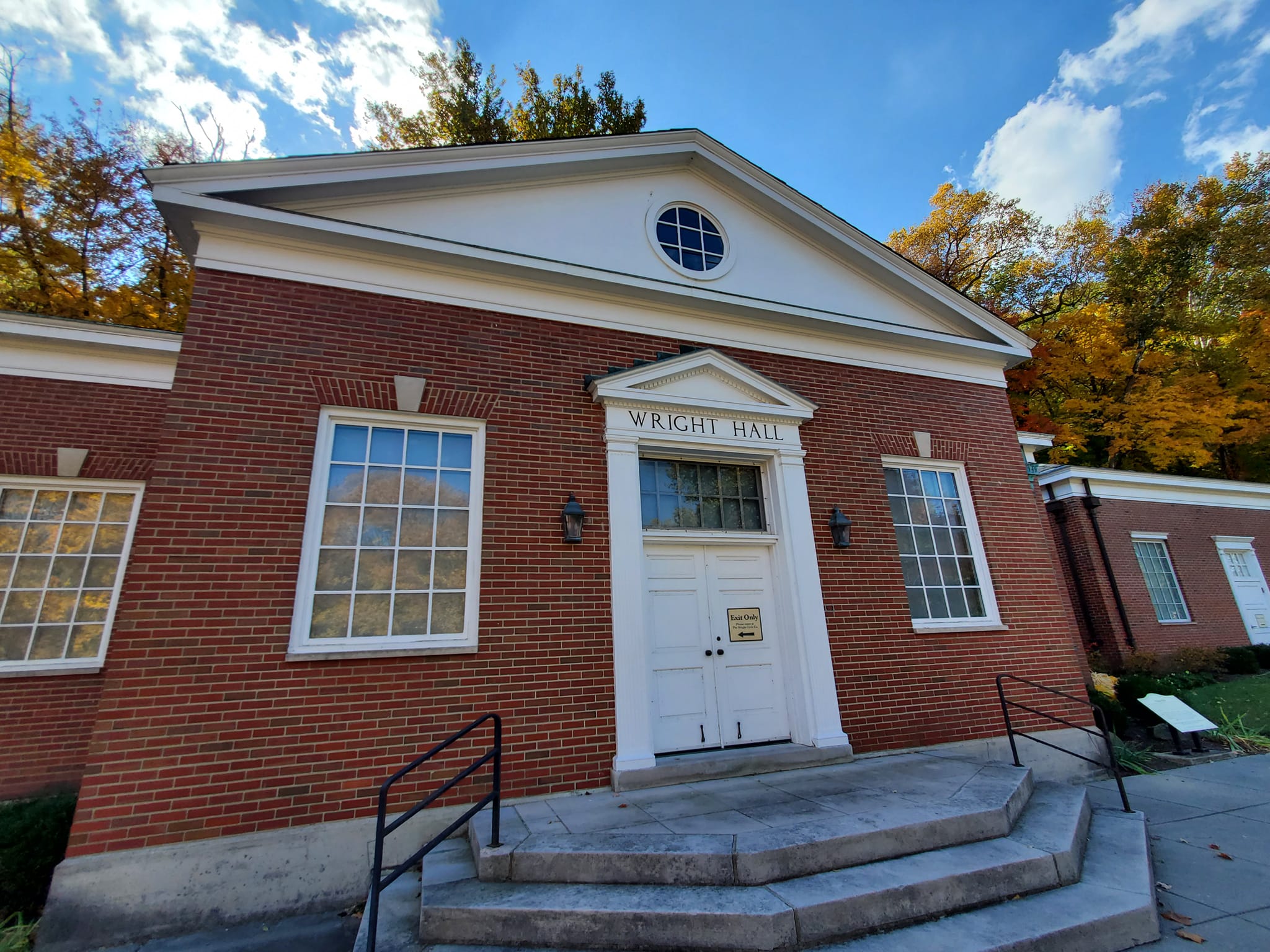
One of the most popular features of this park is the 1905 Wright Flyer III, the REAL one, which is also the only airplane to be designated as a National Historic Landmark. Orville Wright designed Wright Hall himself, and it is used to house the plane. He considered this model to be the most important of all of their work.
This Wright Cycle Company building at Carillon is a replica of the Wright Brothers’ shop at 1127 W. Third Street from Stop #1.

The brothers moved their printing and bicycle business into the building in 1897 and closed the shop to the public in nine years later. It was used as one of their labs for nearly another decade.
Each building of the Wright Brothers National Museum is full of info about the Wright Brothers, including their connection to Paul Laurence Dunbar.
5-6. THE NATIONAL MUSEUM OF THE US AIR FORCE & THE NATIONAL AVIATION HALL OF FAME
The original 1909 Wright Military Flyer may be in the Smithsonian museum, but you can view a replica here at the National Museum of the Air Force & National Aviation Hall of Fame.
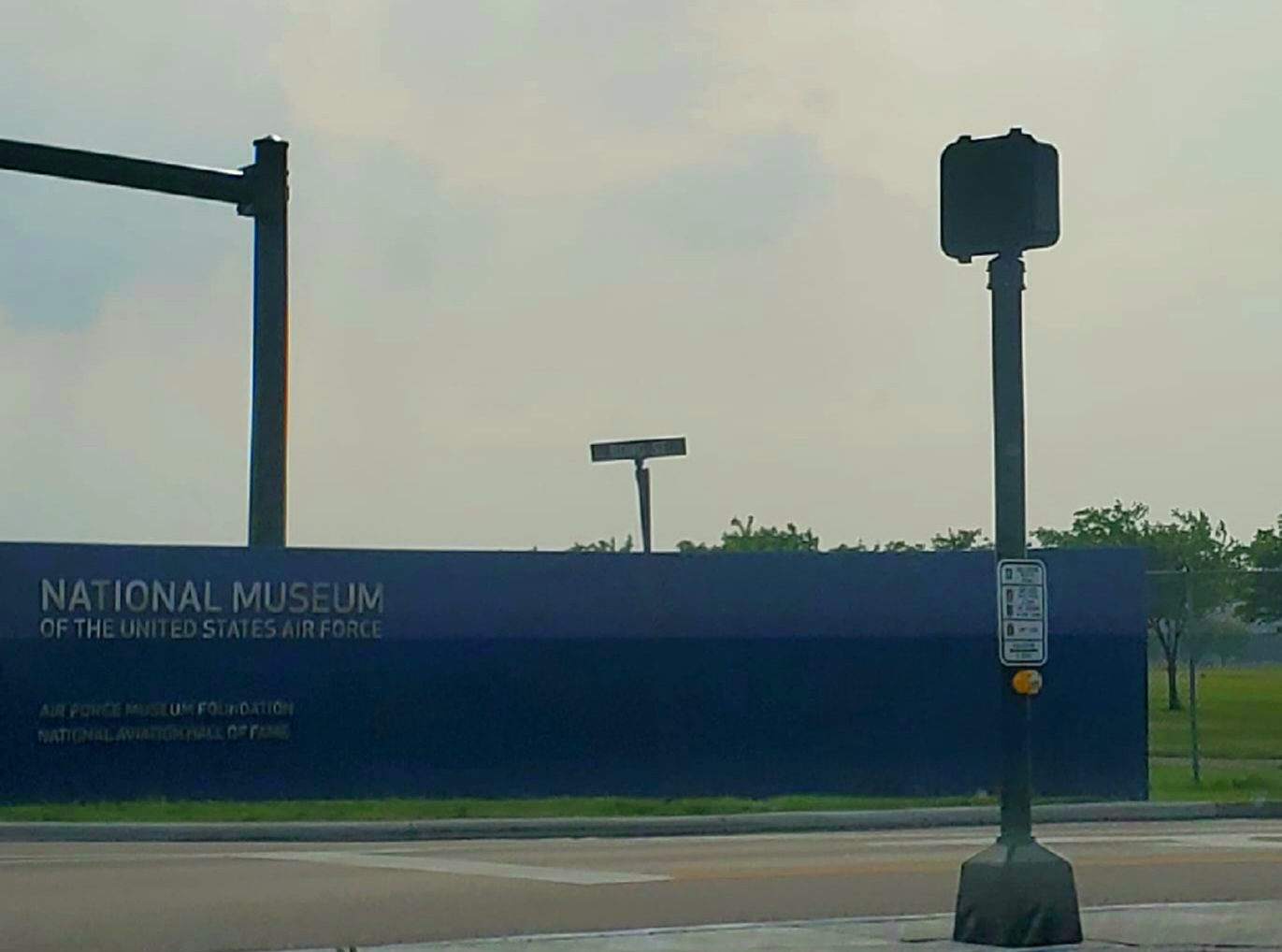
You can also view an original (but modified) Wright Model B and an exhibit about Orville Wright’s 160 mph wind tunnel from his lab in 1916 and a replica of others.
My dad, brother, and cousins have spent hours upon hours in this museum but say they still have not seen everything there is to see.
7. HAWTHORN HILL
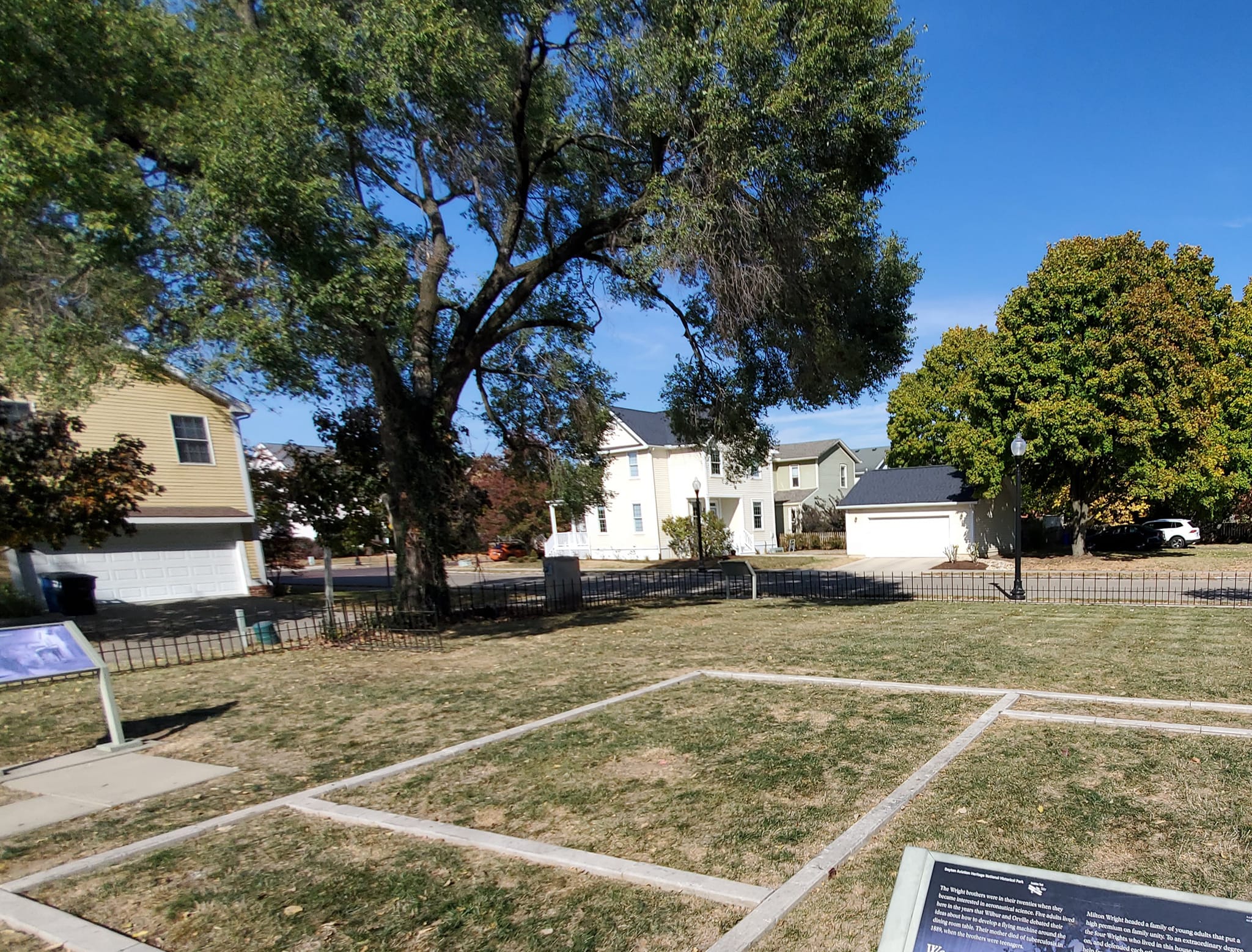
The Wright family once lived in a modest Victorian home at 7 Hawthorn Street.
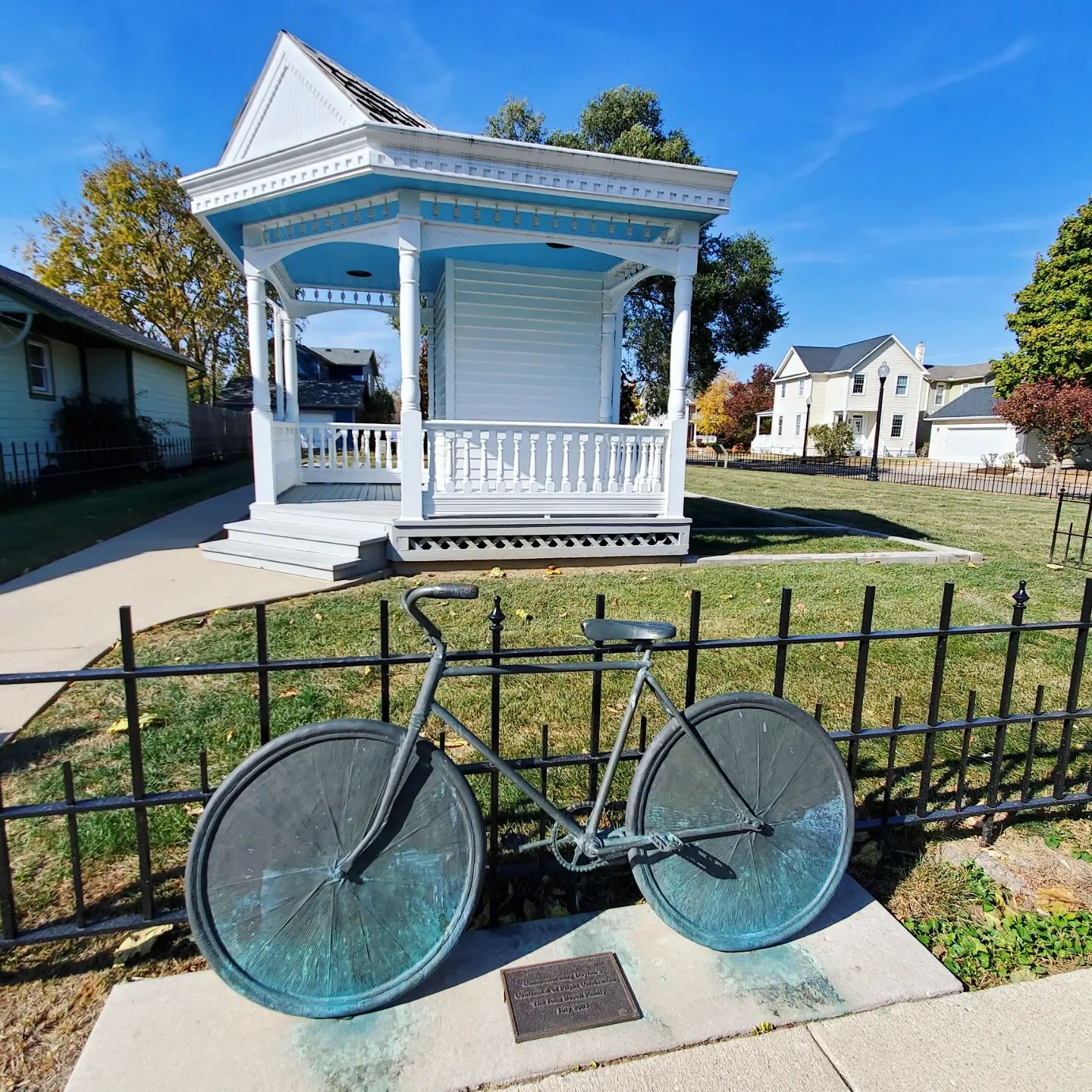
Henry Ford had the home relocated to Dearborn, Michigan to be on display in his Henry Ford Museum many years later.
Daytonians often mourn this loss, but it was a strategic move to ensure preservation of the home that was in a neighbourhood at high risk of falling into disrepair or being demolished back then.
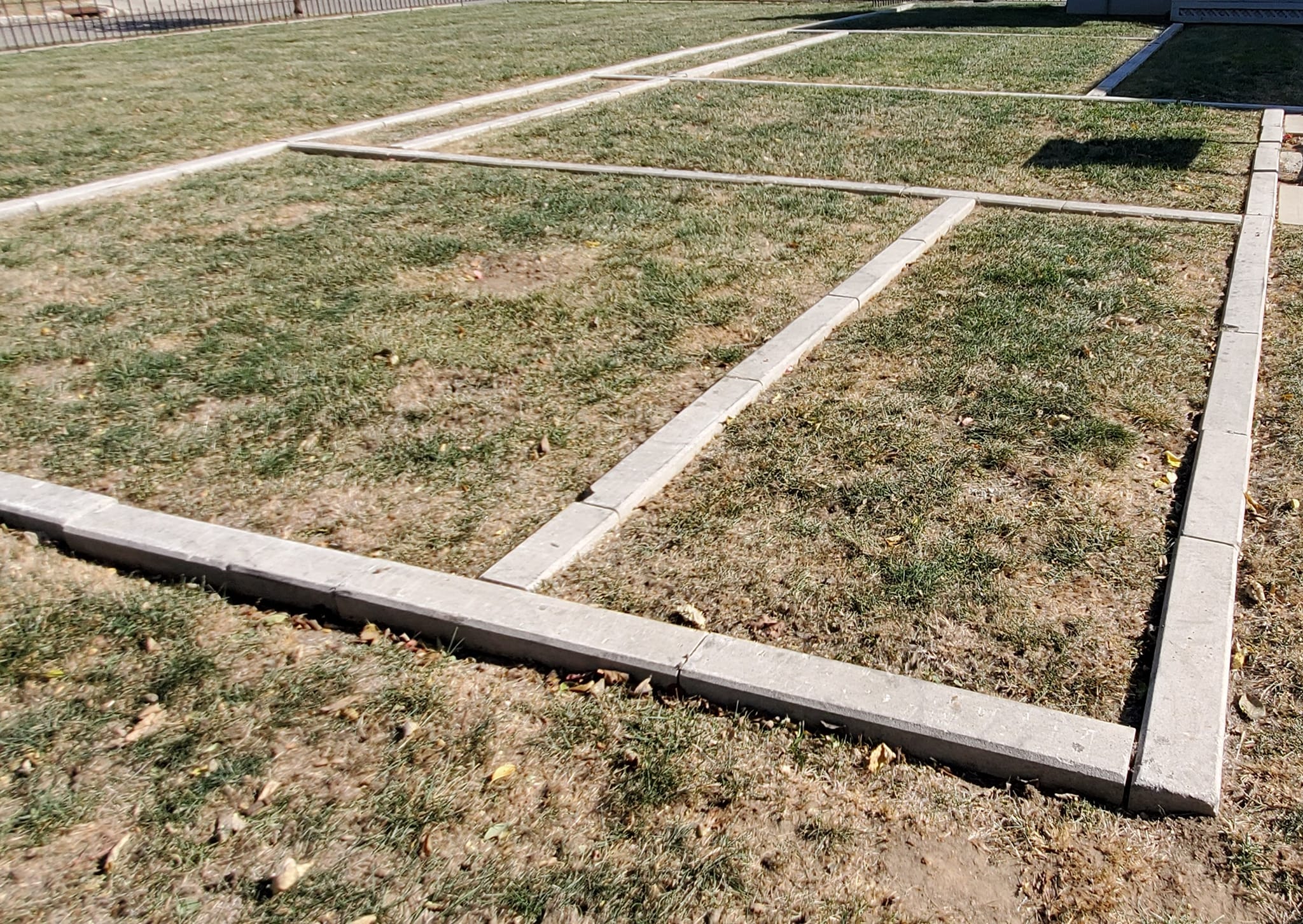
The lot is vacant today, but the foundation and layout of the house is marked, and you can stroll around and view infographics.
8. WOODLAND HISTORIC CEMETERY & ARBORETUM
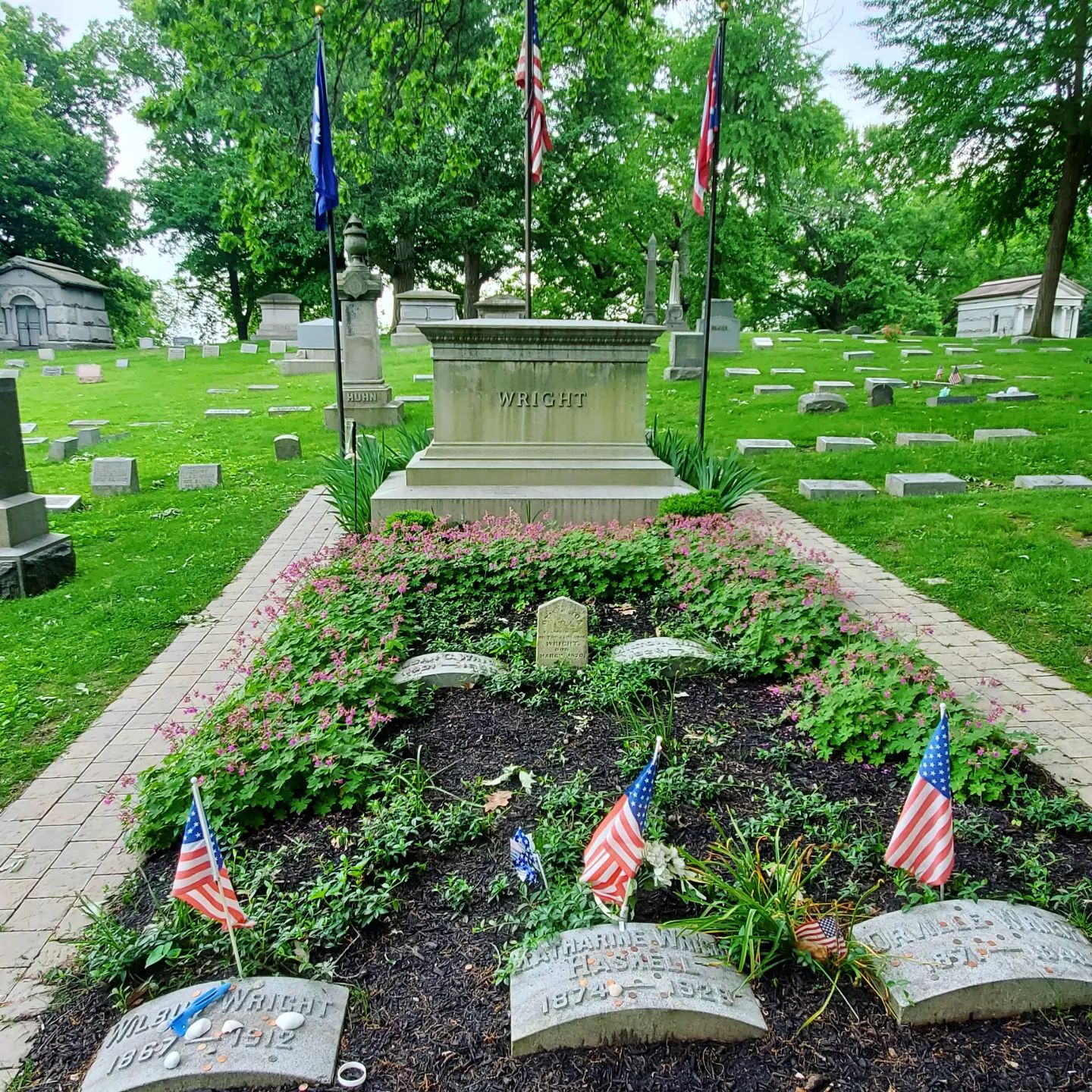
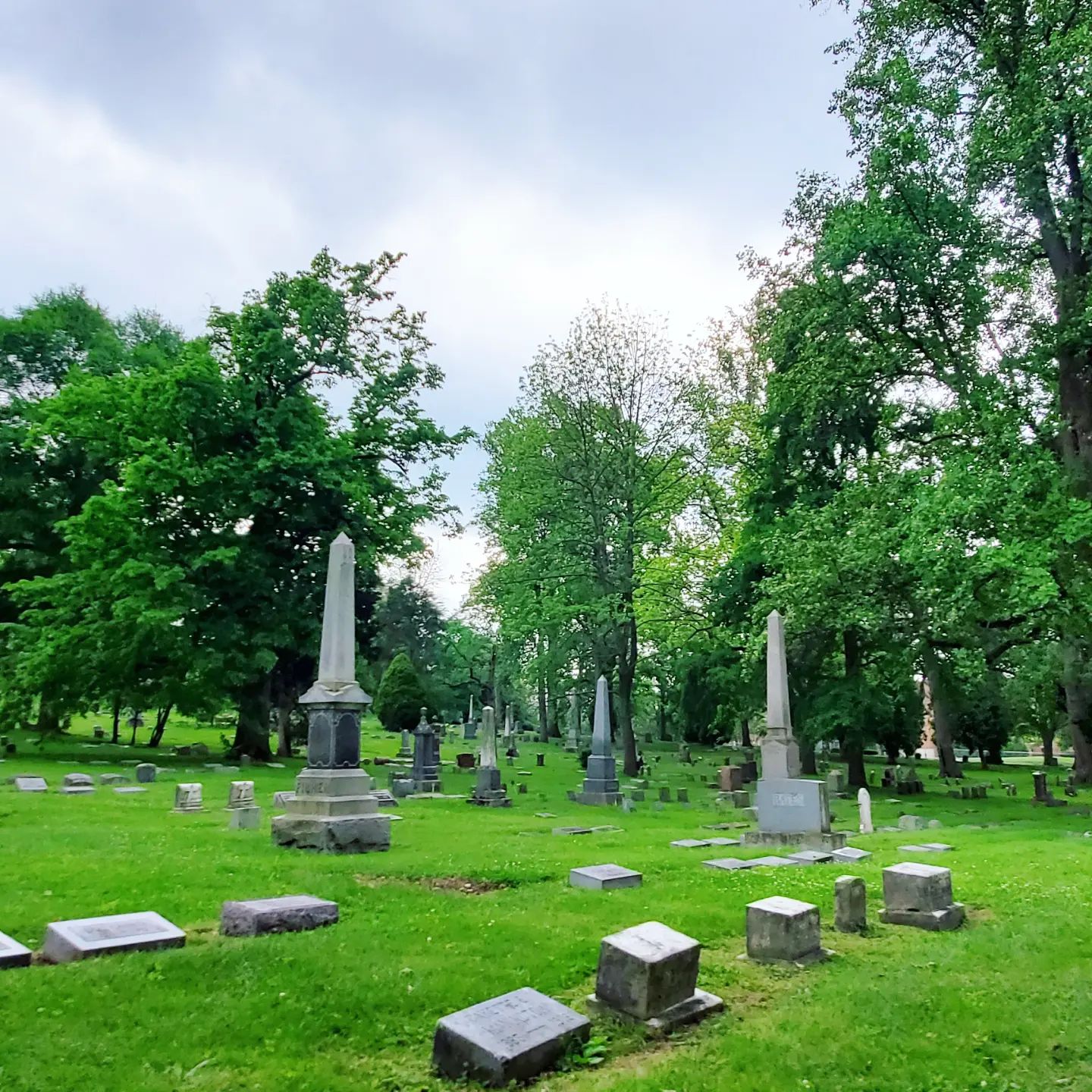
The Wright Brothers are buried in the idyllic Woodland Historic Cemetery & Arboretum, established in 1841.
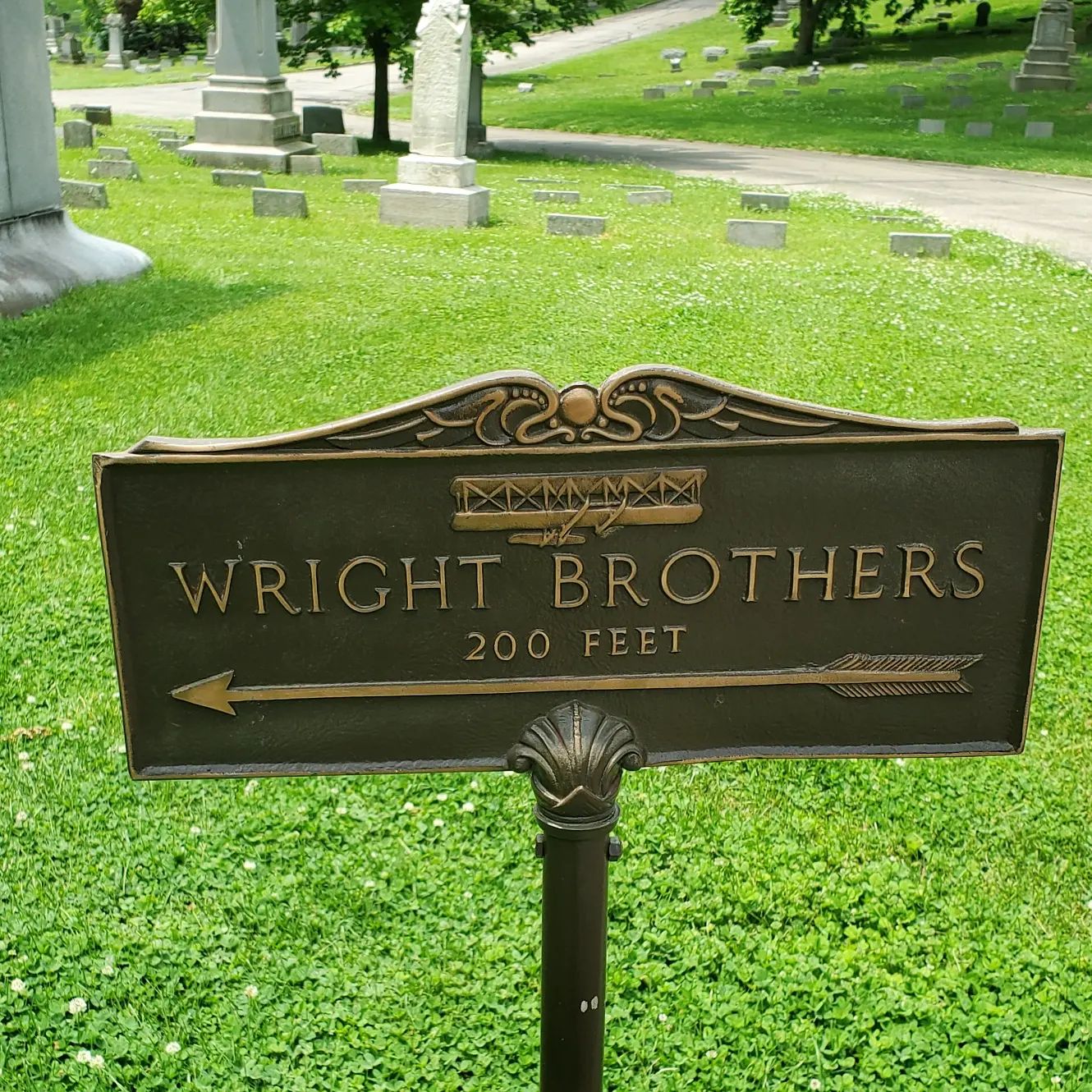
Orville and Wilbur are buried in the Wright family plot on either side of their sister, Katharine.
The siblings are directly below their parents, Milton and Susan, and their older brother Lorin. Their eldest brother, Reuchlin, is notably buried in Kansas City where he died.
As I mentioned before, their long-time friend, Paul Laurence Dunbar, is buried close by.

Woodland is proudly one of the nation’s oldest rural garden cemeteries and it is home to over 110,000 interred.
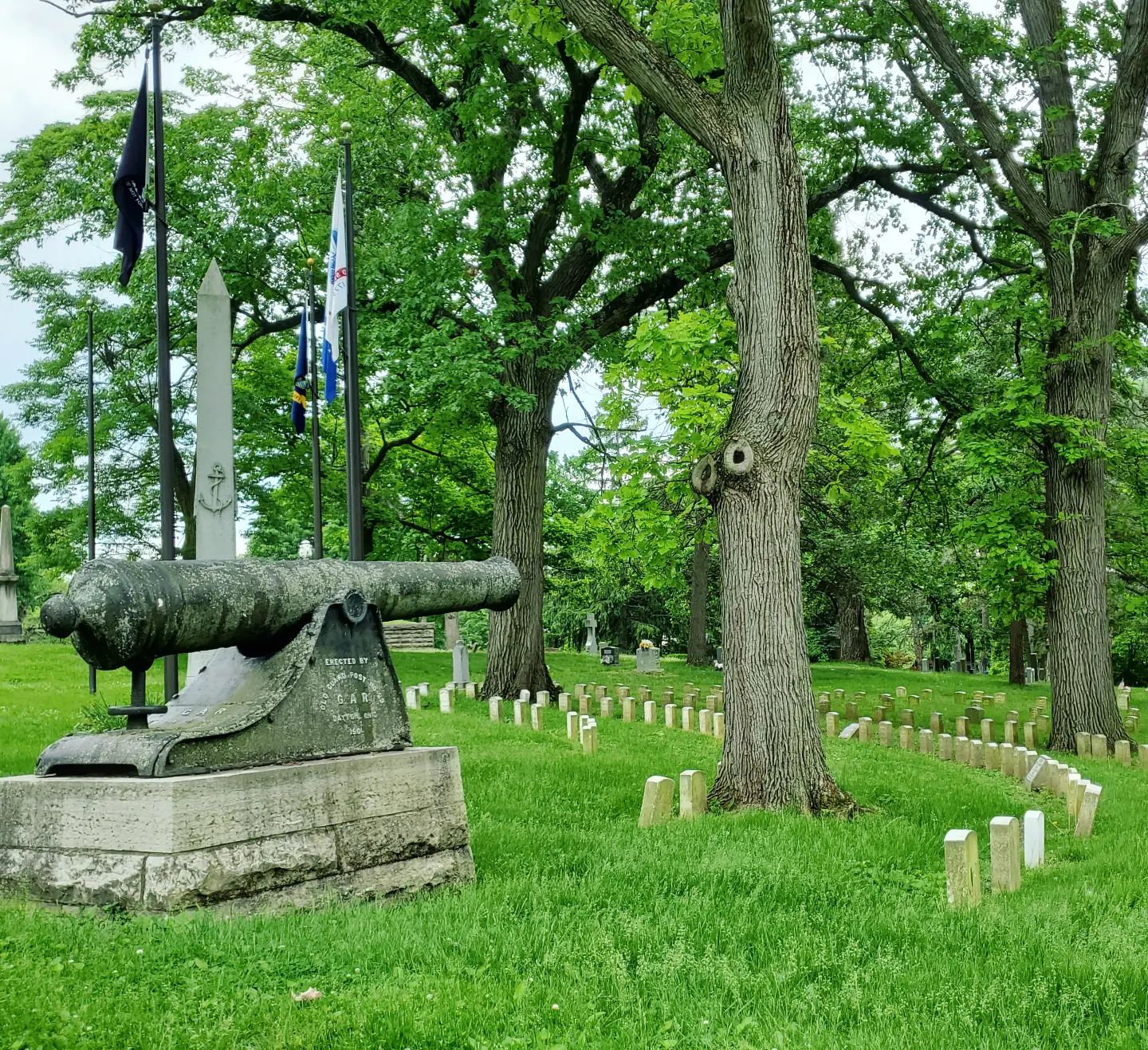

Many of Dayton famous first founders and other celebrities are buried there including Dr. August F. Foerste, Annae B. Gorman, Charles & Virginia Kettering, Colonel Edward Andrew Deeds, David A. Sinclair, Electra C. Doren, Eliam E. Barney, John Henry Patterson, Mitchell “Booty” Wood Jr., and Erma Bombeck.

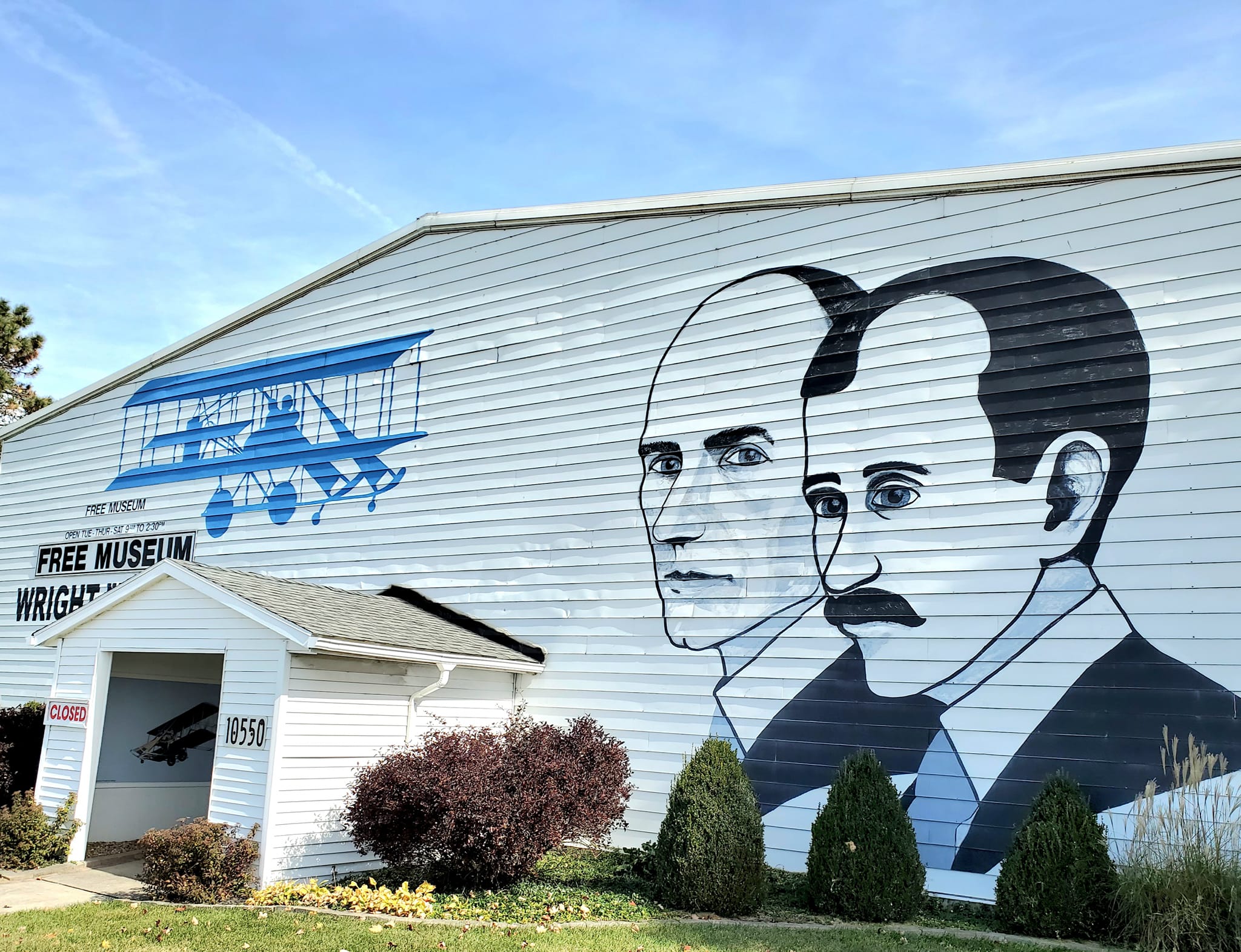
9. THE WRIGHT B FLYER AT DAYTON-WRIGHT BROTHERS AIRPORT
This stop is technically in Miamisburg, just a few miles outside of Dayton, but it is a real general aviation airport. The Dayton-Wright Brothers Airport sits on nearly 530 acres and is operated 24/7 by the City of Dayton to service personal and corporate aircrafts.
Visitors can view historically accurate replicas of the Wright Brothers’ Model B airplane and other technologies, and even book a flight in one. The museum has free admission and is volunteer-operated, supported by the non-profit group Wright “B” Flyer, Inc.
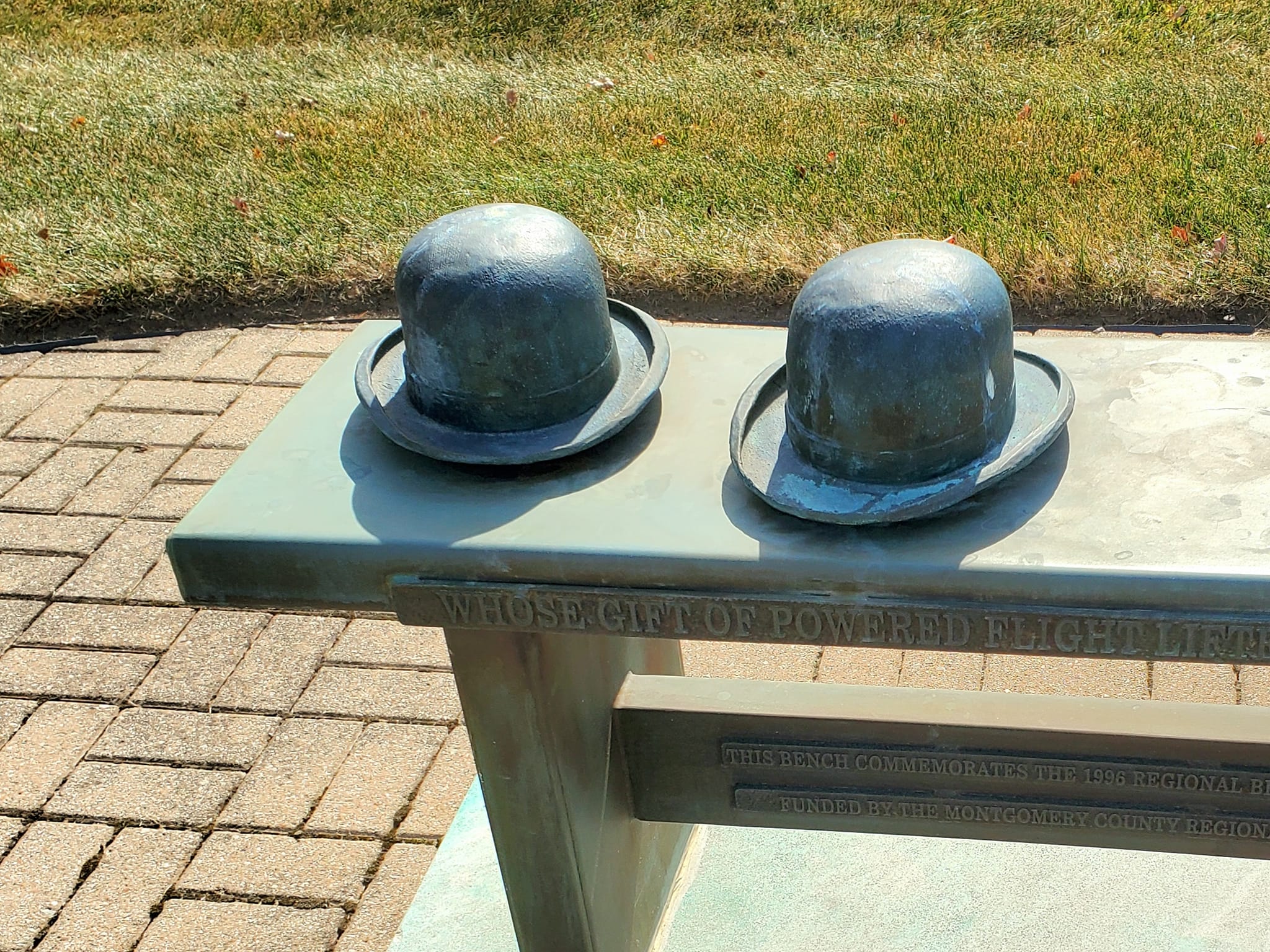
Look out for the memorial bench out front of Wilbur and Orville’s hats.
10. WRIGHT STATE UNIVERSITY ARCHIVES & BONUS ONLINE ARCHIVES
Site 10 is a real site, but designed to facilitate online access. The Wright State University Archives holds the world’s largest Wright Brothers’ manuscript collection and you can browse through them all online by visiting this link.
For more online archives, check out these sources:
- The National Air & Space Museum Collection and Virtual Tour of Wright Brothers History website
- The Dayton Metro Library Online Collection of Wright Brothers manuscripts and other documents
- The National Aviation Heritage Alliance that manages the Congressionally-designated National Aviation Heritage Area, one of nearly fifty in the entire country. They have worked endlessly to keep Dayton as the recognized global center for aviation heritage and tourism, and preserve the legacy of the Wright Brothers.
SITES 11-16 are outside of Dayton so they were not prioritized in this blog. Those sites include:
- The Historic WACO Field and Airplane Museum in Troy (closed when I tried to visit)
- Armstrong Air & Space Museum in Wapakoneta
- Champaign Aviation Museum in Urbana
- Grimes Flying Lab in Urbana
- Tri-State Warbird Museum in Batavia
- Butler County Warbirds, Inc. in Middletown (closed when I tried to visit)
SITE 17 is the Sinclair National UAS Training & Certification Center. It is located in Dayton but I am not yet certain how much they have to offer tourists.
When you have visited 8 of the 17 sites on the Aviation Trail, pick up your exclusive WilBEAR Wright teddy bear.
ADDITIONAL SITES OF INTEREST
Outside of the Aviation Trail, there are several independent sites with significant ties to the Wright Brothers and their aviation history. I will just mention a few that I am personally familiar with, but here is an extensive list with dozens more sites.
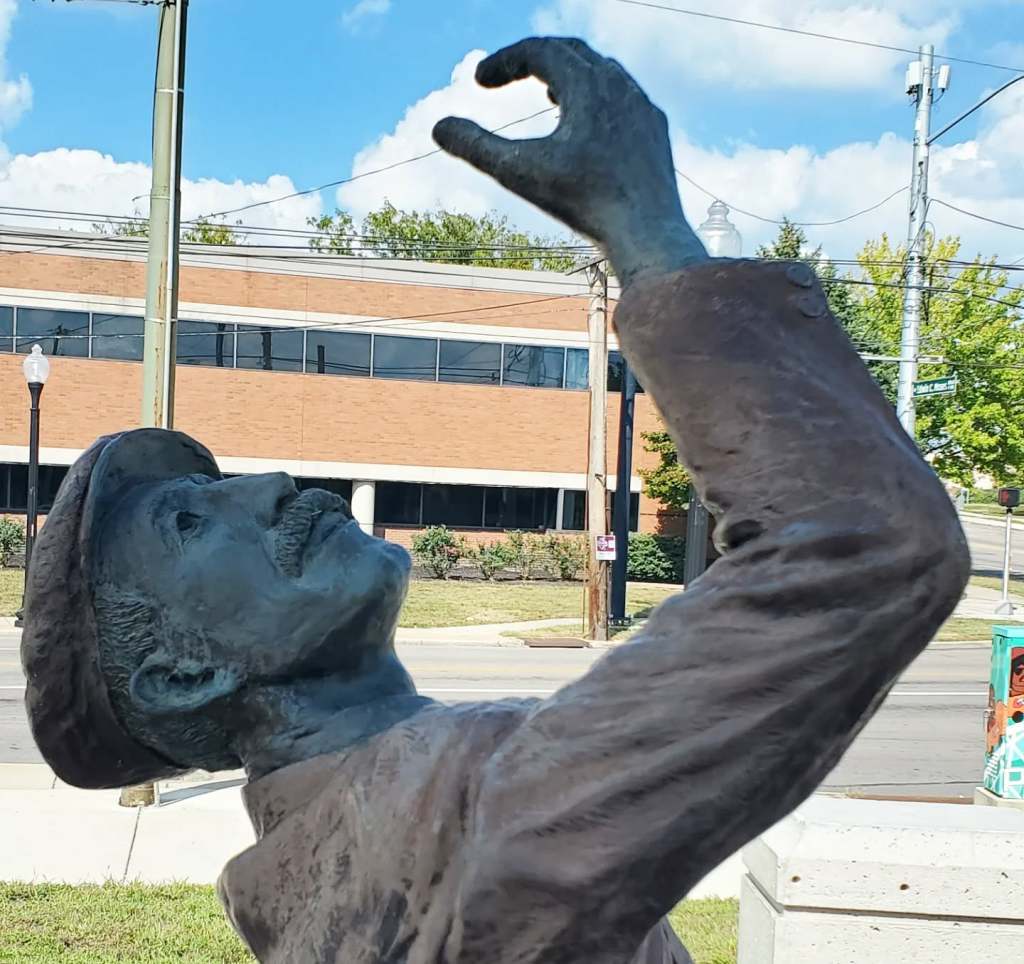
THE 1905 WRIGHT FLYER III was created in 2001 by artists Larry Godwin. It was originally placed in Dayton’s Riverscape MetroPark but was moved to its new home in 2023 at the corner of W. Third & Edwin C Moses Blvd in Dayton’s Wright-Dunbar district, just down the street from the Wright Interpretive Center.
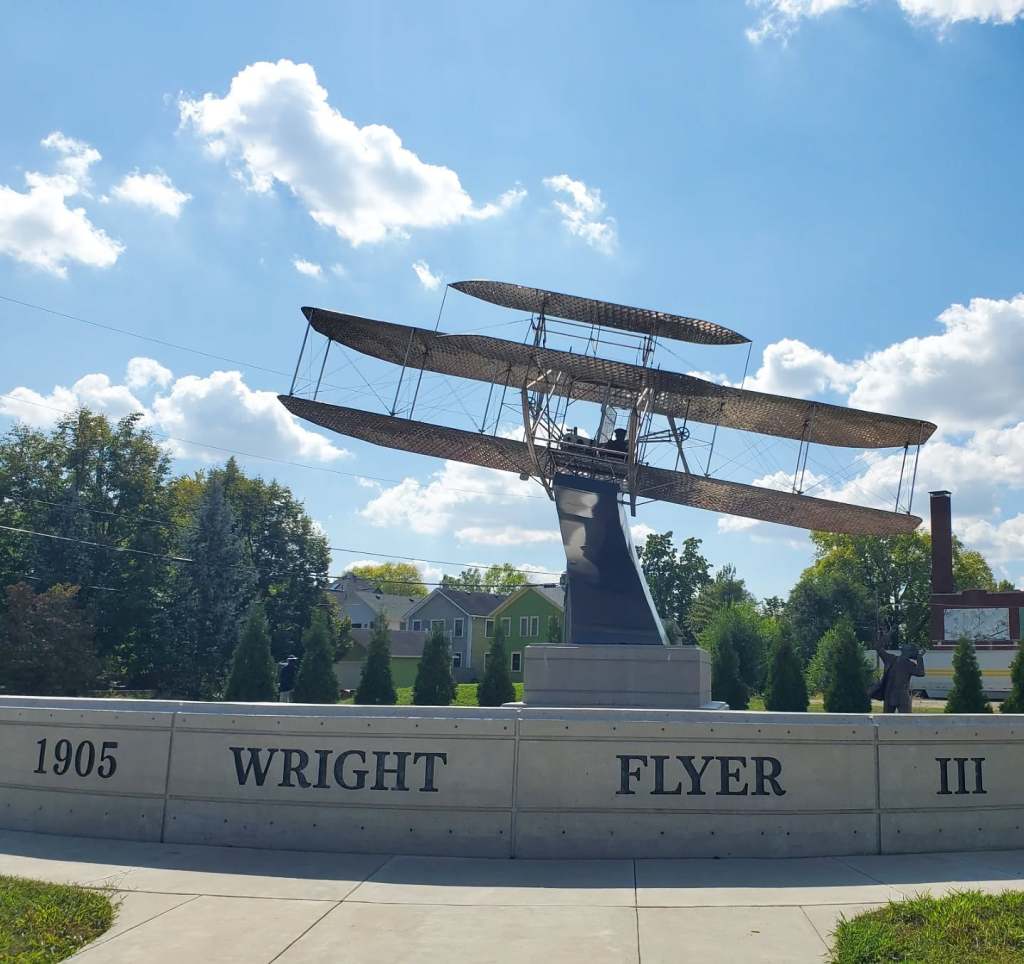
This monument depicts Wilbur Wright piloting the famous plane while Orville watches and directs from below.
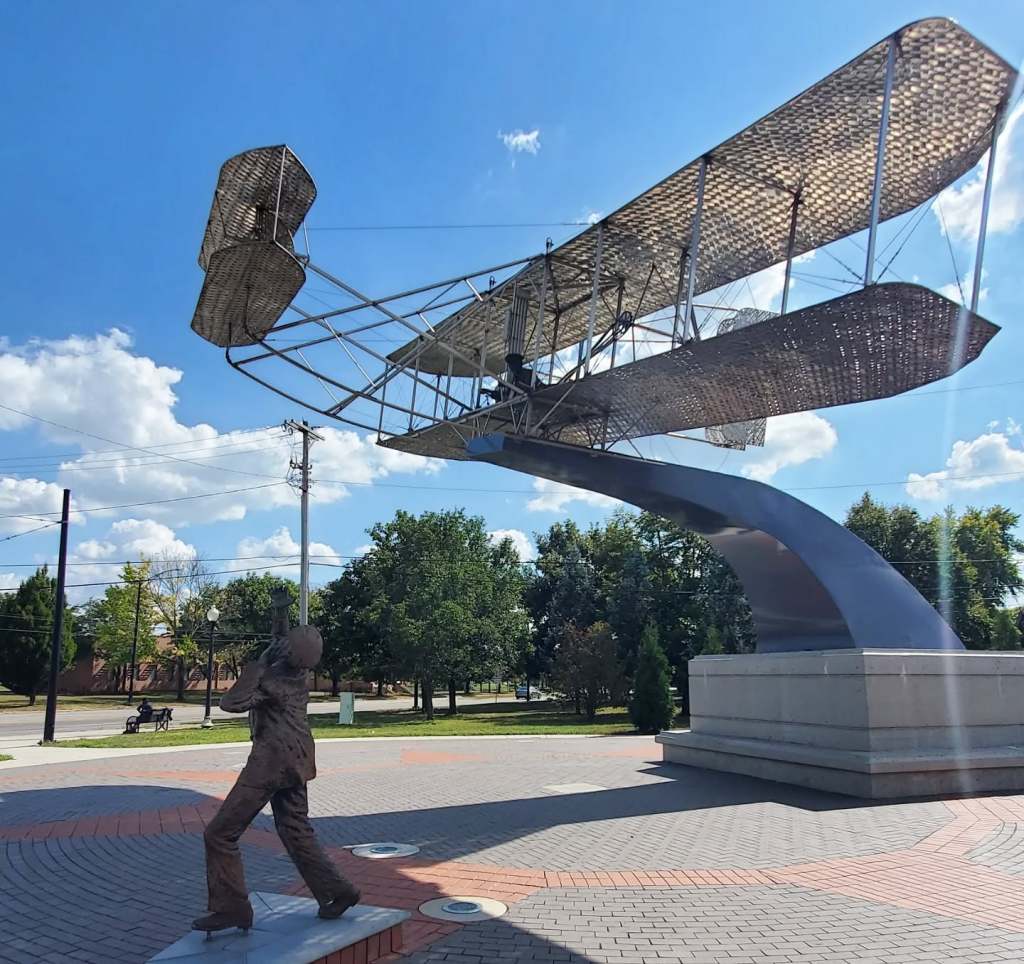
The original, real Wright Flyer III plane is on display at the Carillon Historical Park that I wrote about earlier in this article.
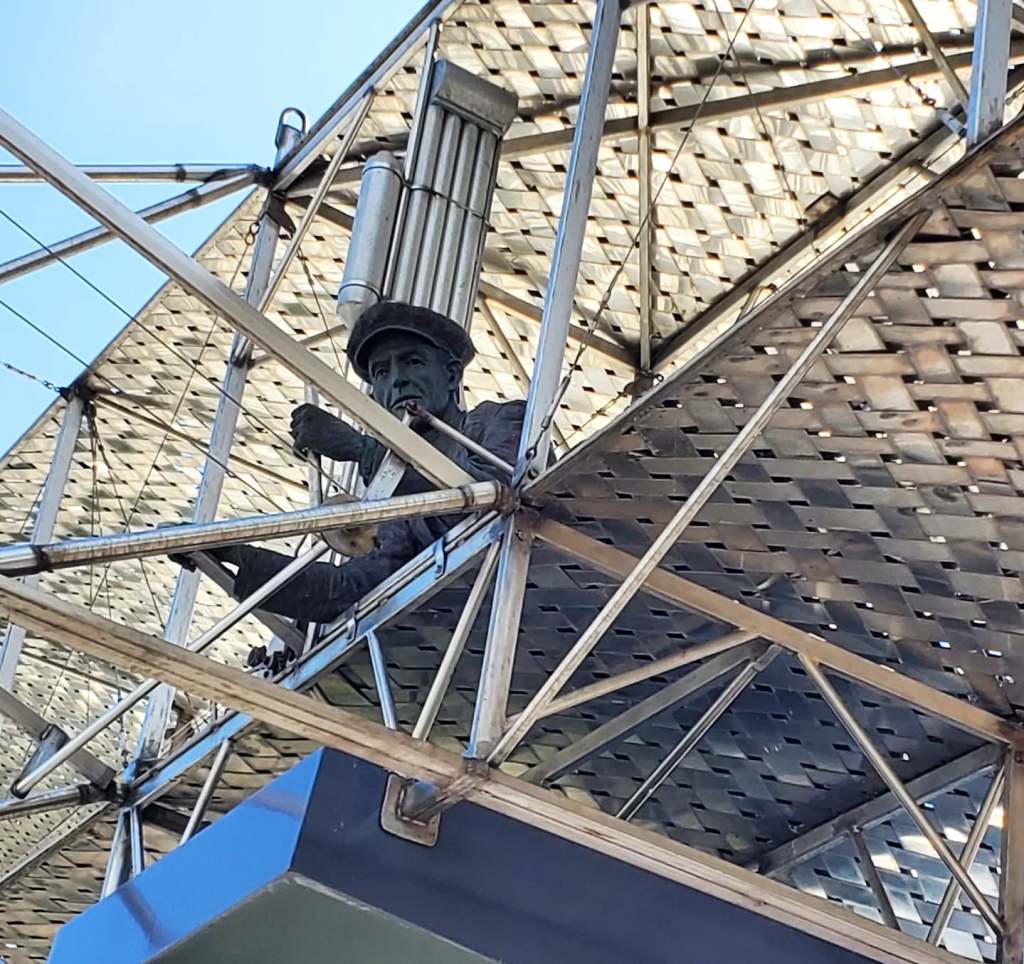
You can read more about the monument’s history here.
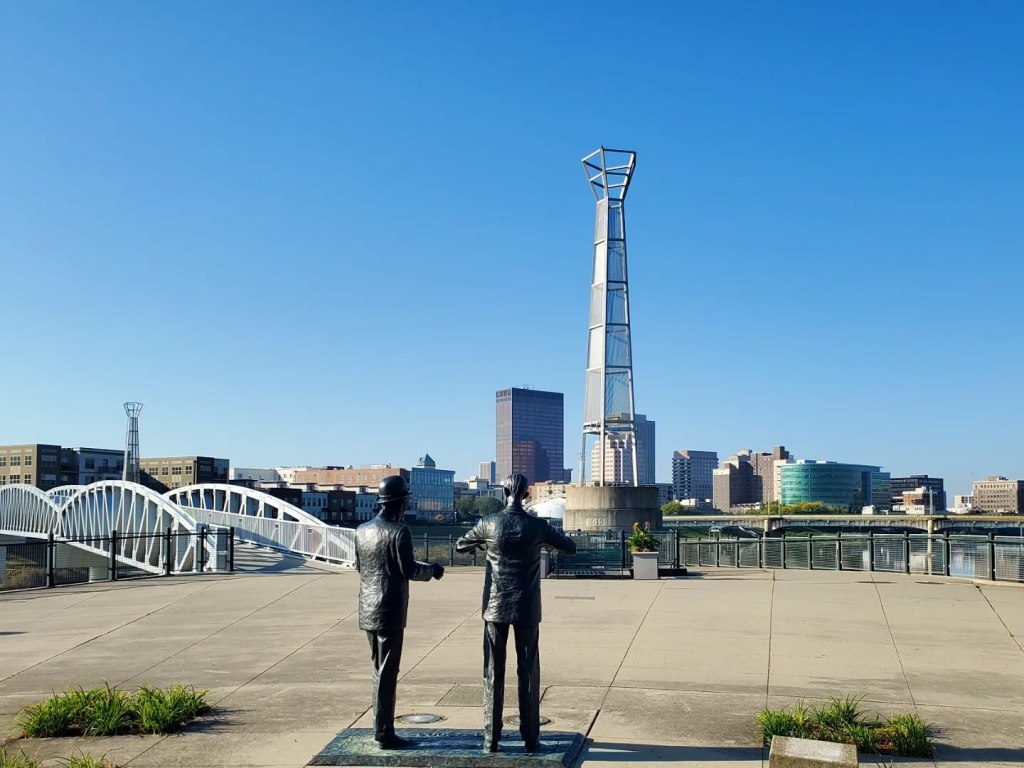
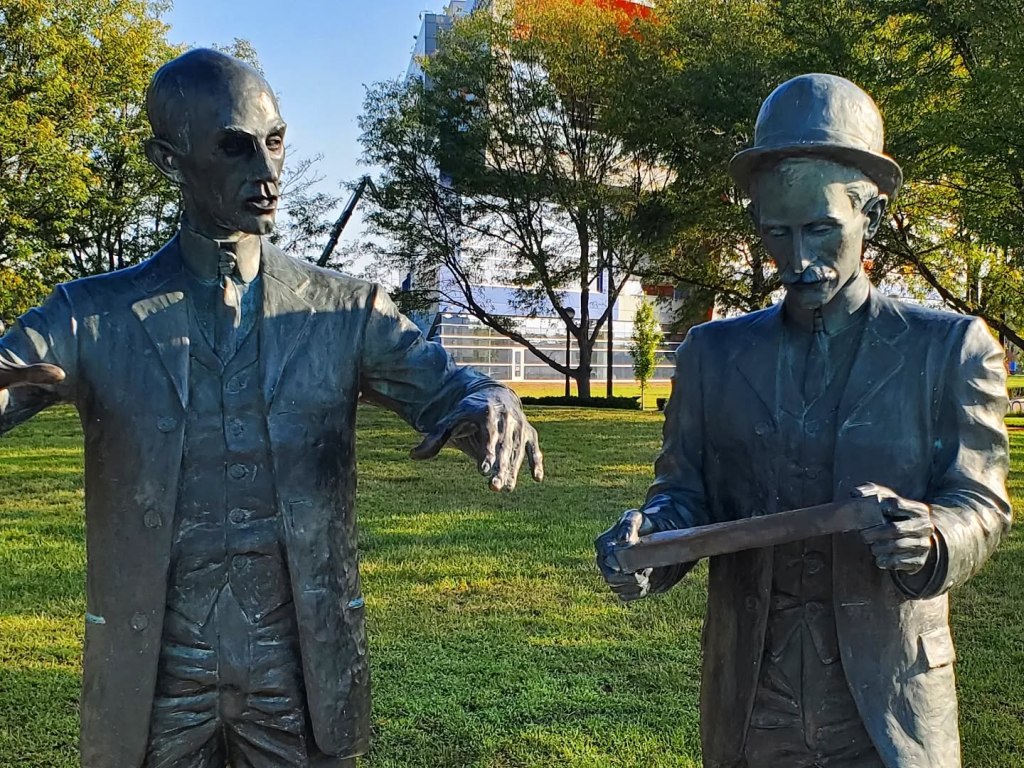
DEEDS POINT METROPARK features Legacy Plaza, an aviation heritage site. The Plaza includes two life-sized statues of Dayton’s own Wright Brothers that commemorate the very beginnings of aircraft control.

The statue captures Orville twisting a bicycle inner tube box as Wilbur explains his scheme for warping wings.
There is also an aviation timeline exhibit that serves as an ongoing reminder of the importance of the Wright Brothers and Dayton to aviation history.
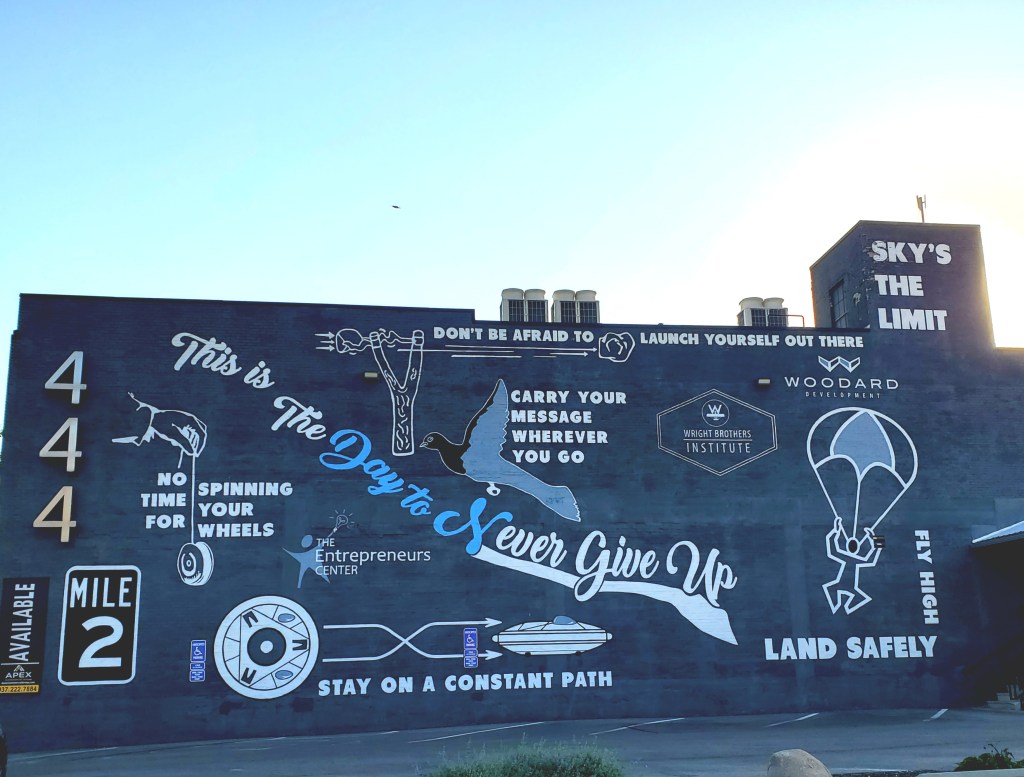
THE WRIGHT BROTHERS INSTITUTE was a long-time major hub for Air Force innovation, tech, and collaborative networking events like Colliders until it ceased operations in 2025. It is unknown what exactly will come next for the facility, but you can read more about continued programs and events here.
DAYTON ENGINEERS CLUB is where Charles F. Kettering and Col. Edward A. Deeds began assembling the most highly regarded minds in the scientific and engineering world that made Dayton one of the top industrial cities in the world. They had began as a group called the Barn Gang, meeting regularly at a barn on Col. Deeds’ property.
In 1914, Deeds proposed establishing the Engineers Club of Dayton and they began meeting at the Dayton Engineering Laboratories Company (DELCO) building.
You can read more about the history and all of the different players here on the website.

THE WRIGHT BROTHERS’ AIRPLANE FACTORY, also known as the Wright Factory, is the original home of the Wright Brothers’ Wright Airplane Company. This is the world’s oldest standing aircraft manufacturing facility, and the first airplane factory in the US. 120 airplanes in 13 varying models were made there, and eventually the site was used to produce parts for General Motors.
Here is a video by one of Dayton’s best historians and active authors:
https://www.youtube.com/watch?v=LXc6o42Fgro&t=400s
Plans to create a cultural facility and museum in partnership with National Park Services were halted due to a massive fire in 2023. Damage and future developments are still being evaluated as of 2026.

In the area for a while? Check out some cool neighbourhoods in Dayton like Wright-Dunbar, the Oregon District, historic South Park, St. Anne’s, the Huffman District, and the Fire Blocks.
********************
© Copyright Fernwehtun, 2015- Current. Unauthorized use and/or duplication of this material without express and written permission from this site’s author and/or owner is strictly prohibited. Excerpts and links may be used, provided that full and clear credit is given to Fernwehtun and Fernwehtun.com with appropriate and specific direction to the original content.


 Fernweh, An Ache for Distant Places
Leave a comment