
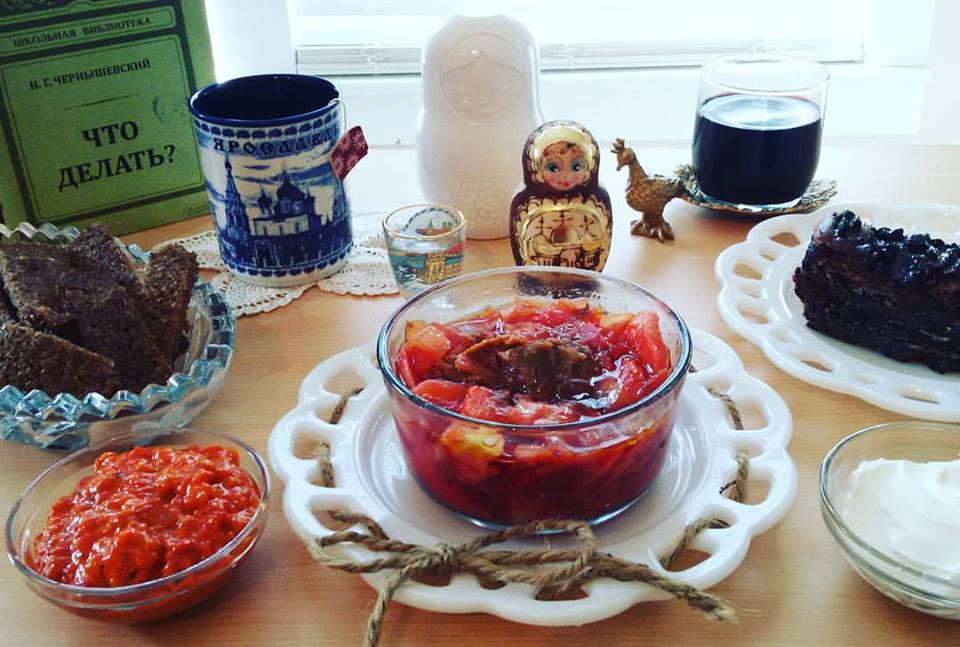
Eastern Europe, diverse as it is, has a hundred variations for every dish it offers. Borsch, for example.
During my time in Russia, I did not find a single menu that failed to tempt me with my favourite stew Борщ, the notorious stew most non-Slavs do not quite understand.
Борщ- those four letters which translate into B-o-r-sch, with no t at the end.

In other countries, the spelling and pronunciation changes, such as Polish barszcz. In America, it is commonly pronounced “borshed” and subsequently spelled “borsht” which drives me insane.
For most people, hearing the words beets or even borsch recalls memories of pickled beet jelly served in lower grade school, or hot pink over-processed puree. Everyone cringes and scrunches their noses and gags.
But let me set the record straight. Are you with me?
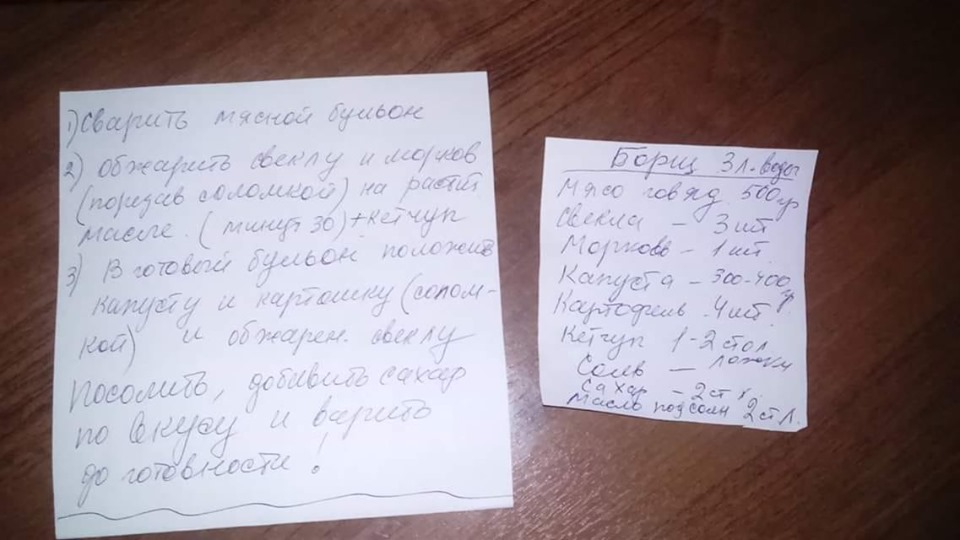
Years ago, my former Russian SO’s Mama shared her borsch recipe with me and I was thrilled. I use it often as a base and enjoy experimenting by adding in turnips, parsnips, white pepper, tomato paste, and red wine; all of which I have seen in other authentic borsch recipes.
First, start with a pound of organic beef tips, add a quart of purified water and let it sit on medium heat while cutting up an onion, 2-3 large potatoes, 3 carrots, and a stalk of celery. In this stage, we have a typical beef stew.
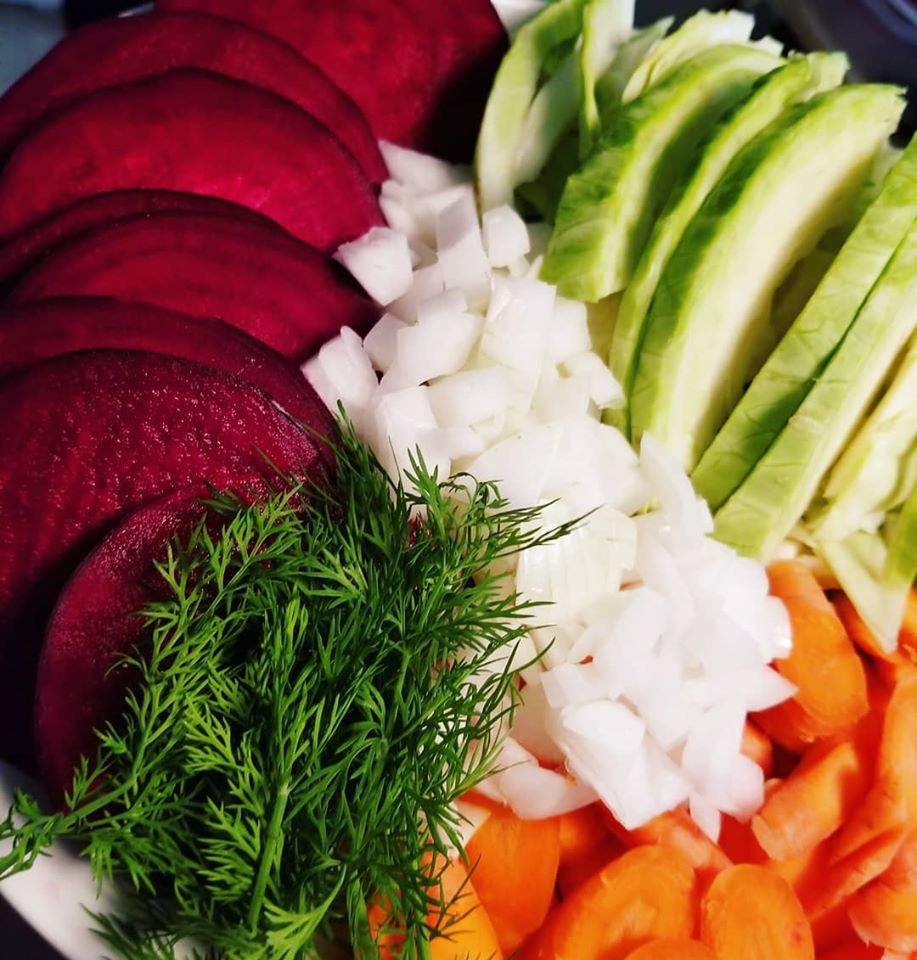
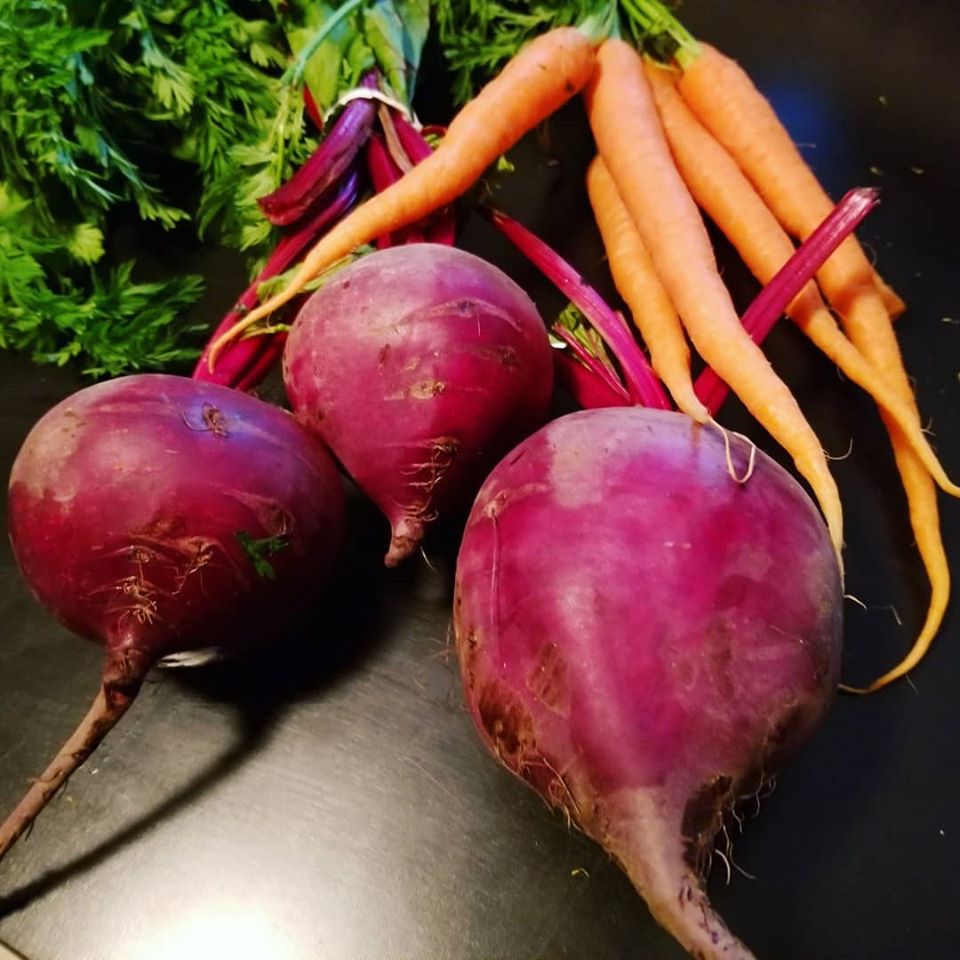
Next, chop a head of cabbage, 4-5 large beets, and mince 3 garlic cloves. It is always fun when people stop by while I am chopping beets.
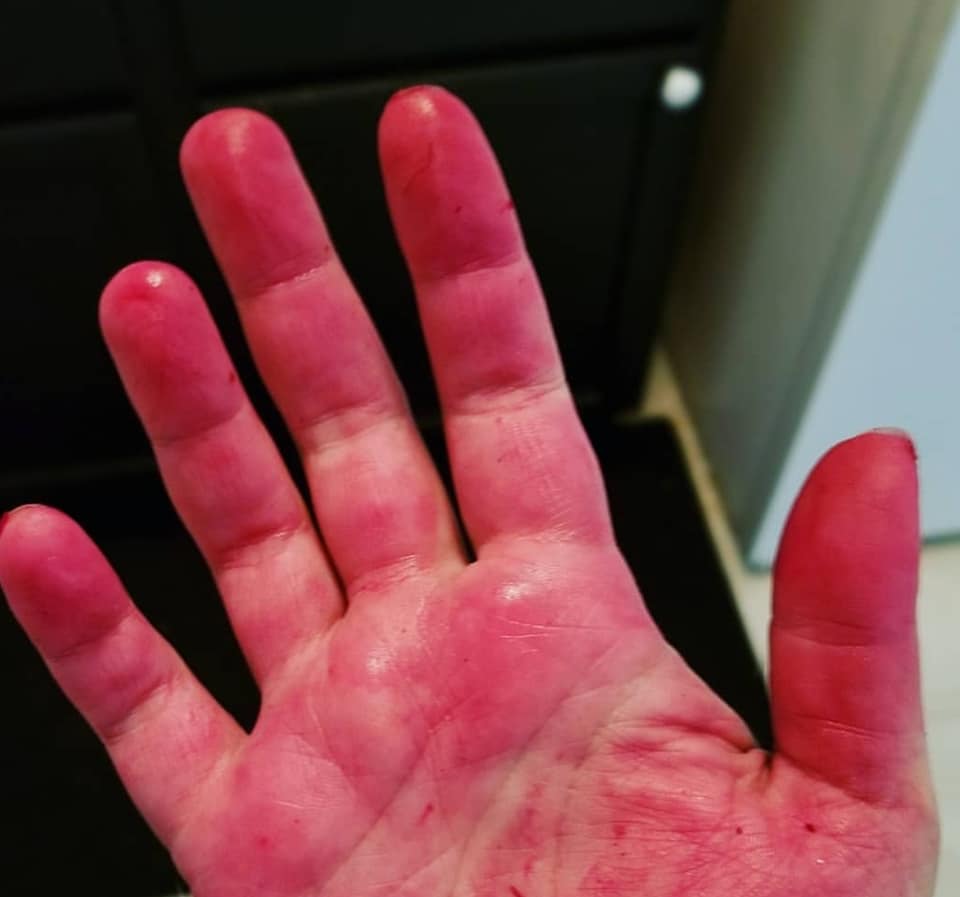
I peel the beets with a knife before chopping, but I do not peel the potatoes.
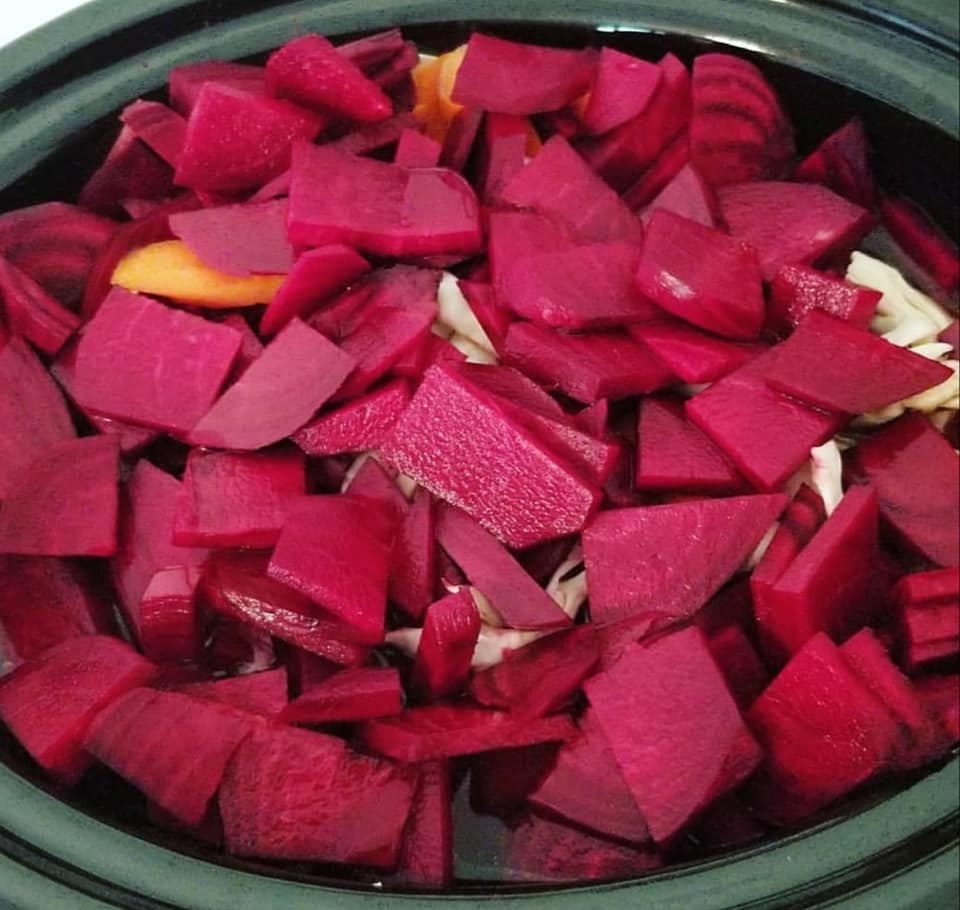
I always saute the vegetables in grapeseed oil with loads of paprika and dill before adding them to the beef broth, which adds a ton of flavour.
Add enough water to cover it all, turn the heat up, and let it all boil until the beef falls apart easily and the potatoes are tender. Beets have a similar texture and taste to potatoes when cooked.
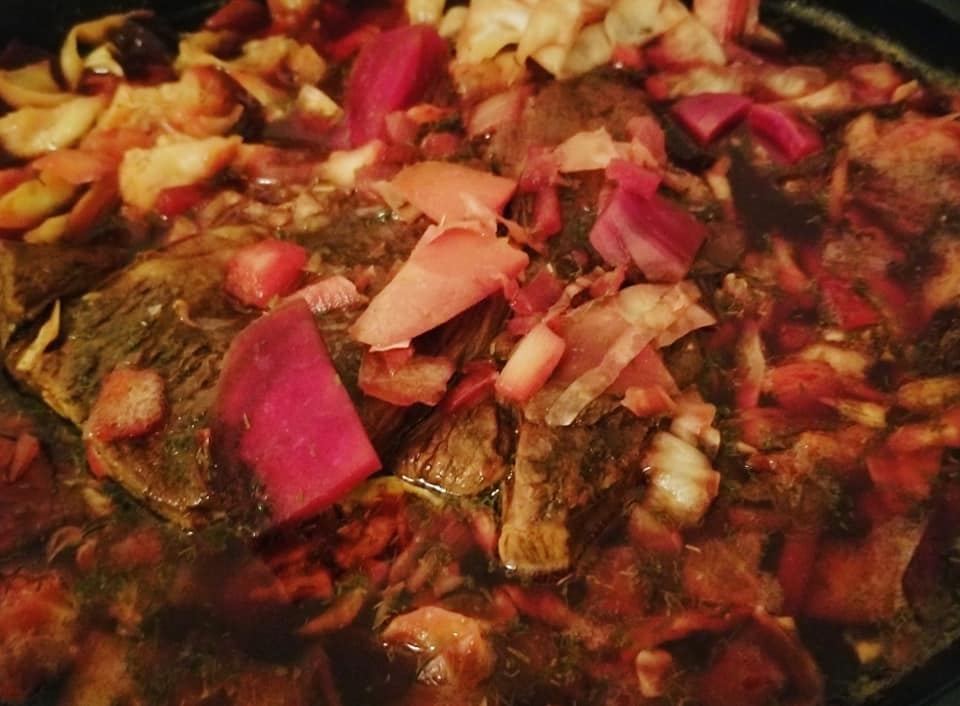
After a few hours on high it started looking like this:
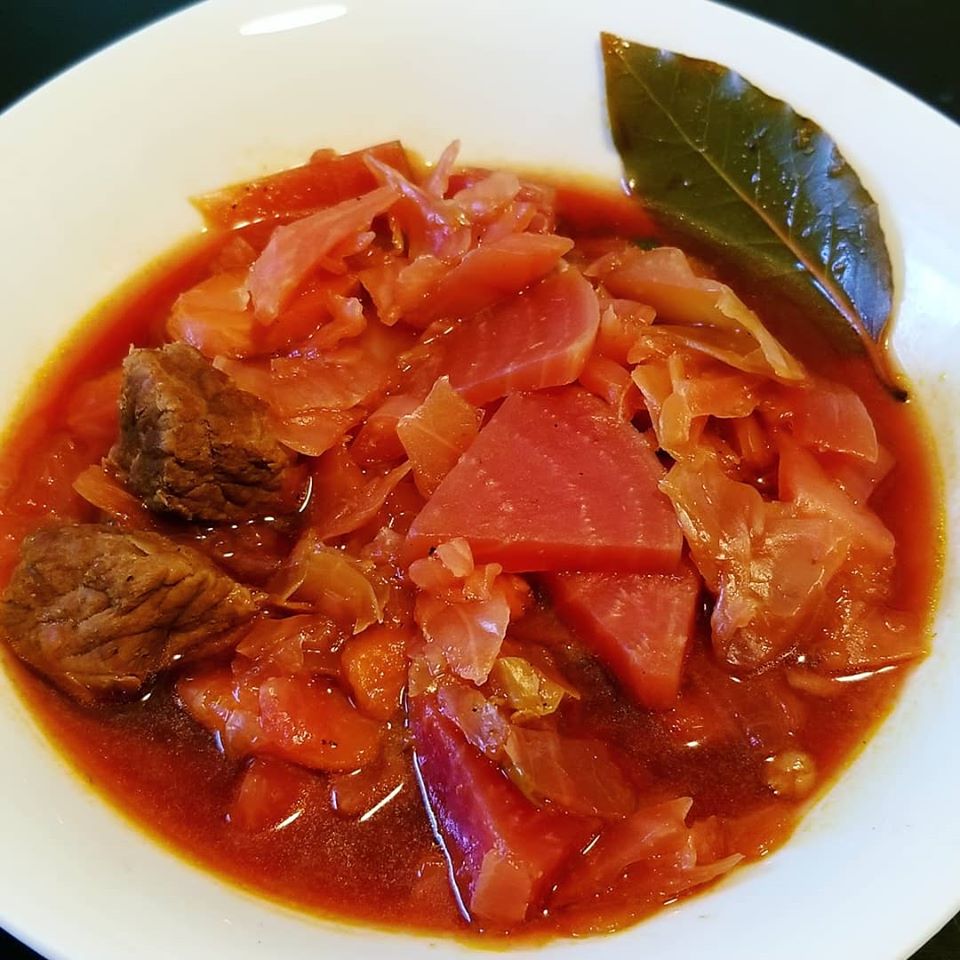
The final product usually looks like this:
Do not make the grave mistake of serving borsch without a dollop of sour cream.
Always add it on top of slightly cooled borsch when it is served and slowly stir it in, instead of mixing in with the other ingredients while cooking. This would cause the cream to curdle and the pretty pink and orange swirls will become clotted.

On occasion, I like to make a giant vat of borsch and go all out Slavo-Balkan feast, complete with toasted black bread, ajvar, chocolate babka, red wine, a shot of vodka, and mint tea.
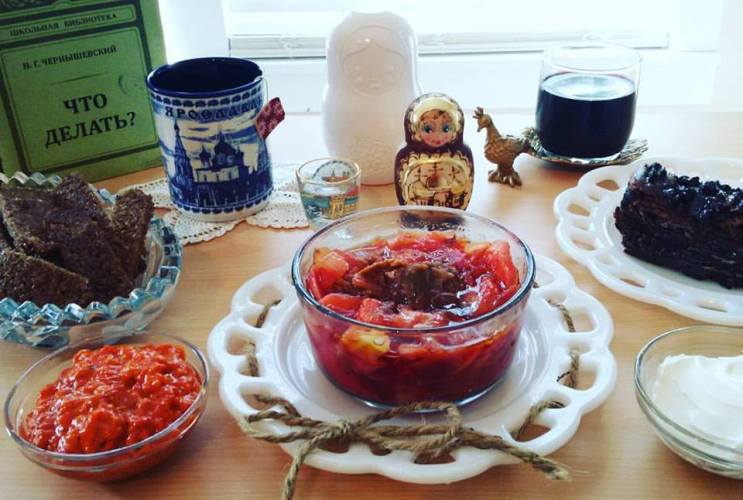
Recently my curiosity got the best of me- can I make borsch in the Crock Pot?
I prepared it the same way but put it in a Crock Pot instead of a stove-top kettle and then let it simmer. After a few hours, I was surprised to find this:
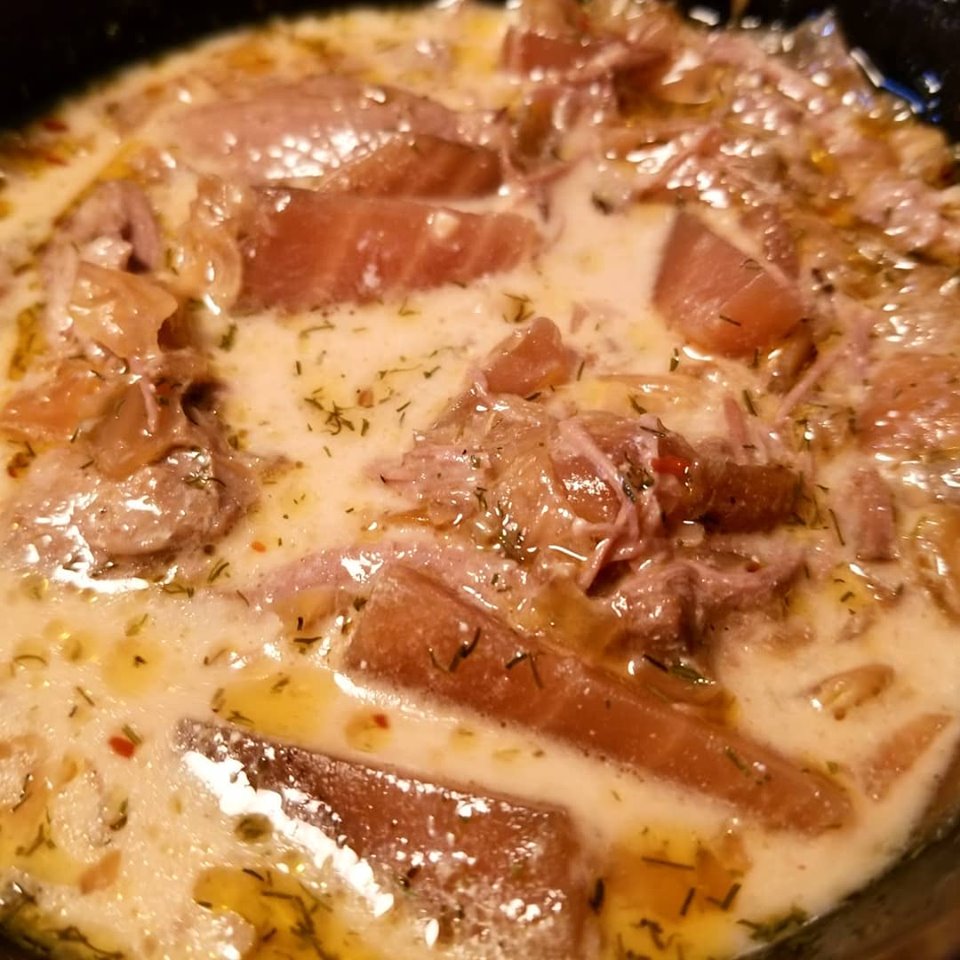
It turned out delicious, but slow-cooking neutralized the natural colouring of the beets. Truth be told, I rather enjoy the usual shock of this hot pink stew.
Borsch is a beloved dish all around the world now. These fine ladies even sing a song about it:
Want to learn more about Russia? Follow me to Red Square, The Arbat, Bulgakov’s Moscow, and the Kremlin!
*************
© Fernwehtun, 2015- Current. Unauthorized use and/or duplication of this material without express and written permission from this site’s author and/or owner is strictly prohibited. Excerpts and links may be used, provided that full and clear credit is given to Fernwehtun and Fernwehtun.com with appropriate and specific direction to the original content.





 Fernweh, An Ache for Distant Places
Leave a comment