
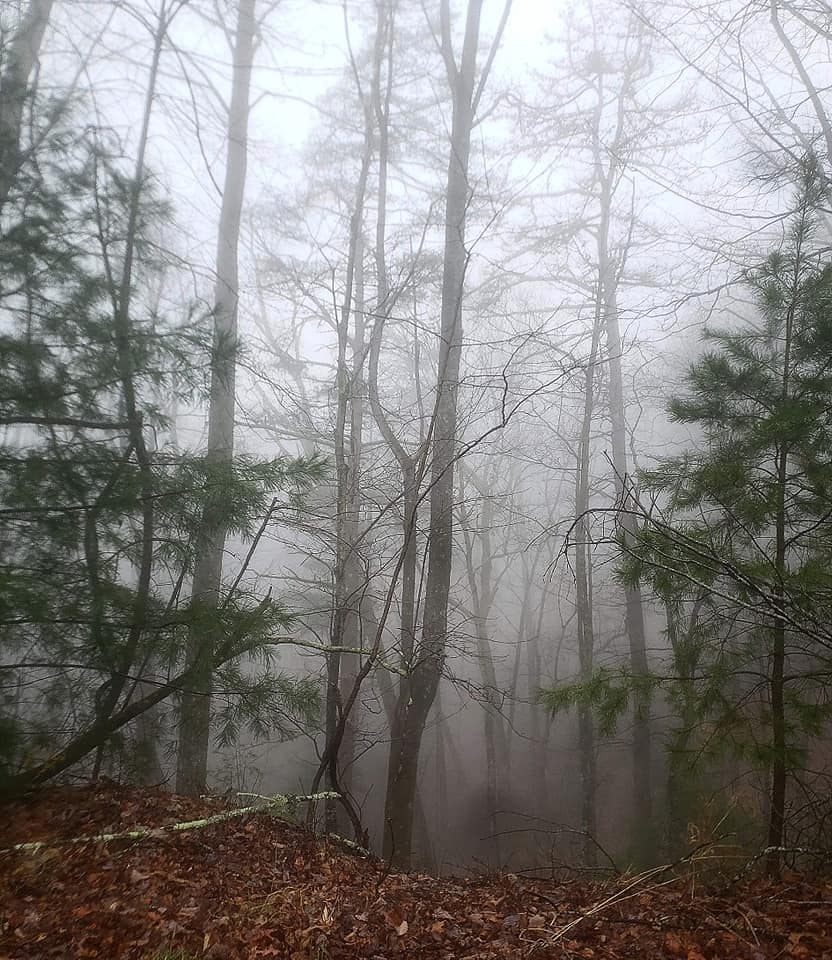
It is not one continuous tract of land, however. Chattahoochee National Forest is located more in the North Georgia Mountains which are the southern edge of the Blue Ridge Mountains, and part of the much larger chain of Appalachian Mountains. Its counterpart, the Oconee National Forest, is in the central Georgia Piedmont area that is shaped more heavily by agriculture and forest regrowth.
This land is part of the Cherokee Homeland, and it was long before European settlers arrived or the national forests were established. Territory expansions, the discovery of gold in the 1820s, and other factors led to seizure of Cherokee lands which led to tragic loss of the Cherokee people’s homes, communities, culture, sovereignty, and thousands of lives during the Indian Removal Act. This Act affected the Cherokee and other Indigenous People and is also known as the Trail of Tears.
Thankfully, the Cherokee story did not end there. Chattahoochee-Oconee National Forest history can only be fully understood by honouring and acknowledging the Cherokee people that this land was stolen from.
Today, the combined Chattahoochee-Oconee National Forest (CONF) brings together ancient geology, Indigenous homelands, gold mining, logging, federal conservation, and methods of public land management

CONF is commonly divided into four Ranger Districts that manage the land and resources:
1. Blue Ridge Ranger District
2. Conasauga Ranger District
3. Chattooga River Ranger District
4. Oconee Ranger District
Let me tell you right off the bat that I have not spent much time in the Oconee Ranger District and can not share a lot of personal experience there, but I know the rest of this forest fairly well.
My sister lived in Blue Ridge for over four years and we traveled this region together pretty extensively, so I have her to thank for much of what I have experienced there. This blog will be focused on the towns and attractions of the forest, until I can return for more of its trails.
Not every single site in this guide lies within official National Forest boundaries but they are super close, and I have included them because they should not be missed!

1. BLUE RIDGE RANGER DISTRICT
This district’s ranger station is located in Blairsville and its main towns include Blairsville, Blue Ridge, Dahlonega, Hiawassee, Morganton, and Young Harris.
BLAIRSVILLE is a VERY small town of around 600 people, known for all the natural beauty of the CONF, Vogel State Park, and Brasstown Bald. Blairsville and the rest of Union County fold right into the Blue Ridge Mountains and the Chattahoochee-Oconee National Forest.
Europeans settled into this Cherokee/Creek land and named it after James Blair, a beloved Revolutionary War veteran. Blairsville had earned a reputation for its abundance of gold in the Coosa Mines, and for having the purest unique yellow gold that set it apart from gold mined elsewhere in the country.

BRASSTOWN BALD is Georgia’s highest mountain and it can be hiked in just little over half a mile from the parking lot, but be warned, it is STEEP! You can also take a shuttle up and hike it down, or shuttle both ways.
Leashed dogs are welcome on the trail, though open hours are not always predictable and they have strict protocols for visiting. Be sure to check the website in case of any changes.

BLUE RIDGE is my favourite town in the forest. After visiting my sister regularly for over four years and making a few friends along the way, I really became familiar with Blue Ridge, its gems, oddities, and local vibes.

Blue Ridge is an extremely popular mountain destination known for its historic downtown with unique shops, local restaurants, the Blue Ridge Scenic Railway train tour, lake life, hiking, fishing, and other outdoor adventures.

MCCAYSVILLE is one half of the Copperhill, TN/McCaysville, GA twin town that is wedged between the Cherokee National Forest in TN and the Chattahoochee-Oconee National Forest.
Copperhill is quieter and was once a major hub for the region’s copper mining industry, while McCaysville is the livelier, more popular side.

Both towns share the same downtown area and many of the same attractions. A popular photo op is on the famous Blue Line marking the state boundary, right in the middle of its Riverwalk Shops, an indoor/outdoor shopping district with three restaurants and eleven shops.
Being just ten minutes from downtown Blue Ridge, we usually split our time between Blue Ridge and McCaysville for most of my visits.

DAHLONEGA is a small historic town in North Georgia with around 8,000 people in less than nine square miles. It is famous because the discovery of gold there in 1828 sparked the first major American Gold Rush. The name “dahlonega” is a derivative of the Cherokee word for yellow or gold, as they were the original inhabitants.
Dahlonega is the county seat of Lumpkin County which was formed in 1832, and is beloved today for its gold mining history, wineries, and themed festivals.

The Dahlonega Gold Museum State Historic Site is located in the old 1836 Lumpkin County Courthouse, in downtown Dahlonega’s historic Public Square. This building served as the county courthouse until 1964 and is the oldest, unaltered courthouse in the state of Georgia.
The museum has varied exhibits and screens several different films about mining and minting in Dahlonega, various equipment used, and other historical local topics. It also has a gift and souvenir shop.

Russell-Brasstown National Scenic Byway
One of the most popular attractions in Chattahoochee-Oconee National Forest is driving the 40-mile Russell-Brasstown National Scenic Byway, which makes a loop between Blairsville and Helen. This route only covers part a small part of the forest, so I would not rely on it completely if you want to see the best of the CONF.
Here is a screenshot of the interactive map from Overlookmaps.com:

TRACK ROCK GAP PETROGLYPH SITE
Between Thunderstruck Mountain and Buzzard Roost Ridge is an obscure bit of land called Track Rock Gap Archaeological Area, where hundreds of ancient petroglyphs are carved into massive soapstone boulders. The site is currently pending status on the National Registry of Historic Places, and is Georgia’s best known petroglyph site.
Though the carvings are dated to have been around since 1,000 BC, it was not until 2009 that a team of archaeologists learned they could apply halogen lights to view the petroglyphs with advanced clarity. Images of animals, human figures, circles, and other symbols cover the boulders.
The photo below was found on Pinterest via Google Image Search, but the link to the original author was broken:

2. CONASAUGA RANGER DISTRICT
This district’s station is in Chatsworth and its main towns and cities are Ellijay, Dalton, Calhoun, Crandall, and Eton.
ELLIJAY is a tiny town of less than two thousand people in a little over 2.5 square miles. It is halfway between Blue Ridge and Jasper, just 75 miles north of Atlanta.
Originally Cherokee territory, Ellijay also takes its name from the Cherokee word Elatseyi meaning “many waters.” Ellijay is located near the confluence of the Cartecay and Ellijay rivers, known then as the Coosawattee River, as well as the lovely Carters Lake.
Ellijay is known for its annual apple celebrations each autumn and is sometimes called the apple capital of Georgia.

DALTON has nearly 35k people in about 20 square miles. Its downtown is the fifth largest downtown district in the state of Georgia and boasts over 300 businesses.
Daltonians value civic engagement and host a number of events like the monthly CommUNITY Dinners and their annual “Gratefull” Dalton Thanksgiving meal, the People of Dalton storytelling campaign, The Civil War Show at the Dalton Convention Center, and the Dalton Brewing Company Block Party. Creative Arts Guild has its own Annual Festival, First Fridays, and Art & Soul events too.
Music festivals are abundant in Dalton including the Civitan Festival, Woodsongs Concert Series, Cohutta Songwriters Festival, Friendship House Music Festival, Off the Rails Summer Music Series, Pops in the Park, Moonlight & Moonshine at Tunnel Hill, and the Prater’s Mill Festival. You can also attend the annual Coin & Stamp Show, Fried Pickle Festival, all sorts of rodeos, home shows, flea markets, pancake dinners, car shows, hot rod rallies, parades, tree lightings, fireworks, and everything else you could think of.
Dalton is known as the Carpet Capital of the World and Flooring Capital of the World with over 150 flooring shops in the town. Some of Dalton’s slogans include “There is so much to do in Dalton, you’ll be FLOORED!” or “Come get FLOORED in Dalton!” I love a good pun.

CALHOUN has over 20,000 people in about 16 square miles and was first named Oothcaloga meaning “place of the beaver dams.” It is located in the heart of what was the Cherokee Nation, where the Oostanaula River meets Oothkalooga Creek.
You can visit several historically significant sites like the Gem Theatre, Oakleigh House maintained by the Gordon County Historical Society, Roland Hayes Museum, the nearby Resaca Battlefield Historic Site, and the junk oddity that is Sam’s Treehouse.
The coolest place we found was the Calhoun Rock Garden, full of child-sized castles, a replica of the Colosseum, and other structures handmade with little stones.

3. CHATTOOGA RIVER RANGER DISTRICT
This district’s ranger station is in Lakemont and some of its towns and communities include Clayton, Rabun Gap, Mountain City, and Helen.
CLAYTON is the seat of Rabun County and was incorporated in 1821. It used to be called Dividings because of its location at the crossing of several important Cherokee trails, and a famous explorer and naturalist named William Bartram wrote about it in the 1770s. As Clayton was developed, three of the ancient trails became US 23/441, US 76, and Warwoman Road.
Clayton is proud to be known as the Farm-to-Table Capital of Georgia and has some really fantastic restaurants, vineyards, and galleries. The town also serves as a gateway to outdoor destinations such as Black Rock Mountain State Park, Tallulah Gorge State Park, and the Chattooga River.

RABUN COUNTY & RABUN GAP
Rabun Gap is a small mountain community within Rabun County, a rural agricultural area wedged into the Georgia, Tennessee, and North Carolina borders. It is best known as the home of Black Rock Mountain State Park, Moccasin Creek State Park, and especially the Rabun Gap-Nacoochee School, the independent boarding and day school that inspired Foxfire.

Foxfire publications started in 1966 when an English teacher at the local Rabun Gap-Nacoochee School created a project to encourage his students to write. They began publishing a magazine full of interviews with their family and community members, the rural Appalachian culture and lifestyle, and various craft methods, recipes, food and farming preparations, planting guides, and skilled instructions.
For decades, Foxfire has been considered the largest collection of firsthand documentation of the southern Appalachian way of life.
FOXFIRE MUSEUM in Mountain City is a scene straight out of The Waltons series. I had wanted to visit this museum since my early 20s when I discovered the magazines and books, and this is one of my favourite places in the CONF.

HELEN is a Bavarian-themed tourist attraction town with street names like Munich Strasse, Edelweiss Strasse, Brucken Strasse (no umlaut), Chattahoochee Strasse, and Alpenrosen Strasse, and is full of cobbled walkways, a matching colour scheme, half-timbers, painted exteriors on point, Biergartens, and most importantly, German food.
Sadly, I can no longer have gluten, but this meal lives in my brain for free.

Helen has only around two square miles and less than six hundred residents, but boasts over 200 local businesses. It is Georgia’s third most-visited city after Atlanta and Savannah, but Helen as we know it is only a few decades old. The annual Oktoberfest events, tubing on the Chattahoochee River, Unicoi State Park, and Anna Ruby Falls are all extremely popular.

ANNA RUBY FALLS has twin waterfalls that mark the junction of Curtis and York Creeks, which merge to form Smith Creek. Curtis Creek (left) drops more than 150 feet and York Creek (right) drops about 50 feet past the viewing platform.

4. OCONEE RANGER DISTRICT
This is the one district I have not spent much time in, as it is furthest from my home and from my sister. The Oconee Ranger district’s station is in Eatonton and its main towns include Eatonton, Monticello, Madison, and Greensboro. One of its main attractions is Hard Labor Creek State Park, but each town has interesting sites like the Georgia Writers Museum, Old School History Museum, Historic Uncle Remus Museum, and The Artisans Village Art Gallery in Eatonton.
Madison has the Madison Morgan Cultural Museum, Morgan County African American Museum, and the Rogers House Museum, while Greensboro has Lake Oconee, and the Greene County African American Museum. I will be back someday soon and update this blog afterward.
Additional places to visit in the Chattahoochee-Oconee National Forest include the Aska Trail System, the Benton MacKaye Trail, Lake Chatuge, Springer Mountain, Lake Conasauga, Fort Mountain State Park, Scull Shoals Historic Site, the Rabun Bald fire tower, Cohutta Wilderness, Ellicott Rock Wilderness, and the Chattooga River corridor, each offering insights into the region’s Indigenous heritage, historical land use, and conservation history.
In the area for a while? Follow me to the Cherokee National Forest, Nantahala National Forest, Pisgah National Forest, and Daniel Boone National Forest!
********************
© Copyright Fernwehtun, 2015- Current. Unauthorized use and/or duplication of this material without express and written permission from this site’s author and/or owner is strictly prohibited. Excerpts and links may be used, provided that full and clear credit is given to Fernwehtun and Fernwehtun.com with appropriate and specific direction to the original content.

Leave a Reply